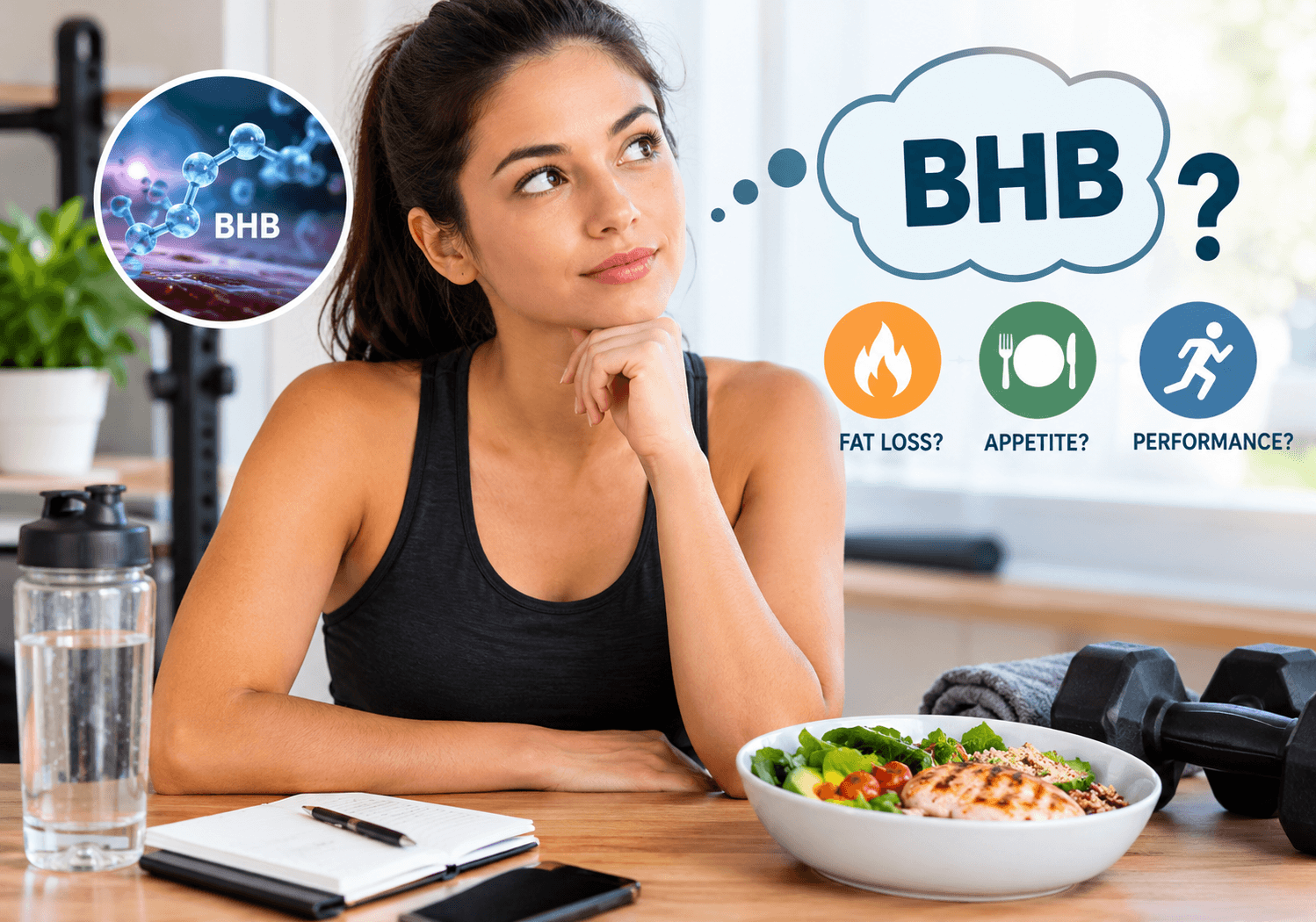
Can you take BHB supplements without following a keto diet? Yes, you can. Studies show these products raise ketones in your blood whether or not you cut carbs. But a supplement does not copy a keto diet, and the effects are smaller and shorter than most labels suggest.
BHB stands for beta-hydroxybutyrate. It is the main ketone your body uses for fuel when carbs are scarce. Supplement makers sell it as a shortcut to ketosis, and plenty of people wonder if the shortcut works without the diet.
This guide gives you a straight answer. You will learn what BHB does in your body, what the research shows, what the side effects look like, and who should skip it. Then you will get a simple plan for testing it safely if you decide to try it.
Quick Answer: Yes. Research shows BHB supplements raise blood ketones within hours whether or not you eat low-carb. But the rise is temporary, and it is not the same as the metabolic state keto creates. Evidence for fat loss or better workouts is limited, so treat BHB as an optional extra, not a shortcut.
What BHB Is and What a Supplement Actually Does
Your liver makes ketones when you eat very few carbs or go without food for a long time. For example, mild ketosis generally develops after a 12- to 14-hour fast. BHB is the most common ketone in your blood. Your brain, heart, and muscles can burn it for energy.
A keto diet is the usual way to raise ketones on purpose. Researchers describe very low carbohydrate ketogenic diets as about 25 to 50 grams of carbs per day. That is roughly 1 to 1.8 ounces. A single plate of pasta can use up the whole day’s allowance, which is why many people find the diet hard to follow.
BHB supplements skip the liver step. They deliver BHB directly, so your blood level goes up after you swallow them. Scientists call these products exogenous ketones, which just means ketones from outside your body.
The Two Main Forms: Salts and Esters
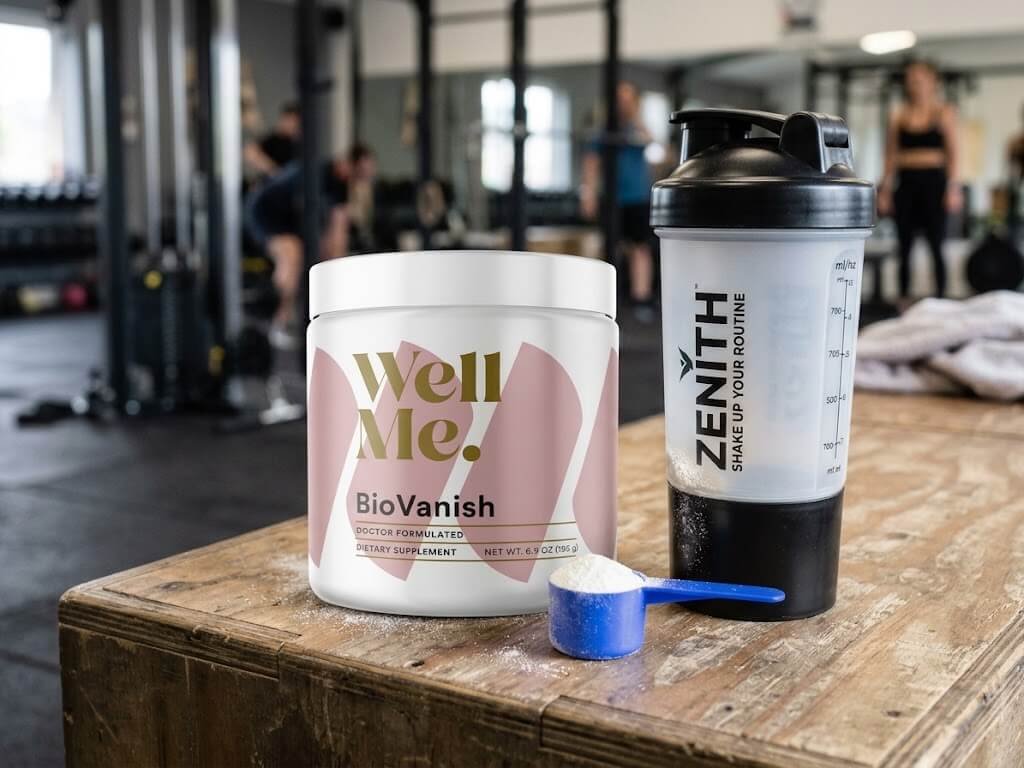
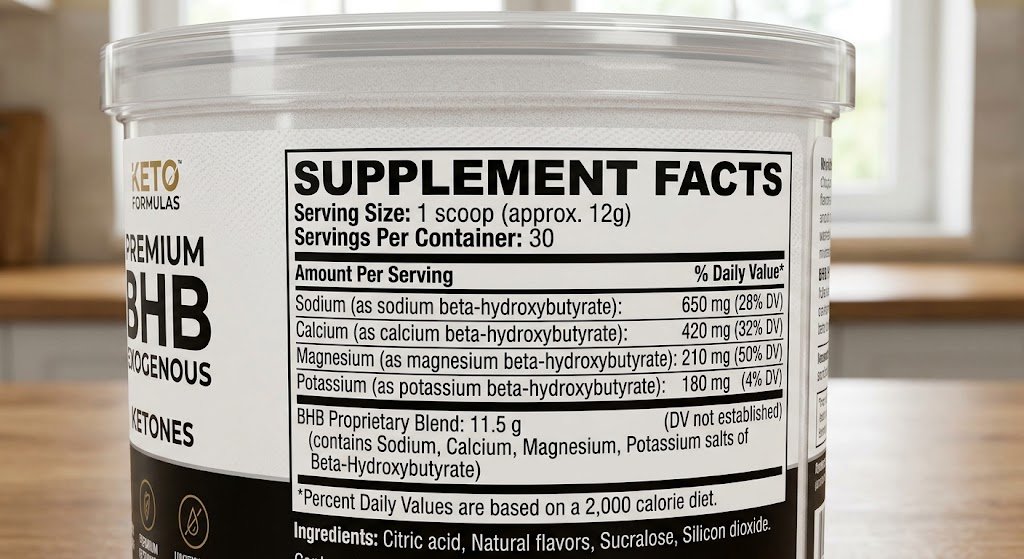
Most products on shelves are ketone salts. The BHB is bound to minerals such as sodium, potassium, calcium, or magnesium so it can be a powder or capsule. One human study of a commercial salt tested a calcium and sodium BHB mix, so the mineral load is part of what you swallow.
Ketone esters are the other form. A ketone monoester is BHB linked to another compound so it can be absorbed as a liquid. These drinks tend to be pricier and harder to find, and many are tied to research or sports use.
The form matters because the size of the effect differs. In a pooled analysis of 43 trials with 586 participants, monoesters raised blood BHB by about 2.6 mM on average, while salts raised it by about 0.5 mM. Most store-bought BHB powders are salts, so expect the smaller number.
Salts vs. Esters at a Glance
| Factor | Ketone salts | Ketone monoesters |
| What they are | BHB bound to minerals | BHB linked to another compound, taken as a liquid |
| Average rise in blood BHB | About 0.5 mM | About 2.6 mM |
| Average drop in blood glucose | About 0.23 mM | About 0.76 mM |
| Mineral load | Yes, varies by product | Not a feature of the form |
| Where you usually find them | Powders and capsules | Drinks, often pricier |
| Best for | Casual trial on a budget | Research and sports settings |
These averages come from the same pooled analysis. Remember that the numbers are averages across many different studies, so your own response may be higher or lower.
Can You Take BHB Supplements Without Following a Keto Diet? What Happens in the Body
Here is the short version of the science. When you take BHB on a normal diet, blood BHB goes up for a few hours and then falls back. Your body is not switching its fuel system the way it does on keto. It is just getting a temporary dose of ketones on top of the glucose it is already burning.
In one salt study, six healthy adults took about 0.5 grams per kilogram of body weight. For a 154-pound (70 kg) person, that is about 35 grams. Blood BHB rose slowly and only moderately, with a significant increase showing up 2.5 and 3 hours after the dose. That is a research dose, not a label dose, but it shows how gradual the rise can be.
An ester drink works faster. In a trial of 15 healthy, normal-weight adults, a ketone ester raised blood BHB from 0.2 to 3.3 mM after 60 minutes. The drink supplied 1.9 calories per kilogram of body weight, or about 133 calories for a 154-pound (70 kg) person. So these drinks are not calorie-free.
What to Expect Hour by Hour
Timing depends on the form. With an ester drink, blood BHB climbed within the first hour in the ghrelin trial. With the calcium and sodium salt, the clear rise took 2.5 to 3 hours to show up.
After that, levels drift back toward normal as your body uses or clears the ketones. That is why one scoop in the morning will not keep you in ketosis at dinner. If a label promises “all-day ketosis” from a single serving, treat that claim with doubt.
What Happens to Blood Sugar
BHB tends to nudge blood sugar down. The pooled analysis found that ketones taken by mouth lowered average blood glucose by about 0.54 mM, which is roughly 10 mg/dL. The drop was larger with monoesters than with salts.
This is interesting, but it is a short-term lab finding. The same review notes there is only limited evidence on taking ketones for long periods. If you take glucose-lowering medicine, this effect is a good reason to talk to your doctor before you start.
Why It Is Not the Same as Keto
Keto changes how your whole body runs. Your insulin stays low, your liver ramps up ketone production, and your muscles slowly adapt to burning more fat. A BHB powder does none of that by itself.
A review of ketone supplements and keto-induction also points out that exogenous ketones raise blood ketones but may inhibit your own ketone production. In plain terms, if outside ketones are in your blood, your liver may make fewer. That is one reason a supplement is not a stand-in for the diet.
Coach’s Tip: Think of BHB as a short visit from a guest, not a move-in. A supplement can raise ketones for a few hours. Only a change in eating pattern keeps them up day after day.
BHB Alone vs. Keto vs. Both: A Quick Comparison
| Factor | BHB supplement, normal diet | Keto diet, no supplement | Keto diet plus BHB |
| Blood ketones | Rise for a few hours, then fall | Stay raised day to day | Raised, with temporary extra spikes |
| Your own ketone production | May be reduced while outside ketones are high | Increased | Unclear, limited research |
| Carb limit needed | No | Yes (about 25-50 g/day) | Yes |
| Calories from the product | Yes, depending on form | Not applicable | Yes |
| Cost and effort | Product cost; low effort | Food planning; low product cost | Highest on both counts |
| Evidence for long-term effects | Limited | More studied | Limited |
Looking at the table, the main point is that the three setups are different tools. If your goal is to stay in ketosis all day, a powder alone will not do it.
Does BHB Work for Weight Loss, Appetite, or Workouts Without Keto?
People mostly buy BHB for three reasons: fat loss, appetite control, and training performance. The research is more mixed than the marketing. Here is what the evidence supports and what it does not.
Weight Loss
No study in the sources above shows that taking BHB on a normal diet makes you lose body fat. The research tracks blood ketones, blood sugar, hunger hormones, and exercise tests. It does not show that the pounds come off faster.
Your fat loss still comes down to a steady calorie gap over weeks and months. Adding a supplement does not change that math. If the product adds calories, it can even work against you.
Appetite
This is the area with the most interesting early data. In the 15-person ester trial, hormones and hunger moved in the same direction. Compared with a sugar drink, the ketone drink was followed by lower ghrelin, lower hunger, and a lower desire to eat in the hours that followed.
There are limits. The people were healthy and normal weight, they took a single ester drink after an overnight fast, and the trial did not follow how much they ate over weeks. Salt powders were not the product tested. So this is a promising signal, not proof that a daily scoop will shrink your appetite.
Workouts and Endurance
The best-known performance study used a ketone ester in 39 high-performance athletes across five separate studies. The researchers reported that ketosis lowered muscle glycolysis and blood lactate and changed which fuels the muscles used during exercise.
That is a real finding, but it does not mean every BHB product will help your workout. A recent systematic review of trained and active people found that effects on exercise performance were mixed, with some studies reporting gains and others not. The same review also noted that the long-term safety of repeated use is not well described.
For strength work like squats, presses, and rows, the evidence is thinner still. If you lift for muscle or strength, your best returns come from progressive overload, enough protein, and sleep. A ketone product is unlikely to outweigh any of those.
Common Mistake: Taking BHB and expecting it to cancel out a high-sugar, high-calorie day. It will not. Your blood sugar and calorie intake still count, and the product may add calories of its own.
How to Take BHB Supplements Without Following a Keto Diet: A Practical Plan
If you decide to try BHB, treat it like a small experiment. The goal is to learn how your body reacts before you commit your money or your routine. Here is a simple way to do that.
- Check with your doctor first if you have a health condition or take medicine. This matters most for diabetes, kidney disease, heart or blood pressure problems, pregnancy, and breastfeeding.
- Read the label. Look at the BHB form (salt or ester), the amount of BHB per serving, which minerals are in it, and whether it contains caffeine or other added ingredients. Skip any product that does not list amounts.
- Start at the lowest serving on the label. Do not double up to “feel it.” Taking it with a meal may be easier on your stomach, though the research on timing is limited.
- Change one thing at a time. Do not start BHB the same week you change your diet, sleep, or training plan. You will not know what caused what.
- Keep a two-week log. Write down energy, hunger, stomach comfort, sleep, and training quality. Stop if you notice anything that worries you.
A Sample Test Week for Gym-Goers
Say you train three times a week with full-body lifting. On your Monday, Wednesday, and Friday sessions, you could try one label-sized serving about 30 to 60 minutes before you train, then log how you feel. This timing is a common approach for a trial, not a proven protocol. Use your normal warm-up of 5 to 10 minutes, then do 3 sets of 8 to 10 reps on your main lifts with 90 to 120 seconds of rest.
On the other four days, skip the product and keep everything else the same. Compare your notes at the end of the week. If you see no difference in energy, hunger, or training quality, you have your answer without spending much.
- Easier version: Try it on just one training day and use the lowest label serving.
- Harder version: Do not add more product. Instead, add more tracking, such as a longer log or blood ketone strips, so you can see what is really happening.
Coach’s Tip: Judge BHB by your log, not by the hype. If your training, hunger, and mood look the same with and without it, the product is not doing much for you.
Can You Take BHB Supplements Without Following a Keto Diet Safely? Side Effects and Risks
For most healthy adults, short-term side effects look mild. A research team tracked stomach symptoms across three studies of ketone drinks. They found that symptoms were acute but mild and resolved by the end of each study, and that they depended on the form, the dose, and whether people were exercising.
Many people had no symptoms at all. Visits with no symptoms after a ketone drink were 32 of 60 in the first study, 9 of 32 in the second, and 20 of 42 in the third. In other words, stomach upset was common enough that you should expect it might happen, especially with larger doses.
Things Researchers Still Do Not Know
The same performance review says the safety of long-term use is not well characterized, including stomach distress and effects on acid-base balance. The authors of the six-person salt study also said they could not exclude an influence on acid-base balance and noted that oral ketone salts may not be completely free of health risks.
Salts also bring minerals. If you have been told to limit sodium, watch your potassium, or protect your kidneys, check the mineral content on the label and ask your doctor before you buy. The amounts differ a lot between products, so do not assume.
Ketosis Is Not the Same as Ketoacidosis
Mild ketosis from fasting or a keto diet is a normal state. Ketoacidosis is a dangerous problem where ketones climb far too high and make the blood too acidic. Medical references list diabetic, alcoholic, and starvation forms of ketoacidosis.
A healthy person with normal insulin is very unlikely to reach that point from a supplement. But people with insulin problems, heavy alcohol use, or very low food intake are in a different position. That is why the next section matters.
Myths vs. Facts About BHB Without Keto
Supplement labels make bold promises. Here is how the common ones compare with the research in this article.
Myth: BHB makes your body burn fat. Fact: Raising blood ketones is not the same as burning body fat. None of the studies cited here show faster fat loss from BHB on a normal diet, and your own ketone production may drop while outside ketones are high.
Myth: BHB lets you eat all the carbs you want and stay in ketosis. Fact: The rise is temporary. Keto-level ketosis depends on staying under roughly 25 to 50 grams of carbs per day, and a powder does not replace that.
Myth: BHB is calorie-free. Fact: The ester drink in the appetite trial supplied 1.9 calories per kilogram of body weight, about 133 calories for a 154-pound (70 kg) person. Check the label for calories in any product you buy.
Myth: More is better. Fact: Stomach symptoms depended on the ketone form and the dose. Taking extra servings to “feel something” raises your chance of an upset stomach without a proven payoff.
Myth: Natural-sounding means risk-free. Fact: Reviewers still say the long-term safety of repeated use is not well described. A supplement can be sold widely and still lack long-term data.
Who Should Skip BHB Supplements or Ask a Doctor First
Check with a doctor or registered dietitian before using BHB if any of these apply to you:
- You have type 1 or type 2 diabetes. Ketones can lower blood sugar, and ketoacidosis is a real risk when insulin is low.
- You take an SGLT2 inhibitor. A published clinical table notes that ketoacidosis with near-normal blood sugar is more common in people taking these drugs .
- You have kidney, liver, or heart disease, or high blood pressure. The minerals in ketone salts may matter for you.
- You are pregnant, breastfeeding, or under 18. There is little safety research for these groups.
- You have a history of an eating disorder. Extreme food restriction can push the body toward ketoacidosis, according to the StatPearls ketoacidosis review.
- You drink alcohol heavily. Alcoholic ketoacidosis is a recognized condition.
- You take blood sugar medicine of any kind. The glucose-lowering effect could stack with your medicine.
This list is not complete. If you are unsure, bring the product label to your appointment. A pharmacist can also check for interactions with your medicines.
Related Tips If You Are Curious About Blood Sugar and Metabolic Support
Many people who look at BHB are really asking a bigger question: how do I support steadier energy and blood sugar? A product that lowers glucose for a few hours is not the only route. Eating enough protein and fiber, walking after meals, lifting weights two or three times a week, and sleeping well all play a part.
Some readers also look at other supplements for glucose support. If that is you, read our guides on chromium picolinate and glucose metabolism and inositol and insulin sensitivity. They cover what studies show for those ingredients, which is a different question from what BHB does.
Here are a few more practical tips.
- Do not stack new supplements all at once. Add one at a time, two weeks apart, so you know what is helping or bothering you.
- Drink water with your serving. This is general good practice, and it can help if a product upsets your stomach. The research on hydration and BHB specifically is limited.
- Keep your food basics steady. If you are trying BHB, keep your meals and training the same for those two weeks so the test is fair.
- Buy with a plan to stop. Choose a small container first. If your log shows no benefit, you have lost very little.
- Match the product to your goal. If you only want to see how ketones feel during training, a small salt product is the lower-cost test. If you want research-style effects, know that ester drinks cost more and that studies used them under controlled conditions, not casual home use.
- Retest honestly. After your two-week log, ask one question: would I notice if I stopped? If the answer is no, that is useful information, and saving the money is a fair result.
- Share your log. Bring it to a doctor, dietitian, or pharmacist if you have any health condition. A written record is easier to review than a memory.
FAQ
Will BHB supplements put me in ketosis without keto?
They raise blood BHB, which is one marker of ketosis, but the rise is temporary. Studies show levels climb within hours and then fall. Real nutritional ketosis from keto also involves low insulin and your liver making its own ketones, which a powder does not copy.
Can BHB supplements help me lose weight without keto?
No study here shows that BHB on a normal diet speeds up fat loss. Research has looked at blood ketones, blood sugar, and hunger hormones, not long-term weight change. Weight loss still depends on a steady calorie gap, and some ketone products add calories of their own.
Is it safe to take BHB every day?
Short-term use looks mild for healthy adults, but long-term safety is not well studied. Reviews say daily, repeated use needs more research, including effects on stomach comfort and acid-base balance. Talk to your doctor first, especially if you have diabetes, kidney disease, or take medicine.
Do BHB supplements lower blood sugar?
Often, yes, for a short time. A pooled analysis of 43 trials found oral ketones lowered average blood glucose by about 0.54 mM, roughly 10 mg/dL, with bigger drops from monoesters. If you take diabetes medicine, ask your doctor before using BHB so your doses can be reviewed.
Can BHB supplements cause stomach problems?
They can. In three studies of ketone drinks, stomach symptoms were common but mild and went away. Symptoms depended on the ketone form, the dose, and exercise. Starting with the lowest label serving and taking it with food may help, though timing research is limited.
Do BHB supplements help with keto flu?
The evidence is thin. A narrative review found that exogenous ketones raise blood ketones, but it described research on supplements for easing keto-induction symptoms as limited. Labels often claim more than studies show. If you feel unwell on keto, check your fluids, food intake, and symptoms with a clinician.
Conclusion: So, Can You Take BHB Supplements Without Following a Keto Diet?
Yes, you can take BHB supplements without following a keto diet, and they will raise your blood ketones for a few hours. That is the part the research supports well. What it does not show is that this translates into fat loss, a steady ketosis state, or reliable workout gains.
If you are curious, run a small, careful test. Check with your doctor if you have a health condition or take medicine, start with the lowest label serving, and keep a two-week log. Let your own results decide whether the product earns a place in your routine.
The basics still do most of the work: a steady calorie plan, enough protein, regular training, and good sleep. BHB is, at best, a small add-on.