
Can dietary fiber help with appetite and weight management? Research suggests it can, a little, and mostly when you choose the right kinds of fiber and build up slowly. Fiber is not a fat-loss shortcut. It is a practical tool that may make a lower-calorie way of eating easier to live with.
As a coach, I like tools that change behavior without demanding extra willpower. Fiber is one of them. High-fiber foods take longer to chew, add bulk to meals, and, according to Mayo Clinic, stay in your stomach longer, which may make it easier to maintain a healthy weight.
This guide covers what the studies actually found, which fibers look best for fullness, how much you need, and a step-by-step plan to add more without gas or bloating. It also shows where the evidence is weak, so you do not waste money on hype.
Quick Answer Yes, dietary fiber may help with appetite and weight management, but the effect is modest and depends on the type. Viscous soluble fibers, like oat beta-glucan and pectin, reduce appetite more often than other fibers. Whole-food fiber, added gradually with water, is the safest place to start.
What Is Dietary Fiber, and Why Does It Affect Hunger?
Dietary fiber is the part of plant foods that your body cannot digest or break down, as Mayo Clinic explains. It shows up in fruits, vegetables, whole grains, beans, lentils, nuts, and seeds. Because you do not absorb it like other carbohydrates, it works on your body in different ways.
Soluble vs. insoluble fiber
Fiber comes in two main forms. Soluble fiber dissolves in water, absorbs fluid in the stomach and intestine, and forms a gel that slows digestion, according to Harvard Health. Harvard notes this can make you feel full and may help with weight loss. Good sources include legumes, nuts, seeds, oat cereals, and fruits high in pectin, such as apples, pears, and citrus.
Insoluble fiber does not dissolve in water. Think of it as the “roughage” in wheat bran, whole grains, and many vegetables. Both types matter for digestion, but most of the appetite research focuses on the soluble, gel-forming kind.
How fiber may calm hunger
Several things may be happening at once. Soluble fiber slows how fast the stomach empties and may raise feelings of fullness, based on a 2019 systematic review and meta-analysis of randomized trials. The same review explains that gut bacteria ferment some fibers into short-chain fatty acids, and these may influence appetite hormones such as PYY, GLP-1, and CCK.
Bulk matters too. Fiber-rich foods tend to be less energy-dense, so a bigger plate of beans, vegetables, and fruit carries fewer calories than the same volume of refined foods. That is a simple, practical way fiber can support a calorie deficit without leaving you hungry.
What the Research Says About Dietary Fiber, Appetite, and Weight Management
The honest summary is “helpful, but not magic.” Studies agree that some fibers curb appetite, yet the effect on actual body weight is usually small. Here is how the evidence breaks down.
Short-term appetite: type matters
A systematic review of randomized controlled trials in Obesity Reviews grouped fibers by their physical properties. Viscous fibers, including pectins, beta-glucans, and guar gum, reduced appetite more often than less viscous fibers (59% vs. 14% of comparisons). They also lowered acute energy intake more often (69% vs. 30%).
Think of viscosity as thickness. A thick, gel-forming fiber slows the movement of food and stays around longer, so your body gets fullness signals for more time. A thin, non-gelling fiber does not do this as well.
The 2019 meta-analysis found a similar pattern for meals. When researchers pooled trials of soluble fibers, guar gum showed the largest effect on how much people ate afterward, followed by beta-glucan, alginate, polydextrose, and pectin. It also noted that findings across studies have been inconsistent, so no single fiber is a guaranteed fix.
Long-term weight: small effects
The same Obesity Reviews analysis concluded that overall effects on energy intake and body weight were relatively small, and clear dose-response patterns did not appear. In plain words, eating far more fiber did not automatically mean losing far more weight. Short-term and long-term effects also seemed to differ.
A short trial from the early 1980s shows the gap between feeling less hungry and losing weight. In that randomized trial of weight-loss club members, bran or ispaghula taken before meals lowered hunger ratings, but weight loss did not differ from the control group over the study period. The trial was short and old, so treat it as a caution, not a verdict.
Simple fiber targets in a real-world diet study
One of the more practical studies came from UMass Chan Medical School. Researchers compared a complex American Heart Association diet with a very simple rule: eat at least 30 grams of fiber a day. Both approaches produced clinically significant weight loss. The AHA diet did slightly better, but the difference was not statistically significant.
The lead author suggested a fiber-focused approach may be a reasonable alternative for people who find complicated diets hard to follow. That is a coaching-friendly takeaway: one clear habit can beat a ten-rule plan you quit in week two.
Fiber supplements: weaker evidence than food
Supplements are tempting, but the data are not impressive. A meta-analysis of psyllium trials found no significant effect on body weight, BMI, or waist circumference. A meta-analysis of glucomannan trials in people with overweight or obesity also found no statistically significant weight loss compared with placebo.
Mayo Clinic says fiber is best obtained from food rather than supplements. Food also brings vitamins, minerals, and water along with the fiber. A supplement can help some people close a gap, but it should not replace beans, oats, fruit, and vegetables.
Where the evidence is limited
- Many appetite studies are short, small, and test one fiber at a time.
- Fiber types, doses, and food forms vary widely, which makes studies hard to compare.
- Fullness scores are self-reported, so they are partly subjective.
- Weight loss in fiber trials is usually modest, so fiber works best alongside other habits.
Fiber Types Compared: What to Eat for Fullness
Use this table to pick foods. The “evidence” column reflects the research above, not a promise of results.
| Fiber | Type | Example foods | What the evidence suggests |
| Beta-glucan | Soluble, viscous | Oats, barley | Among the fibers that reduced appetite more often in trials |
| Pectin | Soluble, viscous | Apples, pears, citrus | Same group as above; modest effects on later meal intake |
| Guar gum | Soluble, viscous | Added to some foods, supplements | Largest effect on later meal intake in one meta-analysis |
| Psyllium | Soluble, gel-forming | Husk powders, some cereals | No significant weight change in a meta-analysis |
| Glucomannan | Soluble, very viscous | Konjac products, capsules | No significant weight loss in a meta-analysis |
| Insoluble fiber | Not dissolved by water | Wheat bran, whole grains, many vegetables | Supports digestion; less studied for appetite |
My practical read: lean on oats, barley, beans, lentils, apples, pears, and citrus for the thick, soluble fibers, then add vegetables and whole grains for the rest.
How Much Dietary Fiber Do You Need Each Day?
A common target is 14 grams of fiber for every 1,000 calories you eat, as Harvard Health reports from the 2020-2025 Dietary Guidelines for Americans. The same article says most Americans reach only about half of what they need.
| Daily calories | Fiber target (14 g per 1,000 calories) |
| 1,500 | about 21 g |
| 1,800 | about 25 g |
| 2,000 | about 28 g |
| 2,400 | about 34 g |
| 2,800 | about 39 g |
You can also use age-based goals. Mayo Clinic lists at least 38 grams for men under 50, 30 grams for older men, 25 grams for women under 50, and 21 grams for older women. Use one method, not both. Either way, there is no special “weight-loss amount” proven in research, so aim for the general target and build toward it.
How to Add Dietary Fiber for Appetite Control: A Step-by-Step Plan
This is the same process I would walk a client through. It is built to hit your target without stomach trouble.
- Find your baseline. Track your normal eating for three days and add up the fiber on the nutrition labels. Most people land well under their target, so do not be discouraged.
- Pick your target. Use the 14 g per 1,000 calories rule or the age-based numbers above.
- Add about 3 grams per week. Mayo Clinic suggests increasing fiber by roughly 3 grams a week to limit gas and bloating. That is about one extra apple with skin, or a few spoonfuls of beans.
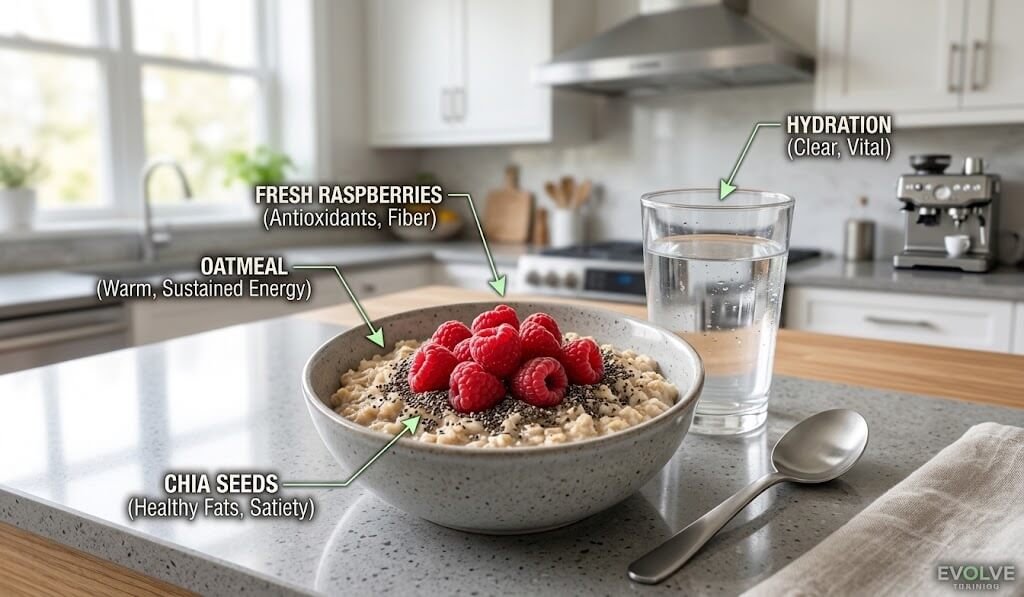
- Anchor fiber to breakfast. Oatmeal with berries or a high-fiber cereal is an easy, repeatable start, and Mayo notes a good breakfast can cover more than a quarter of your daily goal.
- Add a “fiber first” starter to lunch or dinner. A bean soup, lentil salad, or big vegetable salad takes the edge off hunger before the main course.
- Drink water throughout the day. Mayo Clinic advises staying well hydrated as you raise fiber. A glass with each fiber-rich meal is an easy habit.
- Pair fiber with protein. Protein and fiber together make meals more filling for most people, and it keeps the plan from becoming “just salad.”
- Reassess every two weeks. If your stomach feels fine, add another 3 grams. If you feel bloated, hold where you are for a week.
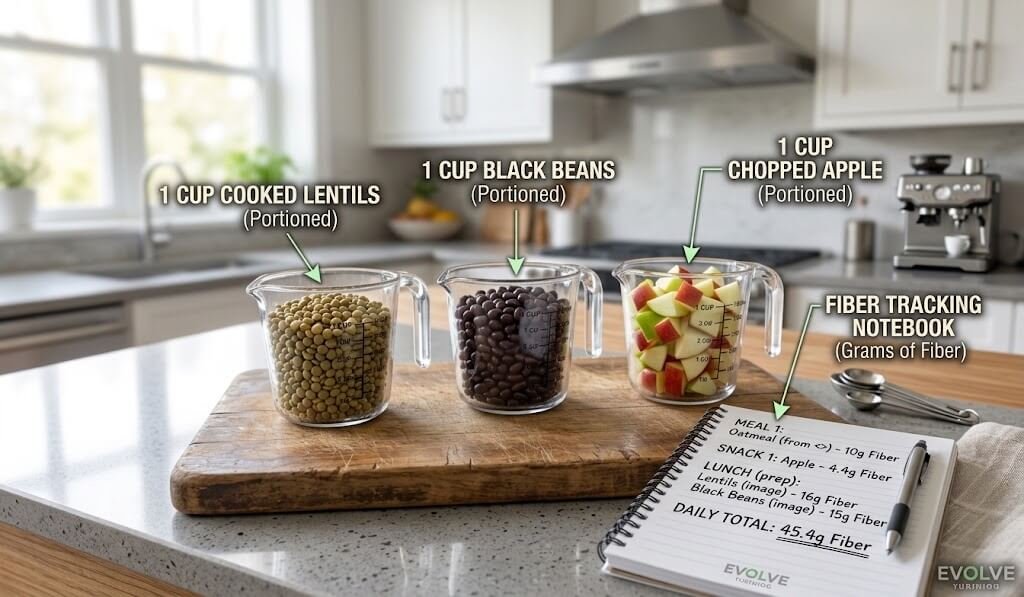
Coach’s Tip: Do not try to hit your full number at once. Pick two high-fiber foods you already enjoy, such as oats and berries, and eat them every day for two weeks. Habits that feel easy are the ones that stick, and your gut gets time to adapt.
Common Mistake: Jumping from a low-fiber diet to a very high one overnight, often with a supplement and not enough water. This can cause gas, cramping, and constipation. Mayo Clinic recommends slow, gradual increases and plenty of fluids. If you overshoot, drop back a few grams and build up more slowly.
Easier and harder versions of the plan
Easier (regression): Make one swap per day. Choose whole-grain bread instead of white, add a piece of fruit with skin, or stir beans into a soup. Keep this for two to three weeks before adding more.
Harder (progression): Aim for the full 14 g per 1,000 calories. Include a soluble, gel-forming fiber source (oats, beans, lentils, or pectin-rich fruit) at two or three meals, spread your fiber across the day, and keep a simple log of how full you feel at each meal.
Sample day (about 30-33 grams of fiber)
Fiber amounts below are approximate and depend on brand and portion. Check your labels.
| Meal | Foods | Approx. fiber |
| Breakfast | 1/2 cup dry oats, 1/2 cup raspberries, water or milk | about 8 g |
| Lunch | Lentil and vegetable soup (about 1/2 cup cooked lentils), side salad | about 10 g |
| Snack | 1 medium apple with skin | about 4-5 g |
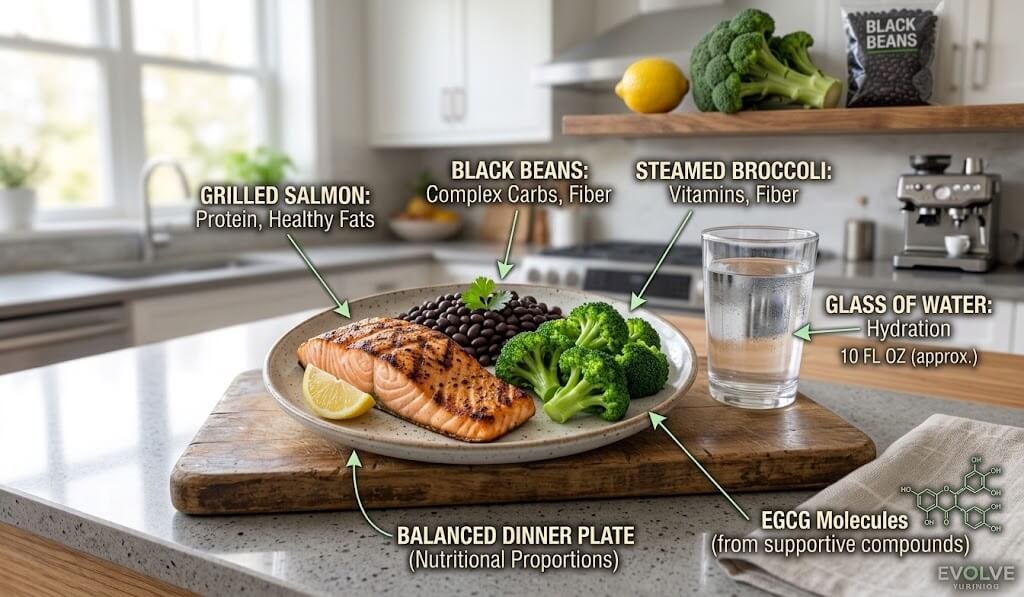
| Dinner | Chicken or fish, 1/2 cup black beans, 1/2 cup broccoli | about 10 g |
Notice that every meal has a visible plant food and a protein source. That simple pattern is easier to repeat than counting every gram.
Safety Notes: Who Should Be Careful With Dietary Fiber
Most healthy adults tolerate extra fiber well if they go slowly. Still, fiber is not right for everyone at every dose.
- Gas, bloating, and cramps: These are common when intake rises quickly, as Mayo Clinic notes. Slow down and drink more fluids.
- Digestive conditions: If you have irritable bowel syndrome, inflammatory bowel disease, a history of bowel blockage, or recent bowel surgery, ask your doctor before changing your fiber intake.
- Medications: Fiber supplements can affect how some medicines are taken. Ask a pharmacist or doctor about timing.
- Supplements: Stick to the label directions, and be cautious with concentrated products such as glucomannan, since they swell with fluid.
- Pregnancy, older age, or medical conditions: Check with a doctor or registered dietitian before making big diet changes.
- Persistent symptoms: Ongoing abdominal pain, blood in the stool, or unexplained weight loss need medical attention, not more fiber.
Because this topic touches weight loss and nutrition, please check with a doctor or registered dietitian before starting a new eating plan, especially if you have a health condition or take medicine.
Related Tips to Support Appetite and Weight Management
Fiber works best as one piece of a bigger routine. These habits fit naturally alongside it.
Build meals around protein, fiber, and water. This trio makes plates more filling without extra effort. Keep ultra-processed snacks out of easy reach and put fruit or nuts where you can see them.
Add easy movement. A 10-to-15-minute walk after meals (about half a mile to three-quarters of a mile, or 0.8 to 1.2 km) is simple, free, and helps you stay consistent. Pair it with two strength sessions a week to protect muscle while you manage your weight.
Keep supplements in perspective. Some readers ask about products that target blood sugar, such as inositol and insulin sensitivity or chromium picolinate and glucose metabolism. Those are different tools with their own evidence, and none replaces a fiber-rich, mostly whole-food diet.
Watch liquids. Juice has little of the fiber found in whole fruit, so eating the fruit usually fills you up more. Whole fruit also comes with chewing time, which helps you slow down.
Be patient. Appetite changes can show up within days, but body weight changes slowly. Judge your progress over weeks, not meals, and focus on habits you can keep.
A 4-Week Fiber Ramp-Up Plan
A schedule removes guesswork. This plan assumes you start near 15-18 grams a day and want to reach roughly 25-30 grams. Adjust the numbers to your own target, and slow down if your stomach complains.
| Week | Goal | What to add | Check-in question |
| 1 | Baseline + about 3 g | Oats or a high-fiber cereal at breakfast | Do I feel fuller before lunch? |
| 2 | About 6 g above baseline | One fruit with skin each afternoon | Is my digestion comfortable? |
| 3 | About 9 g above baseline | Beans or lentils in one meal, four days a week | Am I drinking water with meals? |
| 4 | About 12 g above baseline | One extra vegetable serving at dinner | Which habits feel automatic now? |
After week four, hold steady for two weeks before pushing higher. Many people feel best sitting a few grams under their ceiling, not right at it. Consistency beats chasing a perfect number.
Keep a simple fullness log
Appetite is easy to misjudge, so write it down. After each meal, rate your fullness from 1 (still hungry) to 5 (uncomfortably stuffed) two hours later. Look for patterns after two weeks.
If a high-fiber breakfast keeps you at a 3 or 4 until lunch, you have a meal worth repeating. If you are at a 1 within an hour, add protein or a soluble fiber source such as oats or beans. This is personal data, and it is more useful than any general rule.
How to Build a High-Fiber, Filling Meal
You do not need a diet plan for this. Use a plate template and fill in foods you already like.
- Start with plants: Fill about half the plate with vegetables, fruit, or both.
- Add a fiber-rich carb: Choose whole grains, oats, barley, beans, or lentils in place of refined starches.
- Add protein: Fish, poultry, eggs, tofu, or Greek yogurt help meals feel complete.
- Finish with a small amount of fat: Nuts, seeds, avocado, or olive oil add flavor and satisfaction.
This pattern lines up with how Mayo Clinic describes fiber-rich foods: fruits, vegetables, grains, beans, peas, and lentils all help you reach a daily fiber goal, with different foods supplying different fiber types. Variety is the point, so rotate your choices through the week.
Easy swaps that raise fiber without extra effort
- Swap white rice for brown rice or barley.
- Choose whole-grain bread or pasta over refined versions.
- Eat fruit instead of drinking juice.
- Add a handful of beans to salads, soups, and tacos.
- Snack on nuts or seeds in place of chips.
- Leave the skin on apples, pears, and potatoes where it is safe to eat.
Check Nutrition Facts labels as you go. Packaged foods vary a lot, and labels let you compare brands quickly.
Troubleshooting: What If Fiber Is Not Working for You?
Some people try more fiber and feel no difference. That does not mean you did it wrong. Here are the most common reasons, and what to adjust.
You are not eating enough of it yet. Many people stop at 3 or 4 extra grams. Move up gradually toward your target before judging the result.
You picked thin fibers. Cereal with added bran is fine for digestion, but the appetite research favors thicker, gel-forming soluble fibers. Add oats, beans, lentils, and pectin-rich fruit.
Your meals lack protein. Fiber helps, but a bowl of fruit alone may not carry you through the afternoon. Pair it with yogurt, eggs, or nuts.
You are drinking calories. Smoothies, juices, and sweet coffee drinks add energy without the chewing and bulk that whole foods give. Whole fruit usually fills you up more.
You are eating fast. Fiber-rich foods take longer to chew, but only if you slow down. Put the fork down between bites and stop at comfortable fullness.
Your sleep or stress is off. Poor sleep and high stress can raise hunger no matter how much fiber you eat. This is a good reason to treat fiber as one part of a bigger routine, not a stand-alone fix.
Common Myths About Fiber and Weight Loss
Myth 1: “More fiber always means more weight loss.” The best available review found no clear dose-response pattern between fiber amount and body weight, and effects were relatively small.
Myth 2: “Fiber supplements are the same as fiber foods.” Supplements can help fill a gap, but Mayo Clinic says fiber is best obtained from food, and meta-analyses of two popular supplements did not show significant weight loss.
Myth 3: “All fiber works the same way.” Reviews show effects depend on the fiber’s structure and thickness, which is why oats and beans get more attention than some processed add-ins.
Myth 4: “Fiber lets me eat anything else.” Fiber may make a calorie deficit easier to follow, but it does not cancel out large portions of high-calorie foods. It is a helper, not a loophole.
Myth 5: “If it bloats me, I should quit fiber.” Mild gas is common early on and often settles as your gut adapts. Slow down, drink water, and try gentler soluble sources before giving up. If symptoms are strong or last, talk with your doctor.
Who Benefits Most From Eating More Fiber?
Anyone below the usual target may notice benefits, and most adults are. Harvard Health reports that most Americans meet only about half of their daily fiber needs. People who gain the most from the habit tend to be:
- Frequent snackers, because bulky foods may help meals last longer.
- People who find calorie counting stressful, since one simple rule can be easier to follow than many.
- Active adults and gym-goers, who need steady energy and good digestion around workouts. Keep fiber lighter right before hard training if it upsets your stomach.
- Adults over 50, who have slightly lower recommended amounts, but should still build up gradually and ask a doctor about any health conditions.
Fiber also fits well with exercise. Strength training helps you keep muscle while you manage weight, and a fiber-rich diet gives you steady, filling meals to fuel it. Treat the two as teammates.

FAQ: Dietary Fiber, Appetite, and Weight
Does fiber really reduce appetite?
Sometimes. Research suggests viscous soluble fibers, such as pectin, beta-glucan, and guar gum, reduce appetite more often than less viscous fibers. Many fiber tests show no effect, though, and results vary by fiber type and food form. Think of fiber as a helpful nudge, not a switch that turns hunger off.
How much fiber per day do I need for weight loss?
No special weight-loss number has been proven. The usual target is about 14 grams per 1,000 calories, which works out to roughly 28 grams on a 2,000-calorie diet, according to Harvard Health. Build up gradually, and use your own calorie level or age-based goal.
Are fiber supplements good for weight loss?
Probably not as a main strategy. Meta-analyses of psyllium and glucomannan found no significant weight loss, and Mayo Clinic says food is the best source of fiber. A supplement may help some people reach a goal, but ask a doctor or pharmacist first.
What is the best type of fiber for feeling full?
Viscous soluble fibers have the strongest case. Oat beta-glucan, pectin from apples and citrus, and guar gum all appear in the research. Easy food choices include oats, barley, beans, lentils, apples, and pears. Eating a mix of fiber-rich foods also gives your body different fiber types, which Mayo Clinic says is best.
Can too much fiber cause bloating or other problems?
Yes. Adding fiber too fast can cause gas, bloating, and cramping, and low fluid intake can make stools hard. Mayo Clinic suggests raising intake by about 3 grams a week and drinking enough water. See a doctor if symptoms persist.
Can fiber alone help me lose weight?
It may help a little. In a 2015 Annals of Internal Medicine study, a simple instruction to eat at least 30 grams of fiber daily led to clinically significant weight loss, close to a more complex heart-healthy diet. Results vary, and portions, activity, and sleep still matter.
Conclusion: Can Dietary Fiber Help With Appetite and Weight Management?
So, can dietary fiber help with appetite and weight management? The evidence says it can play a supporting role. Viscous soluble fibers from oats, beans, lentils, and fruit are the best bets for fullness, while supplements have not shown reliable weight loss on their own.
Start small. Find your baseline, add about 3 grams a week, drink water, and build meals around fiber, protein, and plants. Give yourself weeks, not days, and let steady habits do the work.
If you have a digestive condition, take medication, or are making big changes to your diet, talk with a doctor or registered dietitian first.