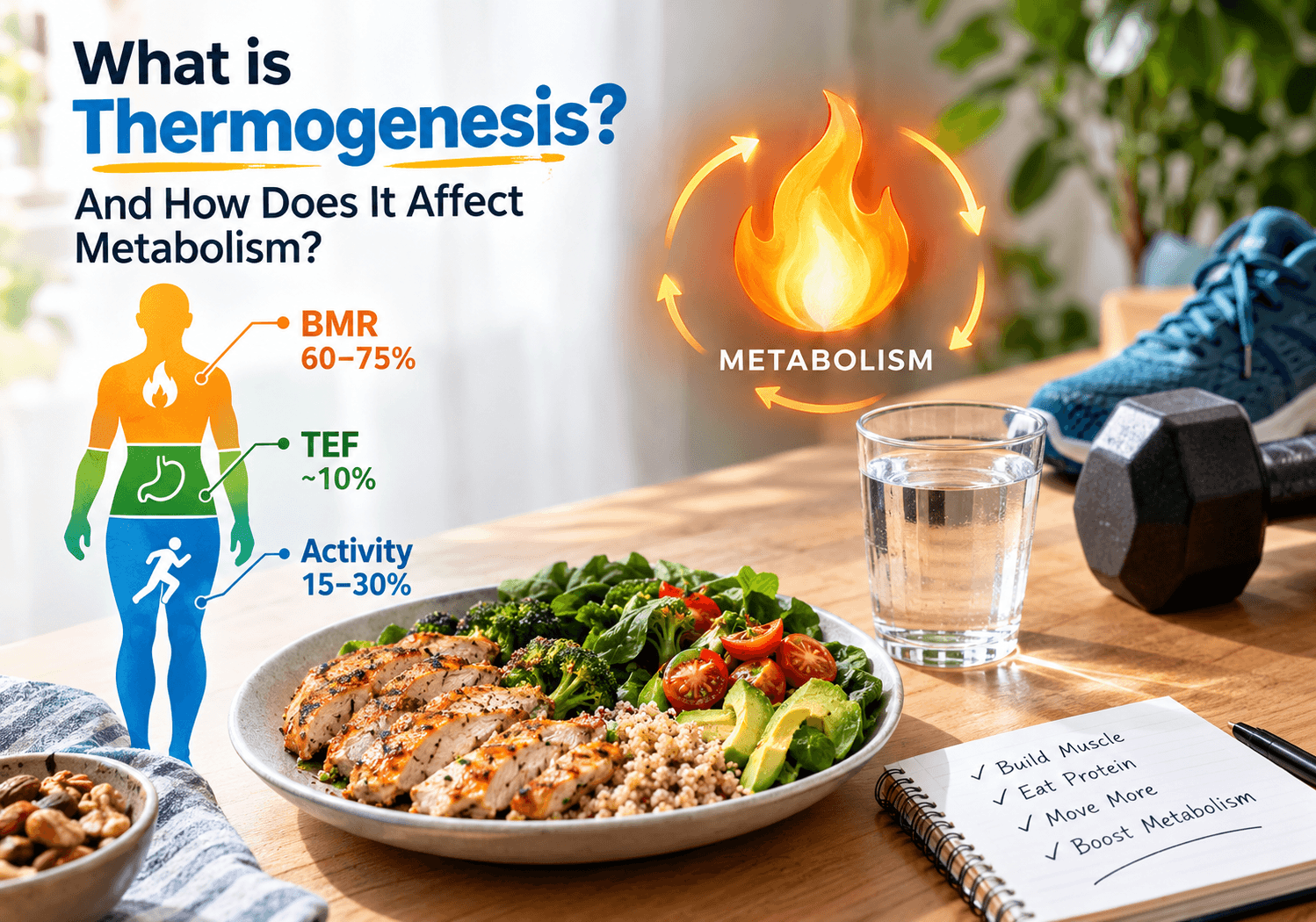
Your body is constantly burning calories, even when you are sitting completely still. This continuous energy expenditure is driven by a biological process that keeps you warm, digests your food, and fuels your movements. If you have ever wondered, what is thermogenesis and how does it affect metabolism, you are asking the right question. As a certified strength and conditioning coach, I help gym beginners, women over 40, and active adults optimize this exact process. We will break down the science of heat production in the body and translate it into practical, everyday actions. You will learn how to safely elevate your calorie burn without relying on extreme diets or unsafe shortcuts.
Quick Answer
Thermogenesis is the process of heat production in the body. It directly affects metabolism by increasing your total daily calorie expenditure. It occurs through three main pathways: your basal metabolic rate, the thermic effect of digesting food, and physical activity. Optimizing these pathways can support healthy weight management and sustained energy levels.
What is Thermogenesis and How Does It Affect Metabolism? The Science Explained
To understand what is thermogenesis and how does it affect metabolism, we must first define the terms. “Thermo” means heat, and “genesis” means creation. Therefore, thermogenesis is simply the creation of heat within your body. Your metabolism is the sum of all chemical processes that keep you alive, and heat production is a major byproduct of these processes.
When your body generates heat, it burns energy (calories). This means that increasing thermogenesis directly increases your metabolic rate. The human body is remarkably efficient at regulating its core temperature, which hovers around 98.6°F (37°C). Maintaining this temperature requires a constant supply of energy, especially in cooler environments or during physical stress.
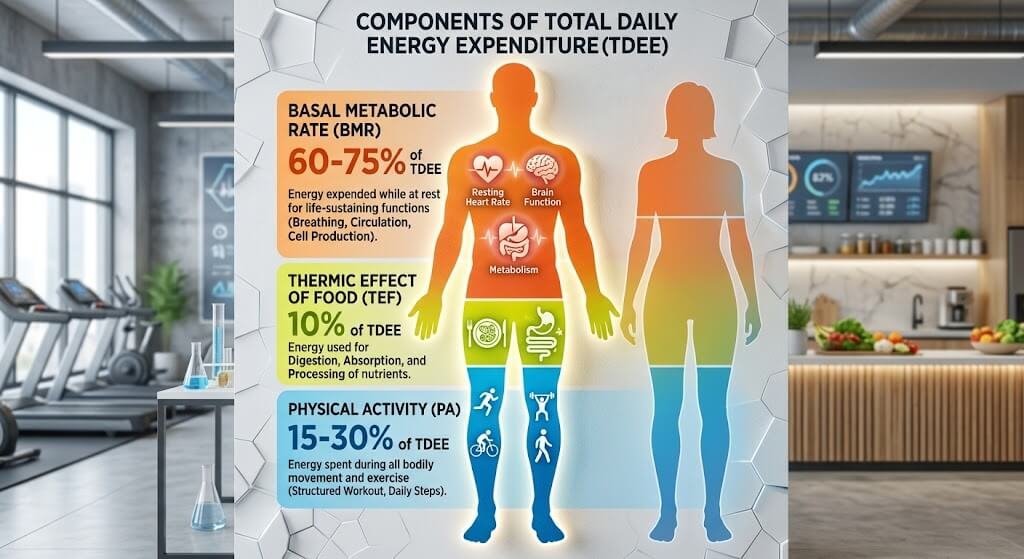
Researchers categorize human thermogenesis into three primary components. Understanding these components is the key to unlocking a more efficient metabolism.
1. Basal Metabolic Rate (BMR) and Resting Energy Expenditure
Your BMR accounts for the largest portion of your daily calorie burn, typically representing 60% to 75% of your total energy expenditure. This is the energy required to keep your heart beating, your lungs breathing, and your brain functioning while at rest. A significant portion of BMR-related thermogenesis occurs in your organs, particularly the liver and brain.
Skeletal muscle also plays a massive role here. Muscle tissue is metabolically active, meaning it requires more energy to maintain than fat tissue. According to the American College of Sports Medicine, increasing your lean muscle mass through resistance training is one of the most effective ways to elevate your resting metabolic rate over the long term.
2. Diet-Induced Thermogenesis (DIT) or Thermic Effect of Food (TEF)
Eating food requires energy. Your body must chew, swallow, digest, absorb, and store the nutrients you consume. This process generates heat and burns calories, accounting for about 10% of your daily energy expenditure.
Not all foods are created equal when it comes to TEF. Protein has the highest thermic effect, requiring your body to expend 20% to 30% of the protein’s calories just to digest it. In contrast, carbohydrates require 5% to 10%, and fats require only 0% to 3%. Research published in the American Journal of Clinical Nutrition confirms that higher protein diets significantly increase postprandial (after-meal) thermogenesis compared to high-fat or high-carbohydrate diets.
3. Activity-Induced Thermogenesis
This category is split into two parts: Exercise Activity Thermogenesis (EAT) and Non-Exercise Activity Thermogenesis (NEAT). EAT is the calories you burn during structured workouts, like a 30-minute run or a weightlifting session. NEAT includes all other movement: fidgeting, walking to your car, standing at your desk, or doing household chores.
NEAT is highly variable between individuals. A landmark study by the National Institutes of Health (NIH) demonstrated that NEAT can vary by up to 2,000 calories per day between two people of the same size. Increasing your daily step count is a highly effective, low-stress way to boost this form of thermogenesis.
The Role of Brown Adipose Tissue (Brown Fat)
When discussing what is thermogenesis and how does it affect metabolism, we cannot ignore brown fat. Most of the fat in an adult human body is white adipose tissue, which stores energy. Brown adipose tissue (BAT), however, is designed to burn energy to generate heat.
Brown fat gets its color from a high density of mitochondria, the powerhouses of the cell. These mitochondria contain a unique protein called uncoupling protein 1 (UCP1). UCP1 allows the mitochondria to generate heat instead of producing usable cellular energy (ATP). This process is known as mitochondrial uncoupling.
While babies have high amounts of brown fat to keep them warm, adults retain smaller amounts, primarily in the neck, collarbone, and upper spine. Research indicates that exposing the body to mild cold temperatures can activate brown fat, thereby increasing overall calorie expenditure. A study in the New England Journal of Medicine confirmed that cold exposure significantly increases glucose uptake and energy expenditure in human brown fat.
Thermogenesis Breakdown: Daily Calorie Expenditure
To visualize how these components work together, review the table below. This represents an average adult with a total daily energy expenditure of 2,000 calories.
| Thermogenesis Type | Percentage of Daily Burn | Estimated Calories (2,000 kcal diet) | How to Optimize Naturally |
| Basal Metabolic Rate (BMR) | 60% – 75% | 1,200 – 1,500 kcal | Build lean muscle mass via resistance training; ensure adequate sleep. |
| Thermic Effect of Food (TEF) | ~10% | ~200 kcal | Prioritize lean protein sources (chicken, fish, legumes) at every meal. |
| Exercise Activity (EAT) | 5% – 15% | 100 – 300 kcal | Engage in structured strength training and cardiovascular exercise 3-5 times weekly. |
| Non-Exercise Activity (NEAT) | 5% – 15% | 100 – 300 kcal | Take walking breaks, use a standing desk, and aim for 8,000+ steps daily. |
How to Apply It: A Coach’s Guide to What is Thermogenesis and How Does It Affect Metabolism
Knowing the science is only half the battle. As a coach, my job is to give you actionable steps. To maximize your metabolic rate, we must target all three pillars of thermogenesis: building muscle (BMR), eating strategically (TEF), and moving consistently (EAT and NEAT).
Below is a practical, 3-day-per-week foundational workout routine designed to stimulate muscle growth and elevate post-exercise oxygen consumption (EPOC), which keeps your metabolism elevated for hours after you finish training.
The Metabolic Boost Workout Routine
1. Goblet Squat
- Target: Quadriceps, glutes, core (Builds metabolically active muscle).
- How to: Hold a single dumbbell vertically against your chest with both hands cupping the top end. Stand with feet shoulder-width apart. Push your hips back and bend your knees to lower into a squat until your thighs are parallel to the floor. Drive through your heels to stand back up.
- Sets/Reps: 3 sets of 10–12 repetitions.
- Tempo: 3 seconds down, 1 second pause at the bottom, 1 second up.
- Weight Guidance: Start with a 15 lb (6.8 kg) dumbbell. Progress to 25 lb (11.3 kg) as form allows.
- Regression: Sit down onto a chair and stand back up without using your hands.
- Progression: Hold a 35 lb (15.8 kg) kettlebell in the goblet position and add a 1-second isometric hold at the bottom of the squat.
2. Kettlebell Swings
- Target: Posterior chain (glutes, hamstrings), cardiovascular system (Boosts EAT and EPOC).
- How to: Stand with feet slightly wider than shoulder-width, holding a kettlebell with both hands. Hinge at your hips, pushing your glutes back while keeping your back flat. Snap your hips forward forcefully, using the momentum to swing the kettlebell to chest height. Let it fall back between your legs and repeat.
- Sets/Reps: 3 sets of 15 repetitions. Rest 60 seconds between sets.
- Tempo: Explosive hip hinge, controlled descent.
- Weight Guidance: Women may start with 18 lb (8 kg); men may start with 26 lb (12 kg).
- Regression: Perform a “dead stop” swing, setting the kettlebell on the floor between every rep to master the hip hinge without momentum.
- Progression: Increase weight to 35 lb (16 kg) or perform single-arm kettlebell swings.
3. Farmer’s Carry
- Target: Core stability, grip strength, postural muscles (Elevates NEAT and functional strength).
- How to: Hold a heavy dumbbell or kettlebell in each hand at your sides. Stand tall, brace your core as if preparing for a punch, and walk forward with controlled, deliberate steps. Keep your shoulders pulled back and down.
- Sets/Reps: 3 sets of 40 yards (36 meters) or 45 seconds of continuous walking.
- Weight Guidance: 20 lb (9 kg) per hand for beginners; 40 lb (18 kg) per hand for advanced.
- Regression: Use lighter weights (10 lb / 4.5 kg) and focus purely on maintaining an upright posture.
- Progression: Use a “suitcase carry” (weight in only one hand) to force your obliques to work harder to prevent lateral leaning.
Coach’s Tip: To maximize the thermic effect of your workout, consume 20 to 30 grams of high-quality protein within two hours after your session. This not only aids muscle repair but also triggers a secondary spike in diet-induced thermogenesis.
Common Mistake: Relying solely on steady-state cardio (like jogging for an hour) while neglecting resistance training. While cardio burns calories during the activity, building lean muscle through strength training permanently elevates your basal metabolic rate, giving you a higher calorie burn 24/7.
Safety Notes and Who Should Be Careful
While boosting thermogenesis is generally safe and beneficial, certain populations must proceed with caution.
Women over 40 and seniors may experience natural shifts in hormone levels, such as decreased estrogen or testosterone, which can slow metabolic rate and reduce muscle mass. For these individuals, prioritizing resistance training and adequate protein intake is crucial, but joint health must be respected. Always warm up for 5 to 10 minutes before lifting weights.
Individuals with pre-existing cardiovascular conditions, high blood pressure, or thyroid disorders should consult a physician before starting any new exercise regimen or considering thermogenic supplements. Stimulant-based fat burners can cause heart palpitations, elevated blood pressure, and anxiety.
Furthermore, extreme calorie restriction can trigger “adaptive thermogenesis.” This is a survival mechanism where your body drastically lowers its metabolic rate to conserve energy, making long-term weight loss much harder. Research from the National Institutes of Health (NIH) warns that severe dieting can suppress thyroid hormone production and reduce resting energy expenditure for months or even years.
Related Tips for Optimizing Metabolic Health
Beyond exercise and protein, several lifestyle factors profoundly influence your metabolic rate and overall health.
1. Prioritize Sleep Quality
Poor sleep disrupts the hormones that regulate hunger (ghrelin) and fullness (leptin). It also impairs glucose tolerance. Chronic sleep deprivation is linked to a decrease in resting metabolic rate. Aim for 7 to 9 hours of quality sleep per night to keep your metabolic engine running smoothly.
2. Support Glucose Metabolism
Stable blood sugar levels prevent energy crashes and reduce fat storage. Certain nutrients, such as chromium picolinate, have been studied for their ability to support healthy glucose metabolism. You can read more about how chromium picolinate supports glucose metabolism to understand how micronutrients play a role in energy balance. Additionally, compounds like inositol are frequently researched for their potential to improve insulin sensitivity, which is vital for metabolic health, especially in women over 40.
3. Optimize Blood Flow and Circulation
Efficient metabolism requires efficient delivery of oxygen and nutrients to working muscles. Nitric oxide is a critical molecule that helps relax and widen blood vessels, improving circulation. Learning how L-citrulline helps produce nitric oxide can be a game-changer for your workout performance and recovery. Many athletes debate the merits of different amino acids, so understanding L-arginine vs L-citrulline for blood flow can help you make informed supplement choices. Ultimately, maintaining healthy blood vessel function is foundational to sustaining a high metabolic rate as you age. For those experiencing cold extremities or fatigue, understanding blood circulation issues can also highlight the importance of movement and hydration in daily metabolic function.
4. Stay Hydrated
Water is essential for every metabolic process. Some studies suggest that drinking cold water may induce a minor, temporary increase in thermogenesis, as the body expends energy to heat the water to core body temperature. While this effect is small, staying consistently hydrated ensures your metabolic machinery operates without friction.


Frequently Asked Questions
How can I increase thermogenesis naturally without supplements?
You can increase thermogenesis naturally by focusing on three pillars: building lean muscle through resistance training, eating a diet higher in lean protein to maximize the thermic effect of food, and increasing your daily non-exercise movement (NEAT) by walking more and taking the stairs.
Does drinking cold water really increase thermogenesis?
Yes, but the effect is minor. Research suggests that drinking about 17 ounces (500 ml) of cold water may temporarily increase resting energy expenditure by roughly 10% to 30% for about an hour. While helpful, it is not a substitute for proper nutrition and exercise.
What foods have the highest thermic effect?
Protein-rich foods have the highest thermic effect of food (TEF). Your body uses 20% to 30% of the calories in protein just to digest and process it. Lean meats, fish, eggs, Greek yogurt, and legumes are excellent choices to naturally boost post-meal calorie burn.
Is thermogenesis safe for women over 40?
Yes, natural thermogenesis through exercise and whole foods is highly beneficial for women over 40. It helps combat the age-related decline in muscle mass and metabolic rate. However, women should avoid high-stimulant “fat burner” supplements, which can cause anxiety and heart palpitations, and instead focus on strength training.
Can thermogenic supplements cause heart palpitations?
Yes, many over-the-counter thermogenic supplements contain high doses of caffeine, synephrine, or other stimulants. These can overstimulate the sympathetic nervous system, leading to heart palpitations, elevated blood pressure, and insomnia. Always consult a doctor before using them.
How does muscle mass affect thermogenesis?
Muscle tissue is metabolically active, meaning it requires more energy to maintain than fat tissue, even at rest. By increasing your lean muscle mass through resistance training, you permanently elevate your basal metabolic rate, meaning you burn more calories 24 hours a day.
Final Verdict: Taking Control of Your Metabolism
Understanding what is thermogenesis and how does it affect metabolism gives you a powerful advantage in your health and fitness journey. It shifts the focus away from restrictive, unsustainable dieting and toward building a resilient, high-functioning body. By prioritizing lean muscle growth, consuming adequate protein, and staying consistently active throughout the day, you can naturally elevate your daily calorie expenditure.
Remember that metabolism is not a static number; it is a dynamic system that responds directly to your lifestyle choices. Start with small, sustainable changes, like adding one strength training session per week or swapping a processed snack for a high-protein alternative. Your body will reward you with sustained energy, better body composition, and long-term health.