
If you are wondering, “Does glucomannan help with appetite control and weight loss?” you are asking the right question. As a strength and conditioning coach, I see clients constantly search for safe, effective tools to manage hunger while maintaining a calorie deficit. Glucomannan, a highly viscous water-soluble dietary fiber extracted from the konjac root, is one of the most researched natural appetite suppressants available. However, it is not a magic pill. It works best when paired with a structured nutrition plan, adequate hydration, and consistent resistance training. This guide breaks down the exact science, realistic results, and practical steps to use it safely and effectively.
Quick Answer
Yes, glucomannan can help with appetite control and modest weight loss when taken correctly. Research shows that taking 1 gram three times daily before meals, with plenty of water, promotes satiety and delays gastric emptying. However, it only works effectively as part of a calorie-restricted diet and active lifestyle, not as a standalone miracle cure.
What Is Glucomannan and How Does It Work?
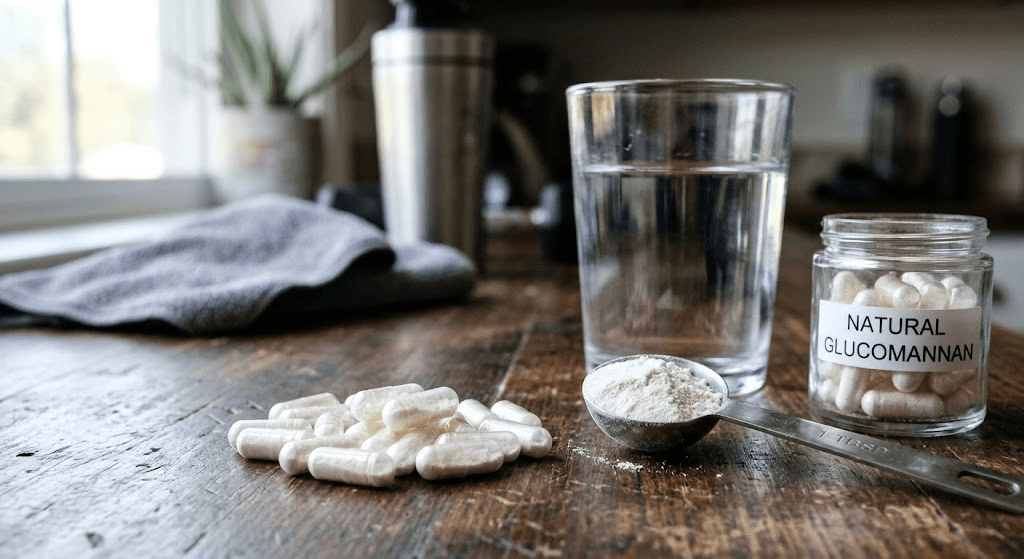
Glucomannan is a natural, water-soluble dietary fiber extracted from the roots of the elephant yam, also known as konjac. It has been used for centuries in traditional Asian cuisine and medicine, most notably in the form of shirataki noodles.
Unlike insoluble fiber, which simply adds bulk to stool, glucomannan is highly viscous. It can absorb up to 50 to 100 times its own weight in water. When you consume it with liquid, it rapidly expands and forms a thick, gel-like substance in your stomach.
This physical expansion triggers several physiological responses. First, the gel stretches the stomach wall. This activates mechanoreceptors that send signals via the vagus nerve to the brain, indicating fullness. Second, this viscous gel delays gastric emptying. Food stays in your stomach longer, which prolongs the feeling of satiety between meals.
Finally, because glucomannan is a fermentable fiber, it travels to the large intestine where gut bacteria break it down. This fermentation process produces short-chain fatty acids (SCFAs) like butyrate. Research suggests that SCFAs may stimulate the release of satiety hormones, including peptide YY (PYY) and glucagon-like peptide-1 (GLP-1), further reducing your drive to eat.
Does Glucomannan Help with Appetite Control and Weight Loss? The Clinical Evidence
To answer the question objectively, we must look at peer-reviewed clinical data. The scientific consensus is that glucomannan is effective, but the results are modest and highly dependent on user compliance.
A comprehensive 2014 meta-analysis published in the Journal of the American College of Nutrition reviewed multiple randomized controlled trials. The researchers concluded that glucomannan supplementation led to a modest but statistically significant weight loss of approximately 0.79 kg (1.74 lb) more than placebo over a 5-week period. While this may sound small, it demonstrates a measurable physiological effect when combined with dietary changes.
Furthermore, the European Food Safety Authority (EFSA) Panel on Dietetic Products, Nutrition and Allergies evaluated the evidence and approved a specific health claim. They stated that glucomannan contributes to weight loss in the context of an energy-restricted diet. The EFSA specifies that this benefit is achieved with a daily intake of 3 grams of glucomannan, divided into three 1-gram doses taken before main meals.
It is also worth noting that glucomannan may improve metabolic markers. By slowing the absorption of carbohydrates, it can help blunt post-meal blood sugar spikes. Maintaining stable blood sugar is a key factor in managing insulin sensitivity, which plays a major role in how your body stores fat and regulates hunger. Additionally, supporting stable glucose metabolism can prevent the mid-afternoon energy crashes that often lead to poor dietary choices.

Glucomannan vs. Other Common Fiber Supplements
Not all fiber supplements work the same way. Here is how glucomannan compares to other popular options for weight management.
| Fiber Type | Source | Water Absorption | Primary Benefit for Weight Loss | Satiety Rating |
| Glucomannan | Konjac root | Very High (50-100x) | Delays gastric emptying, high viscosity gel | Excellent |
| Psyllium Husk | Plantago ovata | High (10-20x) | Promotes regularity, moderate viscosity | Good |
| Methylcellulose | Synthetic | Moderate | Non-fermentable, reduces gas/bloating | Fair |
| Inulin | Chicory root | Low | Prebiotic, feeds gut bacteria | Fair to Good |
Glucomannan stands out due to its unparalleled water-absorbing capacity and viscosity. This makes it uniquely effective for physical stomach distension and appetite suppression compared to less viscous fibers.
How to Apply It: Practical Coaching Steps
Knowing the science is only half the battle. As a coach, I care about how you apply this information to get real results. If you decide to add glucomannan to your routine, follow these exact protocols to maximize benefits and minimize risks.
1. Optimal Dosage
The clinically studied and EFSA-approved dosage is 3 grams per day. Do not exceed this amount initially. Split this into three separate 1-gram doses. You can find glucomannan in capsule or powder form. Capsules are generally easier to dose accurately and avoid the clumping issues associated with powders.
2. Precise Timing
Timing is critical for appetite control. Take each 1-gram dose 15 to 30 minutes before your three main meals (breakfast, lunch, and dinner). This gives the fiber enough time to reach your stomach, absorb water, and expand before the food arrives.
3. Mandatory Hydration
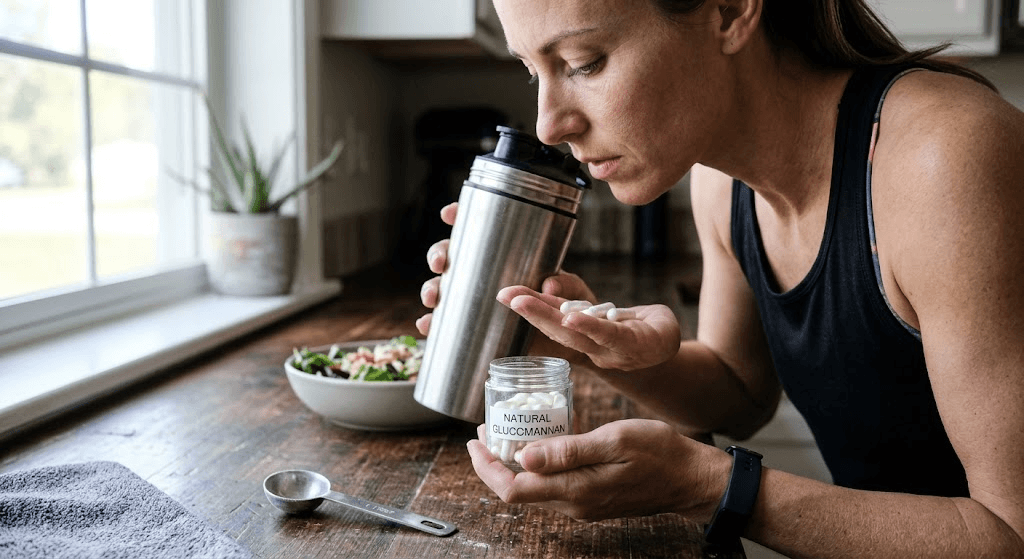
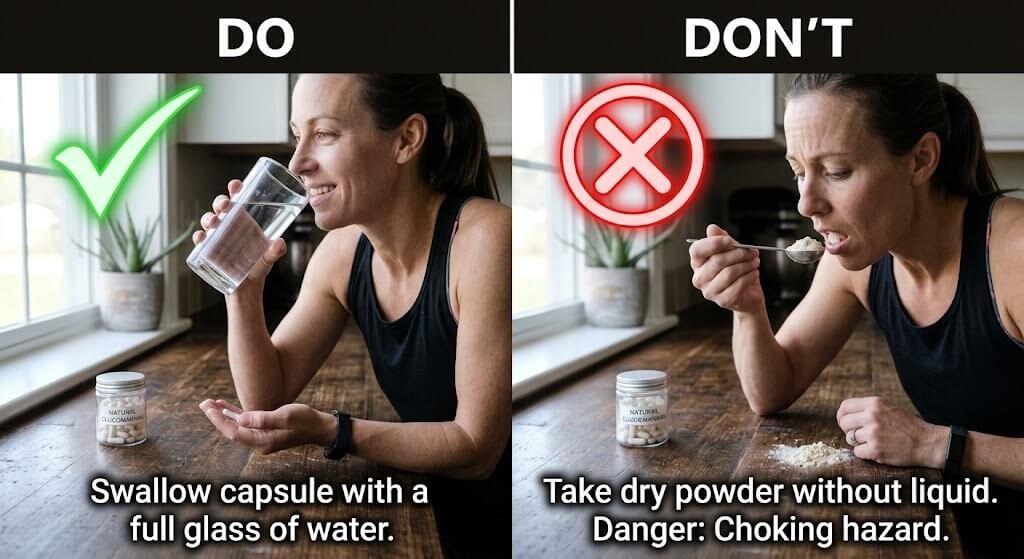
This is the most important rule. You must drink a large glass of water with every dose. Aim for 8 to 16 ounces (240 to 480 ml) of water per 1-gram serving. Without adequate fluid, the fiber cannot expand properly, rendering it ineffective and increasing the risk of gastrointestinal blockage.
Coach’s Tip:
Set a timer on your phone for 20 minutes after taking your glucomannan dose. Use that time to prepare your meal or do a light mobility routine. Do not lie down immediately after taking it, as this can increase the risk of the gel forming in the esophagus rather than the stomach.
4. Gradual Introduction
If your current diet is low in fiber, do not start at 3 grams per day. Begin with 1 gram once daily for the first three to four days. This allows your gut microbiome to adjust, minimizing initial side effects like bloating or excess gas. Gradually work your way up to the full 3-gram daily dose.
Sample Daily Routine and Workout Integration
A supplement is only as good as the lifestyle supporting it. Glucomannan will not cause weight loss if you are eating in a calorie surplus. Below is a sample framework showing how to integrate glucomannan into a structured, active day designed for fat loss and muscle preservation.
Morning (7:00 AM)
- Supplement: 1 gram glucomannan capsule.
- Hydration: 16 oz (480 ml) of water.
- Breakfast (7:30 AM): 3 whole eggs, 1 cup of spinach, and 1 slice of whole-grain toast. (High protein and fiber to compound the satiety effect).
Midday (12:00 PM)
- Supplement: 1 gram glucomannan capsule.
- Hydration: 16 oz (480 ml) of water.
- Lunch (12:30 PM): 5 oz (140 g) grilled chicken breast, 1 cup of quinoa, and a large mixed green salad with olive oil dressing.
Afternoon Workout (4:30 PM)
Resistance training is non-negotiable during a calorie deficit. It preserves lean muscle mass, which keeps your metabolic rate high.
- Warm-up: 5-minute brisk walk (approx. 0.5 miles or 0.8 km) followed by dynamic stretching.
- Goblet Squats: 3 sets of 10 reps (use a 25 lb / 11 kg dumbbell). Rest 90 seconds. Tempo: 3 seconds down, 1 second pause, 1 second up.
- Dumbbell Bench Press: 3 sets of 10 reps (use 30 lb / 13.5 kg dumbbells). Rest 90 seconds.
- Seated Cable Rows: 3 sets of 12 reps. Rest 60 seconds. Focus on squeezing the shoulder blades together.
- Plank: 3 sets, hold for 45 seconds. Rest 45 seconds.
Note: Supporting your workouts with proper hydration and nutrients is vital. Many athletes also explore ingredients that support nitric oxide production to enhance blood flow and endurance during these sessions.
Evening (6:30 PM)
- Supplement: 1 gram glucomannan capsule.
- Hydration: 16 oz (480 ml) of water.
- Dinner (7:00 PM): 5 oz (140 g) baked salmon, 1 cup of roasted broccoli, and half a sweet potato.
Common Mistakes to Avoid
Common Mistake:
Taking glucomannan powder by just dumping it into the mouth and chasing it with a sip of water. This is a severe choking hazard. The powder can expand in the throat or esophagus before reaching the stomach. Always mix powder thoroughly into a large volume of liquid, or stick to pre-measured capsules.
Another frequent error is expecting glucomannan to replace whole foods. While it is a fantastic tool, it does not provide the vitamins, minerals, and diverse phytonutrients found in vegetables, fruits, and legumes. Use it to supplement a high-fiber diet, not to replace it.
Safety Notes and Who Should Be Careful
While glucomannan is generally recognized as safe (GRAS) by the FDA, it is not suitable for everyone. Always prioritize safety over speed.
Choking and Esophageal Blockage Risk
As mentioned, the rapid expansion of glucomannan poses a risk if not consumed with enough water. Individuals with a history of swallowing difficulties or esophageal narrowing should avoid this supplement entirely.
Medication Interference
Because glucomannan delays gastric emptying and can bind to substances in the gut, it may reduce the absorption of oral medications. If you take prescription drugs, especially for diabetes or thyroid conditions, take your medication at least 1 hour before or 4 hours after your glucomannan dose. Consult your doctor to ensure safe timing.
Gastrointestinal Distress
Some users experience bloating, flatulence, loose stools, or mild abdominal discomfort, especially during the first week of use. This is a normal reaction to a sudden increase in fermentable fiber. If symptoms are severe or persist beyond two weeks, discontinue use.
Specific Populations
- Pregnancy and Breastfeeding: There is insufficient clinical data to guarantee safety. Avoid use unless explicitly approved by an obstetrician.
- Diabetes: Because glucomannan can lower blood sugar levels, individuals on insulin or glucose-lowering medications must monitor their levels closely to avoid hypoglycemia.
- Surgery: Stop taking glucomannan at least two weeks before any scheduled surgery due to its potential effects on blood sugar control and gastrointestinal function.
Related Tips for Sustainable Weight Loss
Glucomannan is a single tool in a much larger toolbox. For lasting body composition changes, focus on these foundational pillars:
- Prioritize Protein: Aim for 0.8 to 1 gram of protein per pound (1.8 to 2.2 grams per kg) of your target body weight daily. Protein is the most satiating macronutrient and is essential for repairing muscle tissue after workouts.
- Progressive Overload: Continuously challenge your muscles. Whether you are lifting weights or doing bodyweight exercises, gradually increase the resistance, reps, or improve your form over time.
- Optimize Cardiovascular Health: Fat loss is supported by a healthy circulatory system. Maintaining healthy blood vessel function through regular aerobic activity, like a daily 2-mile (3.2 km) brisk walk, enhances overall metabolic efficiency and recovery.
- Sleep and Stress Management: Poor sleep elevates cortisol and ghrelin (the hunger hormone), directly counteracting the appetite-suppressing effects of fiber. Aim for 7 to 9 hours of quality sleep per night.
Frequently Asked Questions (FAQ)
How much glucomannan should I take daily for weight loss?
The clinically supported dose is 3 grams per day, split into three 1-gram servings. Take each serving 15 to 30 minutes before your main meals with a large glass of water. Do not exceed this amount without consulting a healthcare provider.
Can I take glucomannan if I am on medication?
You must be cautious. Glucomannan can delay or reduce the absorption of oral medications. It is generally recommended to take prescription medications at least 1 hour before or 4 hours after consuming glucomannan. Always consult your doctor first.
Does glucomannan cause bloating or gas?
It can, especially when you first start taking it. Because it is a fermentable fiber, gut bacteria break it down, producing gas. Starting with a lower dose (1 gram once daily) and gradually increasing it over a week can help your digestive system adjust and minimize discomfort.
Is glucomannan better than psyllium husk for weight loss?
Glucomannan is generally considered superior for appetite suppression because it has a much higher water-absorbing capacity and forms a more viscous gel in the stomach. However, psyllium husk is excellent for overall digestive regularity and may cause less initial bloating for some individuals.
Can children take glucomannan supplements?
It is not recommended for young children due to the potential choking hazard and the lack of extensive safety data in pediatric populations. Children should get their dietary fiber from whole foods like fruits, vegetables, and whole grains.
How long does it take to see weight loss results from glucomannan?
Clinical studies typically measure results over 5 to 12 weeks. You may notice improved appetite control within the first few days, but measurable weight loss (usually modest, around 1 to 3 pounds over a month) requires consistent use alongside a calorie deficit.
Conclusion
So, does glucomannan help with appetite control and weight loss? The evidence says yes, but with important caveats. It is a highly effective, natural tool for promoting satiety and delaying gastric emptying, making it easier to stick to a calorie-restricted diet. However, it is not a magic solution. Real, sustainable weight loss requires a foundation of whole foods, adequate protein, consistent resistance training, and proper hydration.