
Do appetite suppressant supplements actually work? The short answer is yes, but with major caveats. As a certified strength and conditioning coach, I see clients daily who are frustrated by aggressive marketing promises. The truth is that while certain ingredients can modestly reduce hunger and support a calorie deficit, they are not magic pills.
Effective hunger management relies on a foundation of adequate protein intake, structured resistance training, and consistent sleep. Supplements merely act as a secondary tool to smooth out the rough edges of a well-designed nutrition plan. Relying solely on pills without addressing your foundational lifestyle habits rarely yields sustainable, long-term results. This guide breaks down the exact science, the most effective ingredients, and how to use them safely to support your body composition goals.
Quick Answer
Yes, some appetite suppressant supplements can modestly reduce hunger and support a calorie deficit, but they are not magic solutions. Ingredients like glucomannan, caffeine, and specific dietary fibers show the most clinical promise. However, they work best when paired with adequate protein intake, resistance training, and consistent sleep. Relying solely on pills without foundational lifestyle changes rarely yields long-term results.
H2: Do Appetite Suppressant Supplements Actually Work? The Biological Reality
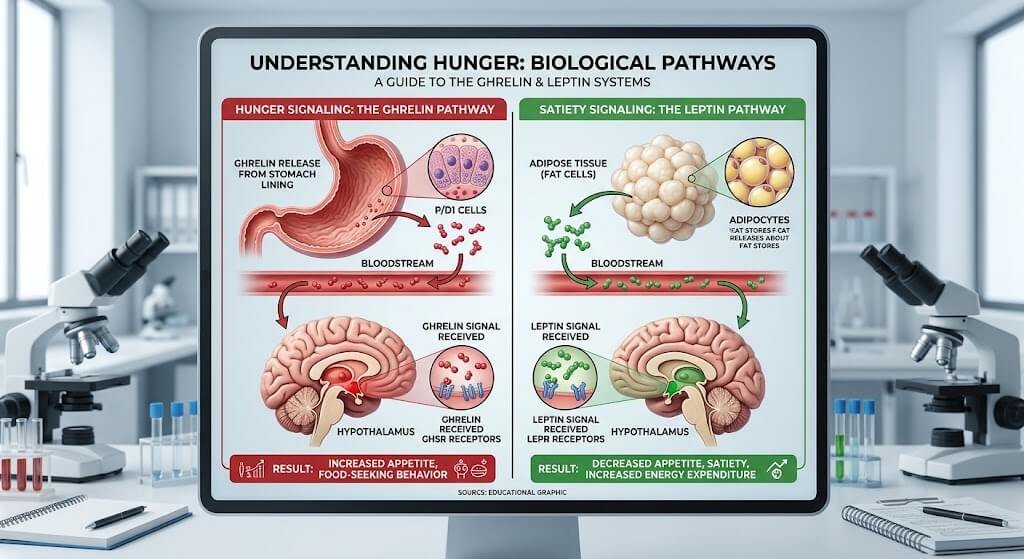
To understand if these supplements are effective, we must first understand how hunger works in the human body. Hunger is not a lack of willpower; it is a complex biological drive regulated by hormones, neural signals, and mechanical stretching in the stomach.
The two primary hormones governing this process are ghrelin and leptin. Ghrelin is often called the “hunger hormone.” It is produced mainly in the stomach and signals your brain that it is time to eat. Leptin, produced by fat cells, signals satiety and tells your brain you have had enough to eat. When you lose weight, leptin levels drop and ghrelin levels rise, which is why dieting often feels like an uphill battle against your own biology.
Appetite suppressant supplements attempt to intervene in this system through three primary mechanisms:
- Gastric Expansion: Soluble fibers absorb water and expand in the stomach, mechanically triggering stretch receptors that signal fullness to the brain.
- Hormonal Modulation: Certain compounds may temporarily blunt ghrelin secretion or enhance the release of satiety hormones like peptide YY (PYY) and glucagon-like peptide-1 (GLP-1).
- Thermogenesis and Central Nervous System Stimulation: Stimulants like caffeine can temporarily increase resting metabolic rate and blunt the perception of hunger through central nervous system activation.
While these mechanisms are scientifically valid, the magnitude of their effect in real-world scenarios is often modest. A supplement might reduce your daily caloric intake by 100 to 300 calories, which is helpful but insufficient on its own to drive massive weight loss without dietary discipline.
H2: Top Ingredients Analyzed: What the Research Says
Not all hunger control pills are created equal. The supplement industry is vast, but only a few ingredients possess robust, peer-reviewed clinical data supporting their efficacy. Let us break down the most common options.
1. Glucomannan (Konjac Root)
Glucomannan is a natural, water-soluble dietary fiber extracted from the roots of the konjac plant. It is one of the most viscous dietary fibers known.
- Typical Dose: 1 gram taken three times daily, 30 minutes before meals, with plenty of water.
- Verdict: Highly effective for mechanical satiety, but requires strict hydration protocols.
2. Caffeine and Green Tea Extract (EGCG)
Caffeine is a well-documented central nervous system stimulant. Green tea extract contains caffeine and epigallocatechin gallate (EGCG), a powerful antioxidant.
- The Science: Research in the American Journal of Clinical Nutrition demonstrates that caffeine can modestly increase energy expenditure and promote lipolysis (fat breakdown). Furthermore, studies suggest that the combination of caffeine and EGCG may have a synergistic effect on satiety and thermogenesis, though the appetite-suppressing effect of caffeine alone tends to diminish as the body builds tolerance.
- Typical Dose: 100–200 mg of caffeine, or 250–500 mg of green tea extract standardized to 50% EGCG.
- Verdict: Effective for short-term metabolic boosting and mild appetite blunting, but tolerance builds quickly.
3. Protein Powders (Whey or Casein)
While often categorized as a macronutrient rather than a “supplement,” protein powders are among the most effective appetite suppressants available.
- The Science: Protein is the most satiating macronutrient. A study in the Journal of the American College of Nutrition showed that higher protein diets significantly reduce hunger and appetite during weight loss. Whey protein, in particular, has been shown to acutely elevate satiety hormones like GLP-1 and PYY more effectively than carbohydrates or fats.
- Typical Dose: 20–30 grams per serving, ideally consumed as a snack between meals or post-workout.
- Verdict: Exceptionally effective and provides the added benefit of preserving lean muscle mass during a calorie deficit.
4. Psyllium Husk
Similar to glucomannan, psyllium is a soluble fiber that forms a gel-like substance when mixed with water.
- The Science: Research indicates that psyllium husk supplementation before meals can significantly reduce subjective hunger ratings and subsequent caloric intake. It also supports healthy blood sugar regulation, preventing the sharp spikes and crashes that often trigger cravings.
- Typical Dose: 5–10 grams mixed in 8–16 ounces (237–473 ml) of water, 30 minutes before a meal.
- Verdict: A reliable, gentle, and highly effective fiber-based satiety tool.
H2: Evidence Comparison Table
| Ingredient | Primary Mechanism | Evidence Level | Typical Effective Dose | Best For |
| Glucomannan | Gastric expansion, delayed emptying | High (Multiple RCTs) | 1g, 3x daily before meals | Mechanical fullness, reducing meal size |
| Caffeine / EGCG | CNS stimulation, mild thermogenesis | Moderate | 100-200mg caffeine / 250mg EGCG | Short-term energy and mild hunger blunting |
| Whey Protein | Hormonal satiety (GLP-1, PYY) | Very High | 20-30g per serving | Preserving muscle, long-lasting fullness |
| Psyllium Husk | Soluble fiber gel formation, blood sugar stability | High | 5-10g before meals | Gentle fiber intake, craving reduction |
H2: How to Apply It: Practical Steps for Real Results
Knowing the science is only half the battle. As a coach, my job is to translate this data into actionable steps for your daily routine. Supplements should never replace whole foods, but they can be strategically deployed to make your calorie deficit more comfortable.
Step 1: Prioritize Protein First
Before buying any pill or powder, ensure you are consuming enough protein. A general guideline for individuals in a calorie deficit is 0.8 to 1 gram of protein per pound of body weight (1.8 to 2.2 grams per kg). For a 150 lb (68 kg) individual, this means aiming for 120 to 150 grams of protein daily. If you struggle to hit this target through food alone, a whey or plant-based protein shake is your best “appetite suppressant.”
Step 2: Time Your Fiber Strategically
If you choose to use glucomannan or psyllium husk, timing is critical. Take the supplement with a large glass of water—at least 16 ounces (473 ml)—exactly 30 minutes before your largest meal of the day. This gives the fiber time to hydrate and expand in your stomach before you begin eating.
Step 3: Manage Stimulant Intake
If you use caffeine or green tea extract, do not take it on an empty stomach if you are prone to anxiety or gastrointestinal distress. Limit your intake to the morning or early afternoon to avoid disrupting your sleep. Poor sleep dramatically increases ghrelin and decreases leptin, completely undoing any minor benefits the supplement provided.
Sample Daily Routine for Hunger Management
- 7:00 AM: Wake up, drink 16 oz (473 ml) of water.
- 7:30 AM: Breakfast containing at least 30g of protein (e.g., eggs and Greek yogurt).
- 10:30 AM: Optional: 100-200mg caffeine or green tea extract if energy dips.
- 12:30 PM: 30 minutes before lunch, take 5g of psyllium husk with 16 oz (473 ml) of water.
- 1:00 PM: Lunch focused on lean protein, vegetables, and complex carbohydrates.
- 6:30 PM: 30 minutes before dinner, take 1g of glucomannan with 16 oz (473 ml) of water.
- 7:00 PM: Dinner.
- 10:00 PM: Sleep in a cool, dark room to optimize hormonal recovery.
COACH’S TIP: Always introduce one new supplement at a time. Wait at least 5 to 7 days before adding another. This allows you to accurately gauge how your body reacts and prevents overlapping side effects like bloating or jitteriness.
COMMON MISTAKE: Taking fiber-based suppressants with inadequate water. Glucomannan and psyllium absorb massive amounts of liquid. If you take them with only a sip of water, they can expand in your esophagus, causing choking hazards or severe gastrointestinal blockages. Always use a full 16-ounce (473 ml) glass of water.
Regression and Progression for Habit Building
- Regression (Easier): If you are new to fitness or have a sensitive stomach, skip the concentrated supplements entirely. Focus on adding one extra serving of whole-food fiber (like an apple or a cup of broccoli) and one extra serving of protein to your daily diet. Master this for 4 weeks before introducing powders or pills.
- Progression (Harder): Once you have mastered basic supplementation, pair your fiber intake with structured resistance training. Lifting weights 3 to 4 times a week improves insulin sensitivity and builds lean muscle, which naturally regulates appetite hormones over the long term. For those looking to optimize metabolic health further, understanding how compounds like inositol supports insulin sensitivity can provide additional context for managing blood sugar and cravings.
H2: Safety Notes and Who Should Be Careful
While many natural appetite suppressants are generally recognized as safe (GRAS) by the FDA, they are not without risks. Supplements are not regulated as strictly as pharmaceutical drugs, meaning quality and purity can vary between brands.
Potential Side Effects:
- Gastrointestinal Distress: Fiber supplements frequently cause bloating, gas, and constipation, especially if introduced too quickly or without enough water.
- Cardiovascular Stress: Stimulant-based suppressants (caffeine, synephrine, bitter orange) can elevate heart rate and blood pressure.
- Nutrient Malabsorption: Taking large doses of fiber or certain compounds with meals can interfere with the absorption of fat-soluble vitamins (A, D, E, K) and certain medications.
Who Should Avoid Appetite Suppressants:
- Individuals with Cardiovascular Conditions: If you have high blood pressure, arrhythmias, or a history of heart disease, avoid stimulant-based hunger control pills.
- Pregnant or Breastfeeding Women: The safety of most concentrated herbal extracts has not been established for fetal or infant development.
- Individuals on Prescription Medications: Fiber can alter the absorption of medications, and stimulants can interact dangerously with antidepressants or ADHD medications.
- Those with a History of Eating Disorders: Using pills to control hunger can reinforce unhealthy relationships with food and bodily cues.
H2: Related Lifestyle Tips for Sustainable Hunger Control
Supplements are merely the tip of the iceberg. True, sustainable appetite management requires a holistic approach to your physiology. Here are evidence-based lifestyle factors that dramatically influence hunger.
1. Optimize Your Sleep
Sleep deprivation is a direct driver of weight gain. A landmark study from the University of Chicago demonstrated that restricting sleep to 4 hours per night increased ghrelin levels by 28% and decreased leptin levels by 18%, leading to intense cravings for high-carbohydrate, calorie-dense foods. Aim for 7 to 9 hours of quality sleep per night.
2. Hydration is Non-Negotiable
The brain often misinterprets thirst signals as hunger signals. Before reaching for a snack or a supplement, drink a large glass of water and wait 15 minutes. Proper hydration also ensures that any fiber supplements you take can function correctly without causing constipation.
3. Manage Blood Sugar Spikes
Dietary choices that cause rapid spikes and subsequent crashes in blood glucose will trigger intense hunger shortly after eating. Prioritize meals that combine protein, healthy fats, and complex carbohydrates. For individuals specifically looking to manage metabolic responses, exploring whether chromium picolinate supports glucose metabolism may offer additional dietary strategies for stabilizing energy levels and reducing sugar cravings.
4. Support Circulatory and Metabolic Health
Overall metabolic efficiency relies on robust circulatory systems. Ensuring healthy blood vessel function is vital for delivering nutrients to working muscles and maintaining a healthy resting metabolic rate during weight loss. Some individuals explore amino acids like citrulline, as research shows how L-citrulline helps produce nitric oxide, which may support overall vascular health and exercise performance, indirectly aiding in body composition goals. When evaluating vascular support, it is also useful to understand the differences in L-arginine vs L-citrulline for blood flow to make informed decisions about your supplement stack.
5. Incorporate Consistent Movement
You do not need to run marathons to manage hunger. In fact, excessive steady-state cardio can sometimes increase appetite compensation. Instead, focus on daily non-exercise activity thermogenesis (NEAT), such as walking 2 miles (3.2 km) per day, and engage in resistance training 3 times a week. Building muscle improves your body’s metabolic flexibility. Furthermore, maintaining good form during these exercises protects your joints, understanding human body types, functions, and anatomy is crucial for long-term, pain-free training consistency.
H2: Frequently Asked Questions (FAQ)
1. Do appetite suppressants work long term? Most appetite suppressants are only effective short-term. The body quickly builds tolerance to stimulants like caffeine, and the mechanical fullness from fiber does not address the psychological habits of eating. Long-term success requires permanent lifestyle changes, not perpetual pill use.
2. What is the most effective natural appetite suppressant? Based on clinical evidence, glucomannan and high-quality protein powders are the most effective natural options. Glucomannan provides physical fullness, while protein directly influences satiety hormones like GLP-1 and PYY, keeping you fuller for longer periods.
3. Are hunger control pills safe for women over 40? They can be, but caution is required. Women over 40 often experience hormonal shifts that affect metabolism and bone density. Stimulant-based pills can exacerbate anxiety or sleep issues. Fiber and protein supplements are generally safer, but a doctor should always be consulted first.
4. Do appetite suppressants have dangerous side effects? Some can. Stimulant-based supplements may cause elevated heart rate, high blood pressure, anxiety, and insomnia. Fiber-based supplements can cause severe bloating, gas, or intestinal blockage if not taken with adequate water. Always follow dosage instructions carefully.
5. How do appetite suppressants affect metabolism? Stimulant-based suppressants like caffeine and green tea extract can temporarily increase resting metabolic rate through thermogenesis. However, this effect is modest (often burning only 50–100 extra calories per day) and diminishes as your body adapts to the stimulant.
6. Can supplements replace a calorie deficit? No. Supplements cannot override the laws of thermodynamics. If you consume more calories than you burn, you will not lose weight, regardless of how many appetite suppressants you take. Supplements are tools to help you maintain a deficit, not replacements for it.
H2: Conclusion
So, do appetite suppressant supplements actually work? Yes, but only as a supportive tool within a broader, well-structured health plan. Ingredients like glucomannan, psyllium husk, and protein powders have legitimate, science-backed mechanisms for promoting satiety and helping you maintain a calorie deficit. However, they are not magic solutions.
The foundation of sustainable weight management will always be adequate protein intake, consistent resistance training, quality sleep, and stress management. If you choose to use supplements, do so strategically, prioritize high-quality brands with third-party testing, and always listen to your body’s natural signals.