Introduction
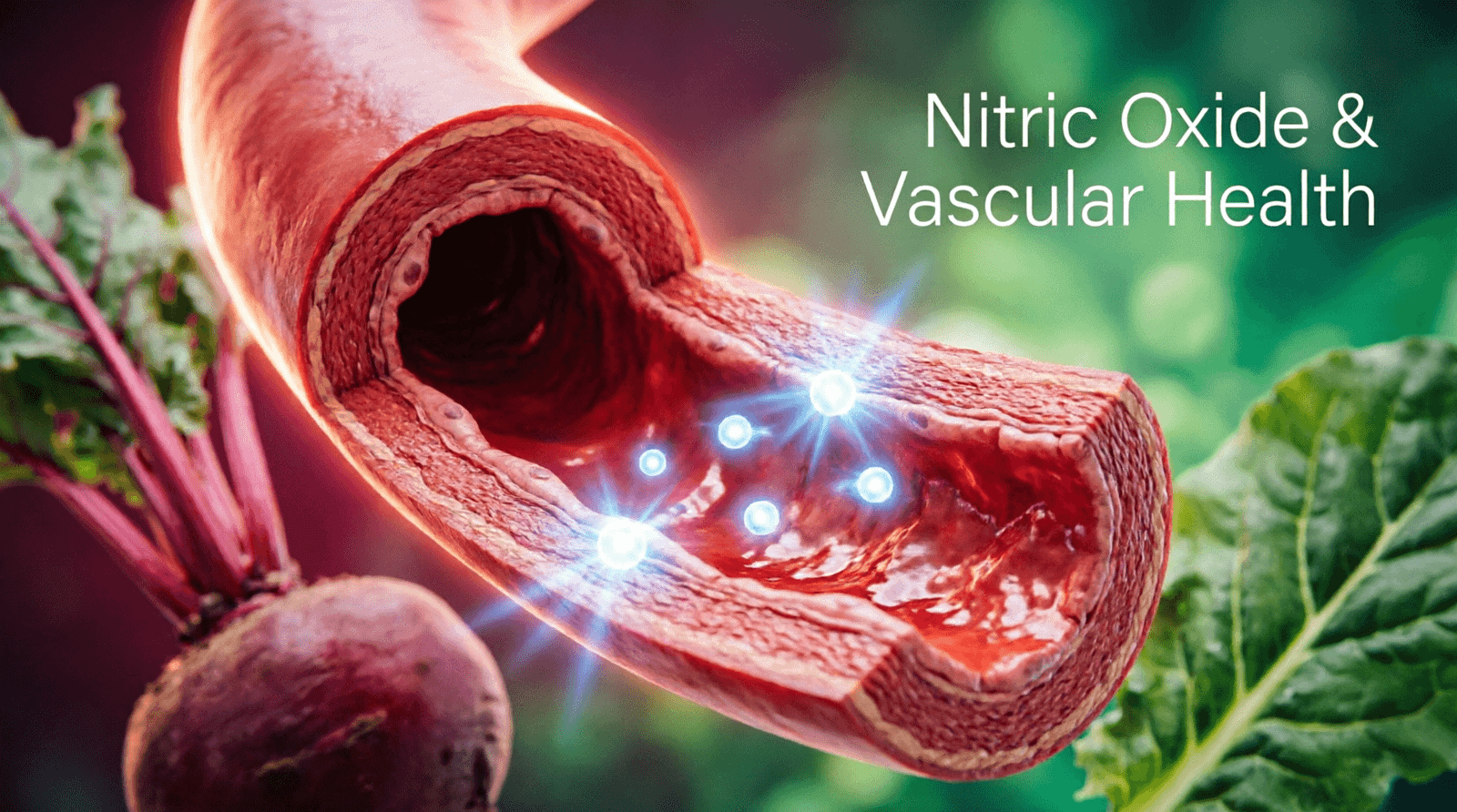
Does nitric oxide support healthy blood vessel function? Yes. Nitric oxide (NO) is an essential signaling molecule that helps regulate blood vessel relaxation and normal vascular function. Produced naturally by the endothelium—the delicate single layer of cells lining the interior of all blood vessels—nitric oxide acts as an internal communicator, telling vascular smooth muscle cells when to relax. This signaling mechanism controls blood vessel diameter, reduces vascular resistance, and ensures smooth blood flow throughout the body.
Maintaining robust nitric oxide availability is vital for cardiovascular health. When nitric oxide signaling becomes impaired, blood vessels can become stiff and less responsive, a condition known as endothelial dysfunction. This comprehensive guide explores what nitric oxide is, how it works at a cellular level, its primary benefits for vascular health, the factors that influence its bioavailability, natural ways to support healthy production, and what scientific research reveals about supplements and safety.
1. What Is Nitric Oxide and How Does It Work in the Body?
What Is Nitric Oxide (NO)?
Nitric oxide is a simple, highly reactive gas molecule consisting of one nitrogen atom and one oxygen atom. Despite its fleeting lifespan of only a few seconds, it functions as a potent biological messenger that crosses cell membranes easily to regulate multiple physiological processes, most notably within the cardiovascular and nervous systems.
How Does the Body Naturally Produce Nitric Oxide?
The human body synthesizes nitric oxide through two primary biochemical pathways:
- The L-Arginine–eNOS Pathway: The amino acid L-arginine is converted into nitric oxide and L-citrulline by family enzymes in the presence of oxygen and cellular cofactors.
- The Nitrate–Nitrite–Nitric Oxide Pathway: Dietary inorganic nitrates found in vegetables are absorbed, concentrated in saliva, reduced to nitrites by oral bacteria, and subsequently converted into active nitric oxide in bodily tissues.
What Is the Role of Nitric Oxide Synthase (NOS)?
Nitric oxide synthases are a family of enzymes responsible for synthesizing nitric oxide from L-arginine. Among them, endothelial nitric oxide synthase (eNOS) is the specific isoform expressed in the vascular endothelium that generates the nitric oxide required to maintain resting vascular tone and healthy blood vessel dilation.
How Does Nitric Oxide Act as a Cellular Signaling Molecule?
As a signaling molecule, nitric oxide does not rely on traditional hormone-receptor pathways. Instead, it diffuses locally out of endothelial cells and directly penetrates adjacent smooth muscle cells, binding to intracellular target enzymes to initiate rapid cellular responses.
Why Is Nitric Oxide Important for Vascular Health?
Nitric oxide is the primary regulator of vascular homeostasis. It keeps blood vessels flexible, prevents white blood cells from sticking inappropriately to vessel walls, inhibits abnormal platelet clumping, and protects arterial tissue against oxidative wear and tear.
2. What Is the Endothelium, and Why Does It Matter for Healthy Blood Vessels?
What Is the Endothelium?
The endothelium is a continuous, specialized layer of endothelial cells that forms the inner lining of the entire cardiovascular system—including the heart, arteries, capillaries, and veins. Covering thousands of square feet in an adult human, it acts as an active endocrine and paracrine organ.
How Endothelial Cells Regulate Blood Vessel Function
Beyond serving as a simple physical barrier between circulating blood and vessel walls, endothelial cells actively sense mechanical forces (like blood flow shear stress) and chemical signals, releasing regulatory substances that control blood fluidity and vessel caliber.
The Relationship Between Endothelial Health and Circulation
Healthy endothelial cells produce a steady, basal level of nitric oxide. This continuous release ensures that blood vessels remain compliant and responsive, allowing smooth, unobstructed circulation to reach every tissue and organ system.
How the Endothelium Controls Vessel Dilation and Constriction
The endothelium constantly balances relaxing factors (predominantly nitric oxide and prostacyclin) with contracting factors (such as endothelin-1). This dynamic equilibrium dictates whether a blood vessel constricts to redirect blood or dilates to increase local perfusion.
What Is Endothelial Dysfunction?
Endothelial dysfunction occurs when endothelial cells lose their ability to produce adequate amounts of nitric oxide. Characterized by a shift toward vasoconstriction, inflammation, and pro-thrombotic states, endothelial dysfunction is widely recognized as an early precursor to clinical cardiovascular disease.
3. How Does Nitric Oxide Support Healthy Blood Vessel Function?
How Nitric Oxide Helps Blood Vessels Relax
When blood flow increases or specific chemical signals occur, eNOS activates to produce nitric oxide within the endothelial lining. This gas molecules diffuses swiftly out of the endothelial cell and into the underlying smooth muscle layer.
The Role of Nitric Oxide in Vasodilation
Vasodilation is the widening of blood vessels resulting from the relaxation of vascular smooth muscle cells within the vessel walls. Nitric oxide serves as the principal endogenous vasodilator driving this process.
How Nitric Oxide Activates the cGMP Signaling Pathway
Upon entering a vascular smooth muscle cell, nitric oxide binds to and activates soluble guanylyl cyclase (sGC). This enzyme converts GTP into cyclic guanosine monophosphate (cGMP), a secondary messenger that triggers a reduction in intracellular calcium concentrations.
How Vascular Smooth Muscle Relaxation Improves Blood Flow
With lower intracellular calcium levels, the contractile machinery of the smooth muscle cell relaxes. The blood vessel widens, lowering vascular resistance and allowing blood to flow more freely and efficiently.
How Nitric Oxide Helps Regulate Vascular Tone
Vascular tone refers to the degree of constriction experienced by a blood vessel relative to its maximally dilated state. By fine-tuning cGMP production, nitric oxide maintains optimal baseline tone across the entire arterial tree.
Nitric Oxide and the Maintenance of Normal Circulation
Through this multi-step cascade, nitric oxide safeguards normal cardiovascular dynamics, preventing chronic hypertension and supporting efficient nutrient and oxygen delivery.
[ Endothelial Cells ] ──(Produce NO via eNOS)──> [ Nitric Oxide (NO) ]
│
▼
[ Vascular Smooth Muscle Relaxes ] <──(cGMP Signaling)── [ Soluble Guanylyl Cyclase ]
│
▼
[ Promotes Vasodilation & Normal Blood Flow ]
4. What Are the Benefits of Nitric Oxide for Blood Vessel Health?
Supports Normal Blood Flow and Circulation
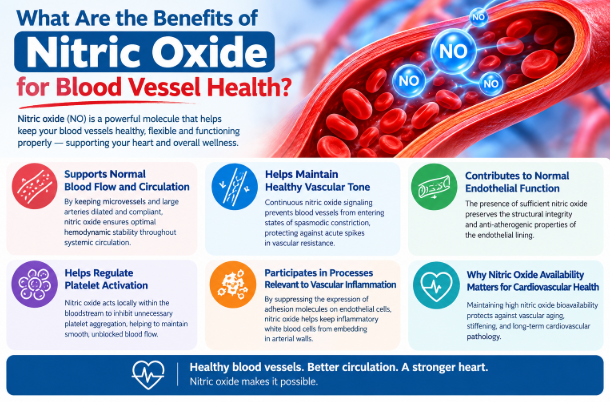
By keeping microvessels and large arteries dilated and compliant, nitric oxide ensures optimal hemodynamic stability throughout systemic circulation.
Helps Maintain Healthy Vascular Tone
Continuous nitric oxide signaling prevents blood vessels from entering states of spasmodic constriction, protecting against acute spikes in vascular resistance.
Contributes to Normal Endothelial Function
The presence of sufficient nitric oxide preserves the structural integrity and anti-atherogenic properties of the endothelial lining.
Helps Regulate Platelet Activation
Nitric oxide acts locally within the bloodstream to inhibit unnecessary platelet aggregation, helping to maintain smooth, unblocked blood flow.
Participates in Processes Relevant to Vascular Inflammation
By suppressing the expression of adhesion molecules on endothelial cells, nitric oxide helps keep inflammatory white blood cells from embedding in arterial walls.
Why Nitric Oxide Availability Matters for Cardiovascular Health
Maintaining high nitric oxide bioavailability protects against vascular aging, stiffening, and long-term cardiovascular pathology.
5. Nitric Oxide and Blood Circulation: How Are They Connected?
How Blood Vessel Diameter Influences Blood Flow According to Poiseuille’s Law
According to hydrodynamic principles, blood flow increases exponentially as a blood vessel’s radius increases. Even minor, nitric oxide-mediated vasodilation produces substantial increases in local blood delivery.
Nitric Oxide and Blood Flow to Organs and Tissues
Vital organs—including the brain, kidneys, heart, and skeletal muscles—rely heavily on precise, locally regulated nitric oxide production to match blood supply with fluctuating metabolic demands.
The Role of Nitric Oxide in Microcirculation
In tiny capillaries and arterioles, nitric oxide optimizes microvascular perfusion, ensuring red blood cells successfully deliver oxygen to single-cell layers.
Nitric Oxide and Oxygen Delivery During Physical Activity
During exercise, increased muscle contractions generate mechanical shear stress, stimulating a surge of nitric oxide that dilates resistance vessels to feed working muscle fibers.
How Healthy Blood Vessels Respond to Changing Demands
Healthy, nitric oxide-receptive blood vessels adapt fluidly to postural changes, temperature shifts, and stress, protecting tissues from ischemia or congestion.
6. What Happens When Nitric Oxide Availability Decreases?
Understanding Reduced Nitric Oxide Bioavailability
Reduced nitric oxide bioavailability means that even if nitric oxide is produced, it is rapidly degraded or synthesized in insufficient quantities to properly signal vascular smooth muscle.
How Oxidative Stress Can Affect Nitric Oxide
Excess reactive oxygen species (free radicals) react directly with nitric oxide to form peroxynitrite, a damaging molecule that destroys NO while further impairing eNOS enzyme function.
The Connection Between Nitric Oxide and Endothelial Dysfunction
Oxidative stress-driven destruction of nitric oxide is a primary driver of endothelial dysfunction, creating a self-reinforcing cycle of vascular injury.
How Aging May Influence Vascular Function
Natural aging is accompanied by declining antioxidant defenses and cumulative oxidative stress, which gradually reduce baseline endothelial nitric oxide production.
Cardiovascular Risk Factors Associated With Impaired Endothelial Function
Conditions such as chronic hypertension, diabetes mellitus, dyslipidemia, obesity, and cigarette smoking are strongly linked to diminished nitric oxide availability and structural vascular impairment.
Why Reduced Nitric Oxide Availability Does Not Diagnose a Specific Disease
While low nitric oxide bioavailability contributes to vascular pathology, it is a physiological state rather than a standalone clinical diagnosis. Nonspecific symptoms cannot confirm an isolated nitric oxide deficiency.
7. Which Factors Can Affect Nitric Oxide and Blood Vessel Function?
Physical Activity and Vascular Health
Regular aerobic and resistance exercise repeatedly exposes vessel walls to shear stress, upregulating eNOS expression and boosting natural nitric oxide production capacity.
Diet Quality and Dietary Nitrate Intake
Eating a diet rich in vegetables provides exogenous nitrates that feed the nitrate-nitrite-NO pathway, supporting endothelial health independently of eNOS.
Smoking, Tobacco Exposure, and Vascular Function
Tobacco smoke introduces massive quantities of free radicals that rapidly quench nitric oxide, paralyze endothelial repair mechanisms, and induce severe vasoconstriction.
High Blood Pressure and Endothelial Health
Chronic hypertension inflicts physical trauma on delicate endothelial cells, degrading their capacity to synthesize protective nitric oxide.
Diabetes, Blood Sugar Regulation, and Vascular Function
Hyperglycemia and insulin resistance promote advanced glycation end-products (AGEs) and oxidative stress, directly suppressing nitric oxide signaling pathways.
Aging and Changes in Nitric Oxide Signaling
As people age, arterial stiffness increases while baseline endothelial responsiveness declines due to cumulative metabolic and oxidative stressors.
Oxidative Stress and the Balance of Vascular Signaling
The balance between protective antioxidants and damaging free radicals dictates whether nitric oxide survives long enough to successfully dilate blood vessels.
8. How to Support Healthy Nitric Oxide Production Naturally
Eat More Nitrate-Rich Vegetables
Incorporate dark leafy greens (spinach, arugula, kale) and root vegetables (beetroots) into your daily nutrition to support the non-enzymatic nitrate pathway.
Include Foods Containing L-Arginine
Consume protein sources rich in L-arginine (such as poultry, seafood, nuts, and seeds) to maintain raw substrate availability for eNOS.
Consider Natural Sources of L-Citrulline
Enjoy fresh watermelon and other cucurbits to supply L-citrulline, which efficiently bypasses liver breakdown to elevate systemic L-arginine and nitric oxide precursors.
Exercise Regularly to Support Vascular Health
Commit to consistent physical activity to stimulate beneficial shear stress, maintaining robust endothelial function over time.
Avoid Smoking and Tobacco Exposure
Eliminating tobacco exposure stops the primary source of oxidative stress responsible for destroying vascular nitric oxide.
Manage Cardiovascular Risk Factors
Work with healthcare providers to monitor and manage blood pressure, blood glucose, and lipid profiles within healthy ranges.
Prioritize Healthy Sleep and Overall Lifestyle Habits
Sufficient sleep and stress management reduce systemic inflammation and support autonomic balance, favoring healthy vascular tone.
9. Best Foods for Supporting Healthy Blood Vessel Function
Leafy Greens and Dietary Nitrates
Arugula, spinach, Swiss chard, and lettuce are exceptional dietary sources of inorganic nitrates that promote natural nitric oxide generation.
Beetroot and Beetroot Juice
Beets offer concentrated dietary nitrates backed by extensive clinical research demonstrating positive support for blood pressure and vascular reactivity.
Watermelon as a Source of L-Citrulline
Watermelon provides natural L-citrulline, supporting sustained systemic arginine and nitric oxide synthesis.
Nuts, Seeds, and Legumes as Sources of L-Arginine
Pumpkin seeds, almonds, walnuts, soybeans, and lentils deliver rich supplies of L-arginine alongside heart-healthy fiber and minerals.
Foods Rich in Antioxidants and Other Essential Nutrients
Berries, citrus fruits, garlic, and extra virgin olive oil supply polyphenols and vitamin C, protecting nitric oxide from premature oxidative degradation.
Can Food Support Nitric Oxide Production Without Supplements?
Yes. For most healthy individuals, a balanced, plant-forward whole-food diet provides ample precursors and cofactors to maintain normal endothelial nitric oxide synthesis without requiring commercial supplements.
10. Nitric Oxide Supplements: Can They Support Blood Vessel Function?
What Are Nitric Oxide Booster Supplements?
Commercial nitric oxide boosters are dietary formulations containing ingredients like L-arginine, L-citrulline, citrulline malate, beetroot extracts, and antioxidants intended to support internal NO synthesis pathways.
L-Arginine vs. L-Citrulline for Nitric Oxide Production
Pharmacokinetic studies indicate that oral L-citrulline is often more bioavailable than oral L-arginine because it escapes first-pass liver breakdown, making it an efficient precursor for raising blood arginine levels.
Beetroot Supplements and Dietary Nitrate Products
Concentrated beetroot powders and capsules offer a standardized, convenient way to consume therapeutic levels of dietary nitrates without drinking large quantities of juice.
What Does Research Say About Supplements and Vascular Function?
Clinical trials demonstrate that specific ingredients like L-citrulline and dietary nitrates can improve flow-mediated dilation (FMD) and reduce arterial stiffness in certain populations. However, results vary based on formulation, dosage, and participant health.
How to Evaluate Supplement Ingredients and Quality
Always check supplement labels for exact active ingredient dosages and look for independent third-party quality testing certifications (such as NSF Certified for Sport or USP) to ensure purity.
Why Nitric Oxide Supplements Are Not a Substitute for Medical Treatment
Supplements cannot reverse advanced cardiovascular disease or replace prescribed medications. Claims that a supplement will “heal damaged arteries” or “cure endothelial dysfunction” lack adequate clinical substantiation.
11. Does Nitric Oxide Help With Blood Pressure and Heart Health?
How Nitric Oxide Participates in Blood Pressure Regulation
By promoting widespread vasodilation and lowering systemic vascular resistance, nitric oxide plays a direct role in keeping blood pressure within normal physiological limits.
Nitric Oxide and Healthy Arterial Function
Sufficient nitric oxide ensures that large arteries remain elastic, buffering the pulsatile pressure generated by each heartbeat.
Does Increasing Nitric Oxide Lower Blood Pressure?
While targeted supplements and nitrate-rich foods can produce modest reductions in blood pressure, they are adjuncts, not replacements, for medical management in hypertensive patients.
What Is the Difference Between Nitric Oxide Biology and Supplement Benefits?
Nitric oxide is a tightly regulated endogenous gas vital to life; consuming an over-the-counter supplement does not automatically translate to equivalent clinical cardiovascular risk reduction.
Evidence-Based Ways to Support Cardiovascular Health
True cardiovascular wellness is achieved through a combination of balanced nutrition, regular exercise, tobacco avoidance, stress management, and appropriate medical supervision.
12. Nitric Oxide, Erectile Function, and Men’s Vascular Health
How Nitric Oxide Participates in Normal Erectile Function
Erectile physiology is a vascular event driven by nitric oxide. Sexual stimulation triggers nerve terminals to release NO in penile smooth muscle, activating cGMP and enabling cavernous blood inflow
The Connection Between Vascular Health and Penile Blood Flow
Because penile arteries are relatively small, systemic endothelial dysfunction often manifests in sexual health changes before major cardiac events occur. Healthy microvascular circulation is a prerequisite for normal erectile function.
Can Erectile Difficulties Be Associated With Vascular Problems?
Yes. Erectile difficulties are frequently an early clinical indicator of underlying systemic vascular disease or endothelial dysfunction.
Do Nitric Oxide Booster Supplements Improve Erectile Function?
Some clinical trials report that amino acid supplements like L-citrulline offer mild support for erectile firmness by improving blood flow, though they do not match the efficacy of prescription PDE5 inhibitors.
When Should Someone Seek Medical Evaluation?
Persistent erectile difficulties or cardiovascular symptoms warrant a comprehensive professional medical evaluation rather than self-treatment with over-the-counter supplements.
13. Nitric Oxide Side Effects, Safety, and Precautions
Is Naturally Produced Nitric Oxide Different From Supplement Ingredients?
Yes. Endogenous nitric oxide is a tightly controlled signaling molecule produced on demand, whereas supplement ingredients act as systemic chemical precursors with broader physiological profiles.
Potential Side Effects of L-Arginine and L-Citrulline
Standard doses are generally well-tolerated, though high intakes can occasionally cause mild gastrointestinal discomfort, nausea, or loose stools.
Can Nitric Oxide Booster Supplements Affect Blood Pressure?
Because they promote vasodilation, nitric oxide supplements can lower blood pressure, requiring caution for individuals with baseline hypotension.
Potential Interactions With Prescription Medications
Nitric oxide boosters can interact dangerously with prescription drugs, including:
- Antihypertensive Drugs: Combining them can cause blood pressure to drop to unsafe levels.
- PDE-5 Inhibitors (e.g., Sildenafil): Additive vasodilatory effects can trigger severe hypotension.
- Nitrates (e.g., Nitroglycerin): Co-administration is strongly contraindicated.
Who Should Seek Medical Advice Before Supplementation?
Individuals with cardiovascular disease, kidney impairment, low blood pressure, or those taking prescription medications must consult a physician before using vascular supplements.
How to Recognize Misleading Supplement Claims
Be skeptical of marketing claims promising rapid cures, miraculous arterial repairs, or guaranteed prevention of heart attacks.
14. What Does Scientific Research Say About Nitric Oxide and Vascular Health?
Studies on Nitric Oxide and Vasodilation
Decades of pharmacological research confirm that nitric oxide is the principal mediator of endothelium-dependent vasodilation across mammalian vascular systems.
Research on Endothelial Function and Cardiovascular Health
Clinical studies utilizing flow-mediated dilation (FMD)—an ultrasound measurement of brachial artery reactivity—consistently link impaired endothelial nitric oxide production to heightened cardiovascular risk.
What Human Studies Show About Dietary Nitrates
Randomized controlled trials demonstrate that dietary nitrate supplementation improves exercise efficiency, lowers resting blood pressure, and enhances endothelial function in healthy adults and clinical cohorts.
Evidence on L-Arginine and L-Citrulline Supplements
Clinical trials show that L-citrulline reliably elevates plasma arginine and improves vascular compliance, serving as an effective nutritional tool for supporting circulation.
Limitations of Current Clinical Research
Many published trials feature small sample sizes, short durations, and heterogeneous participant groups, highlighting the need for expansive long-term studies.
What Researchers Still Need to Establish
Future research aims to clarify optimal individualized dosing, long-term cardiovascular event reduction, and the synergistic effects of combined dietary interventions.
Nitric Boost: Supporting Circulation, Vascular Wellness & Daily Vitality.
15. Frequently Asked Questions About Nitric Oxide and Blood Vessel Function
1. Does nitric oxide support healthy blood vessel function?
Yes, nitric oxide is a critical signaling molecule that regulates blood vessel relaxation, vascular tone, and normal endothelial function.
2. What does nitric oxide do to blood vessels?
It diffuses into vascular smooth muscle cells, signaling them to relax, which widens blood vessel diameter and supports smooth blood flow.
3. How does nitric oxide help blood vessels relax?
Nitric oxide activates soluble guanylyl cyclase (sGC) to produce cGMP, which lowers intracellular calcium and allows smooth muscle cells to relax.
4. What is the role of nitric oxide in vasodilation?
It acts as the primary endogenous vasodilator, enabling arteries and arterioles to widen in response to metabolic demands and blood flow changes.
5. What is the relationship between nitric oxide and endothelial function?
Healthy endothelial cells produce nitric oxide to maintain vascular homeostasis; reduced production marks endothelial dysfunction.
6. How does nitric oxide affect blood circulation?
By reducing vascular resistance and preventing vessel constriction, nitric oxide ensures efficient systemic and microvascular blood circulation.
7. Can low nitric oxide availability affect vascular health?
Yes, reduced nitric oxide availability is closely associated with arterial stiffness, endothelial dysfunction, and elevated cardiovascular risks.
8. What causes reduced nitric oxide bioavailability?
Oxidative stress, aging, smoking, high blood pressure, diabetes, and sedentary habits can degrade nitric oxide or impair its enzymatic production.
9. How can you support nitric oxide production naturally?
Eat nitrate-rich vegetables, consume L-arginine and L-citrulline foods, exercise regularly, avoid tobacco, and manage stress.
10. What foods help support nitric oxide production?
Leafy greens like spinach and arugula, beetroot juice, watermelon, nuts, seeds, and antioxidant-rich fruits support natural nitric oxide pathways.
11. Do nitric oxide supplements improve blood vessel function?
Certain ingredients like L-citrulline and dietary nitrates have been shown in studies to support vascular reactivity and improve blood flow markers.
12. Is L-citrulline better than L-arginine for nitric oxide production?
Oral L-citrulline bypasses first-pass liver metabolism, making it more bioavailable and often more efficient at raising systemic blood arginine levels than oral L-arginine.
13. Does nitric oxide help regulate blood pressure?
By promoting vasodilation and decreasing vascular resistance, nitric oxide helps keep blood pressure within normal physiological ranges.
14. Can exercise support healthy nitric oxide production?
Yes, physical activity creates shear stress on vessel walls, stimulating eNOS expression and boosting natural nitric oxide synthesis.
15. Is nitric oxide important for cardiovascular health?
Absolutely. Its role in maintaining vascular tone, preventing inflammation, and regulating blood flow is foundational to cardiovascular wellness.
16. What is endothelial dysfunction?
It is a condition where endothelial cells lose their ability to produce adequate nitric oxide, leading to impaired vessel relaxation and increased cardiovascular risk.
17. Can nitric oxide improve erectile function?
Because erection relies on nitric oxide-mediated smooth muscle relaxation in penile tissue, supporting NO pathways can benefit erectile health.
18. Are nitric oxide booster supplements safe?
They are generally safe for healthy adults at studied doses, but individuals taking blood pressure or heart medications should consult a doctor due to potential drug interactions.
16. Conclusion: Why Nitric Oxide Matters for Healthy Blood Vessels
Nitric oxide is an indispensable signaling molecule that governs blood vessel relaxation, vascular tone, and endothelial health. By enabling smooth vasodilation and efficient microcirculation, it underpins overall cardiovascular wellness.
While reduced nitric oxide availability contributes to vascular stiffness and endothelial dysfunction, healthy lifestyle habits—such as eating a balanced diet rich in leafy greens and beetroot, engaging in regular exercise, avoiding tobacco, and managing cardiovascular risk factors—can naturally support optimal vascular function.
Commercial supplements marketed to boost nitric oxide should be evaluated based on scientific evidence rather than promotional claims. If you experience persistent circulatory symptoms or have concerns about your cardiovascular health, always consult a qualified healthcare professional for a personalized medical evaluation.