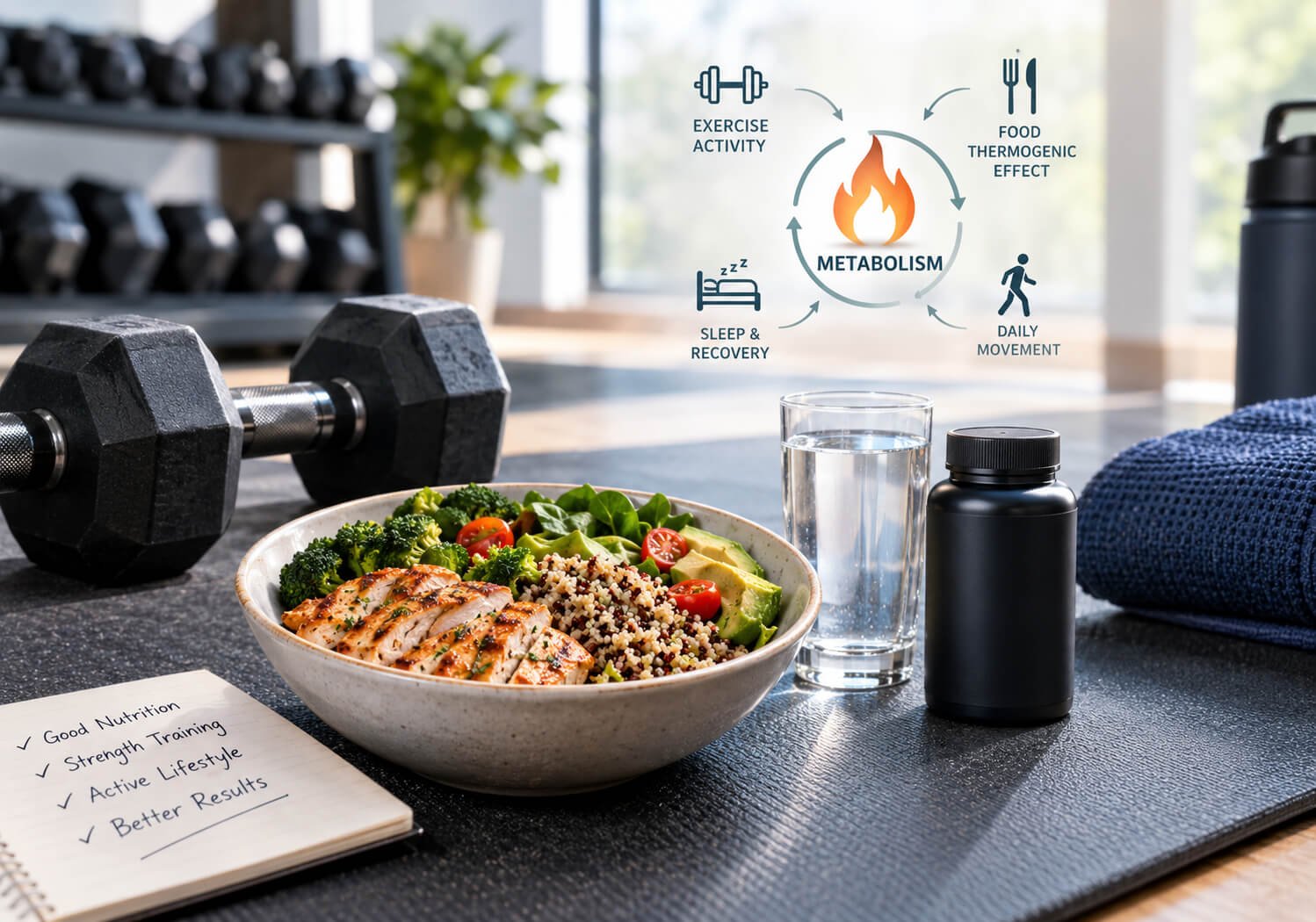
When clients ask me if taking a pill can fix a sluggish metabolism, I always give them the straightforward truth: no pill can replace a consistent workout program and a balanced diet. However, the multi-billion-dollar diet industry bombards us daily with promises of effortless fat loss and hyper-accelerated metabolic rates.
If you are struggling to manage your weight or hit a frustrating plateau, it is completely natural to wonder: do metabolism supplements help with weight management, or are they just expensive marketing in a bottle?
As a certified strength and conditioning coach, I look at dietary supplements through a critical, evidence-based lens. In this guide, we will break down the physiological science of your metabolic rate, examine the most common ingredients found in metabolic boosters, analyze what clinical studies actually prove, and map out a practical strategy to manage your weight effectively.
Quick Answer
Do metabolism supplements help with weight management?
Research shows that while certain ingredients (like caffeine, green tea extract, and capsaicin) can temporarily boost thermogenesis and increase daily calorie burn by roughly 50 to 100 calories, metabolism supplements offer only minor, short-term support. They cannot replace a sustained calorie deficit, adequate daily protein, sleep, and progressive resistance training.
Understanding Metabolism: How Your Body Burns Energy
Before we evaluate any supplement shelf, we must establish how your body consumes and expends energy every single day. Your total daily energy expenditure (TDEE) consists of four primary components:
- Basal Metabolic Rate (BMR): The energy spent keeping your heart beating, lungs breathing, cells repairing, and brain functioning while at complete rest. BMR accounts for roughly 60% to 75% of your total energy burn.
- Thermic Effect of Food (TEF): The energy required to digest, absorb, and metabolize the macronutrients you consume. This accounts for about 10% of total daily burn.
- Exercise Activity Thermogenesis (EAT): The energy burned during structured physical activity, such as lifting weights, running, or cycling.
- Non-Exercise Activity Thermogenesis (NEAT): The energy burned through daily movements that are not formal exercise—fidgeting, standing, walking around the house, or doing household chores.
Many factors dictate your overall energy expenditure. For a deeper breakdown of these physiological levers, explore our guide on what affects metabolism and body weight.
Supplements targeting metabolism primarily focus on elevating your resting energy expenditure via thermogenesis (heat production) or encouraging lipid oxidation (fat burning). However, expecting a pill to double your basal metabolic rate ignores basic human physiology. Understanding what is thermogenesis and how it affects metabolism reveals that heat production is only one piece of the puzzle.

Key Ingredients in Metabolism Supplements: What Does Science Say?
Commercial metabolism boosters usually blend several popular ingredients into a proprietary matrix. Let’s look at the most common ingredients, how they interact with your metabolic pathways, and what clinical human trials demonstrate.
1. Caffeine Anhydrous
Caffeine is one of the most thoroughly researched ergogenic aids available. It acts as a central nervous system stimulant by blocking adenosine receptors, which reduces fatigue and elevates circulating catecholamines (like adrenaline).
Clinical research demonstrates that a standard dose of caffeine (around 3 to 5 mg per kg of body weight) can temporarily increase resting metabolic rate by 3% to 11% over a few hours, according to clinical findings published in the American Journal of Clinical Nutrition.
While this sounds impressive, the effect diminishes as your body builds a tolerance. Furthermore, the total extra calories burned generally equal the energy content of a single bite of food.
2. Green Tea Extract (EGCG)
Green tea extract is rich in epigallocatechin gallate (EGCG), a powerful antioxidant. EGCG inhibits an enzyme called catechol-O-methyltransferase (COMT), which breaks down norepinephrine. By keeping norepinephrine elevated, green tea extract helps prolong signals that break down stored fat cells.
When combined with caffeine, green tea extract has been shown in clinical settings to modestly increase 24-hour energy expenditure. Research hosted by the National Institutes of Health (NIH) Office of Dietary Supplements notes that green tea extract may help burn a minor additional amount of energy, but the resulting actual weight loss is typically modest and variable across individuals.
3. Capsaicin and Capsaicinoids
Capsaicin is the bioactive compound that gives chili peppers their spicy kick. It stimulates TRPV1 receptors in the body, triggering a mild sympathetic nervous system response that increases core body temperature and promotes thermogenesis.
Meta-analyses of human trials reveal that consuming capsaicinoids can increase daily calorie expenditure by approximately 50 calories per day. Over several months, this small shift can support your efforts, but it will not produce dramatic changes on its own.
4. L-Carnitine
L-Carnitine is an amino acid derivative responsible for transporting long-chain fatty acids across the inner mitochondrial membrane so they can be oxidized (“burned”) for energy.
Because of this physiological role, manufacturers market L-Carnitine heavily as a fat-loss miracle. However, unless an individual is clinically deficient in carnitine or elderly, supplemental L-Carnitine rarely increases skeletal muscle carnitine levels enough to significantly alter resting metabolic rate or fat loss rate.
5. Chromium Picolinate
Chromium is an essential trace mineral involved in carbohydrate, lipid, and protein metabolism. It plays a key role in enhancing the action of insulin.
Some users supplement with chromium to reduce sugar cravings and support glycemic control. While it does not directly speed up your baseline energy expenditure, managing blood glucose swings can help prevent energy crashes and overeating. To understand how this mineral targets appetite, review our analysis on whether chromium picolinate helps reduce sugar cravings.
Do Metabolism Supplements Help with Weight Management Realistically?
To answer whether metabolism supplements help with weight management, we need to separate realistic physiological outcomes from marketing claims.
The Math Behind Weight Loss
To lose 1 lb [0.45 kg] of body fat, your body must maintain an energy deficit of roughly 3,500 calories over time.
If a high-quality thermogenic supplement raises your daily energy expenditure by 3%—which equates to roughly 50 to 100 calories per day for an average adult—it would take anywhere from 35 to 70 days of daily use to burn 1 lb [0.45 kg] of fat solely from that supplement.
50-100 Extra Calories Burned per Day via Supplement
│
▼
Requires 35 to 70 Days for 1 lb [0.45 kg] Fat Loss
│
▼
[ Easily negated by a single unmeasured snack or spoonful of oil ]
This mathematical reality highlights why supplements are secondary. A single extra spoonful of peanut butter or cooking oil can completely offset the burn provided by a metabolic pill.
Appetite Suppression vs. Increased Calorie Burn
Where supplements sometimes aid weight management is not through burning thousands of extra calories, but through mild appetite suppression. Central nervous system stimulants like caffeine and natural fibers like glucomannan can temporarily dull hunger signals.
When you feel less hungry, maintaining a target calorie deficit becomes easier. However, relying entirely on stimulants to suppress hunger often leads to energy crashes, sleep disruptions, and rebound eating later in the day.
If you are exploring stimulant-free options, read our guide on which supplements support metabolism without stimulants.
Coach’s Tip
Treat metabolism supplements as an extra 1% to 2% boost, not the foundation of your plan. If your daily nutrition, progressive strength training, and sleep schedule are out of order, adding a thermogenic pill is like putting premium gasoline into a car with no engine. Fix the foundation first.
Potential Risks and Side Effects of Metabolism Supplements
Dietary supplements do not require pre-market approval by the U.S. Food and Drug Administration (FDA) in the same manner as prescription pharmaceuticals. This makes it vital to evaluate safety before adding them to your daily regimen.
- Cardiovascular Strain: High doses of stimulants can increase resting heart rate, elevate blood pressure, and cause heart palpitations.
- Sleep Disruption: Taking stimulant-based thermogenics late in the day suppresses melatonin release and impairs sleep architecture. Reduced sleep negatively impacts recovery and alters appetite-regulating hormones like ghrelin and leptin.
- Gastrointestinal Distress: Ingredients like concentrated green tea extract, capsaicin, or anhydrous caffeine can irritate the stomach lining, causing nausea, acid reflux, or cramping.
- Hormonal and Nervous System Adaptations: Over time, your central nervous system adapts to chronic stimulant intake, requiring higher doses to achieve the same alertness or thermogenic boost.
Common Mistake
Doubling up on stimulants: Taking a high-dose metabolism booster alongside your morning coffee and pre-workout supplement can easily push your daily caffeine intake over 600 mg. This excess often triggers jitteriness, anxiety, elevated blood pressure, and severe sleep disruption, which sabotages fat loss by spiking stress hormones like cortisol.
Evidence-Based Strategies to Boost Metabolism Naturally
Rather than spending money on questionable pills, focus on proven methods that yield long-term results. Here are three core strategies to build an efficient, healthy metabolic engine.

1. Build Muscle Mass via Progressive Resistance Training
Skeletal muscle tissue is metabolically active. While early fitness lore claimed muscle burns 50 calories per pound per day at rest, modern scientific measurements demonstrate that skeletal muscle burns approximately 6 calories per lb [13 calories per kg] per day at rest, compared to fat tissue which burns roughly 2 calories per lb [4.5 calories per kg].
While 6 calories per pound may sound modest, adding 5 to 10 lbs [2.2 to 4.5 kg] of dense muscle tissue adds up over time. More importantly, heavy resistance training triggers Excess Post-Exercise Oxygen Consumption (EPOC)—often called the “afterburn effect”—keeping your metabolic rate elevated for hours after your workout ends.
2. Prioritize Dietary Protein
Protein has the highest Thermic Effect of Food (TEF) among all macronutrients:
- Protein: 20% to 30% of consumed calories are burned during digestion.
- Carbohydrates: 5% to 10% burned during digestion.
- Fats: 0% to 3% burned during digestion.
By increasing your intake of lean protein, you automatically burn more calories simply digesting your meals while preserving lean muscle mass during a weight loss phase. To explore how protein impacts satiety and metabolism, read our article on protein intake, metabolism, and weight loss.
3. Maximize Daily NEAT (Non-Exercise Activity Thermogenesis)
Increasing your daily step count from 4,000 to 10,000 steps can burn an extra 300 to 500 calories per day. This is far more powerful than any over-the-counter metabolism pill.
4-Week Strength Routine to Maximize Metabolic Rate
To boost your metabolic rate safely and effectively, use this resistance training program. It focuses on compound movements that recruit large muscle groups to maximize work output, muscular hypertrophy, and post-workout energy expenditure.
Weekly Schedule Overview
- Monday: Upper Body Strength
- Tuesday: Lower Body Strength & Core
- Wednesday: Active Recovery (Light Walking & Mobility)
- Thursday: Upper Body Hypertrophy
- Friday: Lower Body Hypertrophy & Metabolic Conditioning
- Saturday/Sunday: Rest or Light NEAT focus
Program Exercises and Parameters
| Exercise | Primary Target Muscle | Sets | Reps | Tempo | Rest Interval |
| Dumbbell Goblet Squat | Quadriceps, Gluteus Maximus | 3–4 | 8–10 | 3-1-1-0 | 90 sec |
| Romanian Deadlift (RDL) | Hamstrings, Gluteus Maximus | 3–4 | 8–10 | 3-1-1-0 | 90 sec |
| Dumbbell Overhead Press | Deltoids, Triceps | 3 | 10–12 | 2-0-1-0 | 60–70 sec |
| Dumbbell Bent-Over Row | Latissimus Dorsi, Rhomboids | 3–4 | 10–12 | 2-1-1-0 | 60–70 sec |
| Bodyweight Push-Up | Pectoralis Major, Anterior Deltoid | 3 | 12–15 | 2-0-1-0 | 60 sec |
Exercise Form Cues & Coaching
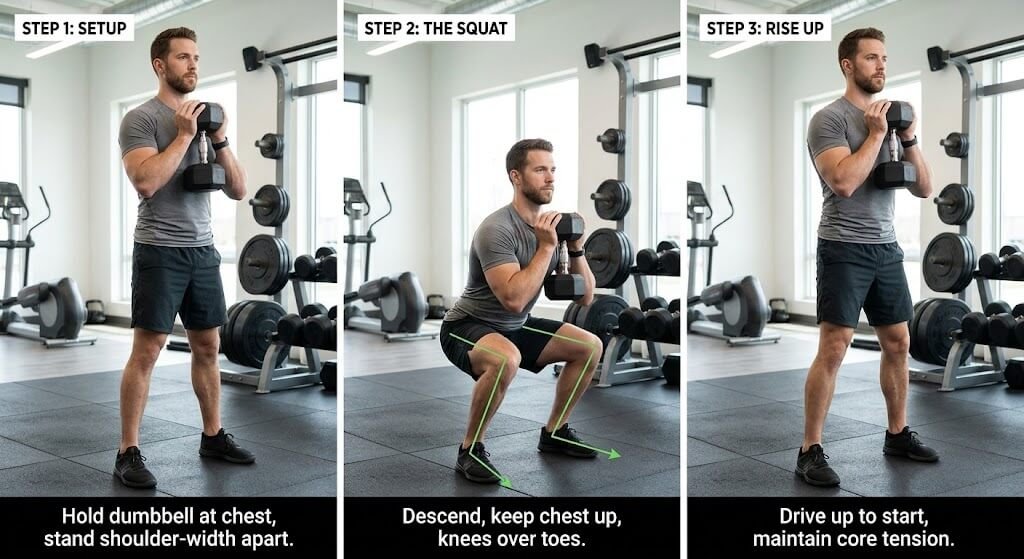
1. Dumbbell Goblet Squat
- How to do it: Hold a dumbbell vertically against your upper chest, cupping the top head with both hands. Stand with feet slightly wider than shoulder-width, toes turned out 15 degrees. Brace your core, bend your knees, and hinge at your hips to lower your body until your thighs are parallel to the floor. Drive through your mid-foot to return to the starting position.
- Form Cue: Keep your chest upright and elbows pointed down toward the floor throughout the movement.
- Easier Version (Regression): Bodyweight Box Squat (squatting down to a 16-inch [40 cm] bench).
- Harder Version (Progression): Barbell Back Squat or increasing dumbbell weight.
2. Dumbbell Romanian Deadlift (RDL)
- How to do it: Stand upright holding two dumbbells in front of your thighs with an overhand grip. Soften your knees slightly, then push your hips back as you slide the weights down your shins. Lower the weights until you feel a deep stretch in your hamstrings, maintaining a flat back. Contract your glutes to pull your torso back upright.
- Form Cue: Think about closing an open door behind you using only your hips.
- Easier Version (Regression): Glute Bridge on the floor.
- Harder Version (Progression): Single-Leg Dumbbell RDL.
Comparing Metabolism Strategies: Supplements vs. Lifestyle Interventions
To see how metabolism supplements compare to lifestyle changes, view the summary table below.
| Strategy | Est. Extra Daily Burn | Primary Long-Term Benefit | Cost / Month | Sustainability |
| Thermogenic Supplements | 40 – 100 calories | Temporary boost in thermogenesis | $30 – $80 | Low (Tolerance builds quickly) |
| High-Protein Diet (1.6g/kg+) | 100 – 200 calories | Muscle retention & high appetite control | Minimal change | High (Nutritious food preference) |
| Resistance Training (3x/wk) | 100 – 250 calories | Increases BMR via muscle mass & EPOC | $0 – $50 | Extremely High (Lifetime habit) |
| Increasing Steps (+5,000 steps) | 200 – 400 calories | Substantial increase in daily NEAT burn | $0 | High (Daily routine movement) |
For a complete breakdown on building these habits naturally, refer to our comprehensive guide on how to support metabolism naturally for weight management.
Frequently Asked Questions
Do metabolism boosters burn fat while you sleep?
Most nighttime metabolism supplements use non-stimulant ingredients like L-theanine, magnesium, or melatonin. While they may improve your sleep quality, their direct thermogenic burn while sleeping is negligible. High-quality sleep itself helps regulate metabolism by keeping cortisol and hunger hormones balanced.
How much weight can you lose using metabolism pills alone?
Without altering your dietary intake or physical activity levels, metabolism supplements yield negligible long-term weight loss. Studies show that individuals relying solely on thermogenic supplements without lifestyle adjustments usually see little to no meaningful change in body fat percentage.
Are non-stimulant metabolism supplements effective?
Non-stimulant options often utilize ingredients like green tea extract, capsaicin, or soluble fibers. While they avoid side effects like jitteriness or elevated heart rate, their direct contribution to overall daily energy expenditure remains modest (typically 30 to 80 calories per day).
Can taking metabolism supplements slow down your natural metabolic rate later?
Supplements do not “ruin” your baseline thyroid function or metabolic rate. However, rapid weight loss achieved through extreme calorie restriction while using thermogenic pills can lead to adaptive thermogenesis (metabolic adaptation), where your body burns fewer calories to conserve energy.
What ingredients in metabolism pills are backed by strong scientific evidence?
Caffeine, green tea extract (EGCG), and capsaicin carry the most consistent research supporting mild, temporary increases in metabolic rate and fat oxidation. However, their total impact remains modest compared to daily physical activity and proper diet.
Conclusion
So, do metabolism supplements help with weight management? The short answer is that while certain ingredients offer a slight, temporary boost to thermogenesis and appetite control, they are far from a standalone solution. Relying on pills without addressing diet, movement, and sleep yields disappointing results.
If you decide to try a supplement, use it as a secondary tool alongside a structured resistance training routine, a high-protein diet, and consistent daily step goals. Real, sustainable metabolic power is built in the weight room and kitchen—not bought in a pill bottle.