
Understanding how to boost metabolism naturally for weight loss is one of the most common questions I hear from clients stepping into the gym. Your metabolism is not a fixed, unchangeable number. It is a dynamic, highly responsive system influenced by your daily habits, movement patterns, and nutritional choices.
By making targeted, evidence-based adjustments to your routine, you can increase your resting energy expenditure. This creates a sustainable calorie deficit without the need for extreme dieting or exhausting cardio sessions. As a certified strength and conditioning coach, I design programs that leverage human physiology to work in your favor.
This guide breaks down the exact, science-backed strategies you can implement today to revitalize your metabolic health and achieve lasting results.
Quick Answer
To boost metabolism naturally for weight loss, prioritize building lean muscle mass through resistance training, increase daily non-exercise activity (NEAT), consume adequate protein to leverage the thermic effect of food, stay hydrated, and prioritize 7 to 9 hours of quality sleep. These evidence-based habits work synergistically to elevate your resting metabolic rate and support sustainable fat loss.
How to Boost Metabolism Naturally for Weight Loss: 10 Evidence-Based Strategies
1. Build Lean Muscle Mass with Compound Resistance Training
Skeletal muscle is metabolically active tissue. Unlike fat, muscle requires a continuous supply of energy just to maintain itself. Increasing your lean body mass directly elevates your basal metabolic rate (BMR), meaning you burn more calories at rest.
How to do it: Focus on compound movements that recruit multiple large muscle groups simultaneously. The goblet squat is an excellent starting point. Hold a dumbbell or kettlebell vertically against your chest. Keep your torso upright, brace your core, and lower your hips back and down until your thighs are parallel to the floor. Drive through your heels to return to the start.
- Sets/Reps: 3 to 4 sets of 8 to 12 reps.
- Rest: 60 to 90 seconds between sets.
- Tempo: 2 seconds down, 1-second pause at the bottom, 1 second up.
- Regression: Bodyweight box squats to a 18-inch (45 cm) bench.
- Progression: Barbell back squats with 95 lb (43 kg) or more, once form is mastered.
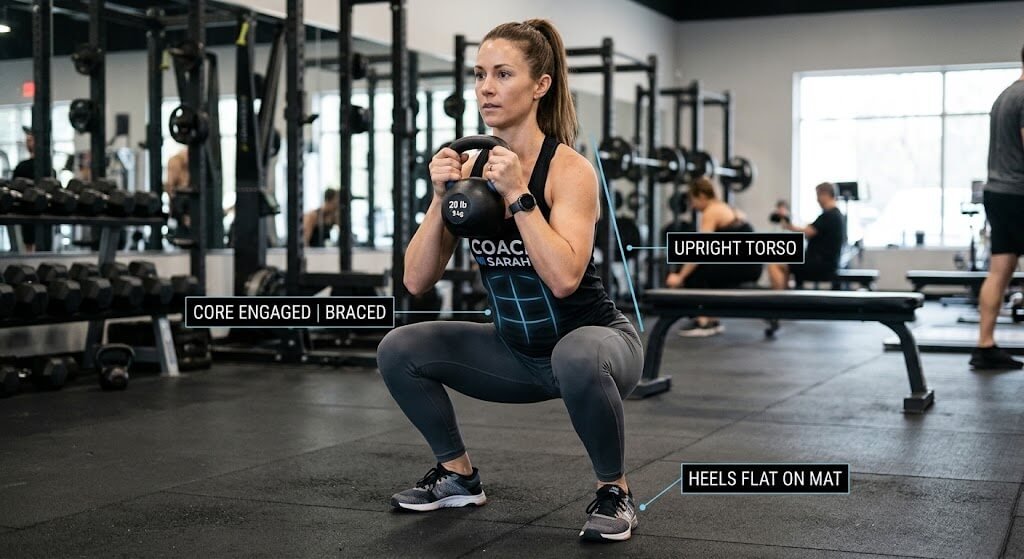
Coach’s Tip: Do not rush the eccentric (lowering) phase. Controlling the weight on the way down causes more micro-tears in the muscle fiber, which requires more energy to repair and rebuild, further boosting your metabolic rate.
2. Leverage the Thermic Effect of Food (TEF) with High Protein Intake
Every time you eat, your body expends energy to digest, absorb, and process nutrients. This is known as the thermic effect of food (TEF). Protein has the highest TEF of all macronutrients. Research indicates that your body burns 20 to 30 percent of the calories in protein just during digestion, compared to 5 to 10 percent for carbohydrates and 0 to 3 percent for fats.
How to apply it: Aim for 0.7 to 1.0 grams of protein per pound of body weight daily. For a 150 lb (68 kg) individual, this equals 105 to 150 grams of protein. Distribute this evenly across three to four meals to maximize muscle protein synthesis and keep TEF elevated throughout the day. Optimizing your protein intake and metabolism is a foundational step for sustainable weight management.
3. Incorporate High-Intensity Interval Training (HIIT)
While steady-state cardio burns calories during the activity, HIIT creates a phenomenon called excess post-exercise oxygen consumption (EPOC). EPOC means your body continues to burn calories at an elevated rate for hours after the workout as it works to restore oxygen levels, clear lactate, and repair tissue.
How to do it: Use a stationary bike, rowing machine, or kettlebell swings. Push at 85 to 90 percent of your maximum effort for 30 seconds, followed by 60 seconds of active recovery (slow pedaling or walking).
- Sets/Reps: 8 to 10 rounds.
- Rest: 60 seconds of active recovery between intervals.
- Regression: Incline treadmill walking (30 seconds fast pace, 60 seconds slow pace).
- Progression: Sprint intervals on a track or heavy kettlebell swings with a 35 lb (16 kg) bell.
Common Mistake: Going all-out in the first two intervals and fading completely by round four. HIIT is about sustained, repeatable effort. Pace yourself so that round eight feels as challenging as round two.
4. Increase Non-Exercise Activity Thermogenesis (NEAT)
NEAT represents the energy expended for everything we do that is not sleeping, eating, or sports-like exercise. This includes fidgeting, walking to the car, typing, and doing household chores. Understanding the factors that affect metabolism reveals that NEAT can account for up to 15 to 30 percent of your total daily energy expenditure, making it a massive lever for weight loss.
How to apply it:
- Aim for 8,000 to 10,000 steps daily.
- Park at the far end of the parking lot.
- Take the stairs instead of the elevator.
- Set a timer to stand and stretch for 2 minutes every hour if you work a desk job.
- A daily 3-mile (5 km) walk can burn an additional 250 to 300 calories without triggering significant hunger or fatigue.

5. Prioritize Sleep Quality and Circadian Rhythm
Sleep is not a passive state; it is an active metabolic recovery period. Chronic sleep deprivation disrupts the balance of ghrelin (the hunger hormone) and leptin (the satiety hormone). This imbalance increases appetite and cravings for high-calorie foods. Furthermore, poor sleep elevates cortisol, which can promote abdominal fat storage and reduce insulin sensitivity.
How to apply it:
- Target 7 to 9 hours of uninterrupted sleep per night.
- Keep your bedroom cool, around 65°F (18°C), and completely dark.
- Avoid screens and blue light for at least 60 minutes before bed.
- Consuming a small, protein-rich snack before bed can stabilize blood sugar overnight. Recognizing how sleep affects metabolism is critical for anyone struggling with unexplained weight plateaus.
6. Stay Optimally Hydrated for Cellular Function
Water is essential for every metabolic process in your body, including lipolysis (the breakdown of fat). Mild dehydration can slow down your metabolic rate. Studies on water-induced thermogenesis show that drinking cold water can temporarily increase resting energy expenditure by 10 to 30 percent for about an hour, as the body expends energy to heat the fluid to core body temperature.
How to apply it:
- Drink 16 to 20 oz (500 to 600 ml) of water immediately upon waking.
- Consume another 8 to 10 oz (250 to 300 ml) 30 minutes before each main meal. This also aids in appetite regulation.
- Monitor your urine color; it should be a pale, straw-like yellow.
7. Consume Metabolism-Supporting Nutrients and Dietary Fiber
A healthy gut microbiome is intricately linked to metabolic health. Dietary fiber slows gastric emptying, stabilizes blood sugar spikes, and improves insulin sensitivity. When your blood sugar is stable, your body is less likely to store excess energy as fat. Including adequate dietary fiber for weight management ensures you stay full longer while supporting a healthy metabolic environment.
How to apply it:
- Aim for 25 to 35 grams of fiber daily.
- Source this from diverse, whole-food options: leafy greens, broccoli, berries, lentils, chia seeds, and oats.
- Increase fiber intake gradually and drink plenty of water to prevent digestive discomfort.

8. Manage Stress and Cortisol Levels
Chronic psychological or physical stress keeps your sympathetic nervous system in a constant state of “fight or flight.” This chronically elevates cortisol. While acute cortisol spikes are normal and helpful during a workout, chronically high levels promote muscle breakdown (catabolism) and encourage the body to store visceral fat, particularly around the midsection.
How to apply it:
- Dedicate 10 minutes daily to diaphragmatic breathing or meditation.
- Engage in low-intensity steady-state (LISS) activities like a leisurely walk in nature or gentle yoga.
- Avoid stacking high-stress life events with overly aggressive, high-volume training programs.
9. Avoid Severe Caloric Restriction and Metabolic Adaptation
When you slash your calories too drastically, your body perceives a famine. In response, it downregulates non-essential functions and lowers your BMR to conserve energy. This is known as metabolic adaptation, often colloquially called “starvation mode.” While you may lose weight initially, it is often a combination of fat, water, and precious muscle mass, making long-term maintenance nearly impossible.
How to apply it:
- Aim for a modest, sustainable caloric deficit of 300 to 500 calories per day below your maintenance level.
- Implement “diet breaks” or maintenance phases every 8 to 12 weeks of dieting to reset hormonal markers and prevent metabolic slowdown. Learning how to support metabolism naturally requires patience, not punishment.
10. Utilize Natural Thermogenic Aids Wisely
Certain natural compounds can provide a mild, temporary boost to your metabolic rate. Caffeine stimulates the central nervous system, increasing both metabolic rate and fat oxidation. Green tea extract contains epigallocatechin gallate (EGCG), which works synergistically with caffeine to enhance thermogenesis.
How to apply it:
- Consume 1 to 2 cups of brewed green tea or black coffee daily, ideally before a workout or in the morning.
- Avoid high-stimulant, proprietary “fat burner” blends, which often contain unsafe, unregulated doses of stimulants that can cause jitters, elevated heart rate, and adrenal fatigue.
- Ensure you are getting the foundational nutrients that support energy metabolism, such as B-vitamins, magnesium, and iron, before relying on any supplemental aids.
Sample Metabolism-Boosting Weekly Workout Plan
To put these strategies into action, consistency is key. This sample weekly plan balances resistance training, HIIT, and active recovery to maximize EPOC and muscle retention without causing overtraining.
| Day | Focus | Exercise Examples | Sets | Reps | Rest |
| Monday | Lower Body Strength | Goblet Squats, Romanian Deadlifts, Leg Press | 3-4 | 8-12 | 90 sec |
| Tuesday | Upper Body Strength + LISS | Dumbbell Bench Press, Rows, Overhead Press + 20 min brisk walk | 3 | 8-12 | 60 sec |
| Wednesday | Active Recovery | 30-45 min light walking, foam rolling, dynamic stretching | N/A | N/A | N/A |
| Thursday | Full Body HIIT | Kettlebell Swings, Push-ups, Reverse Lunges, Plank | 4 | 30 sec work / 60 sec rest | 60 sec |
| Friday | Lower Body Hypertrophy | Walking Lunges, Leg Curls, Calf Raises | 3 | 10-15 | 60 sec |
| Saturday | Upper Body Hypertrophy + NEAT | Lat Pulldowns, Incline Dumbbell Press, Bicep Curls + 8k steps | 3 | 10-15 | 60 sec |
| Sunday | Complete Rest | Meal prep, hydration focus, 7-9 hours of sleep | N/A | N/A | N/A |
Note: Always begin each session with a 5 to 10-minute dynamic warm-up (e.g., arm circles, leg swings, bodyweight squats) to prepare the joints and nervous system. Conclude with 5 minutes of static stretching for tight muscle groups.
Safety Notes and Who Should Be Careful
While boosting your metabolism naturally is generally safe and highly beneficial, certain populations must proceed with caution.
- Thyroid Conditions: If you have hypothyroidism or hyperthyroidism, your metabolic rate is directly influenced by medical factors. Work closely with your endocrinologist before making drastic dietary or exercise changes.
- Cardiovascular Issues: HIIT places significant demand on the heart. If you have high blood pressure or a history of heart disease, consult your physician before starting interval training.
- Pregnancy and Postpartum: Metabolic demands change drastically during and after pregnancy. Avoid severe caloric deficits and high-impact HIIT without explicit clearance from your obstetrician or a pelvic floor physical therapist.
- Joint Pain: If an exercise causes sharp pain (not to be confused with muscular fatigue), stop immediately. Regress the movement or seek guidance from a physical therapist.

FAQ: Boosting Metabolism Naturally
How can I speed up my metabolism after 40?
To speed up your metabolism after 40, prioritize resistance training to combat age-related muscle loss, consume adequate protein at every meal, and maintain consistent daily movement. Hormonal changes occur, but building lean mass remains the most effective way to sustain a healthy resting metabolic rate.
Does drinking cold water really boost metabolism?
Yes, drinking cold water can temporarily increase your metabolic rate through water-induced thermogenesis. Your body expends a small amount of energy to heat the water to body temperature. While the calorie burn is modest, staying optimally hydrated supports overall metabolic efficiency and cellular function.
What are the best exercises to increase metabolic rate?
Compound resistance exercises like squats, deadlifts, and push-ups are the best for increasing metabolic rate because they recruit multiple large muscle groups simultaneously. Adding high-intensity interval training (HIIT) also creates an oxygen debt, elevating calorie burn for hours after your workout concludes.
How much protein do I need to boost metabolism?
Aim for 0.7 to 1.0 grams of protein per pound of body weight daily. Protein has the highest thermic effect of food, meaning your body burns 20 to 30 percent of its calories just digesting it. Distribute this intake evenly across three to four meals.
Can lack of sleep slow down my metabolism?
Absolutely. Chronic sleep deprivation disrupts hunger hormones like ghrelin and leptin, increasing appetite while decreasing resting energy expenditure. Poor sleep also elevates cortisol, which can promote fat storage and reduce insulin sensitivity, making natural weight management significantly more difficult over time.
Does building muscle burn more calories at rest?
Yes. Skeletal muscle is metabolically active tissue. While the exact number varies, having more lean muscle mass increases your basal metabolic rate, meaning you burn more calories at rest compared to having a higher percentage of body fat. This makes strength training essential.
Conclusion: Your Action Plan on How to Boost Metabolism Naturally for Weight Loss
Learning how to boost metabolism naturally for weight loss is not about finding a magic pill or enduring miserable, unsustainable routines. It is about stacking small, evidence-based habits that compound over time.
Start by lifting weights two to three times a week to build metabolically active muscle. Prioritize protein and fiber at every meal to leverage the thermic effect of food. Move more throughout the day, drink plenty of water, and protect your sleep like your results depend on it—because they do.
Be patient with your body. Metabolic improvements take weeks to months of consistent effort, but the results are permanent, healthy, and entirely within your control.