
Two people can eat similar meals, walk similar distances, and still end up with different bodies. That puzzle is why so many people ask what affects metabolism and body weight, and why “I have a slow metabolism” is such a common explanation.
The real answer is more useful than that. Muscle mass, age, sleep, daily movement, hormones, medications, and your recent dieting history all shape how much energy you burn and how much you eat. Some of these you can change this week. Others you can only understand and work around.
This guide breaks down each factor in plain language, shows what the research says, and ends with a simple weekly routine you can start at home or in a gym.
Quick Answer: What affects metabolism and body weight is a mix of body size and muscle mass, age, daily movement, sleep, food choices, hormones such as thyroid hormone, medications, and past dieting. A truly “slow” metabolism is rarely the main cause of weight gain. Habits you control usually matter more.
How Metabolism and Body Weight Are Connected
Metabolism is the process your body uses to turn food and drink into energy, as Mayo Clinic explains. Even at rest, you use energy to breathe, circulate blood, and repair cells.
Body weight is the long-term result of energy balance. Researchers describe it as the difference between the energy you take in from food and the energy you spend, and they note that energy balance and its components all change over time. Eat more than you burn for months, and weight tends to rise. Eat less than you burn, and it tends to fall.
Real life is messier than a simple equation. A review of the human energy balance points out that real-world results often differ from simple predictions because of physiological and environmental factors, including appetite hormones, meal timing, and the thermic effect of food.
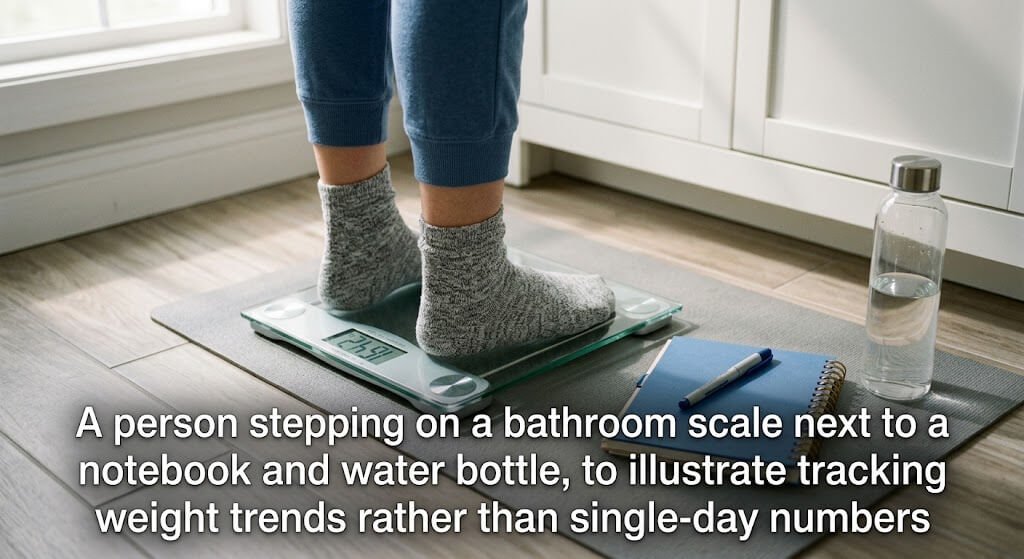
One more detail matters for anyone watching the scale. Day-to-day weight also includes body water, so a short-term jump or drop does not always mean a change in body fat, according to the same energy balance review.
The Four Parts of Daily Calorie Burn
To understand what affects metabolism and body weight, it helps to split your daily calorie burn into four parts. Each one responds to different habits.
| Part of daily burn | What it is | What affects it | How much control you have |
| Resting metabolic rate (RMR) | Energy used to keep you alive at rest | Body size, muscle mass, age, thyroid function | Some (mostly through muscle) |
| Thermic effect of food (TEF) | Energy used to digest and process meals | Amount and type of food, especially protein | Small |
| NEAT | Energy from all movement that isn’t planned exercise | Job, steps, standing, fidgeting, chores | Large |
| Exercise | Energy from planned workouts | Type, length, and intensity | Large |
Resting metabolic rate: the engine that never turns off
Resting metabolic rate (also called resting energy expenditure) is the energy you use while doing nothing. It is not fixed. Research shows that resting energy expenditure varies with body size, body composition, and recent energy imbalance.
In plain terms, a bigger body, or a body with more muscle, burns more at rest. That is why two adults of the same age can have very different calorie needs.
Thermic effect of food: the cost of digesting meals
Your body spends energy digesting, absorbing, and storing what you eat. Protein costs the most to process. In one controlled study, the thermic effect of food was 15.4% on a high-protein diet compared with 5.6% on a normal-protein diet.
That sounds big, but it is a small slice of your day. A protein-rich plate helps a little with calorie burn, and many people also find it filling. It will not override eating far more than you need.
NEAT: the hidden calorie burner
NEAT stands for non-exercise activity thermogenesis. It covers walking to the bus, carrying groceries, standing at your desk, gardening, and even fidgeting. A review of NEAT as part of daily energy expenditure describes it as a highly variable component of daily burn and links low NEAT with obesity.
This is where many people leave easy gains on the table. A person who trains for 45 minutes and then sits for ten hours may burn less overall than someone who trains less but moves all day.
Coach’s Tip: Set a phone reminder every hour to stand up and move for 3-5 minutes. Walk the hallway, do 10 bodyweight squats, or refill your water. Small movement breaks cost nothing and quietly raise your daily total.
Easy ways to raise your NEAT without adding a workout:
- Take phone calls standing or pacing.
- Park farther away and walk the extra 5 minutes.
- Use stairs when you are going up one or two floors.
- Do a 10-minute walk after your largest meal.
- Carry groceries in your hands instead of using a cart for short trips.
- Do light chores, such as gardening or tidying, while listening to a podcast.
Count your steps for a week first. Then add about 1,000 steps a day, which is roughly half a mile (0.8 km) for most people, and hold that level for two weeks before adding more.
Exercise: planned training
Planned exercise is the part people focus on, yet it is often the smallest piece for people who work out only a few hours a week. Its real value goes beyond the calories burned in the session. Exercise protects muscle, supports heart health, and helps you stay active the rest of the day.
For general health, the CDC adult activity guidelines call for at least 150 minutes of moderate aerobic activity per week plus muscle-strengthening on 2 or more days a week that work all major muscle groups.
What Affects Metabolism and Body Weight: Muscle Mass and Body Size
Of all the factors that affect metabolism, body size and muscle mass are the most important ones you can influence. Muscle tissue is more metabolically active than fat tissue, so more muscle generally means a higher resting burn.
Large-scale data back up the importance of lean tissue. In a major analysis of daily energy expenditure across the lifespan, researchers found that total energy expenditure increased with fat-free mass, meaning the weight of everything in your body that is not fat.
Let’s keep expectations realistic. Gaining muscle will not turn you into a calorie furnace. The boost to your resting burn is modest, and it builds slowly. The bigger payoff is that muscle helps you keep your strength, protects your joints, and makes daily tasks easier, which keeps NEAT high.
Mayo Clinic notes that strength training can use weight machines, your own body weight, resistance tubing, or other tools, so you do not need a full gym to start.
Common Mistake: Doing only cardio to “speed up” metabolism. Cardio is valuable, but without any strength work you may lose muscle during a diet and end up with a lower resting burn. Pair your walking, cycling, or running with at least two strength sessions a week.
Age and Metabolism: Does It Really Slow Down?
Many people blame their 30s or 40s for a slower metabolism. The data tell a different story. In the large life-course study mentioned above, adult energy expenditure stayed stable between ages 20 and 60 after accounting for fat-free mass, even during pregnancy. It then declined in older adults.
So for most of adult life, changes in muscle mass, activity, sleep, and eating habits probably explain more weight change than age alone. That is encouraging, because those are things you can work on.
A good habit at any age is to check your trend, not a single week. Weigh in under the same conditions two or three times a week, note your waist or how your clothes fit, and track your strength in the gym. If your lifts are going up while the scale barely moves, you may be building muscle while losing fat, and that is a good sign.
For older adults, protecting muscle becomes even more valuable. If you are over 60, have joint problems, or manage a health condition, talk with your doctor or physical therapist before starting a new strength routine.
Sleep: A Factor People Underestimate
Poor sleep affects appetite and food choices more than it affects calorie burn. In a small inpatient study of 16 adults, five nights of insufficient sleep led to about 1.8 lb (0.8 kg) of weight gain, even though hunger and fullness hormones such as ghrelin, leptin, and peptide YY signaled that energy stores were already sufficient. The study also found that women lost some dietary restraint when sleep was short.
This was a short, controlled study with a small group, so it does not predict what will happen to you. But it fits a clear pattern: when sleep drops, eating tends to rise.
Practical steps that support better sleep:
- Keep a regular bedtime and wake time, including weekends.
- Stop caffeine at least 8 hours before bed.
- Keep the bedroom cool, dark, and quiet.
- Put screens away 30-60 minutes before sleep.
Hormones and Medical Conditions
Hormones help regulate appetite, energy use, and fat storage. A recent review notes that dysregulation of hormones involved in appetite and fat metabolism can influence obesity. Blood sugar control also plays a part, which is why some readers explore topics like insulin sensitivity research.
The thyroid
The thyroid gland makes hormones that help regulate metabolism, heart rate, and digestion. When it is underactive, a condition called hypothyroidism, weight gain and fatigue are two prominent symptoms, according to Harvard Health. The same source notes it is more common in women and should not be self-diagnosed.
Keep this in perspective. Mayo Clinic states that medical conditions rarely slow metabolism enough to cause a lot of weight gain. If you have unexplained weight gain along with fatigue, feeling cold, or dry skin, ask your doctor about testing instead of guessing.
Medications That Can Affect Body Weight
Some prescriptions can shift appetite, fluid balance, or energy use. A narrative review of medications linked to weight gain found that certain antipsychotics, antidepressants, diabetes drugs, blood pressure drugs, and corticosteroids were associated with significant weight gain.
Not everyone on these drugs gains weight, and each person responds differently. Never stop or change a medication on your own. If you notice weight changes after starting a new prescription, tell your doctor or pharmacist. They may be able to adjust the dose or suggest an alternative.
Dieting and Metabolic Adaptation
Cutting calories can change how much energy your body uses. Researchers call this metabolic adaptation, or adaptive thermogenesis. A study of former reality-show contestants describes it as a slowing of resting metabolic rate that is often greater than expected from changes in body composition, and which acts to counter weight loss.
That study followed 14 people who lost a very large amount of weight in an extreme program, so the results do not directly apply to typical dieters. Still, it explains why progress often slows after the first few weeks.
How to work with this instead of against it:
- Lose weight gradually. Very aggressive diets are harder to sustain.
- Keep lifting. Strength work helps protect muscle while you eat less.
- Protect your NEAT. People tend to move less when they eat less, so track your steps.
- Take planned diet breaks at maintenance calories if your doctor or dietitian agrees.
If you are thinking about a weight-loss plan, check with a doctor or registered dietitian first, especially if you have a medical condition or take medication.
Can You “Boost” Your Metabolism With Supplements?
Short answer: not much. Mayo Clinic says products that claim to speed up metabolism usually do not live up to their claims, and it advises against relying on dietary supplements for burning calories.
Some people look into ingredients such as chromium for blood sugar and appetite support. If you are curious, read our overview of chromium picolinate and glucose metabolism and discuss any supplement with your doctor first, especially if you take medication.
Factors You Can Change vs. Factors You Can’t
| Factor | Can you change it? | Best action |
| Muscle mass | Yes, slowly | Strength train 2-3 days a week |
| Daily movement (NEAT) | Yes | Walk more, stand more, take movement breaks |
| Sleep | Mostly | Set a consistent sleep schedule |
| Food quality and amount | Yes | Build meals around whole foods and protein |
| Age | No | Protect muscle as you get older |
| Medical conditions | Partly | Get diagnosed and treated by a doctor |
| Medications | With medical advice only | Discuss side effects with your doctor |
| Dieting history | Partly | Avoid extreme, rapid dieting |
How to Apply This: A Simple Weekly Routine
Understanding what affects metabolism and body weight is only useful if you act on it. Here is a beginner-friendly routine built on the three levers you control most: strength, walking, and daily movement.
Weekly schedule
| Day | Activity |
| Monday | Strength Workout A (about 30 minutes) |
| Tuesday | Brisk walk, 30 minutes |
| Wednesday | Rest or easy stretching |
| Thursday | Strength Workout A or B |
| Friday | Brisk walk, 30 minutes |
| Saturday | Longer walk, hike, or bike ride, 45-60 minutes |
| Sunday | Rest |
A 30-minute brisk walk covers roughly 1.5 miles (2.4 km) for most people. Together, the walks and the longer weekend session help you reach the 150-minute weekly target from the CDC guidelines.
Strength workout A
Warm up for 5 minutes with easy marching, arm circles, and bodyweight squats. Then complete the circuit below.
| Exercise | Sets | Reps | Rest | Starting weight |
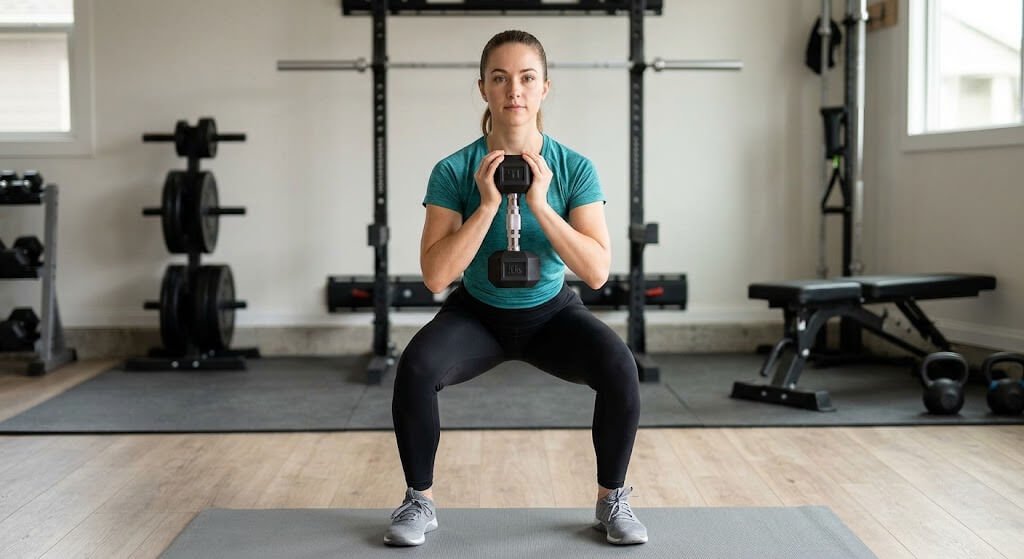
| Goblet squat | 3 | 8-12 | 60-90 sec | 10-20 lb (4.5-9 kg) |
| Dumbbell Romanian deadlift | 3 | 8-12 | 60-90 sec | 10-25 lb (4.5-11 kg) in each hand |
| One-arm dumbbell row | 3 | 8-12 each side | 60 sec | 10-20 lb (4.5-9 kg) |
| Push-up (on a bench or floor) | 3 | 6-12 | 60 sec | Bodyweight |
| Plank | 3 | 20-40 sec hold | 45 sec | Bodyweight |

Form cues that matter
- Goblet squat: Hold the dumbbell at your chest. Sit your hips back and down, keep your chest tall, and push the floor away through your whole foot. You should feel it in your quadriceps and glutes.
- Romanian deadlift: Soften your knees, push your hips back, and slide the dumbbells down your thighs until you feel a stretch in your hamstrings. Stand up by squeezing your glutes.
- One-arm row: Pull your elbow toward your hip, not straight up. You should feel your latissimus dorsi (the big back muscle) working, not your neck.
- Push-up: Keep a straight line from head to heels. Lower your chest to about a fist’s height from the floor.
- Plank: Squeeze your glutes and brace your abs as if you expect a light poke in the stomach.
Use a tempo of about 2 seconds up and 3 seconds down. Choose a weight that leaves you with 2-3 reps in reserve on the last set. If your form breaks down, the weight is too heavy.
Easier version (regression)
- Squat to a sturdy chair about 17 inches (43 cm) high instead of goblet squats.
- Do wall or incline push-ups.
- Do the Romanian deadlift with bodyweight only.
- Use a resistance band for rows.
- Start with 2 sets and add the third after two weeks.
Harder version (progression)
- When you can complete all sets at the top of the rep range with good form, add 5 lb (2.3 kg) next session.
- Slow the lowering phase to 4 seconds.
- Move to split squats or a lighter-load tempo squat.
- Add a fourth set, or a second strength day per week.
- Try elevated push-ups with your feet on a bench.
Coach’s Tip: Write down your weights and reps. Progress you can see keeps you consistent, and consistency matters more than any single “metabolism-boosting” trick.
Four-week progression plan
| Week | Focus |
| 1 | Learn the movements, 2 sets each, light weight |
| 2 | Add the third set, keep the weight light |
| 3 | Increase weight slightly if reps are clean |
| 4 | Repeat week 3 or add a small step up, and add one extra weekly walk |
Safety Notes
Check with a doctor or physical therapist before starting a new exercise or weight-loss plan if you have pain, an injury, heart or blood pressure problems, diabetes, are pregnant or postpartum, are in menopause with symptoms, or take regular medication.
Stop an exercise if you feel sharp pain, dizziness, chest pain, or numbness. Muscle burn and mild fatigue are normal. Joint pain is not.
Avoid crash diets and “detox” plans. Rapid weight-loss promises are a red flag, and no safe plan can guarantee a specific result in a specific time.
Related Tips for Everyday Life
- Eat protein at each meal. It supports muscle and increases the thermic effect of food slightly.
- Count steps for a week before changing anything, so you know your baseline.
- Stay hydrated and eat whole foods most of the time. It makes calorie control easier without strict rules.
- Weigh yourself under the same conditions, such as first thing in the morning, and watch the weekly trend.
- Get your blood work done if you have fatigue, cold intolerance, or unexplained weight changes.

Frequently Asked Questions
Does a slow metabolism cause weight gain?
Rarely. Mayo Clinic says a slow metabolism usually is not the cause of weight gain, and medical conditions seldom slow metabolism enough to cause large gains. Food intake, activity level, sleep, and medications usually play bigger roles. If you are worried, ask your doctor about testing.
Does metabolism slow down with age?
Not as early as most people think. A large study found that adult energy expenditure, adjusted for fat-free mass, stayed steady from about age 20 to 60, then declined in older adults. Muscle loss and lower activity often explain more of the change than age itself.
How much does muscle affect metabolism?
Muscle raises your resting calorie burn, but the effect is modest. Research shows total energy expenditure rises with fat-free mass. The larger benefit is strength, better movement, and the ability to stay active, which keeps daily calorie burn higher. Aim for two or more strength days weekly.
Can lack of sleep make you gain weight?
It may contribute. In a small inpatient study, five nights of insufficient sleep led to weight gain of about 1.8 lb (0.8 kg), and appetite hormones changed. One short study cannot prove the long-term effect, but regular, adequate sleep is a sensible part of any weight plan.
Does the thyroid affect weight?
Yes, an underactive thyroid can contribute to weight gain and fatigue, according to Harvard Health. But thyroid problems seldom explain large weight gain on their own. Do not self-diagnose. If you have symptoms such as fatigue, feeling cold, or dry skin, ask your doctor about a blood test.
Do metabolism-boosting supplements work?
Usually not. Mayo Clinic says products that claim to speed up metabolism typically do not live up to their claims and advises against relying on supplements for weight loss. Some may carry side effects. Talk with your doctor before using any supplement, especially with medications.
Conclusion
What affects metabolism and body weight is not one thing. It is the combined effect of muscle mass, daily movement, sleep, food, age, hormones, medications, and your dieting history. A “slow metabolism” is rarely the whole story, and no supplement can replace consistent habits.
Start with the factors you control. Strength train two or three days a week, walk most days, move more between workouts, protect your sleep, and eat enough protein. If something seems off, such as unexplained weight gain with fatigue, see your doctor and get checked.
Small changes repeated for months beat big changes you cannot keep up. Pick one habit from this guide, and start this week.