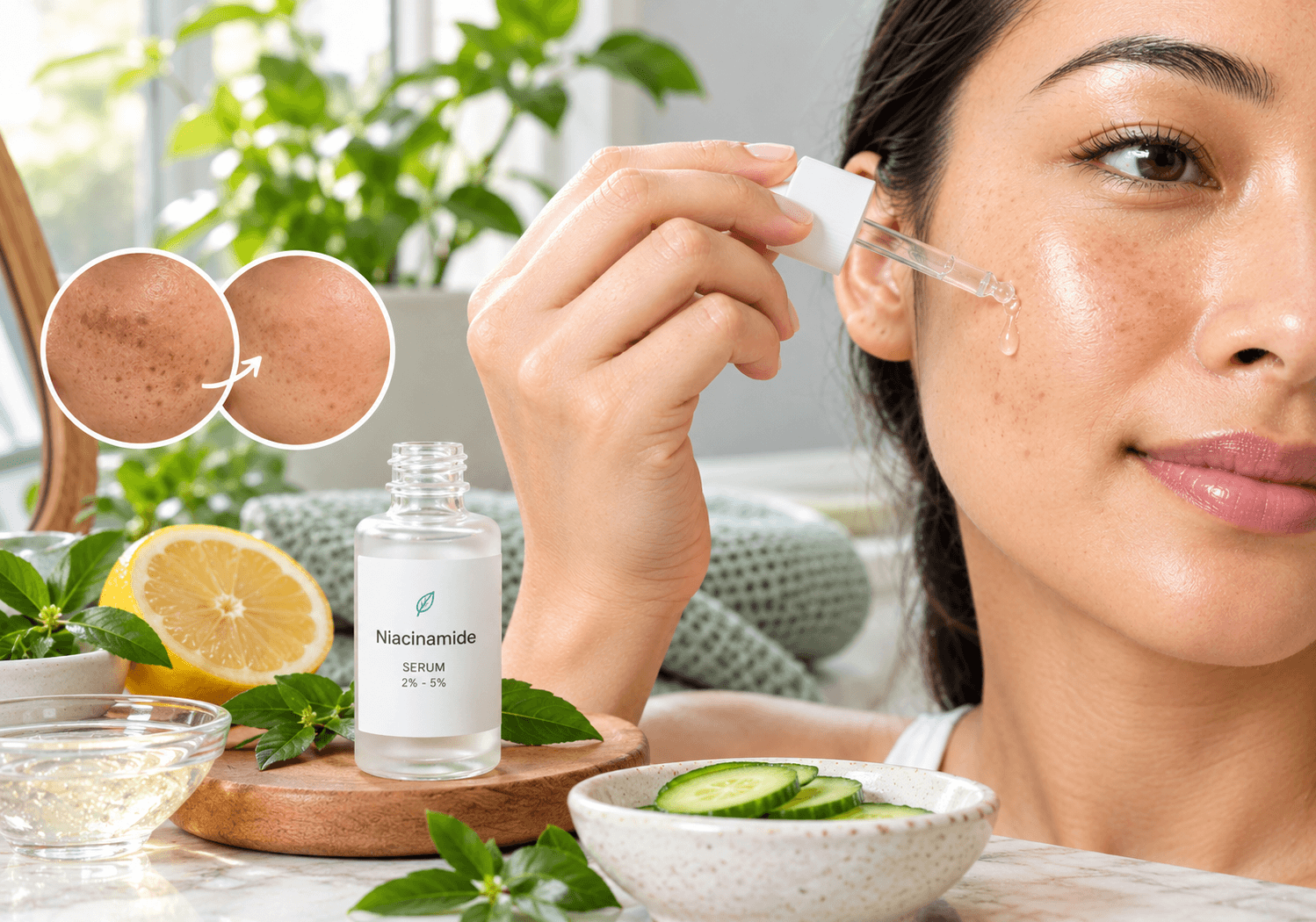
Dark spots can be stubborn. Whether they came after acne, sun exposure, irritation, or melasma, they often outlast the original problem by weeks or months. So, does niacinamide help with dark spots? Research suggests it can help fade some forms of discoloration gradually, especially when you pair it with consistent sunscreen use and a gentle skincare routine.
Niacinamide is a form of vitamin B_3, also called nicotinamide. It is widely used in serums, moisturizers, and treatments because it can support the skin barrier while helping make uneven tone less noticeable. It is not an overnight fix, and it cannot replace medical care for concerning skin changes. But it is a practical, generally well-tolerated option for many people.
Quick Answer: Yes, niacinamide may help with dark spots by reducing the transfer of pigment to surface skin cells. Studies have found that topical niacinamide can improve hyperpigmentation and uneven skin tone over several weeks. Use it consistently, wear broad-spectrum sunscreen daily, and introduce it slowly to reduce irritation.
Does Niacinamide Help With Dark Spots From Acne and Sun Exposure?
The short answer is yes, but the type and cause of the spot matter. Niacinamide may be most useful for post-inflammatory hyperpigmentation, the flat brown, gray-brown, or dark marks that remain after acne, eczema, shaving bumps, or other skin inflammation.
It may also help with uneven tone related to routine sun exposure. However, sunscreen does much of the heavy lifting here. Ultraviolet radiation can trigger more melanin production and deepen existing discoloration, which is why the American Academy of Dermatology’s sun-protection guidance recommends broad-spectrum, water-resistant sunscreen with at least SPF 30.
Niacinamide is not the same as niacin. Niacin supplements can cause flushing and are not a substitute for a topical niacinamide product. For skin concerns, the evidence discussed here applies to topical formulas used as directed.
How niacinamide may affect pigment
Melanin is the pigment that contributes to skin color and creates dark spots when it becomes unevenly distributed. Niacinamide appears to reduce melanosome transfer, meaning it may limit how much pigment is passed from pigment-making cells to surrounding skin cells.
A clinical study published in the International Journal of Cosmetic Science found that niacinamide reduced hyperpigmentation and improved skin lightness in participants using topical treatment. That mechanism differs from stronger pigment treatments that directly interfere with melanin production.
This matters because gentle products can be easier to maintain. Too much irritation from aggressive exfoliation, overusing retinoids, or layering too many active ingredients may worsen post-inflammatory hyperpigmentation, particularly in deeper skin tones.
What niacinamide cannot do
Niacinamide may improve the appearance of dark spots, but it does not treat every type of discoloration equally. It will not remove a mole, diagnose a suspicious lesion, or reliably erase deeply established melasma by itself.
Book an appointment with a dermatologist if a spot is new, changing, painful, bleeding, itchy, irregular in shape, or has multiple colors. The National Cancer Institute’s skin cancer information explains why new or changing skin lesions deserve professional evaluation.

The Research on Niacinamide for Hyperpigmentation
Niacinamide has a useful evidence base, although the research is not a promise that every serum will work the same way. Formula quality, concentration, consistent application, sun exposure, skin sensitivity, and the cause of pigmentation all affect results.
In one randomized clinical trial, a 5% niacinamide moisturizer improved facial hyperpigmentation and skin tone compared with its vehicle control after 8 weeks. The study also noted improvements in skin barrier measures, supporting niacinamide’s reputation as a barrier-friendly active ingredient.
A review in the Journal of Clinical and Aesthetic Dermatology describes niacinamide as a topical ingredient with potential benefits for hyperpigmentation, acne, barrier function, and signs of photoaging. That broad profile is useful for people whose dark spots come with dryness, sensitivity, or acne-prone skin.
Still, realistic expectations matter:
- Mild, newer post-acne marks may respond better than years-old discoloration.
- Dark spots commonly need at least 8 to 12 weeks of consistent care before a clear change is visible.
- Melasma is often chronic and can relapse with heat, visible light, hormones, and ultraviolet exposure.
- A product that stings, burns, or causes a rash is not “working better”; irritation can lead to more discoloration.
Niacinamide versus other dark-spot ingredients
Niacinamide can work well as part of a routine, but other ingredients have different strengths. Your best choice depends on your skin’s sensitivity and the reason you have spots.
| Ingredient | Main role | May suit | Important caution |
| Niacinamide | Helps reduce pigment transfer and supports the skin barrier | Beginners, sensitive skin, acne marks, uneven tone | Higher strengths can irritate some people |
| Vitamin C | Antioxidant support and brightening | Morning routines, sun-related uneven tone | Can be unstable or sting sensitive skin |
| Retinoids | Increase skin cell turnover and improve acne | Acne, texture, fine lines, dark marks | Can cause dryness and irritation |
| Azelaic acid | Helps acne, redness, and hyperpigmentation | Acne-prone or rosacea-prone skin | Can tingle when first introduced |
| Hydroquinone | Potent pigment treatment | More resistant hyperpigmentation under medical guidance | Use only with clinician guidance |
| Chemical exfoliants | Help shed surface cells | Rough texture and clogged pores | Overuse can damage the barrier |
A dermatologist may recommend stronger treatment options for melasma or stubborn pigmentation, including prescription topical medicines, peels, or procedures. The American Academy of Dermatology’s melasma overview emphasizes that treatment plans usually include strict sun protection.
What Percentage of Niacinamide Is Best for Dark Spots?
For most people, start with 2% to 5% niacinamide. That range has clinical support and is often enough to provide skin-barrier and tone benefits without pushing irritation risk unnecessarily high.
Products labeled 10% niacinamide are common, but more is not automatically better. If your skin is reactive, dry, or already using retinol, exfoliating acids, or acne treatments, a lower-strength serum or moisturizer is often the smarter starting point.
A simple way to choose
- Choose 2% to 5% if you are new to active skincare, have sensitive skin, or want a daily moisturizer.
- Consider 5% if your goal is fading post-acne marks and your skin tolerates basic products well.
- Treat 10% formulas cautiously, especially if you have rosacea, eczema, or a history of contact dermatitis.
- Skip products with unnecessary fragrance if your skin reacts easily.
A formula’s full ingredient list matters. A simple niacinamide serum with a humectant such as glycerin can be easier to tolerate than a product packed with fragrance, acids, and several high-strength actives.
Coach’s Tip: Treat dark-spot care like progressive training: change one variable at a time. Start niacinamide every other day for about 2 weeks, then build to daily use if your skin stays calm. Adding three new active products at once makes it impossible to tell what is helping or irritating your skin.
How to Use Niacinamide for Dark Spots
Consistency beats intensity. A basic routine that you can repeat daily is more useful than an elaborate routine you abandon because your skin feels dry, tight, or inflamed.
Morning routine
- Cleanse with a gentle, non-scrubbing cleanser, or rinse with lukewarm water if your skin is dry.
- Apply a thin layer of niacinamide serum to dry or slightly damp skin.
- Use a moisturizer if your skin feels dry or tight.
- Finish with broad-spectrum sunscreen, at least SPF 30, on all exposed skin.
Use enough sunscreen. For the face and neck, many dermatologists use the “two-finger” guideline: two full finger lengths of sunscreen. This is an approximate practical cue, not a replacement for following the product label.
Evening routine
- Remove makeup and sunscreen with a gentle cleanser.
- Apply niacinamide.
- Apply moisturizer.
If you also use a retinoid, you can apply niacinamide before or after it, depending on what your skin tolerates. Some people do well using niacinamide in the morning and retinol at night. Others prefer a simple “sandwich” approach: moisturizer, retinoid, then moisturizer.

Can you use niacinamide every day?
Most people can use niacinamide once or twice daily after they know their skin tolerates it. Start with once daily or every other day if you are new to it. Regular use is more important than using it multiple times per day.
Before applying a new product across your face, perform a patch test. Apply a small amount to a discreet area, such as behind the ear or along the jawline, for several days. Stop using it if you develop a rash, persistent burning, swelling, or intense itching.
Can niacinamide be used with vitamin C?
Yes. Older claims that niacinamide and vitamin C should never be combined came from outdated testing conditions. Modern skincare formulas can generally be layered safely if your skin tolerates them.
For a lower-irritation approach, apply vitamin C in the morning, niacinamide afterward, and sunscreen last. If layering feels too active, alternate them: vitamin C in the morning and niacinamide at night.
Can niacinamide be used with retinol?
Yes, often. Niacinamide may be especially helpful alongside retinoids because it supports the skin barrier. But “compatible” does not mean every person should start both on the same night.
Try this ramp-up plan:
| Week | Niacinamide | Retinoid | Goal |
| 1 to 2 | Every other morning | None or your established schedule | Check tolerance |
| 3 to 4 | Daily morning | 1 to 2 nights weekly | Build gradually |
| 5+ | Daily, morning or night | Increase only if skin remains comfortable | Consistency, not maximum strength |
Common Mistake: Using a strong niacinamide serum, exfoliating acids, scrubs, benzoyl peroxide, and retinol in the same routine. That can cause redness and barrier damage, which may make hyperpigmentation more noticeable. Simplify your routine and add one active ingredient at a time.
Does Niacinamide Help With Dark Spots if You Skip Sunscreen?
Not reliably. If you are treating dark spots without sunscreen, you are working against your own routine. Sunlight can deepen pigmentation, trigger new discoloration, and make it harder to see progress from niacinamide or any other topical.
Broad-spectrum sunscreen protects against both UVA and UVB radiation. UVA penetrates more deeply and contributes to photoaging, while UVB is a major cause of sunburn. Both can contribute to pigment changes.
The U.S. Food and Drug Administration’s sunscreen guidance advises choosing broad-spectrum protection with SPF 15 or higher; for dark-spot prevention and treatment, many dermatologists recommend SPF 30 or above. Reapply based on the product directions, especially after sweating, swimming, or towel drying.
Practical sun-protection habits
- Use sunscreen every morning, including on cloudy days and near windows.
- Reapply when outdoors for extended periods, following the label.
- Wear a wide-brimmed hat and sunglasses for added coverage.
- Seek shade when practical, especially during intense midday sun.
- Consider tinted sunscreens with iron oxides if melasma or visible-light sensitivity is a concern; ask a dermatologist which option fits your skin.
A Practical 12-Week Niacinamide Routine
This routine is designed for someone with mild dark spots, acne marks, or uneven tone. It is not a treatment plan for severe melasma, scarring, or suspicious skin lesions.
Weeks 1 to 2: Build the base
Use a gentle cleanser, a 2% to 5% niacinamide product every other day, moisturizer, and broad-spectrum sunscreen. The goal is not fast fading yet. The goal is calm, stable skin that can tolerate regular treatment.
Avoid picking acne, harsh scrubs, and new exfoliating products during this stage. Picking or rubbing spots can prolong inflammation and contribute to post-inflammatory hyperpigmentation.
Weeks 3 to 6: Establish consistency
If your skin is comfortable, use niacinamide once daily. Continue sunscreen every day and take a photo in the same lighting once every 2 weeks to monitor gradual change.
Do not judge the routine from day to day. Lighting, dryness, and temporary redness can make dark spots look different even when your overall trend is improving.
Weeks 7 to 12: Assess and adjust
At this point, some people may notice a more even overall tone or less visible post-acne discoloration. If you see no improvement but your skin is tolerating the routine, consider speaking with a dermatologist about adding azelaic acid, a retinoid, or another evidence-based option.
If irritation develops, reduce frequency. A lower-frequency routine that keeps your barrier healthy is often better than forcing daily use and creating more inflammation.
Skin Types and Dark-Spot Concerns
Niacinamide can suit many skin types, but the approach should change based on your skin’s needs.
Oily or acne-prone skin
Choose a lightweight, fragrance-free serum or gel moisturizer. Niacinamide can be a useful part of an acne-mark routine, but it will not prevent every breakout on its own.
For active acne, a dermatologist can help build a treatment plan that targets both breakouts and leftover marks. Clearing the ongoing inflammation helps prevent the cycle of new dark spots.
Dry or sensitive skin
Use niacinamide in a moisturizer rather than a high-strength serum, or layer it under a thicker cream. Avoid combining it with abrasive exfoliants, strong cleansers, or too many active ingredients.
Barrier support is important because dry, irritated skin can feel more reactive. Research on niacinamide has linked topical use with improved barrier function and lower transepidermal water loss, as reviewed in Dermatologic Therapy.
Deeper skin tones
Post-inflammatory hyperpigmentation can be more noticeable and longer-lasting in darker skin tones. The priority is reducing inflammation, using sun protection consistently, and avoiding treatments that cause burning or peeling.
A 2022 review in the Journal of Clinical Medicine notes that hyperpigmentation management in skin of color should account for irritation risk and the underlying cause. A dermatologist experienced in treating diverse skin tones can be especially helpful for melasma or persistent marks.
Melasma
Niacinamide may be a supportive ingredient for melasma, but it is rarely enough as a stand-alone treatment. Melasma often needs a more targeted plan, strict photoprotection, and professional guidance.
Hormonal changes, pregnancy, oral contraceptives, and certain medications can affect melasma. Check with a doctor or dermatologist before starting treatment if you are pregnant, breastfeeding, or managing a medical condition.
How Long Does Niacinamide Take to Fade Dark Spots?
Most people should allow at least 8 to 12 weeks before judging whether niacinamide is helping. Skin turnover is gradual, and pigment does not fade in a straight line.
You may notice earlier changes in hydration, smoother texture, or less redness. Those are useful signs that the product is supporting your skin barrier, but they are not the same as complete dark-spot removal.
Keep your expectations grounded:
- Newer acne marks may begin fading within a few months.
- Older dark spots can take longer and may need a combination plan.
- Melasma may improve and then recur without ongoing sun protection.
- Deep pitted acne scars are texture changes, not just pigment changes; niacinamide will not fill them in.
A simple progress photo can be more honest than a daily mirror check. Take photos in the same location, at the same time of day, without filters, every 2 to 4 weeks.

Related Habits That Support Skin Health
Skincare products work best within the basics: gentle cleansing, moisturizer as needed, sun protection, and avoiding repeated irritation. Be cautious with supplements marketed as “skin brighteners” or “detoxes,” particularly when they make big promises without strong evidence.
If you are trying to improve general health habits alongside your skincare routine, a sustainable approach matters. Consistent sleep supports overall health, and you can read more about the relationship between sleep and metabolism without relying on quick-fix supplement claims.
Nutrition also affects overall health, but no food or supplement can replace sun protection for dark-spot management. If you are considering supplements for weight management or skin goals, learn how to evaluate weight-management ingredients rather than assuming “natural” means safe or effective.
When to See a Dermatologist
A dermatologist can save you time, irritation, and money if dark spots are persistent or complicated. Seek professional care if you have:
- Dark spots that are spreading, changing shape, bleeding, crusting, or painful.
- Melasma that does not improve with sunscreen and gentle over-the-counter care.
- Severe acne, frequent inflammatory breakouts, or scarring.
- A history of eczema, rosacea, or allergic contact dermatitis that makes skincare difficult.
- No improvement after about 3 months of consistent use.
- Pregnancy, breastfeeding, or prescription medications that may affect suitable treatments.
Professional options may include prescription retinoids, azelaic acid, hydroquinone under supervision, tranexamic acid in appropriate cases, chemical peels, or laser procedures. Procedures can also trigger pigmentation if selected or performed poorly, so individualized guidance matters.
FAQ
Does niacinamide help with dark spots from acne?
Yes, niacinamide may help fade post-inflammatory hyperpigmentation from acne. It can reduce pigment transfer while supporting the skin barrier. Results are gradual, so use it consistently for at least 8 to 12 weeks, avoid picking blemishes, and use broad-spectrum sunscreen every day.
How long does niacinamide take to fade dark spots?
Many people need 8 to 12 weeks of consistent use to assess changes in dark spots. Newer acne marks may fade sooner than long-standing pigmentation. Progress also depends on sunscreen use, the cause of discoloration, product strength, and whether irritation is triggering more inflammation.
What percentage of niacinamide is best for hyperpigmentation?
A 2% to 5% niacinamide product is a practical starting range for most people. Clinical research has supported 5% formulas for uneven tone. Higher percentages are not automatically more effective and may irritate sensitive skin, which can worsen dark spots.
Can niacinamide make dark spots worse?
Niacinamide itself is usually well tolerated, but any product can irritate your skin. Redness, burning, rash, or dryness may lead to more post-inflammatory hyperpigmentation. Patch test first, start slowly, and stop using the product if you develop a persistent reaction.
Can you use niacinamide with vitamin C?
Yes, most people can use niacinamide and vitamin C in the same routine. Try vitamin C first, niacinamide next, then moisturizer and sunscreen. If your skin is sensitive, use one in the morning and the other at night rather than layering them together.
Is niacinamide good for melasma?
Niacinamide may be a helpful supportive ingredient for melasma, particularly alongside daily sun protection. However, melasma is often persistent and may require treatment from a dermatologist. Do not rely on niacinamide alone if discoloration is extensive, recurring, or affecting your quality of life.
Conclusion: Does Niacinamide Help With Dark Spots?
Does niacinamide help with dark spots? For many people, yes: it may gradually improve post-acne marks and uneven tone while supporting a healthier skin barrier. The most effective approach is simple and consistent: choose a gentle 2% to 5% product, use broad-spectrum sunscreen daily, avoid irritating your skin, and give the routine at least 8 to 12 weeks.
If your spots are stubborn, spreading, or possibly melasma, a dermatologist can help you choose stronger options safely. Niacinamide is a useful tool, but it works best as part of a realistic routine rather than a miracle treatment.