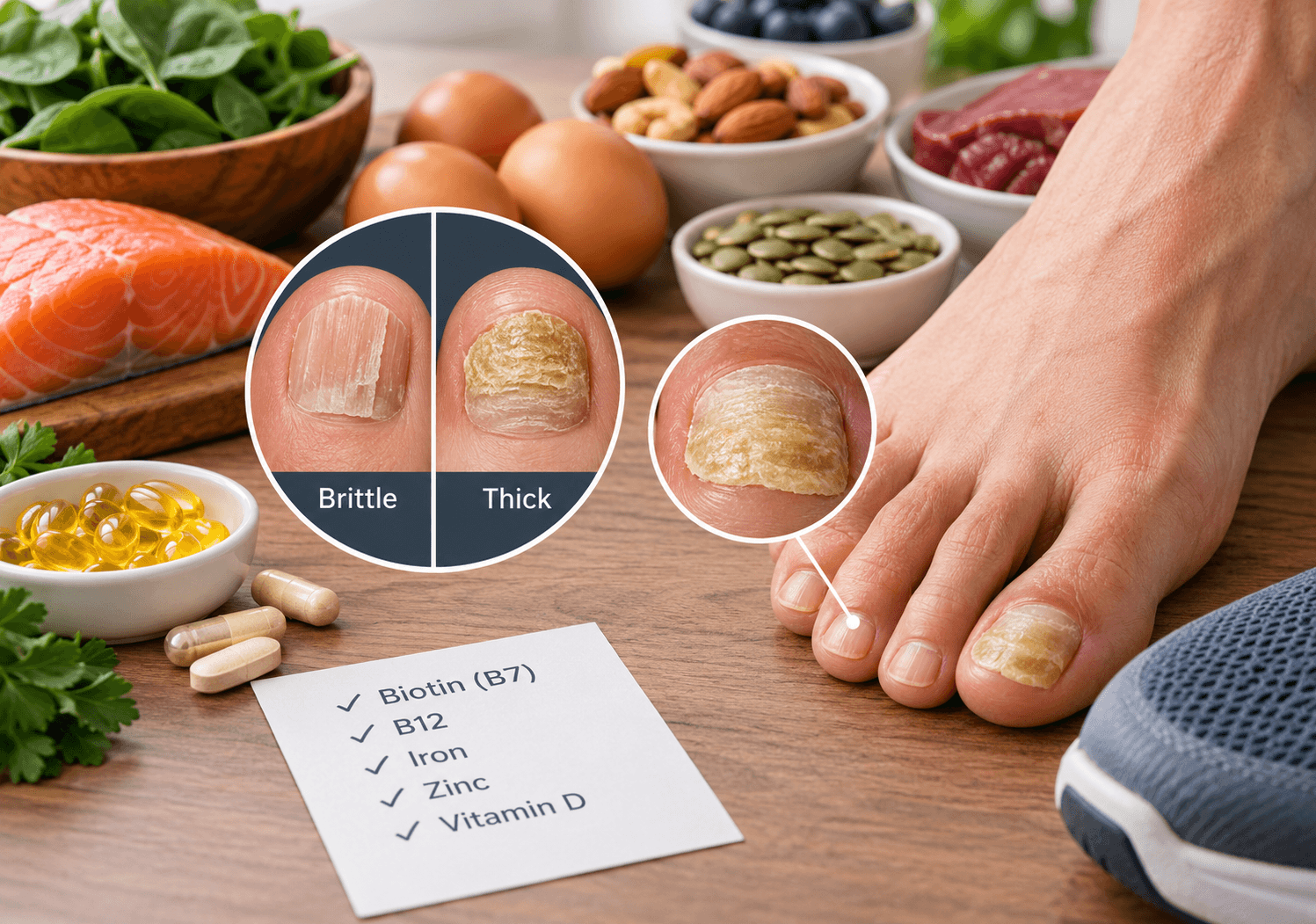
Noticing changes in your feet can be alarming, especially when your toenails start turning thick, yellow, or so brittle that they snap off inside your athletic shoes. As a certified strength and conditioning coach who spends hours on the gym floor working with athletes and active adults, I see foot health issues all the time. Proper foot biomechanics start with healthy toes and nails. When clients come to me asking, can vitamin deficiency cause thick or brittle toenails?, my answer is a resounding yes—though the exact micronutrients involved and the underlying mechanics are often misunderstood.
Your toenails are constantly built from keratinized protein matrix cells located right under your cuticles. Just like your muscles need amino acids and energy to rebuild after a heavy lifting session, your nail matrix relies on a steady stream of key vitamins and minerals carried by healthy blood flow to build strong, flexible nail plates. When your body lacks essential nutrients like biotin, B12, iron, zinc, or vitamin D, the structural integrity of your nails degrades fast.
In this guide, we will break down the exact scientific connection between micronutrient gaps and nail changes, how to tell a nutritional deficiency apart from a fungal infection, and practical, real-world steps you can take to restore your toenail health.
Quick Answer
Yes, vitamin deficiencies can directly cause both thick and brittle toenails. A lack of biotin (vitamin B7), vitamin B12, iron, zinc, or vitamin D disrupts keratin production and matrix cell division. This leads to weak, layered, brittle nails or abnormal tissue buildup that appears as thickened, grooved nail plates.
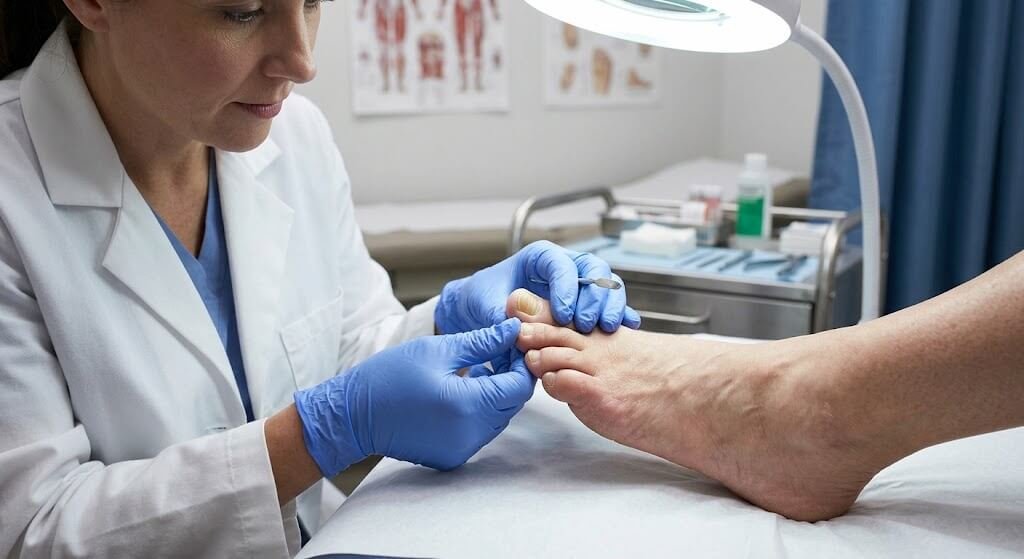
How Vitamins and Minerals Affect Toenail Structure
To understand why your toenails become thick or brittle, you first need to understand how a nail grows. Your toenail plate is made up of multiple dense layers of a tough structural protein called keratin. The nail matrix— hidden beneath the skin fold at the base of your toe—continuously divides and pushes older, keratinized cells forward.
This process requires high cellular energy and rapid cell division. Micronutrients act as required cofactors for the enzymes that drive keratin synthesis, blood vessel formation, and tissue repair.
When your diet lacks key micronutrients, or when your gut fails to absorb them properly, the nail matrix suffers. Without sufficient vitamins, the keratin layers produced are either too thin and prone to flaking (brittle nails) or irregular and heaped up due to altered keratinocyte turnover (thickened nails). Furthermore, poor blood circulation to the lower extremities—a common issue if you suffer from low iron levels—compounds the problem by starving the toes of oxygen.
Common Micronutrient Deficiencies That Cause Nail Changes
Different nutrient shortfalls show up on your toes in distinct ways. Here is a breakdown of the specific vitamins and minerals tied to thick and brittle toenails.
| Nutrient | Primary Role in Nail Health | Deficiency Symptoms on Toenails | Common Food Sources |
| Biotin (Vitamin B7) | Keratin structural matrix creation | Severe brittleness, splitting, vertical ridging | Eggs, salmon, almonds, sweet potatoes |
| Vitamin B12 | Red blood cell synthesis & oxygen delivery | Darkening, blue/brown discoloration, brittleness | Beef, liver, sardines, dairy, eggs |
| Iron (Ferritin) | Oxygen transport to peripheral tissues | Spoon-shaped nails (koilonychia), brittle flaking | Red meat, spinach, lentils, pumpkin seeds |
| Zinc | Cellular division & protein synthesis | Thickened nail bed, white spots, slow growth | Oysters, beef, pumpkin seeds, chickpeas |
| Vitamin D | Calcium regulation & matrix cell growth | Thinning, slow growth, soft or cracking nails | Fatty fish, egg yolks, fortified milk, sunlight |
1. Biotin (Vitamin B7)
Biotin is essential for lipid synthesis and protein metabolism, especially for amino acids like cysteine that make up keratin. When biotin levels drop, the structural cross-links in the nail plate weaken. Research shows that biotin supplementation can help strengthen fragile nails, as noted in clinical reviews published by the National Institutes of Health.
2. Vitamin B12 and Folate
Vitamin B12 (cobalamin) plays an indispensable role in producing red blood cells and carrying oxygen to your feet. Because your toes are at the absolute terminus of your circulatory system, low B12 directly starves the nail matrix. This can cause your nails to turn brittle, develop brownish ridges, or take on a dull appearance. Maintaining optimal B12 levels is crucial for overall tissue cellular vitality, much like staying aware of which nutrients support normal energy metabolism across the whole body.

3. Iron Deficiency (Anemia)
Iron is required to produce hemoglobin. Low iron stores (low ferritin) lead to compromised blood flow and poor tissue oxygenation in the toes. Over time, an iron deficiency makes toenails extremely brittle, paper-thin, or grooved. In severe cases, it leads to koilonychia, where the nails become concave or “spoon-shaped.”
4. Zinc
Zinc is a key catalyst for over 300 enzymatic processes, including the rapid cell division needed for healthy nail growth. A zinc deficiency impairs protein synthesis in the matrix, causing the toenail plate to grow out thick, irregular, or covered in horizontal ridges (Beau’s lines).
5. Vitamin D
Vitamin D regulates systemic calcium absorption and cell proliferation. Low vitamin D levels weaken the nail plate’s attachment to the underlying subungual tissue, making nails dry, slow-growing, and prone to severe splitting.
Thick vs. Brittle Toenails: Identifying the Difference
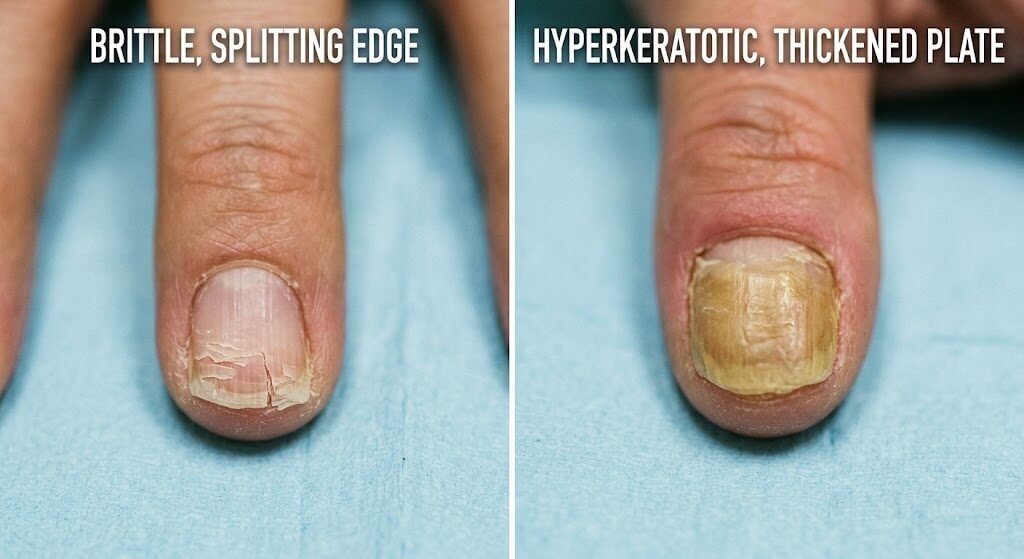
To fix your toenail problems, you must first determine whether your nails are primarily suffering from hypertrophy (thickening) or fragility (brittleness).
Characteristics of Brittle Toenails
- Splitting and Peeling: The top layers of the nail plate peel off in thin sheets.
- Vertical Ridges: Longitudinal lines run from the cuticle to the tip.
- Easy Snapping: The edge of the nail breaks easily when exposed to mild pressure or tight athletic socks.
- Dry Texture: Nails lack elasticity and natural luster.
Characteristics of Thick Toenails
- Increased Nail Height: The nail plate grows noticeably thicker, making it hard to cut with normal clippers.
- Yellow or Opaque Discoloration: The nail loses transparency and turns yellowish or dull grey.
- Rough, Chalky Surface: The tissue beneath the nail plate accumulates debris.
- Curved or Claw-Like Growth: The nail thickens unevenly, causing pressure against shoe toe boxes.
Vitamin Deficiency vs. Fungal Infection: How to Tell
One of the biggest mistakes people make is assuming every thick or yellow toenail is a fungal infection (onychomycosis). While fungal infections are very common, treating a vitamin deficiency with topical antifungal creams will yield zero results.
Key Differences to Look For
- Symmetry: Vitamin deficiencies usually affect all ten toenails (and fingernails) similarly. Fungal infections typically start on one or two toes (often the big toe or pinky toe) after minor trauma or athlete’s foot.
- Debris: Fungal infections often create soft, foul-smelling, chalky debris under the nail plate (subungual hyperkeratosis). Nutritional deficiencies result in hard, altered keratin without cheesy debris.
- Texture: Fungal nails become soft, crumbly, and easily destroyed. Thickened nails from nutrient deficits tend to remain dense and hard.
If you suspect an underlying metabolic or absorption issue, tracking overall systemic factors like how sleep affects metabolism and weight management can help you assess whether poor recovery and lifestyle stress are hurting your skin, hair, and nails.
Secondary Factors That Worsen Nutrient-Related Nail Damage
Even if a vitamin deficiency is the underlying cause, external stressors can accelerate nail breakdown.
1. Inappropriate Athletic Footwear
As a strength coach, I see this daily. Wearing shoes with an improperly sized toe box crushes the toes together. Micro-trauma to the nail matrix causes the tissue to protect itself by growing thicker layers. Combined with a lack of zinc or biotin, your nails stand no chance.
2. Excessive Moisture and Sweat
Sweaty gym socks create a wet environment that swells the nail plate. When the nail dries out again, it contracts rapidly, worsening brittleness and splitting.
3. Aging and Reduced Peripheral Circulation
As we age, arterial blood supply to the feet decreases. This reduced microvascular flow makes it harder for absorbed vitamins to reach the matrix, amplifying any minor dietary gaps into severe toenail changes. This is why many active adults over 40 must be proactive about their nutrient intake, taking steps like learning how to increase metabolism naturally after 40.
Practical Action Plan: Restoring Healthy Toenails
Fixing thick or brittle toenails takes patience. Toenails grow slowly—at a rate of roughly 1.5 to 3 millimeters per month. It can take 9 to 12 months to replace an entire big toenail plate. Follow this 4-step coach-approved protocol to reset your foot health.
Step 1: Get Lab Work Done
Before spending money on random supplements, ask your physician to run a comprehensive nutrient panel checking:
- Serum Ferritin (iron stores)
- Serum Vitamin B12 and Methylmalonic Acid (MMA)
- Plasma Zinc
- 25-hydroxy Vitamin D
Step 2: Fix Your Whole-Food Nutrient Intake
Focus on nutrient-dense foods to rebuild your keratin production naturally:
- For Biotin & Protein: Eat whole pasture-raised eggs, wild salmon, and sunflower seeds.
- For Iron & B12: Include lean grass-fed beef, bison, chicken liver, or fortified plant proteins.
- For Zinc: Consume oysters, pumpkin seeds, lentils, and grass-fed dairy.
If you struggle with maintaining healthy dietary intake while managing body composition goals, focus on nutrient-dense whole foods rather than restrictive crash diets. Knowing how protein intake affects hunger and fullness hormones makes it much easier to optimize nutrition without missing out on vital micronutrients.
Step 3: Implement External Nail Care
- Apply Urea Cream: Use a 20% urea cream on thick toenails to soften dense keratin safely without damaging surrounding tissue.
- Hydrate with Jojoba Oil: Apply pure jojoba oil or vitamin E oil to cuticles twice daily to lock in moisture and reduce brittleness.
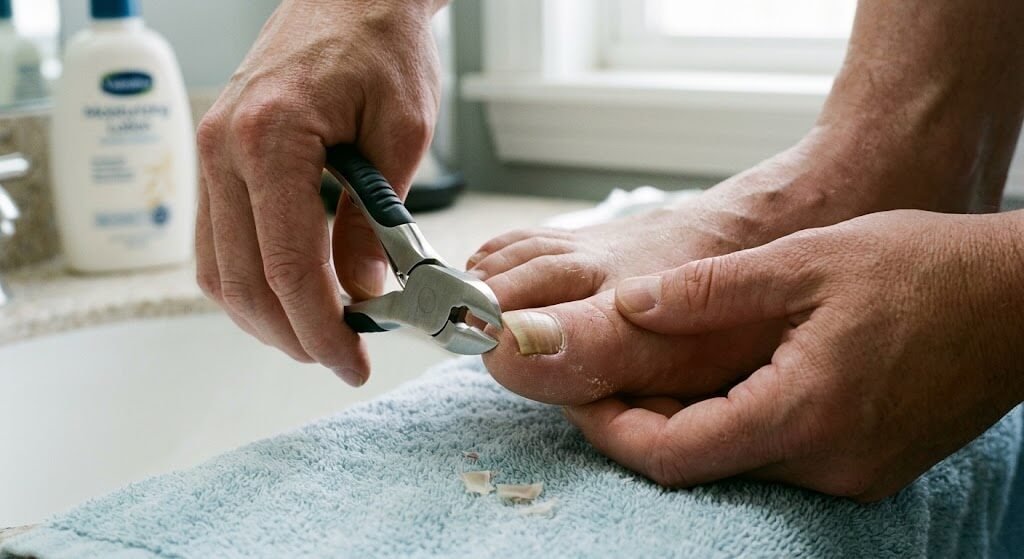
- Proper Trimming: Cut toenails straight across using heavy-duty, stainless-steel clippers. Never round the corners deep into the skin, as this leads to ingrown nails.
Coach’s Tip: The Footwear Space Test
Always ensure there is at least 0.5 inches (1.27 cm) of space between your longest toe and the end of your running or training shoes. When you perform heavy squat sessions, lunges, or sprints, your feet expand under load. If your toes jam against the shoe upper, you cause matrix micro-trauma that mimics or amplifies a vitamin deficiency.
Common Mistake: Over-Filing Thickened Nails
A major error people make when dealing with thick toenails is taking a harsh grit file or electric grinder to the top of the nail plate. Aggressively filing down the top surface thins the nail artificially, but it damages the dorsal keratin layer, leading to infections and increased fragility. Only gently buff the top surface, and let nutritional corrections resolve the issue from the inside out.
Frequently Asked Questions
What vitamin deficiency causes thick toenails?
Thickened toenails are most commonly linked to severe deficiencies in zinc, vitamin D, or vitamin B12. Low levels of these nutrients alter protein synthesis and cell division in the nail matrix, causing keratinized tissue to pile up irregularly rather than growing as a smooth, flat plate.
Why are my toenails getting brittle and yellow?
Brittle, yellowing toenails can stem from a combination of biotin (B7) and vitamin B12 deficiencies, reduced blood flow to the lower limbs, or a fungal infection. Poor diet compromises keratin cross-linking, making the nail porous, dry, discolored, and easily broken.
Can lack of vitamin D make your nails weak?
Yes. Vitamin D plays a critical role in calcium homeostasis and cell maturation within the nail bed. A deficiency slows down overall nail growth and weakens the bonding between keratin layers, leading to soft, flexible, or easily cracked toenails.
How do you fix thick toenails caused by nutritional deficiencies?
First, confirm the exact missing nutrient through blood tests with a doctor. Correct your diet with nutrient-rich foods or targeted supplements, keep cuticles hydrated with jojoba oil, apply a 20% urea cream to soften thickened keratin, and wear shoes with a wide toe box.
What is the best supplement for brittle toenails?
Clinical evidence strongly supports biotin (vitamin B7) supplementation at daily doses of 2.5 mg to 5 mg for improving nail hardness and thickness. Combining biotin with collagen peptides, zinc picolinate, and vitamin B12 provides complete metabolic support for keratin production.
Does B12 deficiency cause toenail ridges?
Yes. Vitamin B12 deficiency impairs healthy red blood cell production, leading to decreased oxygen delivery to the toe tips. This starves the nail matrix, causing dark longitudinal ridges, nail thinning, and extreme brittleness.
Conclusion
Can vitamin deficiency cause thick or brittle toenails? Absolutely. Your toenails serve as an accurate visual monitor for your systemic health and nutritional status. When your body lacks critical micronutrients like biotin, B12, iron, zinc, or vitamin D, your nail matrix cannot produce strong, resilient keratin layers. This leaves you with weak, flaking toenails that break inside your shoes, or hyperkeratotic nails that become thick and tough to manage.
Take a proactive approach by checking your blood levels, prioritizing whole-food nutrition, protecting your feet with proper-fitting footwear, and maintaining an effective topical hydration routine. Healthy nails take time to grow out, but consistent internal and external care will restore your foot health from the matrix up.