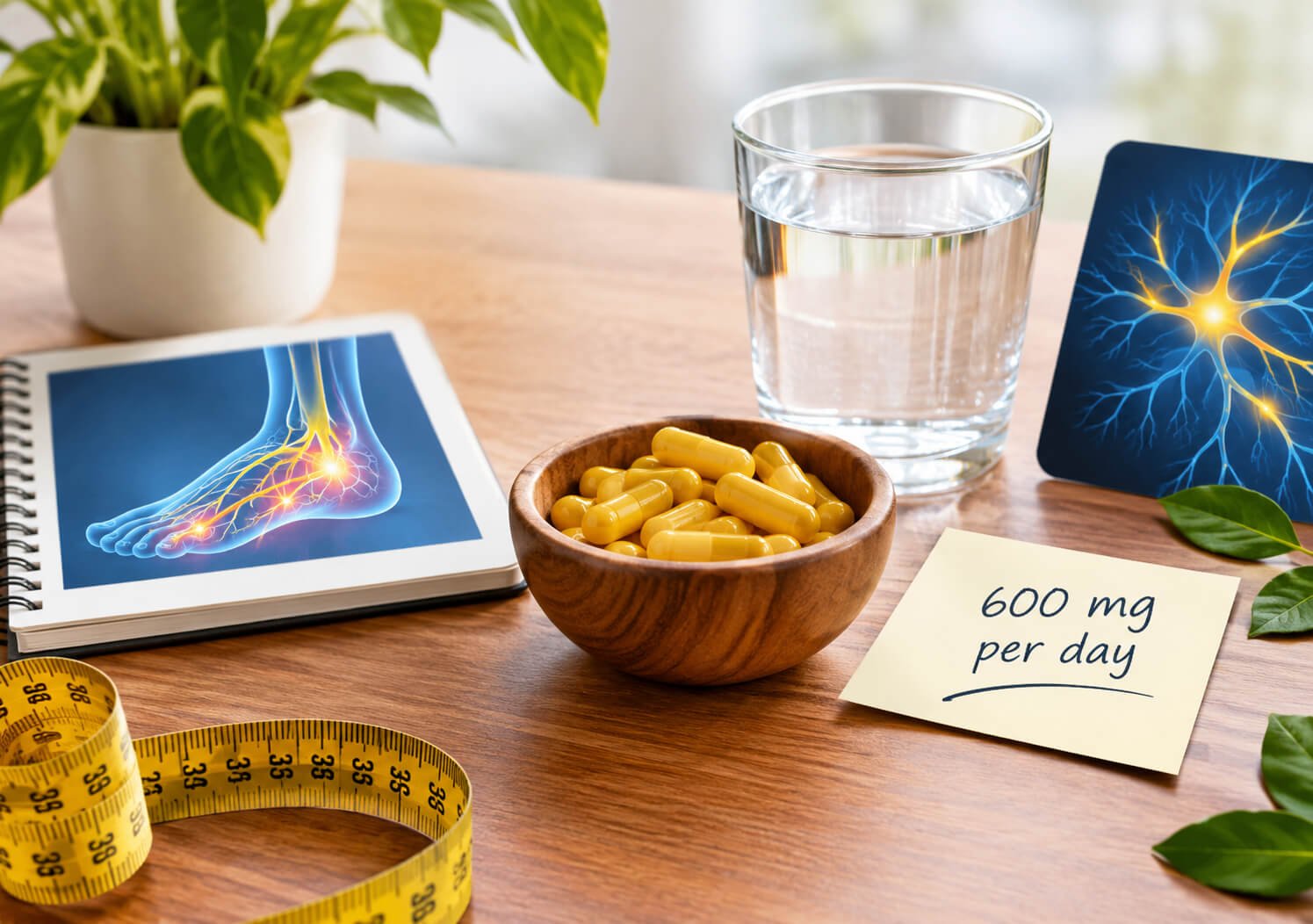
Dealing with nerve pain can feel exhausting. Whether you experience a burning sensation in your feet, constant tingling in your toes, or sharp electrical pains shooting up your legs, peripheral neuropathy significantly impacts daily movement, workouts, and sleep quality.
Alpha lipoic acid (ALA)—also known as thioctic acid—is a powerful antioxidant that has gained considerable attention for its potential to relieve nerve discomfort, particularly in people with diabetic peripheral neuropathy. But how much should you actually take, when should you take it, and how does it fit into a healthy lifestyle?
Disclaimer: Always consult your physician or physical therapist before starting any new supplement, especially if you have chronic health conditions or take prescription medications.
Quick Answer
For nerve pain associated with diabetic peripheral neuropathy, clinical research consistently demonstrates that an oral dose of 600 mg per day of Alpha Lipoic Acid (ALA) offers the best balance between therapeutic effectiveness and minimal stomach side effects. Higher doses (up to 1,200 mg–1,800 mg daily) do not provide significantly better relief and increase the likelihood of nausea or upset stomach. Always discuss supplement usage with your primary care provider.
What Is Alpha Lipoic Acid and How Does It Help Nerve Pain?
Alpha lipoic acid is a naturally occurring compound synthesized inside human cells, specifically within the mitochondria—the energy powerhouses of your cells. Unlike most antioxidants that are either strictly water-soluble (like vitamin C) or fat-soluble (like vitamin E), ALA is uniquely both water- and fat-soluble. This dual nature allows it to work throughout your whole body, including cell membranes and fluid spaces.
Nerve tissue is highly vulnerable to oxidative stress. When free radicals accumulate—often driven by elevated blood sugar, chronic inflammation, or poor circulation—they damage delicate peripheral nerves and the tiny blood vessels (vasa nervorum) that feed them. This damage leads to classic neuropathy symptoms:
- Burning sensations in the hands or feet
- Numbness or a “pins and needles” feeling
- Hypersensitivity to touch
- Dull aching or shooting pain
According to a review published in Frontiers in Pharmacology, ALA works through multiple pathways: it scavenges damaging free radicals, regenerates other antioxidants like vitamins C and E, improves peripheral blood flow, and enhances cellular glucose intake. By reducing oxidative stress around nerve cells, ALA helps improve nerve conduction velocity and alleviates pain.

Alpha Lipoic Acid for Nerve Pain Dosage: What the Science Says
When looking at clinical studies for peripheral neuropathy—especially diabetic neuropathy—researchers have tested doses ranging from 300 mg up to 1,800 mg per day.
| Daily Oral Dose | Typical Effectiveness | Common Side Effects | Coach’s Take |
| 300 mg / day | Mild to moderate support | Extremely low | Good starting point for sensitive stomachs, though may take longer to see results. |
| 600 mg / day | Optimal effectiveness | Low | The standard clinical dose supported by robust medical literature. |
| 1,200 mg / day | Equal relief to 600 mg | Moderate (nausea, acid reflux) | Generally unnecessary; increases risk of stomach discomfort without extra benefits. |
| 1,800 mg / day | Equal relief to 600 mg | High (gastrointestinal upset, skin rash) | Not recommended for routine oral supplementation. |
The landmark ALADIN (Alpha-Lipoic Acid in Diabetic Neuropathy) trial series and the SYDNEY 2 trial evaluated various oral doses of ALA. The research concluded that 600 mg daily delivers the optimal clinical response for reducing nerve pain, burning, and numbness without causing substantial gastrointestinal distress.
Understanding what affects metabolism and body weight can also help put dietary supplementation into a broader context of overall physical health.
R-Alpha Lipoic Acid vs. Standard ALA: Which Form Is Best?
When shopping for supplements, you will encounter two main forms:
- Synthetic ALA (S-ALA / R-ALA mixture): Most common and affordable options contain a 50/50 mix of the synthetic S-isomer and natural R-isomer (often simply labeled “Alpha Lipoic Acid”).
- R-Alpha Lipoic Acid (R-ALA or Na-R-ALA): The natural, biologically active form synthesized by the body.
R-ALA offers higher bioavailability, meaning your body absorbs and utilizes it more efficiently. If you choose a stabilized R-ALA formulation (such as Sodium R-Lipoate), a dose of 300 mg to 600 mg daily is typically used. While standard ALA remains effective and thoroughly researched, R-ALA is often preferred by individuals who experience mild stomach discomfort with standard formulations.
Best Time to Take ALA and Practical Usage Guidelines
To maximize absorption and get the best results from your supplement routine, keep these practical timing guidelines in mind:
Take on an Empty Stomach
Food can significantly reduce the bioavailability of oral alpha lipoic acid. Take your daily dose 30 minutes before breakfast or at least 2 hours after a meal with a full glass of water.
Coach’s Tip
If taking standard ALA on an empty stomach causes acid reflux, heartburn, or nausea, don’t give up! Try splitting your dose into 300 mg twice per day, or take it alongside a light snack. While food slightly reduces absorption rate, taking it consistently with food is far better than skipping doses due to stomach discomfort.
Be Mindful of Timing with Minerals
ALA can bind (chelate) to metal ions in your gut. Avoid taking your ALA dose at the exact same time as iron, calcium, magnesium, or zinc supplements. Separate mineral supplements and dairy products from ALA by at least 2 hours.
How Long Does It Take for ALA to Help Nerve Pain?
Unlike pain relievers that act within minutes, alpha lipoic acid works gradually by combating cellular stress and supporting nerve tissue health.
- Weeks 1 to 3: Clinical improvements usually start showing between 3 and 5 weeks of consistent daily usage.
- Weeks 3 to 5: Most clinical trials report noticeable pain reduction and less numbness around 3 to 5 weeks.
- 3 to 6 Months: Long-term studies suggest sustained improvement in nerve conduction velocity and overall comfort when maintained for 3 to 6 months.
Patience and consistency are essential when managing nerve discomfort naturally.

Safety, Side Effects, and Drug Interactions
While ALA is generally well-tolerated when taken at recommended levels, awareness of potential interactions is important:
Common Mild Side Effects
- Mild nausea or indigestion
- Acid reflux / heartburn
- Skin rash or itching (rare)
- Urine may have a distinct odor (similar to asparagus)
Blood Sugar Considerations
Alpha lipoic acid supports insulin sensitivity and cellular glucose uptake. A review by the National Center for Complementary and Integrative Health (NCCIH) highlights that while improved glucose metabolism is beneficial, combining ALA with insulin or oral diabetes medications may increase the risk of low blood sugar (hypoglycemia). Monitor your blood sugar regularly if you are on diabetes medications.
Thyroid Medications
ALA may interfere with thyroid hormone activity (such as levothyroxine). Always space thyroid medication away from ALA doses and consult your endocrinologist.

Combining ALA with Lifestyle and Exercise Strategies
Supplements work best alongside physical activity, blood sugar management, and lifestyle habits. Exercise increases capillary density and improves peripheral circulation, delivering oxygen and nutrients directly to damaged nerve fibers.
Recommended Exercise Modifications for Neuropathy
If foot numbness affects your balance or causes pain, try low-impact movements:
- Stationary Cycling: Keeps cardiovascular strain high while protecting feet from repetitive impact.
- Water Aerobics or Swimming: Eliminates pressure on lower extremity nerves while building muscle endurance.
- Seated Resistance Training: Strengthens major muscle groups safely without risk of losing balance.
For individuals over 40 looking to support overall vitality, reading about how to increase metabolism naturally after 40 can provide additional useful lifestyle tips. Combining cardiovascular exercise with proper nutrition and target nutrients helps support systemic circulation and cellular energy production.
Common Mistake
Avoiding exercise due to mild foot numbness. Unless strictly advised by your physician, avoiding physical activity can worsen peripheral circulation and slow nerve recovery. Focus on low-impact cardio, wear supportive footwear, and inspect your feet daily for minor cuts or blisters.
Sample Active Living Routine for Neuropathy Support
Here is a weekly template designed to support lower extremity circulation, balance, and general strength without overloading delicate foot nerves:
| Day | Activity Focus | Recommended Volume / Time |
| Monday | Low-Impact Cardio (Cycling / Recumbent Bike) | 20–30 mins at moderate intensity |
| Tuesday | Seated Upper & Lower Body Resistance Training | 3 sets of 10–12 reps (moderate weight) |
| Wednesday | Active Recovery & Gentle Stretching / Yoga | 20 mins of flexibility work |
| Thursday | Low-Impact Cardio (Water Aerobics / Rowing) | 20–30 mins steady pace |
| Friday | Balance & Core Stability Training | 15–20 mins (single-leg stands near wall, seated balance) |
| Saturday | Gentle Walking on Paved/Flat Surface | 20–30 mins with proper cushioned shoes |
| Sunday | Rest & Recovery | Light active movement / recovery |
Maintaining healthy muscle tissue through sensible resistance exercise is an excellent strategy; exploring how protein helps control hunger during weight loss can help support recovery and lean muscle preservation.
Key Nutritional Partners for Nerve Health
Alpha lipoic acid works even better when supported by a solid nutritional foundation:
- Vitamin B12 (Methylcobalamin): Crucial for maintaining the myelin sheath surrounding peripheral nerves.
- Benfotiamine (Fat-soluble Vitamin B1): Clinical trials suggest benfotiamine helps prevent microvascular nerve damage caused by high blood sugar.
- Acetyl-L-Carnitine (ALCAR): Supports mitochondrial energy conversion and assists with nerve regeneration.
- Dietary Fiber: Choosing fiber-dense foods helps steady blood sugar spikes. You can learn more in our guide on can dietary fiber help with appetite and weight management.
If you are exploring broad nutritional strategies to maintain steady daily stamina, reading about which nutrients support normal energy metabolism offers valuable details on metabolic pathways. Furthermore, maintaining good rest is essential for cellular repair; check out how does sleep affect metabolism and weight management to optimize your night routine.

Frequently Asked Questions (FAQ)
How much alpha lipoic acid should I take for nerve pain?
Clinical studies indicate that an oral dose of 600 mg per day is the most effective dosage for relieving nerve pain, burning, and tingling associated with diabetic peripheral neuropathy. Doses higher than 600 mg do not appear to provide additional pain relief and increase the likelihood of stomach upset.
Should I take alpha lipoic acid in the morning or night?
Taking alpha lipoic acid in the morning, roughly 30 minutes before breakfast, is usually best. Oral ALA is absorbed most efficiently on an empty stomach. If morning doses cause heartburn or nausea, you can split it into 300 mg twice daily or take it with a small meal.
How long does ALA take to work for nerve pain?
Most clinical trials show that noticeable improvements in burning sensations, numbness, and shooting pain occur after 3 to 5 weeks of consistent daily use. Long-term studies suggest continued nerve support when taken consistently over 3 to 6 months alongside healthy lifestyle habits.
Does R-alpha lipoic acid work better than standard ALA for neuropathy?
R-alpha lipoic acid is the natural form synthesized by the human body and offers higher bioactivity than synthetic mixtures. While standard ALA at 600 mg daily is well-proven in clinical research, R-ALA at 300–600 mg daily may provide similar benefits with better stomach tolerance.
Are there side effects with ALA for nerve pain?
Alpha lipoic acid is generally safe for most individuals. Mild side effects may include nausea, heartburn, stomach discomfort, or skin rash. Because ALA improves insulin sensitivity, individuals taking diabetes medications should monitor blood sugar levels to prevent unexpected hypoglycemia.
Conclusion
Finding relief from nerve discomfort requires a comprehensive approach. Based on clinical evidence, an alpha lipoic acid for nerve pain dosage of 600 mg per day provides the ideal balance of effective symptom relief and safety. Taking ALA consistently on an empty stomach—combined with low-impact cardiovascular exercise, balance training, and steady blood sugar management—gives your peripheral nerves the best environment to heal and function properly.
Always consult your primary care doctor or physical therapist before starting alpha lipoic acid to ensure it fits safely alongside your current medical regimen.