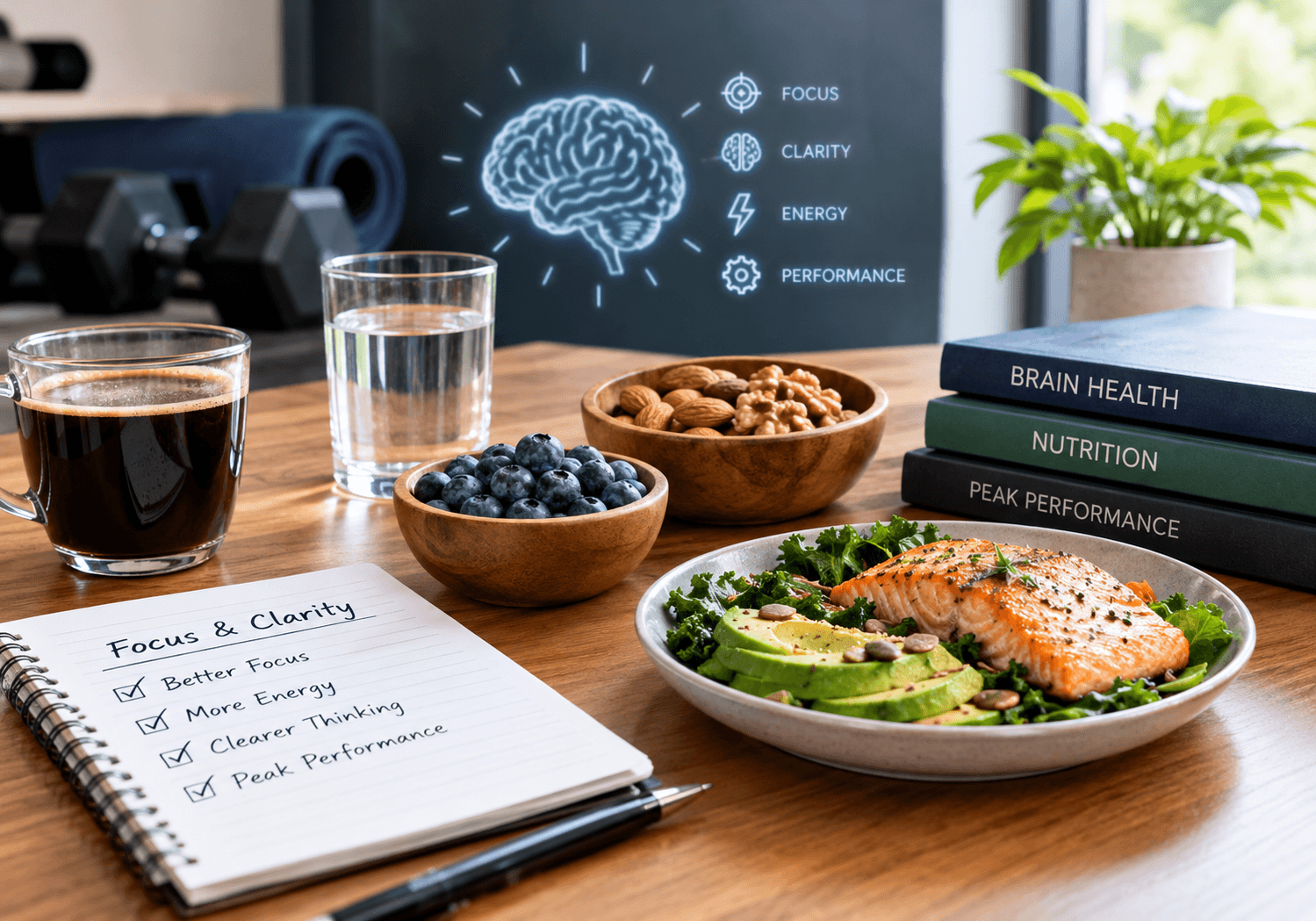
Have you ever finished a heavy set of squats only to realize you can’t remember where you left your water bottle? Or maybe you sit down at your desk after a morning workout and feel like your brain is wrapped in a thick fog. As a strength coach, I see this all the time. We spend so much energy training our muscles that we often forget to fuel our brains. Finding the best nootropics for mental clarity and focus is not about finding a “magic pill” for genius. It is about supporting your nervous system so you can perform at your peak, whether you are under a barbell or a tight deadline.
Quick Answer: The Best Nootropics for Focus
The best nootropics for mental clarity and focus include a combination of L-theanine and caffeine for immediate alertness, Bacopa monnieri for long-term memory support, and Rhodiola rosea for reducing mental fatigue under stress. For optimal results, these should be paired with foundational habits like quality sleep, proper hydration, and a balanced diet.
What Are Nootropics and How Do They Support Brain Health?
The term “nootropic” was first used in 1972 by Dr. Corneliu Giurgea. He believed that certain substances could improve learning and memory while being safe and non-toxic. Today, we use the term to describe a wide range of compounds—both natural and synthetic—that aim to boost cognitive function.
In my coaching practice, I view nootropics as “mental gym equipment.” Just as a lifting belt helps you stabilize your core during a heavy lift, nootropics can help stabilize your focus during a demanding task. They work by interacting with your brain’s chemistry in several ways:
- Neurotransmitter Modulation: They can influence levels of dopamine (for motivation), acetylcholine (for learning), and GABA (for calmness).
- Blood Flow (Vasodilation): Some supplements increase oxygen and nutrient delivery to brain cells.
- Neuroprotection: Many natural nootropics act as antioxidants, protecting brain cells from oxidative stress caused by intense exercise or aging.
- Brain Energy: Some compounds support the mitochondria (the power plants of your cells) in your neurons.

The Power of Natural Nootropics for Cognitive Function
When clients ask me for the best nootropics for mental clarity and focus, I always suggest starting with natural options. These usually have a better safety profile and provide steady support without the “crash” associated with high-stimulant “smart drugs.”
1. Caffeine and L-Theanine: The “Gold Standard” Stack
This is the most researched and accessible combination in the world of cognitive enhancers. Caffeine is a powerful stimulant that blocks adenosine receptors, which are responsible for making you feel sleepy. However, caffeine alone can cause jitters and an eventual energy crash.
L-theanine is an amino acid found in green tea. According to research published in Biological Psychology, the combination of L-theanine and caffeine improves cognitive performance and increases subjective alertness better than caffeine alone.
- Coach’s Tip: Aim for a 2:1 ratio of L-theanine to caffeine. If you have 100mg of caffeine (about one cup of coffee), try taking 200mg of L-theanine. This creates a “calm alertness” that is perfect for deep work or a focused lifting session.
2. Bacopa Monnieri for Memory and Retention
If you struggle with “brain fog” or forgetting your workout programming, Bacopa is a heavy hitter. This herb has been used in Ayurvedic medicine for centuries. Modern studies, like those indexed by the National Institutes of Health (NIH), show that Bacopa monnieri can improve memory acquisition and retention.
It’s important to note that Bacopa is not an “instant” fix. It works by supporting the growth of dendrites—the branches of your nerve cells that help them communicate. This process takes time.
- Common Mistake: Many people stop taking Bacopa after three days because they don’t “feel” anything. You need to take it consistently for 8 to 12 weeks to see significant improvements in mental clarity.
3. Rhodiola Rosea: The Anti-Fatigue Adaptogen
As a coach, I love adaptogens. These are herbs that help your body “adapt” to stress. Rhodiola rosea is particularly effective at reducing mental fatigue during stressful periods. Whether you are dealing with a high-volume training block or a stressful project at work, Rhodiola helps keep your brain sharp.
Research in the journal Phytomedicine suggests that Rhodiola can significantly reduce symptoms of burnout and improve concentration.

Comparing Natural vs. Synthetic Cognitive Enhancers
When searching for the best nootropics for mental clarity and focus, you will likely encounter synthetic options known as “racetams” or prescription stimulants like Modafinil. While these can be powerful, they often come with higher risks of side effects.
| Feature | Natural Nootropics (e.g., Lion’s Mane, L-Tyrosine) | Synthetic Nootropics (e.g., Piracetam, Noopept) |
| Availability | Over-the-counter / Food-based | Often require prescriptions or specialized vendors |
| Mechanism | Support long-term brain health and adaptation | Directly alter neurotransmitter activity |
| Side Effects | Generally low (digestive upset, mild headache) | Potential for anxiety, insomnia, or “brain fry” |
| Best For | Daily maintenance and sustainable focus | Short-term, high-intensity cognitive demands |
How Nootropics Support Physical Performance
It might seem strange for a strength coach to talk about brain supplements, but the brain controls the body. Your “central drive” is what allows you to recruit muscle fibers during a heavy lift. If your brain is tired, your physical performance will suffer.
Nootropics like L-Tyrosine can be very helpful here. L-Tyrosine is a precursor to dopamine and norepinephrine. When you are under physical stress (like cold weather or a grueling workout), your brain uses up these neurotransmitters quickly. Supplementing with L-Tyrosine may help maintain cognitive performance during these stressful times, as noted by the Journal of Psychiatry & Neuroscience.
In fact, many of my clients find that improving their mental clarity leads to better “mind-muscle connection.” When you can focus intensely on the muscle you are working, you can often trigger better growth and strength gains. This is similar to how protein intake affects hunger; by fueling the body correctly, you manage the signals the brain receives.

The Role of Essential Nutrients in Mental Clarity
Before you buy a fancy “brain stack,” you must ensure you aren’t missing the basics. No amount of nootropics can fix a brain that is starving for essential nutrients.
Omega-3 Fatty Acids
Your brain is about 60% fat. Omega-3 fatty acids, specifically DHA, are critical for maintaining the structure of your brain cells. Low levels of Omega-3s are linked to cognitive decline and increased brain fog. I recommend my athletes eat fatty fish like salmon or take a high-quality fish oil supplement to support overall brain health.
B-Vitamins
Vitamins B6, B9 (folate), and B12 are vital for energy metabolism. They help convert the food you eat into the fuel your brain needs to think. A deficiency in B12, in particular, can lead to severe memory issues and fatigue. If you are looking for which nutrients support normal energy metabolism, B-vitamins are at the top of the list.
Magnesium
Magnesium is involved in over 300 biochemical reactions in the body, including those that regulate neurotransmitters. It helps the brain relax, which is essential for falling asleep—the ultimate “nootropic” for mental clarity.

Lifestyle Habits: The Ultimate Nootropic Stack
As a coach, I have to be honest: if you are sleeping four hours a night and living on processed snacks, the best nootropics for mental clarity and focus won’t do much for you. We need to build a solid foundation first.
1. Sleep Hygiene
Sleep is when your brain flushes out toxins and consolidates memories. If you are sleep-deprived, your reaction time and focus will be as bad as if you were legally intoxicated. We’ve discussed previously how sleep affects metabolism and weight management, and the same principles apply to your brain. Aim for 7-9 hours of quality sleep to keep your cognitive function high.
2. Hydration
Even mild dehydration can impair concentration and increase headaches. The brain is highly sensitive to water balance. I tell my clients to drink half their body weight in ounces of water daily. For example, a 200 lb (91 kg) person should aim for 100 oz (about 3 liters) of water.
3. Physical Activity
Exercise increases blood flow to the brain and stimulates the release of BDNF (Brain-Derived Neurotrophic Factor). BDNF is like “Miracle-Gro” for your brain, helping to grow new neurons and strengthen existing ones. A simple 20-minute walk can do more for your focus than a double espresso in some cases.
4. Metabolic Health
There is a strong link between how your body handles sugar and how your brain functions. High blood sugar spikes can lead to “sugar crashes” that cause massive brain fog. Using strategies to increase metabolism naturally can help stabilize your energy levels throughout the day, providing a steady stream of fuel for your brain.
How to Build Your Own Nootropic Stack
If you are ready to try these supplements, don’t start everything at once. This is a “coach’s rule” for both lifting and supplementation: change one variable at a time.
The Beginner Focus Stack
- Morning: 1 cup of Coffee (100mg Caffeine) + 200mg L-Theanine.
- With Breakfast: 2g of high-quality Fish Oil.
- Goal: Immediate alertness without the jitters.
The Student/Deep Work Stack
- Daily: 300mg Bacopa Monnieri (standardized to 50% bacosides).
- As Needed: 500mg Rhodiola Rosea (during high-stress weeks).
- Goal: Improved memory retention and stress resistance over several weeks.
The Athlete’s Clarity Stack
- Pre-Workout: 1g L-Tyrosine + 500mg Lion’s Mane Mushroom.
- Post-Workout: 400mg Magnesium Glycinate (to aid recovery and sleep).
- Goal: Enhanced mind-muscle connection and nervous system recovery.
Potential Side Effects and Safety Considerations
While most natural nootropics are safe for healthy adults, they aren’t for everyone. You should always consult with a doctor before starting a new supplement, especially if you take medication for blood pressure, depression, or ADHD.
- Digestive Issues: Some herbs like Bacopa can cause an upset stomach if taken on an empty stomach.
- Insomnia: Taking stimulants like caffeine or certain “energizing” nootropics too late in the day will ruin your sleep. I recommend a “stimulant cutoff” of 2:00 PM.
- Interactions: Some nootropics can thin the blood (like Ginkgo biloba) or interact with antidepressants (like St. John’s Wort).
Always start with the lowest possible dose to see how your body and brain react. More is not always better. In fact, with nootropics, there is often an “inverted-U” relationship—too little does nothing, but too much can actually impair your focus by making you over-stimulated or anxious.
The Relationship Between Nootropics and Weight Management
You might wonder why a site focused on body shape and weight management is discussing brain health. The answer is simple: willpower is a finite resource.
When your mental clarity is high, you make better decisions. You are more likely to choose a healthy meal over fast food. You are more likely to head to the gym when you feel tired. We often see that people who improve their cognitive function have an easier time sticking to their diets. For instance, using dietary fiber for appetite management is a physical strategy, but the mental strength to stick to that plan comes from a healthy, focused brain.
Furthermore, some nootropics have secondary metabolic benefits. For example, some people use exogenous ketones for hunger control, but they also report a significant “bump” in mental clarity. This is because ketones are a very efficient fuel source for the brain.
Evaluating Supplement Quality: What to Look For
Not all supplements are created equal. The supplement industry is not strictly regulated in the same way as pharmaceuticals. To find the best nootropics for mental clarity and focus, you need to be a savvy consumer.
- Third-Party Testing: Look for seals from NSF International, USP, or Informed-Sport. This ensures the product actually contains what the label says it does.
- Standardized Extracts: For herbal nootropics like Bacopa or Rhodiola, ensure the label lists the percentage of active compounds (like “50% bacosides”). This guarantees potency.
- No “Proprietary Blends”: Avoid products that hide their dosages behind a blend name. You need to know exactly how many milligrams of each ingredient you are taking to ensure safety and effectiveness. This is the same advice I give when people ask what to look for in a metabolism support supplement.
Frequently Asked Questions
Do nootropics actually work for focus?
Yes, many nootropics have strong clinical evidence supporting their effectiveness. For example, the combination of caffeine and L-theanine is well-documented to improve attention and focus. However, they work best when combined with healthy lifestyle habits like adequate sleep and proper nutrition.
How long do nootropics take to work?
It depends on the substance. Caffeine and L-theanine work within 30 to 60 minutes. Adaptogens like Rhodiola may take a few days to notice. Structural nootropics like Bacopa monnieri and Lion’s Mane mushroom typically require 8 to 12 weeks of consistent use to provide noticeable cognitive benefits.
Are nootropics safe for long-term use?
Most natural nootropics like Omega-3s, B-vitamins, and L-theanine are safe for long-term use in healthy adults. However, the long-term effects of many synthetic “smart drugs” are not well-studied. It is always best to cycle stimulants and consult a healthcare provider for a long-term plan.
Can I take nootropics with my pre-workout?
Be careful! Many pre-workout supplements already contain high doses of caffeine and other stimulants. Adding more nootropic stimulants can lead to heart palpitations, high blood pressure, and anxiety. Always check the labels and avoid doubling up on stimulants.
Can nootropics help with brain fog?
Nootropics can help reduce brain fog if the cause is related to stress, minor nutrient deficiencies, or lack of sleep. Ingredients like Rhodiola rosea and L-Tyrosine are specifically useful for brain fog caused by mental or physical fatigue. However, chronic brain fog should be evaluated by a doctor.
Which nootropics are best for studying?
For studying, a stack of L-theanine and caffeine provides immediate focus, while Bacopa monnieri helps with long-term memory retention. Phosphatidylserine is another excellent choice for students as it supports cell membrane health in the brain and can help manage exam-related stress.
Conclusion
Finding the best nootropics for mental clarity and focus is a journey of self-experimentation. As a coach, I believe that a sharp mind is the foundation for a strong body. By combining science-backed supplements like caffeine, L-theanine, and Bacopa monnieri with foundational habits like great sleep and regular exercise, you can unlock a new level of productivity and performance.
Remember, supplements are meant to supplement a healthy lifestyle, not replace it. Start with the basics, choose high-quality products, and be patient with the results. Your brain is the most important muscle you have—train it well!