Does ashwagandha increase testosterone and libido in men? Supplement labels sure make it sound that way. Bold promises about “T-boosting” and “better drive” are everywhere, and many rest on one or two small studies.
Here is the coach’s version. Ashwagandha root extract may raise testosterone a little in some men. The evidence for sex drive is thinner and less consistent. And there is a rare but real liver-safety concern that deserves a clear look before you spend money.
This guide covers what the best trials found, how big the changes were, who might benefit, how to run a fair 8-to-12-week test, and who should skip it. Talk with your doctor before starting any supplement, especially if you take medication or have a health condition.
Quick Answer: Possibly, a little. Randomized trials and a 2026 meta-analysis show ashwagandha root extract raises testosterone modestly in men, and one trial in men with low desire reported better sexual function. But studies are small and short, and libido results are mixed. It is not a testosterone treatment, and liver injury is a rare risk.
What Ashwagandha Is and Why Men Take It
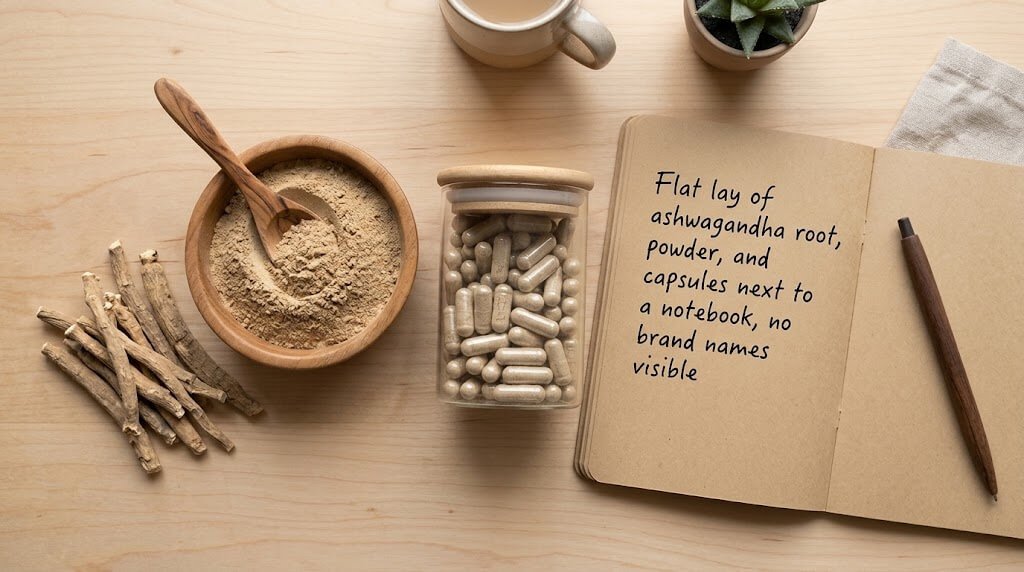
Ashwagandha (Withania somnifera) is an evergreen shrub used in Ayurvedic medicine for thousands of years. Its roots and leaves contain compounds called withanolides. The National Center for Complementary and Integrative Health (NCCIH) notes that ashwagandha supplements are often promoted for stress, sleep, male infertility, and athletic performance.
It is usually called an adaptogen, a label for herbs said to help the body handle stress. That matters here because stress and sex drive are linked. Mayo Clinic lists depression, stress, alcohol use, and fatigue as common factors in lost sex drive in men. The same page says a gradual dip in libido with age is normal.
So the pitch is simple: calm stress, nudge testosterone, and maybe support desire. If you want background on how adaptogens relate to stress hormones, see our guide to adaptogens and cortisol management. The real question is whether human trials back up the pitch.
Does Ashwagandha Increase Testosterone and Libido in Men? What the Evidence Shows
Let’s go through the studies one at a time. They ask slightly different questions, and the differences matter.
The 2019 Trial in Men Aged 40 to 70
In this randomized, placebo-controlled crossover trial, 57 overweight men aged 40 to 70 with mild fatigue took either a placebo or an ashwagandha extract called Shoden for 8 weeks. The extract delivered 21 mg of withanolide glycosides per day. Fifty men finished the first 8-week period.
The ashwagandha group had an 18% greater rise in DHEA-S and a 14.7% greater rise in testosterone than placebo, measured in saliva. But the men showed no significant difference from placebo in cortisol, estradiol, fatigue, vigor, or sexual well-being. The authors said larger studies are needed.
My read as a coach: a hormone number moved, but the men did not report feeling or functioning better than the placebo group.
The 2022 Trial in Men With Low Desire
This 8-week trial enrolled 50 men aged 21 to 45 who scored low on a sexual-desire questionnaire. They took 300 mg of a standardized root extract (KSM-66, more than 5% withanolides) or placebo capsules twice a day.
Here is what the researchers reported:
- Serum testosterone rose about 17% (roughly 72 ng/dL) with ashwagandha, versus about 2% with placebo.
- Total sexual-function scores (the DISF-M questionnaire) rose 40% with ashwagandha and 25% with placebo.
- Prolactin did not change.
- Every man’s testosterone stayed within the normal range.
- Two men in the ashwagandha group reported sleepiness. No serious side effects were reported.
There are caveats. It was a single-center study without long-term follow-up. The extract came from its manufacturer, and some authors received a consulting fee from a supplement company. The placebo group also improved by 25%, which shows how strong expectation effects can be in sexual-health research.
What the Pooled Data Say
Single trials can mislead, so reviews help. A 2021 systematic review in Advances in Nutrition examined 32 trials of 13 herbs on testosterone in men. Ashwagandha and fenugreek were the two extracts with positive effects. Still, only 9 of the 32 studies showed significant testosterone increases, and just 6 had a low risk of bias.
A newer 2026 meta-analysis pooled 23 randomized trials with 1,706 adults. Ashwagandha raised testosterone in men by about 57 ng/dL on average, but not in women. The authors noted that differences between studies and limited data mean more standardized trials are needed.
Put 57 ng/dL in context. The lab in the 2022 trial used a reference range of 241 to 827 ng/dL, though ranges vary by lab. A 57-point bump is a nudge, not a transformation.
Study Snapshot
| Study | Who | Extract and dose | Length | Testosterone | Sexual function |
| Lopresti 2019 | 57 overweight men, 40-70, mild fatigue | Shoden, 21 mg withanolide glycosides/day | 8 weeks per period | +14.7% vs placebo (saliva) | No significant difference in sexual well-being |
| Chauhan 2022 | 50 men, 21-45, low desire | KSM-66, 300 mg twice daily | 8 weeks | About +17% vs +2% placebo (serum) | Larger DISF-M gain than placebo (40% vs 25%) |
| Smith 2021 | 32 trials of 13 herbs in men | Varied | Varied | Ashwagandha and fenugreek positive; 9 of 32 studies significant | Not the focus |
| 2026 meta-analysis | 23 trials, 1,706 adults | Varied | Varied | About +57 ng/dL in men | Cortisol lower overall |
Why the Libido Results Are Mixed
Several things can explain the mismatch:
- Different extracts and doses. The products were not the same.
- Different measures. One tracked a detailed sexual-function questionnaire. The other tracked a broader well-being score.
- Placebo effects. In both trials, scores improved over time even in the placebo group.
- Small samples. Fifty men can’t settle a big question.
Coach’s Tip: Judge a supplement by the outcome you care about. If your lab number rises but your desire, energy, and gym performance don’t change, the number is trivia.
How Ashwagandha Might Work
Researchers have proposed a few ideas. None are proven in men.
The stress pathway. In a 60-day trial in healthy adults, ashwagandha lowered morning cortisol more than placebo, and the 2026 meta-analysis also found lower cortisol. Yet the 2019 trial in men found no significant cortisol difference, so this story isn’t clean.
Brain signaling. The authors of the 2022 trial suggested ashwagandha may act on GABA receptors and help release GnRH, a signal that tells the body to make testosterone. They also noted that withanolides resemble steroid hormones in structure. They said more research is needed to confirm either idea.
Expectation. If you expect a supplement to help, your mood and confidence may improve. That can lift desire without any hormone change.
Who May Benefit, and Who Probably Won’t
The 2021 review found that current evidence leans on young, nonclinical populations. Half of the 32 studies used men under 40. That tells us little about older men or men with medical problems.
The 2022 trial also enrolled men with normal testosterone. Its authors said studies in men with clinically low testosterone are still needed. So if you have been diagnosed with low testosterone, ashwagandha is not a proven replacement for medical care.
Mayo Clinic explains that a doctor can look for fixable causes first. For example, obstructive sleep apnea can cause unusually low testosterone, and treating it can improve sex drive. Some medications also reduce drive. If no reversible cause turns up, testosterone replacement therapy may be an option your doctor discusses with you.
For men over 40, the picture is similar. The 2019 trial included men up to 70 and saw a hormone rise, but no clear symptom change. If you are in that age group and want to build a broader plan, our guide to supporting metabolism after 40 covers the daily habits that matter alongside any supplement.
The group most likely to see a benefit, based on current research, is healthy men whose low desire is tied to stress. That is a reasonable hypothesis, not a promise.
How to Find Out If Ashwagandha Increases Your Testosterone and Libido
If your doctor says it is safe for you, treat ashwagandha like a short experiment, not a lifestyle. Here is the approach I would coach.
- Get a baseline. If you have symptoms like low drive, fatigue, or mood changes, ask your doctor about an exam and blood tests. Mayo Clinic notes doctors use history, a physical exam, and lab tests to find the cause. A guess is not a diagnosis.
- Fix the basics for 2 to 4 weeks first. Sleep is the big one. In one sleep-restriction study, a week of short sleep lowered daytime testosterone by roughly 10 to 15% in young, healthy men. Our guide to sleep and hormones explains the connection. Cut back on alcohol too.
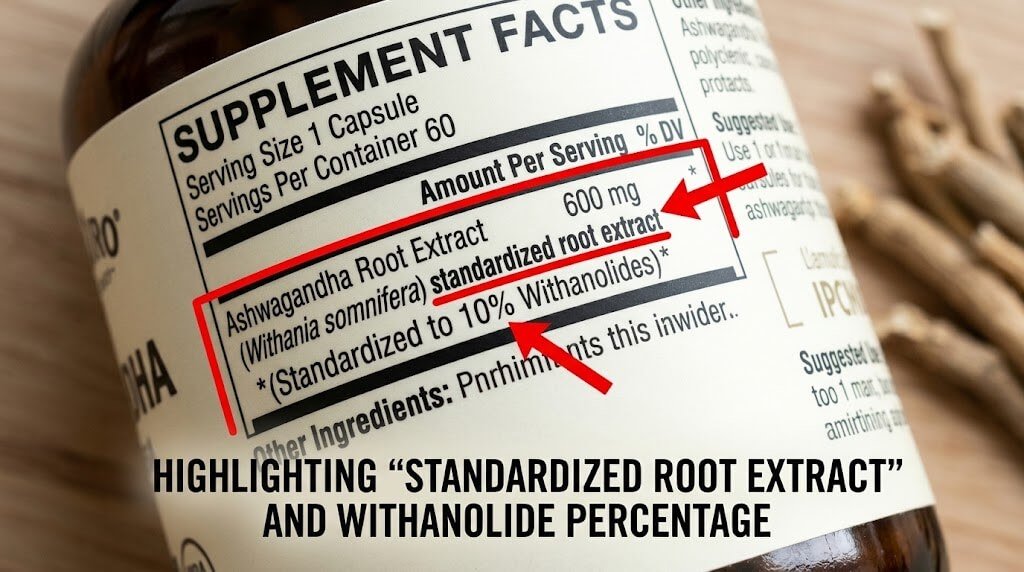
- Choose one single-ingredient root extract. Avoid multi-ingredient “testosterone booster” blends. You can’t tell which ingredient does what, and liver injury has been reported with commercial products labeled as containing ashwagandha. Our guide on how to evaluate supplement ingredients shows how to read a label.
- Match the studied dose, not the marketing. The trials used 21 mg of withanolide glycosides daily (2019) and 600 mg of root extract daily, split into two 300 mg capsules taken after meals (2022). Those are study doses, not recommendations. Ask your doctor or pharmacist what fits you.
- Track four things weekly. Rate desire from 1 to 10, note morning energy, log sleep hours, and record side effects. Add your gym numbers if you lift.
- Time-box it. NCCIH says ashwagandha may be safe up to 3 months and that long-term safety is unclear. After 8 to 12 weeks, stop, review your log, and repeat labs with your doctor if you started with them.

Common Mistake: Changing everything at once. If you start a supplement, a new diet, a new sleep schedule, and a new program in the same week, you will never know what worked. Change one thing at a time.
A Simple Strength Routine to Pair With Your Test
Exercise is not a testosterone hack. It is basic health. The CDC says adults need at least 2 days of muscle-strengthening activity weekly, plus 150 minutes of moderate activity. Here is a beginner-friendly full-body plan for 3 days a week with a rest day between sessions.
| Exercise | Sets x reps | Rest | Easier version | Harder version |
| Goblet squat (start near 20 lb / 9 kg) | 3 x 8-10 | 90 sec | Box squat, bodyweight | Barbell back squat |
| Romanian deadlift (start with a 45 lb / 20 kg bar) | 3 x 8 | 2 min | Hip hinge with a dowel | Add 5-10 lb (2-5 kg) per week |
| Dumbbell bench press (start 15-20 lb / 7-9 kg each) | 3 x 8-10 | 90 sec | Incline push-up | Barbell bench press |
| One-arm dumbbell row (start 20 lb / 9 kg) | 3 x 10 each side | 60 sec | Resistance-band row | Heavier load, 3-second lowering |
| Front plank | 3 x 30 sec | 45 sec | Knees-down plank | 45-60 sec with shoulder taps |
Use a 2-second lowering phase and a smooth lift. Pick a weight that leaves you 2 or 3 reps short of failure on the last set. When you hit the top of the rep range on every set, add 5 lb (2 kg). On two other days, take a brisk 30-minute walk, about 2 miles (3 km).

Coach’s cue for the squat: imagine spreading the floor apart with your feet, and keep your chest tall. It should feel like work in your thighs and glutes, not pinching in your lower back.
Does Ashwagandha Increase Testosterone and Libido in Men Safely? Risks to Know
This is the part many supplement ads skip. Please read it before buying.
Common side effects. NCCIH says some people get drowsiness, stomach upset, diarrhea, and vomiting. In the 2022 trial, the only likely supplement-related effect was sleepiness in two men.
Liver injury. NIH’s LiverTox database rates ashwagandha as a likely cause of clinically apparent liver injury, though cases are rare. Injury usually appeared 2 to 12 weeks after starting, with jaundice (yellow skin or eyes) and itching. Most cases were mild to moderate and cleared within 1 to 4 months of stopping. Fatal cases have been reported, especially in people with existing liver disease. If you notice yellowing or itching, stop and call your doctor promptly.
Who should avoid it. According to NCCIH, ashwagandha should be avoided in pregnancy and not used while breastfeeding. It is not recommended before surgery or for people with autoimmune or thyroid disorders. Because it may raise testosterone, people with hormone-sensitive prostate cancer should avoid it.
Drug interactions. NCCIH says it may interact with medicines for diabetes and high blood pressure, immunosuppressants, sedatives, anti-seizure drugs, and thyroid hormone medications. Bring your supplement bottle to your doctor or pharmacist.
Unknown long-term safety. Studies are short. We don’t know what happens after a year or two of daily use.
For a wider look at supplement safety, see our guide on which supplements may support weight management safely.
Related Tips: Other Ways to Support Drive and Hormones
If your goal is better energy and desire, these steps have a stronger track record than any single herb:
- Check for sleep apnea. Loud snoring and daytime sleepiness are worth mentioning to your doctor. Mayo Clinic says treating sleep apnea can reverse the low testosterone it causes.
- Review your medications. Mayo Clinic notes some medications reduce sex drive. Don’t stop a prescription on your own.
- Cut back on alcohol. Mayo Clinic lists alcohol problems among the factors in low sex drive.
- Address stress or low mood. Counseling, sometimes with medication, may help when stress or depression is behind low desire, per Mayo Clinic.
- Lift and walk regularly. Follow the CDC targets above and build up slowly.
- Explore other options carefully. If you are weighing stimulant-free choices, our roundup of supplements that support metabolism without stimulants compares what the research says.
FAQ
How long does ashwagandha take to raise testosterone?
In the trials above, hormone changes showed up after eight weeks. NCCIH notes limited evidence that two to four months of use may raise testosterone and sperm quality. Effects after that are unknown, and safety beyond about three months isn’t established. Treat it as a short, supervised trial, not a forever supplement.
Can ashwagandha lower testosterone?
The pooled analysis found an average increase in men, not a drop. Still, individual responses vary and most studies were short. If you feel worse after starting, with low mood, fatigue, or less desire, stop and ask your doctor about testing rather than assuming it’s helping.
Is ashwagandha safe to take every day?
NCCIH says it may be safe short term, up to three months, but long-term safety is unknown. Side effects include drowsiness and stomach upset, and rare liver injury has been reported. Daily use for longer than a few months should only happen under a doctor’s guidance.
Who should not take ashwagandha?
NCCIH advises avoiding it during pregnancy, while breastfeeding, before surgery, and with autoimmune or thyroid disorders. Men with hormone-sensitive prostate cancer should avoid it, and people with liver disease should be especially cautious per LiverTox. Check medication interactions with a pharmacist.
Does ashwagandha work for diagnosed low testosterone?
That hasn’t been shown. The 2022 trial’s men had normal testosterone, and its authors called for studies in clinically low men. If you have symptoms, get tested. Mayo Clinic says treatable causes, like sleep apnea, should be checked first.
Conclusion: So, Does Ashwagandha Increase Testosterone and Libido in Men?
The fair answer is: it may raise testosterone modestly, and it might help desire in some men, but the proof is far from solid. The best trials were small, lasted about eight weeks, and some had industry ties. In one trial, a hormone rise didn’t come with better sexual well-being. In another, men with low desire did improve, though the placebo group improved too.
So does ashwagandha increase testosterone and libido in men? Sometimes, a little, and not reliably enough to replace good sleep, strength training, stress management, and a doctor’s evaluation. If you try it, pick a single-ingredient root extract, time-box it to 8 to 12 weeks, track your results, and know the liver warning signs.
Work through the basics first. They cost less, carry fewer risks, and help every part of your health.