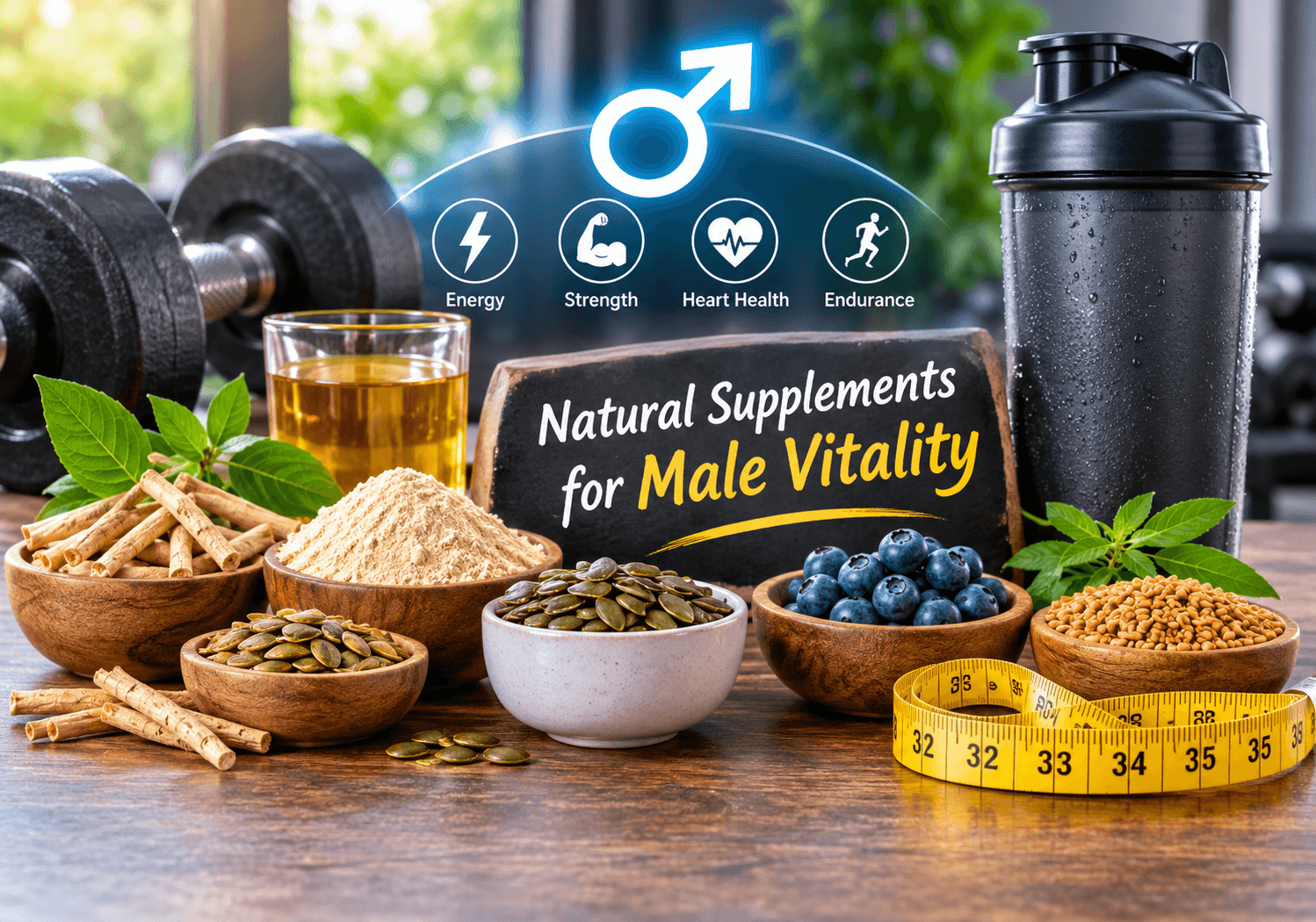
Maintaining high energy, strength, and overall well-being requires a solid foundation of training, sleep, and nutrition. However, even with a perfect routine, men often look for an extra edge. This is where natural supplements for male vitality can play a supportive role. As a strength and conditioning coach, I see many clients ask about boosting their stamina, recovery, and hormonal health safely.
The market is flooded with flashy promises, but true vitality comes from ingredients backed by clinical research. This guide cuts through the noise. We will review the most evidence-based options, explain exactly how they work in your body, and give you a practical blueprint for choosing and using them safely.
Quick Answer
Top Pick: Ashwagandha (KSM-66) for stress reduction and hormonal support.
Budget Pick: Zinc Picolinate for foundational immune and reproductive health.
Upgrade Pick: L-Citrulline for superior blood flow, endurance, and workout performance.
Always consult your doctor before starting any new supplement regimen.
Top Natural Supplements for Male Vitality Reviewed
Below is a side-by-side comparison of the most researched ingredients for men’s health.
| Supplement | Key Active Compound | Best For | Typical Clinical Dose | Price Range |
| Ashwagandha | Withanolides (5%) | Stress management, cortisol balance, natural testosterone support | 300–600 mg/day | 15–30 |
| Zinc | Zinc Picolinate or Bisglycinate | Immune function, reproductive health, enzyme production | 15–30 mg/day | 10–20 |
| Magnesium | Magnesium Glycinate | Sleep quality, muscle recovery, nervous system regulation | 200–400 mg/day | 15–25 |
| Vitamin D3 + K2 | Cholecalciferol + Menaquinone | Bone health, immune function, hormonal baseline | 2,000–5,000 IU/day | 15–35 |
| Maca Root | Macamides and Macaenes | Libido, subjective energy, mood enhancement | 1,500–3,000 mg/day | 20–40 |
| L-Citrulline | L-Citrulline (or Citrulline Malate) | Nitric oxide production, blood flow, exercise endurance | 6,000–8,000 mg/day | 25–45 |
| Fenugreek | Furostanolic saponins | Libido, mild androgen support, metabolic health | 500–600 mg/day | 15–30 |
| Tongkat Ali | Eurycomanone (2%) | Free testosterone support, strength, vitality | 200–400 mg/day | 30–60 |
Note: Price ranges are estimates based on standard retail pricing for third-party tested brands. Always [VERIFY] current pricing at your preferred retailer.
1. Ashwagandha (Withania somnifera)
Who it’s for: Men experiencing high stress, poor sleep, or those looking for natural, indirect hormonal support.
Key Features: Ashwagandha is an adaptogen, meaning it helps the body resist physical and mental stressors. The KSM-66 extract is the most clinically studied form, standardized to 5% withanolides. Research published in the American Journal of Men’s Health shows that ashwagandha root extract can safely improve testosterone levels, sperm quality, and antioxidant status in men.
Pros: Reduces cortisol, improves sleep quality, well-tolerated, strong clinical backing.
Cons: Can cause mild gastrointestinal upset in some; may interact with thyroid medications.
2. Zinc Picolinate
Who it’s for: Men with poor dietary zinc intake, athletes who sweat heavily, or those seeking foundational reproductive support.
Key Features: Zinc is an essential mineral critical for over 300 enzymatic reactions in the body, including DNA synthesis and immune function. The National Institutes of Health (NIH) notes that zinc is vital for normal sperm production and male reproductive health. Zinc picolinate or bisglycinate offers superior absorption compared to cheaper forms like zinc oxide.
Pros: Highly affordable, crucial for immune and reproductive health, improves absorption of other nutrients.
Cons: Taking more than 40 mg daily long-term can cause copper deficiency and nausea.
3. Magnesium Glycinate
Who it’s for: Men with muscle cramps, poor sleep quality, or high physical stress from intense training.
Key Features: Magnesium regulates muscle and nerve function, blood sugar levels, and blood pressure. The Mayo Clinic highlights its role in energy production and protein synthesis. Magnesium glycinate is bound to the amino acid glycine, making it highly bioavailable and gentle on the stomach, unlike magnesium oxide which acts as a laxative.
Pros: Promotes deep sleep, reduces muscle cramps, supports nervous system recovery.
Cons: Must be taken consistently; effects are subtle and build over time.
4. Vitamin D3 + K2
Who it’s for: Men with limited sun exposure, office workers, or those with confirmed low vitamin D levels via blood work.
Key Features: Vitamin D functions more like a hormone than a vitamin, playing a direct role in testosterone production and immune defense. The Cleveland Clinic emphasizes that vitamin D3 (cholecalciferol) is best paired with Vitamin K2 (menaquinone) to ensure calcium is directed to bones and teeth, not arteries.
Pros: Supports bone density, immune function, and healthy hormonal baselines.
Cons: Fat-soluble, so it must be taken with a meal containing dietary fat for proper absorption.
5. Maca Root Extract
Who it’s for: Men looking for a natural, non-hormonal boost in libido, mood, and subjective energy levels.
Key Features: Native to the Andes, maca is a cruciferous vegetable. A systematic review in the journal Evidence-Based Complementary and Alternative Medicine found that maca may improve sexual desire without directly altering serum testosterone or estrogen levels. Gelatinized maca is easier to digest than raw maca powder.
Pros: Non-hormonal, supports mood and libido, provides a clean energy lift without jitters.
Cons: Effects vary widely between individuals; raw maca can cause bloating.
6. L-Citrulline
Who it’s for: Athletes and gym-goers seeking better blood flow, muscle pumps, and workout endurance.
Key Features: L-citrulline is an amino acid that the kidneys convert into L-arginine, which then boosts nitric oxide (NO) production. Nitric oxide relaxes blood vessels, improving circulation. Research in the Journal of Nutrition demonstrates that L-citrulline supplementation reduces fatigue and improves aerobic performance. It is far more effective at raising arginine levels than taking L-arginine directly.
Pros: Significant improvements in blood flow, reduced muscle soreness, no tolerance buildup.
Cons: Requires a relatively high dose (6,000–8,000 mg) to be effective, which can mean multiple capsules or a powder.
7. Fenugreek Extract
Who it’s for: Men seeking mild support for libido, metabolic health, and free testosterone levels.
Key Features: Fenugreek contains furostanolic saponins, which may support healthy testosterone levels by inhibiting the enzymes that convert testosterone to estrogen. A study in the Journal of the International Society of Sports Nutrition showed that fenugreek extract improved strength and body composition in resistance-training men.
Pros: Supports healthy libido, may aid in blood sugar regulation, natural plant extract.
Cons: Can cause a harmless but noticeable maple-syrup-like odor in sweat and urine.
8. Tongkat Ali (Eurycoma longifolia)
Who it’s for: Men experiencing age-related declines in energy, strength, and vitality.
Key Features: Also known as Longjack, this Southeast Asian herb has been shown in clinical trials to improve sperm motility, reduce stress hormones, and support free testosterone levels. A randomized controlled trial published in Andrologia noted significant improvements in testosterone parameters and mood. Look for extracts standardized to 2% eurycomanone.
Pros: Direct support for free testosterone, improves mood and energy, strong traditional and clinical backing.
Cons: Quality varies wildly; cheap extracts are often under-dosed or adulterated.
How to Choose Natural Supplements for Male Vitality
Navigating the supplement aisle can feel overwhelming. As a coach, I tell my clients to use a strict buyer’s checklist. Do not buy a product unless it meets these criteria.
- Third-Party Testing: This is non-negotiable. Look for seals from NSF Certified for Sport, Informed-Choice, or USP (United States Pharmacopeia). These organizations test for heavy metals, banned substances, and label accuracy. If a brand does not provide a Certificate of Analysis (CoA), walk away.
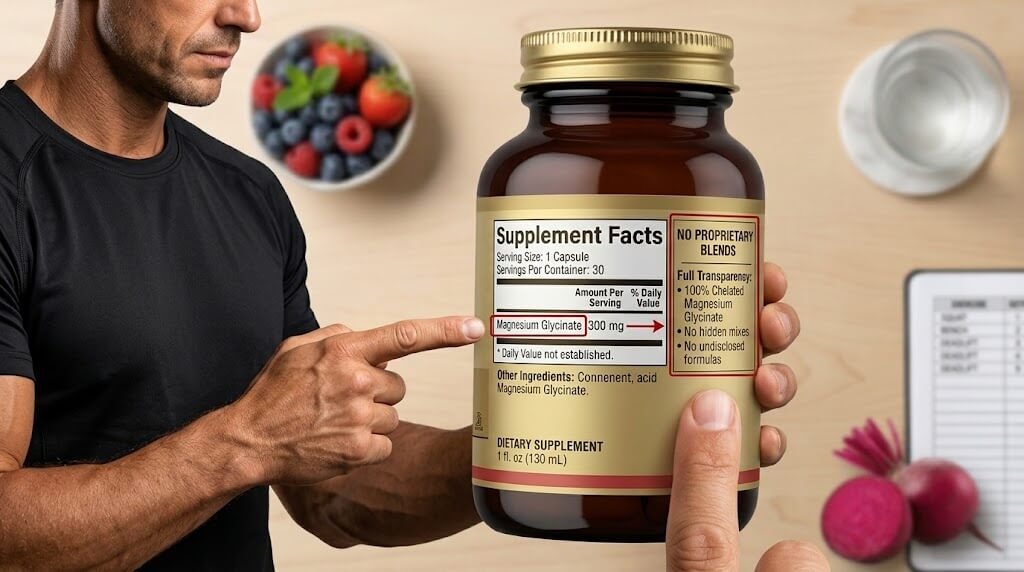
- Transparent Labeling: Avoid “proprietary blends.” A proprietary blend hides the exact dosage of each ingredient behind a total weight. You need to know you are getting a clinical dose, not just “fairy dusting” (adding a tiny, ineffective amount just to put it on the label).
- Clinical Dosages: Match the serving size to the doses used in peer-reviewed studies. For example, if a study shows benefits from 6,000 mg of L-citrulline, a pill offering 500 mg per serving will not deliver the promised results.
- Bioavailability: The form of the nutrient matters. Magnesium glycinate is absorbed far better than magnesium oxide. Zinc picolinate is superior to zinc sulfate. Pay for the form your body can actually use.
- Budget and Value: Calculate the cost per serving, not the cost per bottle. A $20 bottle that lasts 15 days is more expensive than a $40 bottle that lasts 60 days.
How We Picked
The recommendations in this guide are not based on marketing hype. They are grounded in rigorous scientific evaluation. Our selection criteria include:
- Peer-Reviewed Evidence: Every recommended ingredient has multiple randomized, placebo-controlled human trials supporting its efficacy for men’s health, energy, or hormonal balance.
- Safety Profile: We prioritized ingredients with a long history of safe use and minimal side effects when taken at recommended dosages.
- Mechanism of Action: We only included supplements with a clear, understood biological pathway (e.g., L-citrulline converting to nitric oxide to dilate blood vessels).
- No Medical Claims: We avoid products that promise to “cure” low testosterone or act as pharmaceutical replacements. These are dietary supports, not drugs.
Setup and Maintenance Tips
Taking supplements correctly is just as important as choosing the right ones. Here is how to integrate them into your daily routine for maximum benefit.
Timing Matters
- Morning: Take Vitamin D3 + K2 and Maca Root with breakfast. Vitamin D is fat-soluble and requires dietary fat for absorption. Maca provides a gentle, non-jittery energy lift for the day.
- Pre-Workout: Take L-Citrulline 45–60 minutes before training. This gives your body enough time to convert it to nitric oxide, maximizing blood flow and muscle pumps during your session.
- Evening: Take Magnesium Glycinate and Zinc 30–60 minutes before bed. Magnesium promotes nervous system relaxation and deeper sleep, while zinc supports overnight recovery processes.
Cycling and Stacking Not all supplements need to be taken year-round. Adaptogens like Ashwagandha and Tongkat Ali are often best “cycled.” A common protocol is 8 weeks on, followed by 2 weeks off. This prevents your body from building a tolerance and keeps the endocrine system responsive. Zinc and Magnesium, however, can be taken daily as foundational nutrients, provided you stay within the safe upper limits.
Coach’s Tip: Always start with a baseline blood test. Before spending money on testosterone support or vitality supplements, ask your doctor to check your total testosterone, free testosterone, SHBG, Vitamin D, and Zinc levels. Supplementing blindly is like driving in the dark. If your Vitamin D is already optimal, taking more will not give you “super” vitality; it will just be excreted or, in extreme cases, cause toxicity.
Common Mistake: Assuming more is better. Megadosing zinc (e.g., taking 50–100 mg daily) can actually block copper absorption, leading to anemia and neurological issues over time. Stick to the 15–30 mg range unless a doctor prescribes otherwise. More does not equal more vitality; it often equals more side effects.
Who Should Be Careful
While these are natural supplements for male vitality, “natural” does not automatically mean “safe for everyone.”
- Men on Blood Pressure Medication: L-Citrulline lowers blood pressure. Combining it with prescription antihypertensives can cause your blood pressure to drop too low (hypotension).
- Men with Autoimmune Conditions: Adaptogens like Ashwagandha can stimulate the immune system, which may exacerbate conditions like rheumatoid arthritis or lupus.
- Men Taking Blood Thinners: Vitamin K2 and certain herbal extracts can interact with anticoagulant medications like Warfarin.
- Men with Prostate Issues: Any supplement claiming to boost testosterone should be discussed with a urologist, as hormonal changes can affect prostate health.
If you fall into any of these categories, consult your physician or a registered dietitian before adding these to your routine.
FAQ
1. Do natural supplements for male vitality really work?
Yes, but with realistic expectations. Ingredients like L-citrulline, zinc, and ashwagandha have robust clinical data showing they can improve blood flow, correct deficiencies, and lower stress. However, they are not magic pills. They work best when paired with adequate sleep, resistance training, and a nutrient-dense diet.
2. How long does it take to see results from male vitality supplements?
It depends on the ingredient. L-Citrulline can improve workout pumps within 45 minutes. Magnesium may improve sleep quality within a few days. However, adaptogens like Ashwagandha or Tongkat Ali typically require 4 to 8 weeks of consistent daily use to noticeably impact cortisol, energy, and hormonal markers.
3. Can I take multiple natural male supplements at the same time?
Yes, stacking is common, but do it strategically. A foundational stack might include Vitamin D3, Magnesium, and Zinc. An advanced performance stack could add L-Citrulline pre-workout and Ashwagandha post-workout. Avoid stacking multiple testosterone-boosting herbs at once, as this increases the risk of side effects and makes it hard to identify what is working.
4. Are there any side effects to natural male energy supplements?
Most are well-tolerated at clinical doses. Minor side effects can include digestive upset (from magnesium or raw maca), a maple-syrup odor in sweat (from fenugreek), or mild drowsiness (from ashwagandha). Always start with the lowest effective dose to assess your tolerance.
5. What is the best time of day to take male vitality vitamins?
Fat-soluble vitamins (D3, K2) should be taken with your largest meal containing fats. Performance enhancers like L-Citrulline are best taken 45 minutes before exercise. Relaxing minerals like Magnesium Glycinate are ideal 30–60 minutes before bedtime to support recovery and sleep architecture.
6. Do I need to cycle herbal supplements like Tongkat Ali or Ashwagandha?
Cycling is highly recommended for herbal adaptogens and hormone-supporting botanicals. A standard protocol is 8 to 12 weeks of continuous use followed by a 2 to 4-week break. This helps maintain the body’s sensitivity to the compounds and prevents potential downregulation of natural hormone production.
Conclusion
Optimizing your health is a long-term project. While no pill can replace the foundational pillars of heavy resistance training, 7–9 hours of quality sleep, and a balanced diet, natural supplements for male vitality can provide a meaningful, evidence-based edge.
Focus on correcting deficiencies first with Zinc, Magnesium, and Vitamin D. Then, consider targeted additions like L-Citrulline for performance or Ashwagandha for stress management. Always prioritize third-party tested brands, respect clinical dosages, and listen to your body.