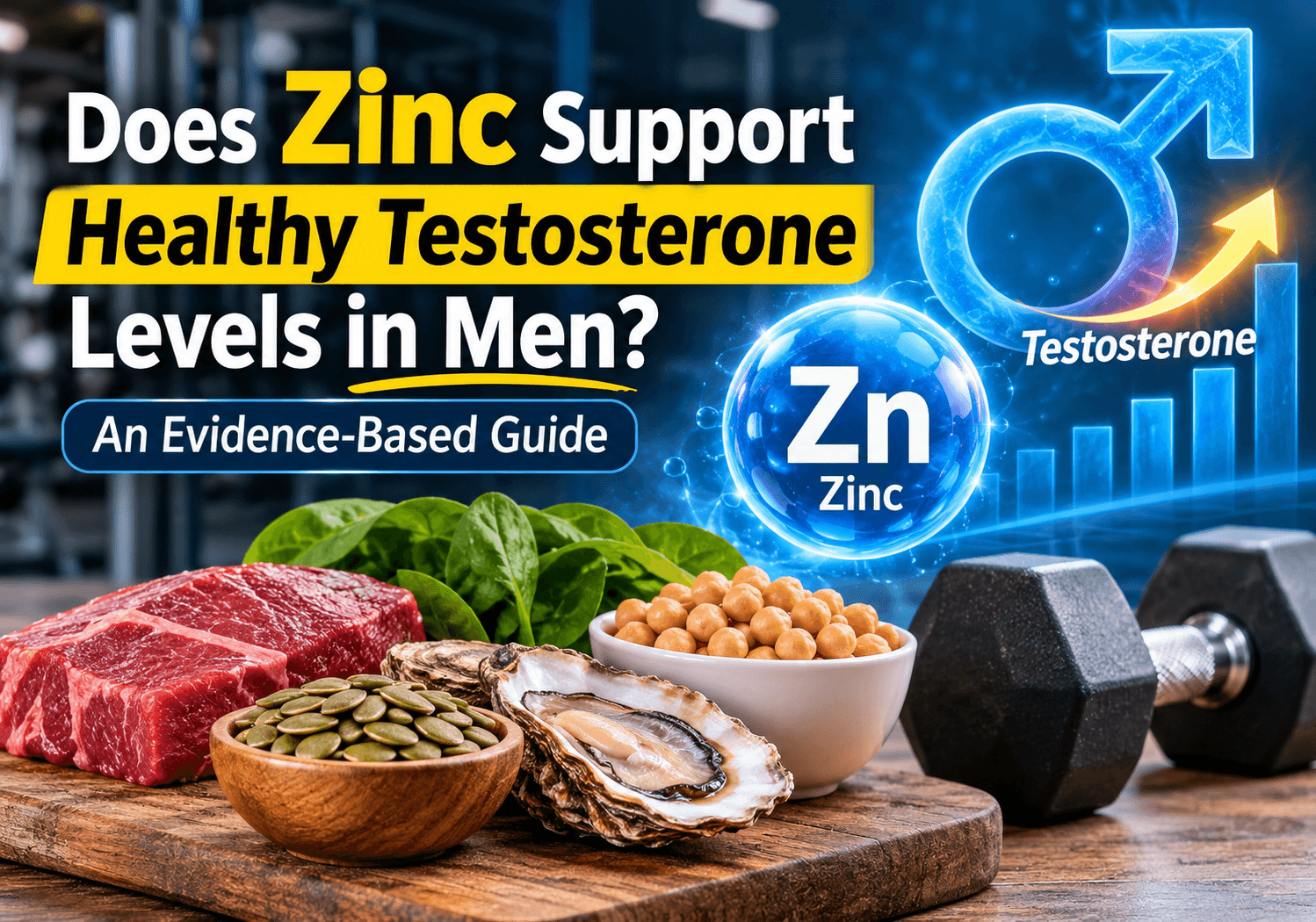
Testosterone is the primary male sex hormone, playing a massive role in muscle growth, bone density, fat distribution, and overall energy. As a strength coach, I frequently get asked about natural ways to optimize this crucial hormone. One of the most common questions I hear is: does zinc support healthy testosterone levels in men? The short answer is yes, but with important nuances. Zinc is an essential mineral that acts as a foundational building block for hormone production. However, it is not a magical steroid alternative. Its primary benefit lies in correcting deficiencies and supporting the body’s natural endocrine function, especially when combined with proper training and nutrition.
In this comprehensive guide, we will break down exactly what the scientific research says about zinc and male hormone health. You will learn how zinc works in the body, the best dietary and supplemental sources, optimal dosages, and how to pair this mineral with a smart resistance training program for maximum results.
Quick Answer
Does zinc support healthy testosterone levels in men? Yes. Research shows that zinc is essential for normal testosterone production. Supplementing with zinc can significantly increase testosterone levels in men who are deficient or who experience heavy sweat loss from intense exercise. However, it is unlikely to boost testosterone beyond normal physiological levels in men who already have adequate zinc intake.
Detailed Explanation: What the Research Says
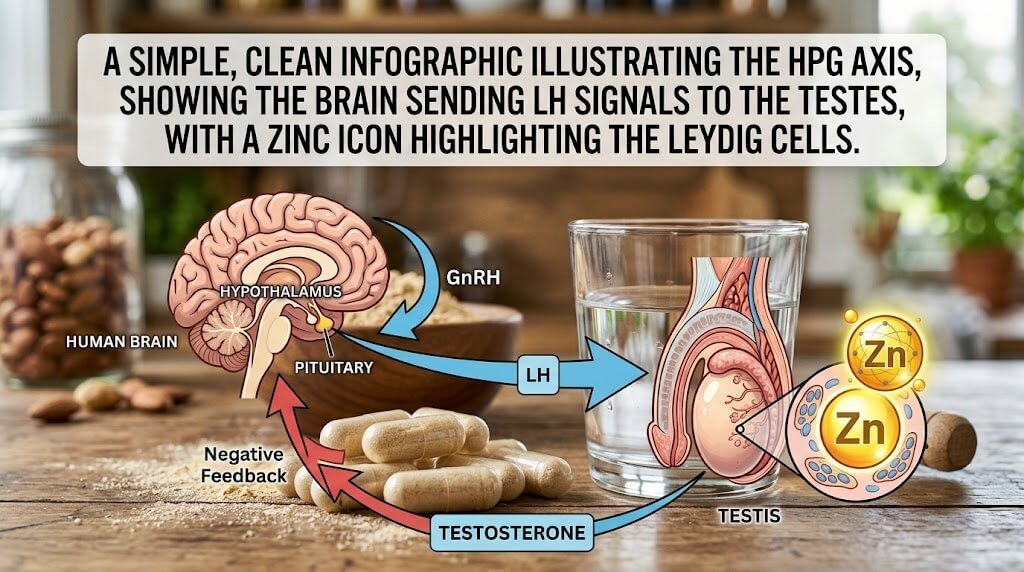
To understand how this mineral impacts your hormones, we need to look at the basic biology of the male endocrine system. The body operates on a delicate feedback loop known as the hypothalamic-pituitary-gonadal (HPG) axis.
The Role of Zinc in Male Hormone Production
Zinc is a trace mineral that acts as a cofactor for over 300 enzymatic reactions in the human body. In the context of male hormones, zinc is highly concentrated in the prostate gland and the testes. Specifically, it is vital for the function of Leydig cells, which are the primary testosterone-producing cells in the testes.
Furthermore, zinc influences the release of luteinizing hormone (LH) from the pituitary gland. LH is the chemical messenger that travels down to the testes and signals the Leydig cells to produce testosterone. Without adequate zinc, this signaling pathway becomes sluggish, and the raw materials needed for androgen synthesis are compromised. According to the National Institutes of Health (NIH) Office of Dietary Supplements, zinc is fundamentally required for normal growth, development, and reproductive function.
Zinc Deficiency and Low Testosterone
The most robust evidence supporting zinc’s role in hormone health comes from studies on zinc deficiency. A landmark study published in the journal Nutrition demonstrated that restricting zinc intake in healthy young men led to a significant decrease in serum testosterone levels after just 20 weeks. When these same men were given zinc supplements, their testosterone levels returned to normal baseline ranges.
This proves a critical point: zinc is necessary to maintain healthy testosterone. If you are not getting enough from your diet, your hormone levels will drop.
Does Zinc Boost Testosterone in Already Healthy Men?
This is where we must separate marketing hype from scientific reality. If your dietary zinc intake is already optimal, adding more zinc will not turn you into a superhero with supraphysiological testosterone levels. The body tightly regulates hormone production.
However, there is one major exception: intense physical training. Elite athletes and heavy lifters lose significant amounts of zinc through sweat. A study in the Biological Trace Element Research journal observed elite wrestlers who underwent exhausting training regimens. The group that received zinc supplementation maintained their resting testosterone levels, while the placebo group experienced a notable decline. For active men, zinc acts as a protective shield against exercise-induced hormonal drops.
Zinc Content in Common Foods vs. Supplements
Before reaching for a pill, it is always best to evaluate your diet. Whole foods provide a matrix of nutrients that work synergistically. Below is a comparison of zinc content in common dietary sources versus standard supplements.
| Source Type | Specific Item | Serving Size | Approximate Zinc Content | Notes |
| Whole Food | Oysters (cooked) | 3 oz (85 g) | 74 mg | The highest natural source; exceeds daily needs quickly. |
| Whole Food | Beef Chuck Roast (lean) | 3 oz (85 g) | 7 mg | Highly bioavailable; also provides protein and iron. |
| Whole Food | Pumpkin Seeds | 1 oz (28 g) | 2.2 mg | Great plant-based source; also high in magnesium. |
| Whole Food | Chickpeas (cooked) | 1 cup (164 g) | 2.5 mg | Bioavailability is lower due to phytates. |
| Supplement | Zinc Picolinate | 1 capsule | 15–30 mg | Highly absorbable form; recommended for most men. |
| Supplement | Zinc Gluconate | 1 lozenge/capsule | 15–30 mg | Common and affordable; decent absorption rate. |
| Supplement | Zinc Oxide | 1 capsule | 15–30 mg | Poorly absorbed; generally not recommended for hormone goals. |
Note: The Recommended Dietary Allowance (RDA) for adult men is 11 mg per day. The Tolerable Upper Intake Level (UL) is 40 mg per day from all sources combined.
How to Apply It: Practical Steps for Men
Knowing the science is only half the battle. As a coach, I want you to know exactly how to apply this information to your daily routine. Here is a step-by-step guide to optimizing your zinc intake for hormone health.
Step 1: Determine Your Baseline Needs
Start by tracking your food intake for three to five days using a nutrition app. Look specifically at your zinc intake. If you regularly eat red meat, shellfish, or fortified cereals, you may already be hitting the 11 mg RDA. If you follow a strict vegan or vegetarian diet, you are at a higher risk for deficiency because plant-based zinc is bound to phytates, which reduce absorption by up to 50%.
Step 2: Choose the Right Supplement Form
If you need to supplement, the form of zinc matters greatly.
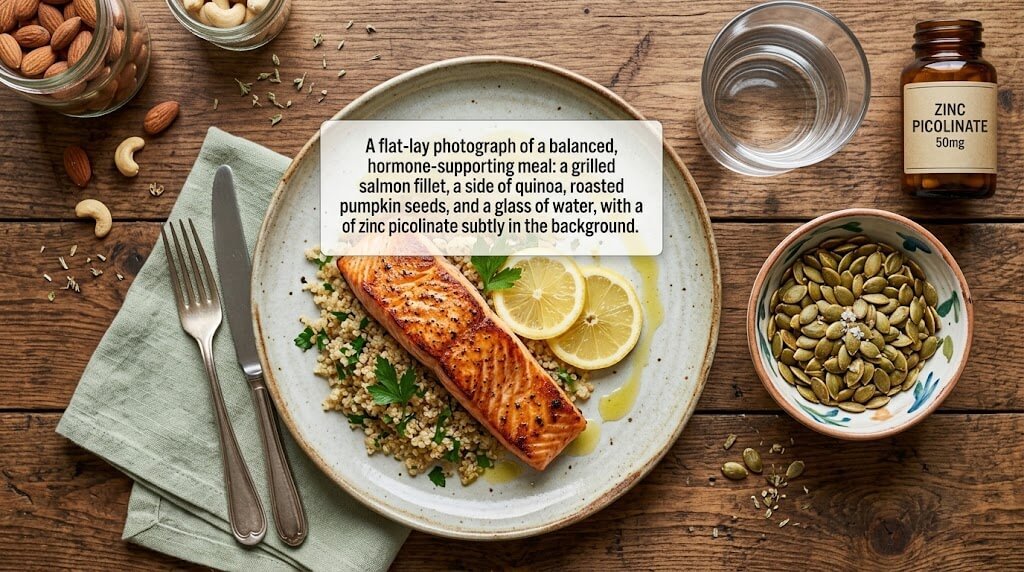
- Zinc Picolinate: This is widely considered the best form for correcting deficiencies. The picolinic acid enhances intestinal absorption, making it highly bioavailable.
- Zinc Citrate: Another well-absorbed option, though it can have a slightly metallic taste if bought in powder form.
- Zinc Gluconate: Frequently found in cold lozenges. It is effective and budget-friendly, though slightly less bioavailable than picolinate.
- Avoid Zinc Oxide: This form is cheap and often used in fortified foods or low-quality multivitamins, but the body struggles to absorb it effectively.
Step 3: Master the Timing and Pairing
Zinc is best absorbed when taken with a meal containing protein, as amino acids can enhance its uptake. However, you must be careful about what else is on your plate. Calcium and iron compete with zinc for the same absorption pathways in the gut.
Coach’s Tip: Do not take your zinc supplement at the same time as a high-calcium meal (like a large glass of milk or a whey protein shake) or an iron supplement. Space them out by at least two hours. Taking zinc with a solid meal like grilled chicken and vegetables is ideal to prevent the nausea that sometimes occurs when taking it on an empty stomach.
Step 4: Integrate with a Testosterone-Supporting Routine
Supplements alone do not build hormone profiles; lifestyle does. Resistance training is one of the most potent natural stimulators of testosterone. Below is a sample lower-body workout designed to maximize hormonal response, paired with your daily zinc protocol.
Sample Hormone-Supporting Lower Body Workout
Perform this routine 2 times per week, with at least 72 hours of recovery between sessions.
- Barbell Back Squat
- Sets/Reps: 4 sets of 6–8 reps
- Rest: 2–3 minutes
- Tempo: 3-1-1-0 (3 seconds down, 1 second pause at the bottom, 1 second up, 0 second hold at top)
- Weight Guidance: 75–85% of your 1-rep max (e.g., 225 lb / 102 kg for an intermediate lifter).
- Form Cues: Brace your core like you are about to be punched in the stomach. Keep your chest proud and drive your feet through the mid-foot.
- Regression: Goblet squat with a 35 lb (16 kg) kettlebell.
- Progression: Pause squats with a 2-second hold at the bottom.
- Romanian Deadlift (RDL)
- Sets/Reps: 3 sets of 8–10 reps
- Rest: 90 seconds
- Weight Guidance: 60–70% of 1RM (e.g., 185 lb / 84 kg).
- Form Cues: Push your hips back as if trying to close a car door with your glutes. Keep the barbell within 2 inches (5 cm) of your shins.
- Walking Lunges
- Sets/Reps: 3 sets of 10 steps per leg
- Rest: 60 seconds
- Weight Guidance: Bodyweight or holding two 25 lb (11 kg) dumbbells.

Safety Notes and Common Mistakes
More is not always better. When it comes to mineral supplementation, the margin between an optimal dose and a toxic dose can be surprisingly narrow.
Common Mistake: Ignoring the Copper Connection
Zinc and copper compete for absorption in the intestines. Consistently taking high doses of zinc (above the 40 mg upper limit) over weeks or months will actively deplete your body’s copper stores. Copper deficiency can lead to severe neurological issues, anemia, and ironically, a decrease in overall immune and endocrine function. The Fix: If you must take a high-dose zinc supplement (e.g., 30–50 mg daily) for a short period to correct a deficiency, choose a supplement that includes a small amount of copper (usually at a 10:1 or 15:1 zinc-to-copper ratio, such as 15 mg zinc to 1 mg copper).
Who Should Be Careful
- Individuals on Antibiotics: Zinc can bind to certain antibiotics (like tetracyclines and quinolones), reducing their effectiveness. Space doses by at least 2 hours.
- Men with Prostate Conditions: While zinc is vital for prostate health, excessively high doses have shown mixed results in studies regarding prostate cancer risk. Stick to the RDA or upper limit unless directed by a doctor.
- Those with Kidney Disease: Impaired kidney function can alter mineral excretion, making supplementation risky without medical supervision.
Related Tips for Holistic Hormone Health
Zinc does not work in a vacuum. To truly optimize your testosterone and overall metabolic health, you must view your body as an interconnected system. Here are evidence-based strategies to pair with your zinc intake.
1. Prioritize Sleep Quality
Sleep is when the majority of your daily testosterone is produced. Research consistently shows that restricting sleep to 5 hours per night can reduce testosterone levels by 10% to 15% in healthy young men. Understanding how sleep affects hormonal connections is just as critical as your supplement stack. Aim for 7 to 9 hours of quality, uninterrupted sleep in a cool, dark room.
2. Optimize Vitamin D and Magnesium
Zinc’s best friends in the hormone optimization world are Vitamin D and Magnesium. Vitamin D acts more like a steroid hormone in the body and is directly linked to testosterone production. Magnesium is required for over 300 enzymatic processes, including the conversion of cholesterol into testosterone. Ensuring you have adequate levels of vitamins that support metabolism when deficient creates a fertile environment for zinc to do its job.
3. Manage Body Composition and Insulin Sensitivity
Excess visceral fat contains an enzyme called aromatase, which converts testosterone into estrogen. Maintaining a healthy body composition is one of the most reliable ways to protect your testosterone levels. Furthermore, improving your metabolic health through diet and exercise can enhance your body’s natural hormone profile. Learning how to support metabolism naturally through whole foods and consistent movement is a foundational step.
4. Fuel with Adequate Protein
Protein is not just for muscle repair; it provides the amino acids necessary for hormone synthesis and helps regulate blood sugar, which in turn stabilizes cortisol (a hormone that antagonizes testosterone). Optimizing your protein intake and metabolism ensures your body has the raw materials it needs to recover from heavy lifting and produce hormones efficiently.
5. Consider Synergistic Nutrients
While zinc is a star player, other nutrients that support normal energy metabolism like B-vitamins and healthy dietary fats (cholesterol is the literal building block of testosterone) are equally important. Do not neglect your intake of eggs, avocados, and olive oil.
Frequently Asked Questions (FAQ)
1. How much zinc should a man take daily for testosterone support? The Recommended Dietary Allowance (RDA) for adult men is 11 mg per day. If you are supplementing to correct a mild deficiency or offset heavy sweat loss, 15 mg to 30 mg per day is generally safe and effective. Do not exceed the Tolerable Upper Intake Level of 40 mg per day without medical supervision.
2. Can zinc increase testosterone in healthy men who already eat well? Probably not. Research indicates that zinc supplementation primarily restores testosterone levels in men who are deficient or experiencing heavy physical stress. If your levels are already optimal, adding more zinc will not push your testosterone into supraphysiological ranges.
3. What is the best form of zinc for male hormone health? Zinc picolinate is widely regarded as the best form due to its high bioavailability and absorption rate. Zinc citrate and zinc gluconate are also effective, budget-friendly alternatives. Avoid zinc oxide, as it is poorly absorbed by the digestive tract.
4. How long does it take for zinc to affect testosterone levels? If you are deficient, you may begin to see improvements in energy and hormone markers within 4 to 6 weeks of consistent, daily supplementation paired with a balanced diet. However, individual results vary based on baseline levels and overall lifestyle factors.
5. Can taking too much zinc lower testosterone? Indirectly, yes. Chronic excessive zinc intake (above 40 mg/day long-term) depletes copper levels in the body. Copper deficiency can lead to a cascade of health issues, including impaired immune function and disrupted endocrine health, which can negatively impact overall hormone balance.
6. What foods are highest in zinc for men? Oysters are by far the richest natural source, providing over 70 mg per 3 oz (85 g) serving. Other excellent sources include lean beef, crab, lobster, pumpkin seeds, chickpeas, and fortified breakfast cereals. Animal-based sources are generally more bioavailable than plant-based ones.
Conclusion
So, does zinc support healthy testosterone levels in men? Absolutely. It is a non-negotiable, foundational mineral for the male endocrine system. It fuels the Leydig cells, supports luteinizing hormone signaling, and protects against the hormonal drops associated with intense physical training.
However, zinc is not a magic bullet. It works best as part of a comprehensive approach to male health. Prioritize hitting your 11 mg daily requirement through nutrient-dense whole foods like beef and pumpkin seeds. If you choose to supplement, opt for highly bioavailable forms like zinc picolinate, respect the 40 mg upper limit to protect your copper levels, and pair your nutrition with heavy, compound resistance training and adequate sleep.
By building a solid foundation of micronutrients and disciplined training, you give your body the exact environment it needs to produce hormones naturally and safely.