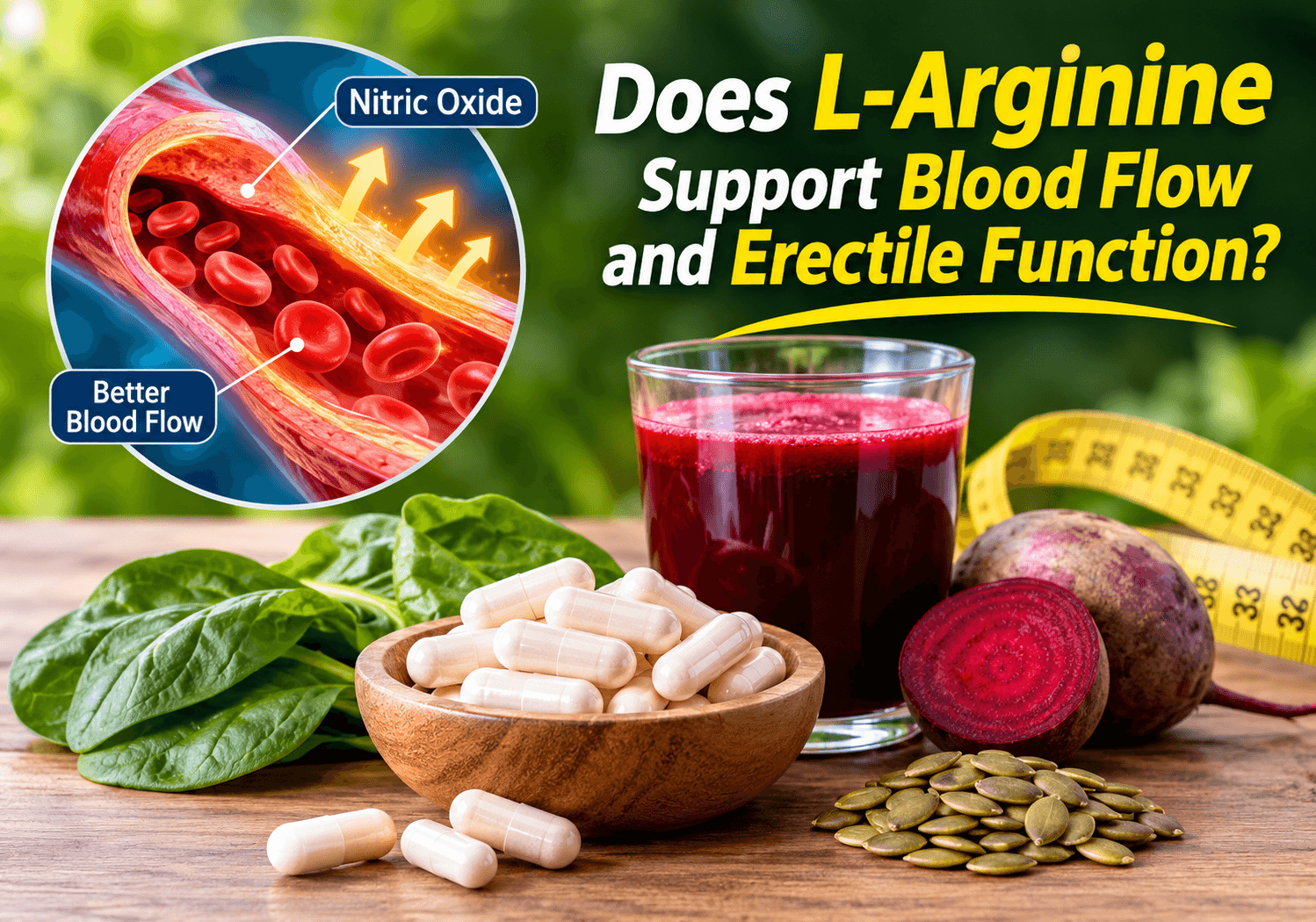
As a certified strength and conditioning coach, I frequently field questions about supplements that bridge the gap between gym performance and overall health. One of the most common inquiries I hear from clients is: Does L-arginine support blood flow and erectile function? The short answer is yes, but with important caveats regarding dosage, absorption, and individual health status.
Many men over 40 and fitness enthusiasts turn to amino acid supplements hoping to improve circulation, enhance workout pumps, and support male sexual health. While the biochemical pathway is sound, the real-world effectiveness depends heavily on how you use it, what you pair it with, and your baseline cardiovascular health. This guide breaks down the clinical research, practical dosing strategies, and safety considerations you need to know before adding this compound to your routine.
Quick Answer
Yes, L-arginine may support blood flow and erectile function by boosting nitric oxide production, which relaxes and widens blood vessels. However, research suggests that L-citrulline often provides more reliable results due to superior intestinal absorption. Always consult a doctor before starting, especially if you take blood pressure medication or have a history of heart conditions.
The Science: Does L-arginine support blood flow and erectile function?
To understand how this amino acid works, we have to look at the endothelium, the thin membrane lining the inside of your blood vessels. When functioning properly, endothelial cells produce an enzyme called nitric oxide synthase. This enzyme converts L-arginine into nitric oxide (NO), a potent signaling molecule.
Nitric oxide acts as a vasodilator. It signals the smooth muscles surrounding your blood vessels to relax. When these muscles relax, the vessels widen, allowing more blood to flow through with less resistance. This process is critical for regulating blood pressure, delivering oxygen to working muscles during exercise, and facilitating the hemodynamic changes required for an erection.
According to the Mayo Clinic, L-arginine is considered possibly safe for most people when taken orally in appropriate doses, and it has been studied extensively for its role in cardiovascular health. The physiological mechanism is well-documented: without adequate L-arginine, nitric oxide production drops, leading to endothelial dysfunction, arterial stiffness, and restricted blood flow.
However, a major hurdle exists. When you consume L-arginine orally, a significant portion is broken down by the enzyme arginase in the intestines and liver before it ever reaches your bloodstream. This is known as the “first-pass metabolism” effect. Because of this, achieving a clinically effective dose of L-arginine through supplementation alone can be challenging without causing gastrointestinal distress.
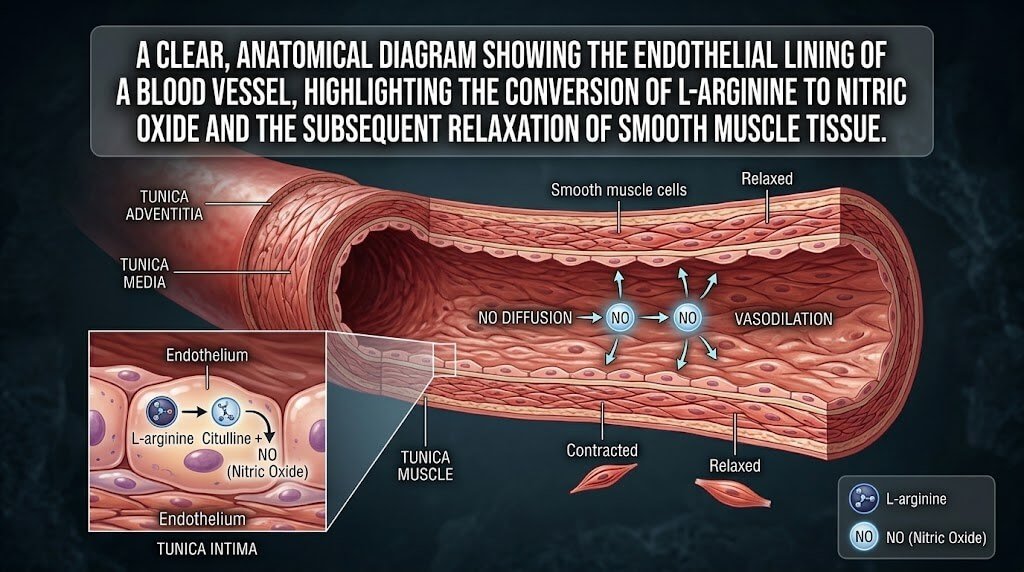
This absorption issue is why many researchers and clinicians now point to L-citrulline as a superior alternative. L-citrulline is another amino acid that bypasses the liver and is converted into L-arginine directly in the kidneys. Studies published in the Journal of Nutrition have demonstrated that oral L-citrulline supplementation actually raises plasma L-arginine levels more effectively than supplementing with L-arginine itself.
For erectile function specifically, the evidence is promising but mixed. A review of clinical trials indicates that men with mild to moderate erectile dysfunction (ED) may experience improvements in erection hardness and satisfaction when taking L-arginine, particularly when combined with other compounds like pycnogenol (pine bark extract). However, it is not a replacement for prescription PDE5 inhibitors (like sildenafil or tadalafil) in cases of severe ED. The Cleveland Clinic notes that while L-arginine can support vascular health, it should be viewed as a complementary strategy rather than a standalone cure.
L-arginine vs. L-citrulline: A Detailed Comparison
Choosing the right supplement requires understanding how different compounds behave in the body. Below is a breakdown of how L-arginine compares to its predecessor, L-citrulline, across key metrics relevant to blood flow and performance.
| Feature | L-arginine | L-citrulline |
| Primary Mechanism | Direct precursor to nitric oxide | Converts to L-arginine in the kidneys |
| Intestinal Absorption | Low (heavily degraded by arginase) | High (bypasses liver first-pass metabolism) |
| Plasma Half-Life | Short (rapidly cleared from blood) | Longer (sustained elevation of arginine) |
| Typical Effective Dose | 3,000 – 6,000 mg per day | 3,000 – 8,000 mg per day |
| Gastrointestinal Tolerance | Moderate to Poor (bloating, diarrhea at high doses) | Excellent (well-tolerated even at higher doses) |
| Best For | Short-term, acute pre-workout use (if tolerated) | Sustained daily nitric oxide support and ED management |
If your primary goal is to support long-term vascular health and erectile function, L-citrulline (or a blend of both) is often the more practical choice. However, if you are specifically asking, does L-arginine support blood flow and erectile function on its own? The answer remains yes, provided you can tolerate the required dosage and your body absorbs it effectively.
Practical Application: How to use L-arginine for blood flow and erectile function
As a coach, I believe supplements should fit seamlessly into a structured routine. Taking a pill randomly without a plan rarely yields optimal results. Here is a practical, step-by-step guide to applying this knowledge safely and effectively.
1. Determine Your Starting Dosage
If you choose to use pure L-arginine, start low to assess your gastrointestinal tolerance. Begin with 1,500 mg to 2,000 mg per day. If you experience no stomach upset after a week, you can gradually increase the dose to 3,000 mg to 5,000 mg per day, split into two or three smaller doses. Taking it with food can help mitigate stomach discomfort.
2. Optimize Timing for Your Goals
- For Exercise Performance: Take 3,000 mg about 45 to 60 minutes before your workout. This aligns with the peak plasma concentration window, potentially enhancing the “pump” and nutrient delivery to working muscles.
- For Erectile Function and General Circulation: Consistency matters more than acute timing. Take your daily dose in the morning and early evening to maintain stable blood levels throughout the day and night.
3. Pair with Synergistic Lifestyle Habits
Supplements do not work in a vacuum. To maximize nitric oxide production, pair your supplementation with habits that naturally stimulate the endothelium.
- Dietary Nitrates: Consume nitrate-rich foods like beets, spinach, and arugula. Dietary nitrates follow an alternative pathway to produce nitric oxide, complementing the L-arginine pathway.
- Physical Activity: Engage in at least 30 minutes of moderate-intensity cardiovascular exercise, such as brisk walking (covering about 1.5 miles or 2.4 km) or cycling, most days of the week. The shear stress of blood flow during exercise is one of the most potent natural stimulators of nitric oxide synthase.
Coach’s Tip: If you find L-arginine causes bloating, switch to L-citrulline malate. A common and effective ratio is 2:1 (citrulline to malate). Aim for 6,000 mg to 8,000 mg of L-citrulline malate about an hour before training or as a daily split dose for vascular support.
4. Sample Daily Protocol for Vascular Support
- Morning (with breakfast): 2,000 mg L-arginine (or 3,000 mg L-citrulline) + a multivitamin containing B-vitamins to support overall metabolic function. If you are exploring broader metabolic support, reviewing which vitamins support metabolism can help ensure your foundational nutrition is solid.
- Afternoon (pre-workout or pre-walk): 2,000 mg L-arginine + a serving of beetroot juice or powder.
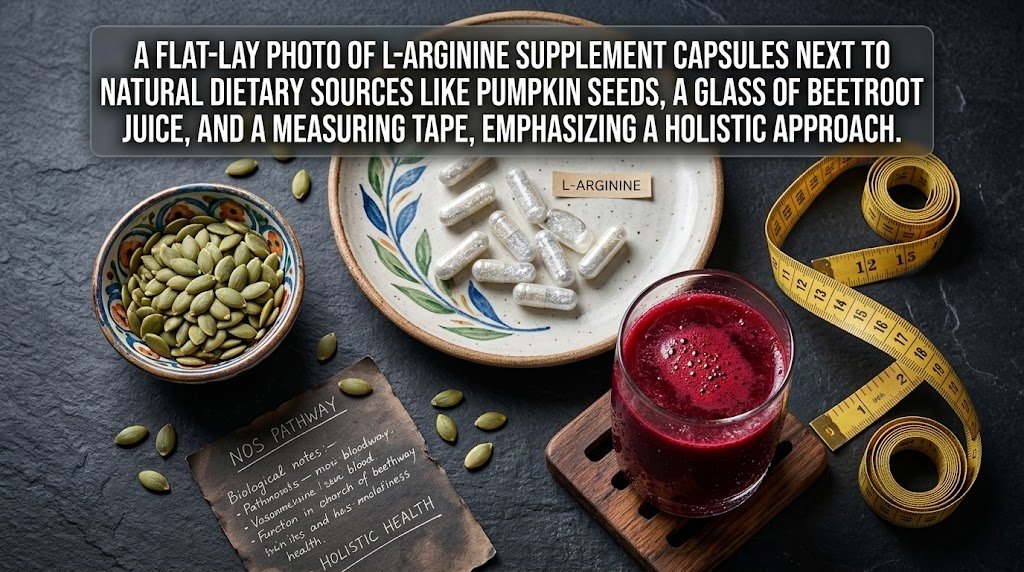
- Evening: Focus on whole-food sources of arginine, such as a 4 oz (113 g) serving of turkey breast, pumpkin seeds, or lentils, which provide a steady, natural release of amino acids without the risk of supplement-induced stomach upset.
Safety Notes and Contraindications
While L-arginine is a naturally occurring amino acid, it is not harmless. High doses can cause significant side effects, and it interacts with several common medications. Always prioritize safety over perceived benefits.
Common Mistake: Ignoring Medication Interactions
Common Mistake: Many individuals assume that because L-arginine is “natural,” it is safe to combine with prescription medications. This is dangerous. L-arginine lowers blood pressure. If you are already taking antihypertensive drugs (like lisinopril or amlodipine) or nitrates for chest pain, adding L-arginine can cause your blood pressure to drop to dangerously low levels (hypotension), leading to dizziness, fainting, or worse.
Specific Health Conditions to Consider
- Post-Heart Attack Patients: A notable clinical trial published by the National Institutes of Health (NIH) found that L-arginine supplementation after a recent myocardial infarction (heart attack) was associated with an increased risk of adverse outcomes and mortality. If you have a history of heart disease, do not use L-arginine without explicit clearance from your cardiologist.
- Herpes Simplex Virus (HSV): The herpes virus requires L-arginine to replicate. If you are prone to cold sores or genital herpes, supplementing with high doses of L-arginine may trigger an outbreak. Some users counter this by balancing their intake with L-lysine, but caution is still advised.
- Kidney and Liver Disease: Because amino acids are processed by the liver and kidneys, individuals with impaired organ function should avoid high-dose amino acid supplementation unless monitored by a physician.
- Surgery: L-arginine can affect blood pressure and blood sugar control. Discontinue use at least two weeks before any scheduled surgical procedure.
Recognizing Side Effects
At doses exceeding 5,000 mg per day, the most frequently reported side effects are gastrointestinal. These include:
- Abdominal pain and bloating
- Diarrhea
- Nausea
- Gout flare-ups (in susceptible individuals, due to changes in uric acid handling)
If you experience any of these symptoms, reduce the dose immediately or discontinue use. When evaluating any new regimen, it is wise to consider how different compounds interact. For instance, understanding how certain compounds improve insulin sensitivity can provide a broader picture of your metabolic and vascular health, as insulin resistance is closely linked to endothelial dysfunction.
Related Tips: Maximizing Circulatory and Sexual Health
Relying solely on a supplement is a narrow approach to health. As a coach, I encourage clients to build a foundation of habits that naturally enhance blood flow and hormonal balance. Here are three evidence-based strategies to pair with your supplementation.
1. Prioritize Lower-Body and Compound Resistance Training
Exercise is the most potent natural vasodilator available. Resistance training, particularly exercises that engage large muscle groups, forces the cardiovascular system to adapt.
- The Routine: Incorporate squats, deadlifts, or leg presses 2–3 times per week.
- Execution: Perform 3 sets of 8–12 repetitions at a weight that challenges you by the final rep (e.g., 135 lb / 61 kg for a beginner, progressing as form allows). Rest for 90 seconds between sets.
- The Benefit: The mechanical stress and increased metabolic demand of these movements stimulate the release of growth hormone and nitric oxide, improving long-term vascular elasticity. Learning how to boost metabolic flexibility through consistent training ensures your blood vessels remain responsive and healthy.
2. Manage Stress and Cortisol Levels
Chronic stress elevates cortisol, a hormone that, over time, constricts blood vessels and impairs endothelial function. High cortisol is also a known libido killer.
- Actionable Step: Dedicate 10 minutes daily to diaphragmatic breathing or meditation. Box breathing (inhale 4 seconds, hold 4 seconds, exhale 4 seconds, hold 4 seconds) has been shown to activate the parasympathetic nervous system, promoting vasodilation and relaxation.
3. Optimize Your Sleep Architecture
Erections predominantly occur during the REM (Rapid Eye Movement) phase of sleep, often referred to as “nocturnal penile tumescence.” This is the body’s natural maintenance cycle for vascular tissue. Poor sleep quality directly reduces testosterone production and impairs nitric oxide synthesis.
- Actionable Step: Aim for 7–9 hours of uninterrupted sleep. Keep your bedroom cool (around 65°F or 18°C) and avoid screens for an hour before bed. If you are struggling with weight management, which can heavily impact sleep quality and vascular health, exploring strategies on how to support metabolism naturally can be a highly beneficial parallel step.

Frequently Asked Questions (FAQ)
1. How long does it take for L-arginine to work for erectile dysfunction? L-arginine is not an instant fix like prescription ED medications. It typically takes 2 to 4 weeks of consistent daily supplementation to build up plasma levels and observe noticeable improvements in blood flow and erection quality. Patience and consistency are key.
2. Does L-arginine interact with blood pressure medication? Yes. Because L-arginine naturally lowers blood pressure by widening blood vessels, combining it with antihypertensive drugs can cause hypotension (dangerously low blood pressure). Always consult your doctor before combining them.
3. Can I get enough L-arginine from food alone? Yes, many foods are rich in L-arginine, including turkey, chicken, pumpkin seeds, soybeans, lentils, and dairy products. However, achieving the high doses (3,000–6,000 mg) used in clinical studies for ED or performance strictly through food can be difficult without consuming excessive calories.
4. Is L-arginine safe for women to take for blood flow? Yes, L-arginine is generally safe for women and is often used to support healthy blood pressure, exercise performance, and circulation. However, pregnant or breastfeeding women should avoid supplementation unless explicitly directed by their obstetrician.
5. What is the best time of day to take L-arginine? For general vascular health, split the dose between morning and evening. For exercise performance, take it 45 to 60 minutes before your workout. Taking it with a meal can help prevent stomach upset.
6. Are there any supplements that work better than L-arginine for blood flow? Research increasingly points to L-citrulline as a more effective option. Because it bypasses first-pass liver metabolism, L-citrulline raises blood levels of L-arginine more reliably and with fewer gastrointestinal side effects than L-arginine itself. When evaluating your overall regimen, it is also helpful to know which supplements may support weight management safely without negatively impacting cardiovascular health.
Conclusion
When evaluating the question, does L-arginine support blood flow and erectile function? The scientific evidence provides a clear, albeit nuanced, answer: yes, it does. By serving as the direct precursor to nitric oxide, L-arginine plays a vital role in vasodilation, helping to relax blood vessels and improve circulation throughout the body, including the pelvic region.
However, the practical reality of supplementation means that absorption is a major hurdle. For many individuals, L-citrulline represents a more reliable and better-tolerated pathway to achieving the same nitric oxide-boosting effects. Furthermore, no supplement can override a poor lifestyle. The most effective approach combines targeted, safe supplementation with regular cardiovascular exercise, a nutrient-dense diet rich in natural nitrates, and stress management.
Always prioritize your safety. If you have a history of heart disease, low blood pressure, or are taking prescription medications, speak with your healthcare provider before adding L-arginine to your routine. By making informed, evidence-based choices, you can effectively support your vascular health and overall vitality for years to come.