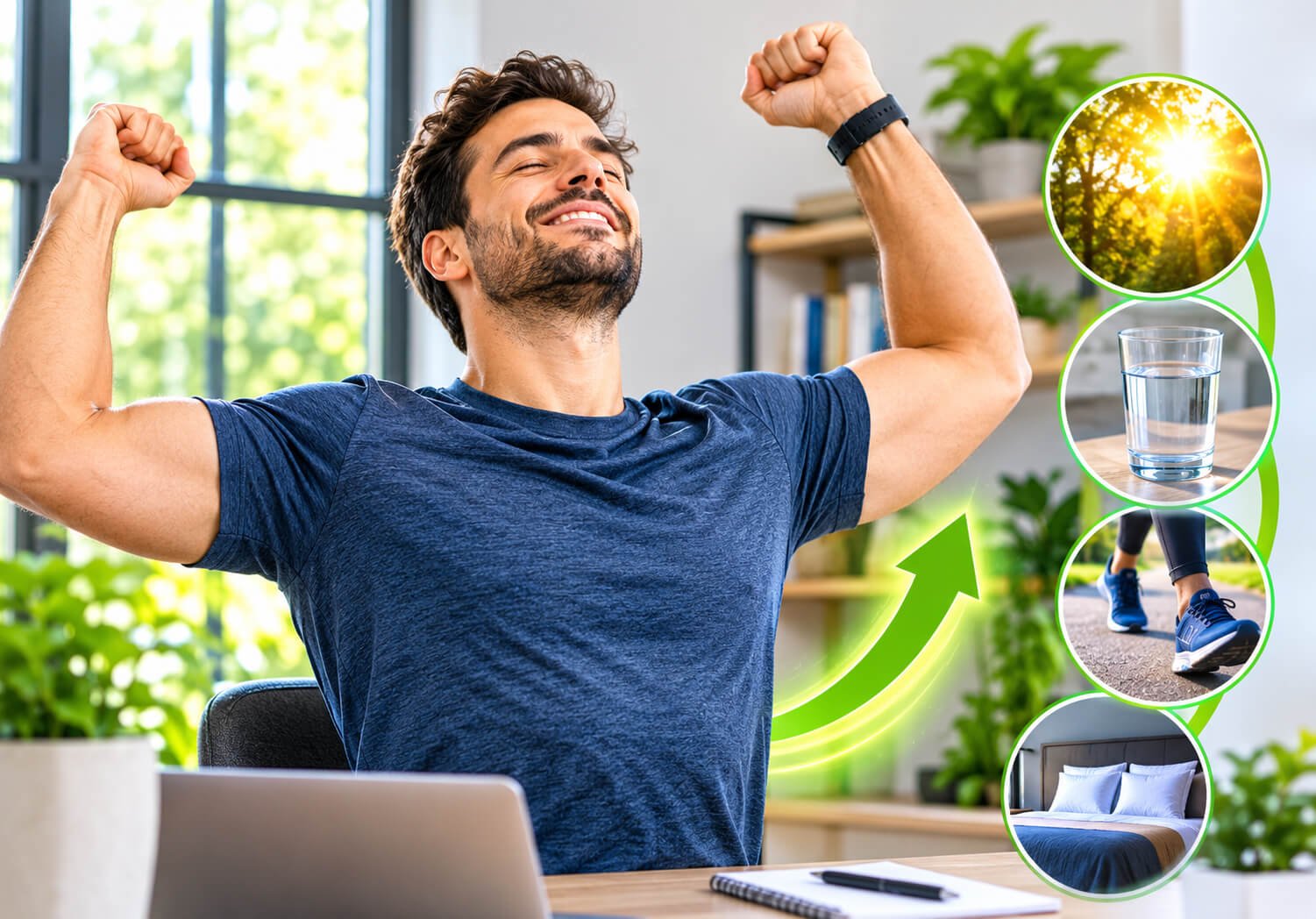
Meta Title: How to Improve Daily Energy Without Caffeine: 9 Proven Ways Meta Description: Learn how to improve daily energy without caffeine using evidence-based movement, light, hydration, and sleep strategies from a certified strength coach.
Quick Answer Box
Quick Answer: To improve daily energy without caffeine, synchronize your circadian rhythm with early morning sunlight (10–15 minutes), maintain steady hydration with electrolytes, utilize short 5-minute movement snacks (brisk walking or light bodyweight drills) to trigger catecholamine release, and optimize sleep hygiene to eliminate afternoon adenosine buildup naturally.
Do you wake up feeling as though your battery never fully charged? Reaching for another mug of coffee or an energy drink might offer a quick surge, but it often leads to a mid-afternoon crash, jittery focus, and disrupted night sleep. Relying constantly on central nervous system stimulants hides the root causes of physical and mental fatigue rather than fixing them.
Understanding why caffeine pills cause energy crashes and how to prevent it helps illuminate how artificial stimulation masks adenosine buildup—the natural molecule in your brain that signals fatigue. When caffeine wears off, all that accumulated adenosine binds to your brain’s receptors simultaneously, producing a dramatic drop in stamina and mental clarity.
As a certified strength and conditioning coach, I help clients build sustainable physical output without relying on external stimulants. Boosting your stamina naturally involves leveraging your body’s physiology—mitochondrial respiration, blood flow dynamics, cortisol regulation, and circadian biology. In this guide, we will examine evidence-based strategies to rebuild your daily vitality from the cellular level up.
The Physiology of Human Energy: Why Caffeine Is a Quick Fix
To learn how to improve daily energy without caffeine, it helps to understand how your body creates and manages energy. Your cells run on adenosine triphosphate (ATP), a high-energy molecule produced inside your mitochondria. When you engage in physical movement, think critically, or simply digest food, ATP breaks down into adenosine diphosphate (ADP) and individual phosphate molecules, releasing usable energy.
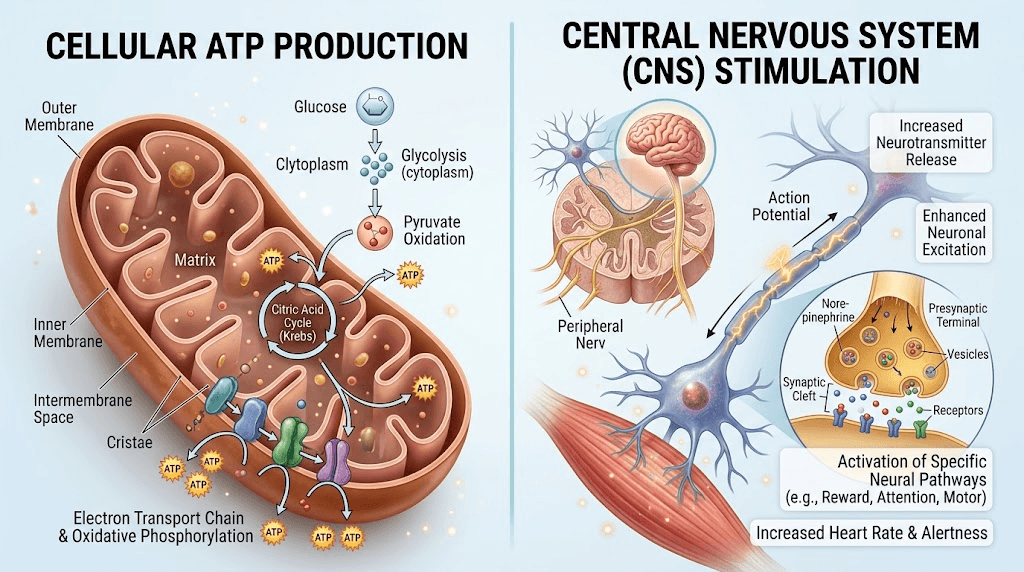
As your body burns through ATP across your waking hours, free adenosine builds up in your brain. This accumulation creates “sleep pressure,” binding to specific adenosine receptors to signal that it is time to rest. Caffeine does not create genuine metabolic fuel; it merely acts as an adenosine receptor antagonist. It blocks the signal of tiredness while your underlying fatigue continues to build up behind the dam.When you rely on lifestyle protocols—such as light exposure, strategic hydration, and non-exercise activity thermogenesis (NEAT)—you directly stimulate cellular ATP production and catecholamine circulation without draining your adrenal reserves or disrupting your sleep structure.
9 Practical Protocols to Boost Daily Energy Naturally
Here are nine direct, evidence-based methods to increase your daily stamina without drinking coffee, tea, or energy drinks.
1. View Direct Morning Sunlight Within 30 Minutes of Waking
Getting natural outdoor light into your eyes early in the morning is one of the most effective ways to establish consistent daily alertness. Natural sunlight triggers photoreceptor cells in your retina that communicate directly with your brain’s master clock—the suprachiasmatic nucleus.
This light exposure triggers an immediate, healthy spike in systemic cortisol (the Cortisol Awakening Response), which raises your core body temperature, increases heart rate, and sets your circadian timer. Knowing which nutrients support normal energy metabolism can further enhance this cellular process by providing essential cofactors for mitochondrial function.
- Duration: 10 to 15 minutes on clear days; 20 to 30 minutes on overcast days.
- Actionable Step: Step outside without sunglasses (contacts and prescription glasses are fine). Look in the general direction of the sun without staring directly at it.
2. Rehydrate Immediately with Water and Essential Electrolytes
Overnight, you lose between 1.0 to 2.0 lb (0.45 to 0.90 kg) of water weight through respiration and perspiration. Even mild dehydration—as little as 1% to 2% of body weight loss—impairs cognitive focus, reduces muscular stamina, and causes subjective fatigue.
When plasma volume drops, your heart must pump harder to deliver oxygen and nutrients throughout your vascular system. Drinking a large glass of water right when you wake up restores blood volume and eases the workload on your cardiovascular system.
Coach’s Tip: Keep a 16 to 24 fl oz (470 to 710 mL) glass or bottle of water on your nightstand. Before getting out of bed, drink the entire container. Add a pinch of unrefined sea salt or a non-caloric electrolyte solution containing sodium, potassium, and magnesium to speed up fluid absorption.
3. Perform 5-Minute “Movement Snacks” Every 90 Minutes
Sitting motionless for extended periods reduces blood flow, lowers your heart rate, and lowers your core body temperature. This physiological slowdown signals your brain that it is time to rest, making it difficult to stay alert at work without caffeine.
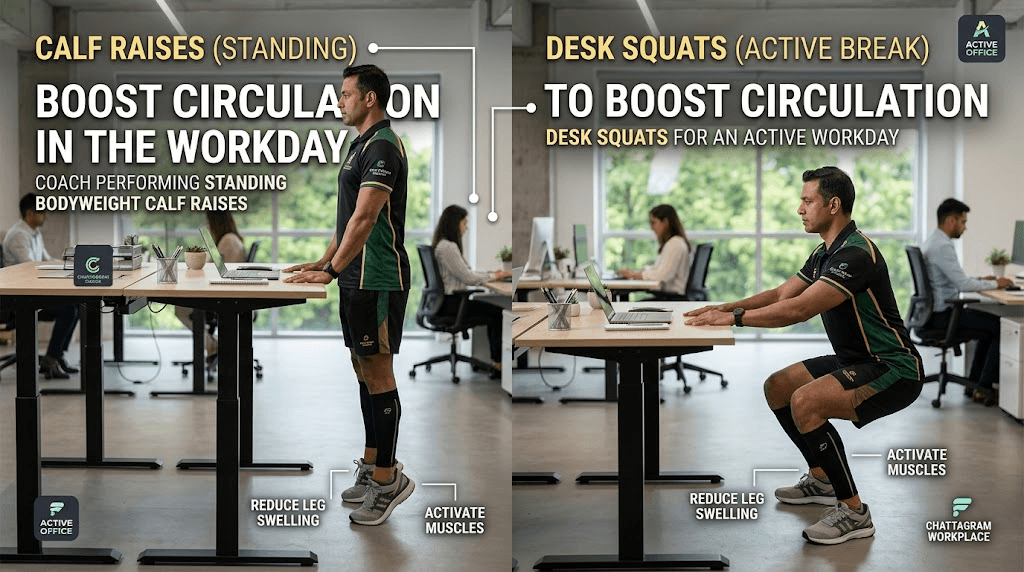
By performing brief bursts of movement—what exercise physiologists call “movement snacks”—you contract large muscle groups like your glutes, quadriceps, and calves. This activates the soleus muscle pump, returning pooled blood from your lower extremities back up to your heart and brain.
- Example Movement Snack Routine:
- Standing Bodyweight Squats: 15 reps
- Wall Push-Ups or Countertop Incline Push-Ups: 12 reps
- Standing Calf Raises: 20 reps
- Torso Rotations / Arm Swings: 30 seconds
These quick exercises raise your heart rate and release small amounts of dopamine and norepinephrine, giving you a smooth boost in focus without any post-workout exhaustion.

4. Optimize Carbohydrate and Protein Timing to Avoid Postprandial Somnolence
The afternoon crash—often called postprandial somnolence—is frequently caused by high-carbohydrate, low-protein lunches. Consuming high-glycemic carbohydrates causes a rapid increase in blood glucose, followed by an insulin surge that clears glucose from your bloodstream.
This drop in blood sugar can leave you feeling sleepy and unfocused. Additionally, large meals direct significant blood flow toward your digestive system, leaving less available for peripheral muscular and cerebral tissues.
To maintain steady physical stamina and cognitive focus throughout the afternoon:
- Pair lean proteins—such as 4 to 6 oz (113 to 170 g) of chicken breast, fish, or tofu—with fibrous vegetables and slow-digesting complex carbohydrates like quinoa or sweet potatoes.
- Keep total meal size moderate; avoid overeating during working hours.
- Review best vitamins for energy while dieting to ensure micronutrient sufficiency during caloric restrictions.
5. Take Tactical 10- to 20-Minute Power Naps or Practice NSDR
If you feel your alertness slipping around mid-afternoon, short rest periods can help clear accumulated adenosine without throwing off your nighttime sleep schedule.
Research published in Sleep shows that brief 10- to 20-minute naps significantly improve alertness, cognitive performance, and motor output without causing sleep inertia (that groggy feeling that comes from waking out of deep sleep).If you struggle to fall asleep during the day, practice Non-Sleep Deep Rest (NSDR) or Yoga Nidra. These protocols guide you through structured body scans and conscious breathing, helping your brain transition into slow alpha and theta wave states that restore mental clarity and replenish striatal dopamine.
6. Utilize Cold Water Exposure on Facial Micro-Vessels
Cold temperature exposure triggers your sympathetic nervous system, causing a natural surge of epinephrine (adrenaline) and norepinephrine in both your body and brain. This response narrows peripheral blood vessels, elevates heart rate, and increases mental focus.
You do not need a full ice bath to benefit from this effect:
- Splash ice-cold water over your face and eyes for 30 to 45 seconds.
- Alternatively, submerge your hands and wrists in a basin of cold water, or end your morning shower with 30 to 60 seconds of cold water.
Common Mistake: Avoid taking long, scorching hot showers during mid-afternoon fatigue slumps. Excessive heat causes peripheral vasodilation, lowering your blood pressure and making you feel even more sluggish.
7. Practice Box Breathing or Physiological Sighs
How you breathe directly impacts your autonomic nervous system. Shallow, rapid breathing can cause mild hypercapnia or unnecessary physical tension, while slow, structured breathwork improves arterial oxygenation and balances heart rate variability (HRV).
To increase alertness using breathwork, perform 3 to 5 minutes of the Physiological Sigh or Box Breathing:
The Physiological Sigh: Take two quick inhales through your nose (one deep inhale followed immediately by a sharp micro-inhale to fully expand your lung alveoli), then execute a long, slow exhale through your mouth. Repeat this pattern 5 to 6 times for an immediate reset in mental clarity.
- Box Breathing: Inhale through your nose for a count of 4 seconds, hold your breath for 4 seconds, exhale through your mouth for 4 seconds, and hold your lungs empty for 4 seconds. Repeat for 3 to 5 total minutes.
8. Elevate Non-Exercise Activity Thermogenesis (NEAT)
Physical movement acts as a direct signaller to your brain that you are active and engaged. Non-Exercise Activity Thermogenesis (NEAT) includes all the daily physical activity you perform outside of structured workouts and sleeping.If you spend your day working at a desk, build small habits to keep your movement levels up:
- Use a height-adjustable standing desk, alternating between 45 minutes of sitting and 15 minutes of standing.
- Take phone calls while walking around your room or office space.
- Pace around the room during meetings when appropriate.
- Park your car 0.25 miles (0.40 km) away from building entrances to guarantee extra movement.
9. Master Sleep Architecture and Evening Wind-Down Habits
You cannot maintain high energy during the day if your sleep quality is compromised. Quality rest relies on consistent timing, proper darkness, and lower nighttime temperatures. Understanding how does sleep affect metabolism and weight management highlights how poor sleep compromises cellular recovery and disrupts hormone balance.
To set up your sleep for success:
- Go to bed and wake up within the same 30-minute window every day—even on weekends.
- Keep your bedroom cool, around 65°F to 68°F (18°C to 20°C). Core body temperature must drop by 2°F to 3°F (1°C to 1.5°C) to initiate deep sleep.
- Turn off bright overhead lights and screens 60 minutes before bed, or use low-level, warm lamps to encourage natural melatonin production.
15-Minute Daily Energy Recharge Routine
This quick, non-stimulant routine is designed to restore circulation, mobilize your spine, and trigger a healthy physical uplift whenever you hit an afternoon slump.
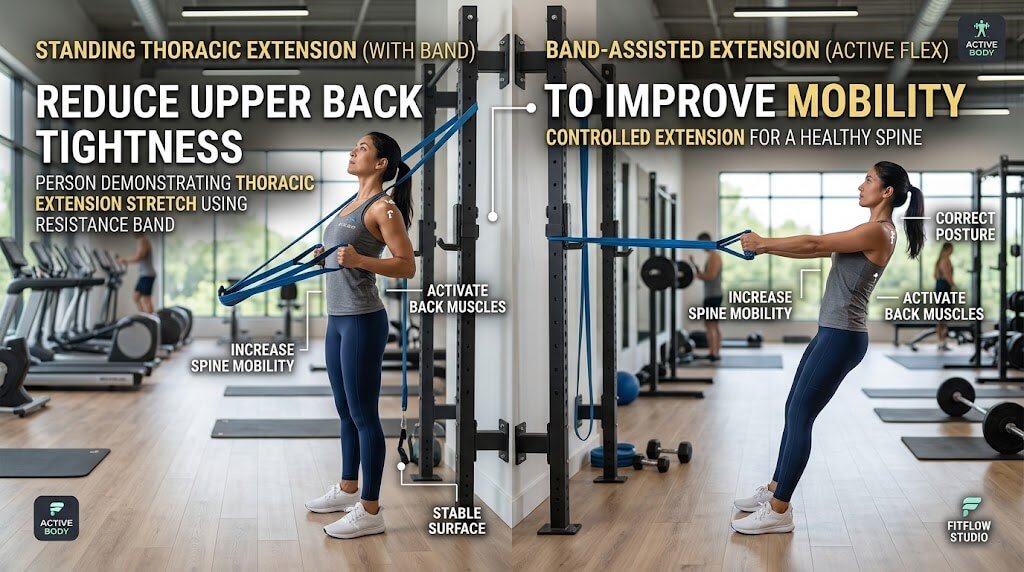
Routine Specifications & Guidance
- Target Time: Mid-afternoon (between 1:30 PM and 3:30 PM) or early morning.
- Equipment Required: None (an exercise mat or resistance band is optional).
- Pacing & Tempo: Controlled, continuous motion without straining.
Exercise Execution Cues
1. Bodyweight Air Squats
- Primary Muscles: Quadriceps, Gluteus Maximus.
- Form Cues: Stand with feet shoulder-width apart, toes turned slightly out. Drive your hips back while bending your knees, keeping your chest open. Lower until your thighs are parallel to the floor, then push through your feet to return to standing.
2. Incline Desk/Wall Push-Ups
- Primary Muscles: Pectoralis Major, Anterior Deltoids, Triceps.
- Form Cues: Place your hands shoulder-width apart on a sturdy desk or wall. Keep your body in a straight plank line from your head to your heels. Lower your chest down with control, then press firmly back up to full arm extension.
3. Standing Calf Raise to Overhead Reach
- Primary Muscles: Gastrocnemius, Soleus, Latissimus Dorsi.
- Form Cues: Press up onto the balls of your feet while reaching both arms straight overhead. Hold the top position for 1 second, then lower your heels back down under control.
4. Cat-Cow Spine Mobilization
- Primary Muscles: Erector Spinae, Rectus Abdominis.
- Form Cues: Start on your hands and knees on an exercise mat. Inhale as you arch your back and lift your head (Cow position). Exhale as you round your spine toward the ceiling, tucking your chin toward your chest (Cat position). Move smoothly between the two positions.
Exercise Regressions and Progressions
Adjust these movement strategies based on your current fitness level, mobility, or workplace setup.
Regression (Beginner/Limited Mobility): If standing bodyweight squats cause joint discomfort, use a sturdy office chair for Sit-to-Stand Box Squats. Sit down under control, touch the chair seat lightly, and stand up without using your hands for support.
- Progression (Advanced Athletes): Increase the intensity of your movement snacks by performing explosive Jump Squats or adding a 15 lb to 25 lb (6.8 kg to 11.3 kg) weighted vest or backpack during your brisk outdoor walks.
Common Mistakes That Drain Daily Stamina
Avoiding common daily habits that lower your energy can be just as important as building new positive routines.
Mistake 1: Relying on Artificial Light Instead of Outdoor Sun. Indoor lighting typically delivers only 100 to 500 lux, whereas even an cloudy day outdoors provides 10,000 lux or more. Indoor lighting is not bright enough to properly trigger your Cortisol Awakening Response.
- Mistake 2: Sitting Motionless for Long Stretches. Extended sitting allows blood to pool in your lower limbs, lowering your heart rate and signaling to your brain that it is time to rest. Set an hourly timer to stand up and move.
- Mistake 3: Misinterpreting Dehydration for Low Blood Sugar. When mid-afternoon tiredness hits, people often reach for a sugary snack when their body actually needs fluid and electrolytes. Drink 16 fl oz (470 mL) of salted or electrolyte-enhanced water before reaching for food.
- Mistake 4: Cranking Intensity Too High Late in the Day. High-intensity workouts late in the evening elevate your core temperature and system-wide cortisol, making it difficult to wind down and get deep, restorative sleep. Keep late workouts to low- or moderate-intensity efforts.
Daily Schedule: Fueling Energy naturally
Here is how to structure your daily routine to optimize your energy levels naturally without relying on caffeine.Integrating strategic movement alongside supportive nutrition can keep your energy steady throughout the day. If your goals include managing your body weight while building stamina, reading about how protein helps control hunger during weight loss can help you plan satisfying meals that prevent mid-day slumps.
Medical Disclaimer and Cautionary Notes
While most people can safely build daily energy through movement, light exposure, and sleep habits, sudden onset of chronic fatigue requires proper medical evaluation.
Cautionary Note: If you experience severe, persistent fatigue, sudden muscle weakness, chest discomfort, shortness of breath, or chronic daytime sleepiness despite getting 7 to 9 hours of sleep per night, consult a physician. These symptoms may point to underlying medical conditions such as sleep apnea, thyroid imbalances, anemia, or systemic deficiency disorders. Always speak with your healthcare provider before starting new physical exercise regimens or significantly altering your lifestyle habits.
Frequently Asked Questions
How long does it take to adapt to life without caffeine?
Most people adapt within 7 to 14 days. During the first 3 to 5 days, you may experience mild headache symptoms or temporary fatigue as your brain recalibrates its natural adenosine receptor sensitivity. Staying well-hydrated, adding extra movement snacks, and getting morning sunlight can help ease this transition period.
Can light physical movement replace my morning cup of coffee?
Yes. Short sessions of moderate physical movement elevate your heart rate, stimulate circulation, and trigger the release of catecholamines like dopamine and norepinephrine. This creates a smooth, sustained boost in mental clarity without the sharp crash often associated with coffee.
What should I do when I hit a severe mid-afternoon slump?
Drink 16 fl oz (470 mL) of water with a pinch of sea salt or an electrolyte solution, step outside for a brisk 5-minute walk in natural sunlight, and perform 5 to 6 physiological sighs. This simple routine helps restore plasma volume, stimulates circulation, and balances your autonomic nervous system.
How does early morning sunlight increase overall daily stamina?
Early morning natural light triggers your retinal ganglion cells, signaling your brain’s suprachiasmatic nucleus to set your circadian rhythm. This starts an early release of cortisol, elevates your core body temperature, and sets a timer for your brain to produce melatonin naturally about 12 to 14 hours later.
Are non-stimulant energy supplements effective for chronic fatigue?
Certain non-stimulant compounds can support natural energy production. If you are exploring non-caffeinated options, learning how L-tyrosine supports energy during a calorie deficit can show how amino acid precursors help synthesize dopamine and norepinephrine naturally.
Can dehydration alone cause daytime fatigue?
Yes. A drop in fluid levels as small as 1% to 2% of total body weight decreases blood volume, forcing your heart to work harder to deliver oxygen and key nutrients. This extra cardiovascular effort often shows up as subjective fatigue, low motivation, and mental brain fog.
Conclusion
Learning how to improve daily energy without caffeine comes down to supporting your body’s natural physiology instead of trying to override it with stimulants. When you align your daily routine with your natural biology—getting early morning sunlight, maintaining consistent hydration with electrolytes, taking regular movement snacks, and keeping a steady sleep schedule—you unlock smooth, sustainable energy that lasts all day long.
Start by choosing two or three simple protocols from this guide: drink a large glass of water right when you wake up, get 10 minutes of direct morning sunlight, and set an hourly timer to stand up and stretch. By building these daily habits, you will create dependable energy levels, sharpen your mental focus, and build athletic stamina that lasts.