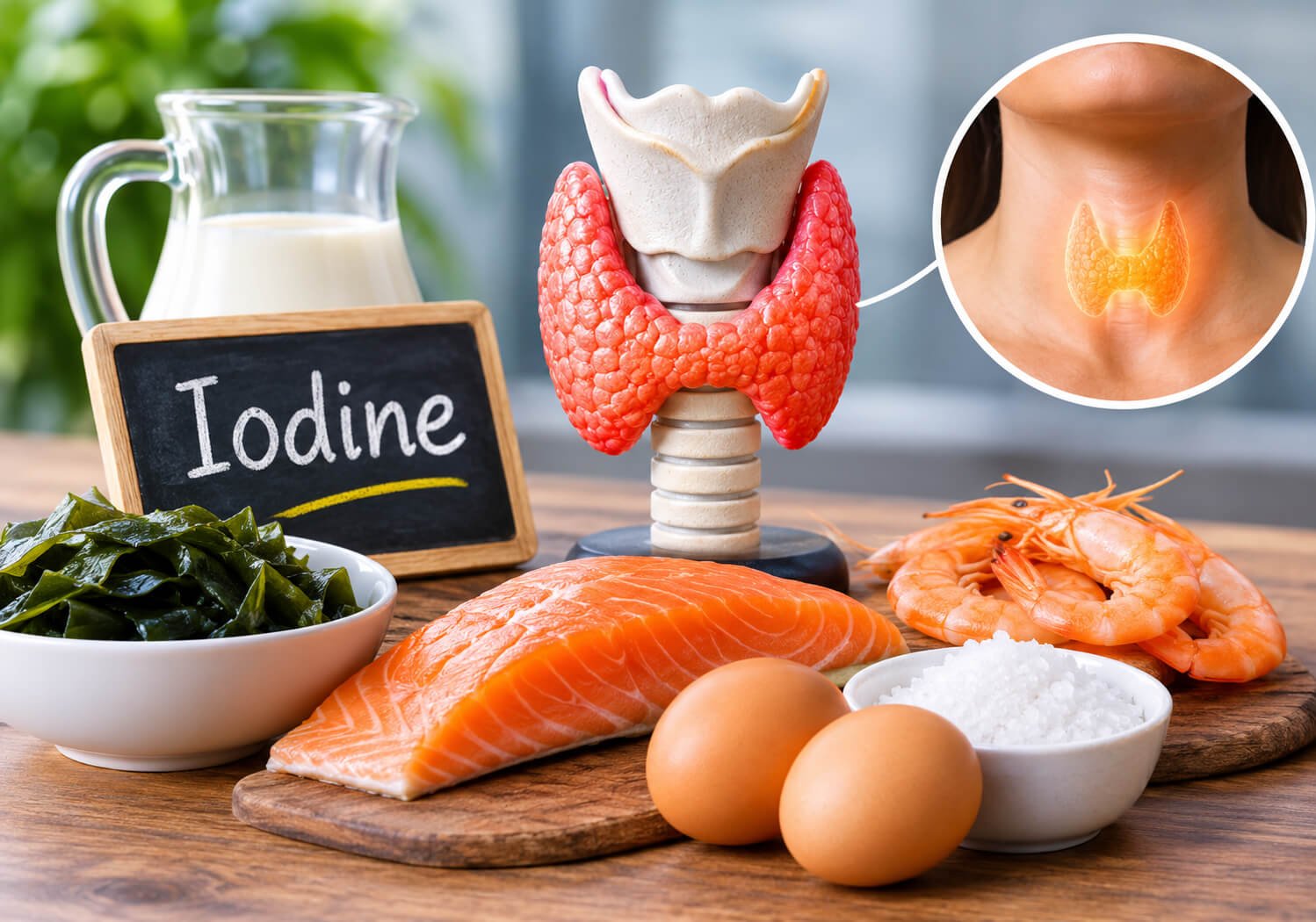
Your thyroid gland is a small, butterfly-shaped organ in your neck, but it controls some of the most critical processes in your body. It regulates your energy, body temperature, and how efficiently you burn calories. Many clients ask me, how does iodine deficiency affect thyroid function? The direct answer is that without adequate iodine, your thyroid cannot produce essential hormones, leading to a sluggish metabolism, chronic fatigue, and potential weight gain. As a strength and conditioning coach, I see the downstream effects of poor thyroid health in the gym every day: stalled progress, low workout energy, and extended recovery times. Understanding the science behind iodine and thyroid health is the first step toward fixing these issues. This guide breaks down the physiology, dietary strategies, and practical workout applications to help you support your endocrine system safely and effectively.
Quick Answer
Iodine deficiency impairs the thyroid gland’s ability to produce thyroxine (T4) and triiodothyronine (T3) hormones. This triggers a rise in Thyroid-Stimulating Hormone (TSH), which can lead to hypothyroidism, a slowed basal metabolic rate, fatigue, weight gain, and the development of a goiter. Adequate dietary iodine is strictly required for normal energy metabolism and overall thyroid health.
How Does Iodine Deficiency Affect Thyroid Function? The Physiological Breakdown
To understand the impact of low iodine, we must look at how the thyroid gland operates. The thyroid’s primary job is to manufacture two key hormones: T4 (thyroxine) and T3 (triiodothyronine). The numbers 4 and 3 refer to the number of iodine atoms attached to each hormone molecule. Therefore, iodine is not just a helpful nutrient; it is the fundamental building block of these hormones.
When you consume iodine-rich foods, it is absorbed in your gut and transported via the bloodstream to the thyroid gland. Specialized cells in the thyroid use a mechanism called the sodium-iodide symporter to actively pull iodine from the blood. According to the World Health Organization (WHO), iodine is a trace mineral that the human body cannot produce on its own, making dietary intake mandatory.
When iodine intake drops below required levels, the thyroid gland cannot synthesize adequate amounts of T4 and T3. The body detects this drop in circulating thyroid hormones. In response, the pituitary gland in the brain releases more Thyroid-Stimulating Hormone (TSH) to yell at the thyroid to work harder.
This constant overstimulation causes the thyroid cells to multiply and grow in size, attempting to trap every available molecule of iodine in the blood. This physical enlargement of the gland is known as a goiter. If the deficiency persists, the gland ultimately fails to keep up with demand, resulting in clinical hypothyroidism. Research published in the journal Endocrine Reviews confirms that iodine deficiency remains the most common preventable cause of intellectual disability and hypothyroidism worldwide, though it is less common in developed nations due to iodized salt programs.
Daily Iodine Requirements and Dietary Sources
Meeting your daily iodine needs is straightforward for most people, but it requires conscious dietary choices. The National Institutes of Health (NIH) provides clear Recommended Dietary Allowances (RDA) for iodine based on age and life stage.
| Life Stage | Recommended Daily Iodine (mcg) |
| Adult men and women (14+ years) | 150 mcg |
| Pregnant individuals | 220 mcg |
| Lactating individuals | 290 mcg |
| Upper Tolerable Limit (Adults) | 1,100 mcg |
Relying on whole foods is the safest and most effective way to maintain these levels. Below is a comparison of common dietary iodine sources. Note that the iodine content in plant-based foods can vary wildly depending on the iodine levels in the soil where they were grown.
| Food Source | Serving Size | Approximate Iodine (mcg) | % of Daily Value |
| Seaweed (Kelp, dried) | 1 gram | 16 to 2,984 mcg | 11% to 1,989% |
| Cod (baked) | 3 ounces (85 g) | 99 mcg | 66% |
| Milk (low-fat) | 1 cup (240 ml) | 56 mcg | 37% |
| Iodized table salt | 1/4 teaspoon (1.5 g) | 71 mcg | 47% |
| Shrimp (cooked) | 3 ounces (85 g) | 35 mcg | 23% |
| Eggs (large) | 1 whole | 24 mcg | 16% |
Note: Sea salt, Himalayan pink salt, and kosher salt typically do not contain added iodine unless explicitly stated on the label.
How to Apply It: Dietary Strategy for Thyroid Health
As a coach, I always prioritize food first. Before reaching for a supplement, evaluate your current diet. If you do not eat dairy, fish, or eggs, and you exclusively use non-iodized sea salt, you may be at a higher risk for low iodine intake.
Incorporate one to two iodine-rich foods into your daily meal plan. For example, adding a serving of low-fat milk to your morning oats or having baked cod twice a week can easily cover your baseline requirements. If you follow a plant-based or vegan diet, using iodized salt in your cooking is a simple, cost-effective strategy to prevent deficiency.
Be highly cautious with kelp or seaweed supplements. While they are natural, their iodine content is notoriously inconsistent. A single supplement pill can contain anywhere from 100 mcg to over 2,000 mcg of iodine. Consistently exceeding the upper tolerable limit of 1,100 mcg per day can actually trigger thyroid dysfunction, including hyperthyroidism or autoimmune flare-ups.

How Does Iodine Deficiency Affect Thyroid Function and Your Fitness Goals?
When thyroid hormone levels drop, your basal metabolic rate (BMR) decreases. This means your body burns fewer calories at rest. For individuals focused on body composition, this metabolic slowdown can make fat loss feel like an uphill battle, even when diet and exercise are on point. Furthermore, low T3 levels directly impact muscle tissue. Thyroid hormones are required for optimal muscle protein synthesis and the efficient clearance of metabolic waste after training.
If you suspect your thyroid is underperforming, do not panic. You can support your metabolic health through targeted, evidence-based strength training. Resistance exercise improves insulin sensitivity and helps maintain lean muscle mass, which is the most metabolically active tissue in the body.
Below is a practical, thyroid-supportive metabolic workout routine. This program focuses on compound movements that recruit large muscle groups, maximizing hormonal response and caloric expenditure without overstressing the central nervous system, which is already vulnerable when thyroid function is low.
Perform this routine 2 to 3 times per week, with at least one full rest day between sessions.
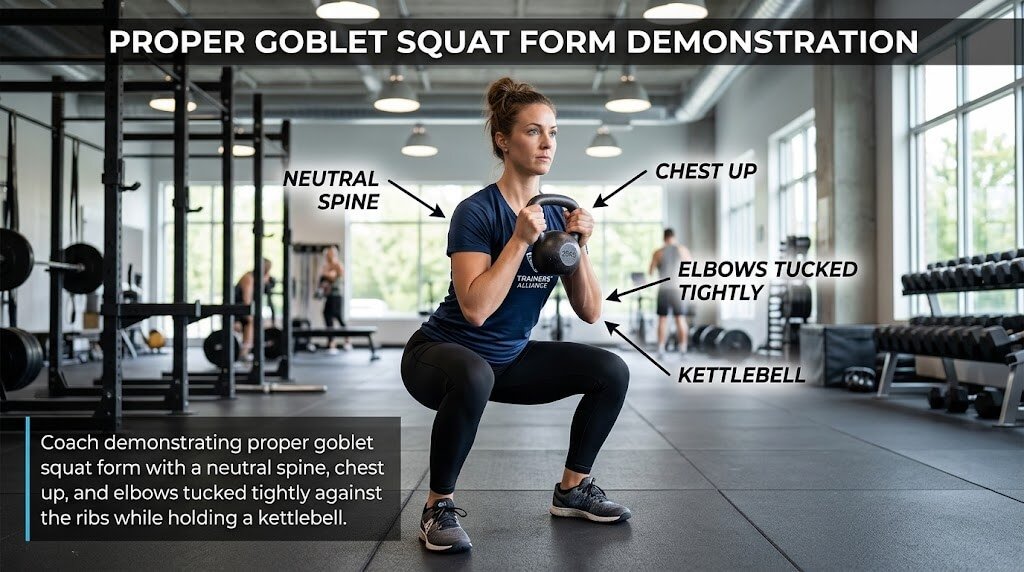
1. Goblet Squat
- Sets: 3
- Reps: 10–12
- Rest: 60–90 seconds
- Weight Guidance: Start with a 25 lb (11 kg) dumbbell or kettlebell. Progress to 45 lb (20 kg) as form allows.
- Tempo: 3-1-1-0 (3 seconds down, 1 second pause at the bottom, 1 second up, 0 seconds at the top).
- Form Cues: Hold the weight close to your chest with elbows tucked. Keep your chest proud and spine neutral. Push your knees outward so they track directly over your toes.
- Regression: Bodyweight box squat to a bench.
- Progression: Front barbell squat.

2. Dumbbell Romanian Deadlift (RDL)
- Sets: 3
- Reps: 10–12
- Rest: 60–90 seconds
- Weight Guidance: 30 lb (13 kg) to 50 lb (22 kg) per hand.
- Tempo: 3-1-1-0.
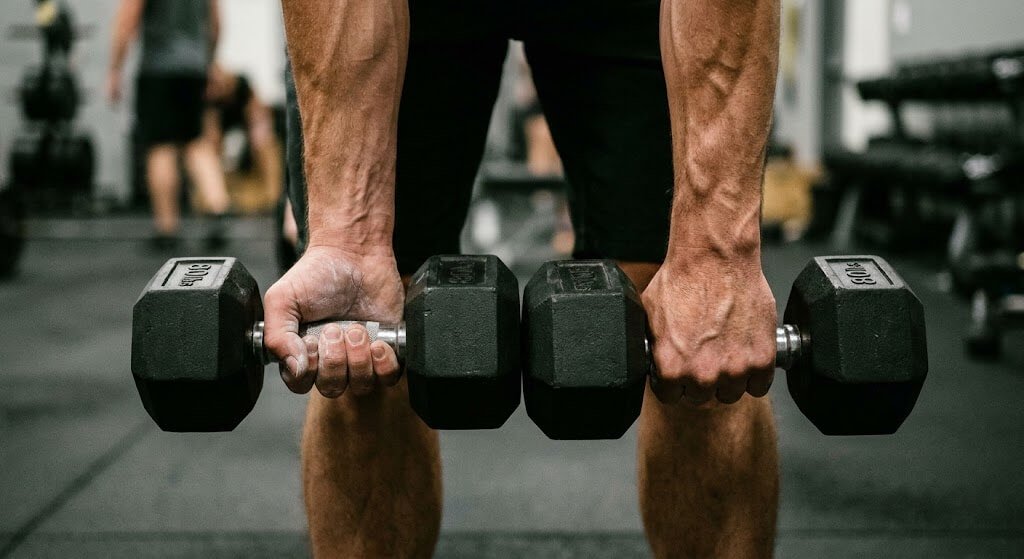
- Form Cues: Stand with feet hip-width apart. Hold dumbbells in front of your thighs. Push your hips backward as if trying to close a car door with your glutes. Keep a slight bend in the knees and your back completely flat. Lower the weights until you feel a deep stretch in your hamstrings, then squeeze your glutes to return to standing.
- Regression: Bodyweight hip hinge with a dowel rod along the spine to teach the movement pattern.
- Progression: Barbell RDL with heavier loads.
3. Incline Push-Up
- Sets: 3
- Reps: 8–15 (or until 1-2 reps shy of failure)
- Rest: 60 seconds
- Weight Guidance: Bodyweight.
- Tempo: 2-1-1-0.
- Form Cues: Place your hands on a sturdy bench or box (approximately 24 inches or 60 cm high). Keep your body in a straight, rigid line from your head to your heels. Lower your chest to the edge of the bench, then press away forcefully. Do not let your hips sag.
- Regression: Wall push-up (standing, hands on a wall).
- Progression: Standard floor push-up or deficit push-up with hands elevated on blocks.
4. Farmer’s Carry
- Sets: 3
- Distance: 40 yards (36 meters) per set, or 0.25 miles (0.4 km) total per session.
- Rest: 90 seconds
- Weight Guidance: 40 lb (18 kg) to 60 lb (27 kg) per hand.
- Tempo: Controlled, steady walking pace.
- Form Cues: Grip the dumbbells or kettlebells tightly. Stand tall, pull your shoulder blades down and back, and brace your core as if preparing for a light punch to the stomach. Walk with short, controlled steps. Do not let the weights swing or your shoulders round forward.
- Regression: Suitcase carry (one heavy weight in one hand, walking half the distance, then switching sides).
- Progression: Heavy farmer’s carry with 75+ lb (34+ kg) per hand.
Coach’s Tip: When thyroid function is sluggish, your recovery capacity is diminished. Do not chase extreme soreness. Focus on perfect form, controlled tempos, and consistent weekly attendance. The goal is to stimulate the muscle and boost metabolic rate, not to annihilate your central nervous system.
Common Mistake: Rushing the eccentric (lowering) phase of the lifts. When you drop the weight quickly, you rely on momentum and connective tissue rather than muscle tension. Stick to the 3-second lowering count to maximize muscle fiber recruitment and metabolic demand.
Safety Notes and Medical Considerations
While optimizing your diet and training is powerful, thyroid health requires careful medical oversight.
First, more iodine is not always better. The thyroid operates on a “Goldilocks” principle. Chronic excessive iodine intake (above 1,100 mcg daily) can induce the Wolff-Chaikoff effect, a temporary shutdown of thyroid hormone production, or trigger hyperthyroidism in susceptible individuals.
Second, if you have an autoimmune thyroid condition like Hashimoto’s thyroiditis, introducing high doses of iodine can act like throwing gasoline on a fire, increasing thyroid antibody levels and accelerating gland destruction. The American Thyroid Association advises that individuals with Hashimoto’s should avoid high-dose iodine supplements unless specifically directed by an endocrinologist.
Always consult with a doctor or registered dietitian before starting any new supplement regimen, especially if you are experiencing symptoms like unexplained weight gain, severe fatigue, hair loss, or cold intolerance. A simple blood test measuring TSH, Free T4, Free T3, and thyroid antibodies can provide a clear picture of your thyroid status.
Related Tips for Holistic Metabolic Support
Thyroid function does not exist in a vacuum. It interacts closely with other lifestyle factors and nutrients.
- Synergistic Nutrients: The conversion of inactive T4 into active T3 relies heavily on other minerals. Ensuring adequate intake of selenium and zinc is crucial. Brazil nuts are an excellent dietary source of selenium. For more details, read about which nutrients support normal energy metabolism.
- Protein Prioritization: Consuming adequate protein supports both muscle retention during weight management and the transport of thyroid hormones. Learn more about how protein intake metabolism weight loss are interconnected.
- Stress and Sleep: Chronic stress elevates cortisol, which can inhibit the conversion of T4 to T3. Prioritizing 7 to 9 hours of quality sleep is a non-negotiable pillar of endocrine health. If you struggle with evening habits, explore strategies to manage food cravings without supplements and improve your sleep hygiene.
- Metabolic Flexibility: Training your body to efficiently switch between burning carbohydrates and fats can reduce the metabolic strain on a sluggish thyroid. Discover how to boost metabolic flexibility without crash dieting.
- Natural Support: If you are looking for broader lifestyle interventions, review our guide on how to support metabolism naturally for weight management. Additionally, ensuring you do not have underlying deficiencies is key; see which vitamins support metabolism when you’re deficient. For those specifically trying to increase metabolism naturally, consistent resistance training remains the most reliable tool.
FAQ
What are the early signs of low iodine?
Early signs often mimic general fatigue and include unexplained weight gain, feeling constantly cold, dry skin, hair thinning, and brain fog. In more advanced cases, a visible swelling at the base of the neck (a goiter) may develop as the thyroid gland enlarges.
Can iodine supplements fix an underactive thyroid?
Only if the underactive thyroid (hypothyroidism) is directly caused by iodine deficiency. In developed countries, most hypothyroidism is caused by autoimmune disease (Hashimoto’s), not low iodine. In these cases, iodine supplements will not fix the issue and may worsen it. Always get a blood test first.
How much iodine do adults need daily?
The Recommended Dietary Allowance (RDA) for adult men and women is 150 micrograms (mcg) per day. Pregnant individuals need 220 mcg, and lactating individuals need 290 mcg. The safe upper limit for adults is 1,100 mcg per day.
Does low iodine directly cause weight gain?
Yes, indirectly. Low iodine leads to reduced production of T3 and T4 hormones. This slows down your basal metabolic rate (BMR), meaning your body burns fewer calories at rest. This metabolic slowdown, combined with potential fluid retention, often results in gradual weight gain.
What foods are highest in natural iodine?
Seaweed (like kelp and nori) is the most concentrated natural source, though its content varies wildly. Other reliable sources include cod, shrimp, low-fat dairy products (milk, yogurt), eggs, and commercially prepared foods made with iodized table salt.
Is it safe to take iodine for thyroid health if I have Hashimoto’s?
Generally, no. High doses of iodine can trigger or worsen autoimmune thyroid inflammation in individuals with Hashimoto’s thyroiditis. It is critical to consult an endocrinologist before taking any iodine-containing supplements if you have an autoimmune thyroid condition.
Conclusion
Understanding exactly how does iodine deficiency affect thyroid function is vital for anyone serious about their long-term health and fitness. Without this essential trace mineral, your thyroid cannot produce the hormones required to regulate your metabolism, energy, and muscle function. The solution is rarely a high-dose supplement. Instead, focus on a balanced diet rich in seafood, dairy, or iodized salt, paired with a consistent, intelligent strength training routine. By supporting your endocrine system through evidence-based nutrition and exercise, you lay the foundation for sustainable energy and body composition goals.