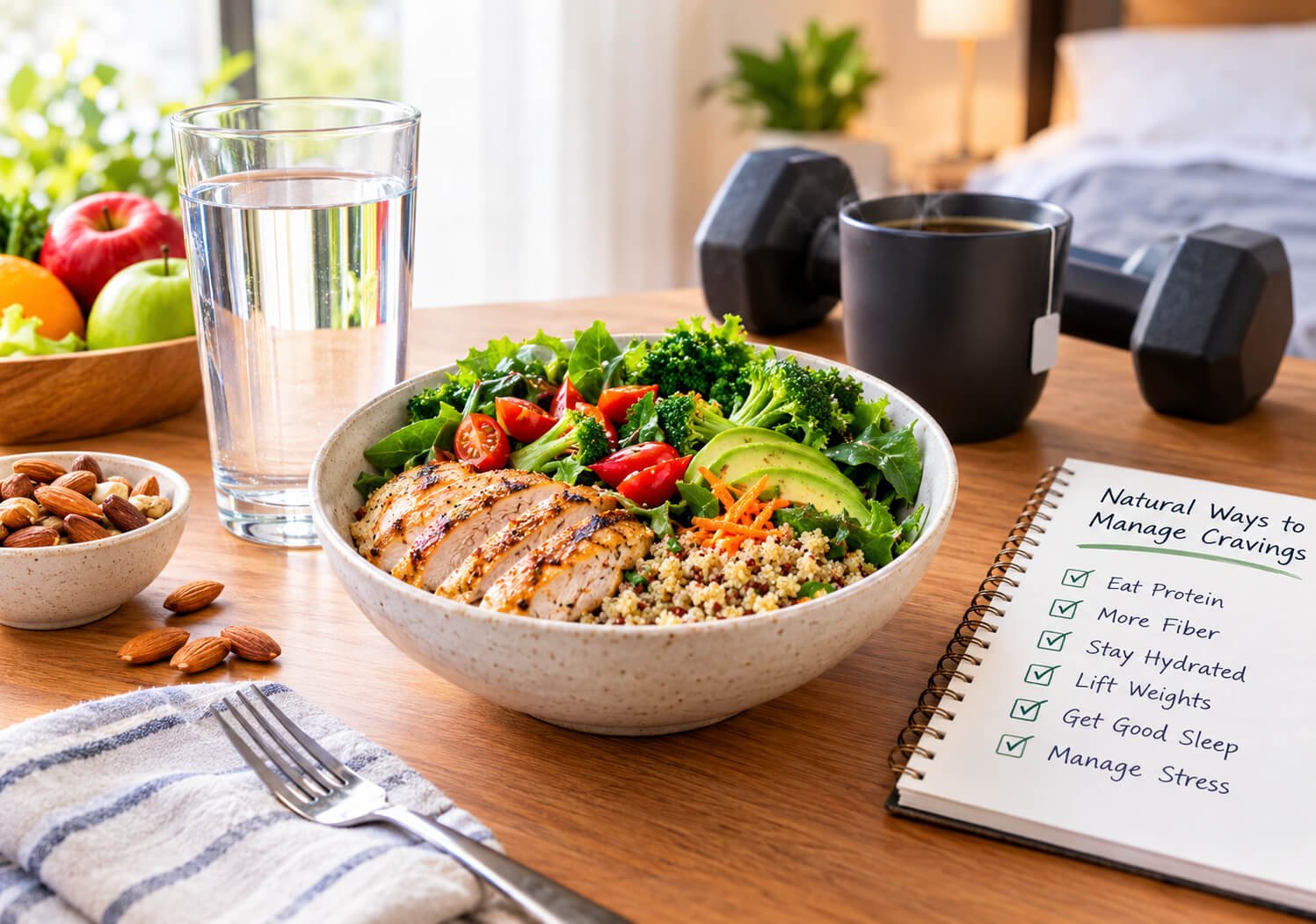
If you are wondering, how can I manage food cravings without supplements? you are asking the right question. Relying on pills or powders to control your appetite is a short-term fix that often fails to address the root cause of your hunger. As a strength and conditioning coach, I see clients battle intense sugar and carb cravings daily. The good news is that your body already has a built-in regulatory system. By optimizing your nutrition, training, and daily habits, you can naturally reset your hunger hormones and take back control of your diet.
This guide provides practical, evidence-based strategies to help you stop cravings in their tracks. We will cover exactly what to eat, how to train, and which lifestyle tweaks yield the biggest results, all without spending a dime on questionable appetite suppressants.
Quick Answer
To manage food cravings without supplements, prioritize 30 grams of protein per meal, drink 16 oz of water before eating, engage in regular resistance training, and get 7–9 hours of sleep nightly. These natural strategies regulate hunger hormones like ghrelin and leptin more effectively and safely than any over-the-counter diet pill.
The Science Behind Why We Crave Food
To beat cravings, you must first understand them. Food cravings are not simply a lack of willpower; they are complex physiological signals driven by hormones and brain chemistry.
The primary hormone responsible for hunger is ghrelin, which is produced mainly in the stomach. Ghrelin levels rise before meals and fall after eating. Conversely, leptin is the satiety hormone produced by fat cells, signaling to your brain that you have enough energy stored and can stop eating.
When you consume highly processed, sugary foods, your blood sugar spikes rapidly triggering a large release of insulin. This is often followed by a sharp blood sugar crash, which prompts your brain to demand quick energy—usually in the form of more sugar. Additionally, chronic stress elevates cortisol, a hormone that specifically drives cravings for high-fat, high-calorie comfort foods. By stabilizing these hormonal fluctuations through natural means, you remove the biological drive to overeat.
1. Prioritize Protein at Every Meal
Protein is the most satiating macronutrient. It directly impacts your hunger hormones by decreasing ghrelin and boosting peptide YY, a hormone that makes you feel full. Furthermore, protein has the highest Thermic Effect of Food (TEF), meaning your body burns more calories digesting it compared to fats or carbohydrates.
Practical Application: Aim for 25 to 35 grams of high-quality protein at every meal. This threshold is scientifically shown to maximize muscle protein synthesis and satiety.
| Food Source | Serving Size | Approximate Protein |
| Chicken Breast | 4 oz (113 g) | 35 g |
| Greek Yogurt (Plain) | 1 cup (245 g) | 20 g |
| Eggs | 3 large eggs | 18 g |
| Lentils (Cooked) | 1 cup (198 g) | 18 g |
| Whey Protein Isolate | 1 scoop (30 g) | 25 g |
2. Maximize Dietary Fiber and Volume Eating
Fiber is a type of carbohydrate that your body cannot digest. It adds bulk to your meals, slowing down gastric emptying and keeping you physically full for hours. The Academy of Nutrition and Dietetics recommends 25 grams per day for women and 38 grams for men, yet most adults fall far short.
Volume eating is the practice of consuming foods that are large in physical size but low in calorie density. This stretches the stomach, triggering stretch receptors that send immediate fullness signals to the brain.
Practical Application: Fill half your plate with non-starchy vegetables at every meal. A massive salad with leafy greens, cucumbers, and tomatoes provides immense volume for under 100 calories, leaving plenty of room for your protein and healthy fats.
3. Optimize Hydration Beyond Basic Water Intake
The hypothalamus, the part of your brain that regulates appetite, also controls thirst. Because these signals share the same neural pathways, your brain frequently misinterprets mild dehydration as hunger.
Practical Application: Drink 16 oz (473 ml) of water 20 minutes before every meal. Studies show this simple habit can reduce calorie intake during the subsequent meal by up to 13%. Furthermore, aim for a baseline hydration of 0.5 to 1 oz of water per pound of body weight daily. If you weigh 160 lb (72 kg), that is 80 to 160 oz (2.3 to 4.7 liters) of water per day.
4. Leverage Resistance Training to Regulate Appetite
While steady-state cardio can sometimes increase appetite, resistance training has been shown to suppress ghrelin levels and improve leptin sensitivity. Building muscle also increases your resting metabolic rate, meaning your body handles calories more efficiently.
Understanding your human body anatomy allows you to choose compound movements that engage multiple large muscle groups, maximizing this metabolic and hormonal benefit.
Sample Appetite-Regulating Mini-Workout
Perform this routine 2–3 times per week. Focus on controlled movement rather than heavy weight.
| Exercise | Sets | Reps | Rest | Tempo |
| Goblet Squat | 3 | 10–12 | 60–90 sec | 3-1-1 |
| Dumbbell Romanian Deadlift | 3 | 10–12 | 60–90 sec | 3-1-1 |
| Push-Up (or Incline Push-Up) | 3 | 8–15 | 60 sec | 2-1-1 |
- Coach’s Tip: The “3-1-1” tempo means 3 seconds lowering the weight, a 1-second pause at the bottom, and 1 second lifting. This time under tension builds muscle and keeps your mind focused on the movement, not food.
- Common Mistake: Letting the knees cave inward during the squat. Push your knees outward in line with your toes to protect your joints and engage your glutes.
- Regression: Perform a bodyweight box squat, sitting down onto a bench and standing back up.
- Progression: Progress to a barbell back squat with 45 lb (20 kg) plates on each side, maintaining strict form.

5. Master Mindful Eating Techniques
Eating while distracted—such as watching television, scrolling on a phone, or working at a desk—disconnects your brain from your body’s satiety signals. It takes approximately 20 minutes for your gut to communicate to your brain that you are full. If you inhale your food in 5 minutes, you will likely overeat before the signal arrives.
Practical Application:
- Sit down at a table with no screens.
- Chew each bite 20 to 30 times until the food is nearly liquid.
- Put your fork down between bites.
- Pause halfway through the meal to assess your fullness on a scale of 1 to 10. Stop eating at a 7 (comfortably satisfied, not stuffed).
6. Stabilize Blood Sugar Naturally
Blood sugar rollercoasters are the primary driver of intense, sudden cravings. When you eat refined carbohydrates alone, your glucose spikes and crashes, triggering an urgent demand for more sugar.
While some individuals explore dietary supplements, researching topics like inositol and insulin sensitivity or chromium picolinate and glucose metabolism, the most reliable and proven method for blood sugar control is dietary structure.
Practical Application: Never eat a “naked carb.” Always pair carbohydrates with protein, fat, or fiber. For example, if you want an apple, pair it with 2 tablespoons of almond butter. The fat and protein slow the absorption of the apple’s natural sugars, preventing the insulin spike and subsequent crash.
7. Prioritize Sleep Hygiene for Hormonal Balance
Sleep deprivation is a silent saboteur of diet success. A landmark study published in the Annals of Internal Medicine demonstrated that sleeping only 5.5 hours per night, compared to 8.5 hours, resulted in a 55% greater loss of fat mass and a 60% increase in hunger and appetite.
Lack of sleep elevates ghrelin (hunger) and suppresses leptin (fullness). It also impairs the prefrontal cortex, the brain region responsible for impulse control and decision-making, making you far more likely to choose a donut over an apple.
Practical Application:
- Aim for 7 to 9 hours of quality sleep per night.
- Keep your bedroom cool, around 65°F (18°C).
- Avoid screens and bright blue light for at least 60 minutes before bed.
- Consume your last meal at least 2 to 3 hours before sleeping to prevent digestion from disrupting deep sleep cycles.

8. Manage Stress to Lower Cortisol-Driven Cravings
Emotional eating is a real physiological response. Chronic stress keeps cortisol levels elevated. Cortisol specifically drives cravings for energy-dense, sugary, and fatty foods because the body perceives stress as a threat and wants quick fuel to “fight or flight.”
Practical Application: You must give your nervous system a signal that it is safe. When a craving hits, pause and try the “box breathing” technique: inhale for 4 seconds, hold for 4 seconds, exhale for 4 seconds, and hold for 4 seconds. Repeat this cycle four times. This simple practice activates the parasympathetic nervous system, lowering cortisol and often making the craving dissipate.
9. Structure Your Environment for Success
Willpower is a finite resource that depletes throughout the day. Relying on it is a flawed strategy. Instead, design your environment to make the right choice the easiest choice. This concept, known as “choice architecture,” is highly effective for long-term habit change.
Practical Application:
- Out of sight, out of mind: Store trigger foods (like cookies or chips) in opaque containers on high shelves, or better yet, do not buy them at all.
- Make healthy foods visible: Keep a 12-inch (30 cm) wide bowl of fresh fruit, such as apples or bananas, directly on your kitchen counter.
- Prep in advance: Wash and chop vegetables on Sunday so they are ready to grab during a busy Wednesday evening.
10. Use Strategic Caffeine and Natural Dietary Compounds
You do not need synthetic stimulant pills to manage your appetite. Natural dietary choices can offer mild, safe metabolic and circulatory support. For instance, just as L-citrulline helps produce nitric oxide to promote healthy blood vessel function, natural whole foods like spinach, beets, and leafy greens offer similar vascular and metabolic benefits without the need for processed supplements.
Practical Application:
- Black Coffee or Green Tea: Consuming a cup of black coffee or green tea mid-afternoon can provide a mild appetite-suppressing effect due to natural caffeine and catechins (in green tea).
- Caution: Do not consume caffeine after 2:00 PM, as it can disrupt the sleep hygiene discussed in Strategy 7, which would ultimately worsen your cravings the next day.
How to Put These Strategies Into a Daily Routine
Knowing what to do is only half the battle; execution is what delivers results. Here is a sample daily schedule that integrates these craving-busting strategies seamlessly.
| Time | Action | Craving-Control Strategy Applied |
| 7:00 AM | Wake up, drink 16 oz (473 ml) of water. | Rehydrates the body, preventing thirst-hunger confusion. |
| 7:30 AM | Breakfast: 3 eggs, 1 cup spinach, 1 slice whole-grain toast. | High protein (Strategy 1) + Fiber (Strategy 2) + Paired carbs (Strategy 6). |
| 10:30 AM | Mid-morning: Green tea or black coffee. | Natural, mild appetite support (Strategy 10). |
| 12:30 PM | Lunch: 5 oz (141 g) grilled chicken, large mixed green salad, olive oil dressing. | Volume eating (Strategy 2) + Protein prioritization. |
| 3:30 PM | Snack (if needed): 1 apple with 2 tbsp almond butter. | Prevents blood sugar crash before dinner (Strategy 6). |
| 5:30 PM | Workout: 30-minute resistance training session. | Regulates ghrelin and improves insulin sensitivity (Strategy 4). |
| 7:00 PM | Dinner: 5 oz (141 g) salmon, 1 cup roasted broccoli, 1/2 cup quinoa. | Balanced macros, high fiber, omega-3s for satiety. |
| 9:30 PM | Wind down: No screens, read a book, box breathing if stressed. | Lowers cortisol, prepares body for restorative sleep (Strategies 7 & 8). |
| 10:30 PM | Lights out. | Ensures 7–9 hours of sleep for optimal leptin/ghrelin balance. |
Safety Notes and When to Seek Professional Help
While natural strategies are highly effective for the general population, persistent, uncontrollable cravings can sometimes indicate an underlying medical issue, such as thyroid dysfunction, severe nutrient deficiencies, or an eating disorder.
If you find that these evidence-based lifestyle changes do not improve your cravings after 4 to 6 weeks, or if your eating habits are causing you significant psychological distress, it is important to consult a healthcare professional. A registered dietitian or your primary care physician can run blood tests to check your thyroid, iron, and vitamin D levels, providing personalized guidance tailored to your unique physiology.
Frequently Asked Questions (FAQ)
1. How long does it take to stop sugar cravings naturally? Most people notice a significant reduction in sugar cravings within 7 to 14 days of consistently eating high-protein, high-fiber meals and staying hydrated. Your taste buds and hunger hormones need about two weeks to reset and adapt to a lower-sugar dietary pattern.
2. Can drinking water really stop food cravings? Yes. The brain’s hypothalamus regulates both thirst and hunger, often confusing the two signals. Drinking 16 oz of water before a meal or when a craving strikes can satisfy this misinterpreted signal, reducing the urge to eat unnecessary calories.
3. Does lifting weights reduce appetite? Research suggests that resistance training can temporarily suppress ghrelin (the hunger hormone) and improve leptin sensitivity. Unlike excessive steady-state cardio, which can sometimes increase appetite, strength training helps regulate metabolic hormones effectively.
4. What is the best snack to stop evening cravings? The best evening snack combines protein, fat, and a small amount of complex fiber. Examples include a small bowl of plain Greek yogurt with a few berries, or a handful of almonds. This combination stabilizes blood sugar overnight without spiking insulin.
5. Are natural appetite suppressants like green tea safe for everyone? While generally safe, natural compounds like caffeine in green tea or coffee can cause jitteriness, increased heart rate, or sleep disruption in sensitive individuals. Pregnant women or those with anxiety or heart conditions should consult a doctor before increasing caffeine intake.
Conclusion
Learning how can I manage food cravings without supplements? is entirely within your control. You do not need expensive pills, powders, or restrictive fad diets. By prioritizing protein and fiber at every meal, staying properly hydrated, engaging in regular resistance training, and protecting your sleep, you work with your body’s natural biology rather than against it.
Start by picking just two strategies from this list to implement this week. Perhaps it is drinking a glass of water before dinner and adding a serving of vegetables to your lunch. Small, consistent changes compound over time, leading to lasting freedom from relentless food cravings. You have the tools; now it is time to put them into action.