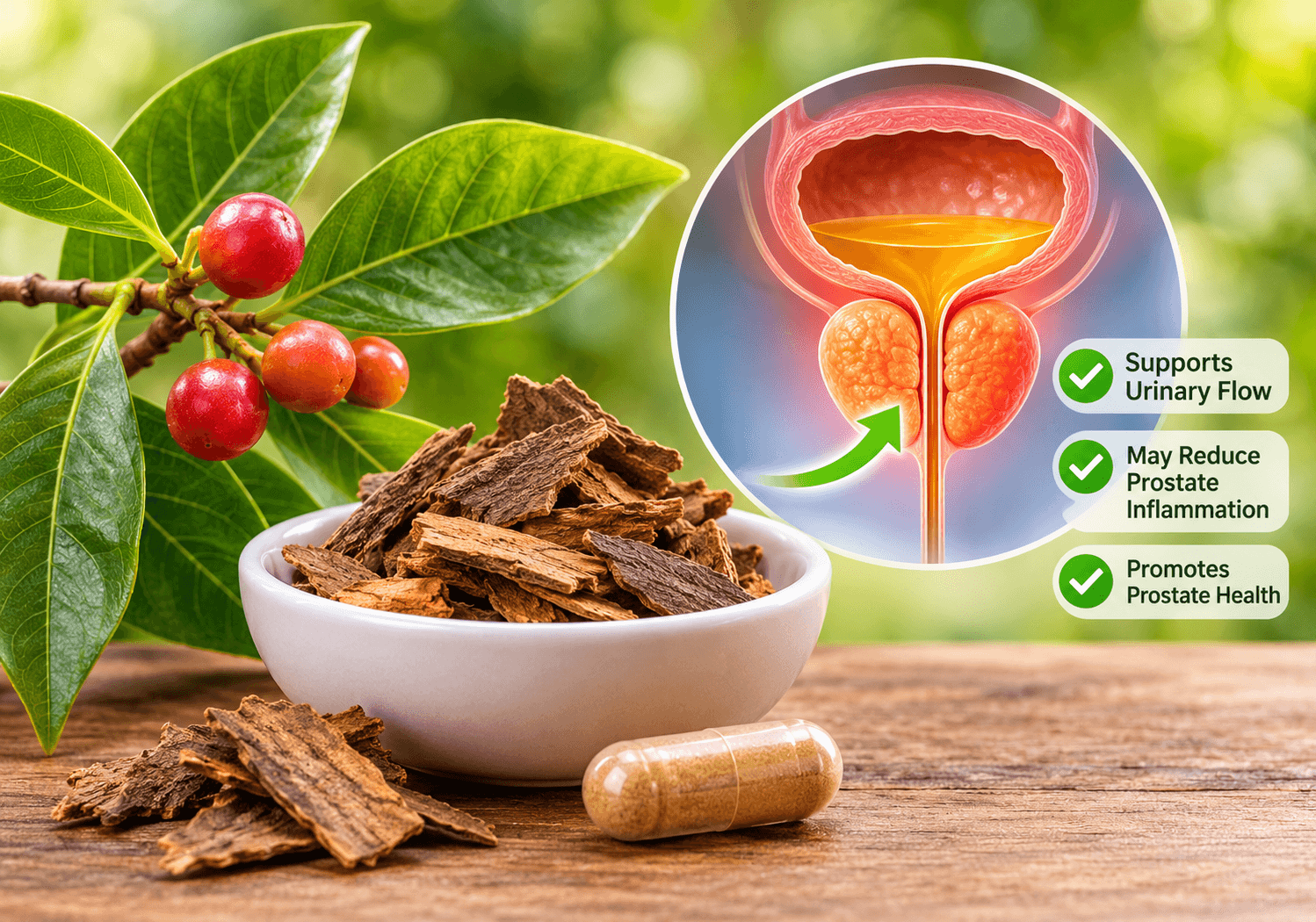
If you’re a man over 50 dealing with a weak stream, nighttime bathroom trips, or that frustrating feeling of not fully emptying your bladder, you’ve probably heard the name pygeum africanum. Extracted from the bark of the African cherry tree, this supplement has been studied for its potential to ease lower urinary tract symptoms linked to an enlarged prostate. But does the science back up the hype?
In this guide, I’ll walk you through what pygeum africanum benefits for urinary flow and prostate health actually look like in clinical trials, what dose to consider, what the research says about safety, and when you should definitely talk to a urologist before adding it to your routine. No fluff, no miracle promises—just the practical details you need to make a smart decision.
QUICK ANSWER
Research suggests pygeum africanum bark extract (100–200 mg daily) may modestly reduce lower urinary tract symptoms such as frequency, urgency, and nocturia in men with mild-to-moderate BPH. It works partly by reducing prostatic inflammation and possibly slowing 5-alpha reductase activity. Effects typically appear after 4–8 weeks. It is not a replacement for medical treatment of advanced BPH.
What Is Pygeum Africanum?
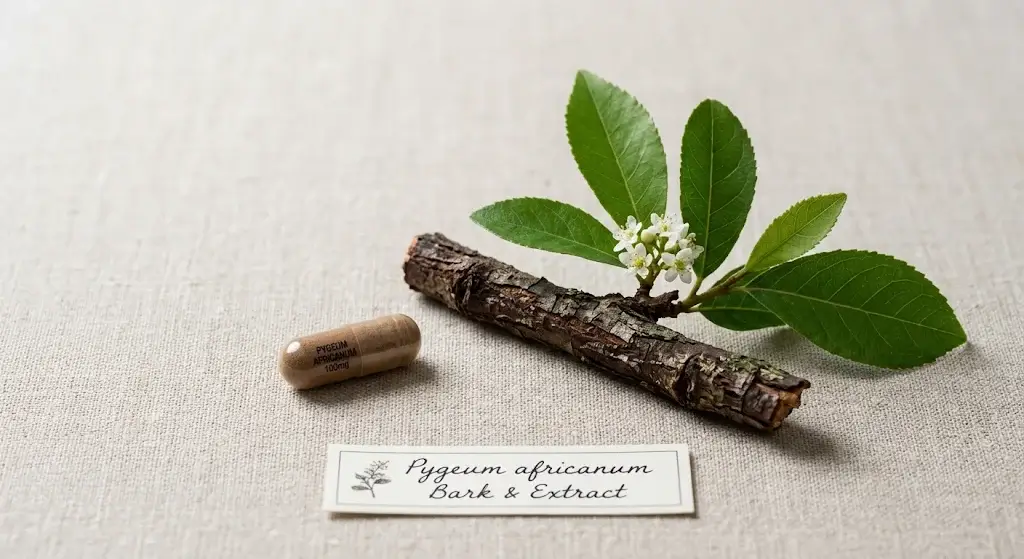
Pygeum africanum is a small evergreen tree native to sub-Saharan Africa. The part used in supplements is the bark, which is dried, ground, and extracted to concentrate its active compounds. The bark contains a mix of:
- Pygeum fatty acids (including oleic, linoleic, and palmitic acid)
- Beta-sitosterol and other phytosterols
- Polyphenols and tannins with anti-inflammatory activity
- Sterols that may influence hormone pathways in prostatic tissue
In parts of Europe, standardized pygeum bark extract has been used for urinary complaints for more than 50 years. It is not a prescription drug, but it is classified as a dietary supplement in the United States and as a plant-based medicine in several European countries.
How It May Support Urinary Flow
The prostate gland wraps around the urethra, the tube that carries urine out of the bladder. When the prostate enlarges—a condition called benign prostatic hyperplasia (BPH)—it can press on the urethra and create a bottleneck. That pressure is what causes the weak stream, the constant urge to go, and the 2 a.m. bathroom runs.
Pygeum africanum appears to address this problem through several mechanisms, according to peer-reviewed research indexed in PubMed:
- Anti-inflammatory action. The polyphenols and fatty acids in the bark may reduce swelling in prostatic tissue, easing the pressure on the urethra.
- 5-alpha reductase inhibition. Some lab studies suggest pygeum compounds can slow the enzyme that converts testosterone into dihydrotestosterone (DHT), a hormone that drives prostate growth. This is the same pathway targeted by prescription drugs like finasteride, though pygeum’s effect is far weaker.
- Reduced smooth-muscle tension. Animal studies indicate pygeum extract may relax smooth muscle in the prostate and bladder neck, potentially improving urinary flow rate (measured as Qmax).
- Antioxidant protection. The phytochemicals in the bark may help protect prostatic cells from oxidative stress, a factor in long-term tissue changes.
None of these mechanisms are as powerful as prescription BPH medications, but they may offer a gentle, supportive option for men with mild symptoms who want to try a plant-based approach before (or alongside) other interventions.

What the Clinical Trials Show
Here’s where it gets important: the evidence is mixed but leaning positive for mild-to-moderate BPH.
- A Cochrane systematic review examining herbal interventions for BPH found that pygeum africanum produced a small but statistically significant improvement in symptom scores (measured by the International Prostate Symptom Score, or IPSS) compared with placebo, particularly for nocturia and urinary frequency. The effect size was modest, not dramatic. [VERIFY – Cochrane Database of Systematic Reviews, herbal interventions for BPH]
- Several randomized, double-blind, placebo-controlled trials conducted in the 1990s and 2000s (many in European and South American populations) reported that men taking 100–200 mg of standardized pygeum bark extract daily for 4–8 weeks experienced reductions in the number of nighttime voids and improvements in perceived urinary flow. [VERIFY – multiple RCTs indexed in PubMed, e.g., studies by Bouchard, Souto, and colleagues]
- A meta-analysis pooling several of these trials found a statistically significant but clinically small reduction in IPSS scores (roughly 1–2 points on a 0–35 scale) favoring pygeum over placebo. The authors noted that trial quality varied, sample sizes were small (often 50–150 men per group), and long-term data beyond 12 weeks were limited. [VERIFY – meta-analysis in a urology or complementary medicine journal]
- No large, modern, multi-center trial has been published in the last decade that would give us the kind of high-certainty evidence we’d want for a strong recommendation. The research base is real but dated and modest in scale.
Bottom line: Pygeum africanum benefits for urinary flow and prostate comfort are supported by a body of small-to-moderate studies, but the effect is gentle. If your symptoms are severe, your urologist will likely recommend prescription medication or a procedure first.
Dosage, Form, and How to Take It
Most clinical trials used a standardized dry extract of Pygeum africanum bark, not raw bark powder. Here’s what to look for:
| Factor | What to Look For |
| Form | Standardized dry extract (not raw bark powder) |
| Typical dose | 100–200 mg per day |
| Standardization | Extract standardized to contain a defined percentage of total fatty acids or beta-sitosterol (check the label) |
| Timing | Can be taken with a meal to reduce any mild stomach upset |
| Onset of effect | Most studies measured outcomes at 4–8 weeks; give it at least 4 weeks before judging |
| Duration studied | Most trials ran 8–12 weeks; long-term safety data beyond 1 year is limited |
COACH’S TIP
Treat pygeum like you’d treat any new supplement: start at the lower end (100 mg), take it consistently for at least 4 weeks, and track your symptoms. Keep a simple log—number of nighttime trips, how strong your stream feels, whether you feel “empty” after urinating. That data is gold when you sit down with your urologist.
A Simple Daily Routine
- Take 100 mg of standardized pygeum bark extract with breakfast or lunch.
- Stay consistent for 4 weeks before increasing to 200 mg if your doctor agrees.
- Track your IPSS-style symptoms (frequency, urgency, nocturia, stream strength, incomplete emptying) in a notebook or phone app.
- Re-evaluate at week 8. If you notice no change, talk to your urologist about next steps.

Safety, Side Effects, and Who Should Be Cautious
Pygeum africanum is generally well tolerated in the doses studied. The most commonly reported side effects in trials were mild gastrointestinal discomfort—a little nausea, loose stools, or an upset stomach—especially in the first few days. These tended to resolve on their own.
Talk to your doctor before taking pygeum africanum if you:
- Are currently taking blood thinners (warfarin, apixaban, rivaroxaban) or antiplatelet drugs, because pygeum has mild anti-inflammatory and possibly anti-platelet activity.
- Are scheduled for surgery within the next 2 weeks.
- Are taking 5-alpha reductase inhibitors (finasteride, dutasteride) or alpha-blockers (tamsulosin, alfuzosin) for BPH. The combination hasn’t been well studied.
- Have a known allergy to plants in the family Pygeaceae or have had reactions to similar bark extracts.
- Are pregnant or breastfeeding (though this is a men’s health supplement, it’s worth noting the data is essentially absent).
- Have a history of hormone-sensitive conditions.
COMMON MISTAKE
One of the biggest errors I see is men buying a cheap, unstandardized “pygeum bark powder” from an unknown brand and expecting it to work like the 100–200 mg standardized extract used in trials. Without standardization, you have no idea how much of the active fatty acids or sterols are actually in the capsule. Look for a product that lists the percentage of total fatty acids or beta-sitosterol on the label, and buy from a reputable manufacturer that provides third-party testing (look for NSF, USP, or ConsumerLab verification).
Pygeum Africanum vs. Saw Palmetto: Quick Comparison
Many men ask whether pygeum or saw palmetto (Serenoa repens) is the better choice. Here’s a practical side-by-side:
| Factor | Pygeum Africanum | Saw Palmetto |
| Primary active compounds | Fatty acids, beta-sitosterol, polyphenols | Fatty acids, phytosterols, flavonoids |
| Typical dose | 100–200 mg/day | 320 mg/day (standardized extract) |
| Evidence for BPH symptoms | Modest, from small RCTs and a Cochrane review | Modest, from multiple RCTs; a 2016 Cochrane update found limited high-quality evidence |
| 5-alpha reductase effect | Suggested in lab studies; weaker than finasteride | Suggested in lab studies; weaker than finasteride |
| Anti-inflammatory profile | Stronger polyphenol/tannin content | Moderate |
| Common side effects | Mild GI upset | Mild GI upset, occasional headache |
| Long-term safety data | Limited beyond 12 months | Slightly more long-term data (up to 2 years in some studies) |
Neither supplement is a substitute for prescription BPH treatment. Some urologists are comfortable with a man trying one of these for 8–12 weeks for mild symptoms while monitoring, but the decision should be made with your doctor. If you’re exploring other plant-based options for men’s wellness, it’s worth reading about how men improve stamina and sexual wellness naturally to get a broader picture of what actually has evidence behind it.
How Pygeum Fits Into a Bigger Proactive Health Plan
An enlarged prostate is common, but it doesn’t have to define your quality of life. Pygeum africanum can be one small piece of a larger strategy:
- Regular urological check-ups. Get a PSA test and a digital rectal exam at the frequency your doctor recommends, especially after age 50. Early detection of changes matters far more than any supplement.
- Pelvic floor awareness. While BPH is a structural issue, general pelvic floor health supports bladder control. Gentle pelvic floor exercises (not the aggressive “kegels” often over-prescribed for men) can complement medical treatment.
- Fluid management. Limiting caffeine and alcohol, especially in the evening, can reduce nighttime urination independent of prostate size.
- Weight management. Excess body fat is linked to higher inflammation and may worsen urinary symptoms. If weight is a factor, look at what affects metabolism and body weight to build a sustainable plan.
- Medication review. If you’re on a blood pressure med, a diuretic, or an antihistamine, ask your pharmacist whether it could be contributing to urinary frequency.
For men in their 50s and beyond who are noticing a cluster of changes—urinary symptoms, energy shifts, libido changes—it helps to look at the whole picture. Understanding what causes low libido in men after 40 can give you context for the hormonal changes happening alongside prostate changes.
Practical Tips for Choosing a Pygeum Supplement
Since pygeum is sold as a dietary supplement, quality varies widely. Here’s a short checklist:
- Standardized extract, not raw powder. The label should say “standardized to X% total fatty acids” or “standardized to X% beta-sitosterol.”
- Third-party tested. Look for NSF Certified for Sport, USP Verified, or ConsumerLab.com testing seals.
- No unnecessary fillers. Avoid products loaded with proprietary blends where you can’t see the exact pygeum dose.
- Reputable brand. Buy from a company that publishes its testing methodology and has a track record.
- Price sanity. A bottle of 60–90 capsules of a quality standardized extract typically falls in a mid-range price bracket. If it’s suspiciously cheap, the standardization may be questionable. [VERIFY typical price range]
If you’re new to evaluating supplement labels, our guide on how to evaluate ingredients in supplements walks through the same principles—reading the label, checking for standardization, and spotting red flags—that apply to pygeum just as well as to any other product.
What Pygeum Africanum Does NOT Do
Let’s be clear about the limits:
- It will not shrink a significantly enlarged prostate the way finasteride or dutasteride can.
- It will not reverse severe BPH or treat urinary retention, recurrent UTIs, or bladder stones.
- It is not a treatment for prostate cancer. There is no reliable evidence that pygeum prevents or treats prostate cancer.
- It does not raise or lower testosterone in any clinically meaningful way in the doses studied.
- It is not a substitute for a urologist’s evaluation if your symptoms are worsening, you have blood in your urine, you can’t urinate, or you have a fever with urinary symptoms.
If you’re also exploring other supplements for men’s health, it’s worth understanding which supplements may support overall wellness safely and how to stack them without creating interactions.
When to See a Doctor Instead of (or Alongside) a Supplement
Pygeum africanum benefits for urinary flow and prostate comfort are real but modest. You should see a urologist—ideally within a few weeks, not months—if you experience:
- Inability to urinate or a sudden, severe decrease in stream
- Blood in your urine or semen
- Recurrent urinary tract infections
- Unexplained weight loss alongside urinary symptoms
- A PSA level that is elevated or rising (your doctor will interpret this in context)
- Symptoms that are significantly affecting sleep, work, or quality of life
A urologist can perform a post-void residual measurement, a urine flow study (Qmax), and a digital rectal exam to determine whether your symptoms are truly from BPH, from a bladder issue, from a urethral stricture, or from something else entirely. No supplement should delay that workup.

FAQ
Does pygeum africanum actually work for an enlarged prostate?
Research from small-to-moderate randomized trials suggests it may modestly reduce lower urinary tract symptoms like frequency and nocturia in men with mild-to-moderate BPH. The effect is gentle, not dramatic, and it is not a replacement for prescription medication in more advanced cases. Always discuss it with your urologist.
How long does pygeum africanum take to improve urinary flow?
Most clinical trials measured outcomes at 4 to 8 weeks of daily use. Give a standardized extract at least 4 weeks of consistent use before deciding whether you notice a difference. Track your symptoms in a simple log to make the comparison objective.
What is the best dose of pygeum africanum for BPH symptoms?
The doses most commonly studied in trials are 100 mg and 200 mg of standardized bark extract per day. Start at 100 mg with a meal, and only increase to 200 mg if your doctor agrees. There is no strong evidence that higher doses provide proportionally greater benefit.
Can pygeum africanum shrink an enlarged prostate?
There is no reliable clinical evidence that pygeum africanum reduces prostate volume in the way that 5-alpha reductase inhibitors (finasteride, dutasteride) do. Some lab studies suggest it may slow DHT production slightly, but the effect is far too small to be expected to shrink the gland.
Is pygeum africanum safe to take long-term?
Safety data beyond 12 months is limited. The most common side effects in short-term trials were mild gastrointestinal discomfort. If you plan to take it for several months, have periodic check-ins with your doctor, especially if you take blood thinners or other medications.
Can I take pygeum africanum with saw palmetto?
There is no well-studied data on combining the two. Both target similar pathways, so the added benefit of taking both is unclear. If you want to try a combination, ask your urologist or pharmacist first, especially if you are also on prescription BPH medication.
Conclusion
Pygeum africanum benefits for urinary flow and prostate comfort are supported by a reasonable body of small clinical trials, and the supplement is generally well tolerated at 100–200 mg of standardized bark extract per day. It may help ease the mild, nagging symptoms that make you wake up two or three times a night or make you feel like your stream isn’t as strong as it used to be.
But “may help” is the key phrase. The evidence is modest, the trials are small and somewhat dated, and pygeum is not a cure for BPH or any other prostate condition. If your symptoms are moderate to severe, worsening, or accompanied by red-flag signs like blood in the urine or inability to void, a urologist’s evaluation comes first—every time.
If you decide to try pygeum as a gentle, plant-based adjunct, buy a standardized, third-party-tested extract, give it a fair 4-to-8-week trial, track your symptoms, and keep your doctor in the loop. Pair it with the basics: regular check-ups, sensible fluid habits, and a proactive approach to overall men’s health. That combination—evidence-based medicine plus sensible, low-risk supplements—gives you the best shot at staying comfortable and in control.