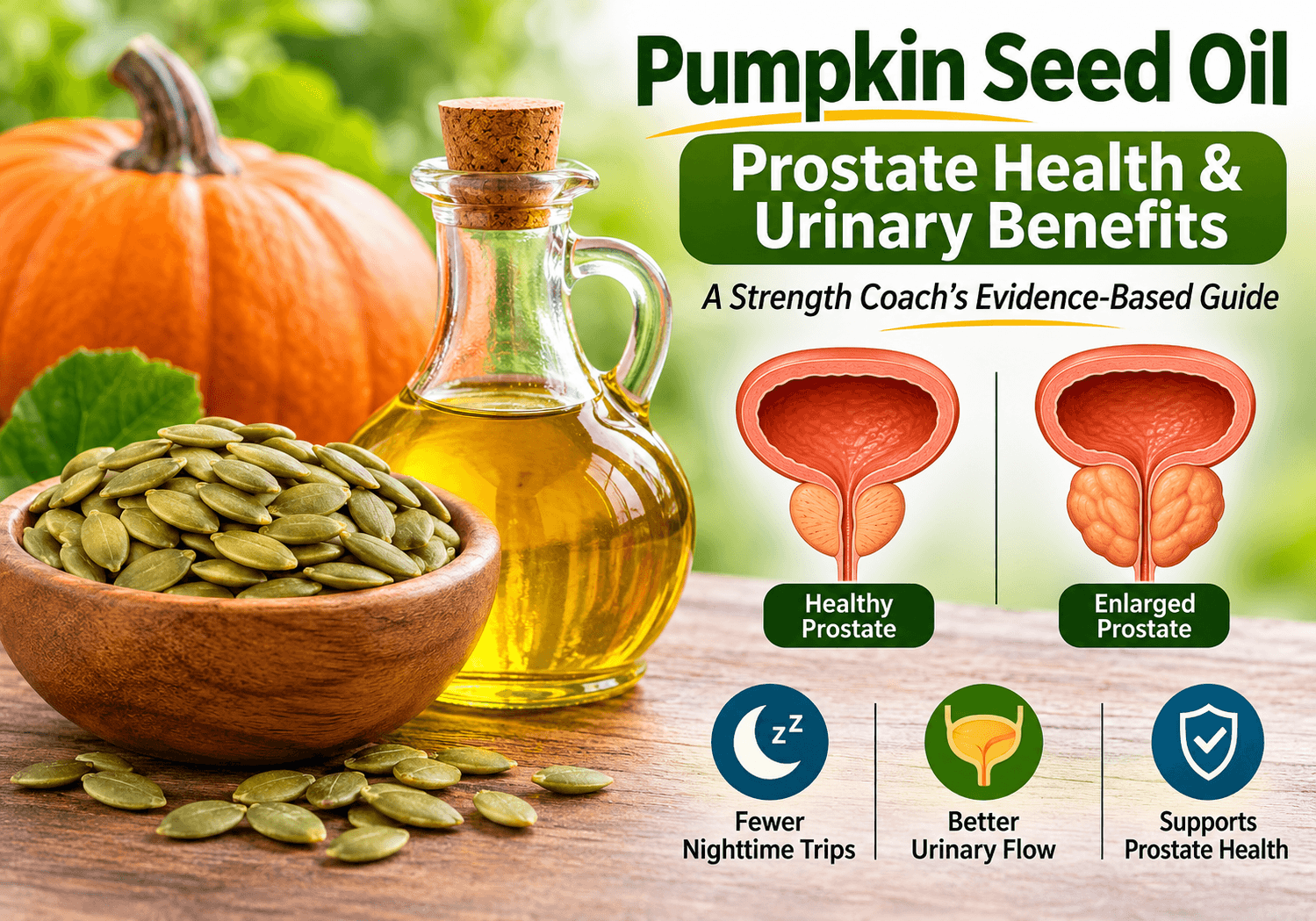
Maintaining optimal health as we age requires looking beyond muscle mass and bench press numbers. For men over 40, internal health directly dictates physical performance. Urinary urgency, fragmented sleep from night-time bathroom trips, and reduced pelvic floor control can disrupt training intensity and lower overall quality of life.
Pumpkin seed oil prostate health and urinary benefits have gained significant attention as a natural, evidence-based approach to managing lower urinary tract symptoms (LUTS) and supporting age-related prostate wellness. Derived from Cucurbita pepo seeds, this nutrient-dense botanical oil provides target compounds that act on hormone metabolism and smooth muscle function.
Quick Answer: Pumpkin seed oil supports prostate and urinary function by inhibiting the enzyme 5-alpha reductase, which converts testosterone into dihydrotestosterone (DHT)—a primary driver of prostate enlargement. Clinical research shows daily supplementation with 500–1,000 mg of pumpkin seed oil helps improve urinary flow rate, reduce post-void residual bladder volume, and lower nighttime urination frequency (nycturia) within 12 to 24 weeks.
This article is for general information and is not a substitute for advice from a doctor or physical therapist.
1. What Is Pumpkin Seed Oil and How Does It Support Prostate Health?
Pumpkin seed oil is extracted from the seeds of Cucurbita pepo, typically using cold-pressed methods to preserve active bioactive compounds. For decades, traditional herbal practice utilized raw seeds for urinary tract discomfort. Modern nutritional science has isolated the specific lipid profile responsible for these systemic benefits.The core physiological mechanisms supporting pumpkin seed oil prostate health and urinary benefits rely on three primary nutrient groups:
- Phytosterols (Delta-7-Sterols): Plant sterols structurally similar to cholesterol that competitively block the binding sites of dihydrotestosterone (DHT)?.
- Essential Fatty Acids (Linoleic & Oleic Acid): High concentrations of omega-6 and omega-9 fatty acids regulate the inflammatory cascade by modulating prostaglandin synthesis within prostate tissue.
- Zinc & Tocopherols: High concentrations of bioavailability-tested zinc and vitamin E provide structural antioxidant defense against free-radical damage in glandular epithelial cells.
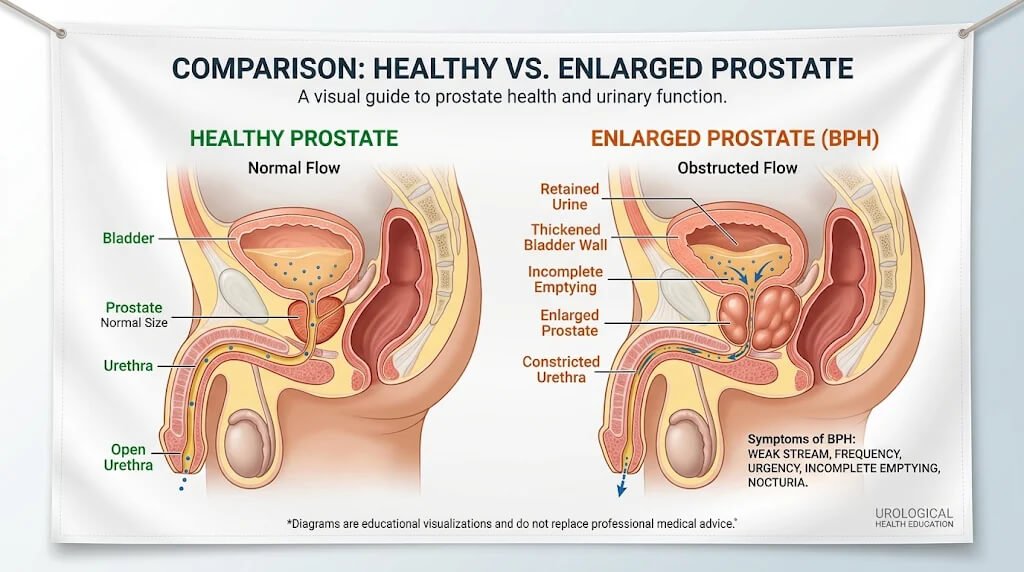
In men diagnosed with mild-to-moderate Benign Prostatic Hyperplasia (BPH)?, tissue growth restricts normal bladder emptying. Pumpkin seed oil intervenes at the cellular level by downregulating the proliferation signals that cause glandular tissue expansion.
2. The Science: Key Urinary and Prostate Benefits
Clinical trials confirm that regular intake of cold-pressed pumpkin seed oil yields measurable improvements in urodynamic parameters.
Reduces Nighttime Urination (Nycturia)
Waking multiple times per night disrupts deep sleep cycles, reducing human growth hormone (HGH) secretion and athletic recovery. Research published in Urologia Internationalis indicates that men receiving daily Cucurbita pepo extract experienced a significant drop in nocturnal voiding frequency, resulting in deeper, uninterrupted sleep architecture. Reduced sleep disruption directly supports long-term recovery and helps men increase metabolism naturally for weight loss.
Enhances Urinary Flow Rate and Bladder Emptying
Prostate tissue growth compresses the prostatic urethra, causing stream hesitation, dribbling, and incomplete bladder emptying. Clinical evaluations using the International Prostate Symptom Score (IPSS)? show that pumpkin seed oil increases peak urinary flow rate (Qmax) while decreasing post-void residual volume (PVR)?.
| Clinical Outcome Parameter | Placebo Group Response | Pumpkin Seed Oil Group | Clinical Significance |
| IPSS Score Reduction | Minimal change (-0.5 pts) | Significant drop (-4.2 to -6.8 pts) | Lower overall symptom burden |
| Peak Flow Rate (Qmax) | Baseline static | Increased by 1.5–2.8 mL/sec | Stronger, more consistent stream |
| Post-Void Residual Volume | Unchanged or increased | Decreased by 20–35% | Cleaner bladder clearance, lower infection risk |
Blocks DHT Conversion
The enzyme 5-alpha reductase? converts circulating testosterone into DHT. High localized levels of DHT in the prostate trigger androgen receptor pathways that stimulate stromal and epithelial cell division. Phytosterols in pumpkin seed oil naturally inhibit this enzyme, helping prevent excess tissue buildup without causing the severe endocrine suppression associated with synthetic pharmaceuticals.
Supports Bladder and Pelvic Floor Smooth Muscle Tone
Urinary control relies on a balance between the detrusor muscle of the bladder wall and the urethral sphincters. Pumpkin seed oil modulates nitric oxide signaling in bladder smooth muscle tissue. This relaxation response reduces involuntary detrusor spasms, alleviating sudden, uncontrollable urges to void.
Pairing targeted dietary support with a balanced lifestyle can also help protect total endocrine health, especially when evaluating how factors like stress and poor sleep lower male libido.

3. Pumpkin Seed Oil vs. Other Natural Prostate Supplements
Athletes and fitness enthusiasts often ask how pumpkin seed oil compares to other botanical supplements like saw palmetto, pygeum, or beta-sitosterol.
Pumpkin Seed Oil vs. Saw Palmetto
Saw palmetto (Serenoa repens) is widely recognized for supporting prostate wellness. While saw palmetto directly inhibits 5-alpha reductase, pumpkin seed oil offers additional benefits for bladder neck muscle tone and overall detrusor muscle relaxation due to its high concentration of linoleic acid. Combined formulations containing both botanicals often demonstrate a synergistic effect, reducing IPSS scores more effectively than single-ingredient protocols.
Pumpkin Seed Oil vs. Beta-Sitosterol
Beta-sitosterol is an isolated plant sterol found within pumpkin seeds, saw palmetto, and pine bark. While taking high-dose beta-sitosterol provides targeted sterol intake, whole cold-pressed pumpkin seed oil provides a full spectrum of synergistic nutrients, including lipid-soluble antioxidants, zinc, and tocopherols. These additional nutrients help protect cell membranes from oxidative stress.
4. Dosing, Timing, and Supplement Selection
To maximize pumpkin seed oil prostate health and urinary benefits, consistency and proper product selection are essential.
Recommended Dosage
Clinical studies evaluating Cucurbita pepo oil typically administer:
- Standard Therapeutic Dose: 500 mg to 1,000 mg daily of standardized cold-pressed pumpkin seed oil.
- Raw Seed Equivalent: Approximately 10–15 grams (about 1 tablespoon) of whole, unroasted pumpkin seeds daily. However, concentrated softgel extracts provide a more consistent dose of phytosterols.
Optimal Timing
Take pumpkin seed oil softgels with meals containing dietary fat to enhance the absorption of fat-soluble sterols and tocopherols. Splitting the dose—taking 500 mg with breakfast and 500 mg with dinner—maintains stable plasma nutrient levels and minimizes potential gastrointestinal upset.
What to Look for on the Label
- Extraction Method: Select cold-pressed, unrefined pumpkin seed oil. Solvent extraction and high-heat processing degrade delicate essential fatty acids and phytosterols.
- Standardization: Look for products clearly listing phytosterol or fatty acid concentration (e.g., standardized to 85–90% fatty acids).
- Purity Testing: Ensure third-party testing (e.g., USP, NSF, or Informed Choice) confirms the absence of heavy metals, pesticides, and microbial contaminants.
5. Integrating Exercise and Pelvic Floor Work for Prostate Health
Supplements provide chemical support, but structural integrity requires physical training. The prostate sits directly above the pelvic floor musculature. Maintaining healthy tone in the levator ani and pubococcygeus muscles optimizes urethral closure pressure, supports bladder control, and enhances local blood flow.

1. Pelvic Floor Activation (Kegel Exercises for Men)
How to do it: Sit upright on a stable flat bench. Inhale deeply into your diaphragm. As you exhale, contract your internal pelvic floor muscles upward and inward, as if attempting to stop urine flow mid-stream. Avoid squeezing your glutes, inner thighs, or superficial abdominal muscles.
- Volume & Tempo: Hold the contraction for 5 seconds, then relax completely for 5 seconds. Perform 3 sets of 10 repetitions daily.
- Coach’s Tip: Do not perform Kegel contractions while actively urinating, as this can disrupt natural bladder reflex responses and increase residual urine volume. Perform them during workout warm-ups or recovery periods instead.
2. Deep Goblet Squats with Diaphragmatic Breathing
Target: Dynamic stretch and recruitment of the pelvic floor and hip adductors.

- How to do it: Hold a kettlebell or dumbbell close to your chest. Stand with feet slightly wider than shoulder-width, toes turned out 15–30 degrees. Inhale slowly through your nose as you sit deep into a squat, allowing your pelvic floor to lengthen naturally at the bottom position. Drive through your heels to return to standing while exhaling smoothly.
- Sets & Reps: 3–4 sets of 8–12 repetitions.
- Weight Guidance: Moderate weight—around 35–50 lb (16–23 kg)—focusing on control and movement depth rather than maximum resistance.
3. Glute Bridges with Pelvic Cueing
Target: Posterior pelvic support and hip extension power.
- How to do it: Lie flat on your back with knees bent at 90 degrees and feet flat on the floor, hip-width apart. Inhale to prepare. As you exhale, drive through your feet and extend your hips upward until your knees, hips, and shoulders form a straight line. Squeeze your glutes at the top while gently contracting your pelvic floor. Lower under control.
- Sets & Reps: 3 sets of 12–15 repetitions.
- Regression & Progression:
- Regression: Standard bodyweight bridge with a 3-second hold at the top.
- Progression: Single-leg glute bridge or barbell hip thrust using 95 lb (43 kg).
Physical activity also plays a vital role in endocrine health. Men interested in optimizing baseline hormone markers may consider reading about what causes low libido in men after 40 to build a comprehensive wellness strategy.
6. Real-World Coaching Protocol: Prostate & Urinary Support Routine
Integrating supplementation with target exercise yields superior outcomes compared to isolated interventions. Below is a structured weekly protocol designed for male clients aiming to support lower urinary tract function while maintaining athletic performance.
Daily Lifestyle & Nutrition Routine
- Morning: Take 500 mg pumpkin seed oil softgel with a whole-food breakfast containing healthy fats. Maintaining balanced nutrition also helps men support metabolism naturally for weight management.
- Mid-Day: Maintain consistent hydration. Aim for 0.5 fl oz per pound of body weight (approx. 30 mL per kg). Avoid chugging large volumes of liquid at once.
- Evening: Take 500 mg pumpkin seed oil softgel with dinner. Limit fluid intake 2–3 hours before sleep to reduce nocturnal bladder pressure.
- Bedtime: Perform 5 minutes of diaphragmatic breathing in a supine position to calm autonomic nervous system tone and relax the bladder neck.
7. Safety, Side Effects, and Precautions
Pumpkin seed oil is well-tolerated by most men, with a long history of safe use as both a food product and dietary supplement. However, key precautions apply:
Potential Side Effects
- Mild Gastrointestinal Upset: Higher doses may cause mild nausea, indigestion, or loose stools if taken on an empty stomach.
- Caloric Intake: As a concentrated lipid, pumpkin seed oil provides roughly 9 calories per gram. Liquid doses should be factored into your daily caloric totals.
Contraindications and Interactions
- Antihypertensive Medications: Pumpkin seed oil may exert a mild hypotensive effect. Men taking blood pressure medications should monitor their blood pressure regularly.
- Blood Thinners: High doses of essential fatty acids can possess mild anti-platelet properties. Consult your physician if you take warfarin or aspirin therapy.
- Prostate-Specific Antigen (PSA) Screening: While pumpkin seed oil relieves LUTS, it does not mask PSA test results like certain prescription 5-alpha reductase inhibitors (e.g., finasteride). However, you should always inform your physician about all supplements you take prior to undergoing prostate screenings.
Coach’s Tip: Supplementation should complement, not replace, regular medical evaluations. Men over age 40 should schedule annual prostate exams with a urologist, including digital rectal examinations (DRE) and serum PSA testing.
Frequently Asked Questions
Does pumpkin seed oil shrink an enlarged prostate?
Research suggests pumpkin seed oil helps slow down progressive prostate growth by inhibiting the enzyme 5-alpha reductase. While it does not rapidly shrink glandular tissue to youthful proportions like pharmaceuticals, it significantly reduces tissue inflammation and relieves mechanical strain on the urethra, leading to improved urinary flow.
How long does pumpkin seed oil take to work for prostate health?
Clinical trials demonstrate measurable improvements in urinary flow rate and reductions in symptom scores within 6 to 12 weeks of continuous daily use. Optimal results for nighttime urination relief typically manifest around the 12- to 24-week mark.
Can I get the same benefits by eating raw pumpkin seeds?
Yes, eating raw, unroasted pumpkin seeds delivers phytosterols, zinc, and essential fatty acids. However, you would need to consume roughly 10 to 15 grams (1 to 2 tablespoons) of seeds daily to match the standardized phytosterol content found in concentrated 1,000 mg softgel oil extracts.
Does pumpkin seed oil have side effects for men?
Pumpkin seed oil is safe for most individuals. Infrequent side effects include minor stomach upset or loose stools if taken without food. Because it may mildly lower blood pressure, men taking antihypertensive medications should monitor their blood pressure levels.
Is pumpkin seed oil better than saw palmetto for urinary flow?
Both botanicals support lower urinary tract health through similar anti-androgenic pathways. Pumpkin seed oil often exhibits superior performance for bladder smooth muscle relaxation and detrusor stability, whereas saw palmetto focuses primarily on blocking local tissue DHT. Combining both ingredients often provides the most comprehensive relief.
Does pumpkin seed oil lower testosterone levels?
No. Pumpkin seed oil prevents the conversion of systemic testosterone into dihydrotestosterone (DHT) by inhibiting the 5-alpha reductase enzyme. This mechanism preserves circulating free testosterone levels while protecting prostate cells from excessive DHT exposure.
Conclusion
Maximizing pumpkin seed oil prostate health and urinary benefits requires a consistent, multi-faceted approach. By combining high-quality, cold-pressed pumpkin seed oil with target pelvic floor strength training, diaphragmatic breathing, and proper evening hydration timing, men can effectively manage urinary urgency, reduce sleep-disrupting nighttime bathroom trips, and preserve prostate wellness for the long haul.
Consult your urologist or primary care physician to verify that your symptoms stem from benign prostatic changes, lock in your daily supplementation dose of 500–1,000 mg, and integrate the pelvic stability exercises outlined above into your weekly training routine.