
If you’re a man over 50 who stands at the toilet and waits, straining, hoping the stream will start, you’re not alone. Urinary hesitancy—that awkward pause before you can get going—is one of the most common lower urinary tract symptoms (LUTS) linked to benign prostatic hyperplasia (BPH), the non-cancerous enlargement of the prostate gland. According to the National Institute of Diabetes and Digestive and Kidney Diseases (NIDDK), roughly half of men in their 50s show signs of an enlarged prostate, and that number climbs past 90% by age 80.
Before reaching for a prescription, many men want to know whether natural remedies for urinary hesitancy in older men can make a real difference. The honest answer: they may help ease mild-to-moderate symptoms, but they won’t replace medical care if your prostate is significantly enlarged or your bladder is struggling. What they can do is support pelvic floor function, reduce inflammation, manage fluid habits, and keep your body moving in ways that take pressure off the lower urinary tract.
This guide walks through ten practical, evidence-informed strategies you can start this week. I coach men in their 50s, 60s, and 70s every day, and a solid movement-and-lifestyle foundation is part of how I keep my clients feeling strong and functional. Think of this as your coach’s playbook for the bathroom problem nobody talks about at the gym.
⚠️ Important: If you have blood in your urine, complete inability to urinate, severe pain, or fever with urinary symptoms, see a doctor or go to urgent care immediately. This article is for general information and is not a substitute for advice from a doctor or physical therapist.
Quick Answer
What are the best natural remedies for urinary hesitancy in older men? The most evidence-supported approaches include daily pelvic floor (Kegel) exercises, regular aerobic walking, managing fluid and caffeine intake, trying saw palmetto or pumpkin seed oil under a doctor’s guidance, practicing double voiding, and maintaining a healthy weight. These strategies may ease mild BPH-related symptoms but do not treat a severely enlarged prostate.
What Is Urinary Hesitancy, and Why Does It Hit Older Men Hard?
Urinary hesitancy is the delay in starting a urine stream despite a full-bladder sensation. You feel the urge, you sit or stand, and then… nothing. Or a thin, weak trickle. In men, the most common driver is BPH. As the prostate grows, it wraps around the urethra like a swollen ring squeezing a garden hose. The detrusor muscle in the bladder wall has to push harder to get urine through that narrowed channel.
Other contributors include:
- Pelvic floor muscle weakness or over-tightness – the same muscles that control the start and stop of urination
- Medications – antihistamines, decongestants, and some antidepressants can tighten the bladder neck
- Sedentary lifestyle – prolonged sitting compresses the pelvic region and weakens the core and pelvic floor
- Chronic constipation – a full rectum presses on the bladder and urethra
- Stress and poor sleep – elevated sympathetic nervous system activity can make the bladder neck “grip” tighter
Understanding why the stream stalls helps you pick the right remedy. A weak pelvic floor needs strengthening. An over-tight one needs relaxation. A large prostate may need anti-inflammatory support. The good news: several of these levers respond to daily habits you can control.
10 Natural Remedies for Urinary Hesitancy in Older Men
1. Pelvic Floor (Kegel) Exercises
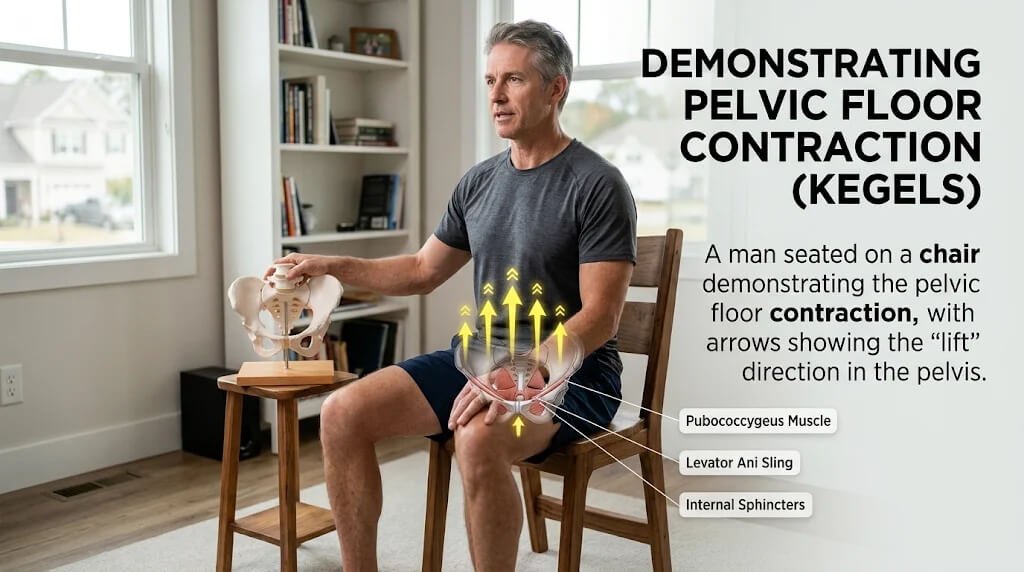
This is the single most underused tool in a man’s toolkit. The pubococcygeus and iliococcygeus muscles form the pelvic floor, and they control the external urethral sphincter. Weak or uncoordinated pelvic floor muscles can make it hard to “release” the stream.
How to do a male Kegel (step-by-step):
- Sit on the edge of a chair, feet flat on the floor.
- Imagine you’re trying to stop urine mid-stream and pull up the area between your scrotum and anus. You should feel a gentle squeeze and lift, not a bear-hug of your thighs or belly.
- Contract the pelvic floor for 5 seconds, then fully relax for 5 seconds.
- That’s one rep. Aim for 10 reps, 3 sets per day (morning, midday, evening).
- Rest at least 30 seconds between sets.
COACH’S TIP: The first two weeks, do your Kegels while lying on your back with knees bent. It’s easier to isolate the correct muscle without gravity fighting you. Once you can feel the “lift” clearly, move to seated, then standing. The movement should feel like a subtle “elevator going up” in your pelvis—nothing visible should change on the outside.
Progression: After 4–6 weeks, increase to 10-second holds with 10-second rests. Add a “quick flick” set: 10 rapid 1-second contractions to train the fast-twitch fibers that help you start the stream.
Regression (easier version): If 5-second holds are too hard, start with 2-second holds and 5-second rests, doing 5 reps per set.
Research published in the Journal of Urology has shown that structured pelvic floor training can improve voiding symptoms in men with LUTS, particularly when combined with other lifestyle changes.
2. Daily Aerobic Walking
You don’t need a treadmill or a gym membership. A brisk 30-minute walk on most days of the week reduces systemic inflammation, improves circulation to the pelvic region, and helps manage the weight that adds pressure to the bladder and prostate.
The U.S. Department of Health and Human Services Physical Activity Guidelines recommend at least 150 minutes of moderate-intensity aerobic activity per week for adults. For a man dealing with urinary hesitancy, breaking that into 30-minute walks five days a week is practical and sustainable.
Practical walking plan:
- Weeks 1–2: 20 minutes at a comfortable pace (you can talk but not sing). 5 days/week.
- Weeks 3–4: 30 minutes, same pace. Add a gentle hill or a few extra blocks.
- Week 5 onward: 30–40 minutes, 5 days/week. Add 1–2 days of a slightly faster pace (brisk, where you can speak in short sentences).
Walking also combats the sedentary habit that worsens pelvic floor deconditioning. If you sit at a desk, stand up and walk for 3–5 minutes every hour.
3. Saw Palmetto (Serenoa repens)
Saw palmetto is the most studied herbal supplement for BPH-related symptoms. It’s an extract from the berries of a small palm native to the southeastern United States. The proposed mechanism involves mild inhibition of 5-alpha reductase (the enzyme that converts testosterone to dihydrotestosterone, or DHT) and anti-inflammatory effects on prostate tissue.
A meta-analysis in the Cochrane Database of Systematic Reviews found that saw palmetto may provide a modest improvement in urinary flow and symptom scores compared with placebo, though the effect size is small. It is not a replacement for prescription alpha-blockers or 5-alpha reductase inhibitors in moderate-to-severe BPH.
If you choose to try it:
- Typical studied dose: 320 mg of standardized extract per day, taken with food.
- Give it 4–6 weeks before judging whether you notice a difference.
- Tell your doctor you’re taking it, especially if you’re on blood thinners, hormone therapy, or BPH medication.
COMMON MISTAKE: Buying a cheap, unbranded saw palmetto product that doesn’t list the percentage of fatty acids and sterols. Look for a product standardized to 85–95% fatty acids/sterols. If a label doesn’t specify, skip it.

4. Pumpkin Seed Oil (Cucurbita pepo)
Pumpkin seed oil contains phytosterols, particularly beta-sitosterol, which have shown anti-inflammatory and mild anti-androgenic properties in laboratory studies. A randomized controlled trial published in the Journal of Urology reported that 200 mg of pumpkin seed oil taken twice daily improved peak urinary flow rate and reduced the sensation of incomplete emptying in men with BPH over a 12-week period.
Practical use:
- 1 tablespoon (about 14 g / 0.5 oz) of cold-pressed pumpkin seed oil daily, or 400 mg of standardized extract in capsule form.
- You can drizzle it over salad, stir it into oatmeal, or take a capsule with lunch.
- It’s gentle on the stomach for most men, but start with a smaller amount if you’re sensitive.
5. Pygeum Africanum
Pygeum is an extract from the bark of the African plum tree (Pygeum africanum). It’s been used in European phytotherapy for decades as a support for prostate and bladder comfort. The active compounds include phytosterols and omega-3 fatty acids.
A systematic review in the journal Phytomedicine noted that pygeum extract (typically 200 mg/day of a standardized 70% extract) showed modest improvements in urinary frequency and nocturia in men with BPH, though study quality varied.
If you try pygeum:
- Standard dose: 200 mg of a 70% standardized extract once daily with food.
- Allow 6–8 weeks to assess any change.
- Watch for mild GI upset (nausea, diarrhea) in the first week.
As with saw palmetto, pygeum is a supportive strategy, not a cure. Pair it with the exercise and lifestyle habits in this list for the best chance of noticing a difference.
6. Smart Fluid and Caffeine Management
What you drink—and when—matters more than most men realize.
- Caffeine: Caffeine is a bladder irritant. It increases detrusor muscle contractions and can make the bladder feel “full” faster, while also tightening the bladder neck. Limit coffee, black tea, and energy drinks to one 8-oz (240 ml) cup per day, and avoid them after 2 p.m.
- Alcohol: Alcohol is a diuretic and also irritates the bladder. If you drink, keep it to one standard drink (12 oz / 355 ml of beer, 5 oz / 150 ml of wine) and avoid it on nights when you already wake up to urinate (nocturia).
- Total fluid intake: Don’t over-restrict. Aim for about 6–8 cups (48–64 oz / 1.4–1.9 L) of fluids spread through the day. Cut back 2–3 hours before bedtime to reduce nighttime trips.
- Avoid large fluid boluses. Sip steadily rather than chugging a 32-oz bottle in 10 minutes.
A simple habit: keep a small water bottle at your desk and take 4–6 sips every 30 minutes instead of a big glass all at once.
7. Double Voiding Technique
This is a free, zero-equipment strategy that many urologists recommend for men who feel they haven’t fully emptied their bladder.
How to do it:
- Urinate normally until the stream stops.
- Stand up, walk to the kitchen, do a quick 10-second task (wash your hands, check your phone).
- Return to the toilet, sit down, and try again. Relax your pelvic floor. Let gravity and a gentle abdominal push (not a Valsalva strain) do the work.
- Many men get an additional small stream the second time.
Practice this once a day for two weeks. It retrains the detrusor muscle to contract more completely and gives the pelvic floor a “reset” before the final push.
8. Core Strength and Weight Management
Carrying extra weight around the midsection increases intra-abdominal pressure, which pushes down on the bladder and prostate. Even a 5–10% reduction in body weight can reduce that pressure and ease voiding.
As a coach, here’s a simple, low-impact core routine you can do three times a week at home:
| Exercise | Sets | Reps / Hold | Rest |
| Dead bug (supine, alternating arm/leg) | 3 | 10 per side | 30 sec |
| Bird-dog (on hands and knees) | 3 | 8 per side | 30 sec |
| Glute bridge | 3 | 12 | 30 sec |
| Plank (forearm) | 3 | 20–30 sec | 45 sec |
Form cue for the dead bug: Lie on your back, arms reaching to the ceiling, knees bent at 90°. Lower one arm and the opposite leg toward the floor while keeping your lower back pressed into the mat. Exhale on the way down. The pelvis should not rock.
If you’re new to exercise or have joint issues, start with the glute bridge and bird-dog only, and build up over 4–6 weeks. Pair this with the walking plan from Section 2.
For men who want a broader look at staying active after 50, our guide on increasing metabolism naturally after 40 covers a full weekly movement plan you can adapt.
9. Stress Reduction and Sleep Hygiene
Chronic stress keeps your sympathetic nervous system in “fight or flight” mode. One effect: the bladder neck and urethral sphincter stay more constricted, making it harder to initiate a stream. Poor sleep compounds the problem—fatigue reduces your ability to coordinate the pelvic floor relaxation needed to start urinating.
Practical steps:
- Box breathing: Inhale 4 counts, hold 4, exhale 4, hold 4. Do 4–5 rounds before you sit down to urinate if you feel “stuck.” It takes 60 seconds and can lower the sympathetic tone just enough to let the stream start.
- Sleep target: Aim for 7–8 hours. Keep a consistent bedtime. Avoid screens 30 minutes before bed.
- Evening wind-down: A 10-minute walk after dinner, a warm shower, or a few minutes of gentle stretching (hip flexor stretch, child’s pose) can lower cortisol and relax the pelvic region.
The connection between stress, sleep, and overall male wellness is well documented. If you want a deeper look at how sleep and stress affect men’s health, see our article on how stress and poor sleep affect male health.
10. Dietary Support: Fiber, Zinc, and Lycopene
What you eat plays a supporting role.
- Fiber (25–30 g/day): Chronic constipation is a sneaky contributor to urinary hesitancy. A full rectum presses on the bladder and urethra. Load up on vegetables, legumes, whole grains, and fruit. If you’re short on fiber, a psyllium husk supplement (5 g with a full glass of water, once or twice daily) can help. You can read more about fiber’s role in overall wellness in our guide on how soluble fiber supports fullness and digestive health.
- Zinc: The prostate contains a higher concentration of zinc than any other organ in the body. Zinc supports normal prostate cell function. A daily multivitamin with 15–30 mg of zinc (from food sources like pumpkin seeds, lean meat, or legumes) is a reasonable baseline. Our article on whether zinc supports healthy testosterone levels in men covers the broader role of zinc in male physiology.
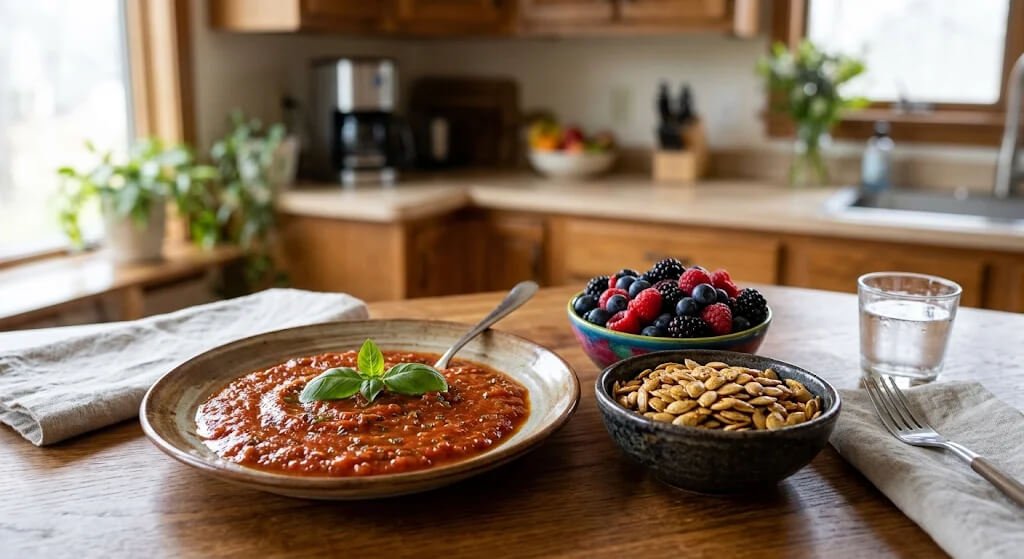
- Lycopene: Found in cooked tomatoes, watermelon, and pink grapefruit, lycopene is a carotenoid with antioxidant properties. Some observational studies link higher lycopene intake to a lower risk of BPH, though the evidence is not definitive. A daily serving of tomato-based sauce or a small watermelon is an easy way to get in.
How to Build Your Daily Routine
You don’t need to do all ten at once. Here’s a simple weekly template:
| Time | Action |
| Morning (with breakfast) | 10 Kegel reps × 3 sets. 1 tbsp pumpkin seed oil or 1 saw palmetto capsule (if using). |
| Midday | 30-min brisk walk. Sip water steadily. Keep caffeine to one cup before 2 p.m. |
| Afternoon | 3× core circuit (dead bug, bird-dog, glute bridge, plank). |
| Evening (2 hrs before bed) | Last large fluid intake. 10-min walk or gentle stretching. Box breathing × 5 rounds. |
| Before bed | Double voiding. Consistent bedtime. |
Give the routine 6–8 weeks before you assess whether your hesitancy has improved. Track it simply: note on your phone whether you had a delay, a weak stream, or a full stream each morning. You’ll start to see a pattern.
When to See a Doctor (Red Flags)
Natural strategies support mild symptoms. They do not treat:
- Complete urinary retention (you can’t urinate at all)
- Blood in the urine (hematuria)
- Recurrent urinary tract infections
- Severe, progressive worsening over weeks
- Unexplained weight loss or bone pain (to rule out prostate cancer)
- Symptoms that interfere with daily life, sleep, or work
If any of these apply, schedule an appointment with a urologist. You’ll likely need a digital rectal exam, a urinalysis, a PSA blood test, and possibly a uroflowmetry test or bladder ultrasound. A doctor can determine whether your hesitancy is from BPH, a urethral stricture, a neurological issue, or something else that needs targeted treatment.
This article is for general information and is not a substitute for advice from a doctor or physical therapist.
What the Research Actually Shows (A Fair Summary)
I’ll be straight with you: the evidence for herbal and lifestyle interventions in BPH is modest but real.
- Pelvic floor training: A randomized trial in the Journal of Urology found that a 12-week pelvic floor muscle training program improved International Prostate Symptom Score (IPSS) and peak urinary flow in men with moderate LUTS. The effect was comparable to a low-dose alpha-blocker in that specific cohort.
- Saw palmetto: The Cochrane review (last major update) concluded that saw palmetto may offer a small benefit over placebo for symptom scores, but the quality of evidence was rated low to moderate. It is not recommended as a standalone treatment by major urological guidelines.
- Pumpkin seed oil: A 12-week RCT in the Journal of Urology showed a statistically significant improvement in peak flow rate and a reduction in post-void residual urine volume.
- Aerobic exercise: The HHS Physical Activity Guidelines and the American College of Sports Medicine (ACSM) position statements support regular moderate-intensity exercise for overall cardiovascular and metabolic health, which indirectly supports pelvic and urinary function. There is no single “exercise cures BPH” trial, but the anti-inflammatory and weight-management benefits are well established.
The bottom line: no single herb or exercise will “fix” a significantly enlarged prostate. But a consistent combination of pelvic floor training, walking, smart fluid habits, and targeted dietary support can make a noticeable difference in day-to-day comfort, especially for men with mild-to-moderate symptoms.
FAQ
Can pelvic floor exercises really help with urinary hesitancy in men?
Yes. Structured Kegel training strengthens the pubococcygeus and external urethral sphincter, improving coordination between “holding” and “releasing.” A 12-week program of 10 reps × 3 sets daily has shown measurable improvements in voiding flow and symptom scores in men with LUTS, according to research in the Journal of Urology.
Does saw palmetto actually work for prostate-related urinary issues?
The evidence is mixed. A Cochrane systematic review found a small but statistically significant improvement in symptom scores compared to placebo. It’s best viewed as a mild supportive supplement, not a replacement for prescription medication in moderate-to-severe BPH. Always check with your doctor before adding it.
How long does it take for natural BPH remedies to show a difference?
Most men need 4–8 weeks of consistent pelvic floor training, walking, and dietary changes before noticing a change in stream or frequency. Herbal supplements like pumpkin seed oil or pygeum typically require 6–12 weeks of daily use. Track your symptoms weekly to spot a trend.
What foods help with urinary flow in older men?
Fiber-rich foods (oats, beans, vegetables) prevent constipation that presses on the bladder. Pumpkin seeds provide zinc and phytosterols. Cooked tomatoes and watermelon supply lycopene. Limiting caffeine and alcohol also reduces bladder irritation.
Can exercise improve urinary hesitancy?
Regular aerobic walking (150 min/week) and a core-strength routine reduce intra-abdominal pressure, lower systemic inflammation, and support pelvic floor function. Exercise won’t shrink a large prostate, but it addresses several contributing factors to hesitancy.
Are there natural alternatives to BPH medication?
For mild symptoms, a combination of pelvic floor training, lifestyle changes, and possibly a supplement like saw palmetto or pumpkin seed oil may help. For moderate-to-severe BPH, prescription alpha-blockers or 5-alpha reductase inhibitors remain the standard of care. A urologist can help you decide which path fits your situation.
Final Thoughts
Urinary hesitancy is uncomfortable, embarrassing, and—let’s be honest—annoying. But it’s also one of the most manageable men’s health issues when you take a structured, patient approach. You don’t need a complicated protocol. You need a few consistent habits: squeeze and lift your pelvic floor three times a day, walk 30 minutes most days, watch your caffeine and evening fluids, eat your fiber, and give your body six to eight weeks to respond.
If you’re in the 50-and-over range and want a broader look at staying active and feeling sharp, our guide on how men improve stamina and wellness naturally covers a full weekly plan you can pair with the habits in this article. And if you’re exploring supplements as part of a broader men’s health routine, our roundup of supplements for libido and energy in men can help you separate evidence-based options from marketing noise.
The key word is consistent. One Kegel session won’t change your stream. Thirty days of them might. Start small, track your progress, and bring the data to your next doctor’s visit. You’ve got this.
This article is for general information and is not a substitute for advice from a doctor or physical therapist.