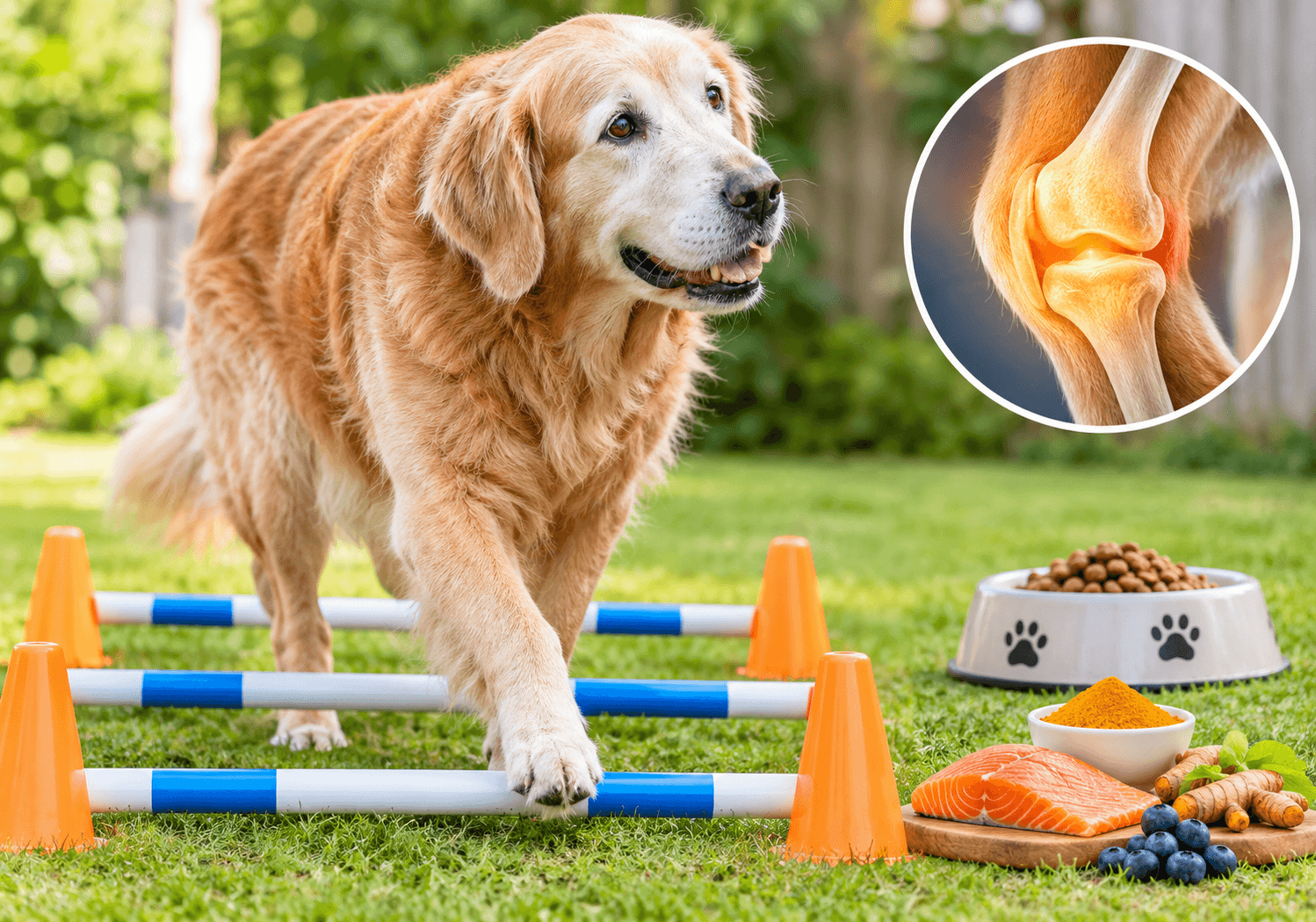
Your dog used to bound up the stairs like a puppy. Now they pause, shift their weight, and seem to “think” before standing up after a nap. That slow, careful movement is one of the most common complaints I hear from dog owners, and it usually points to joint inflammation, early osteoarthritis, or age-related stiffness in the hips, knees, or spine.
The good news: you do not have to wait for a prescription before you start helping. A growing body of veterinary research supports several natural remedies for dog stiffness and mobility that can reduce joint inflammation, support cartilage, and keep your dog moving comfortably. From omega-3 fatty acids to targeted low-impact exercise, the options are practical, affordable, and easy to add to your dog’s daily routine.
This guide walks through the most evidence-backed natural approaches, how to use them safely, and what to watch for. Before you start any new supplement or exercise plan, talk with your veterinarian, especially if your dog is already on medication or has a diagnosed condition.
Quick Answer
The most supported natural remedies for dog stiffness and mobility include omega-3 fatty acids (EPA/DHA), glucosamine and chondroitin sulfate, curcumin (turmeric), and low-impact exercise like short walks and hydrotherapy. Adding a quality joint supplement, keeping your dog at a healthy weight, and doing daily gentle movement can noticeably improve comfort and range of motion over 4–8 weeks.
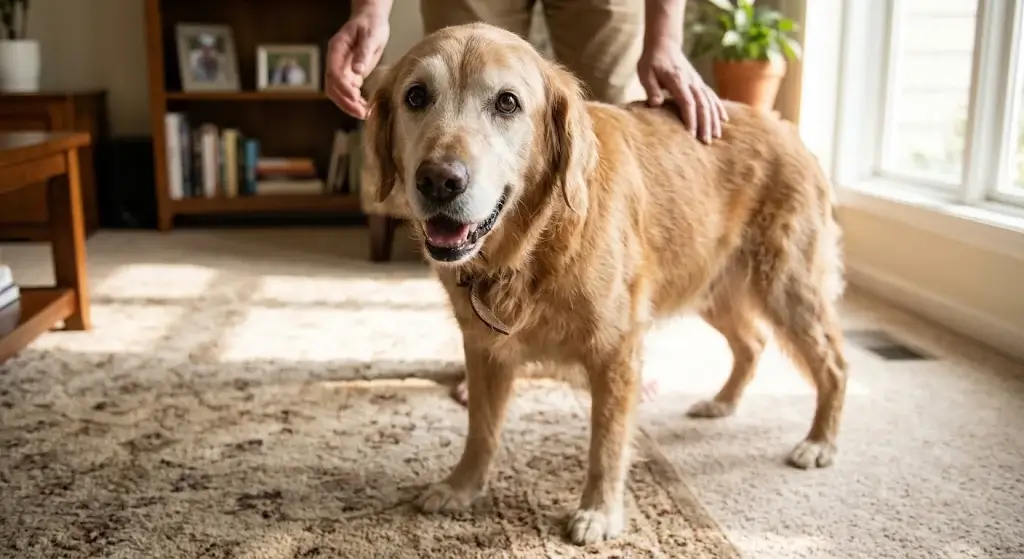
Why Dogs Get Stiff: Understanding the Problem
Stiffness in dogs most often comes from canine osteoarthritis, a progressive condition where the smooth cartilage that cushions joints wears down. When that cartilage thins, the bones rub more freely, the synovial membrane (the lining that produces synovial fluid) becomes inflamed, and the joint swells and hurts.
Other common causes include:
- Hip dysplasia – a developmental mismatch between the hip ball and socket, common in large breeds like Labradors, German Shepherds, and Rottweilers
- Elbow dysplasia – similar joint mismatch in the front legs
- Degenerative myelopathy – a spinal cord condition that causes hind-leg weakness, especially in German Shepherds
- Age-related muscle atrophy – as dogs lose muscle mass, the joints bear more load and feel stiffer
A 2019 review in the Journal of Veterinary Internal Medicine noted that up to 90% of dogs over 8 years old show some degree of joint degeneration on imaging, even if they do not appear painful yet. That means early, gentle intervention matters more than waiting until your dog is limping.
10 Natural Remedies for Dog Stiffness and Mobility
1. Omega-3 Fatty Acids (EPA and DHA)
What it is: Long-chain omega-3 fatty acids found in fish oil, krill oil, or flaxseed oil supplements.
Why it works: EPA and DHA are building blocks for anti-inflammatory compounds in the body. Research in veterinary medicine shows that dogs with osteoarthritis who received omega-3-enriched diets showed reduced joint inflammation markers and improved mobility scores compared to dogs on standard diets. A study published in the Journal of the American Veterinary Medical Association found that omega-3 supplementation helped reduce the need for NSAID pain medication in arthritic dogs.
How to use it:
- Look for a supplement that lists EPA and DHA content per serving on the label, not just “fish oil.”
- A common starting range is 50–100 mg of combined EPA + DHA per pound of body weight per day, split into two meals. [VERIFY exact dosing with your vet]
- For a 60-lb (27 kg) dog, that might be 3,000–6,000 mg of combined EPA/DHA daily.
- Give it with food to reduce the chance of an upset stomach.
- You will typically see a difference in coat shine within 2–3 weeks and in joint comfort within 4–6 weeks.
Easier version: Mix a small amount of plain, unseasoned canned sardines or salmon (packed in water, no added salt) into your dog’s food a few times a week.
Harder version: If your vet agrees, a higher-dose prescription-grade omega-3 supplement (like those used in veterinary clinics) can be more concentrated.
Coach’s Tip: Omega-3s work best when they are part of a consistent daily routine, not an occasional treat. Set a phone reminder tied to your dog’s meal times so you do not miss a dose.
2. Glucosamine and Chondroitin Sulfate
What it is: Two naturally occurring compounds found in cartilage. Glucosamine helps build and repair cartilage; chondroitin helps retain water in the cartilage and may slow its breakdown.
Why it works: Several studies in the Journal of Veterinary Internal Medicine and the Journal of the American Veterinary Medical Association have examined glucosamine and chondroitin in dogs. Results are mixed but generally positive: some dogs show improved joint function and reduced pain scores over 8–12 weeks. The effect is subtle, not dramatic, but it can add up over time.
How to use it:
- Typical dosing: 750 mg glucosamine + 500 mg chondroitin per day for a medium-to-large dog. Smaller dogs may need 250–500 mg of each. [VERIFY with your vet]
- Give with a meal.
- Be patient. Most owners notice a difference around 6–8 weeks, not 3 days.
- Look for a product that specifies glucosamine sulfate (not just “glucosamine”) and chondroitin sulfate from a reputable brand.
Common Mistake Callout:
Common Mistake: Giving glucosamine for two weeks, seeing no change, and stopping. Cartilage support compounds work slowly. Give it a full 8-week trial before deciding it “does not work.”
3. Curcumin (Turmeric)
What it is: The active compound in turmeric root, known for its anti-inflammatory properties.
Why it works: Curcumin inhibits several inflammatory pathways (including COX-2 and NF-kB) that are involved in joint pain. A 2018 study in the Journal of Veterinary Internal Medicine found that a curcumin-based supplement reduced pain and improved mobility in dogs with osteoarthritis over a 12-week period, with effects comparable to a low dose of carprofen (a common veterinary NSAID).
How to use it:
- Plain turmeric powder has very low absorption in dogs. Look for a curcumin extract with piperine (black pepper extract) or a phospholipid complex (like Meriva) for better absorption.
- Typical dosing: 10–20 mg of curcumin per pound of body weight per day, split into two doses. [VERIFY with your vet]
- For a 50-lb (23 kg) dog, that is roughly 500–1,000 mg of curcumin daily.
- Give with a meal that contains some fat (curcumin is fat-soluble).
Easier version: Add ¼ to ½ teaspoon of ground turmeric to your dog’s food once or twice a day. This is a lower dose but still provides some benefit.
Safety note: Curcumin can interact with blood-thinning medications. If your dog is on aspirin, clopidogrel, or any anticoagulant, ask your vet before adding curcumin.
4. MSM (Methylsulfonylmethane)
What it is: A sulfur-containing compound found naturally in small amounts in fruits, vegetables, and grains.
Why it works: Sulfur is a building block for connective tissue, including cartilage and joint ligaments. MSM may help reduce oxidative stress in joint tissue and support the structural integrity of cartilage. Some combination joint supplements for dogs include MSM alongside glucosamine and chondroitin.
How to use it:
- Typical dosing: 200–500 mg per day for a medium dog, up to 1,000 mg for a large dog. [VERIFY with your vet]
- Give with food.
- MSM is generally well tolerated, but start at the low end and watch for loose stool.
5. Boswellia Serrata (Indian Frankincense)
What it is: An extract from the resin of the Boswellia serrata tree, used in traditional medicine for joint and inflammatory conditions.
Why it works: Boswellic acids in the extract inhibit 5-lipoxygenase, an enzyme involved in inflammation. A small study in the Journal of Veterinary Internal Medicine suggested boswellia extract could reduce pain and improve activity levels in dogs with osteoarthritis.
How to use it:
- Typical dosing: 10–25 mg of boswellic acids per pound of body weight per day. [VERIFY with your vet]
- Give with food.
- Results may take 4–6 weeks.
6. Ginger (Zingiber officinale)
What it is: A root with anti-inflammatory and antioxidant properties, used in human and veterinary medicine.
Why it works: Ginger contains gingerols and shogaols, which have shown anti-inflammatory effects in laboratory and small animal studies. While the veterinary-specific research base is smaller than for omega-3s or curcumin, ginger is a gentle, low-risk addition for mild stiffness.
How to use it:
- Fresh grated ginger: 1/8 to ¼ teaspoon per 25 lb (11 kg) of body weight, mixed into food, 1–2 times per day.
- Dried ginger powder: start with a small pinch and work up.
- Watch for mild stomach upset, especially in sensitive dogs.
7. Weight Management
What it is: Keeping your dog at a healthy body weight through portion control, measured meals, and regular activity.
Why it works: This is arguably the single most impactful “natural remedy” for joint stiffness. Every extra pound on your dog’s body adds roughly 4 pounds of pressure on the knee joints during movement. A dog that is 20% overweight is putting dramatically more load on already-degenerating cartilage.
How to use it:
- Ask your vet to assess your dog’s body condition score (a 1–9 scale; 4–5 is ideal).
- Measure food with a standard cup or kitchen scale rather than free-feeding from a bowl.
- Switch to a high-quality, protein-rich dog food that supports lean muscle mass.
- Reduce or eliminate high-calorie treats. Use small pieces of carrot, cucumber, or frozen green beans instead.
- Re-check weight monthly. Even losing 5–10% of excess body weight can noticeably reduce joint strain.
Coach’s Tip: If your dog is overweight and stiff, start with a 10-minute daily walk on a flat surface before adding supplements. The gentle movement helps with circulation and joint lubrication, and the weight loss reduces the load on those joints. Do both at the same time.
8. Low-Impact Exercise and Physical Therapy
What it is: Structured, gentle movement designed to maintain joint range of motion, build supporting muscle, and improve proprioception (the body’s sense of where it is in space).
Why it works: Joints are “use it or lose it.” When a stiff dog avoids movement, the muscles around the joint weaken (muscle atrophy), the joint capsule tightens, and stiffness gets worse. Controlled exercise keeps synovial fluid circulating, which nourishes cartilage, and strengthens the muscles that stabilize the joint.
How to use it (a simple daily routine):
- Short flat walks: 10–15 minutes on a flat, even surface (grass or carpet, not concrete or stairs). Go 2–3 times per day. Keep the pace slow and steady.
- Sit-to-stand repetitions: Gently encourage your dog to sit, then stand, 5–8 times. This works the hind-leg muscles and hip joints.
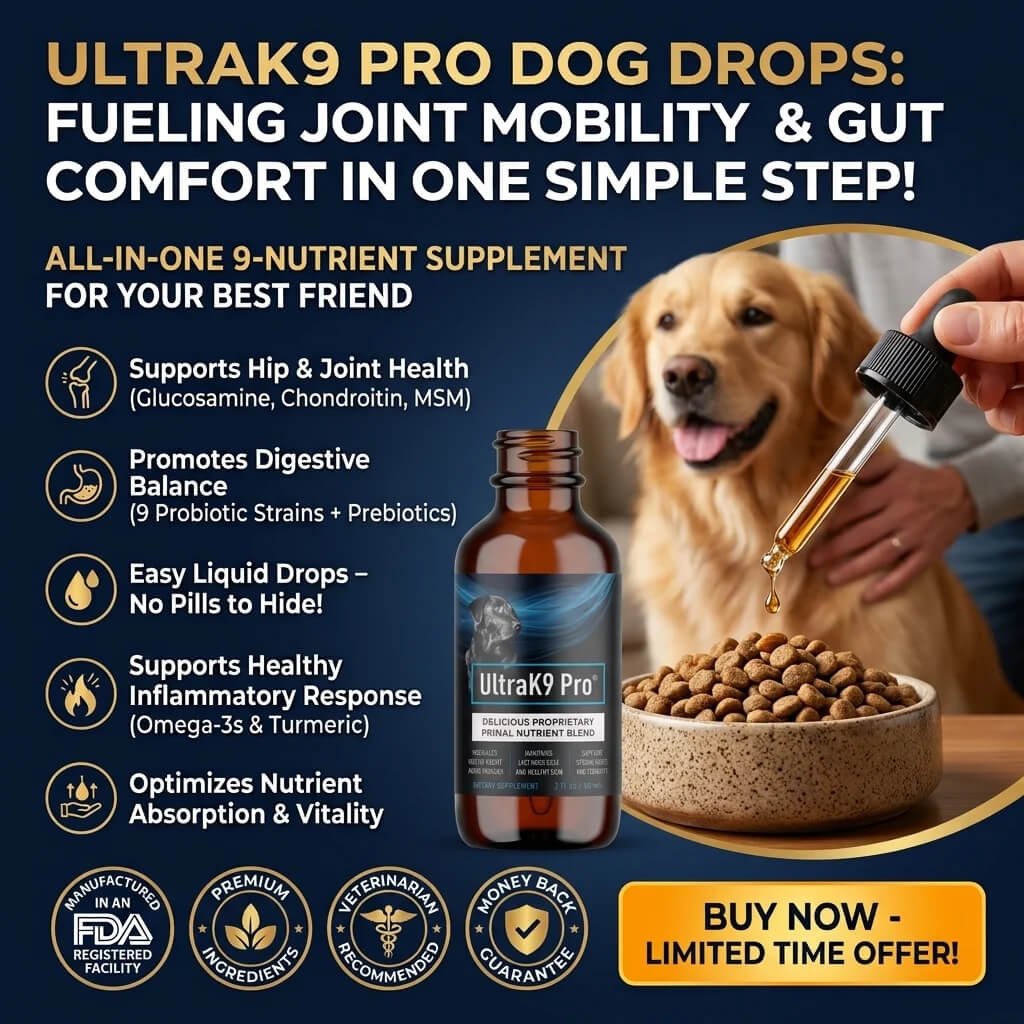
- Cavaletti poles (low): Set two or three low poles (6–8 in / 15–20 cm off the ground) in a line. Walk your dog over them slowly. This encourages a slight lift of the legs, improving range of motion without impact.
- T-Pull: With your dog on a harness, gently pull them forward in a straight line for 30–60 seconds. This builds core and hind-leg strength. [VERIFY technique with a certified canine rehab specialist]
- Swimming or hydrotherapy: If your dog is comfortable in water, a 10–15 minute supervised swim is excellent. The water supports the body’s weight while the dog works the muscles. If your dog is not a swimmer, a veterinary hydrotherapy treadmill (underwater treadmill) is a safe alternative.
Easier version: If your dog is very stiff or in pain, start with just the short flat walks and gentle petting/massage around the hips and shoulders. Do not force range-of-motion stretches.
Harder version: Once your dog is moving more comfortably, add the Cavaletti poles, T-Pull, and a second daily walk. A certified Canine Rehabilitation and Conditioning (CReC) or Certified Canine Rehabilitation Technician (CCRT) can design a personalized program.
9. Anti-Inflammatory Diet Adjustments
What it is: Adjusting your dog’s food to reduce dietary triggers for inflammation and increase anti-inflammatory nutrients.
Why it works: Chronic low-grade inflammation worsens joint pain. A diet high in omega-6 fatty acids (common in many commercial kibble formulas) and low in omega-3s can tip the balance toward inflammation. Adding anti-inflammatory foods and reducing pro-inflammatory ones can help.
How to use it:
- Add: Fatty fish (salmon, sardines, mackerel) 2–3 times per week; pumpkin (plain, canned, no sugar); sweet potato; blueberries; turmeric; ginger.
- Reduce or avoid: Excess grain fillers, artificial preservatives, and high-fat treats.
- Consider: A veterinary-recommended diet formulated for joint support (many contain added omega-3s, glucosamine, and chondroitin).
- Hydration: Make sure fresh water is always available. Well-hydrated synovial fluid is thicker and better at cushioning joints.
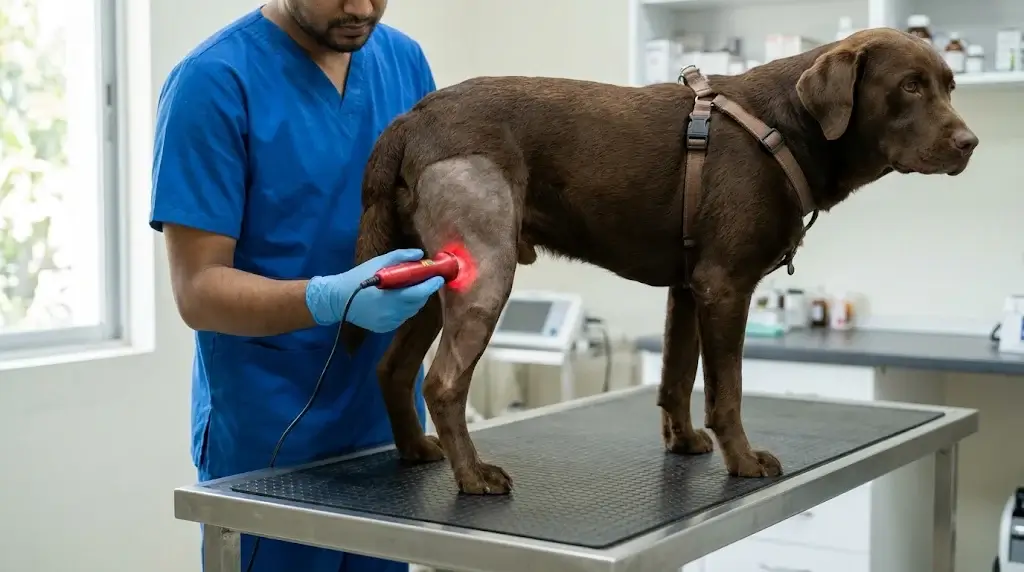
10. Laser Therapy and Cold/Heat Therapy
What it is: Low-level laser therapy (LLLT) and targeted cold or heat packs applied to stiff joints.
Why it works: Low-level laser therapy has been studied in veterinary medicine for pain reduction and tissue repair. A review in the Journal of Veterinary Internal Medicine suggested that LLLT can reduce pain and improve mobility in dogs with osteoarthritis. Cold packs reduce acute inflammation; heat packs increase blood flow and relax tight muscles.
How to use it:
- Laser therapy: Must be administered by a veterinarian or certified canine rehab professional. Sessions are typically 5–10 minutes, 2–3 times per week for 4–6 weeks.
- Cold pack: Wrap an ice pack in a thin towel. Apply to a swollen, hot joint for 10–15 minutes, up to 2–3 times per day. Best for acute flare-ups.
- Heat pack: Use a warm (not hot) towel or a microwavable heat pack. Apply to a stiff, aching joint for 15–20 minutes before exercise to loosen the area. Do not use heat on an acutely swollen joint.
How to Put These Remedies Into a Daily Routine
You do not need to try all ten at once. Here is a practical starter plan:
| Time of Day | Action |
| Morning | 10-min flat walk → warm heat pack on stiff joints (15 min) → breakfast with omega-3 + joint supplement |
| Midday | 5–10 min of gentle play or a short walk → water break |
| Evening | 10-min flat walk → sit-to-stand reps (5–8) → dinner with curcumin or turmeric → cold pack if a joint is swollen |
| Weekly | 1–2 swimming sessions or hydrotherapy visits → vet check-in if starting new supplements |
Start with omega-3s + a joint supplement (glucosamine/chondroitin) + daily walks + weight management. That is your foundation. Add curcumin, boswellia, or ginger after 3–4 weeks if your vet approves. Layer in physical therapy exercises as your dog’s comfort improves.
Safety Tips and When to See the Vet
- Always talk to your veterinarian before adding supplements, especially if your dog is on NSAIDs (carprofen, meloxicam, deracoxib), prednisone, blood thinners, or other medications.
- Do not use human-dose turmeric, ginger, or fish oil. Dog dosing is different, and some human products contain xylitol or other ingredients toxic to dogs.
- Watch for red flags: sudden inability to stand, a leg that will not bear weight, a hunched back, vocalizing in pain, or a joint that is hot, swollen, and very tender. These need a vet visit promptly, not a supplement trial.
- Pregnant or nursing dogs: avoid herbal supplements (turmeric, ginger, boswellia) unless your vet specifically approves them.
- Puppies: do not give glucosamine or chondroitin to growing puppies unless directed by your vet, as long-term effects on developing cartilage are not well studied.
- Gradual is better. Introduce one new supplement at a time, wait 1–2 weeks, then add the next. This way you can identify any digestive upset or allergic reaction.
Common Mistake Callout:
Common Mistake: Buying a “joint supplement for dogs” that lists 12 ingredients at very low doses. Check the label. If the glucosamine is 100 mg and the chondroitin is 50 mg, you are paying for a multivitamin, not a joint support formula. Look for products that clearly state the milligram amount of each active ingredient.
What to Expect: A Realistic Timeline
- Week 1–2: You may notice a shinier coat (omega-3s) and slightly less reluctance to stand up. Joint pain will not be gone yet.
- Week 3–4: Stiffness after rest may decrease. Your dog may walk a little farther on morning walks. Muscle tone in the hind legs may start to improve with exercise.
- Week 5–8: This is when glucosamine, chondroitin, and curcumin start showing their full effect. Many owners report their dog is “themselves again” by the 6-to-8-week mark.
- Ongoing: Natural remedies for dog stiffness and mobility are maintenance strategies, not cures. Osteoarthritis is progressive. Consistency with supplements, weight management, and low-impact exercise is what keeps your dog comfortable over the long term.
FAQ
What natural supplements help dog joint pain the most?
Omega-3 fatty acids (EPA/DHA) and a combination of glucosamine plus chondroitin sulfate have the strongest veterinary research base. Curcumin (turmeric extract) is a close third. Start with these three and add MSM or boswellia if your vet recommends it.
Can turmeric really help dog arthritis?
Research suggests curcumin, the active compound in turmeric, has anti-inflammatory effects that may reduce joint pain in dogs. A 2018 study found a curcumin supplement improved mobility in arthritic dogs over 12 weeks. Use a curcumin extract with piperine for better absorption, and confirm dosing with your vet.
How long do dog joint supplements take to work?
Most joint supplements, including glucosamine, chondroitin, and curcumin, take 4 to 8 weeks of consistent daily use before you notice a meaningful change. Omega-3s may show coat improvements in 2–3 weeks, but joint effects also take several weeks. Do not stop after one week.
What exercises help a dog with stiff hips?
Short flat walks (10–15 min), sit-to-stand repetitions (5–8 reps), low Cavaletti pole walks, T-Pull, and swimming or hydrotherapy are all effective. Keep the pace slow and the surface even. A certified canine rehab professional can tailor a program to your dog’s specific joints.
Can I give my dog human fish oil or turmeric capsules?
It is not recommended. Human supplements may contain fillers, xylitol, or doses that are too high for a dog. Use products specifically formulated for dogs, or measure plain turmeric powder and fish oil yourself under your vet’s guidance.
When should I take my stiff dog to the vet?
If your dog shows sudden inability to bear weight, vocalizes in pain, has a joint that is hot and very swollen, or is losing the ability to stand, see your vet promptly. For gradual stiffness, a vet visit is still wise before starting any supplement regimen to rule out other causes and confirm safe dosing.
Conclusion
Dealing with a stiff, slow-moving dog is frustrating, but you have more practical options than you might think. The most supported natural remedies for dog stiffness and mobility—omega-3 fatty acids, glucosamine and chondroitin, curcumin, anti-inflammatory diet changes, weight management, and low-impact exercise—are not complicated. They are consistent, daily habits that reduce joint inflammation, support cartilage, and keep your dog’s muscles strong.
Start with the basics: a quality joint supplement, a measured diet, and a short daily walk. Add curcumin or boswellia after a few weeks if your vet agrees. Layer in physical therapy exercises as your dog’s comfort improves. Track your dog’s progress with a simple note in your phone: how far they walked, how quickly they stood up, whether they still pause on the stairs.
You do not need to fix everything in a week. You need to build a routine that keeps your dog moving, comfortable, and engaged. And that is something you can start tomorrow morning.