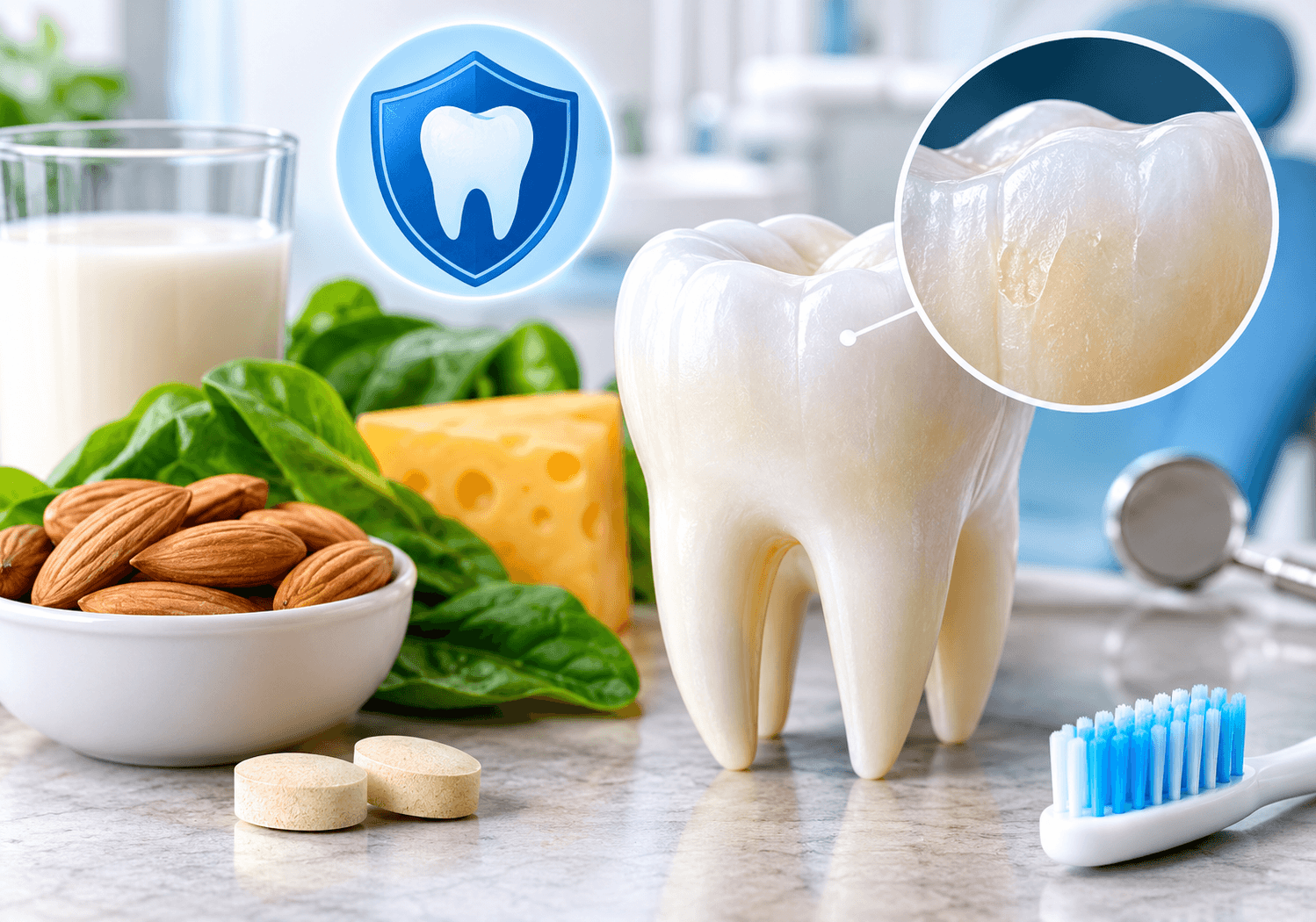
Tooth enamel is the hard outer layer that protects each tooth. If it is wearing down, it makes sense to ask whether a supplement can restore it. The short answer: supplements may support normal tooth development and mineral health when you have a nutrient deficiency, but they cannot regrow enamel that has already been permanently lost.
The useful distinction is between early mineral loss and physical enamel loss. Early changes in a tooth’s surface may sometimes be remineralized, but a chip, cavity, or area worn away by acid or grinding needs a dentist’s assessment. Supplements are not a substitute for proven dental care.
Quick answer: Supplements cannot rebuild enamel that has been physically lost. Calcium and vitamin D support normal mineral and bone health, but taking extra does not restore a cavity or worn tooth. Early mineral loss may be helped by fluoride, saliva, and changes to oral-care habits. See a dentist to identify the cause and choose treatment.
Can supplements help rebuild tooth enamel?
Usually, no—not in the way many supplement ads suggest. Enamel is made mostly of mineral, but once it has been worn away or removed, the body does not grow a replacement layer. The National Institute of Dental and Craniofacial Research explains that tooth decay begins when acids remove minerals from enamel; early damage can sometimes be reversed, while a cavity that has formed requires dental treatment.
That process is called remineralization. Minerals from saliva and fluoride can help repair microscopic mineral loss in enamel. This is not the same as rebuilding a missing piece of tooth. Think of it as strengthening a weakened surface, not pouring new concrete where a chunk has broken off.
Mineral loss versus enamel loss
These terms describe different stages of tooth damage:
- Early demineralization: Minerals leave the enamel, sometimes creating a chalky white spot. The surface may still be intact.
- Cavity formation: Mineral loss progresses until a hole develops. A dentist must assess the damage and decide on treatment.
- Enamel erosion or wear: Acid, friction, or grinding physically thins the enamel. Lost enamel does not grow back.
- Tooth sensitivity: A symptom with several possible causes, including enamel wear, gum recession, cavities, or cracks. It does not prove that you need a supplement.
A dentist can determine whether a spot is an early lesion, a cavity, erosion, or something else. Looking at a tooth at home—or relying on an online photo—cannot reliably establish how deep the damage is.
What supplements can and cannot do
Nutrients matter for health, including tooth development. But their role depends on your age, health, diet, and whether you have a deficiency. A nutrient that supports normal body function is not automatically a treatment for enamel damage.
| Nutrient or product | What it may support | What it cannot be assumed to do |
| Calcium | Normal bone and tooth development and maintenance when intake is appropriate | Fill cavities or replace enamel already lost |
| Vitamin D | Calcium absorption and normal mineral health | Repair a chipped tooth or guarantee protection from decay |
| Fluoride | Topical protection against mineral loss and support for remineralization | Regrow missing enamel or replace a dentist’s evaluation |
| Hydroxyapatite products | Some toothpastes use this mineral as an oral-care ingredient | Make every product equivalent to fluoride or treat every cavity |
| Multivitamins | Help address certain dietary gaps when medically appropriate | Prevent or reverse dental disease on their own |
The NIH Office of Dietary Supplements’ calcium fact sheet and vitamin D fact sheet describe these nutrients’ roles in the body. They do not establish that taking extra calcium or vitamin D regrows adult enamel.
Calcium supplements
Calcium is essential for normal tooth and bone development. However, that does not mean calcium tablets travel to a damaged tooth and rebuild its surface. If your diet is low in calcium, a clinician may recommend improving intake or checking for a health issue. That is different from treating tooth erosion or a cavity.
Do not take high-dose calcium solely for enamel repair. Supplements can have side effects and may interact with medicines. Ask a healthcare professional or pharmacist whether a supplement is appropriate for you, especially if you have a medical condition or take prescription medication.
Vitamin D supplements
Vitamin D helps the body absorb calcium and supports normal mineral health. A deficiency may need attention for broader health reasons, but taking vitamin D is not a direct enamel-repair treatment. The right dose depends on individual factors, and more is not necessarily better.
If you suspect a deficiency, ask a healthcare professional about assessment rather than guessing from dental symptoms. Tooth sensitivity, discoloration, or wear alone cannot diagnose low vitamin D.
Fluoride is different from a dietary supplement
Fluoride is commonly used in topical dental products, such as toothpaste and professionally applied varnish. It can help protect enamel from mineral loss and support remineralization. That is why fluoride toothpaste is a standard part of cavity-prevention advice from dental organizations, including the American Dental Association’s guidance on fluoride.
Fluoride toothpaste is not the same as swallowing a supplement. Fluoride tablets or drops are prescribed only in specific circumstances, such as when a dental professional determines they are appropriate. Do not start oral fluoride without professional guidance, especially for children.
What helps early enamel mineral loss?
The most helpful steps usually target the mouth’s daily environment: reduce repeated acid attacks, keep saliva flowing, and use proven preventive care. The CDC’s overview of oral health emphasizes prevention and regular dental care as part of protecting teeth.
1. Brush with fluoride toothpaste
Brush twice a day with fluoride toothpaste, using a soft-bristled brush and gentle pressure. Brush all tooth surfaces, and spit out the toothpaste rather than swallowing it. Follow your dentist’s advice if you have a specific dental condition or have been prescribed a particular product.
For children, use an age-appropriate amount and supervise brushing as recommended by a dentist. Children should not use adult products or fluoride supplements without guidance.
2. Clean between teeth
Floss or use another dentist-recommended interdental cleaner once daily. Cleaning between teeth helps remove plaque from areas a toothbrush may miss. It does not rebuild enamel, but it supports the prevention of decay and gum problems.
3. Limit frequent acid exposure
Acidic drinks and foods can soften enamel. The risk can depend on how often and how long teeth are exposed, not only on the total amount. Sipping an acidic drink over several hours keeps exposing the teeth; having it with a meal may reduce repeated contact.
Practical changes include:
- Make water your main drink between meals.
- Avoid slowly sipping soda, sports drinks, energy drinks, or citrus drinks throughout the day.
- If you have an acidic drink, use a straw when practical and avoid swishing it around your mouth.
- Rinse with water afterward.
- Wait about an hour before brushing after an acidic exposure, because brushing softened enamel may increase wear. The NHS guidance on dental erosion discusses ways to reduce acid-related damage; ask your dentist for tailored advice.
4. Support saliva
Saliva helps wash away food and acids and supplies minerals to the mouth. Dry mouth can raise the risk of oral problems, so persistent dryness deserves attention. Medicines, health conditions, dehydration, and other factors can contribute.
Drink water regularly. If you have ongoing dry mouth, discuss it with a dentist or doctor rather than relying only on over-the-counter products. Sugar-free gum may help stimulate saliva for some people, but it does not replace brushing or dental care.
5. Get a dental evaluation
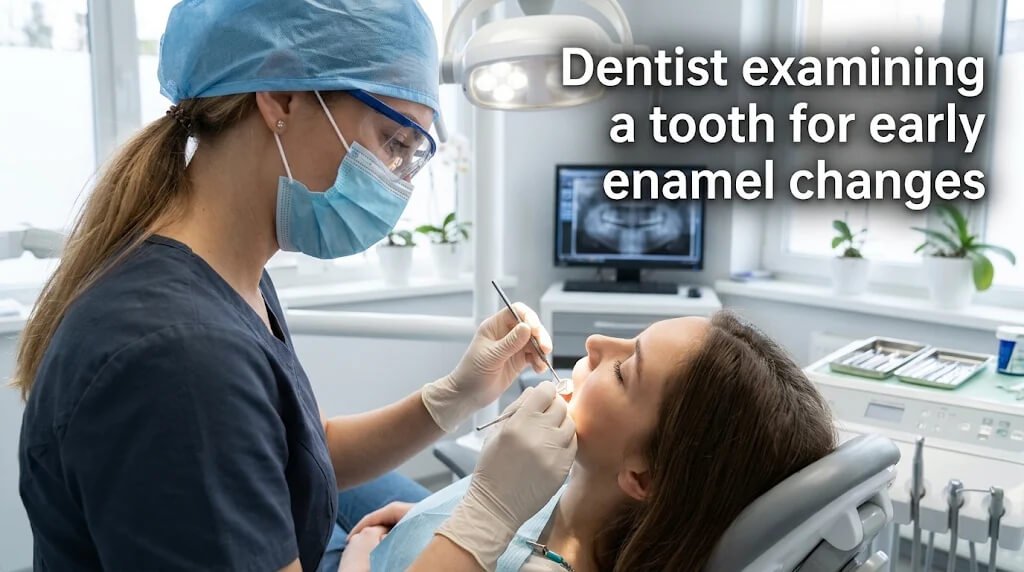
A dentist can check whether a white spot is an early lesion, whether a cavity has formed, and whether erosion or grinding is present. Depending on the finding, options may include preventive care, fluoride treatments, changes to oral habits, or restorative treatment.
What causes enamel damage?
Finding the cause matters because the right response depends on the type of damage. A supplement will not help much if the underlying problem—such as frequent acid exposure or nighttime grinding—continues.
Common contributors include:
- Frequent sugary foods or drinks: Mouth bacteria can produce acids that contribute to tooth decay.
- Acidic drinks and foods: Frequent exposure may erode enamel over time.
- Dry mouth: Lower saliva flow may reduce the mouth’s natural protection.
- Teeth grinding or clenching: Repeated force can wear or crack teeth.
- Reflux or repeated vomiting: Stomach acid can expose teeth to strong acid.
- Poorly fitting dental appliances or brushing habits: Mechanical wear can have more than one cause.
- Some medical conditions or medicines: These may affect saliva, oral health, or nutrient levels.
The NIDCR information on tooth decay describes how plaque bacteria and acids contribute to decay. If grinding, reflux, vomiting, or dry mouth may be involved, tell your dentist. Addressing the cause can be as important as treating the tooth.
Does hydroxyapatite rebuild enamel?
Hydroxyapatite is a mineral found in teeth and bones, and some toothpastes contain a manufactured form of it. These products are intended for topical use, not as a nutritional supplement. Research on hydroxyapatite toothpastes is an active area, but product formulations and evidence can differ.
Do not assume a product will regrow missing enamel or treat a cavity. Ask your dentist whether a particular toothpaste suits your needs, especially if you have active decay, high cavity risk, or sensitivity. If your dentist recommends fluoride toothpaste, do not stop using it based on a product claim without discussing the change.
How to choose a supplement safely
Before buying a supplement for enamel, ask what problem you are trying to solve. If a dentist has identified early mineral loss, the treatment plan may focus on fluoride, oral hygiene, diet, or follow-up—not a general supplement. If a clinician suspects a nutrient deficiency, they can advise whether testing or supplementation makes sense.
Use this checklist:
- Identify the dental issue first. A cavity, acid erosion, and a nutrient deficiency are not the same problem.
- Check with a clinician before using high-dose products. This matters if you take medicines, have kidney disease, are pregnant, or have another health condition.
- Read the label carefully. Check the serving size and total amount from all products you take.
- Avoid “regrows enamel” promises. No supplement can restore a missing piece of adult enamel.
- Prioritize proven oral care. Supplements should not replace brushing, interdental cleaning, fluoride advice, or dental visits.
If you are considering supplements because of tooth pain or a visible hole, make a dental appointment instead of trying a supplement first. Pain may have causes that need prompt care.
When to see a dentist
Book a dental visit if you notice a persistent white or brown spot, a visible hole, a chipped tooth, ongoing sensitivity, pain when biting, or a change in tooth shape. A dental professional can examine the tooth and recommend a plan based on its condition.
Seek urgent dental advice for severe pain, swelling, fever, facial swelling, or trouble swallowing or breathing. Those symptoms should not be managed with vitamins or home remedies.
Coach’s Tip: Treat supplements as a way to address a confirmed nutritional need—not as dental repair. For enamel protection, consistent brushing with fluoride toothpaste, fewer repeated acid exposures, and regular dental care are more practical starting points.
Common Mistake: Taking calcium or vitamin D because a tooth looks worn, while continuing frequent acidic drinks or delaying a dental exam. The supplement may not address the cause, and a dentist may need to treat damage that is already present.
FAQ
Can vitamins rebuild tooth enamel?
No vitamin can regrow adult enamel that has been physically lost. Nutrients such as calcium and vitamin D support normal body functions, but they are not substitutes for dental treatment. If you think a deficiency may be involved, ask a healthcare professional rather than taking high doses on your own.
Can calcium supplements repair enamel?
Calcium supplements do not fill cavities or rebuild enamel that has worn away. Calcium is important for normal mineral health, but a supplement is useful only when it is appropriate for your needs. A dentist can identify the dental problem, while a clinician can advise on calcium intake.
Does vitamin D help remineralize teeth?
Vitamin D helps the body absorb calcium, but taking it is not a direct treatment for enamel damage. If you have a deficiency, a clinician can advise on treatment for your overall health. For early enamel mineral loss, dental care and fluoride recommendations are more directly relevant.
Can enamel grow back after erosion?
No. Once enamel has been physically worn away, it does not grow back. Early mineral loss may sometimes be reversed or slowed, but erosion that has removed enamel needs a dentist’s assessment. Treatment may focus on protecting the remaining tooth and managing the cause.
What is the best supplement for tooth enamel?
There is no supplement proven to regrow missing enamel. The right approach depends on whether you have a nutritional deficiency, early mineral loss, a cavity, or erosion. Ask a dentist to identify the issue before spending money on products marketed for “enamel repair.”
How long does enamel remineralization take?
There is no single timeline. It depends on the tooth, the cause of mineral loss, and the care plan. A dentist may monitor early changes over time and recommend fluoride or other preventive steps. If you see a hole, have pain, or notice worsening damage, do not wait for a supplement to work.
Conclusion
Can supplements help rebuild tooth enamel? Not if enamel has already been physically lost. Calcium and vitamin D support normal health, but they do not replace a cavity or repair erosion. Early mineral loss may respond to preventive dental care, including fluoride, good oral hygiene, and fewer repeated acid exposures.
If you have sensitivity, a visible spot, pain, or a chipped tooth, ask a dentist what is causing it. Get professional advice before starting a supplement for a suspected deficiency or taking high doses.