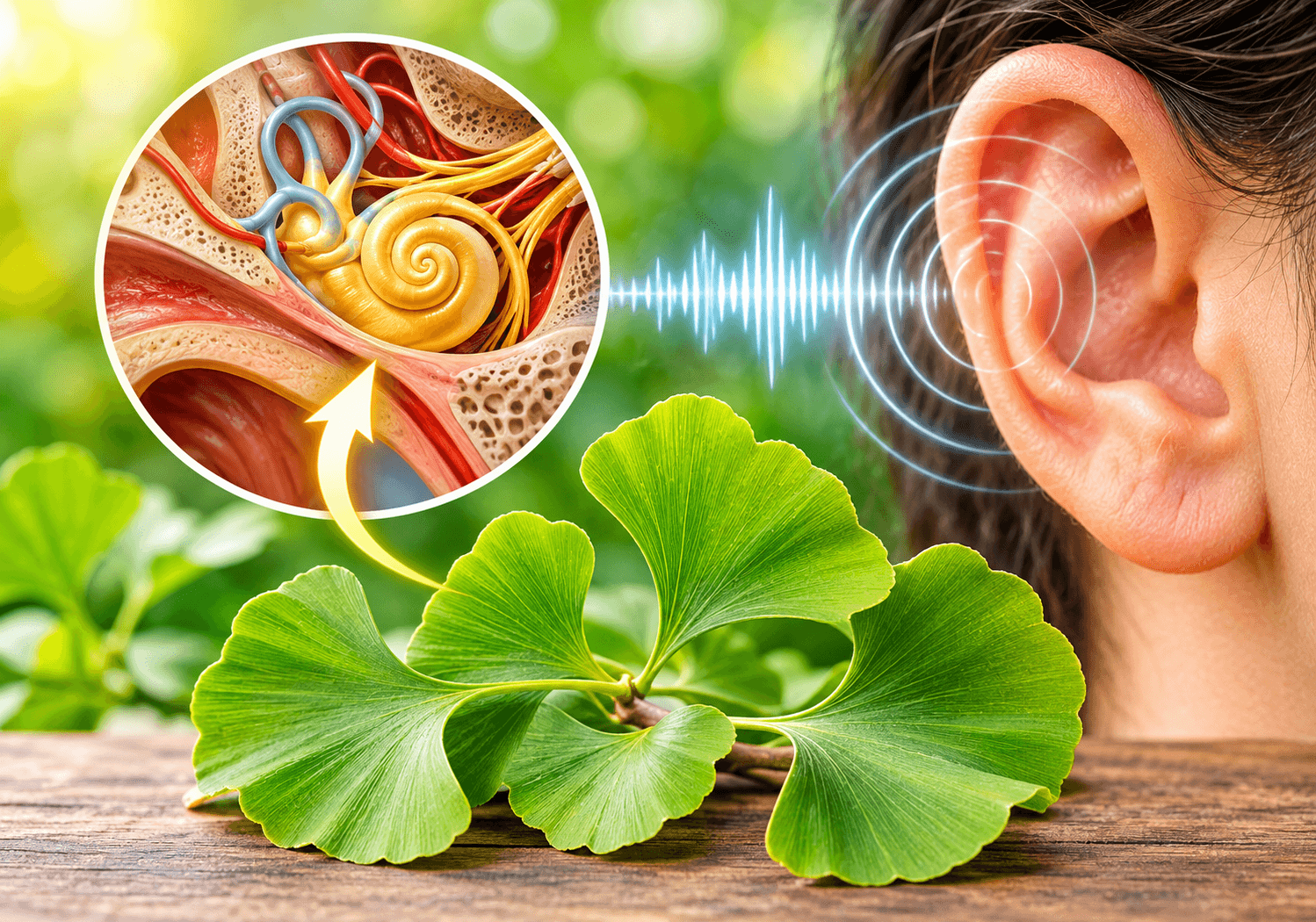
Dealing with a constant ringing, buzzing, or hissing sound in your ears can drain your focus, ruin your sleep, and make quiet rooms feel unbearable. If you are looking into how does ginkgo biloba help tinnitus, you are likely searching for a safe, plant-based way to turn down the volume without relying on heavy prescriptions.
Ginkgo biloba is one of the most widely sold herbal supplements in the world for ear and brain health. However, the scientific evidence behind it is mixed, and the specific extract you choose matters just as much as the dose. Let us break down how this ancient tree extract interacts with your inner ear, what clinical trials actually say about its effectiveness, and how to pair smart supplementation with physical habits that support healthy blood flow.
Quick Answer: Research suggests ginkgo biloba may help tinnitus primarily by improving microcirculation in the inner ear, reducing oxidative stress on delicate auditory hair cells, and protecting nerve pathways. While clinical results are mixed—showing modest benefits mainly for tinnitus linked to poor blood flow or age—standardized extracts like EGb 761 (120–240 mg daily) offer the strongest evidence.
How Does Ginkgo Biloba Help Tinnitus? The Biological Mechanisms
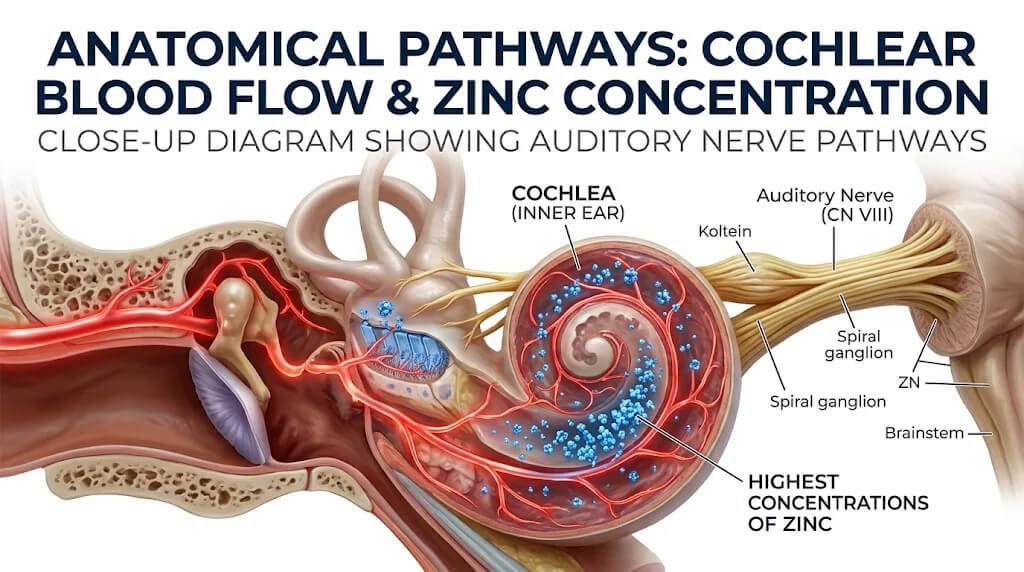
To understand how does ginkgo biloba help tinnitus, you first need to look at what happens inside your ear when ringing starts. Most cases of persistent tinnitus stem from damage or irritation to the microscopic hair cells inside the cochlea—the spiral-shaped hearing organ in your inner ear. When these cells get stressed or starved of oxygen, they send erratic electrical signals to your brain, which your auditory cortex interprets as ringing or buzzing.
Ginkgo biloba leaves contain two primary active compound groups: flavonoid glycosides and terpene lactones (including ginkgolides and bilobalide). Researchers have identified four main ways these compounds interact with your auditory system.
1. Boosting Cochlear Microcirculation
Your inner ear relies on a tiny, fragile network of blood vessels fed by the labyrinthine artery. Because there is very little backup blood supply in this area, even a slight drop in local blood flow can starve cochlear cells of oxygen and nutrients.
Ginkgo biloba acts as a mild vasodilator, helping blood vessels relax and widen. It also inhibits platelet-activating factor (PAF), a compound that causes blood cells to stick together. By keeping blood platelets from clumping and lowering blood viscosity, ginkgo helps blood move smoothly through the narrow capillaries of the inner ear.
2. Fighting Oxidative Stress in the Inner Ear
Loud noise exposure, aging, and metabolic stress generate unstable molecules called free radicals inside the cochlea. Over time, this oxidative stress damages inner ear hair cells and accelerates auditory decline.
The flavonoids in ginkgo biloba act as potent antioxidants. According to the National Center for Complementary and Integrative Health (NCCIH), ginkgo leaf extracts demonstrate strong antioxidant activity that helps neutralize free radicals before they harm cellular membranes.
3. Neuroprotection for the Auditory Nerve
Tinnitus is not just an ear problem; it is also a brain and nerve signaling issue. When auditory hair cells lose function, the auditory nerve and brainstem pathways can become hyperactive to compensate for missing sound frequencies.
Terpene lactones in ginkgo—especially bilobalide—have shown neuroprotective properties in laboratory and animal models. They help stabilize mitochondrial function inside nerve cells, protect myelin sheaths, and regulate neurotransmitters like glutamate, which can otherwise over-excite auditory nerve fibers.
4. Supporting Healthy Nitric Oxide Signaling
Healthy blood vessel linings (the endothelium) produce nitric oxide, a gas that signals smooth muscles in blood vessel walls to relax. Aging, sedentary habits, and high blood pressure blunt nitric oxide production. Ginkgo compounds help preserve endothelial nitric oxide activity, supporting steadier circulation to both the brain and the inner ear.
Coach’s Tip: Think of your inner ear circulation like a garden hose feeding a delicate plant. If you have a kink in the hose—whether from stiff neck muscles, poor cardiovascular fitness, or sluggish blood flow—no supplement will fix the problem alone. Pairing circulation-supporting habits like daily brisk walking with targeted nutrition gives your body the best environment to recover.
What Clinical Research Says About Ginkgo Biloba for Tinnitus
If you read supplement labels, you might assume ginkgo biloba is a guaranteed fix for ear ringing. When you look at controlled human trials, the picture is much more nuanced.
The Divide Between Standardized Extracts and Plain Leaf Powder
One of the biggest reasons clinical studies disagree is product quality. Most positive clinical trials use a specific, patented German extract called EGb 761 (or a bioequivalent extract like LI 1370). These extracts are strictly standardized to contain:
- 24% flavone glycosides
- 6% terpene lactones
- Less than 5 parts per million (ppm) of ginkgolic acid (a natural compound in raw ginkgo that can trigger allergic reactions and stomach upset)
When researchers test plain, unstandardized ginkgo leaf powder, results are consistently poor because the active compounds are too weak or inconsistent to reach therapeutic levels in the bloodstream.
Key Findings from Major Reviews and Trials
- Cochrane Systematic Reviews: A major review published in the Cochrane Database of Systematic Reviews evaluated multiple randomized controlled trials on ginkgo biloba for tinnitus. The authors concluded that for people whose primary complaint is isolated tinnitus with no underlying cognitive or circulatory impairment, ginkgo biloba does not reliably outperform a placebo across the general population.
- Subgroup Benefits (Vascular and Age-Related Cases): A review indexed on PubMed Central (PMC) examining standardized EGb 761 found a different pattern when looking specifically at older adults experiencing tinnitus alongside mild cognitive decline or cerebral insufficiency (reduced blood flow to the brain). In these trials, patients taking standardized EGb 761 showed statistically meaningful reductions in tinnitus loudness and annoyance compared to placebo groups.
- Head-to-Head Comparisons: Clinical studies comparing EGb 761 to pentoxifylline (a prescription medication used to improve blood flow) found that standardized ginkgo produced comparable improvements in tinnitus scores with fewer gastrointestinal side effects.
| Study / Source | Extract Tested | Key Findings for Tinnitus | Best Candidates Based on Data |
| Cochrane Review (Sereda et al.) | Various extracts (mostly EGb 761) | Limited evidence of benefit over placebo for primary, isolated tinnitus in general adults. | Not recommended as a universal standalone cure. |
| Von Boetticher Review (PMC) | Standardized EGb 761 (120–240 mg/day) | Significant improvement over placebo in trials using strict EGb 761 standardization. | Adults with vascular-related or age-associated tinnitus. |
| Geriatric & Cognitive Trials | Standardized EGb 761 | Reduced tinnitus severity scores alongside improvements in memory and blood flow. | Older adults with mild cognitive impairment and ear ringing. |
Understanding Your Tinnitus Type: Who Responds Best?
Tinnitus is a symptom, not a single disease. Asking how does ginkgo biloba help tinnitus works best when you match the mechanism of the herb to the root cause of your ear ringing.
1. Vascular and Age-Related Tinnitus (Moderate Potential)
If your tinnitus developed gradually as you got older, or if you have risk factors for sluggish microcirculation—such as mildly elevated blood pressure, cold hands and feet, or a history of sedentary desk work—standardized ginkgo biloba makes physiological sense. Its vasodilating and antioxidant actions directly target microvascular aging in the cochlea.
2. Noise-Induced Tinnitus (Low to Moderate Potential)
If your ringing started after years of loud concerts, power tools, or gunfire, the microscopic hair cells in your inner ear have suffered physical trauma. While ginkgo’s antioxidant properties may help protect remaining healthy cells from further oxidative stress, it cannot regrow dead cochlear hair cells.
3. Somatic Tinnitus (Low Potential from Supplements Alone)
Somatic tinnitus happens when physical tension in your jaw, neck, or upper back alters nerve signals entering the brainstem’s dorsal cochlear nucleus. If your ringing changes pitch or volume when you clench your jaw, press on your temples, or turn your head, your issue is mechanical. Supplements will not release a tight sternocleidomastoid muscle or an overworked temporomandibular joint (TMJ).
4. Pulsatile Tinnitus (Requires Immediate Medical Evaluation)
If you hear a rhythmic whooshing, thumping, or pulsing sound that matches your exact heartbeat, you likely have pulsatile tinnitus. This points to turbulent blood flow near the ear—often tied to blood vessel narrowing, high blood pressure, or sinus issues—and requires a doctor’s exam rather than over-the-counter supplements.
Dosage, Standardization, and Timeline: How to Take Ginkgo Biloba Safely
If you and your doctor decide to test ginkgo biloba for ear ringing, using the wrong dose or quitting after ten days will leave you guessing whether it works.
Practical Dosing Protocol
- Standardized Extract Ratio: Look for a 50:1 standardized leaf extract listing 24% flavone glycosides and 6% terpene lactones on the Supplement Facts panel.
- Daily Dose: Clinical trials typically use 120 mg to 240 mg per day.
- Timing and Split Dosing: Split your daily total into two doses—for example, 60 mg to 120 mg with breakfast and 60 mg to 120 mg with dinner. Taking it with food reduces the chance of mild stomach upset, and splitting the dose keeps blood levels steady across 24 hours.
- Trial Timeline: Microcirculation and nerve cell stabilization take time. Most clinical studies run for 8 to 12 weeks before evaluating results. If you notice zero change in tinnitus volume, pitch, or sleep disruption after 12 full weeks at 240 mg per day, continuing the supplement is unlikely to help.
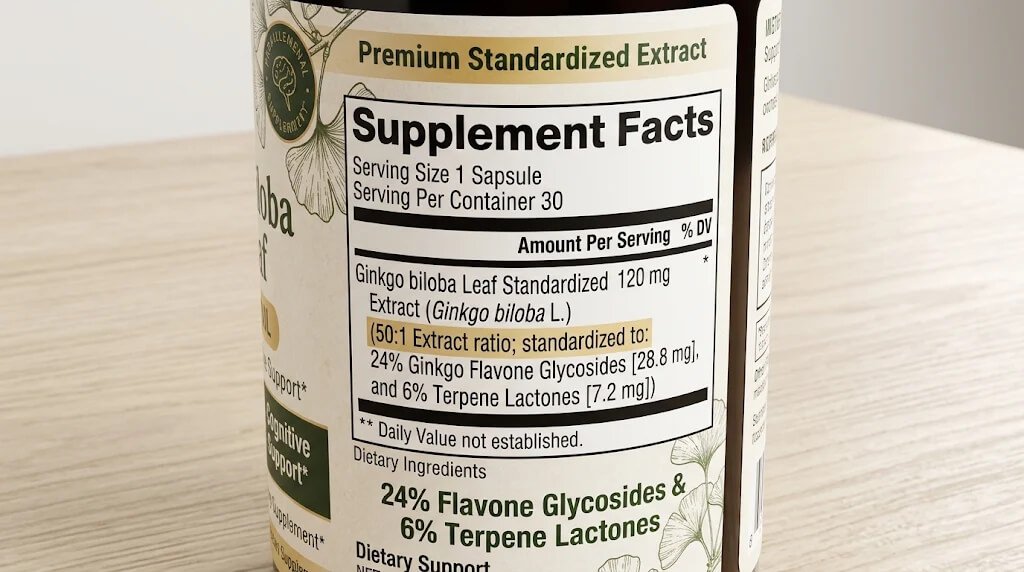
Common Mistake: Buying bargain-bin ginkgo supplements that list “Ginkgo Biloba Leaf Powder” instead of a standardized extract. Raw leaf powder contains minimal active terpene lactones and may contain higher levels of irritating ginkgolic acids. Always verify third-party testing seals (such as USP, NSF, or ConsumerLab) to confirm purity.
Side Effects, Drug Interactions, and Who Should Be Careful
Natural does not mean risk-free. Because ginkgo biloba actively alters blood platelet behavior and liver enzyme activity, it carries real medical precautions.
Common Mild Side Effects
Most healthy adults tolerate standardized ginkgo extract well, though a small percentage experience:
- Mild headaches during the first week
- Stomach upset, nausea, or loose stools
- Dizziness or lightheadedness
- Mild allergic skin reactions
Serious Drug Interactions
According to the Mayo Clinic guide on Ginkgo, ginkgo biloba can interact with several common medications:
- Blood Thinners and Antiplatelets: Warfarin (Coumadin), clopidogrel (Plavix), apixaban (Eliquis), and daily aspirin. Because ginkgo slows blood clotting, combining it with blood thinners increases the risk of bruising and dangerous bleeding.
- NSAID Pain Relievers: Regular use of ibuprofen or naproxen alongside ginkgo also raises gastrointestinal bleeding risk.
- Antidepressants (SSRIs and MAOIs): Ginkgo may alter serotonin pathways and interact with certain mood medications.
- Anticonvulsants: High doses may reduce the effectiveness of anti-seizure drugs.
- Blood Pressure and Diabetes Medications: Ginkgo can slightly shift blood pressure and blood sugar levels, requiring closer monitoring.
Who Should Avoid Ginkgo Biloba
- Anyone scheduled for surgery or dental extractions (stop taking ginkgo at least 2 weeks prior to any procedure).
- People with diagnosed bleeding disorders.
- Pregnant or breastfeeding women, due to insufficient safety data.
- Anyone who eats raw or roasted ginkgo seeds (seeds contain ginkgotoxin, which can trigger seizures and is toxic).
If you take daily medications or manage a chronic health condition, check with your doctor or pharmacist before adding ginkgo biloba to your routine.
A Coach’s Circulation & Neck Mobility Routine to Support Ear Health
As a strength and conditioning coach, I remind clients that supplements only provide raw materials—movement is what pumps blood through your body. Since inner ear health and somatic tinnitus are tightly linked to cardiovascular blood flow and upper-neck tension, combining daily cardio with targeted neck mobility often delivers better relief than a capsule alone.
This simple 15-minute daily routine requires zero gym equipment and fits easily into a morning or evening schedule.

Part 1: Low-Impact Zone 2 Cardio (10 Minutes)
Brisk walking, cycling on a stationary bike, or using an elliptical at a conversational pace boosts cardiac output and triggers nitric oxide release throughout your blood vessels without spiking stress hormones.
- Target Effort: 60–70% of your maximum heart rate (you should be able to speak in full sentences, though slightly breathless).
- Distance / Pace Goal: Aim for a brisk 0.5 to 0.75 miles (0.8 to 1.2 km) in 10 minutes, or build up to 20–30 minutes most days of the week.
- Why It Helps: Steady aerobic work improves systemic endothelial function, helping blood reach small peripheral capillaries—including those feeding the cochlea.
Part 2: Cervical & Jaw Decompression Drills (5 Minutes)
Perform these three slow, controlled movements once or twice a day to release tension around the base of your skull and jaw.
| Exercise | Sets & Reps | Tempo & Hold | Target Area & Coaching Cue |
| 1. Seated Chin Tucks | 2 sets of 8–10 reps | 2 sec back, 3 sec hold, 2 sec return | Deep neck flexors & suboccipitals. Glide your chin straight back like making a double chin without tilting your head up or down. |
| 2. Upper Trapezius Stretch | 2 sets per side | Hold 20–30 seconds per side | Side of neck & top of shoulder. Sit on your right hand to anchor the shoulder down, then gently tilt your left ear toward your left shoulder. |
| 3. Controlled Jaw Hinge (Rocabado 6×6) | 1 set of 6 reps | 3 sec open, 3 sec close | Temporomandibular joint (TMJ). Rest the tip of your tongue on the roof of your mouth just behind your front teeth, then slowly open and close your jaw without letting your tongue drop. |
Easier Version (Regression): Perform chin tucks while lying flat on your back on a firm bed or yoga mat with your head resting on a thin towel. The floor gives you instant feedback so you do not over-strain.- Harder Version (Progression): Add a light resistance band loop around the back of your head during chin tucks, holding the ends in front of your face to build deep cervical endurance.

If you want to support overall circulation and stamina without relying on stimulants that can spike tinnitus volume, read our guide on how to improve daily energy without caffeine.
Other Evidence-Based Ways to Manage Tinnitus Naturally
Ginkgo biloba works best as one piece of a broader recovery strategy. If you want to lower tinnitus volume and protect your hearing long-term, focus on these high-return habits:
- Prioritize Deep, Consistent Sleep: Fatigue amplifies how loudly your brain perceives tinnitus. Poor sleep also raises cortisol and tightens neck and jaw muscles overnight. See our breakdown of how sleep affects metabolism and recovery to build a better wind-down routine.
- Manage Stress and Cortisol Spikes: Emotional stress triggers your fight-or-flight nervous system, constricting peripheral blood vessels and sensitizing the auditory cortex. If stress drives your symptoms, explore our research review on adaptogens for stress and cortisol management.
- Support Vascular Nitric Oxide: Amino acids like L-arginine and L-citrulline serve as building blocks for nitric oxide production. Learn more in our evidence-based guide on how L-arginine supports blood flow.
- Check Key Micronutrient Deficiencies: Low levels of vitamin B12, zinc, and magnesium are linked in clinical literature to higher rates of auditory nerve irritation and noise sensitivity. Check our guide on vitamin B12 and energy metabolism and how zinc supports cellular health for proper dosing ranges.
- Watch Your Caffeine and Sodium Intake: While moderate caffeine does not cause tinnitus for everyone, high doses of stimulants can trigger temporary spikes in ear ringing and disrupt sleep. Read our tips on why caffeine causes energy crashes if you are cutting back.
- Use Sound Enrichment at Night: Complete silence forces your brain to turn up its internal “volume knob,” making ringing seem louder. A simple fan, white noise machine, or low-volume rain track gives your auditory cortex neutral background sound to focus on.
For a broader look at building physical resilience and steady blood flow through daily habits, check out our guide on how to increase energy and stamina naturally.
Frequently Asked Questions (FAQ)
How long does ginkgo biloba take to work for tinnitus?
Most clinical trials evaluating standardized ginkgo biloba extract run for 8 to 12 weeks before measuring symptom changes. Because ginkgo works gradually by supporting microcirculation and reducing oxidative stress rather than numbing nerve signals, you should not expect overnight relief. If no improvement occurs after 12 weeks, discontinue use.
What is the best dose of ginkgo biloba for ringing in the ears?
Clinical research typically uses 120 mg to 240 mg daily of a standardized 50:1 leaf extract (such as EGb 761) containing 24% flavone glycosides and 6% terpene lactones. Splitting the dose into two servings—taken with breakfast and dinner—helps maintain steady blood levels and minimizes mild stomach upset.
Can ginkgo biloba make tinnitus worse?
Ginkgo biloba rarely worsens tinnitus directly, though a small number of users report temporary headaches, dizziness, or heightened awareness of ear pulsing during the first few days due to mild blood vessel dilation. If your ringing spikes or becomes rhythmic like a heartbeat, stop taking the supplement and consult a physician.
Is EGb 761 better than regular ginkgo biloba for ear ringing?
Yes. EGb 761 is a pharmaceutical-grade standardized extract used in the majority of positive clinical studies. It guarantees exact concentrations of active flavonoids and terpene lactones while filtering out toxic ginkgolic acids. Plain, unstandardized ginkgo leaf powders often lack sufficient active compounds to influence inner ear circulation.
Can you take ginkgo biloba with blood thinners or aspirin?
No, you should not combine ginkgo biloba with blood thinners (like warfarin or apixaban), antiplatelet drugs (like clopidogrel), or daily aspirin without strict medical supervision. Ginkgo inhibits platelet aggregation, which slows blood clotting and significantly increases your risk of bruising and serious bleeding.
Does ginkgo biloba help with age-related hearing loss and tinnitus?
Research suggests ginkgo biloba offers the most potential benefit for older adults whose tinnitus accompanies age-related vascular changes or mild cognitive decline. While it cannot restore permanent hair cell loss in the inner ear, its antioxidant and circulatory effects may help protect remaining auditory cells and reduce perceived ringing annoyance.
Conclusion
Understanding how does ginkgo biloba help tinnitus comes down to realistic expectations and smart execution. Standardized extracts like EGb 761 support cochlear microcirculation, neutralize oxidative free radicals, and protect auditory nerve pathways—making them a reasonable 8-to-12-week trial option if your ear ringing is linked to aging or sluggish blood flow. However, ginkgo is not a universal cure, and it will not fix mechanical neck tension or regrow damaged inner ear hair cells.
For the best results, pair a third-party tested standardized extract (120–240 mg daily, cleared by your doctor) with daily brisk walking, gentle neck and jaw mobility drills, and consistent sleep habits. Always consult your physician or pharmacist before starting ginkgo biloba, especially if you take blood thinners or manage cardiovascular conditions.