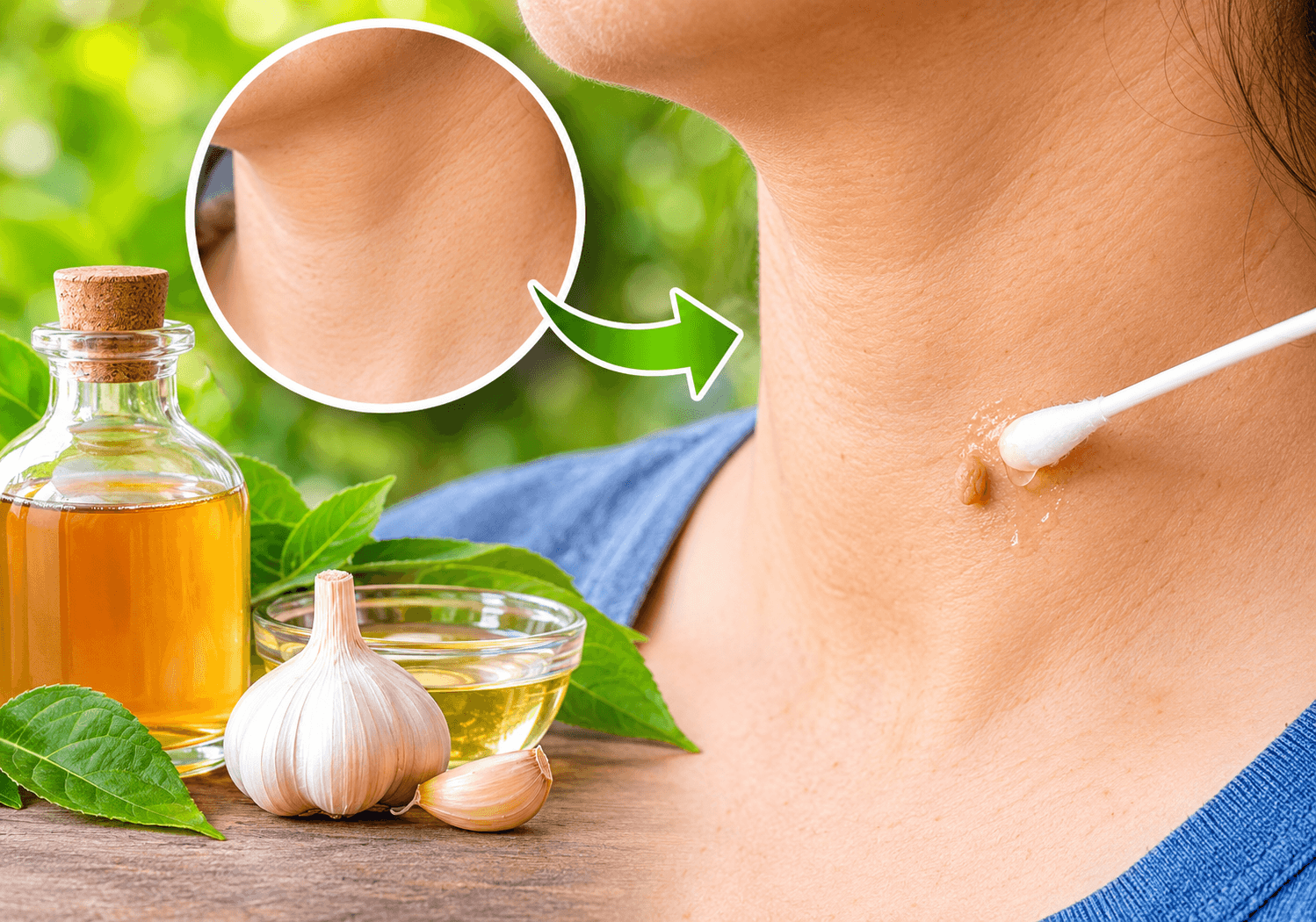
Learning how to remove skin tags on neck naturally is a common goal for many adults seeking gentle, at-home solutions. Skin tags, medically known as acrochordons, are harmless but can be annoying, especially when they catch on clothing, necklaces, or collarbones. As a health and wellness coach, I guide clients toward safe, evidence-based methods that prioritize skin integrity and overall metabolic health. This guide breaks down the most effective natural remedies, the underlying reasons they form, and exactly how to apply them safely at home.
Quick Answer
To remove skin tags on the neck naturally, apply apple cider vinegar or diluted tea tree oil directly to the tag using a cotton swab twice daily. Protect the surrounding skin with a thin layer of petroleum jelly. Consistency is key, as natural methods typically take two to four weeks to dry out the tissue and allow the tag to fall off safely.
What Are Skin Tags and Why Do They Form on the Neck?
Skin tags are small, soft, benign growths of skin that hang off the body by a connecting stalk. According to the Mayo Clinic, they are incredibly common and affect nearly half of all adults at some point in their lives. They are not contagious and are rarely painful unless they are repeatedly rubbed or snagged.
The neck is a prime location for these growths due to constant friction. Collars, scarves, and jewelry repeatedly rub against the delicate skin in this area. This mechanical friction stimulates the epidermis and dermis to overgrow, forming a pedunculated (stalk-like) structure.
Genetics also play a significant role. If your parents developed skin tags, you are more likely to develop them as well. Age is another factor, as skin elasticity decreases and metabolic changes occur over time, making middle-aged and older adults more susceptible. While they are primarily a cosmetic concern, understanding why they form is the first step in addressing them effectively and preventing new ones from appearing.

The Metabolic Connection: Insulin Resistance and Skin Tags
While friction and genetics are primary culprits, there is a well-documented link between multiple skin tags and metabolic health. Research published in the Journal of the American Academy of Dermatology indicates that the presence of multiple acrochordons can be a cutaneous marker of insulin resistance and metabolic syndrome.
When your body becomes resistant to insulin, it produces higher levels of this hormone to keep blood sugar stable. Elevated insulin and insulin-like growth factors can stimulate the proliferation of skin cells and fibroblasts, leading to the development of skin tags. This is why individuals managing prediabetes, type 2 diabetes, or polycystic ovary syndrome (PCOS) often notice an increase in these growths.
Addressing the root metabolic cause is just as important as treating the visible tag. Improving your metabolic health can prevent new tags from forming. You can explore evidence-based strategies to improve insulin sensitivity through dietary adjustments and lifestyle changes. Additionally, learning how to boost metabolic flexibility without crash dieting supports stable blood sugar levels, creating an internal environment where skin tags are less likely to thrive.
Top Natural Remedies: How to Remove Skin Tags on Neck Naturally
If you want to know how to remove skin tags on neck naturally, consistency and patience are your best tools. Natural remedies work by gently drying out the tissue, cutting off its blood supply, or breaking down the proteins holding it together. Below are the most effective, evidence-supported home methods.
1. Apple Cider Vinegar (ACV)
Apple cider vinegar is one of the most popular natural remedies for skin tags. The acetic acid in ACV has mild keratolytic properties, meaning it helps break down the outer layers of skin tissue over time.
- How to apply: Soak a small cotton ball (about 0.5 inches or 1.25 cm in diameter) in raw, unfiltered apple cider vinegar. Place it directly on the skin tag. Secure it with a small piece of medical tape or a bandage.
- Frequency: Leave it on for 15 to 30 minutes, twice daily.
- Expected timeline: The tag will typically turn dark, dry up, and fall off within two to three weeks.

2. Tea Tree Oil
Tea tree oil (melaleuca) is renowned for its antimicrobial and anti-inflammatory properties. It also acts as a natural drying agent, which helps dehydrate the skin tag until it detaches.
- How to apply: Never apply undiluted tea tree oil directly to the skin, as it can cause irritation. Mix one drop of tea tree oil with two drops of a carrier oil, such as coconut oil or olive oil. Dip a cotton swab (roughly 2 inches or 5 cm long) into the mixture and dab it directly onto the tag.
- Frequency: Apply this mixture three times a day after cleansing the area.
- Expected timeline: Results are usually visible in three to four weeks of consistent application.
3. Castor Oil and Baking Soda Paste
This combination creates a thick, drying paste that suffocates the skin tag and draws out moisture. Castor oil contains ricinoleic acid, which may help reduce local inflammation, while baking soda alters the pH of the skin, creating an unfavorable environment for the tag to survive.
- How to apply: Mix equal parts castor oil and baking soda to form a thick paste. Apply a small dab directly onto the skin tag using a clean fingertip or cotton swab. Cover it with a bandage to prevent the paste from rubbing off on your clothes.
- Frequency: Apply once daily, preferably at night before bed.
- Expected timeline: The tag should shrink and fall off within three to five weeks.
4. Iodine Solution
Liquid iodine is a potent antiseptic that can also help dry out skin tissue. It is highly effective but requires careful application to avoid staining or irritating the healthy skin around the tag.
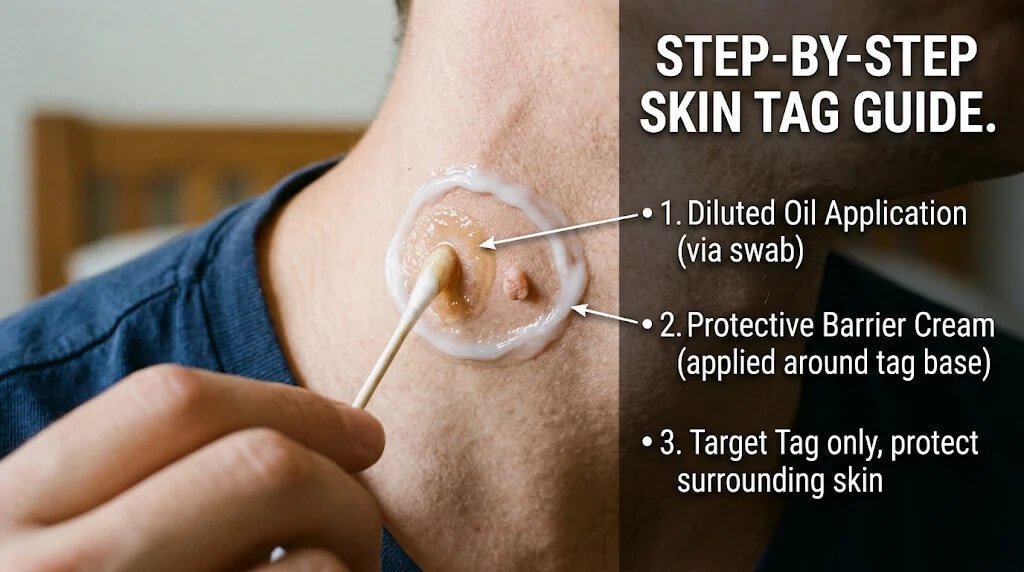
- How to apply: First, apply a thin layer of petroleum jelly (about 0.1 inches or 0.25 cm thick) in a circle around the base of the skin tag to protect the surrounding skin. Then, use a toothpick or fine cotton swab to apply a single drop of liquid iodine directly to the center of the tag.
- Frequency: Apply once daily before bed.
- Expected timeline: The tag will darken and detach within one to two weeks.
5. Fresh Garlic
Garlic contains allicin, a compound with strong enzymatic and anti-inflammatory properties. Some anecdotal and preliminary dermatological observations suggest that fresh garlic can help break down the cells of a skin tag.
- How to apply: Crush a fresh clove of garlic to release its juices. Place the crushed piece directly over the skin tag and secure it with a bandage.
- Frequency: Leave it on overnight and wash the area thoroughly in the morning.
- Expected timeline: Two to three weeks. Note: Garlic can cause chemical burns if left on healthy skin, making the petroleum jelly barrier essential.
6. Vitamin E Oil
Vitamin E is a powerful antioxidant that supports skin healing. While it may not dry out a tag as aggressively as ACV, puncturing a Vitamin E capsule and massaging the oil into the tag can help degrade the tissue gently while promoting healthy skin regeneration underneath.
- How to apply: Puncture a Vitamin E gel capsule and squeeze the oil onto the skin tag. Massage it gently for 30 seconds.
- Frequency: Apply twice daily.
- Expected timeline: Four to six weeks. This is the gentlest method, ideal for those with highly sensitive skin. Supporting your skin’s overall repair process can also be enhanced by understanding the best time to take collagen powder for skin absorption.
Common Mistakes and Fixes
⚠️ Common Mistake: Picking or Pulling the Skin Tag
It is incredibly tempting to pull, twist, or attempt to cut off a skin tag with household scissors. Do not do this. Household tools are not sterile, and the neck has a rich blood supply. Cutting a skin tag at home can lead to excessive bleeding, severe bacterial infections, and permanent scarring.
The Fix: Stick to topical, non-invasive natural remedies that allow the tag to necrose (dry out) and fall off on its own. If a tag is large, painful, or bleeding, schedule an appointment with a board-certified dermatologist for professional removal via cryotherapy or surgical excision.
💡 Coach’s Tip: Protect the Surrounding Skin
The skin on your neck is delicate. Whenever you apply an acidic or drying agent like apple cider vinegar or iodine, always create a protective barrier. Apply a ring of petroleum jelly or a thick moisturizer about 0.2 inches (0.5 cm) around the base of the tag. This ensures the active ingredient only targets the unwanted growth, preventing painful contact dermatitis or chemical burns on healthy tissue.
Safety Notes: Who Should Be Careful
While learning how to remove skin tags on neck naturally is generally safe for small, uncomplicated growths, certain situations require professional medical evaluation. The Cleveland Clinic advises seeking a doctor’s care if a skin growth exhibits any of the following “red flag” symptoms:
- It bleeds spontaneously or oozes pus.
- It changes color rapidly (e.g., turning dark red, black, or multi-colored).
- It grows quickly or becomes painful to the touch.
- It is located on the eyelid or very close to the eye.
Furthermore, individuals with compromised immune systems, bleeding disorders, or uncontrolled diabetes should avoid home removal methods entirely. The risk of infection or poor wound healing is significantly higher in these populations.
It is also worth noting that managing overall skin health and inflammation can support your body’s natural healing processes. Incorporating nutrients that support skin hydration, such as those found in omega-3 fatty acids for skin hydration and inflammation, can improve your skin’s resilience during and after the removal process.
Sample Daily Skin Care Routine for Natural Removal
To successfully get rid of neck skin tags, you need a structured, repeatable routine. Here is a practical, daily schedule designed for maximum efficacy and minimal skin irritation.
Morning (7:00 AM)
- Cleanse your neck gently with a mild, fragrance-free face wash and lukewarm water. Pat dry with a clean towel. Do not rub.
- Apply a protective ring of petroleum jelly around the base of the skin tag.
- Using a fresh cotton swab, apply diluted tea tree oil or apple cider vinegar directly to the tag. Let it air dry for 5 minutes before getting dressed.
Afternoon (1:00 PM)
- If possible, reapply the chosen natural remedy during a midday break.
- If you cannot reapply, ensure the area remains clean and dry. Avoid wearing tight collars or heavy necklaces that cause friction.
Evening (9:00 PM)
- Wash the neck area again to remove any daytime sweat or residue.
- Apply the castor oil and baking soda paste, or a fresh application of your chosen liquid remedy.
- Cover the area with a small, breathable bandage to protect your pillowcase and keep the remedy in place overnight.
Consistency is the most critical factor. Missing days will reset the drying process, prolonging the time it takes for the tag to detach.
Frequently Asked Questions (FAQ)
1. How long does it take for a skin tag to fall off naturally?
With consistent daily application of natural remedies like apple cider vinegar or tea tree oil, a skin tag typically dries out, turns dark, and falls off within two to four weeks. Larger tags may take up to six weeks.
2. Are skin tags on the neck a sign of diabetes?
While a single skin tag is usually just caused by friction, the sudden appearance of multiple skin tags can be a cutaneous marker of insulin resistance or metabolic syndrome, which are precursors to type 2 diabetes. Consult a doctor for blood work if you notice many new growths.
3. Is it safe to cut off a skin tag on your neck at home?
No. Cutting a skin tag with household scissors or nail clippers is highly discouraged. It can cause severe bleeding, introduce dangerous bacteria, and lead to permanent scarring or infection. Always use non-invasive topical methods or see a dermatologist.
4. Can weight loss help reduce skin tags on the neck?
Yes. Weight loss can reduce skin folds and friction, which are primary mechanical causes of skin tags. Additionally, losing weight often improves insulin sensitivity, addressing the metabolic root cause of tag formation.
5. Does apple cider vinegar really remove skin tags?
Yes, the acetic acid in apple cider vinegar has mild keratolytic properties. It gradually breaks down the cells of the skin tag, cutting off its blood supply and causing it to dry up and detach safely over a few weeks.
6. Can I prevent new skin tags from forming?
You can reduce your risk by minimizing neck friction (wearing loose collars, removing heavy jewelry), maintaining a healthy weight, and managing blood sugar levels to support optimal metabolic health.
Conclusion
Learning how to remove skin tags on neck naturally is a straightforward process when you rely on evidence-based, gentle methods. Remedies like apple cider vinegar, diluted tea tree oil, and castor oil pastes can effectively dry out these benign growths without the need for invasive procedures. However, success requires strict consistency, proper protection of the surrounding skin, and patience over a period of several weeks.
Remember that your skin reflects your internal health. Addressing underlying factors like insulin resistance and supporting your body with proper nutrition can prevent future tags from forming. If a growth is painful, bleeding, or changing in appearance, skip the home remedies and consult a healthcare professional immediately.