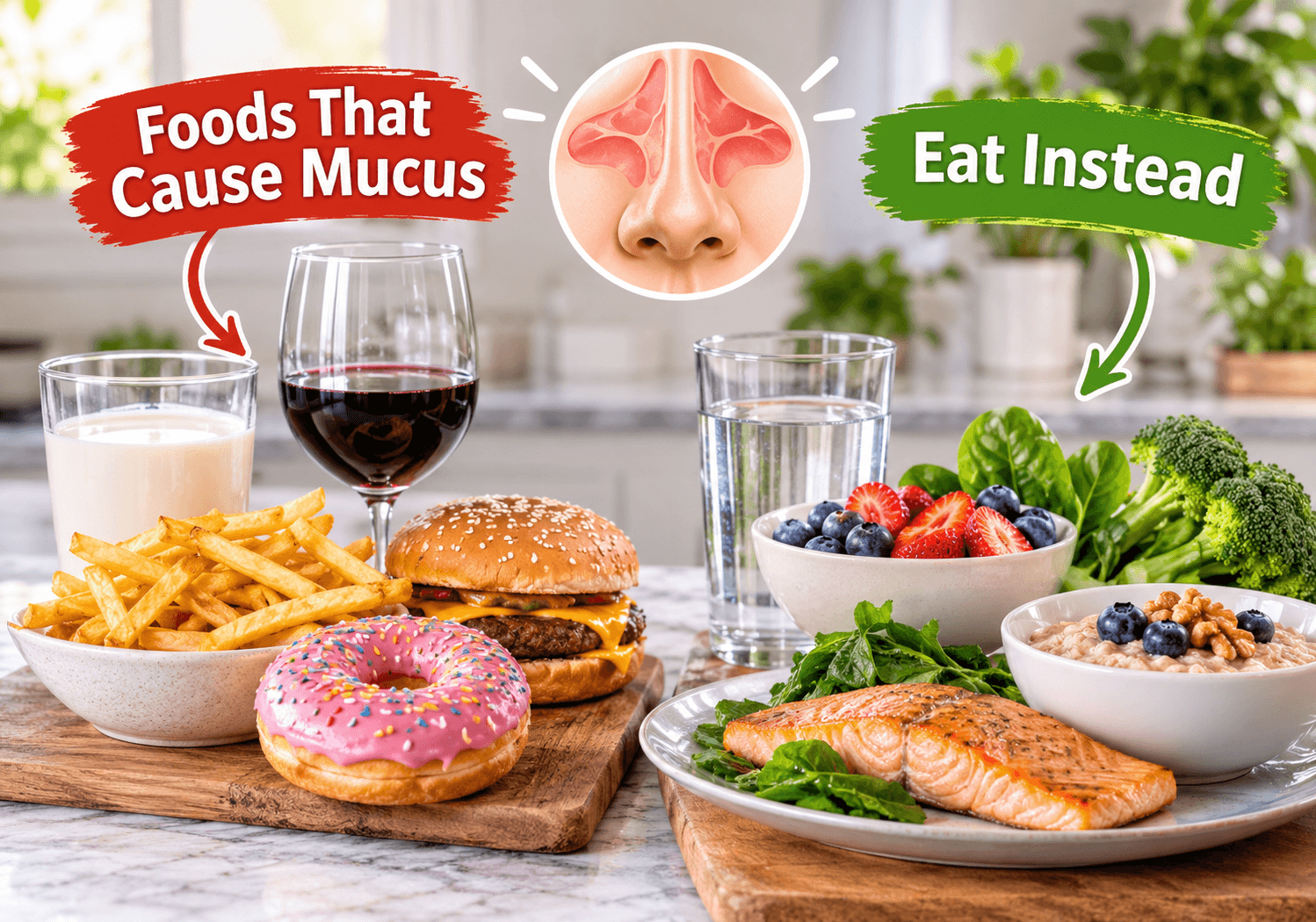
If you constantly clear your throat, wake up congested, or feel like you always have phlegm stuck in your chest, your diet may be part of the problem. Certain foods that cause mucus can make congestion feel worse, even when the underlying cause is a cold, allergies, or acid reflux. The tricky part is that the research does not back every popular claim, including the long-standing idea that milk creates phlegm. As a coach who works with clients on nutrition and recovery, I have seen how much daily food choices affect congestion, breathing comfort, and even how well someone tolerates a hard training session.
This guide breaks down the 10 most common foods that cause mucus, or at least make it feel worse, explains what the research actually says, and gives you a practical anti-mucus diet you can start this week.
Quick Answer: The foods most likely to worsen mucus are alcohol (especially red wine), fried and fatty meals that trigger reflux, sugary foods and drinks, highly processed foods, and excess salt. Dairy triggers a small group of people but does not cause mucus in most. Spicy foods can trigger it in some and help others. Water, warm broth, honey, and anti-inflammatory foods like fruits, vegetables, and omega-3s may help thin mucus. Run a short elimination trial, not a permanent ban on every food.
Why Your Body Makes Mucus (and Why Food Matters)
Mucus is not your enemy. It traps dust, germs, and allergens before they reach your lungs, and it keeps your airways from drying out. Your nose makes clear mucus first, and after 2 to 3 days of a cold it can turn white, yellow, or green. That color change is normal and does not mean you need antibiotics [1].
The problem starts when you produce more mucus than you can clear. That happens with colds, allergies, sinus infections, acid reflux, or chronic conditions like asthma or COPD. Diet does not usually create mucus from scratch, but certain foods can thicken it, trigger nerve-driven congestion, irritate your throat and sinuses, or add low-grade inflammation that makes airways more reactive. Knowing which foods do what helps you adjust without giving up entire food groups for no reason.
The 10 Foods That Cause Mucus (and What to Eat Instead)
These are the foods that show up most often in both the research and in real-world client reports. For each one, I explain why it affects mucus, what the evidence actually supports, and what to try instead.
1. Dairy (Milk, Cheese, Yogurt, Ice Cream)
Dairy tops every list of foods that cause mucus, but the research tells a more nuanced story. In a controlled trial from 1990, 60 volunteers were given a cold virus (rhinovirus-2) and tracked for 10 days. Milk and dairy intake was not associated with increased congestion, cough, or the actual weight of nasal secretions they produced [2]. A 2005 review reached a similar conclusion, noting that sensations of thicker saliva or a coated throat were not specific to cow’s milk, and even appeared with a soy-based drink that had a similar creamy texture [3]. A 2019 review in Archives of Disease in Childhood went further, arguing the milk-mucus myth “needs to be rebutted firmly” because children with asthma and cystic fibrosis often cut out dairy they actually need for calcium and calories [4].
So why does milk feel like it thickens mucus? Mayo Clinic points to texture: when milk mixes with saliva, it briefly coats your mouth and throat, and that lingering sticky feeling can be mistaken for extra phlegm [5].
That said, a small 2019 blinded trial in The Laryngoscope found that a dairy-free diet reduced self-reported nasopharyngeal secretions in adults with persistent throat mucus [6]. The study was small and based on self-reports, but it matches something I see in practice: a minority of people genuinely feel better without dairy, at least for a trial period. If you suspect dairy, run a two-week test instead of cutting it forever.
Coach’s Tip: If you do cut dairy, replace the calcium and protein. Almond or oat milk has far less protein than cow’s milk (roughly 1 g per 8 fl oz / 240 ml cup versus 8 g in cow’s milk). Add fortified plant milks, soy yogurt, or extra protein at other meals so you do not quietly lower your daily protein intake, which matters if you are also training and want to keep your strength numbers.

2. Alcohol (Especially Red Wine)
In a large Swedish survey of nearly 12,000 adults, about 3.4 percent reported nasal symptoms triggered by alcohol, and red wine was the most common trigger, reported by 83 percent of those affected [7]. A Danish survey found similar patterns, with red wine again the top trigger and about 9.9 percent of adults reporting alcohol-induced airway symptoms in the past year [8]. The mechanism in most cases is not a true allergy; it is more likely histamine, sulfites, or other compounds in wine and beer irritating nerve endings in the nose.
If you notice a stuffy or runny nose within an hour of a glass of red wine, you are probably reacting to histamines or sulfites rather than being allergic to alcohol. Try switching to clear spirits with soda water, or limiting alcohol during cold and allergy season when your airways are already inflamed.
3. Sugary Foods and Drinks
Sugar does not directly produce phlegm in humans, but it may contribute indirectly through inflammation. In a 2026 animal study, mice fed a high-sugar diet for just two weeks showed increased airway inflammation, thicker mucus (measured as more goblet cell staining), and worse allergic airway responses compared with mice on a normal diet [9]. Human research is thinner on the direct mucus link but does connect high added-sugar intake to higher levels of inflammatory markers like CRP [10].
I am not saying one cookie will congest you. But if you drink soda, sweetened coffee drinks, or energy drinks daily and also struggle with chronic congestion or asthma, cutting added sugar is one of the more evidence-supported changes you can make. The WHO recommends limiting free sugars to less than 10 percent of daily energy, ideally under 5 percent [11]. Most people find this easier with a structured plan, and I have a guide on managing food cravings without supplements if you need help with the mental side.
Common Mistake: Many people read “sugar causes mucus” and then cut all carbohydrates, including the fiber-rich whole grains and fruit that actually support your immune system and gut health. Keep whole foods with natural sugars (fruit, plain dairy, whole grains) and cut the refined versions (soda, candy, sweetened yogurt, baked goods).
4. Fried and Fatty Foods
High-fat meals slow digestion and can relax the valve between your esophagus and stomach, making acid reflux more likely. When reflux reaches your throat and sinuses, it can cause chronic throat clearing, hoarseness, and a persistent feeling of mucus stuck in your throat, a condition called laryngopharyngeal reflux (LPR). The National Institute of Diabetes and Digestive and Kidney Diseases (NIDDK) lists high-fat foods, along with acidic foods, chocolate, coffee, alcohol, and mint, as common GERD triggers [12].
Beyond reflux, one study of 915 adolescents found that higher total fat intake was linked to thicker airway mucus, independent of weight or other diet factors [13]. If you eat a lot of fried or heavily processed meals and also notice constant throat clearing, try cutting back for a couple of weeks. This helps both your sinuses and your training recovery.
5. Coffee, Caffeine, and Carbonated Drinks
Coffee and soda do not create mucus directly, but they can worsen reflux, which in some people shows up as throat mucus rather than heartburn. Carbonated drinks may also irritate the esophagus. If your main mucus symptom is a lump-in-the-throat feeling or constant clearing, try a week without coffee or soda and see whether it improves. If coffee does not bother you, keep drinking it in moderation; there is no need to avoid it for congestion alone.
6. Excess Salt
A 2017 study in mice found that a high-salt diet increased mucus production in airway cells through a pathway tied to hydration and inflammation in the airway lining [14]. Human data is thinner, but it aligns with what many people report: very salty meals (fast food, takeout, processed snacks) can leave you feeling puffy and congested the next morning. The WHO recommends less than 5 g of salt per day, roughly one teaspoon [11]. If you eat a lot of restaurant food or packaged snacks, trimming sodium may reduce water retention and the feeling of thick, sticky mucus.
7. Spicy Foods (It Depends on You)
Spicy food is a strange one: it can trigger mucus in some people and thin it in others. Eating chili peppers, wasabi, or horseradish can cause a runny nose within minutes, a reflex called gustatory rhinitis. This is not allergy; it is a nerve reflex, and it usually stops soon after you finish eating [15]. On the other hand, some people find spicy food temporarily opens their sinuses.
Interestingly, a Cochrane review found that capsaicin nasal spray (the compound in chili peppers) can improve symptoms in people with non-allergic rhinitis when given under medical supervision [16]. But eating an extra-hot curry is not the same as a clinical nasal spray. If spicy food reliably gives you a runny nose, watery eyes, or postnasal drip, dial it back. If it does not, there is no need to avoid it for congestion alone.

8. High-Histamine Foods (Aged Cheese, Fermented Foods, Cured Meats)
Some people are sensitive to histamine, a compound that builds up in foods that are aged, fermented, or stored for a long time. Symptoms can include a runny or stuffy nose, flushing, headache, and stomach upset, usually within 30 minutes to a few hours after eating. Cleveland Clinic lists aged cheese, wine, beer, sauerkraut, kimchi, smoked or canned fish, and cured meats as common high-histamine foods [17].
Histamine intolerance is controversial, and the American Academy of Allergy, Asthma and Immunology does not currently recognize it as a formal condition. But if you consistently get a stuffy or runny nose after eating aged cheese, a glass of red wine, or a fermented food, a short low-histamine trial may be worth it. Talk to a doctor or dietitian before cutting whole food groups, since many high-histamine foods (fish, fermented vegetables) also offer real health benefits.
9. Processed and Ultra-Processed Foods
Ultra-processed foods often combine several mucus-unfriendly features at once: refined carbs, added sugar, trans fats, excess salt, and low fiber. They also tend to be energy-dense but nutrient-poor, which matters because your immune system relies on steady nutrition to keep airway defenses working. A 2019 study of 915 adolescents found that higher total fat and refined carbohydrate intake correlated with thicker airway mucus, while a diet rich in vegetables, fruit, and fiber was linked to thinner, easier-to-clear secretions [13].
Practical version: swap white bread and sugary cereal for oats, whole-grain toast, or a vegetable omelet. Swap chips and processed snacks for fruit, nuts, or plain yogurt. These changes also support weight management and steady energy, which matter for anyone training. If cravings for the old snacks are the sticking point, this guide on managing cravings during a calorie deficit may help.
10. Food Allergens (If You Have Them)
For a small group of people, specific food allergens cause airway inflammation and excess mucus. Dairy and wheat are the most commonly reported in people with eosinophilic esophagitis, a condition where certain foods trigger inflammation in the esophagus and symptoms like difficulty swallowing, chest discomfort, and persistent throat mucus. Other common food allergens include eggs, soy, nuts, fish, and shellfish.
If you suspect a specific food triggers your congestion, the safest approach is to work with a doctor or allergist. They can arrange proper testing and a supervised elimination and reintroduction plan so you are not guessing and cutting out foods you actually tolerate fine.
Foods That Cause Mucus vs. Foods That Fight It: The Anti-Mucus Diet Side
Now the other side. Here is what to eat and drink to support thinner, easier-to-clear mucus.
Water and hydration. Hydration keeps mucus from becoming sticky and hard to clear. There is no single perfect number, but most adults do well with roughly 2 to 3 liters (67 to 100 fl oz) of fluids daily, more if you train hard or live in a dry climate. Water, herbal tea, broth, and diluted juice all count.
Warm liquids and soup. Hot fluids temporarily increase the speed of nasal mucus clearance. A classic 1978 study in Chest found that hot water sipped slowly increased nasal mucus velocity from 6.2 to 8.4 mm per minute, and hot chicken soup from 6.9 to 9.2 mm per minute, while cold water actually slowed clearance [18]. A 2008 randomized trial found that a hot fruit drink improved subjective symptoms of runny nose, cough, and sneezing in people with cold or flu symptoms, though it did not change objective nasal airflow [19]. In plain terms: warm drinks feel good, and chicken soup may help clear mucus faster than cold drinks.
Honey. A 2007 randomized trial in Archives of Pediatrics & Adolescent Medicine found that buckwheat honey, given before bed, improved nocturnal cough and sleep quality in children with upper respiratory infections better than honey-flavored cough medicine or no treatment [20]. The evidence is not perfect, but honey is safe for adults and children older than 1 year and worth trying for a night-time cough. Never give honey to infants under 12 months due to the risk of infant botulism.
Fruits and vegetables. Colorful produce supplies vitamin C, vitamin A, and other antioxidants your immune system uses to keep airway linings healthy. The WHO recommends at least 400 g (about 5 portions) of fruits and vegetables per day [11]. Foods often mentioned for mucus support include citrus fruits, berries, kiwi, leafy greens, bell peppers, carrots, broccoli, and garlic.
Note that vitamin C supplements do not prevent colds in the general population, though regular supplementation may modestly shorten their duration (about 8 percent in adults and 14 percent in children), and they do not help once symptoms have already started [21]. Food sources are still the better option.
Omega-3 fatty acids. Omega-3 fats from fish, walnuts, and flaxseed have anti-inflammatory properties, and some research links higher intake to thinner airway secretions. Aim for two servings of oily fish per week (salmon, sardines, mackerel), or use walnuts and ground flaxseed if you prefer plant sources.
Spicy foods (again, for some people). Capsaicin from chili peppers can temporarily thin and move mucus, which is why a bowl of spicy pho or a hot-sauce-laden meal can make your nose run for a few minutes. If this helps you rather than bothers you, there is no reason to avoid it. Just note it is a short-term effect, not a cure.
Foods to be cautious with, even if they seem anti-mucus. Some foods get promoted as mucus-busters online, but the evidence is thin or the trade-offs matter. Pineapple contains bromelain, an enzyme sometimes marketed for mucus, but high-quality human evidence is limited. Apple cider vinegar is claimed to thin mucus but has no solid research support. Probiotics may help respiratory health over time, but results are mixed and not strong enough to call them a mucus remedy.
How to Do a 2-Week Anti-Mucus Diet Trial
Rather than cutting every food on the list, run a focused elimination. Here is how I would set it up with a client.
Step 1: Keep a 3-day food and symptom diary. Write down everything you eat and drink, and note any congestion, throat clearing, postnasal drip, cough, or runny nose, with a rough severity (1 to 3). Do this before you change anything, so you have a baseline.
Step 2: Cut the two or three biggest suspects. For most people that means dairy, alcohol, and added sugar. Pick two to three, not ten. Removing ten foods at once makes it impossible to tell what actually caused improvement.
Step 3: Hold the elimination for 2 weeks. Some people feel a difference in 3 to 5 days; for others it takes the full 2 weeks. Do not add the foods back early.
Step 4: Reintroduce one food at a time, every 3 days. Add back one suspect food for a full day, then track symptoms for the next 2 days. If nothing changes, that food is probably not your trigger. If you feel more congested or notice more throat clearing, that is your signal.
Step 5: Keep what works, drop what does not. Most people find that one or two foods, not all of them, drive their mucus symptoms. Keep those out (or limit them), and keep everything else in your diet.
Coach’s Tip: Do this trial outside of a heavy training block if you can. Restrictive diets, even short ones, can affect energy, gym performance, and recovery. Run it during a lighter or deload week so you are not fighting fatigue and low blood sugar while also trying to read your congestion patterns.
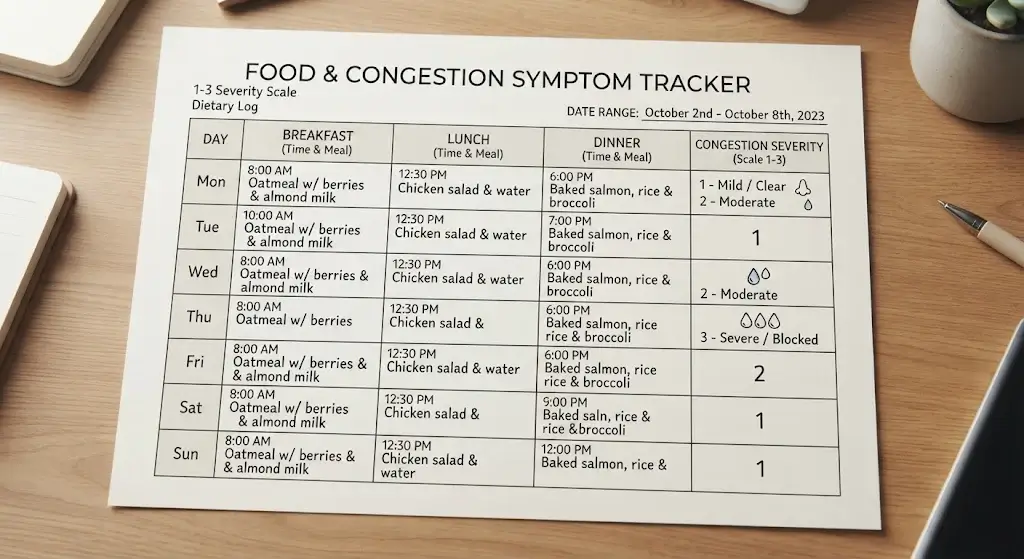
Sample Anti-Mucus Diet Day
Here is what a typical anti-mucus day looks like for me and the clients I work with. It is not a prescription; it is a template showing how to hit fiber, hydration, and protein targets while staying low on added sugar, refined carbs, and processed fats.
Table
| Meal | Time | What to Eat |
| Breakfast | 7 AM | 1 cup (80 g) rolled oats with cinnamon, sliced banana, 2 tbsp (15 g) chopped walnuts, green tea |
| Mid-morning | 10 AM | 1 cup (240 g) plain Greek-style soy or coconut yogurt, 1 cup berries, 1 tsp honey |
| Lunch | 1 PM | Large salad with mixed greens, cucumber, carrot, cherry tomatoes, 4 oz (115 g) grilled chicken, 1/4 avocado, olive oil-lemon dressing |
| Afternoon snack | 4 PM | Apple with 1 tbsp almond butter, herbal tea |
| Dinner | 7 PM | 5 oz (140 g) baked salmon, 1 cup (150 g) roasted broccoli, 1 medium baked sweet potato (5 oz/140 g), garlic and olive oil |
| Throughout | All day | 2.5 to 3 L (84 to 100 fl oz) water; keep alcohol out for the trial |

Related Tips That Go Beyond Food
Nasal saline irrigation (neti pot or squeeze bottle). Flushing your nasal passages with saline helps clear mucus and irritants directly. Mayo Clinic and Harvard Health both note it can reduce congestion and, in some studies, shorten cold symptoms [22] [23]. Use only distilled, sterile, or previously boiled water, never tap water, to avoid rare but serious infections [24].
Steam and humidity. Breathing steam from a hot shower, or running a cool-mist humidifier at night, can loosen mucus and make it easier to clear. This helps more with the thickness of mucus than with the amount your body produces [25].
Rest and sleep. Sleep gives your immune system the time it needs to fight whatever is driving the mucus in the first place. If you have a cold, let yourself rest; there is no way to train or supplement your way through an infection faster.
Zinc and vitamin C (the honest take). Zinc lozenges may shorten a cold by about 2 days according to a 2017 meta-analysis, though the evidence is not strong and zinc can cause stomach upset or a metallic taste [26]. Vitamin C does not prevent colds in the general population, but regular supplementation may modestly shorten their duration [21]. Neither will fix a mucus problem caused by your diet or reflux.
When Mucus Is Not About Food
Diet is one factor, but congestion can also come from colds and other respiratory infections (usually last 7 to 14 days and improve on their own), allergies to pollen, dust mites, pets, or mold, sinus infections, acid reflux reaching the throat (LPR), asthma or COPD, smoking or secondhand smoke, and air pollution, dry indoor air, or strong smells.
If your mucus lasts more than 10 days without improving, comes with a fever that lasts more than 4 days, or you have trouble breathing or shortness of breath, see a healthcare professional. Those are the CDC’s markers for when a cold-like illness needs medical care [1].
Safety Notes
This article is not medical advice. A few important points:
- Do not start a strict elimination diet without talking to a doctor or registered dietitian, especially if you have asthma, allergies, a digestive condition, or any chronic health issue.
- If you are pregnant, breastfeeding, or managing a condition like GERD, COPD, or diabetes, check with your healthcare team before changing your diet significantly.
- If a child in your care has recurring congestion or mucus, talk with a pediatrician before cutting food groups. Children need adequate calories, calcium, and protein for growth.
This article is for general information and is not a substitute for advice from a doctor or physical therapist.
FAQ
Q1: Does milk really cause mucus?
Most likely no. Multiple controlled studies, including a 1990 trial and a 2005 review, found no link between milk intake and increased nasal secretions or congestion. The thick, coating feeling after drinking milk comes from its texture mixing with saliva, not from your body making more mucus. Mayo Clinic notes this sensory illusion is the most likely explanation for the myth.
Q2: What foods increase mucus the most?
The foods with the most consistent evidence are alcohol (especially red wine), foods that trigger acid reflux (fatty, fried, spicy, acidic), and foods high in added sugar, which may worsen airway inflammation in some people. Dairy triggers a small group of people but does not cause mucus in most. High-histamine foods (aged cheese, fermented foods) can also trigger symptoms in sensitive individuals.
Q3: How do you get rid of mucus fast?
Drink plenty of fluids, especially warm liquids, broth, or tea, which temporarily increase the speed of nasal mucus clearance. Use a saline nasal rinse with distilled or boiled water, breathe steam, and rest if you are fighting a cold. Honey may help with night-time coughing. If your mucus is driven by reflux, avoiding fatty meals and eating 3 hours before bed may help more than any food swap.
Q4: Can spicy foods help clear mucus?
Spicy foods can trigger a temporary runny nose in many people, a reflex called gustatory rhinitis, and some find this feels like clearing congestion. It is short-lived, not a real fix. Interestingly, capsaicin nasal spray has been studied in clinical trials for non-allergic rhinitis and may reduce symptoms when used under medical supervision, but eating hot peppers is not the same as using a clinical spray.
Q5: Does sugar cause mucus?
Not directly in humans. But a 2026 animal study found that mice on a high-sugar diet for two weeks had increased airway inflammation and mucus, and human research links high added-sugar intake to higher inflammatory markers. If you have chronic congestion or asthma, cutting added sugar is a reasonable, evidence-aligned change to try, even though it will not fix a cold.
Q6: What is the best drink to thin mucus?
Water and warm liquids. A 1978 study found that hot water sipped slowly increased nasal mucus clearance speed, and hot chicken soup increased it even more, while cold water slowed it. Broth-based soups, herbal tea, and warm water with lemon are good options. Avoid very cold drinks if you are actively congested, and limit alcohol, which can worsen nasal symptoms in some people.
Conclusion
The list of foods that cause mucus is shorter than the internet makes it sound. For most people, the biggest levers are alcohol (especially red wine), fried and fatty meals that feed acid reflux, and added sugar, which may feed airway inflammation over time. Dairy deserves a fair trial rather than a permanent ban, since the research does not support the idea that milk creates phlegm for most people.
The anti-mucus diet is less about restriction and more about what you add: water, warm broth, colorful fruits and vegetables, omega-3 fats, and enough fiber to keep your gut and immune system working well. Run a focused 2-week elimination if you suspect a specific food, and reintroduce things one at a time so you know what actually matters.
If you do that and still deal with chronic throat clearing or congestion, the cause is probably reflux, allergies, or an underlying airway condition rather than food. That is your cue to see a doctor instead of cutting more food groups.