
Thick, stubborn mucus sitting in your chest makes every breath feel heavy and turns simple workouts or daily walks into a chore. Learning how to clear mucus from lungs naturally comes down to combining smart hydration, targeted breathing drills, and light physical movement to mobilize phlegm without exhausting your throat. Before starting any new breathing routine or exercise regimen for chest congestion, check with a doctor or physical therapist—especially if you have asthma, COPD, or an active respiratory infection.
Quick Answer: To clear mucus from your lungs naturally, drink 64 to 96 ounces (1.9 to 2.8 liters) of warm fluids daily to thin secretions, use a cool-mist humidifier, and practice the Active Cycle of Breathing Technique (ACBT). Combine deep diaphragmatic breaths with gentle huff coughs and 15 to 20 minutes of brisk walking to physically move phlegm up and out of your airways.

What the Research Says About Natural Airway Clearance
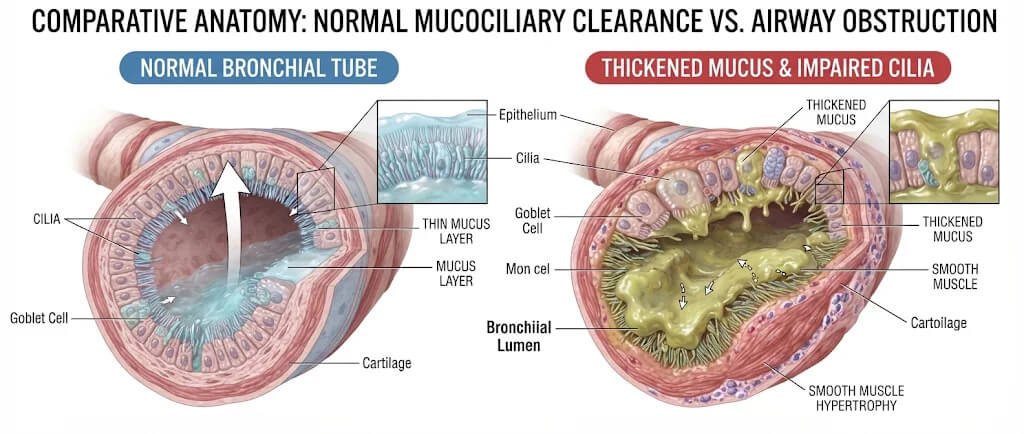
Your respiratory tract relies on a built-in conveyor belt called the mucociliary escalator. Microscopic hair-like structures named cilia sweep a thin layer of protective mucus upward toward your throat so you can swallow or clear it effortlessly. When airway irritation, dry air, or mild respiratory illness thickens that fluid, the cilia bog down and phlegm pools in your bronchial tubes.
Clinical guidelines from the National Heart, Lung, and Blood Institute (NHLBI) highlight airway clearance techniques and pulmonary rehabilitation exercises as foundational ways to manage excess secretions. Rather than relying on harsh, repetitive throat-clearing—which slams your vocal cords together and triggers more inflammation—evidence-based methods use airflow dynamics and gravity to shear mucus off airway walls.
According to research published in PubMed Central (PMC), combining controlled breathing patterns with forced expirations (huffing) moves secretions from small peripheral airways into larger central bronchi. Once mucus reaches the upper airways, a single gentle cough clears it out with far less physical fatigue.
Comparison of Natural Mucus-Clearing Methods
Different techniques target different parts of the mucus-clearing process—some thin the fluid, while others physically push it upward. Use this table to match the right tool to your current symptoms.
| Method | Primary Mechanism | Best Time to Use | Equipment Needed |
| Warm Hydration | Reduces mucus viscosity (thickness) from the inside out | Continuously throughout the day | Water bottle or mug |
| Steam / Humidifier | Moisturizes dry upper airways and loosens sticky phlegm | Morning wake-up and overnight sleep | Cool-mist humidifier or shower |
| Diaphragmatic & Huff Breathing | Creates high-velocity airflow behind mucus to shear it off airway walls | 2 to 3 times daily, especially before bed | None (seated upright) |
| Postural Drainage | Uses gravity to drain lower and middle lung lobes toward the windpipe | Mid-morning or late afternoon (empty stomach) | Firm pillows or yoga mat |
| Low-Impact Cardio | Increases tidal volume and respiratory rate to vibrate airways | Daily for 15 to 30 minutes | Walking shoes or stationary bike |
How to Clear Mucus from Lungs Naturally: Step-by-Step Routine
When coaching clients through heavy chest congestion or post-illness recovery, I treat airway clearance like a structured warm-up. Follow this four-part sequence once or twice a day to loosen and expel phlegm efficiently.
Step 1: Hydrate and Warm Your Airways (10 Minutes)
Thick phlegm clings to bronchial walls like cold honey. Drinking 12 to 16 ounces (350 to 475 ml) of warm water, herbal tea, or clear broth 15 minutes before doing breathing drills lowers secretion viscosity.
Follow your warm drink with 5 to 10 minutes of moist air inhalation. Run a cool-mist humidifier in your room or sit in a steamy bathroom while taking slow, relaxed breaths through your nose.
Step 2: Open the Ribs with Thoracic Mobility (3 Minutes)
Tight chest and upper back muscles restrict how deeply your ribs can expand. Perform 2 sets of 8 slow Seated Cat-Cow Stretches to mobilize your thoracic spine.
- Sit tall on the edge of a chair with your feet flat on the floor, spaced hip-width apart.
- Place your hands on your knees, inhale deeply through your nose, and gently arch your chest forward while squeezing your shoulder blades back (Cow).
- Exhale slowly through pursed lips as you round your upper back and tuck your chin slightly toward your chest (Cat).
- Move at a controlled 3-second inhale and 4-second exhale tempo, resting 20 seconds between sets.
Step 3: Practice the Active Cycle of Breathing Technique (5 Minutes)
The Cleveland Clinic recommends structured breathing cycles to mobilize secretions without causing airway collapse. Perform 3 full rounds of this sequence:
- Breathing Control (30 seconds): Place one hand on your belly and one on your chest. Breathe gently through your nose so your belly rises while your upper chest stays quiet.
- Thoracic Expansion (3 to 4 breaths): Take a slow, deep inhale through your nose for 3 to 4 seconds to pull air behind the trapped mucus. Hold your breath comfortably for 2 to 3 seconds at the top, then sigh the air out passively.
- Huff Coughing (2 to 3 huffs): Take a medium-sized breath in, open your mouth into an “O” shape, and force the air out sharply using your abdominal muscles—just like you are fogging up a pair of glasses.

Coach’s Tip: Focus on squeezing your lower abs inward during the huff cough rather than tensing your throat. You should feel your belly button pull toward your spine and hear a smooth, rushing “haaa” sound instead of a harsh bark.
Step 4: Use Gravity-Assisted Postural Drainage (5 to 10 Minutes)
If you still feel rattling in the lower bases of your lungs, let gravity assist your cilia. Lie on your side on a firm bed or exercise mat with a folded pillow or 6-inch (15 cm) foam wedge under your hips so your chest sits slightly lower than your pelvis.
Stay in this side-lying position for 3 to 5 minutes per side while practicing slow diaphragmatic breaths. Sit up slowly afterward and perform two gentle huff coughs to clear anything that has drained into your central airways.
Common Mistake: Skipping the warm-up hydration and immediately forcing deep, aggressive coughs. Dry, forceful coughing irritates bronchial linings, causes bronchospasm, and leaves your core muscles sore without actually lifting deep phlegm.
Using Light Exercise to Mobilize Chest Phlegm
Movement is one of the most underrated tools for respiratory hygiene. When you elevate your heart rate gently, your lungs expand more fully, pulling fresh air into under-ventilated lower lung segments and physically vibrating loose mucus upward.
If you are recovering from a mild cold or dealing with morning chest congestion, avoid heavy barbell lifting or high-intensity sprints. Instead, aim for 15 to 25 minutes of steady-state aerobic movement at a conversational pace—roughly a 4 or 5 out of 10 on the Rate of Perceived Exertion (RPE) scale.
- Brisk Walking: Walk 0.75 to 1.25 miles (1.2 to 2 km) outdoors or on a treadmill at a steady pace of 2.8 to 3.5 mph (4.5 to 5.6 km/h). Swing your arms naturally to encourage gentle ribcage rotation.
- Recumbent or Upright Cycling: Pedal for 15 to 20 minutes with light resistance so your breathing deepens without making you gasp. Keeping your torso slightly upright prevents compression on your diaphragm.
- Daily Energy Support: Consistent low-intensity movement paired with proper recovery habits also supports overall stamina; you can read more about how to improve daily energy without caffeine if respiratory fatigue has slowed down your workouts.
Easier Regression vs. Harder Progression
- Easier Version (Regression): If standing or walking leaves you winded, perform 5 minutes of seated marching combined with overhead arm raises. Inhale as you raise your arms to shoulder height, and exhale slowly as you lower them.
- Harder Version (Progression): Once your airways feel clearer and your energy rebounds, try 20 minutes of incline walking at a 3% to 5% grade, pairing a 3-step nasal inhale with a 4-step pursed-lip exhale.

Nutrition, Sleep, and Daily Habits That Thin Mucus
What you eat, drink, and how you set up your bedroom directly influence how easily your body clears secretions overnight. Just as sleep affects overall recovery and metabolism, poor sleep posture and dry bedroom air can cause phlegm to pool in your throat by morning.
- Dial In Your Hydration Targets: According to the Mayo Clinic, adequate daily fluid intake keeps mucosal membranes moist. Aim for pale-yellow urine as a simple daily benchmark, adding an extra 12 to 16 ounces (350 to 475 ml) of water if you use a dehumidifier or heated indoor air.
- Eat Anti-Inflammatory Whole Foods: Diets rich in omega-3 fatty acids, colorful vegetables, and lean proteins help regulate systemic inflammation across mucosal tissues. Exploring how omega-3 fatty acids support hydration and inflammation balance offers useful context for keeping epithelial barriers resilient.
- Elevate Your Upper Body at Night: Lying completely flat allows post-nasal drip and bronchial secretions to settle in your upper throat. Prop your head and upper torso up by 6 to 8 inches (15 to 20 cm) using an extra pillow or a wedge pillow to encourage continuous downward drainage while you sleep.
- Run a Cool-Mist Humidifier: Indoor heating drops relative humidity below 30%, drying out your respiratory cilia. Keep bedroom humidity between 40% and 50%, and clean the humidifier tank every two days with vinegar and water to prevent mold buildup.
- Limit Dairy Only If It Triggers Thickness for You: While milk does not physically create more mucus in most people, its creamy texture can temporarily coat saliva and make existing phlegm feel thicker. Swap cold dairy for warm herbal tea or broth during acute congestion.

Safety Notes and When to See a Doctor
Natural airway clearance techniques work well for mild congestion, seasonal allergies, dry indoor air, or the tail end of a common cold. However, excess mucus can also signal an underlying medical issue that requires targeted clinical care.
Stop doing postural drainage or vigorous breathing exercises and contact a healthcare professional promptly if you notice any of these warning signs:
- Discolored or Bloody Sputum: Mucus that turns dark green, rust-colored, or contains streaks of blood.
- Fever or Chills: A temperature above 100.4°F (38°C) accompanied by body aches or night sweats.
- Shortness of Breath at Rest: Wheezing, chest tightness, or difficulty completing full sentences while sitting still.
- Persistent Symptoms: Excess lung mucus or a productive cough that lasts longer than 3 weeks without steady improvement.
- Existing Heart or Lung Conditions: If you have heart failure, severe GERD, uncontrolled high blood pressure, or recent eye/abdominal surgery, skip head-down postural drainage positions unless cleared by your physician.
For further guidance on managing seasonal respiratory symptoms safely, review the CDC guidelines on managing respiratory illnesses.
Frequently Asked Questions
What is the fastest way to clear mucus from lungs naturally?
The fastest natural combination is drinking 12 ounces (350 ml) of warm water, breathing warm steam for 5 minutes, and performing three rounds of the Active Cycle of Breathing Technique. Following deep belly breaths with two gentle huff coughs uses targeted airflow to lift phlegm quickly without irritating your throat.
How do you do the huff cough technique to clear phlegm?
Sit upright, take a medium-sized breath in through your nose, and open your mouth into an “O” shape. Force the air out rapidly using your stomach muscles, as if trying to fog up a mirror. Repeat two to three times, followed by one relaxed normal cough to clear the loosened mucus.
Does exercise help clear mucus from your lungs?
Yes, low-to-moderate aerobic exercise like brisk walking or light cycling increases your breathing depth and heart rate. This expanded airflow reaches lower lung pockets, vibrates airway walls, and stimulates cilia to sweep mucus upward. Keep intensity moderate so you can still speak in full sentences while moving.
Which sleeping position drains mucus from the lungs?
Sleeping on your side with your upper body elevated 6 to 8 inches (15 to 20 cm) on a wedge pillow prevents secretions from pooling in your throat. Side-lying also keeps your airways open and reduces snoring or post-nasal drip irritation compared to lying flat on your back.
How much water should I drink to thin chest mucus?
Most adults do well aiming for 64 to 96 ounces (1.9 to 2.8 liters) of total fluids daily, adjusting upward during illness or dry weather. Warm liquids like herbal tea, lemon water, or clear broth are especially helpful because warmth relaxes throat muscles while hydration lowers mucus viscosity.
Why is mucus stuck in my chest every morning?
During sleep, your breathing slows down, your cough reflex quiets, and you go several hours without drinking water. Dry indoor air thickens respiratory secretions overnight, allowing phlegm to settle in your bronchial tubes until you sit upright, hydrate, and start moving around in the morning.
Final Thoughts on Clearing Lung Mucus Naturally
Mastering how to clear mucus from lungs naturally gives you a reliable, drug-free toolkit whenever dry air, seasonal allergies, or lingering congestion slows down your breathing. Start your mornings with a tall glass of warm water, spend five minutes practicing diaphragmatic breathing and huff coughs, and take a brisk 15-minute walk to get your lungs expanding fully. Keep your bedroom air humidified at night, listen to your body’s recovery signals, and reach out to a clinician if congestion lingers or worsens.