
You sit at your desk, or lie in bed, and suddenly a full breath feels out of reach. Your chest feels tight. You yawn and sigh, but nothing feels satisfying. If you keep asking yourself, “why do I feel like I can’t take a deep breath,” you’re not alone, and the answer is often manageable.
As a strength and conditioning coach, I hear this from beginners and experienced lifters alike. Sometimes it’s stress. Sometimes it’s fitness. Occasionally it’s a medical issue that needs a doctor. This guide helps you sort out which is which, shows you what to do right now, and tells you when to get help.
⚡ Quick Answer
Feeling like you can’t take a deep breath is most often linked to stress, anxiety, fast shallow breathing, or being out of shape. It can also point to lung, heart, or blood conditions. Sudden, severe breathlessness, chest pain, or fainting needs emergency care. If it keeps returning, see a doctor to find the cause.
What That “Can’t Get a Deep Breath” Feeling Really Is
Doctors call the feeling of not getting enough air dyspnea, or shortness of breath. Mayo Clinic describes it as feeling like you can’t get enough air, and says it might also feel like your chest is tight.
Notice what that definition says: it’s a feeling. Your lungs may be working fine while your brain senses that something is off. That’s why two people with the same oxygen level can feel very different. It’s also why this symptom deserves respect without panic.
People describe it in different ways:
- A wall or block at the top of the breath
- Needing to yawn or sigh again and again
- A tight band around the chest
- Breathing that feels “unsatisfying,” even though you’re breathing fine
- Feeling that you must think about each breath
![Person sitting on the edge of a bed with one hand on the chest and one on the belly, showing where the breath is felt]](https://pillsfeed.com/wp-content/uploads/2026/11/Person-sitting-on-the-edge-of-a-bed-with-one-hand-on-the-chest-and-one-on-the-belly-showing-where-the-breath-is-felt.webp)
Why Do I Feel Like I Can’t Take a Deep Breath? The Most Common Causes
Mayo Clinic notes that shortness of breath is most often due to heart or lung conditions, because the heart and lungs move oxygen through the body and remove carbon dioxide. But Mayo also lists mental health conditions and other medical conditions as possible causes. So the list is wide.
Here are the main groups, from most common in everyday life to most serious.
Stress and Anxiety
Mayo says that even people with healthy lungs may notice shortness of breath with stress or anxiety, strenuous exercise, very hot or cold weather, weight gain, and high altitude.
Here’s the pattern I see most. Stress tightens your shoulders and upper chest. You start breathing higher and faster. The breath feels “stuck,” which feels scary, which makes you more tense. It becomes a loop.
Anxiety and the breathing loop feed each other. If you suspect this is your pattern, look for these clues:
- It shows up during busy, stressful, or worried times
- It eases when you’re distracted, such as during a movie or a conversation
- It comes with a racing heart, restlessness, or tingling in the hands
- Doctors have already checked your heart and lungs and found nothing wrong
A good stress and cortisol management routine can help. Breathing practice, covered below, is a direct tool.

Hyperventilation and Overbreathing
This one surprises people. Feeling like you can’t get enough air can happen when you’re actually breathing too much.
Cleveland Clinic explains that hyperventilation is abnormal breathing that is rapid and deep, also called overbreathing, and that it lowers the carbon dioxide level in your blood. The same page notes that most people with hyperventilation syndrome don’t realize they’re breathing abnormally. They just notice the symptoms.
Episodes can happen with strong emotions such as fear, anxiety, or anger. The page also says hyperventilation can itself be a trigger for anxiety and fear. In most cases that’s not dangerous, but Cleveland Clinic notes that severe hyperventilation can rarely cause fainting.
Coach’s Tip: If you notice yourself sighing, gulping air, or breathing through your mouth a lot, the fix often isn’t “breathe deeper.” It’s “breathe slower and lower.” Gentle belly breathing through the nose usually works better than big forced breaths.
Being Out of Shape (Deconditioning)
If you get winded on stairs or a short walk, your fitness may be part of the story. Mayo says exercise, and losing weight if needed, may help lessen shortness of breath caused by being out of condition.
I’ll be direct: this one is fixable, but only after more serious causes are ruled out. Don’t assume it’s “just fitness” if the symptom is new, getting worse, or happens at rest.
Lung Conditions
Mayo lists asthma and COPD among conditions where shortness of breath can be a sign. It also says the long-term lung effects of smoking may first show up as worsening shortness of breath.
Clues that point toward a lung issue include wheezing, a long-lasting cough, and breathlessness that gets worse with activity or exposure to smoke, dust, or cold air. These need a medical diagnosis. You can’t self-treat them with breathing tricks alone.
Heart Conditions and Other Medical Causes
Mayo also lists heart failure among possible causes. Mayo recommends making an appointment if shortness of breath comes with swelling in your feet and ankles.
Other medical conditions can also make breathing feel hard. Anemia, which is a low red blood cell count, is one commonly discussed example . A doctor can sort this out with a physical exam and tests.
Everyday Body Mechanics: Posture and Tight Chest Muscles
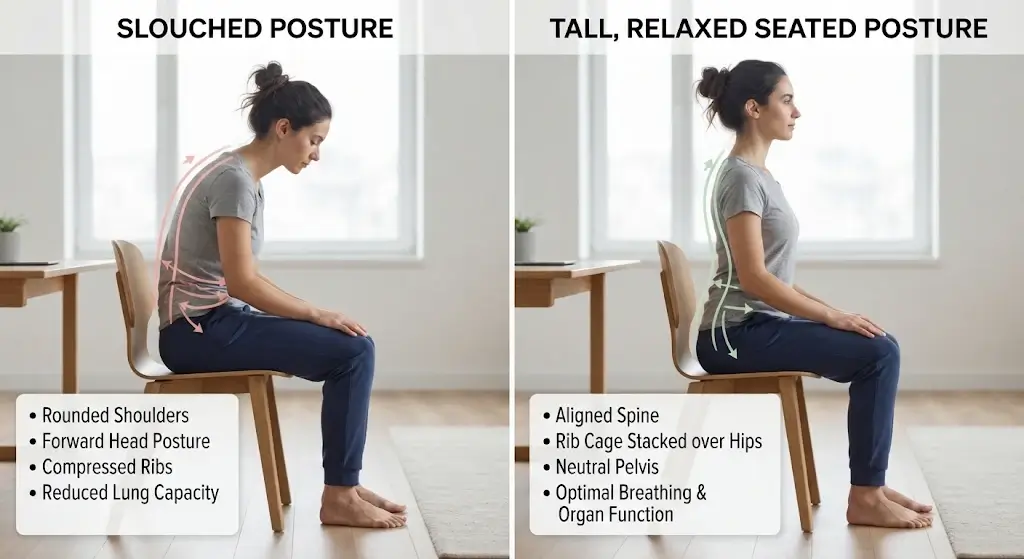
Sitting hunched over a laptop all day compresses the ribcage and can make the breath feel restricted. Many lifters and desk workers also have tight chest and upper-back muscles. In my coaching view, these can make full breaths feel limited .
This is an area where a physical therapist can help. For general posture, see the movement tips later in this article.
Quick Comparison Table
| Possible cause | What it often feels like | Helpful clues | Best next step |
| Stress or anxiety | Tight chest, “stuck” breath, yawning, sighing | Worse when worried; better when distracted | Slow belly breathing; talk to a clinician if frequent |
| Hyperventilation | Fast, deep breaths; dizziness; tingling | Often unnoticed; triggered by strong emotion | Breathing retraining; medical check |
| Low fitness | Winded on stairs or hills | Improves as you get fitter | Gradual walking plan after medical clearance |
| Lung condition | Wheeze, cough, tightness with triggers | Smoke, dust, cold, or illness make it worse | See a doctor for diagnosis |
| Heart or blood issue | Breathless with effort; swelling; fatigue | Ankle swelling; trouble lying flat | Medical care soon |
| Environment | Short of breath in heat, cold, or altitude | Eases when conditions change | Slow down; allow time to adjust |
When It’s an Emergency and When to See a Doctor
This is the most important section of the article. Please don’t skip it.
Mayo Clinic says to call 911 or your local emergency number or get to an emergency department if you have:
- Severe shortness of breath that comes on suddenly
- Shortness of breath with chest pain, fainting, upset stomach, blue lips or nails, or a change in mental alertness
- New shortness of breath after a long period of not being active, such as after surgery, illness, or injury
- New shortness of breath after a long plane or car ride
The same Mayo page also lists trouble breathing when you lie flat, a high fever with chills and cough, and wheezing as reasons to get care. It lists worsening long-term shortness of breath too.
Make a regular appointment if the feeling keeps returning or seems out of proportion to what you’re doing. A Mayo Clinic Health System respiratory therapist says that shortness of breath is not a symptom of getting older. She notes that people sometimes blame age when it’s actually a treatable medical condition. The same article suggests talking to your primary care provider if you’re consistently out of breath on a flight of stairs or have an ongoing cough that leaves you gasping.
Common Mistake: Assuming it’s “just anxiety” and never getting checked. Anxiety is a common cause, but it’s a diagnosis of exclusion. Let a clinician rule out heart, lung, and blood causes first.
A Simple Self-Check Before You Decide
Ask yourself these questions. They don’t replace a medical exam.
- Did it start suddenly and severely? If yes, treat it as an emergency.
- Is there chest pain, fainting, blue lips, or confusion? If yes, call emergency services.
- Does it get worse when you lie flat or with mild effort? If yes, call your doctor soon.
- Does it come mostly during stress and fade when you relax? That pattern fits anxiety or overbreathing, but still mention it to a clinician.
What to Do When You Feel Like You Can’t Take a Deep Breath
If emergency signs are absent and you’re sure you’re safe, the best first tool is slow belly breathing. Cleveland Clinic describes the diaphragm as a large dome-shaped muscle at the base of the lungs. Diaphragmatic breathing helps you use it correctly, which can slow your breathing rate, lower oxygen demand, and cut the effort of breathing .
Cleveland Clinic also says the technique may be easier to learn lying down, and that it can feel tiring at first. If you have COPD, asthma, or anxiety, it suggests asking your provider whether this technique is right for you.
Step-by-Step: Belly Breathing
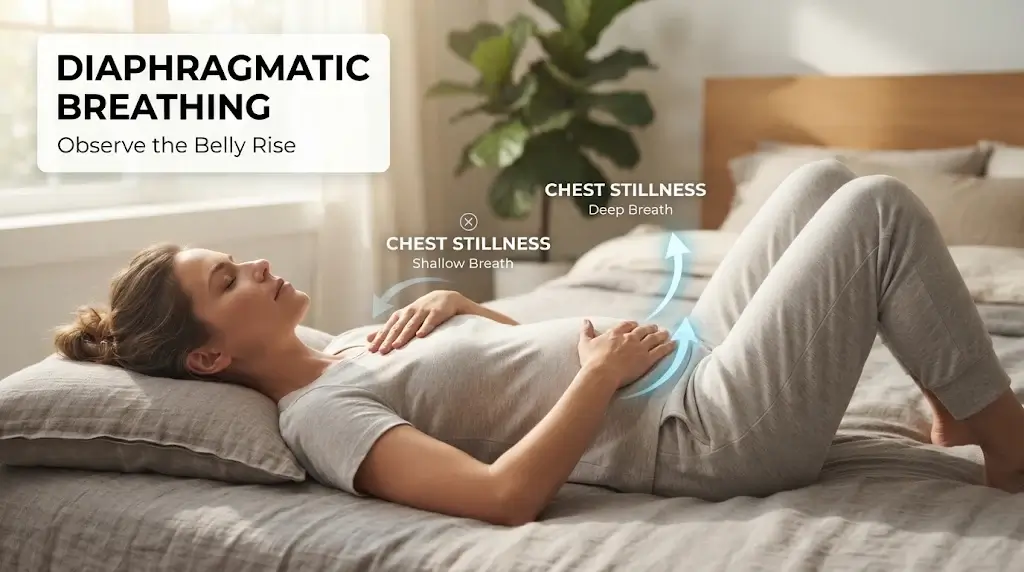
- Get comfortable. Lie on your back with knees bent and a pillow under your head. You can also sit tall in a chair with shoulders relaxed.
- Set your hands. Put one hand on your upper chest and the other on your belly, just below your ribs.
- Inhale slowly through your nose. Aim for about 2-4 seconds. Let your belly rise into your hand. The upper-chest hand should stay as still as possible.
- Exhale gently. Tighten your stomach muscles so your belly moves back in, and breathe out through pursed lips, as if you’re blowing out a candle. Cleveland Clinic’s instructions describe this same pursed-lip exhale with the chest hand staying still.
- Repeat. Keep the pace slow and easy. Don’t force big breaths. If you feel dizzy, pause and breathe normally.
What it should feel like: Calm, quiet, and low. You should feel the belly expand and your shoulders stay soft. It should not feel like gulping.
Coach’s Tip: Don’t chase a “perfect deep breath.” Chasing it keeps you in the loop. Aim for a slow, easy exhale that is a little longer than your inhale, and let the next inhale come on its own.
How Often to Practice
A Cleveland Clinic patient handout hosted by the University of Georgia suggests practicing at first for 5 to 10 minutes about 3 to 4 times per day. Practice when you’re calm, not only during a bad moment. That way the skill is ready when you need it.
Easier and Harder Versions
| Level | How to do it |
| Easier (regression) | Lie down. Do just 3-5 slow breaths, 2-3 times a day. Skip the pursed-lip exhale if it feels awkward. |
| Standard | Sit or lie down for 5 minutes, a few times daily. |
| Harder (progression) | Practice seated, then standing, then while walking slowly. Cleveland Clinic notes you can move to sitting once you’ve gained practice. |
Common Mistake: Pulling your shoulders up toward your ears on every inhale. If the upper hand moves a lot, you’re breathing from the chest again. Go back to lying down and slow things down.
Other Calming Tools
For stress-driven episodes, Cleveland Clinic lists breathing exercises, regular exercise, progressive muscle relaxation, and meditation as techniques that may help prevent hyperventilation episodes. It adds that if breathing exercises aren’t helping, you should contact your healthcare provider.
Pursed-lip breathing is a simple add-on. Cleveland Clinic Abu Dhabi describes pursed-lip and diaphragmatic breathing as techniques that help you get the air you need without working as hard .
Can Exercise Help When You Can’t Take a Deep Breath?
For some people, yes. But the order matters: get checked first if the symptom is new, worsening, or happens at rest. Mayo says to talk with your healthcare professional before starting an exercise program when dealing with long-term shortness of breath.
The CDC says adults need at least 150 minutes of moderate-intensity activity each week and 2 days of muscle-strengthening activity. You don’t have to do it all at once. It can be 30 minutes a day, five days a week, or broken into smaller chunks.
If you’ve been inactive, that target can feel huge. Start smaller.
A Gentle Starter Plan
Use this only after a clinician says you’re cleared to exercise.
| Week | Walk (easy pace) | Frequency | Rest |
| 1 | 10 minutes | 4 days | Rest days between |
| 2 | 15 minutes | 4-5 days | Rest as needed |
| 3 | 20 minutes | 5 days | Add one slightly brisker stretch |
| 4 | 25-30 minutes | 5 days | Aim toward about 1-1.5 miles (1.6-2.4 km) at a comfortable pace |
How it should feel: You should be able to talk in short sentences. A common coaching rule is that if you can’t talk, slow down . Stop and seek care if you get chest pain, dizziness, or severe breathlessness.

Add Strength Training Slowly
Strong back, shoulder, and core muscles can make good posture easier, which supports easier breathing. The CDC lists muscle-strengthening on 2 or more days a week that works all major muscle groups, such as legs, hips, back, abdomen, chest, shoulders, and arms.
A simple beginner template:
- Seated row with a light band or cable: 2 sets of 10-12 reps, 60-90 seconds rest
- Wall push-up (easier) or incline push-up (standard): 2 sets of 8-10 reps
- Goblet squat to a chair with a 5-10 lb (2.3-4.5 kg) dumbbell: 2 sets of 8-10 reps
- Bird dog: 2 sets of 6 slow reps per side
Tempo: Lift for 2 seconds and lower for 3 seconds. Breathing cue: Exhale on the effort and inhale on the way back. Never hold your breath.
Easier: Use no weight or a band. Harder: Add a third set, use heavier dumbbells, or slow the lowering phase to 4 seconds.
Common Mistake: Holding your breath on hard reps. That increases pressure in your chest and can leave you lightheaded. Breathe steadily through every rep.
Everyday Habits That May Help
These are practical coaching tips. They’re meant to support, not replace, medical care.
- Break up sitting. Stand, roll your shoulders, and take a short walk every 30-60 minutes.
- Slow down your exhale. A longer exhale tends to feel calming.
- Breathe through your nose when you can. It naturally slows the pace for most people.
- Avoid smoke, fumes, and allergens. Mayo advises staying away from pollutants, allergens, and toxins as much as possible if you have long-term shortness of breath.
- Be careful with altitude and extreme temperatures. Mayo notes that very hot, humid, or cold conditions may worsen breathlessness caused by lung disease, and that you should give your body time to adjust at higher altitudes.
- Sleep and recovery matter. Poor sleep makes stress feel bigger. See our guide on how sleep affects hormones for more on that link.
- Keep your energy steady. Fatigue can make breathing feel harder. Our tips to increase energy and stamina naturally can help, and so can learning to improve daily energy without caffeine, since caffeine can leave some people jittery.
Who Should Be Extra Careful
Check with a doctor or physical therapist first if any of these apply to you:
- You have known heart, lung, or blood conditions
- You’re pregnant or postpartum
- You’re going through menopause or have noticed new symptoms
- You’re an older adult with health conditions
- You take medicines that may affect breathing
- You feel pain, dizziness, or chest pressure with effort
Don’t start new exercise to “fix” a breathing symptom that hasn’t been checked. If a clinician has given you an action plan, follow it. Mayo also reminds readers to take their medicines because skipping lung and heart medicines can make shortness of breath worse.
Frequently Asked Questions
Can anxiety make you feel like you can’t take a deep breath?
Yes. Mayo Clinic says even people with healthy lungs may notice shortness of breath with stress or anxiety. Anxiety can also trigger fast, shallow breathing, which makes the feeling stronger. Because other conditions can look similar, ask a clinician to rule out heart, lung, and blood causes first.
Why do I keep sighing and yawning to get air?
Sighing and yawning are often part of the “air hunger” loop that comes with stress or overbreathing. Cleveland Clinic notes that hyperventilation, or overbreathing, lowers carbon dioxide levels, and many people don’t realize they’re doing it. Slow belly breathing may help, but frequent episodes deserve a medical check.
When is shortness of breath an emergency?
Get emergency help if breathlessness is severe and sudden, or comes with chest pain, fainting, blue lips or nails, or confusion. Mayo also lists new breathlessness after surgery, a long period of inactivity, or a long flight or car ride. Call 911 or your local emergency number.
What’s the best breathing exercise for this feeling?
Diaphragmatic (belly) breathing is a good first choice. Cleveland Clinic says it can slow your breathing rate and reduce the effort of breathing. Start lying down, keep the upper chest still, and exhale slowly through pursed lips. Ask a provider first if you have COPD, asthma, or anxiety.
Can being out of shape cause shortness of breath?
It can. Mayo says exercise, and weight loss if needed, may help lessen shortness of breath caused by being out of condition. But that’s only after a doctor rules out other causes. Start with easy walking and build up slowly rather than pushing through strong breathlessness.
Should I see a doctor if I can’t take a deep breath?
Yes, if it keeps coming back, is getting worse, or happens at rest or with mild effort. A Mayo Clinic Health System respiratory therapist notes that breathlessness isn’t a normal part of aging. A doctor can check your heart, lungs, and blood to find the cause and a safe plan.
Conclusion
If you’ve been asking, “why do I feel like I can’t take a deep breath,” the honest answer is that it has many possible causes. Stress, overbreathing, low fitness, lung conditions, and heart or blood issues are the main groups. Most of the time the feeling can be improved, but you have to know which cause you’re dealing with.
Start by ruling out the emergency signs. If you’re safe, practice slow belly breathing, build a gentle walking habit, and see your doctor if the problem keeps returning. Don’t chase the “perfect breath.” Aim for slow, calm breathing and steady progress.