
You finish dinner, lie down on the couch, and by the time you’re trying to fall asleep, your stomach looks like you’re six months pregnant. Your jeans are tight, your midsection feels stretched, and you just want it gone by morning.
I’ve coached hundreds of people through this exact frustration. Bloating is one of the most common complaints I hear in the gym, and most of the “fixes” people try online are either useless or make things worse. The good news: you don’t need a magic pill or a 10-hour spa session. A few targeted steps—adjusting what you eat, hydrating the right way, moving your body gently, and setting up your sleep—can noticeably reduce abdominal distension within a few hours.
This guide walks you through a practical, step-by-step routine you can follow tonight. No extreme fasting. No dangerous “detox” drinks. Just evidence-based tweaks that work with your body’s natural fluid and digestive processes.
Quick Answer: How to Debloat Overnight
To reduce bloating by morning, follow these steps: stop eating 3 hours before bed, drink 16–20 oz (475–590 ml) of warm water with a pinch of sea salt and a squeeze of lemon, take a 10–15 minute slow walk, do gentle stretching (cat-cow, child’s pose, knee-to-chest), avoid carbonated drinks, artificial sweeteners, and high-sodium snacks, and sleep on your left side with your upper body slightly elevated. These steps reduce gas, ease peristalsis, and help your kidneys balance sodium and water.
Why You’re Bloating: What the Research Actually Says
Before you can fix bloating, it helps to understand what’s happening inside your abdomen. Bloating is the feeling of fullness, tightness, or visible swelling in the belly. It’s different from constipation, though the two often overlap.
Sodium and fluid retention. When you eat a high-sodium meal—think restaurant dinner, takeout, or a big bowl of ramen—your kidneys hold onto extra water to dilute the salt in your bloodstream. This is a normal osmotic response. Research from the National Kidney Foundation explains that excess sodium pulls water into the interstitial spaces, which can make your midsection look and feel puffy within a few hours.
Gas and fermentation. Carbohydrates that your small intestine can’t fully absorb—like certain sugars, starches, and fibers—travel to the colon, where gut bacteria ferment them. That fermentation produces hydrogen, methane, and carbon dioxide. The Mayo Clinic notes that gas buildup is the most common cause of acute bloating after meals.
Cortisol and stress. Chronic stress elevates cortisol, which can slow gut motility (the wave-like contractions called peristalsis that move food through your digestive tract). Slower peristalsis means food sits longer, ferments more, and produces more gas. The Harvard T.H. Chan School of Public Health has published on how the gut-brain axis links stress hormones to digestive discomfort.
Hormonal shifts. In the week before a menstrual period, progesterone and estrogen fluctuations can cause the body to retain up to 5 pounds (2.3 kg) of extra fluid, according to the American College of Obstetricians and Gynecologists. This is hormonal bloating, and it’s temporary.
Food intolerances and FODMAPs. Certain short-chain carbohydrates—found in onions, garlic, wheat, legumes, and some fruits—can be poorly absorbed in people with sensitive guts. The FODMAPs Research Foundation and peer-reviewed work in the Journal of Gastroenterology and Hepatology confirm that reducing high-FODMAP foods can reduce bloating in susceptible individuals.
Understanding why you’re bloated tonight matters because it tells you which of the steps below will help most.
What Actually Works vs. What Doesn’t
I see a lot of conflicting advice online. Here’s a quick breakdown of what has a reasonable evidence base and what’s mostly hype.
| Strategy | Does It Help? | Why |
| Drink warm water with a pinch of salt | Yes | Replenishes electrolytes, supports kidney fluid balance |
| 10–15 min gentle walk after dinner | Yes | Stimulates peristalsis, moves trapped gas |
| Peppermint or ginger tea | Yes (modest) | Peppermint relaxes smooth muscle; ginger speeds gastric emptying |
| Sleep on your left side | Yes (modest) | Aligns the stomach and colon for easier gas passage |
| “Detox” juice cleanses | No | No evidence; can worsen gas from high sugar load |
| Drinking 4+ liters of water at once | No | Can temporarily worsen distension |
| Laxatives as a nightly habit | No (risky) | Disrupts natural motility; not for occasional bloating |
| Carbonated water / soda | No | Adds gas directly to the GI tract |
| Wearing a tight compression belt to bed | No | Can restrict diaphragm and worsen discomfort |
| Magnesium citrate (200–400 mg) | Yes (modest) | Osmotic effect draws water into the bowel, eases transit |

Your 7-Step Overnight De-Bloat Routine
Here’s the exact sequence I recommend to clients who come in saying, “I ate too much at dinner and I need to look normal by morning.” Do these steps in order, starting about 2–3 hours after your last meal.
Step 1: Stop Eating and Set a 3-Hour Window
The single most important thing you can do is give your digestive system time to work. Aim to finish your last meal at least 3 hours before you plan to sleep. If you ate at 7 p.m., try to be in bed by 10 p.m.
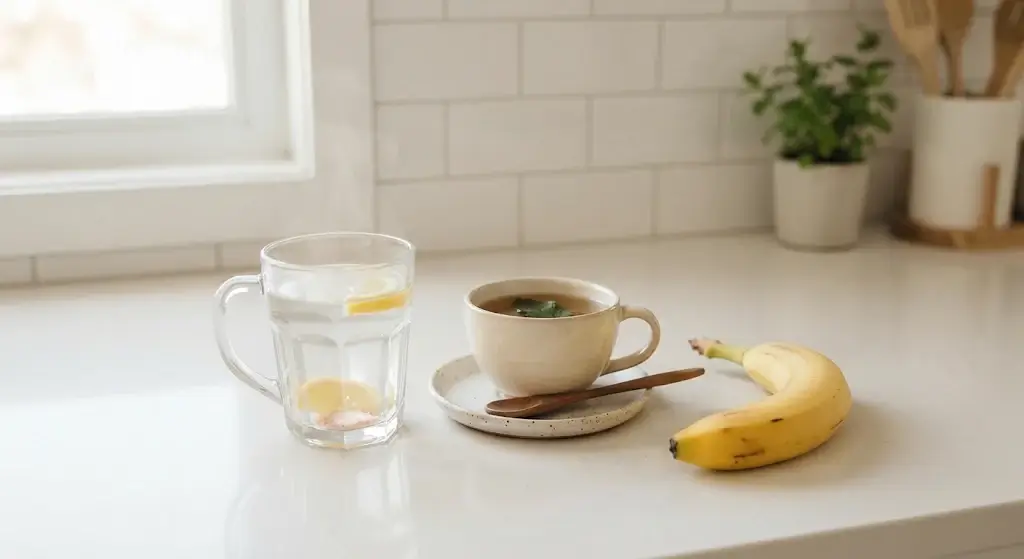
If you’re still hungry, have a small, low-FODMAP snack: a few slices of ripe banana, a small handful of rice cakes, or ¼ cup of plain yogurt (if you tolerate dairy). Avoid onions, garlic, beans, and cruciferous vegetables at this point.
Coach’s Tip: If you’re a late eater by habit, you don’t need to overhaul your entire schedule. Just shift dinner earlier by 60–90 minutes for a few nights and see if morning bloating improves. Small timing changes often matter more than what you eat.
Step 2: Hydrate the Right Way
Drink 16–20 oz (475–590 ml) of room-temperature or warm water. Add a small pinch of sea salt (about ⅛ teaspoon) and the juice of half a lemon. The sodium helps your kidneys regulate fluid balance, and the lemon adds a small amount of citric acid that may support gastric acid production.
What to avoid right now: carbonated water, regular soda, beer, and drinks with artificial sweeteners (sucralose, aspartame, acesulfame-K). Carbonation introduces CO₂ directly into your stomach. Some research in Gut and Liver suggests artificial sweeteners can alter gut microbiome composition and increase gas production in sensitive individuals.
Step 3: Take a 10–15 Minute Slow Walk
This is the step most people skip, and it’s one of the most effective. A gentle, unhurried walk (about 2.0–2.5 mph, or 3.2–4.0 km/h) stimulates peristalsis—the rhythmic contractions that move contents through your intestines. You’re not trying to burn calories. You’re trying to get gas and partially digested food moving.
Walk at a pace where you can hold a conversation. If you feel gassy or tight, that’s normal; the movement is working.

Step 4: Do 5 Minutes of Gentle Stretching
After your walk, do these three movements. Each takes about 60–90 seconds. Move slowly and breathe into the stretch. You should feel a gentle pull, never pain.
- Cat-Cow (on all fours): Arch your back up (cat) on the inhale, then dip your spine down (cow) on the exhale. 8–10 slow reps. This mobilizes the diaphragm and abdominal wall.
- Child’s Pose: Kneel, sit back on your heels, stretch your arms forward, and press your forehead to the floor. Hold for 60 seconds. This gently compresses the abdomen and encourages gas to move.
- Knee-to-Chest (lying on your back): Pull one knee to your chest, hold 30 seconds, switch legs. Then pull both knees in and rock gently side to side for 30 seconds.
Common Mistake: People crank into these stretches too hard, especially the knee-to-chest. If you feel sharp pain in your lower back or hip, ease off. The goal is a mild, comfortable pressure on the abdominal area, not a deep stretch.
Step 5: Sip a Small Cup of Herbal Tea
Pour yourself 8 oz (240 ml) of peppermint tea or ginger tea. Peppermint contains menthol, which has a mild antispasmodic effect on the smooth muscle of the gut, according to research summarized by the National Center for Complementary and Integrative Health (NCCIH). Ginger has been shown in small clinical trials to speed gastric emptying, which can reduce the feeling of fullness.
Avoid chamomile if you’re also taking a magnesium supplement (see Step 6), as the combination can make you drowsy sooner than you’d like.
Step 6: Consider a Small Dose of Magnesium (Optional)
If you tend to be constipated or your bloating comes with a “backed up” feeling, a small dose of magnesium citrate—200 to 400 mg—taken with a glass of water can help. Magnesium acts as a mild osmotic agent, drawing water into the colon and softening stool. The Office of Dietary Supplements at the NIH lists 200–400 mg as a safe supplemental range for adults.
Do not take a full-dose magnesium oxide laxative (500 mg+) as a nightly habit. Your gut will lose its natural rhythm. Use this only on the nights you feel genuinely backed up.
Step 7: Set Up Your Sleep Position
Lie on your left side with your upper body slightly elevated. Use an extra pillow or a wedge to raise your head and shoulders by about 6–8 inches (15–20 cm). Here’s why:
- The stomach’s outlet (the pylorus) sits on the right side. Lying on your left side uses gravity to help gastric contents drain into the small intestine.
- Slight elevation reduces the chance of acid reflux, which can worsen the feeling of fullness.
- The left-side position aligns the natural curve of the colon (ascending → transverse → descending), making it easier for gas to pass.

What to Eat and Drink Tomorrow Morning
Overnight steps set the stage, but what you do in the first 2–3 hours after waking determines whether the de-bloating holds.
Good breakfast choices (low-FODMAP, easy to digest):
- 2 scrambled eggs with a small piece of toast (white or rice bread, not whole wheat if you’re sensitive)
- A small bowl of plain oatmeal (½ cup dry oats) with a few blueberries
- A banana with 1 tablespoon of peanut butter
- A small bowl of rice porridge (congee) with a pinch of ginger
What to skip for the first meal:
- High-fiber cereals (bran, psyllium)
- Onions, garlic, cauliflower, broccoli
- Carbonated drinks
- Large volumes of coffee on an empty stomach (a small cup is fine)
Hydrate with 12–16 oz (350–480 ml) of water when you wake up, before coffee or food. This rehydrates your system after a night of reduced fluid intake.
Safety Notes and When to See a Doctor
Most bloating is temporary and harmless. But I want to be clear about when it’s not.
See a doctor or gastroenterologist if bloating:
- Lasts more than 3–4 days despite dietary changes
- Is accompanied by unexplained weight loss, blood in stool, persistent vomiting, or fever
- Occurs with severe, localized abdominal pain (especially lower right, which can signal appendicitis)
- Is new and progressive (getting worse week over week)
- Follows a known food allergy or a new medication
If you have a diagnosed condition like irritable bowel syndrome (IBS), inflammatory bowel disease (IBD), celiac disease, or gastroparesis, the steps above are supportive but don’t replace your treatment plan. Check with your doctor or a registered dietitian before adding supplements like magnesium or changing your fiber intake.
If you are pregnant, postpartum, or managing a chronic condition (kidney disease, heart failure, liver disease), talk to your healthcare provider before making any changes to fluid intake, sodium, or supplements. Fluid and electrolyte balance is especially important in these situations.
This article is for general information and is not a substitute for advice from a doctor or physical therapist.
Related Tips for Long-Term Bloat Management
If bloating hits you more than once or twice a week, the overnight fix is a band-aid. Here’s what actually prevents it:
- Track your trigger foods for two weeks. Keep a simple log: what you ate, when, and how bloated you felt 1–4 hours later. Patterns will emerge. Common culprits: onions, garlic, wheat, legumes, dairy, and sugar alcohols (sorbitol, xylitol in “sugar-free” gum).
- Watch your sodium at dinner. A single restaurant entrée can contain 1,500–2,500 mg of sodium. The American Heart Association recommends no more than 2,300 mg per day, with an ideal limit of 1,500 mg. Rinsing canned beans or choosing fresh herbs over soy sauce makes a real difference.
- Move after meals. You don’t need a workout. A 5–10 minute walk after lunch and dinner is enough to keep peristalsis active. I tell my clients: “Don’t sit on the couch for 90 minutes after a big meal. Walk it off.”
- Manage stress around meals. Eating while stressed (at your desk, in the car, scrolling your phone) activates the sympathetic nervous system and slows digestion. Even 5 minutes of slow, diaphragmatic breathing before you eat can help.
- Get enough sleep. Poor sleep raises cortisol and disrupts gut motility. The connection between sleep quality and digestive health is well documented; check out this breakdown of how sleep affects metabolism and weight management for a deeper look at the hormonal side.
- Don’t overdo fiber overnight. Adding a large dose of psyllium or wheat bran right before bed can increase gas. Fiber is great for long-term gut health—learn more about how dietary fiber supports digestion and weight management—but introduce it gradually during the day, not at 9 p.m.
- Stay consistent with electrolytes. If you sweat a lot from training or live in a hot climate, you may be running low on sodium, potassium, and magnesium, which can contribute to fluid imbalance. Understanding which nutrients support normal energy metabolism can help you build a balanced daily routine.
Can you really debloat in one night?
You can reduce noticeable bloating by a meaningful amount overnight, especially if the cause is a high-sodium meal, excess gas, or mild constipation. The 7-step routine above—stopping food early, hydrating with electrolytes, walking, stretching, and sleeping on your left side—gives your digestive system the best chance to reset. You won’t lose actual body fat overnight, but visible abdominal distension can reduce noticeably by morning.
What should I drink to debloat fast?
Room-temperature water with a small pinch of sea salt and a squeeze of lemon is the simplest option. Peppermint tea or ginger tea (8 oz / 240 ml) can add a mild antispasmodic or pro-motility effect. Avoid carbonated drinks, large volumes of cold water, and artificial sweeteners. Aim for 16–20 oz (475–590 ml) total in the 2–3 hours before bed.
Does walking actually help with bloating?
Yes. A 10–15 minute slow walk after a meal stimulates peristalsis, the wave-like contractions that move food and gas through your intestines. Research published in the American Journal of Gastroenterology and summarized by the ACSM supports light walking as a simple, effective way to reduce post-meal fullness and gas. You don’t need to run or do a full workout. A casual pace is enough.
Why am I so bloated tonight but I didn’t eat anything unusual?
Bloating doesn’t always come from food. Stress, a late meal, a change in your sleep schedule, hormonal shifts (premenstrual, perimenopausal), a new medication, or even drinking too much water too quickly can all contribute. If it’s a one-off, the overnight routine above should help. If it’s a new, recurring pattern, it’s worth mentioning to your doctor.
Can magnesium help with bloating?
A small dose of magnesium citrate (200–400 mg) can help if your bloating is tied to mild constipation. Magnesium draws water into the colon, softens stool, and eases transit. The NIH Office of Dietary Supplements confirms this is safe for most adults at that dose. Don’t use high-dose magnesium oxide as a nightly laxative; it can disrupt your natural bowel rhythm.
Does sleeping position really matter for bloating?
Lying on your left side with your upper body slightly elevated (6–8 inches / 15–20 cm) uses gravity to help gastric contents move from the stomach into the small intestine and allows gas to pass through the colon more easily. It’s a small change, but for people who feel “stuck” after dinner, it can make a noticeable difference in comfort by morning.
Conclusion: You Don’t Need a Miracle, Just a Routine
How to debloat overnight isn’t about a single magic trick. It’s about giving your digestive system the right conditions to do its job: stop feeding it, hydrate with electrolytes, move gently, stretch, sip something soothing, and sleep in a position that works with your anatomy.
Most of the time, the bloating you feel at 10 p.m. is a combination of a sodium-heavy dinner, a bit of trapped gas, and the natural slowdown of digestion as your body prepares for sleep. None of that is dangerous. It’s just your gut asking for a little help.
Start with the 7-step routine tonight. If bloating is a weekly or monthly pattern, use the long-term tips to find your triggers and build habits that prevent it before it starts. And if it’s persistent, painful, or accompanied by other symptoms, make that doctor’s appointment. Your gut health is worth more than a tight pair of jeans.