Testosterone doesn’t just “drop off a cliff” at 30, but the slow decline is real, and most men notice it first as lower energy, stubborn belly fat, and a gym that feels harder than it used to. The good news: you don’t need a prescription to fight back. The research is clear that how you train, sleep, eat, and manage stress shapes your hormone environment more than any single supplement.
In this guide, I’ll walk you through the exact strategies that move the needle on natural testosterone support after 30—backed by peer-reviewed research and grounded in what I see working in the gym day after day. No magic pills. No 6 a.m. cold plunges. Just practical, repeatable habits that protect your anabolic hormones and keep you building lean muscle mass into your 40s, 50s, and beyond.
Quick Answer: The most effective ways to increase testosterone naturally after 30 are: (1) heavy compound resistance training 3–4×/week, (2) 7–9 hours of quality sleep, (3) adequate zinc, magnesium, and vitamin D, (4) keeping body fat below ~20%, and (5) managing chronic stress to lower cortisol. These five levers, done consistently, support healthy total and free testosterone levels without supplements or medication.
Understanding Testosterone After 30: What’s Actually Happening
Here’s the number most men need to hear: total testosterone declines roughly 1% to 2% per year starting in your mid-20s to early 30s, according to a large meta-analysis published in the Journal of Clinical Endocrinology & Metabolism. That sounds small, but over a decade it adds up to a 10–20% reduction.
You don’t need a lab test to feel it. The typical pattern I see in my training clients:
- Energy dips by mid-afternoon, even with decent sleep
- Recovery slows—you need an extra day between leg sessions
- Body fat creeps up around the midsection while muscle stays the same or shrinks
- Mood and motivation feel “off” in a way that’s hard to pin down
This gradual shift is sometimes called andropause or late-onset hypogonadism when levels drop below the clinical range. But most men in their 30s and 40s aren’t clinically low. They’re in a gray zone where lifestyle choices make a bigger difference than they did at 22.
The key takeaway: you can’t stop the clock, but you can absolutely slow the slide—and in some cases, push levels back toward the upper end of your personal range—by stacking the right habits.
Exercise: The Single Biggest Natural Testosterone Lever
If you only change one thing, make it your training. Resistance training is the most well-studied stimulus for acute and chronic testosterone responses in men, as reviewed in the Journal of Strength and Conditioning Research.
Why Compound Lifts Win
Isolation work has its place, but the exercises that drive the largest hormonal response are multi-joint, heavy compound movements. They recruit the most muscle mass, create the greatest mechanical tension, and trigger a stronger luteinizing hormone (LH) signal to the testes.
The big five I program for nearly every male client over 30:
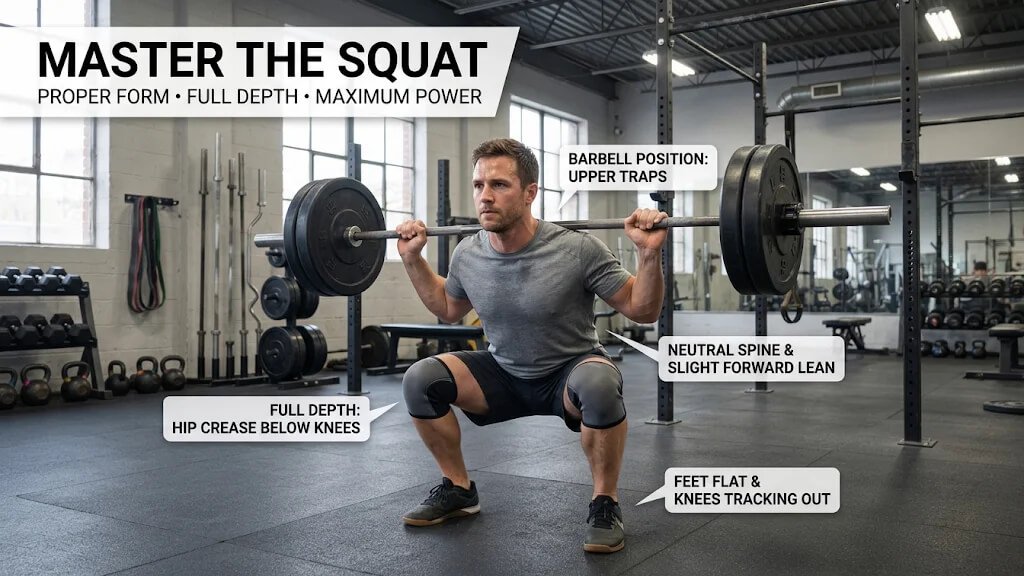
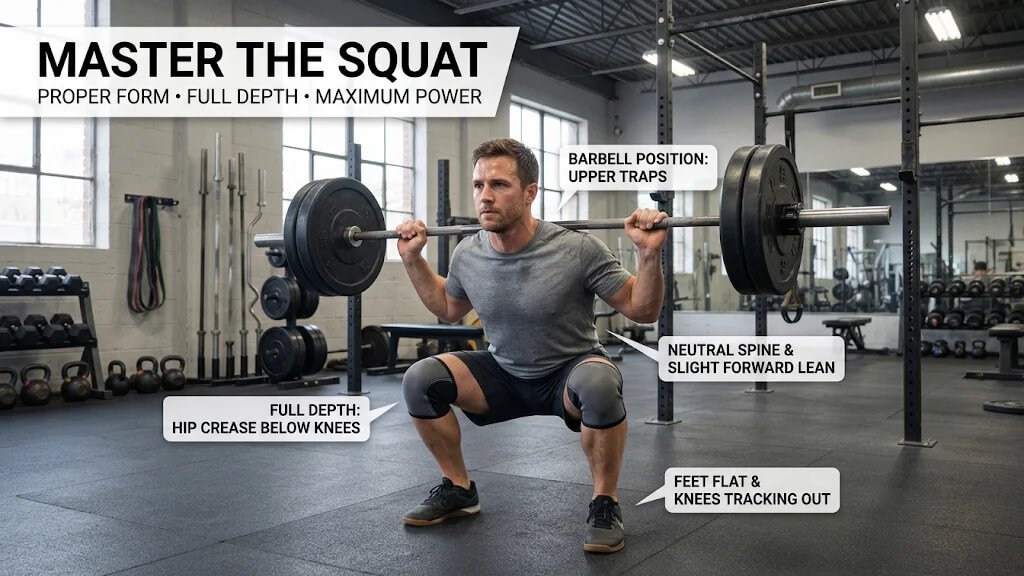
- Barbell back squat – quads, glutes, hamstrings, erector spinae, core
- Conventional or sumo deadlift – posterior chain, grip, core
- Bench press – pectorals, anterior deltoids, triceps
- Overhead press (barbell or dumbbell) – deltoids, triceps, upper back
- Weighted pull-ups or barbell rows – lats, rhomboids, biceps, rear delts
The Testosterone-Boosting Workout
Here’s a straightforward 4-day split I use for men in their 30s–40s who want to protect and support their T levels while building strength:
| Day | Focus | Key Exercises | Sets × Reps | Rest |
| Mon | Lower (Quad bias) | Back squat, leg press, walking lunges, calf raises | 4×5, 3×8, 3×12, 3×15 | 2–3 min |
| Tue | Upper (Push) | Bench press, overhead press, dips, lateral raises | 4×5, 3×8, 3×10, 3×15 | 2–3 min |
| Thu | Lower (Hip bias) | Deadlift, Romanian deadlift, hip thrusts, farmer’s carries | 4×5, 3×8, 3×12, 3×40 yd | 2–3 min |
| Fri | Upper (Pull) | Weighted pull-ups, barbell rows, face pulls, curls | 4×6, 3×10, 3×15, 3×12 | 2 min |
Key coaching cues:
- Squat: Brace your core, sit between your hips, drive the knees out. The bar should track over the mid-foot.
- Deadlift: Hinge at the hips, push the floor away, keep the bar close. You should feel a deep stretch in the hamstrings at the start.
- Bench press: Retract your shoulder blades, arch slightly, drive the bar in a slight arc to mid-chest.
- Overhead press: Squeeze glutes, tuck ribs, press to lockout without flaring the ribs.
Coach’s Tip: You don’t need to go to absolute failure every set. Training at about 80–85% of your one-rep max (R1RM) for 5 reps, or 70–75% for 8 reps, gives you the hormonal stimulus while keeping joint stress manageable. Leave 1–2 reps in the tank. That’s where the magic lives for a 35-year-old with a desk job.

Progression and Regression
- Progression (harder version): Add 5 lb (2.3 kg) to the bar every 1–2 weeks on squats and deadlifts. For pull-ups, add 5–10 lb (2–4.5 kg) via a dip belt once you hit 8 clean reps.
- Regression (easier version): If a full barbell squat feels rough on the knees or lower back, swap to a goblet squat with a 50–60 lb (23–27 kg) dumbbell or kettlebell. Replace deadlifts with a hip thrust machine at 150–200 lb (68–91 kg). You still get the posterior-chain stimulus with less spinal loading.
How Long Until You See a Difference?
Acute testosterone spikes during a heavy session are temporary—levels normalize within an hour or two. The chronic adaptation (better baseline T, more lean muscle, lower body fat) builds over 8–12 weeks of consistent training. That’s the timeline I tell clients to expect before they feel a real shift in energy and recovery.
Sleep: Your Hormone Reset Button
This is the one most men underestimate. A study published in the Journal of the American Medical Association (JAMA) Internal Medicine found that restricting sleep to 5 hours per night for a week reduced daytime testosterone by roughly 10–15% in healthy young men—equivalent to aging 10–15 years hormonally.
After 30, your sleep architecture shifts. You spend less time in deep (slow-wave) sleep, which is when the majority of your daily testosterone pulse occurs. Protecting that window matters more now than it did at 20.
Practical sleep rules I give every client:
- Aim for 7–9 hours in bed, not just 7 hours of actual sleep. You need the extra 30–60 minutes to cycle through deep sleep.
- Consistent schedule: Same bedtime ± 30 minutes, even on weekends. Your circadian rhythm is a hormone scheduler.
- Cool, dark room: 65–68 °F (18–20 °C), blackout curtains or a sleep mask.
- No screens 30–60 min before bed. Blue light suppresses melatonin and delays sleep onset.
- Avoid alcohol within 3 hours of bedtime. Even one or two drinks fragment deep sleep cycles.
If you’re already sleeping 8 hours and still feel foggy, look at snoring or breathing pauses. Obstructive sleep apnea is linked to lower testosterone and higher cardiovascular risk, and it’s more common in men over 30 with even modest excess weight. A Mayo Clinic overview of low testosterone in men flags poor sleep quality as a modifiable factor worth addressing.
Nutrition and the Key Nutrients
You can’t out-train a diet that’s starved of the raw materials your endocrine system needs. Here’s what the evidence supports:
Caloric and Protein Targets
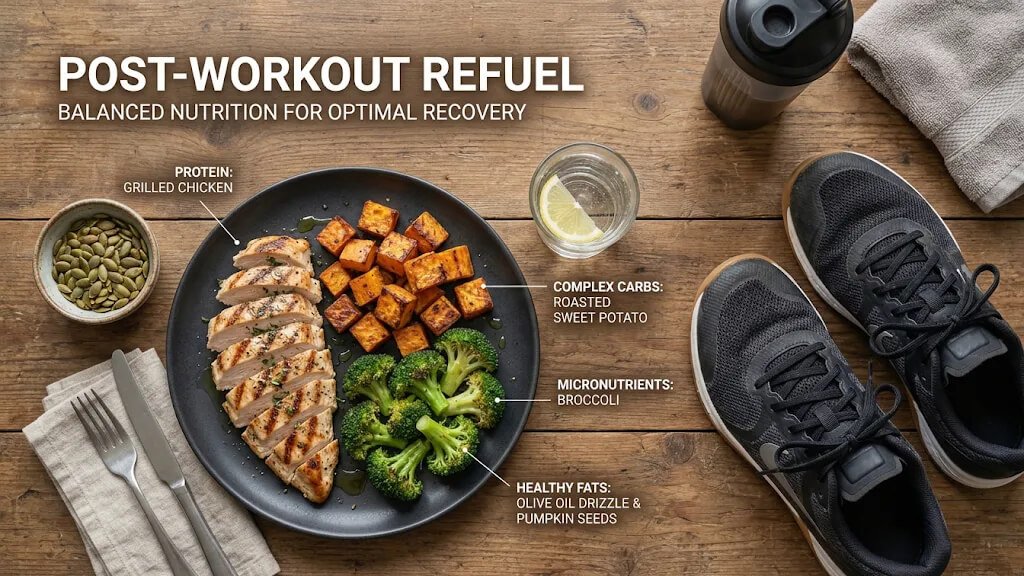
- Protein: 0.7–1 g per pound of body weight (1.6–2.2 g/kg) daily. This supports muscle protein synthesis and keeps you in a slight anabolic environment. For a 180 lb (82 kg) man, that’s roughly 126–180 g of protein per day.
- Don’t crash-diet. Severe caloric restriction (below ~1,500 kcal for most men) suppresses LH and testosterone. If you need to lose body fat, a moderate deficit of 300–500 kcal works better for hormone preservation.
- Healthy fats matter. Testosterone is synthesized from cholesterol. Keep dietary fat at 25–35% of total calories, emphasizing olive oil, avocados, eggs, and fatty fish.
Micronutrients with the Strongest Evidence
| Nutrient | Why It Matters | Food Sources | Supplement Note |
| Zinc | Cofactor for testosterone synthesis; deficiency directly lowers T | Oysters, red meat, pumpkin seeds, lentils | 15–30 mg/day if diet is low; see does zinc support healthy testosterone levels in men |
| Magnesium | Supports free testosterone by lowering SHBG binding; aids sleep | Dark leafy greens, nuts, dark chocolate, bananas | 200–400 mg glycinate or citrate before bed |
| Vitamin D | Receptors present in Leydig cells; low D is linked to low T | Sunlight (15–20 min midday), fatty fish, fortified dairy | 2,000–5,000 IU/day if levels are below 30 ng/mL |
| Omega-3 fatty acids | May support LH signaling and reduce inflammatory markers | Salmon, sardines, mackerel, walnuts | 1–2 g EPA+DHA combined daily |
For a broader look at which vitamins and minerals support male hormonal health, check out our guide on vitamins and nutrients for male fertility and sperm health.
Common Mistake: Loading up on “testosterone-boosting” supplement stacks (tribulus, D-aspartic acid, fenugreek) while ignoring sleep and training. The research on most of these compounds is weak or inconsistent. A review in the Journal of the International Society of Sports Nutrition found that the majority of popular T-boosting supplements did not produce clinically meaningful changes in total or free testosterone in healthy men. Fix the basics first.
Stress, Cortisol, and the HPTA Axis
Here’s the hormonal seesaw most men don’t think about: cortisol and testosterone share a common precursor (pregnenolone) and compete for it. When chronic stress keeps cortisol elevated, the body diverts resources away from androgen production. This is sometimes called the “pregnenolone steal.”
The HHS 2018 Physical Activity Guidelines for Americans recommend at least 150 minutes of moderate aerobic activity plus two days of muscle-strengthening work per week—not just for cardio health, but because regular exercise is one of the most effective natural ways to lower resting cortisol and improve the HPTA axis.
Practical stress management for a 30-something with a job and a family:
- 10 minutes of box breathing (4-count in, 4-count hold, 4-count out, 4-count hold) before bed or during a midday break.
- Walk outside for 15–20 minutes after lunch. Sunlight + movement drops cortisol faster than sitting at a desk.
- Set a hard stop on work email at a specific time. Chronic “always-on” stress is a silent T killer.
- One full rest day per week from training. Overtraining without recovery mimics chronic stress hormonally.
If stress is a major factor in your energy and libido, our article on how stress and poor sleep lower male libido breaks down the cortisol–testosterone interaction in more detail.
Body Composition: The Fat–Testosterone Loop
There’s a well-documented inverse relationship between body fat percentage and testosterone. Adipose tissue contains the enzyme aromatase, which converts testosterone into estradiol. The more excess fat you carry, the more of your T gets “wasted” converting to estrogen.
A study in the Journal of Clinical Endocrinology & Metabolism found that men who lost 10% of their body weight through diet and exercise saw a significant increase in total testosterone, with the largest gains in those who started with higher body fat.
Practical targets:
- Keep body fat below ~20% for optimal hormonal environment. Below 15% is ideal for most men in their 30s–40s.
- Don’t chase single digits. Dropping below 8–10% body fat suppresses the HPTA axis and tanks T.
- Lose fat gradually: 0.5–1 lb (0.2–0.45 kg) per week. Faster than that and you risk losing muscle and suppressing hormones.
Pairing a moderate caloric deficit with the resistance training outlined above is the most hormone-friendly way to recomposition. For a broader framework, see our guide on how to support metabolism naturally for weight management.
What to Avoid (The Silent T Killers)
These habits don’t get a “testosterone” label, but they chip away at your levels over months:
- Chronic alcohol: More than 3–4 drinks on a regular basis is linked to lower T and higher estrogen. Cleveland Clinic’s overview of testosterone flags alcohol as a modifiable risk factor.
- Endocrine-disrupting chemicals (EDCs): BPA in plastic containers, phthalates in some personal-care products, and parabens in cosmetics. Use glass or stainless-steel containers, and check ingredient labels.
- Sedentary days: Sitting for 8+ hours without breaks is associated with lower T in observational studies. Stand, walk, or do 5 minutes of bodyweight work every hour.
- Chronic sleep debt: Two or three bad nights won’t wreck you, but a pattern of 5–6 hours over weeks will.
- Excessive cardio without resistance work: Long, steady-state cardio (marathon training, daily 2-hour rides) can elevate cortisol and suppress T in some men. Keep cardio to 2–3 sessions of 20–30 minutes if your primary goal is hormonal health.
Sample Weekly Routine: Putting It All Together
Here’s a realistic week for a 35-year-old office worker who trains 4 days:
| Day | Morning | Midday | Evening |
| Mon | 5-min box breathing → 45-min lower-body workout (squat focus) | 15-min lunch walk outside | 7–9 hrs sleep, no screens 1 hr before bed |
| Tue | 10-min walk → 40-min upper-body push | 5-min desk stretch break × 3 | Magnesium glycinate (300 mg) + sleep |
| Wed | Active rest: 20-min walk or light swim | — | 7–9 hrs sleep |
| Thu | 5-min breathing → 45-min lower-body (deadlift focus) | 15-min lunch walk | No alcohol; early dinner (7–7:30 pm) |
| Fri | 10-min walk → 40-min upper-body pull | 5-min desk stretch × 3 | 7–9 hrs sleep |
| Sat | 30-min recreational activity (hiking, basketball, cycling) | — | Social, no phone after 10 pm |
| Sun | Full rest. Light stretching or foam rolling. | Meal prep for the week | 7–9 hrs sleep, consistent bedtime |
Nutrition overlay: 0.7–1 g protein/lb body weight, 25–35% fat, remaining calories from complex carbs (oats, rice, potatoes, fruit). Zinc-rich meals (beef, oysters, pumpkin seeds) at least 3×/week. Vitamin D supplement if you don’t get 15+ minutes of midday sun daily.
Common Mistakes I See in the Gym
- Going too light, too often. “I’m 34, I need to be careful.” You don’t. You need to progress. If you’ve been squatting 135 lb (61 kg) for three months, that’s not a safety concern—that’s a stagnation problem. Add 5 lb (2.3 kg).
- Skipping legs to “save” testosterone. The largest muscle groups (quads, glutes, back) produce the biggest hormonal response. Cutting leg day is like cutting the engine out of the car.
- Training 6 days with no deload. After 30, your recovery capacity is different. Every 4th or 5th week, drop volume by 40–50% for a week. Your T will thank you.
- Chasing the “pump” over progressive overload. Light, high-rep, short-rest circuits feel great, but they don’t drive the same strength and hormonal adaptations as heavier, lower-rep work with 2–3 minute rest periods.
- Ignoring the non-gym 95%. You can do the perfect squat workout and still undo it with 5 hours of sleep, a 2,800-calorie pizza night, and 10 hours of screen time. The gym is 2 hours. The other 22 hours matter more.
Research shows a decline of roughly 1–2% per year in total testosterone starting in the mid-to-late 20s. By age 40, many men have lost 10–20% of their peak. The rate varies by genetics, body composition, sleep, and activity level. A meta-analysis in the Journal of Clinical Endocrinology & Metabolism confirms the trend is gradual, not sudden.
Can you raise testosterone with exercise alone, no supplements?
Yes. Heavy compound resistance training, combined with adequate sleep and nutrition, is the most evidence-backed natural strategy. You don’t need a supplement stack. The training stimulus, 7–9 hours of sleep, and a diet rich in zinc, magnesium, and healthy fats cover the bases for most healthy men.
What time of day is testosterone highest?
Testosterone follows a circadian rhythm, peaking in the early morning (around 6–8 a.m.) and dipping in the late evening. This is why morning blood draws are standard for clinical testing. Practically, it means you’ll feel strongest and most focused in the morning—schedule your heaviest lifts then if possible.
Does lifting weights actually increase testosterone long-term?
Acute spikes during a workout are temporary (normalizing within 60–90 minutes). However, consistent resistance training over 8–12+ weeks supports higher baseline testosterone, greater lean mass, and lower body fat—all of which create a more favorable hormonal environment long-term.
What’s a normal testosterone level for a man in his 30s?
The typical reference range is roughly 300–1,000 ng/dL (10.4–34.7 nmol/L), though labs vary. Most men in their 30s fall between 400–700 ng/dL. If you’re below 300 ng/dL on two separate morning tests, talk to a doctor about whether further workup is warranted.
Can stress really lower my testosterone?
Yes. Chronic psychological or physical stress elevates cortisol, which competes with testosterone for the same hormonal precursor and can suppress the HPTA axis over time. Managing stress through sleep, movement, breathing work, and setting boundaries is a legitimate part of a testosterone-support strategy.
Final Thoughts: You Don’t Need a Miracle, You Need a System
How to increase testosterone naturally after 30 isn’t a single trick. It’s a stack of small, repeatable choices: hit the heavy compounds three to four times a week, protect your sleep like it’s a non-negotiable appointment, eat enough protein and healthy fats, keep your body fat in a reasonable range, and give your nervous system a break from chronic stress.
None of this is glamorous. None of it requires a $200 supplement bottle or a 5 a.m. ice bath. But done consistently over 3–6 months, the compound effect is real. You’ll sleep deeper, recover faster, hold more lean muscle, and feel like the version of yourself that made the gym feel easy at 25.
Start with one or two changes this week. Add 5 lb to your squat. Go to bed 30 minutes earlier. Swap one processed snack for a handful of pumpkin seeds and a piece of dark chocolate. Small shifts, stacked over time, are how you keep your hormones working for you well past 30.
This article is for general information and is not a substitute for advice from a doctor or physical therapist. If you suspect clinically low testosterone, persistent fatigue, or other concerning symptoms, schedule a blood panel with your primary-care physician or an endocrinologist.