
You’ve been told to eat more fiber. So you load up on beans, bran cereal, a handful of chia seeds, a psyllium supplement, and a big bowl of oatmeal before lunch. By dinner, your stomach is gurgling, you’re bloated, and you’ve made three trips to the bathroom. You start to wonder: can you actually eat too much fiber? The short answer is yes. Too much fiber in diet can cause bloating, gas, cramping, diarrhea, and even constipation. The good news is that learning your safe range and increasing intake gradually keeps your gut comfortable while still delivering the fullness and digestive benefits fiber provides.
Quick Answer
Eating too much fiber in diet—generally above 50–60 grams per day for most adults—can trigger bloating, gas, abdominal cramping, diarrhea, or paradoxical constipation. The recommended daily intake is 25 g for women and 38 g for men (USDA). Increase fiber slowly over 2–3 weeks and drink plenty of water to avoid digestive upset.
What Does “Too Much Fiber” Actually Mean?
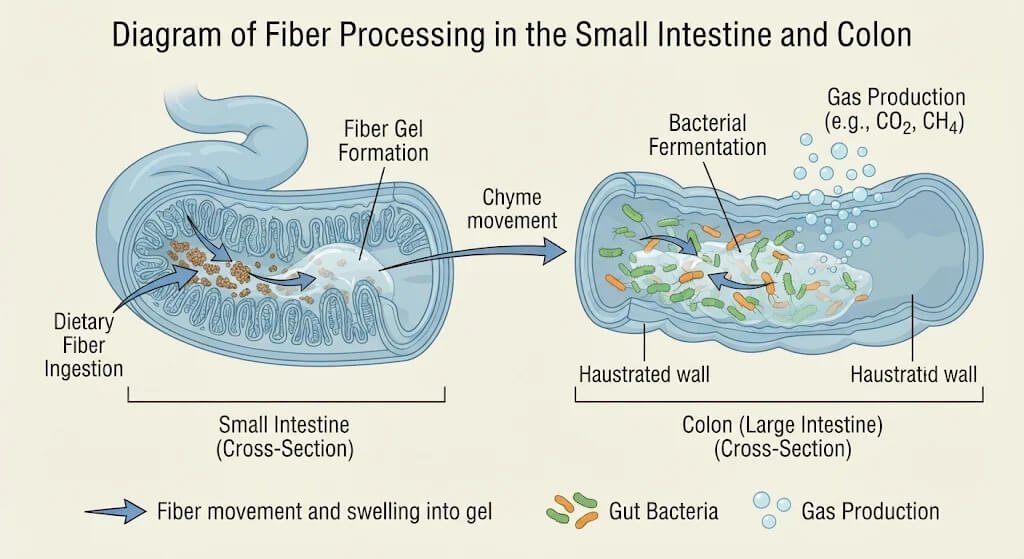
Fiber is the part of plant foods your body can’t fully break down in the small intestine. It travels to the colon, where gut bacteria ferment a portion of it. There are two main types:
- Soluble fiber (oats, beans, apples, psyllium husk) dissolves in water, forms a gel, and slows digestion.
- Insoluble fiber (whole-wheat bran, vegetable skins, nuts) adds bulk to stool and speeds transit through the colon.
The USDA Dietary Guidelines for Americans 2020–2025 recommend an average of 25 g per day for adult women and 38 g per day for adult men. Most Americans consume only about 15 g, which is why “eat more fiber” is such common advice. But “more” has a ceiling.

Recommended Daily Fiber by Age and Sex
| Group | Recommended Intake (g/day) |
| Children 1–3 | 19 |
| Children 4–8 | 25 |
| Children 9–13 | 38 |
| Males 14–18 | 38 |
| Females 14–18 | 26 |
| Males 19–50 | 38 |
| Females 19–50 | 25 |
| Males 51+ | 30 |
| Females 51+ | 21 |
These numbers come from the National Academies of Sciences, Engineering, and Medicine. They represent the amount that supports normal bowel function and may lower long-term risks of heart disease and type 2 diabetes. Going significantly above these numbers—especially in a single day—is where problems start.
Signs You’re Eating Too Much Fiber
In my coaching work, the most common complaint I hear isn’t about lifting heavier or running faster. It’s “my stomach feels like a drum after I switched to a high-fiber meal plan.” Here’s what to watch for:
- Bloating and abdominal distension. Your midsection looks puffy, and your waistband feels tighter by afternoon.
- Excessive gas (flatulence). Gut bacteria ferment undigested fiber, producing hydrogen, methane, and carbon dioxide.
- Cramping or sharp abdominal pain. The colon is working overtime to move the extra bulk.
- Loose stools or diarrhea. Too much soluble fiber draws water into the bowel (an osmotic effect), softening stool beyond normal.
- Paradoxical constipation. Sudden large amounts of insoluble fiber without enough water can form a dense mass that’s hard to pass.
- Nausea or a “full” feeling that won’t go away. You feel stuffed well after a normal-sized meal.
- Reduced appetite for nutrient-dense foods. Fiber fills your stomach so much that you skip protein, healthy fats, or vegetables you actually need.
These symptoms usually appear within 12–48 hours after a big jump in fiber. If they resolve in a few days, you likely just need to dial back. If they persist beyond a week or include blood in stool, severe pain, or vomiting, talk to a doctor.
Common Mistake: Doubling or tripling fiber intake overnight. A client who ate 12 g of fiber one week and jumps to 55 g the next is setting up a GI storm. The colon needs time to adapt its bacterial population and motility patterns.

What Happens in Your Gut When Fiber Intake Spikes
Understanding the mechanism makes the symptoms make sense.
- Small intestine. Soluble fiber forms a viscous gel that slows gastric emptying and delays the absorption of sugars and fats. In moderate amounts, this is great for blood-sugar control. In excess, it can cause a prolonged “stuffed” feeling and reduce the efficiency of nutrient absorption (iron, zinc, calcium).
- Colon – bacterial fermentation. Gut bacteria (bifidobacteria, lactobacilli, and others) break down soluble fiber into short-chain fatty acids (acetate, propionate, butyrate). This process also releases gas. A sudden fiber surge overwhelms the bacterial community, producing more gas than the colon can absorb or expel comfortably.
- Colon – water and motility. Insoluble fiber absorbs water and swells. If you’re not drinking enough, the fiber becomes a dry, compacted mass. If you are drinking enough, the extra water drawn into the lumen can lead to loose, frequent stools.
- Hormonal signaling. Fiber in the small and large intestine stimulates the release of peptide YY (PYY) and glucagon-like peptide-1 (GLP-1), which slow gastric emptying and signal fullness to the brain. This is the same mechanism discussed in my guide to how GLP-1 and PYY regulate appetite and satiety. In excess, the signal can make you feel uncomfortably full for hours.
How Much Fiber Is Too Much? The Numbers
There’s no single “upper limit” the way there is for vitamin A or sodium, but practical thresholds emerge from the literature and clinical observation:
| Daily Intake | Typical Effect |
| 20–30 g | Comfortable for most; within or near recommended range |
| 30–45 g | Fine for well-adapted individuals; may cause mild gas in newcomers |
| 45–60 g | Bloating, gas, and cramping become common; some people get diarrhea |
| 60–80 g+ | High risk of significant GI distress; nutrient malabsorption possible |
| 100 g+ (extreme) | Severe bloating, abdominal pain, possible bowel obstruction in rare cases |
A 2016 systematic review published in the Journal of the Academy of Nutrition and Dietetics noted that most GI side effects (bloating, flatulence) were dose-dependent and resolved when intake was reduced or when the increase was made more gradually. The authors emphasized that gradual increases of 5–10 g per week produced far fewer symptoms than jumping straight to the target.
So, is 50 grams of fiber too much? For a well-adapted adult who’s been eating a high-fiber diet for months, 50 g may be tolerable. For someone used to 15 g, 50 g in a single day is almost certainly too much fiber in diet terms and will likely cause noticeable discomfort.
Can Too Much Fiber Cause Constipation?
It sounds backwards, but yes. Here’s why:
- Insoluble fiber without adequate water absorbs what little liquid is available and forms a hard, bulky stool.
- A sudden large bolus of fiber can temporarily slow colonic motility while the gut adjusts.
- Osmotic diarrhea followed by “rebound” constipation. After a few days of loose stools, the colon may overcompensate.
The fix is always the same: increase fiber gradually AND increase water intake. Aim for at least 8 cups (64 oz / 1.9 L) of water per day, and more if you’re adding 10+ grams of fiber. If you’re adding a psyllium supplement, drink a full 8-oz (240 mL) glass of water with each dose.
How to Increase Fiber Safely (Without GI Distress)
Here’s the protocol I walk clients through. It takes about three to four weeks, and it works.
Week-by-Week Ramp-Up
| Week | Add (g fiber) | Practical Example |
| 1 | +5 g | Swap white rice for brown rice (½ cup cooked ≈ 3 g) + 1 small apple (≈ 3 g) |
| 2 | +5 g | Add ¼ cup cooked black beans to lunch (≈ 7 g) |
| 3 | +5 g | Top oatmeal with 1 tbsp ground flaxseed (≈ 2 g) + 1 orange (≈ 3 g) |
| 4 | +5 g | Add a side salad with ½ cup lentils (≈ 8 g) or a small serving of Brussels sprouts (≈ 4 g) |
By the end of week 4, you’ve added about 20 g to your baseline. If you started at 15 g, you’re now at 35 g—right in the recommended zone.
Practical Tips
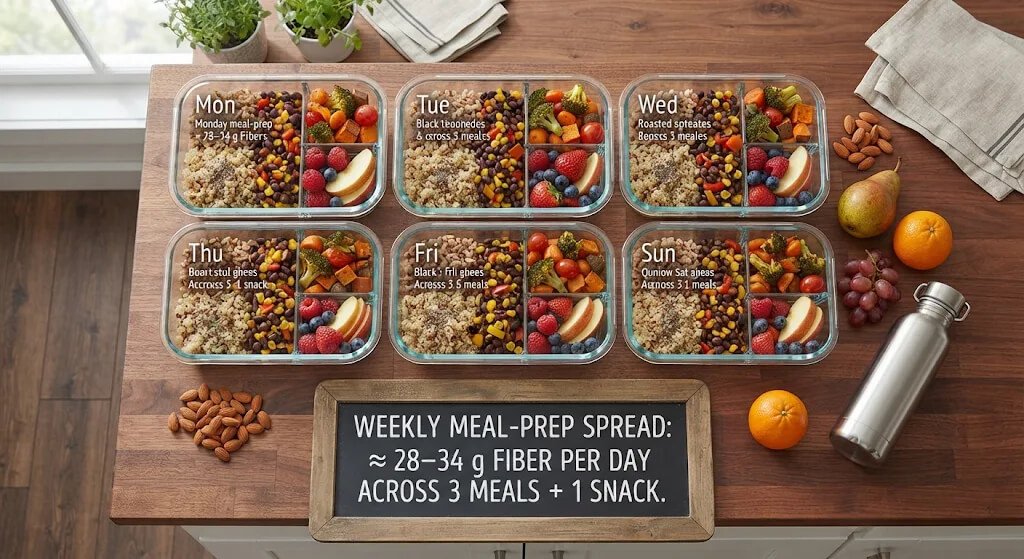
- Spread fiber across meals. Don’t load 30 g into one bowl of “superfood” cereal. Divide it across breakfast, lunch, dinner, and snacks.
- Pair with water. Every fiber-rich meal should come with a full glass of water.
- Choose a mix of soluble and insoluble. Oats, beans, and apples (soluble) plus whole-wheat bread, broccoli, and nuts (insoluble) give you the best of both.
- If you use a fiber supplement like psyllium husk or glucomannan, start at half the label dose and increase by 25% every few days. My detailed breakdowns on can psyllium husk help you feel full before meals and does glucomannan help with appetite control and weight loss cover dosing specifics.
- Track for a week. A simple food journal (or an app) helps you see where your fiber is actually coming from and whether you’ve accidentally stacked three high-fiber foods in one meal.
Coach’s Tip: If you’re adding fiber to support a calorie deficit for weight loss, don’t let the “fullness” trick you into thinking you’ve eaten enough protein and healthy fats. Fiber helps you feel satisfied, but it doesn’t replace the other macros. I go through this in more detail in my guide on how to manage cravings during a calorie deficit.
Fiber and Weight Management: Finding the Sweet Spot
Fiber is one of the most evidence-backed tools for appetite control. Soluble fiber forms a gel in the stomach, slows gastric emptying, and triggers the release of satiety hormones. Research consistently shows that diets higher in fiber are associated with lower energy intake and modest weight loss over time. You can read the full breakdown in my article on can dietary fiber help with appetite and weight management.
But there’s a practical ceiling. If fiber makes you so bloated that you skip your protein at dinner or avoid a post-workout snack, you’ve gone past the useful range. The goal is comfortable fullness, not a distended, gassy stomach.
For most people working on body composition, 25–35 g of fiber per day hits the sweet spot: enough to support satiety and regular bowel movements, without triggering the side effects of excessive intake. If you’re pairing fiber with protein to stretch fullness between meals, my guide on can protein and fiber supplements reduce hunger between meals walks through specific combinations.
Special Considerations
People with IBS, Diverticular Disease, or SIBO
If you have irritable bowel syndrome, diverticulitis, or small intestinal bacterial overgrowth, fiber tolerance is individual. Some IBS patients do better with low-FODMAP, moderate-fiber diets; others tolerate high fiber fine. Check with a gastroenterologist or registered dietitian before making big fiber changes. The Mayo Clinic recommends a personalized approach for anyone with a diagnosed GI condition.
Athletes and High-Volume Diets
Endurance athletes (marathoners, triathletes, cyclists) often eat 50–70 g of fiber to fuel long training blocks. They tolerate it because their gut is conditioned over months of high-volume eating. If you’re a recreational lifter doing 3–4 sessions a week, you don’t need that volume. Stick to the 25–38 g range.
Fiber Supplements and Stacking
If you’re taking a psyllium supplement, a glucomannan capsule, AND eating a high-fiber meal plan, you may be well over 50 g without realizing it. Add up the supplement labels and your food intake. My article on which ingredients support fullness and satiety helps you see which fiber sources overlap.
Older adults on medications like metformin, opioids, or iron supplements may be more sensitive to fiber changes. A gradual increase and close monitoring of bowel habits is essential. If you’re over 60 or on multiple medications, run your fiber plan past your primary-care doctor.
What to Do If You’ve Eaten Too Much Fiber
You had a “superfood” day—lentil soup, a bran muffin, a big salad with artichokes, a chia pudding for dessert. Now your stomach is in protest. Here’s a practical recovery plan:
- Hydrate. Drink water steadily over the next 12–24 hours. Aim for 8–10 cups (64–80 oz / 1.9–2.4 L). Avoid sugary drinks, which can worsen osmotic diarrhea.
- Ease off fiber for 1–2 days. Switch to lower-fiber, easily digestible foods: white rice, bananas, cooked potatoes, plain chicken, toast. You’re not “cheating”; you’re letting your colon reset.
- Gentle movement. A 15–20 minute walk helps stimulate normal peristalsis. Avoid intense cardio if you’re cramping.
- Don’t take laxatives unless directed by a doctor. Stimulation laxatives on top of a fiber overload can cause cramping and dehydration.
- Monitor for 48 hours. If bloating and gas subside, resume your normal fiber level. If symptoms persist beyond two days, or you develop fever, blood in stool, or severe pain, see a healthcare provider.
Safety Notes
- This article covers general dietary fiber guidance. It is not medical advice.
- If you have a diagnosed GI condition (IBS, Crohn’s, diverticulitis, SIBO, gastroparesis), a history of bowel obstruction, or are on medications that affect GI motility, consult a gastroenterologist or registered dietitian before changing your fiber intake.
- If you’re pregnant, postpartum, or managing a chronic condition, get clearance from your OB/GYN or primary-care physician before starting a new fiber supplement.
- Children should follow age-appropriate fiber guidelines from the USDA Dietary Guidelines and pediatrician guidance, not adult targets.
FAQ
What happens if you eat too much fiber in one day?
You’ll likely experience bloating, gas, abdominal cramping, and either diarrhea or constipation within 12–48 hours. Symptoms are usually temporary and resolve within 1–3 days if you hydrate well and ease off fiber intake. Severe or persistent symptoms warrant a doctor’s visit.
Use up and down arrow keys to resize the meta box pane.
Move upMove downShow or hide panel
Analysis resultsLearn more about the inclusive language analysis(Opens in a new browser tab)
Potentially non-inclusive (1)
Use up and down arrow keys to resize the meta box pane.
Move upMove downShow or hide panel
Analysis resultsLearn more about the inclusive language analysis(Opens in a new browser tab)
Potentially non-inclusive (1)
- Consider using an alternative, such as older people, unless referring to someone who explicitly wants to be referred to with this term. Or, if possible, be specific about the group you are referring to (e.g. people older than 70). Learn more.
Move upMove downShow or hide panelPostBlock
Paragraph
Start with the basic building block of all narrative.
Typography
Color
Font sizeFont size
Background
Color
Gradient
Advanced
Skip to the selected blockOpen publish panel
- Post
- Paragraph
Use up and down arrow keys to resize the meta box pane.
Move upMove downShow or hide panel
Analysis resultsLearn more about the inclusive language analysis(Opens in a new browser tab)
Potentially non-inclusive (1)
- Consider using an alternative, such as older people, unless referring to someone who explicitly wants to be referred to with this term. Or, if possible, be specific about the group you are referring to (e.g. people older than 70). Learn more.
Move upMove downShow or hide panelPostBlock
Paragraph
Start with the basic building block of all narrative.
Typography
Color
Font sizeFont size
Background
Color
Gradient
Advanced
Skip to the selected blockOpen publish panel
- Post
- Paragraph
How much fiber is too much per day?
There’s no official “upper limit,” but most adults tolerate 25–38 g comfortably. Intakes above 50–60 g per day commonly cause bloating, gas, and cramping, especially if the increase was sudden. Individual tolerance varies based on gut adaptation and water intake.
Can too much fiber cause constipation?
Yes, paradoxically. A sudden large amount of insoluble fiber without enough water can form a dense, hard stool. Gradual increases paired with adequate hydration (at least 64 oz / 1.9 L water daily) prevent this.
Is 50 grams of fiber too much?
For someone used to 15–20 g, 50 g in a single day is likely too much and will cause noticeable GI distress. For a well-adapted endurance athlete eating high-fiber meals daily, 50 g may be tolerable. The key is how fast you got there and how much water you’re drinking.
How fast should I increase my fiber intake?
Add 5–10 g per week over 3–4 weeks. This gives your gut bacteria time to adapt and your colon time to adjust motility. Jumping from 15 g to 45 g in a week is the fastest way to end up bloated and cramping.
Does too much fiber interfere with weight loss?
Fiber supports fullness and can reduce overall calorie intake, which is helpful. But if excessive fiber makes you skip protein or healthy-fat meals, or causes you to feel too bloated to train, it can work against your goals. Stay in the 25–35 g range for most weight-management plans.
Conclusion
Eating too much fiber in diet isn’t dangerous in the way that excessive sodium or sugar is, but it’s uncomfortable, and it can sabotage the very benefits you’re chasing. The sweet spot for most adults is 25–38 grams per day, reached through a gradual 3–4 week ramp-up, paired with consistent water intake and a mix of soluble and insoluble sources. If you’re using fiber to support appetite control or a calorie deficit, the goal is comfortable fullness, not a bloated, gassy stomach. Increase slowly, listen to your gut, and keep the total in a range that lets you train, work, and eat without thinking about your digestion.