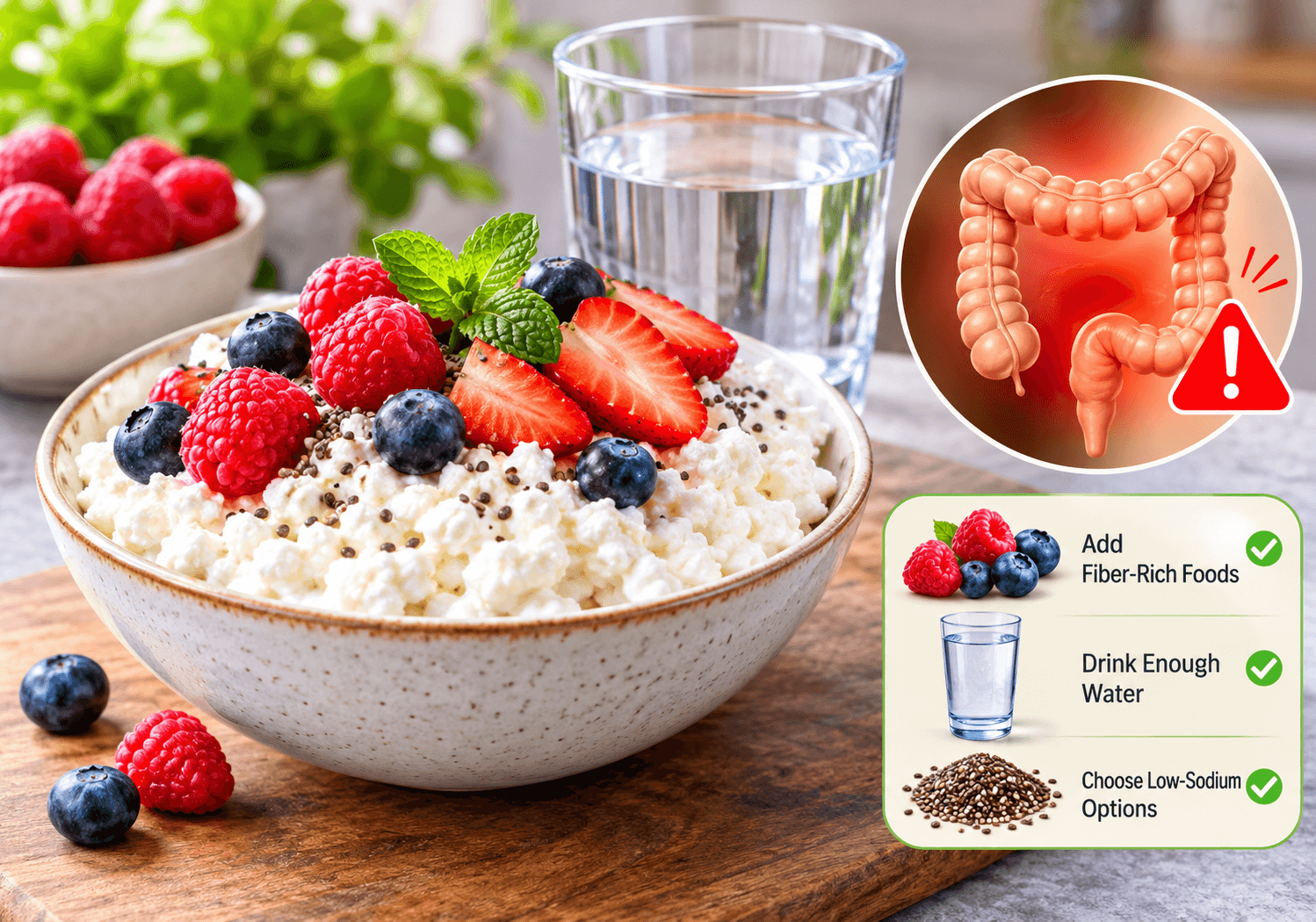
Yes, eating cottage cheese can contribute to constipation, especially when it makes up a large portion of your daily calories without enough fiber and water. While cottage cheese is a staple for strength athletes and fitness enthusiasts looking to hit high daily protein targets, it contains zero dietary fiber.
When you swap out fiber-rich whole foods for dense dairy proteins, your digestive tract slows down. Understanding how dairy proteins, sodium, and missing fiber interact in your gut allows you to keep cottage cheese in your meal prep without dealing with uncomfortable bloating or sluggish digestion.
Quick Answer
Can cottage cheese cause constipation? Yes. Cottage cheese contains zero dietary fiber and is rich in slow-digesting casein protein and sodium. If you eat large portions without drinking enough water or pairing it with high-fiber foods like berries or seeds, it can slow down gut motility and make stools harder to pass.
As a strength coach, I see clients run into digestive roadblocks every time they jump straight into a high-protein meal plan. Cottage cheese is an easy, affordable way to add 24 to 28 grams of protein per cup, but relying on it too heavily creates a mechanical bottleneck in your digestive system.
According to data from the USDA FoodData Central, a standard 1-cup serving (about 226 grams) of low-fat cottage cheese provides roughly 24 grams of protein and over 700 milligrams of sodium, but 0 grams of dietary fiber. Without fiber to add bulk and draw water into your stool, waste moves much more slowly through your colon.
Several biological factors explain why this happens:
- Zero Fiber Content: Dietary fiber acts like a broom for your digestive tract. Because dairy products lack plant cell walls, eating several bowls of cottage cheese a day reduces your overall fiber-to-calorie ratio.
- Slow-Digesting Casein Protein: Roughly 80% of the protein in cottage cheese is casein, compared to 20% whey. Casein forms a thick, gel-like curd in the acidic environment of your stomach, which delays gastric emptying and slows down gastrointestinal transit time.
- High Sodium Levels: Most commercial cottage cheese tubs pack significant sodium to preserve freshness and flavor. High sodium intake pulls water out of your intestines and into your bloodstream to maintain fluid balance, leaving less moisture in your colon to keep stools soft.
- Mild Lactose Sensitivity: While most people associate lactose intolerance with diarrhea, research published in the National Library of Medicine (PMC) notes that methane-producing gut bacteria can ferment undigested lactose, slowing intestinal transit and triggering constipation in roughly 30% of lactose-sensitive individuals.

Coach’s Tip: Do not eliminate cottage cheese from your diet just because you feel backed up. Most digestive slowdowns during a fitness phase come from what is missing from your plate—specifically water, potassium, and soluble fiber—rather than the protein source itself.
Cottage Cheese vs. Other High-Protein Snacks for Digestion
To understand how cottage cheese affects your stomach compared to other popular fitness foods, it helps to look at their macronutrient and fiber profiles side by side.
| Food Item (1 Serving) | Protein (g) | Fiber (g) | Sodium (mg) | Primary Protein Type | Digestion Speed | Constipation Risk |
| Low-Fat Cottage Cheese (1 cup / 226 g) | 24 g | 0 g | 700–800 mg | Casein (80%) | Slow (4–6 hours) | Moderate to High |
| Plain Greek Yogurt (1 cup / 245 g) | 20–23 g | 0 g | 75–90 mg | Casein & Whey | Moderate (2–4 hours) | Low to Moderate |
| Whey Protein Isolate (1 scoop / 30 g) | 25 g | 0 g | 50–120 mg | Whey (100%) | Fast (1–2 hours) | Low |
| Cooked Lentils (1 cup / 198 g) | 18 g | 15.6 g | 4 mg | Plant Protein | Moderate (3–5 hours) | Very Low |
| Chicken Breast (4 oz / 113 g) | 35 g | 0 g | 85 mg | Animal Muscle | Moderate (3–4 hours) | Moderate |
| Chia Seeds (2 tbsp / 28 g) | 5 g | 10 g | 5 mg | Plant Protein | Slow (Gel-forming) | Very Low (Relieves) |
Notice the massive difference in sodium between cottage cheese and Greek yogurt. Even though both are dairy products, Greek yogurt has nearly one-tenth the sodium and often contains live probiotic cultures that actively support smoother bowel movements.
If you are already following a high-protein diet for weight management, stacking multiple zero-fiber foods—like chicken breast at lunch, whey shakes after lifting, and cottage cheese before bed—compounds the issue.
How to Eat Cottage Cheese Without Getting Constipated

You can easily keep cottage cheese in your daily rotation by making a few simple adjustments to your portion sizes, pairings, and hydration habits. Follow these practical steps to keep your digestion moving smoothly.
1. Stick to a Reasonable Daily Portion
Limit your intake to 1/2 cup to 1 cup (113 g to 226 g) per day. Eating an entire 16-ounce (454 g) tub in one sitting floods your stomach with heavy casein curds and over 1,400 milligrams of sodium, which is more than half of the daily limit recommended by the American Heart Association.
2. Pair Every Serving with High-Fiber Toppings
Never eat cottage cheese plain if you are prone to sluggish digestion. Turn your bowl into a balanced, gut-friendly meal by mixing in foods rich in soluble and insoluble fiber:
- Raspberries or Blackberries: Adding 1/2 cup (60 g) gives you 4 grams of fiber and extra water volume.
- Ground Flaxseeds or Chia Seeds: Stirring in 1 tablespoon (10–12 g) adds 3 to 5 grams of gel-forming soluble fiber.
- Diced Cucumber and Cherry Tomatoes: For a savory snack, mix in 1 cup (150 g) of chopped vegetables and cracked black pepper.
- Psyllium Husk: If you struggle to hit your daily fiber goals, mixing a small amount of psyllium husk for fullness into your routine helps pull water back into the colon.
![Top-down shot of a bowl of cottage cheese topped with chia seeds, sliced strawberries, and crushed walnuts]](https://pillsfeed.com/wp-content/uploads/2026/11/Top-down-shot-of-a-bowl-of-cottage-cheese-topped-with-chia-seeds-sliced-strawberries-and-crushed-walnuts.webp)
3. Match Your Sodium and Protein with Extra Water
When you increase protein intake, your kidneys need extra water to flush out nitrogen byproducts from protein metabolism. Aim to drink at least 12 to 16 ounces (350 to 475 ml) of plain water alongside every high-protein dairy snack. According to the National Institute of Diabetes and Digestive and Kidney Diseases (NIDDK), adequate fluid intake works directly with dietary fiber to keep stools soft and bulky.
4. Choose Low-Sodium or Probiotic-Enriched Brands
Check the nutrition label at the grocery store. Look for “no salt added” or “low sodium” cottage cheese varieties, which drop the sodium content from 750 mg down to roughly 50–120 mg per serving. Additionally, select brands that list “live and active cultures” on the label; beneficial bacteria like Lactobacillus acidophilus and Bifidobacterium help break down dairy proteins and support healthy gut motility.
Common Mistake: Increasing your fiber toppings dramatically overnight while remaining dehydrated. Dumping 15 grams of chia seeds or bran onto your cottage cheese without drinking extra water will act like dry cement in your stomach and make constipation worse. Increase fiber by 3 to 5 grams every few days while scaling up your water intake.
How Physical Activity Affects Dairy Digestion
What you do outside the kitchen matters just as much as what you put in your bowl. Sedentary behavior slows down peristalsis—the wave-like smooth muscle contractions that push food through your intestines.
Regular movement acts as a natural stimulant for your digestive tract:
- Post-Meal Walking: Taking a brisk 10- to 15-minute walk (about 0.5 to 0.75 miles [0.8 to 1.2 km]) after eating stimulates intestinal contractions and helps clear gas and bloating.
- Core and Resistance Training: Compound exercises like squats, deadlifts, and torso rotations gently compress and massage the abdominal organs, encouraging blood flow to the gastrointestinal tract.
- Morning Mobility: Simple bodyweight movements like deep goblet squat holds, cat-cow stretches, and supine knee-to-chest twists help relax tight pelvic floor muscles that can restrict bowel movements.
If you are cutting calories and training hard, managing overall dietary fiber for appetite and digestion alongside consistent daily step counts is one of the most reliable ways to prevent diet-induced constipation.
Who Should Be Careful With Cottage Cheese?
While most healthy adults tolerate cottage cheese well when paired with fiber and water, certain individuals should monitor their intake closely or consult a healthcare provider:
- People with Irritable Bowel Syndrome (IBS-C): Those with constipation-predominant IBS often react poorly to high-FODMAP dairy products or slow-digesting casein proteins.
- Individuals with Undiagnosed Lactose Intolerance: Even though cottage cheese has less lactose than milk (about 3 to 4 grams per half-cup), sensitive individuals may still experience gas, cramping, or delayed transit.
- People Managing High Blood Pressure: Standard cottage cheese is very high in sodium, which can contribute to fluid retention and elevated blood pressure if consumed daily.
- Anyone Taking Calcium or Iron Supplements: Cottage cheese is rich in calcium (roughly 100–130 mg per cup). Combining high-calcium foods with supplemental calcium or iron can sometimes bind in the gut and harden stools.
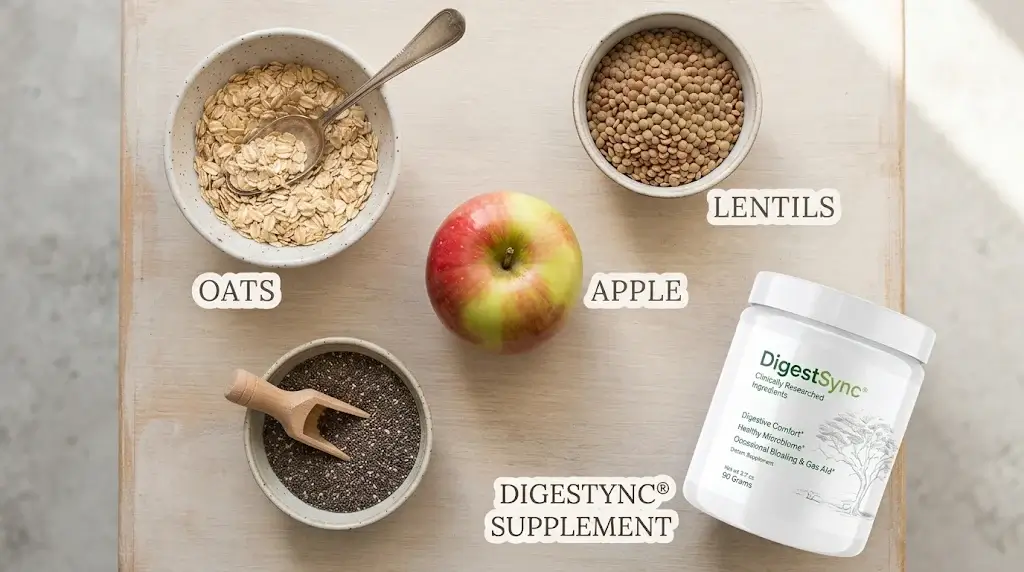
If you experience severe abdominal pain, blood in your stool, unexplained weight loss, or constipation lasting longer than two weeks despite increasing water and fiber, consult a doctor or registered dietitian before making further dietary changes.
Sample Gut-Friendly Cottage Cheese Snack Ideas
If you want to keep hitting your daily protein goals without slowing down your stomach, use these three balanced combinations:
- The Berry & Seed Bowl (30 g Protein, 8 g Fiber): Mix 1 cup (226 g) low-sodium cottage cheese with 1/2 cup (60 g) raspberries, 1 tablespoon (12 g) chia seeds, and a dash of cinnamon.
- The Savory Crunch Bowl (26 g Protein, 5 g Fiber): Combine 1 cup (226 g) cottage cheese with 1/2 cup (75 g) diced cucumber, 1/2 cup (75 g) cherry tomatoes, 2 tablespoons (15 g) roasted pumpkin seeds, and fresh dill.
- The Warm Cinnamon Apple Bowl (28 g Protein, 6 g Fiber): Microwave 1 chopped small apple (100 g) with cinnamon for 60 seconds until soft, then top with 1 cup (226 g) cottage cheese and 1 tablespoon (10 g) ground flaxseed.
Integrating soluble fiber sources for fullness directly into your protein snacks ensures you stay satisfied between workouts while keeping your digestive tract moving on schedule.
Frequently Asked Questions (FAQ)
Does low-fat cottage cheese cause constipation more than full-fat?
Low-fat and fat-free cottage cheese can sometimes trigger constipation slightly faster than full-fat versions. Dietary fat stimulates the gastrocolic reflex, which signals your colon to contract and move waste forward. Removing the milk fat leaves behind pure, dense casein protein and sodium with zero lubricating fats or fiber.
How long does it take for cottage cheese to digest?
Cottage cheese takes roughly 4 to 6 hours to fully digest and clear the stomach. Because roughly 80% of its protein is micellar casein, it forms slow-releasing curds in stomach acid. This makes it great for overnight muscle recovery, though it moves slower than whey protein or yogurt.
Can casein protein in cottage cheese cause bloating and gas?
Yes, casein protein can cause bloating and gas in some people. Beyond slow gastric emptying, certain cow’s milk breeds produce A1 beta-casein, which releases a peptide called BCM-7 during digestion. Research cited by Harvard Health Publishing suggests A1 casein can trigger mild gut inflammation and sluggishness in sensitive stomachs.
Is cottage cheese good for gut health?
Plain cottage cheese is neutral for gut health unless you buy a brand fortified with live and active probiotic cultures. Unlike traditional yogurt or kefir, many commercial cottage cheeses are made using direct acid-setting methods rather than bacterial fermentation, meaning they lack beneficial probiotics unless added after processing.
What should I drink with cottage cheese to prevent constipation?
Drink 12 to 16 ounces (350 to 475 ml) of plain water or herbal tea alongside your cottage cheese. Warm liquids like peppermint tea, ginger tea, or warm water with lemon help stimulate smooth muscle contractions in the digestive tract and offset the dehydrating effects of cottage cheese’s high sodium content.
How much fiber do I need per day if I eat a high-protein diet?
According to the Dietary Guidelines for Americans, adult women should aim for 25 to 28 grams of fiber daily, while adult men need 31 to 38 grams. If you consume 120 to 180 grams of protein per day for strength training, hitting at least 30 grams of fiber daily is essential for regular bowel movements.
Conclusion
So, can cottage cheese cause constipation? Yes, if you eat large servings without balancing out its zero-fiber, high-sodium, and slow-digesting casein profile. For lifters and active adults, cottage cheese remains one of the most convenient, bioavailable protein sources available—you just need to treat it as a base ingredient rather than a standalone meal.
By capping your daily intake at around 1 cup, choosing low-sodium or probiotic-enriched tubs, drinking plenty of water, and loading your bowl with berries, chia seeds, or crisp vegetables, you get all the muscle-building benefits without the digestive slowdown.