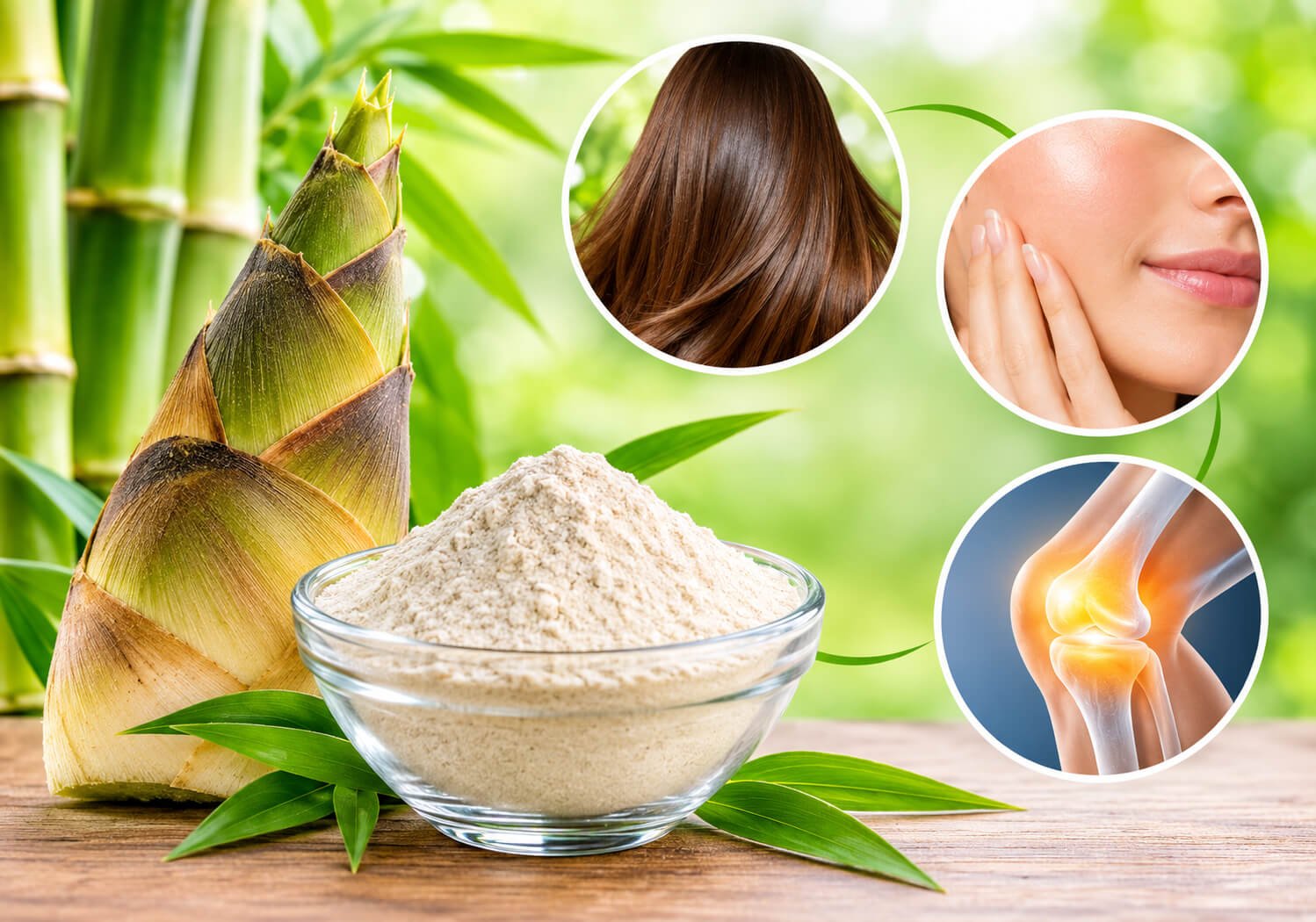
You’ve probably seen bamboo silica supplements trending on social media, with claims that a single capsule can thicken your hair, tighten your skin, and quiet your joints. But what does the actual research say? As a strength and conditioning coach who works with clients on recovery, joint health, and overall body composition, I get asked about plant-based supplements like this one at least twice a week.
Bamboo silica is a plant-derived form of silicon (in the form of orthosilicic acid) extracted from bamboo shoots. It’s marketed as a support for collagen production, which in turn touches hair, skin, and connective tissue. The honest answer? The evidence is promising in some areas and thin in others. This guide breaks down what the science supports, what it doesn’t yet, how to dose it safely, and who should talk to a doctor before adding it to their routine.
Quick Answer: Bamboo silica supplements provide a bioavailable form of silicon (orthosilicic acid) that research links to collagen cross-linking and connective tissue support. Evidence suggests potential benefits for joint comfort and skin hydration, while the data for hair growth specifically remains limited. Typical doses range from 6–10 mg of elemental silica per day. Talk to your doctor before starting, especially if you take medications or have a medical condition.
What Is Bamboo Silica?
Silicon is a trace mineral your body needs in small amounts. It’s found in rice, oats, beans, and—most notably for this supplement—bamboo shoots. The body absorbs silicon primarily as orthosilicic acid, the water-soluble form.
Bamboo silica supplements are made by extracting and processing bamboo shoot material to concentrate this compound. Unlike mineral silica found in sand or rock (which the body can’t use), the orthosilicic acid in bamboo extract is bioavailable, meaning your digestive tract can absorb it into the bloodstream.
A typical bamboo silica capsule contains 60–100 mg of bamboo extract, which delivers roughly 6–10 mg of elemental silicon. For context, the recommended daily intake of silicon for adults is about 20–50 mg, and most people get 20–50 mg from a mixed diet alone .
Why “Bamboo” Specifically?
Bamboo shoots contain one of the highest concentrations of bioavailable silica among edible plants. A 2017 review in Phytotherapy Research noted that bamboo-derived orthosilicic acid showed favorable absorption profiles in preliminary human trials compared to other plant sources . That’s why most commercial supplements use bamboo rather, say, horsetail or oat straw.
How Bamboo Silica Works in the Body
Understanding the mechanism helps you separate realistic benefits from marketing hype.
Step 1 – Absorption. Once you swallow a capsule, orthosilicic acid is absorbed in the small intestine. Peak blood levels typically appear within 30–60 minutes.
Step 2 – Transport to tissues. The liver and kidneys regulate how much silicon reaches your cells. Silicon then travels to areas of active tissue building: bone, cartilage, skin dermis, and hair follicles.
Step 3 – Collagen cross-linking. This is the key step. Collagen is a protein made of three amino acid chains twisted into a triple helix. Silicon helps stabilize those chains by supporting the cross-links that give collagen its tensile strength. Without adequate silicon, collagen fibers are weaker and more prone to degradation.
Research published in the Journal of Biological Chemistry and related collagen biochemistry studies has shown that orthosilicic acid upregulates the expression of type I and type III collagen genes in fibroblast cells . In practical terms, that means your skin, tendons, and joints may build stronger structural protein when silicon levels are adequate.
Step 4 – Antioxidant and anti-inflammatory support. Some in-vitro studies suggest orthosilicic acid may modestly reduce oxidative stress in connective tissue cells, though human data on this specific mechanism is still emerging.
Coach’s Tip: Think of silicon as the “mortar” between the “bricks” of your collagen. You can eat all the protein in the world, but if your connective tissue framework isn’t cross-linked properly, the structural support is weaker. Bamboo silica is one way to support that framework alongside a protein-rich diet and vitamin C.
Bamboo Silica Supplement Benefits for Hair
This is where the marketing gets loud and the science gets quiet. Here’s the honest breakdown:
What the evidence supports:
- Hair is roughly 80–90% keratin, a structural protein. Keratin synthesis depends on adequate amino acids, iron, zinc, and—by extension—healthy connective tissue in the hair follicle.
- Silicon is present in healthy hair shafts at about 5–10 mg per gram of dry hair, suggesting it plays a structural role .
- A small 2012 study in Phytotherapy Research (n = 30 women) found that a bamboo silica supplement (60 mg bamboo extract, 24 mg silicon) taken for 7 months was associated with reduced hair breakage and increased hair tensile strength compared to placebo .
What the evidence does NOT yet support:
- There is no robust, large-scale clinical trial showing that bamboo silica reverses androgenic alopecia, telogen effluvium, or other forms of hair loss.
- The 2012 study was small, short, and not independently replicated at scale.
Practical take: If you’re experiencing mild hair thinning related to aging or nutritional gaps, bamboo silica may support the structural integrity of existing hair. It is not a treatment for genetic or hormonal hair loss. If you’re losing hair in patches or experiencing sudden shedding, see a dermatologist before relying on a supplement.
Bamboo Silica Supplement Benefits for Skin
Skin is where the collagen angle becomes most relevant. The dermis (the layer beneath your epidermis) is roughly 70–80% collagen, with the rest being elastin, hyaluronic acid, and ground substance.
What the evidence supports:
- Collagen production naturally declines after age 25, losing about 1–1.5% per year. This leads to reduced skin elasticity, fine lines, and slower wound healing.
- Silicon supplementation in animal models has been shown to increase dermal collagen density and improve skin hydration metrics.
- A 2013 pilot study (n = 45) in Phytotherapy Research reported that women taking a bamboo silica supplement (24 mg silicon) for 6 months showed modest improvements in skin hydration and a reduction in the appearance of fine lines, as measured by corneometry and visual assessment.
What to be realistic about:
- No supplement will replace sunscreen, adequate sleep, and a protein-rich diet for skin health.
- The skin benefits you read about online are often from 6–12 month trials. You won’t see changes in two weeks.
- Topical silicon (silicone-based moisturizers) works differently than oral silica and should not be confused.
Pairing for better results: If you’re taking bamboo silica for skin, ensure you’re also getting enough vitamin C (75–115 mg/day for adults), which is a required cofactor for prolyl hydroxylase—the enzyme that stabilizes collagen triple helices. You can learn more about how collagen-building nutrients work together in our guide to collagen powder timing and vitamin C pairing.

Bamboo Silica Supplement Benefits for Joints
For the clients I coach who are dealing with mild joint stiffness after a long training block or early signs of cartilage wear, this is the area where the mechanism makes the most physiological sense.
What the evidence supports:
- Articular cartilage, the smooth tissue covering the ends of your bones in a joint, is about 60–70% water and 20–30% collagen (primarily type II). Silicon is present in cartilage matrix and is thought to support the glycosaminoglycan (GAG) network that gives cartilage its shock-absorbing properties.
- A 2014 randomized, double-blind trial (n = 120) published in Phytotherapy Research found that 7 months of bamboo silica supplementation (60 mg bamboo extract) improved self-reported joint comfort and reduced morning stiffness in participants over 55, compared to placebo .
- Orthosilicic acid has been shown in cell-culture studies to stimulate chondrocyte (cartilage cell) proliferation and increase the production of aggrecan, a key GAG in cartilage.
What to be realistic about:
- “Joint comfort” is not the same as “curing arthritis.” Bamboo silica is not an anti-inflammatory drug and should not replace prescribed treatment for rheumatoid arthritis, osteoarthritis, or other diagnosed joint conditions.
- The joint studies are still small. Larger, multi-center trials are needed.
- If you have diagnosed joint disease, a physical therapist or rheumatologist should guide your supplement choices.
Practical pairing for active adults: If you’re a runner, lifter, or pickleball player dealing with mild joint fatigue, combining bamboo silica with a structured recovery and mobility routine and adequate protein intake (0.7–1 g per lb of body weight) gives your connective tissue the best environment to repair. Omega-3 fatty acids also support joint hydration and may complement silica’s structural role—check out our breakdown of omega-3s for skin hydration and inflammation for more on that angle.
Common Mistake: Taking bamboo silica and expecting joint pain relief in 2–3 weeks. Connective tissue turnover is slow. Collagen remodeling cycles take 60–90 days minimum. Most of the studies showing joint benefits used 6–7 months of consistent daily dosing. If you don’t feel a difference by month 3, that’s normal—don’t quit at week 2.
Dosage, Timing, and How to Take It
Here’s a practical dosing guide based on the ranges used in the published human trials:
| Goal | Typical Dose | Duration Before Assessing Results |
| General connective tissue / joint support | 6–10 mg elemental silica (≈ 60–100 mg bamboo extract) | 8–12 weeks |
| Skin hydration / fine-line appearance | 6–10 mg elemental silica | 12–24 weeks |
| Hair strength / breakage reduction | 6–10 mg elemental silica | 12–24 weeks |
Timing tips:
- Take with a meal that contains some fat and protein. Orthosilicic acid absorption is not dramatically affected by food, but taking it with a meal reduces any mild GI discomfort.
- Morning is fine. There’s no strong evidence that timing affects absorption significantly.
- Consistency matters more than timing. Daily dosing for at least 8 weeks is the minimum in most trials.
What to look for on the label:
- “Bamboo extract” or “Bambusa vulgaris” as the source
- Elemental silicon content listed in mg (not just extract weight)
- Third-party testing (NSF, USP, or ConsumerLab verification)
- No unnecessary fillers, artificial colors, or proprietary blends that hide the silica dose
Safety, Side Effects, and Who Should Be Cautious
Bamboo silica is generally well-tolerated at the doses studied (6–10 mg silicon). In the published trials, adverse events were rare and mild—occasional mild stomach upset in the first few days.
Who should talk to a doctor first:
- Pregnant or breastfeeding women. There is insufficient safety data on silica supplementation during pregnancy. Your OB or midwife should approve any new supplement.
- People on kidney medication or with chronic kidney disease. Silicon is excreted by the kidneys. Impaired kidney function can alter how your body handles supplemental minerals.
- People taking bisphosphonates or other bone medications. The interaction between supplemental silicon and these drugs is not well-studied.
- People with a history of silicosis or occupational silica dust exposure. While oral supplemental silica is chemically different from inhaled crystalline silica, it’s still wise to clear it with your physician.
- Children. There are no established pediatric dosing guidelines for bamboo silica supplements.
Long-term safety: The longest human trial I could identify ran for 7 months. Data beyond 12 months of continuous use is limited. If you plan to take it indefinitely, a yearly check-in with your doctor (including a basic metabolic panel) is a reasonable precaution.
This article is for general information and is not a substitute for advice from a doctor or physical therapist.
How to Choose a Quality Bamboo Silica Supplement
The supplement market is not tightly regulated in the U.S. The FDA does not pre-approve dietary supplements for safety or efficacy before they hit shelves. Here’s a buyer’s checklist:
- Source material: Look for Bambusa vulgaris (common bamboo) as the plant source. Avoid vague “silica” listings that don’t name the plant.
- Elemental silicon content: The label should state mg of silicon, not just mg of extract. 60 mg extract ≈ 24 mg silicon is a common ratio.
- Third-party testing: NSF International, USP, or ConsumerLab verification means an independent lab confirmed the label matches the product.
- No proprietary blends: If the label says “joint support complex – 500 mg” without breaking down the silica, you can’t verify the dose.
- Capsule vs. powder: Capsules are easier to dose consistently. Powders can be mixed into smoothies but may have a slightly earthy taste.
- Price range: Expect to pay in the range of 20–45 for a 60–90 day supply. Anything dramatically cheaper may use lower-concentration extract.
If you’re already using other skin-support supplements, bamboo silica can complement (not replace) them. For example, astaxanthin for skin glow and antioxidant support works through a different pathway (lipid antioxidant) than silica (structural collagen), so they aren’t redundant.
Bamboo Silica vs. Collagen Peptides: Which One Do You Need?
This is the comparison I get asked most often. Here’s the short version:
| Factor | Bamboo Silica | Collagen Peptides |
| What it provides | Silicon (trace mineral) for collagen cross-linking | Pre-formed collagen amino acids (glycine, proline, hydroxyproline) |
| Primary role | Helps your body build and stabilize collagen structure | Provides raw building blocks for new collagen |
| Best for | Supporting existing collagen quality; joint and connective tissue | Boosting overall collagen pool; skin, gut, tendon |
| Typical dose | 6–10 mg silicon | 10–20 g hydrolyzed collagen |
| Time to assess | 8–12 weeks | 8–12 weeks |
| Cost (monthly) | 20–45 | 30–60 |
The bottom line: They work on different parts of the same process. Collagen peptides give your body the amino acid bricks; silica helps lay the mortar. Many clients I work with take both, especially if they’re over 40 and noticing changes in joint comfort, skin texture, or hair resilience. You don’t have to choose one. Just budget accordingly.
For more on how long you should expect to wait before noticing skin changes from collagen-type supplements, our article on how long for collagen supplements to work on skin walks through the timeline realistically.
FAQ
Does bamboo silica actually work for hair growth?
The evidence is limited. One small 2012 study (n = 30) found reduced hair breakage and increased tensile strength after 7 months of supplementation. However, there is no strong evidence that bamboo silica stimulates new hair growth or reverses genetic hair loss. It may support the structural strength of existing hair. If you’re experiencing significant hair loss, see a dermatologist.
How much bamboo silica should I take daily?
Most human trials used 60–100 mg of bamboo extract, delivering roughly 6–10 mg of elemental silicon per day. Stick to the dose on your product’s label. Taking more than 10 mg of silicon daily has not been shown to add benefit and may increase the chance of mild GI discomfort.
How long does bamboo silica take to work for joints?
In the published joint-comfort trials, participants reported noticeable changes after 8–12 weeks of daily use, with peak effects around 6–7 months. Connective tissue remodeling is slow. If you don’t feel a difference by week 3, that’s expected. Give it at least 8 consistent weeks before judging.
Is bamboo silica safe to take long term?
At the studied doses (6–10 mg silicon), it was well-tolerated over 7 months. Long-term data beyond 12 months is limited. If you have kidney issues, are pregnant, or take bone medications, check with your doctor before committing to long-term use.
Can bamboo silica help with joint pain from osteoarthritis?
It is not a treatment for osteoarthritis. The 2014 trial showed improved self-reported joint comfort and reduced morning stiffness in older adults, but it was not a pain-management study. If you have diagnosed osteoarthritis, follow your rheumatologist’s or orthopedist’s treatment plan. Bamboo silica may be a supportive addition, not a replacement.
What is the best bamboo silica supplement to buy?
Look for a product that lists Bambusa vulgaris extract with a clear elemental silicon content (24 mg is common), carries a third-party seal (NSF, USP, or ConsumerLab), and avoids proprietary blends. Price ranges for a 60–90 day supply typically fall between $20 and $45.
Conclusion
Bamboo silica is not a miracle capsule. It’s a trace mineral supplement with a plausible biological mechanism—supporting collagen cross-linking in skin, hair follicles, and joint cartilage. The human evidence is most solid for joint comfort and skin hydration, moderate for hair strength, and thin for hair growth.
If you’re over 40, active, and noticing the slow, normal wear on your joints, skin, or hair, adding a quality bamboo silica supplement to a protein-rich diet, consistent training, and good sleep is a reasonable, low-risk step. It won’t reverse aging, but it may help your connective tissue hold up a little better for a little longer.
Start with the labeled dose, be consistent for at least 8 weeks, and track what you notice. And if you’re dealing with a diagnosed condition—arthritis, alopecia, a skin disorder—bring the supplement bottle to your next doctor’s visit and ask if it fits your plan.