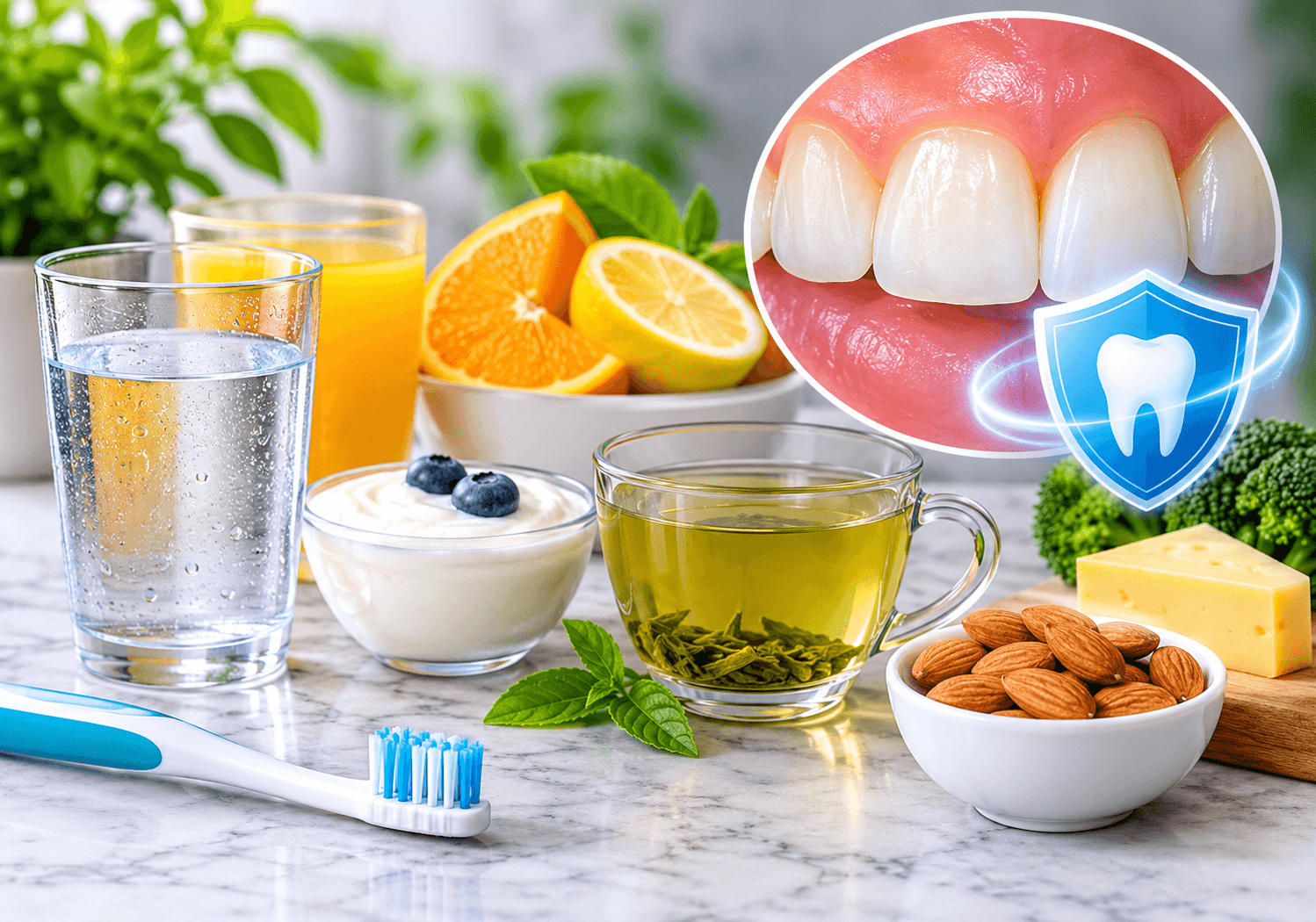
Natural Ways to Protect Tooth Enamel from Acid Erosion: 12 Practical Strategies
Acid erosion is the slow, silent wearing away of your tooth enamel by acids from food, drink, or stomach reflux. Unlike cavities, which start as a small hole, acid erosion softens and thins the entire surface of your teeth, making them sensitive, discolored, and more prone to breaking. The good news: you do not need expensive treatments or harsh chemicals to slow the process. There are straightforward, natural ways to protect tooth enamel from acid erosion that fit into a normal daily routine—swishing water, timing your brushing, choosing the right foods, and managing reflux.
This guide walks through twelve evidence-based habits that help your mouth buffer acid, support remineralization, and keep your enamel as strong as it can be. No jargon, no fear-mongering. Just practical steps you can start tonight.
Quick Answer
What are the best natural ways to protect tooth enamel from acid erosion? Swish and swallow plain water after acidic foods or drinks, wait at least 30 minutes before brushing, chew xylitol-based sugar-free gum, use fluoride toothpaste, eat calcium- and phosphorus-rich foods, manage acid reflux, sip water throughout the day, use a straw for acidic beverages, drink green tea, limit frequent snacking, see your dentist regularly, and ask about fluoride varnish. Together, these habits raise your mouth’s pH, boost salivary buffering, and give enamel a chance to remineralize.
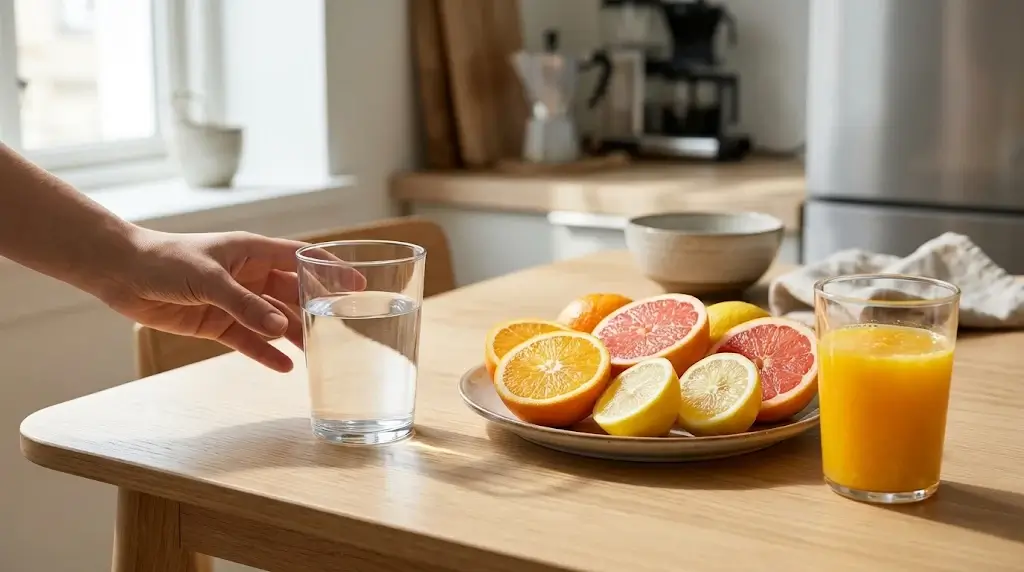
1. Swallow Water Immediately After Acidic Foods or Drinks
When you eat citrus fruit, drink soda, or have a glass of wine, the pH in your mouth can drop below 5.5—the threshold where enamel begins to dissolve, according to the National Institute of Dental and Craniofacial Research (NIDCR). Plain water is the simplest buffer you have.
How to do it:
- After any acidic bite or sip, take two or three swallows of plain water and swish gently for 10 seconds.
- Do not gargle aggressively; a gentle swish is enough to dilute the acid across the tooth surface.
- Spit the water out or swallow it—either works. The goal is dilution, not rinsing.
Why it works: Water raises the pH in your mouth within seconds. Saliva then takes over, and the acid challenge on your enamel is shortened dramatically. Think of it as washing off a splash of lemon juice before it has time to eat into the surface.
2. Wait 30 Minutes Before Brushing
This one surprises people. If you brush immediately after eating something acidic, your bristles can scrub away the already-softened enamel layer, accelerating erosion.
The rule: Give your saliva at least 30 minutes to neutralize the acid and begin remineralizing the surface before you pick up your toothbrush.
- Set a phone reminder if you tend to forget.
- In the meantime, swish water or chew a piece of xylitol gum (see tip #3).
- When you do brush, use a soft-bristle toothbrush and gentle, short strokes.
Coach’s Tip: If you are at a restaurant and finish a meal with a glass of wine, do not rush to the bathroom to brush. Swish water, chew a piece of gum, and brush at home. Your enamel will thank you.
3. Chew Sugar-Free Gum with Xylitol
Xylitol is a sugar alcohol that your mouth’s bacteria cannot ferment, so it does not produce the lactic acid that drives demineralization. On top of that, chewing stimulates saliva flow, and saliva is your mouth’s natural defense system.
- Look for gum that lists xylitol as the first or second sweetener.
- Chew for 15 to 20 minutes after a meal or snack.
- Avoid gum that contains sorbitol or mannitol as the primary sweetener if you are focused on enamel protection, because xylitol has the strongest research base for reducing acid-producing bacteria.
A 2019 review in Caries Research found that xylitol-containing products reduced the risk of dental caries in both children and adults, supporting its role in maintaining a healthier oral microbiome and reducing acid production.
Why it matters for acid erosion: More saliva means more bicarbonate ions, which neutralize acid faster. Xylitol also makes it harder for Streptococcus mutans and other acid-producing bacteria to establish a thick plaque biofilm on the enamel surface.
4. Use Fluoride Toothpaste (and Know What to Look For)
Fluoride is not a “natural” ingredient in the organic-food sense, but it is a naturally occurring mineral, and it is the single most proven topical agent for strengthening enamel against acid. The CDC’s oral health guidelines recommend fluoride toothpaste for all ages.
What to look for on the tube:
- “Contains fluoride” or “sodium fluoride 0.245% (1,100 ppm)” for adults.
- The ADA Seal of Acceptance (if available in your region) confirms the product meets safety and efficacy standards.
- Avoid “natural” toothpastes that list only baking soda, charcoal, or essential oils as active ingredients—they do not remineralize enamel.
How to use it:
- Apply a pea-sized amount (about 0.4 g) to a soft-bristle brush.
- Brush for two full minutes, twice daily.
- Do not rinse aggressively after brushing. Spit out the excess, but leave a thin film of fluoride on your teeth so it can work overnight.
Fluoride converts the hydroxyapatite in enamel to fluorapatite, which is more resistant to acid dissolution. This is not a cosmetic effect; it is a structural change in the crystal lattice of your enamel.
5. Eat Calcium- and Phosphorus-Rich Foods
Enamel is made of hydroxyapatite, a crystal of calcium and phosphorus. When you eat foods rich in both minerals, the ions are available in your saliva to support the remineralization process.
Good daily sources:
| Food | Approx. Calcium | Approx. Phosphorus |
| 1 cup (245 g) plain yogurt | 450 mg | 245 mg |
| 3 oz (85 g) canned sardines (with bones) | 350 mg | 235 mg |
| 1 cup (240 ml) fortified almond milk | 450 mg | 100 mg |
| ½ cup (78 g) cooked broccoli | 60 mg | 75 mg |
| 1 oz (28 g) almonds | 75 mg | 95 mg |
You do not need to hit the full daily requirement from a single meal. Spreading these foods across breakfast, lunch, and dinner keeps a steady supply of calcium and phosphate ions in your saliva.
The National Institutes of Health (NIH) Office of Dietary Supplements notes that adequate calcium and phosphorus intake supports bone and dental mineralization, though the primary source of remineralizing ions in the mouth is saliva itself.
6. Manage Acid Reflux (GERD)
If you experience heartburn more than twice a week, stomach acid is reaching your esophagus and, in some cases, your mouth. This is a major, often overlooked cause of enamel erosion—especially on the back surfaces of the upper teeth, which face the throat.
Practical steps to reduce reflux-related erosion:
- Eat smaller meals and avoid lying down for at least 2–3 hours after eating.
- Limit trigger foods: tomato sauce, citrus, mint, chocolate, alcohol, and carbonated drinks.
- Elevate the head of your bed by 4–6 inches (10–15 cm) using a wedge pillow or by raising the bed frame.
- If reflux is frequent, see your doctor. Untreated GERD is not just a dental problem; it is a medical one.
Common Mistake: Many people with reflux rinse their mouth with baking soda or an antacid after a bad episode. While this can temporarily neutralize acid, it is not a long-term strategy. The real fix is reducing how often stomach acid reaches the mouth. If you are managing GERD, check with a doctor before adding any new supplement or antacid routine.
7. Sip Water Throughout the Day
This sounds too simple to matter, but a consistently hydrated mouth produces more saliva, and saliva is the primary buffer against acid.
- Keep a water bottle at your desk or on the counter.
- Aim for 6–8 cups (1.5–2 liters) of water per day, spread out rather than chugged all at once.
- If you are in a dry climate or take medications that cause dry mouth (antihistamines, some blood-pressure meds), increase your water intake and talk to your dentist about saliva substitutes.
The CDC emphasizes that adequate hydration supports overall oral health, including the maintenance of a healthy salivary flow that protects against both caries and erosion.
8. Use a Straw for Acidic Beverages
If you drink coffee, iced tea, sports drinks, or wine regularly, a straw changes the geometry of the acid’s contact with your teeth.
- Position the straw toward the back of your tongue so the liquid bypasses the front surfaces of your teeth.
- This reduces the time acid sits on the enamel, especially the labial (front-facing) surfaces that are most visible.
- It does not eliminate the acid, but it shortens the acid challenge window.
This is a small habit with a measurable effect over years. You are not avoiding the drink; you are just changing where it lands.
9. Drink Green Tea (Hot or Iced, Unsweetened)
Green tea contains polyphenols called catechins, particularly epigallocatechin gallate (EGCG), which have been shown in laboratory and clinical studies to inhibit the growth of acid-producing oral bacteria and reduce plaque formation.
- One to two cups (240–480 ml) per day is a reasonable target.
- Avoid adding sugar, which reintroduces the fermentation problem.
- If you are sensitive to caffeine, decaf green tea still contains catechins.
A 2020 review in Journal of Dental Research summarized that green tea catechins reduce the virulence of S. mutans and lower the acid output of dental plaque in vitro and in small human trials. The effect is modest, but it adds another layer of protection when combined with the other habits in this list.
If you are already managing food cravings or looking for a satisfying low-calorie drink swap, the principles in our guide on managing food cravings without supplements can help you transition from sugary drinks to water and green tea without feeling deprived.
10. Limit Frequent Snacking and Acidic “Grazing”
It is not just what you eat; it is how often. Every time you eat or drink something acidic, your mouth’s pH drops and takes 20–30 minutes to recover. If you snack every 30 minutes, your enamel is in a near-constant state of demineralization.
Practical adjustments:
- Set two or three defined eating windows (for example, 8 a.m., 12:30 p.m., 6 p.m.) and keep snacks to whole fruits, nuts, or cheese rather than citrus, dried fruit, or soda.
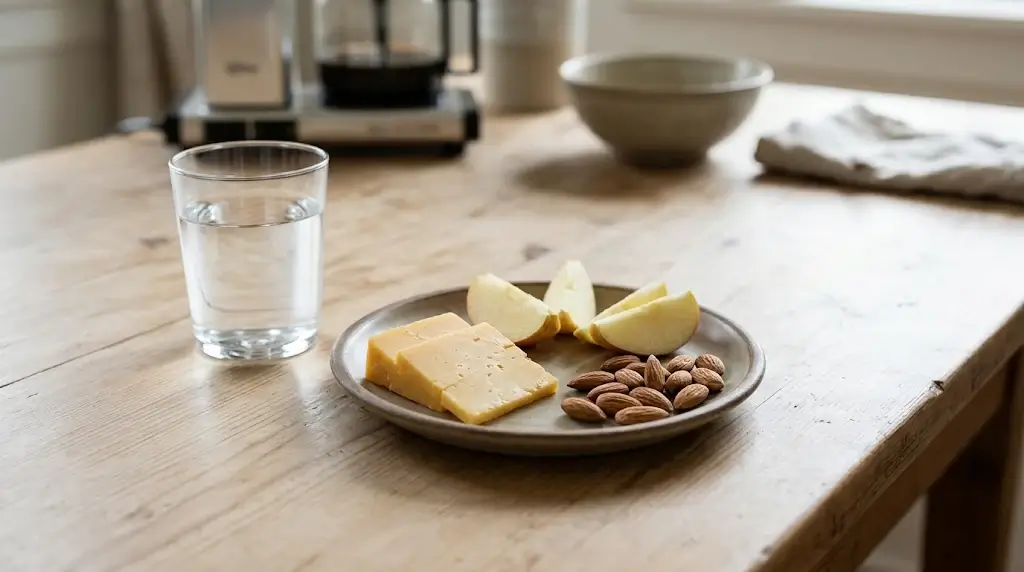
- If you must snack, choose low-acid options: plain crackers, cheese, apple slices (the fiber actually stimulates saliva), or plain nuts.
- Avoid “sipping” acidic beverages over several hours. Drink them in one sitting, then swish water.
The Mayo Clinic notes that frequent exposure to acidic foods and drinks is a leading cause of non-carious enamel loss, and reducing the frequency of exposure is as important as reducing the amount.
11. See Your Dentist Regularly and Ask About Erosion
A general dental cleaning every six months catches early enamel thinning before it becomes a sensitivity or structural problem.
What to ask your dentist or hygienist:
- “Do I show signs of acid erosion?” They can check the back surfaces of your upper teeth and the cusps (chewing surfaces) for early wear patterns.
- “Would a fluoride varnish be helpful?” A professional fluoride varnish (50,000 ppm fluoride) is applied in-office and releases fluoride over 24–48 hours. It is a stronger topical fluoride dose than toothpaste and is recommended for patients at higher risk of erosion or caries.
- “Should I consider a dental sealant on the chewing surfaces?” Sealants are most common in children, but adults with early cusp wear can benefit from a protective resin coating.
If you have had a root canal, a crown, or a veneer, mention it. Restored teeth are still vulnerable to erosion at the margins, and your dentist can monitor those areas.
12. Consider a Professional Fluoride Varnish or Desensitizing Treatment
This is the “extra layer” for people who are at higher risk: those with GERD, those who eat a lot of citrus or wine, those with a history of enamel sensitivity, or those who grind their teeth at night (bruxism thins enamel and makes it more vulnerable to acid).
- A fluoride varnish visit takes about five minutes and is typically covered by dental insurance as a preventive service.
- For sensitivity, your dentist may apply a desensitizing agent (such as potassium nitrate or strontium chloride) to the exposed dentin tubules.
- If bruxism is contributing, a custom night guard made by your dentist protects the enamel surface from mechanical wear, giving the acid-buffering habits in this list a better chance to work.
This is not a “natural” intervention in the strictest sense, but it is a non-invasive, preventive dental treatment that works alongside the daily habits above.
How to Build a Daily Enamel-Protection Routine
You do not need to do all twelve things at once. Start with the three that are easiest for your schedule and add one new habit every two weeks.
Morning:
- Brush for two minutes with fluoride toothpaste. Spit, do not rinse.
- Eat a breakfast that includes a calcium source (yogurt, fortified milk, cheese).
- Drink a full glass of water with the meal.
Midday:
- If you have coffee or an acidic lunch, use a straw for the drink and swish water after the meal.
- Chew xylitol gum for 15 minutes if you are away from a sink.
Evening:
- Eat dinner with a phosphorus-rich side (fish, broccoli, legumes).
- Wait 30 minutes, then brush for two minutes.
- Sip water through the evening. Avoid late-night snacking, especially citrus or dried fruit.
- If you have reflux, elevate your head and avoid eating within 2–3 hours of bed.
Weekly / Monthly:
- Keep a green tea habit (1–2 cups/day, unsweetened).
- Track your dental checkup schedule. Call if it has been more than six months.
Safety and Cautions
- Do not use abrasive “whitening” pastes or charcoal products on a daily basis. They can physically wear down already-thinned enamel.
- Do not swish undiluted apple cider vinegar, lemon juice, or essential oils in your mouth as a “natural remedy.” These are highly acidic and will accelerate erosion, not prevent it.
- If you have GERD, esophagitis, or a history of peptic ulcers, talk to your doctor before making dietary changes or starting any new supplement.
- If you are pregnant or postpartum, hormonal changes can increase gum sensitivity and alter salivary pH. Mention any new sensitivity to your OB/GYN or dentist.
- If you take medications that cause dry mouth (antihistamines, antidepressants, diuretics, some blood-pressure drugs), ask your pharmacist or dentist about saliva substitutes or sugar-free lozenges.
This article is for general information and is not a substitute for advice from a doctor or dentist.
FAQ
Can you rebuild tooth enamel naturally?
Enamel has no living cells, so it cannot regenerate the way bone or skin can. However, the mineral content of the outer enamel layer can be partially restored through remineralization—depositing calcium, phosphate, and fluoride ions back into early microcracks. This is why the habits in this guide matter: they create the chemical environment for remineralization to occur. Once enamel is physically worn away, only a dentist can restore it with a filling, bonding agent, or crown.
What foods cause the most acid erosion of teeth?
Citrus fruits (lemons, limes, grapefruit), carbonated sodas, sports and energy drinks, wine, vinegar-based dressings, and dried fruits (raisins, apricots) are the most commonly cited culprits. The Cleveland Clinic notes that both dietary acids and stomach acid from reflux contribute to enamel loss. It is the frequency of exposure, not just the acidity, that drives erosion.
How long does it take for enamel to erode?
It depends on the frequency and concentration of acid exposure, your salivary flow, and your brushing habits. Mild, occasional exposure may cause no measurable loss for years. Chronic daily exposure—such as sipping soda all day or untreated GERD—can produce visible enamel thinning within a few years. Your dentist can assess wear patterns at a routine exam.
Does drinking water really protect tooth enamel?
Yes. Water dilutes acid in the mouth, helps rinse food particles that feed plaque bacteria, and supports the volume of saliva your glands produce. Saliva contains bicarbonate (a natural buffer), calcium, phosphate, and proteins that all contribute to remineralization. The CDC lists adequate hydration as a basic component of oral health maintenance.
Is fluoride “natural” or “artificial”?
Fluoride is a naturally occurring mineral found in water, soil, and many foods. The fluoride in toothpaste is a processed form (usually sodium fluoride or stannous fluoride), but the element itself is not synthetic. The question is not whether fluoride is “natural” but whether it is effective and safe at the concentrations used in toothpaste (1,000–1,500 ppm for adults). Decades of research support its role in reducing caries and strengthening enamel against acid.
What should I do if my teeth are already sensitive from erosion?
Reduce acid exposure using the steps in this guide, switch to a soft-bristle toothbrush, and use a toothpaste formulated for sensitivity (look for potassium nitrate or stannous fluoride as active ingredients). Book a dental visit to rule out other causes of sensitivity (cracks, gum recession, exposed roots). If the erosion is significant, your dentist may recommend a fluoride varnish, a desensitizing treatment, or a restorative procedure.
Conclusion
Protecting your tooth enamel from acid erosion does not require a complicated routine or expensive products. The natural ways to protect tooth enamel from acid erosion come down to a handful of daily habits: swishing water, timing your brushing, choosing the right foods, managing reflux, and giving your saliva the time and conditions it needs to do its job. Add a fluoride toothpaste, a couple of cups of green tea, and a dental checkup every six months, and you have a practical, evidence-based shield for your teeth.
Start with two or three of the twelve strategies above this week. Build the rest in gradually. Your enamel will not thank you with a note, but it will show up as fewer sensitive teeth, less discoloration, and fewer unexpected dental bills down the road.