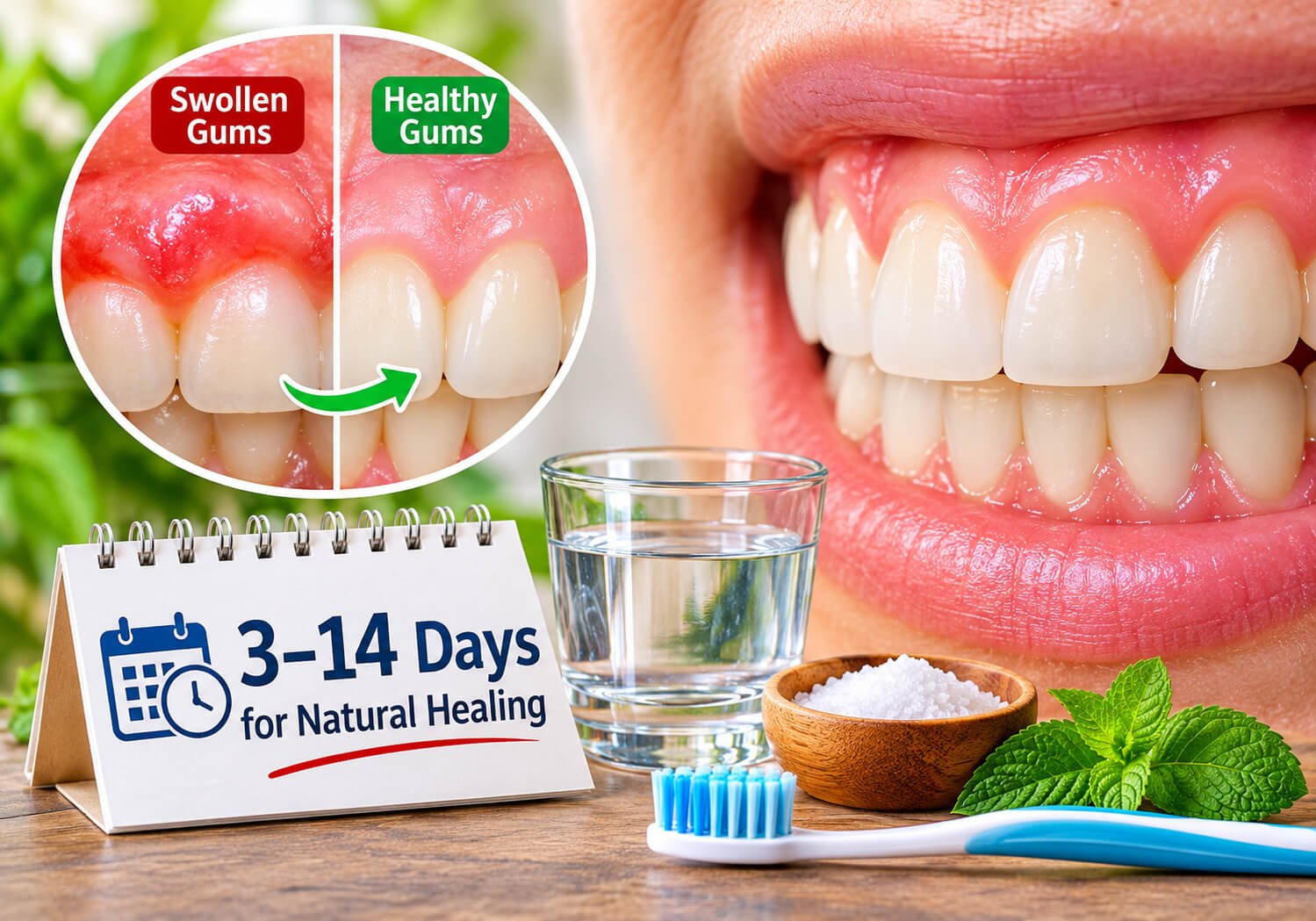
How Long Does It Take for Swollen Gums to Heal Naturally? A Practical Recovery Timeline
Mildly swollen gums usually take 3 to 14 days to heal naturally once you remove the source of irritation and stay consistent with daily care. If your gum swelling comes from a small scratch—like biting into a sharp tortilla chip or brushing too aggressively—the soft tissue in your mouth often repairs itself in just 2 to 5 days. However, if the swelling is caused by early-stage gum disease (gingivitis) from plaque buildup, expect a 10-to-14-day timeline of dedicated brushing, flossing, and rinsing before your gums look pink, firm, and healthy again.
Think of gum recovery just like recovering from a strained muscle or a minor skin scrape. Your body already has the biological machinery to repair tissue, calm inflammation, and fight off bacteria. Your job isn’t to force the tissue to heal overnight; your job is to clear away the irritants—food debris, bacterial plaque, and harsh friction—so your immune system can finish its work without interruption.
(Note: Because persistent gum swelling can signal an underlying infection or periodontal disease, check with a dentist or doctor before relying solely on home care, especially if you experience severe pain, fever, or pus.)
Quick Answer: Most minor cases of swollen gums heal naturally within 3 to 14 days. Mechanical irritation from food or hard brushing typically resolves in 2 to 5 days, while mild plaque-induced gingivitis takes 10 to 14 days of consistent daily brushing, gentle flossing, and warm saltwater rinses to fully subside.
Why Your Gums Swell in the First Place
Before you can map out an accurate recovery timeline, you have to identify what triggered the inflammation. In the gym, you wouldn’t treat a tight hamstring the same way you treat a torn ligament. The exact same rule applies to your mouth: the root cause dictates how fast your gum tissue bounces back.
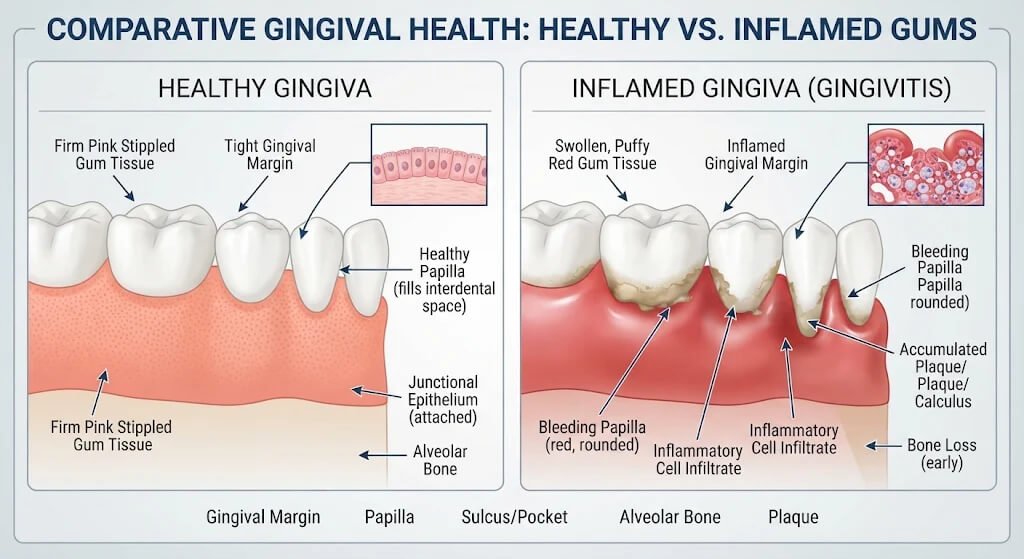
When plaque, food particles, or physical trauma irritate your gumline, your body sends extra blood flow and white blood cells to the area. That rush of blood is what makes your gums look puffy, red, and shiny—and why they bleed easily when you brush. According to the National Institute of Dental and Craniofacial Research, this inflammatory response is your body’s natural defense mechanism against bacterial buildup along the gumline.
Here are the four most common reasons gums swell—and why their healing clocks run at different speeds:
- Minor Physical Trauma: Burned tissue from hot pizza, a poke from a stiff toothbrush bristle, or a scratch from crunchy snacks creates localized swelling. Because there is no deep bacterial infection, oral mucosal cells turn over rapidly, leading to fast healing.
- Plaque-Induced Gingivitis: When sticky bacterial film sits along your gumline for more than 48 to 72 hours, it irritates the gingival tissue. Healing requires daily mechanical removal of that plaque, which takes over a week of consistent habits.
- Trapped Food or Debris: A popcorn hull or sesame seed wedged beneath the gumline acts like a splinter. Until that physical object is flushed or flossed out, the tissue stays inflamed indefinitely.
- Systemic Factors and Nutrition: Hormonal shifts, high stress, poor sleep, dehydration, or low levels of key micronutrients like vitamin C can slow down tissue repair and make gums overreact to minor plaque.
How Long Does It Take for Swollen Gums to Heal Naturally by Cause?
Not all gum swelling follows the same schedule. Use the breakdown below to match your symptoms to a realistic recovery window.
| Cause of Swollen Gums | Typical Natural Healing Time | Key Action Required for Healing | Warning Sign to See a Dentist |
| Food Scratch or Thermal Burn | 2 to 5 days | Warm saltwater rinses; avoid spicy, acidic, or crunchy foods. | Pain worsens after day 3 or white patches appear. |
| Aggressive Brushing / Flossing Trauma | 3 to 7 days | Switch to an extra-soft toothbrush; use gentle, controlled strokes. | Gums continue receding or bleeding lightly after a week. |
| Trapped Food Debris (e.g., Popcorn Hull) | 24 to 48 hours (after removal) | Gentle flossing or water flossing to dislodge the trapped particle. | You cannot remove the object, or throbbing pain starts. |
| Mild Plaque-Induced Gingivitis | 10 to 14 days | Twice-daily soft brushing, daily flossing, and antiseptic/saline rinses. | Swelling and bleeding persist past 2 full weeks. |
| Tartar (Calculus) Buildup | Cannot heal naturally alone | Requires professional dental scaling to remove hardened deposits. | Hard yellow/brown crust at the gumline that won’t brush off. |
| Dental Abscess or Periodontitis | Will not heal naturally | Immediate professional dental treatment or antibiotics. | Pus, severe throbbing pain, facial swelling, or fever. |
Notice one critical distinction in that table: soft plaque can be removed at home, while hardened tartar cannot. Once plaque mineralizes into tartar (calculus)—which can happen in as little as 24 to 72 hours if left undisturbed—no amount of brushing or rinsing will get it off. If tartar is sitting under your gums, the tissue will stay chronically inflamed until a dental hygienist removes it.
The Day-by-Day Gum Healing Timeline: What to Expect
When you commit to a clean, gentle oral care routine for mild gingivitis or irritation, your recovery happens in predictable phases. Knowing what to look for each day keeps you from quitting too early—or brushing harder out of frustration.
Days 1 to 2: Clearing the Irritant and Calming Acute Puffiness
During the first 48 hours, your primary goal is stopping further trauma while flushing away surface bacteria. You will likely still see redness, puffiness, and minor pink streaks when you spit after brushing. Warm saltwater rinses begin drawing excess fluid out of the swollen tissue through osmosis, giving you mild relief from throbbing or tenderness within hours.
Days 3 to 5: Bleeding Starts to Decrease
By day three or four, if you have been flossing and brushing gently twice a day, your immune system gains the upper hand over surface plaque. The sharp sensitivity when eating or rinsing starts to fade. You might still notice light bleeding when you slide floss between tight teeth, but the heavy, spontaneous oozing stops.
Days 6 to 9: Tissue Firming and Color Shift
Around the one-week mark, visible inflammation drops noticeably. The swollen, rounded edges of your gums begin tightening back against the base of your teeth. Their color shifts from angry crimson back toward a healthier coral or pale pink, and chewing normal foods feels comfortable again.
Days 10 to 14: Full Surface Recovery
By the end of week two, mild gingivitis and surface irritation should be completely resolved. Healthy gums look firm, feel snug around each tooth, and do not bleed when you brush or floss gently. If you hit day 14 with zero improvement, that is your clear signal that tartar buildup or a deeper pocket needs professional attention.
Coach’s Tip: Treat your daily oral care like progressive training—consistency beats intensity every single time. Brushing aggressively for three minutes once a day will tear up fragile gum tissue, while two gentle, focused two-minute sessions every day give your gums the exact environment they need to rebuild.

Step-by-Step Daily Routine to Help Swollen Gums Heal Faster
If you want to hit the fast end of that healing timeline, follow a structured daily protocol. Just like following a well-built workout plan, executing the right habits in the right order maximizes your recovery without irritating delicate tissue.
1. Start With a Warm Saltwater Rinse (2 to 3 Times Daily)
Saltwater is one of the simplest, safest ways to soothe inflamed oral tissue. Research published via the National Library of Medicine (PMC) shows that saline rinses promote gingival fibroblast migration and help reduce oral bacteria without harsh chemical irritation.
- How to mix it: Dissolve 1/2 teaspoon of standard table salt into 8 ounces (240 ml) of warm—not hot—water.
- How to use it: Swish the solution gently around your mouth for 30 seconds, focusing on the swollen area, then spit it out.
- Best timing: Do this right after meals to flush out food particles and before bed.
2. Floss Gently Before You Brush (Once Daily)
Many people skip flossing when their gums are swollen because they see blood and assume they are making things worse. In reality, bleeding is a sign of trapped plaque irritating the tissue—not a reason to stop.
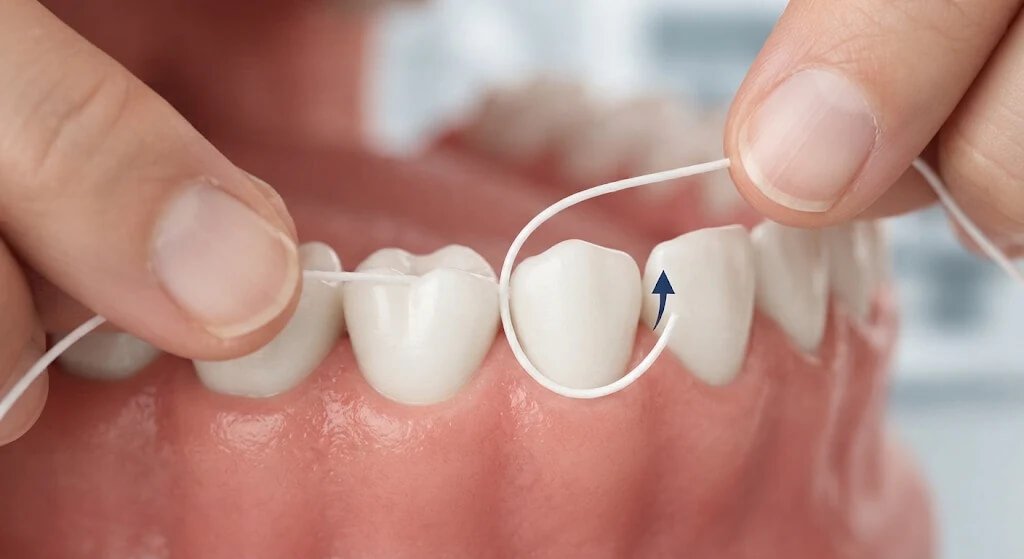
- The right technique: Take about 18 inches (45 cm) of waxed or woven floss. Slide it gently between your teeth using a soft sawing motion—never snap it straight down into the gums.
- Hug the tooth: Curve the floss into a “C” shape against the side of one tooth and slide it just beneath the gumline, moving up and down 2 to 3 times before repeating on the adjacent tooth.
- Alternative tool: If string floss feels too clumsy or painful, use a water flosser on its lowest pressure setting to flush debris out of the gum sulcus.
3. Brush With an Extra-Soft Bristle Brush (Twice Daily)
When gums are inflamed, medium or hard bristles act like sandpaper on healing skin. Switch immediately to a manual brush labeled extra-soft or an electric toothbrush with a built-in pressure sensor.
- Angle matters: Hold the bristles at a 45-degree angle toward your gumline so the tips gently sweep under the edge of the gums.
- Use light pressure: Hold the toothbrush with just your fingertips—not a white-knuckle fist—and move in short, gentle circular strokes for 2 full minutes.
- Timing: Brush once in the morning and once right before sleep, when saliva flow drops and bacteria multiply fastest.
Common Mistake: Scrubbing harder to “clean away” gum swelling. Heavy pressure abrades delicate mucosal tissue, causes gum recession, and resets your healing clock back to day one. Let the tips of the bristles do the work—never mash them flat against your teeth.
4. Stay Hydrated and Support Saliva Flow
Saliva is your mouth’s built-in recovery fluid. It buffers acids, washes away loose food particles, and delivers antimicrobial proteins directly to injured tissue. When you are dehydrated or breathe through your mouth at night, your gums dry out and stay inflamed longer.
- Daily target: Sip water steadily throughout the day so your mouth stays moist.
- Check your habits: Cut back on alcohol-based mouthwashes, sugary drinks, and tobacco products during recovery, as all three dry out oral tissue and constrict blood flow needed for healing.
Nutrition and Lifestyle Factors That Speed Up Gum Tissue Repair
Your gums are living connective tissue made largely of collagen fibers and blood vessels. Just like rebuilding muscle fibers after hard training sessions, repairing gingival tissue requires the right raw materials from your diet and recovery habits.
Key Nutrients for Gingival Healing
- Vitamin C (Ascorbic Acid): Vitamin C is essential for collagen synthesis and capillary strength. According to the NIH Office of Dietary Supplements, inadequate vitamin C intake directly impairs wound healing and leads to swollen, bleeding gums. Load up on bell peppers, strawberries, kiwi, broccoli, and citrus (rinsing with water afterward if citrus stings).
- Omega-3 Fatty Acids: Healthy fats like EPA and DHA help regulate your body’s inflammatory response. Clinical reviews in PubMed Central note that omega-3 intake is associated with lower levels of periodontal inflammation. Fatty fish like salmon, sardines, walnuts, and chia seeds are easy additions.
- Zinc and Protein: Tissue regeneration relies on amino acids and zinc to build new cells. Pair lean proteins—like eggs, poultry, Greek yogurt, or tofu—with zinc-rich foods like pumpkin seeds and lentils.
- Coenzyme Q10 (CoQ10) and B Vitamins: Whole grains, leafy greens, and lean meats supply B vitamins and antioxidants that support cellular energy during tissue repair.
Sleep, Stress, and Oral Inflammation
Chronic stress and short sleep don’t just stall your workouts—they also slow down wound healing in your mouth. When cortisol stays elevated from poor sleep or high daily stress, your immune system becomes less efficient at clearing oral bacteria, while systemic inflammation climbs.
Prioritizing 7 to 9 hours of quality sleep gives your body the deep recovery window it needs to repair mucosal cells. If you notice you clench or grind your teeth during stressful weeks, that extra mechanical pressure on your jaw and gums can also prolong soreness. Learning how sleep quality impacts inflammation and recovery—and finding ways to manage stress-driven habits—pays off across your entire body, including your oral health.

Foods and Habits to Avoid While Your Gums Are Healing
Even the best brushing routine won’t overcome constant re-injury. For the next 7 to 14 days, keep these common irritants off your plate and out of your routine:
- Sharp, Crunchy Snacks: Tortilla chips, crusty baguettes, nuts, and popcorn hulls can slice or wedge straight into tender gum pockets. Stick to softer foods like scrambled eggs, oatmeal, steamed vegetables, smoothies, and flaky fish for a few days.
- Very Hot Foods and Drinks: Piping hot coffee, soup, or melted cheese can cause thermal micro-burns on already fragile gums. Let hot meals cool to a warm temperature before eating.
- Acidic and Spicy Foods: Hot sauce, vinegar dressings, tomatoes, and sour candies sting exposed gum tissue and increase surface irritation.
- Added Sugars and Sticky Carbs: Refined sugars feed the exact acid-producing bacteria that form plaque along your gumline. If you’re working to curb daily sugar cravings, your gums will benefit right alongside your energy levels.
- Alcohol-Based Mouthwashes: Traditional mouthwashes high in alcohol burn sensitive tissue and dry out your mouth. Choose an alcohol-free antibacterial rinse or stick to plain warm saltwater.
- Tobacco and Vaping: Nicotine constricts blood vessels, starving your gums of oxygen and nutrients while masking early warning signs like bleeding.
6 Red Flags: When Swollen Gums Will NOT Heal Naturally
Home care works well for mild gingivitis and minor scrapes, but some dental problems cannot heal on their own. Knowing when to stop self-treating and book a dental exam protects you from losing bone or teeth.
According to the Mayo Clinic, untreated gingivitis can advance to periodontitis, an infection that damages the soft tissue and bone supporting your teeth. Seek professional dental care promptly if you notice any of these red flags:
- Swelling Lasts Longer Than 14 Days: If two full weeks of gentle brushing, daily flossing, and saltwater rinses haven’t reduced the puffiness, hardened tartar or deeper pockets are likely present.
- Swelling Is Localized Around One Specific Tooth With Throbbing Pain: A single swollen, painful bump on the gums often points to a dental abscess (a bacterial infection at the tooth root) or an impacted tooth, which requires professional drainage or treatment.
- Pus or Bad-Tasting Drainage: Any white, yellow, or foul-tasting fluid coming from the gumline is a clear sign of active infection.
- Loose Teeth or Changes in Your Bite: If a tooth feels wiggly or your teeth don’t fit together the way they normally do, the supporting bone may be affected.
- Fever, Facial Swelling, or Swollen Neck Glands: These systemic symptoms mean an oral infection may be spreading beyond the gums and requires urgent medical or dental care.
- Gums Pulling Away From Teeth: Visible gum recession that exposes tooth roots won’t grow back naturally and needs a dentist’s evaluation.
How to Prevent Swollen Gums From Coming Back
Once your gums return to a healthy pink color, keeping them that way takes less than five minutes a day. Think of maintenance like mobility work after rehabbing a joint—if you stop doing the basics, the stiffness creeps right back in.
- Follow the 2×2 Rule: Brush for 2 minutes, twice a day with a soft-bristled brush and fluoride toothpaste.
- Clean Between Teeth Every 24 Hours: Plaque starts hardening into tartar within a day or two. Daily flossing or water flossing disrupts bacterial colonies before they mineralize.
- Schedule Professional Cleanings Every 6 Months: Even with flawless home habits, small amounts of tartar build up in hard-to-reach spots. Regular cleanings clear the slate so your gums stay inflammation-free.
- Support Overall Metabolic and Immune Health: Balanced blood sugar, steady hydration, adequate daily protein intake, and nutrient-dense meals keep your immune system responsive and resilient. Building consistent daily energy and recovery habits reinforces tissue health from head to toe.

Frequently Asked Questions
How long does it take for swollen gums to go down after flossing?
If you just started flossing after a long break, mild soreness and puffiness usually calm down within 3 to 7 days of daily gentle flossing. Your gums are adjusting to plaque removal and improved circulation. As long as you use a soft C-shape motion instead of snapping the floss down, the tissue will toughen up quickly.
Can swollen gums heal on their own without a dentist?
Yes, mildly swollen gums caused by food scratches, aggressive brushing, or early plaque buildup can heal naturally in 3 to 14 days with consistent home care. However, if the swelling is caused by hardened tartar, deep periodontal pockets, or a tooth abscess, it will not heal on its own and requires a dentist.
How many days does gingivitis take to clear up?
Early-stage, plaque-induced gingivitis typically takes 10 to 14 days to clear up once you commit to brushing twice daily with a soft brush, flossing every day, and rinsing with warm saltwater. If bleeding and swelling continue past two full weeks, schedule a professional dental cleaning to remove stubborn tartar buildup.
Why are my gums swollen around one tooth?
Gum swelling isolated around a single tooth usually happens when a piece of food (like a popcorn hull or seed) gets wedged under the gumline, or when you brush one spot too hard. If gentle flossing and warm saltwater rinses don’t relieve it within 48 hours—or if you feel throbbing pain—it could be a localized tooth abscess.
Does salt water help swollen gums heal faster?
Yes, warm saltwater rinses help reduce gum swelling faster by drawing excess fluid out of inflamed tissue and creating an environment that discourages bacterial growth. Dissolve half a teaspoon of salt in a glass of warm water, swish gently for 30 seconds two to three times a day, and spit it out.
When should I see a dentist for swollen gums?
Book a dental visit if your swollen gums last longer than 14 days despite good daily oral hygiene, or right away if you notice severe throbbing pain, pus, a pimple-like bump on your gums, loose teeth, fever, or swelling in your cheek or jaw. Those signs point to an infection that needs professional treatment.
Conclusion
Knowing how long does it take for swollen gums to heal naturally comes down to identifying the cause and giving your mouth consistent, gentle care. Minor scrapes and brushing irritation usually settle down in 2 to 5 days, while mild gingivitis from plaque buildup takes 10 to 14 days of steady brushing, flossing, and saltwater rinsing to fully resolve. Be patient with the process, ditch stiff bristles and crunchy irritants while your tissue recovers, and contact a dentist promptly if swelling lingers past two weeks or comes with severe pain.