
You do not need grueling, sweat-drenched HIIT sessions or two-hour treadmill marathons to get your metabolism humming. Many people assume that unless they are gasping for air on a spin bike, their daily calorie burn stays stuck in neutral. In reality, formal, high-intensity workouts make up a surprisingly small slice of the energy your body uses every single day.
Learning how to increase metabolic rate naturally without intense exercise comes down to understanding where your daily energy actually goes. By adjusting what you eat, how often you move outside of workouts, how you hydrate, and how you sleep, you can steadily raise your daily calorie expenditure without exhausting your joints or nervous system. Let’s break down the exact, science-backed coaching strategies you can start using today.
Quick Answer
To increase metabolic rate naturally without intense exercise, focus on four daily habits: eat 0.7 to 1.0 grams of protein per pound of target body weight to maximize digestion energy, boost Non-Exercise Activity Thermogenesis (NEAT) through frequent walking and standing, perform two brief weekly resistance sessions to preserve muscle, and get 7 to 9 hours of quality sleep.
- Understanding How Your Metabolism Actually Burns Calories
When clients ask me how to fix a “slow” metabolism, they usually picture a single dial inside their body that only turns up during brutal cardio. Your metabolism is not a single switch. It is the sum of every chemical process that keeps you alive, breathing, digesting, and moving.
Scientists divide your Total Daily Energy Expenditure (TDEE) into four distinct buckets, as outlined in research published via the National Library of Medicine (PMC):
- Basal Metabolic Rate (BMR) – 60% to 70%: The energy your organs, brain, and muscles burn just to keep you alive while lying completely still.
- Non-Exercise Activity Thermogenesis (NEAT) – 15% to 30%: Every calorie you burn doing daily tasks that are not formal exercise—walking to your car, cooking dinner, typing, fidgeting, and cleaning.
- Thermic Effect of Food (TEF) – ~10%: The energy your digestive system uses to break down, absorb, and store the food you eat.
- Exercise Activity Thermogenesis (EAT) – 5% to 10%: The calories burned during intentional workouts like running, lifting weights, or cycling.
Look closely at those percentages. Intentional exercise typically accounts for only 5% to 10% of your total daily burn. Meanwhile, BMR, NEAT, and TEF account for 90% to 95% of your energy output. When you master how to increase metabolic rate naturally without intense exercise, you are targeting the biggest pieces of the metabolic pie rather than chasing the smallest one.
| Metabolic Component | Share of Daily Calorie Burn | Primary Drivers | How to Increase Without Intense Exercise |
| Basal Metabolic Rate (BMR) | 60% – 70% | Lean muscle mass, organ size, age, genetics, thyroid health | Preserve and build muscle with light resistance training; avoid crash diets |
| Non-Exercise Activity (NEAT) | 15% – 30% | Daily steps, standing time, posture shifts, household chores | Walk 10 minutes after meals; use a standing desk; pace on phone calls |
| Thermic Effect of Food (TEF) | ~10% | Macronutrient breakdown (protein vs. carbs vs. fats), meal processing | Prioritize lean protein and whole, high-fiber foods at every meal |
| Exercise Activity (EAT) | 5% – 10% | Formal workouts (running, lifting, sports, fitness classes) | Optional for this approach; keep formal sessions low-impact and brief |
To dig deeper into all the biological factors that govern daily energy output, explore our full breakdown of what affects metabolism and body weight.
Leverage Non-Exercise Activity Thermogenesis (NEAT)
If there is one secret weapon I teach every busy, joint-sensitive, or exercise-averse client, it is NEAT. Non-Exercise Activity Thermogenesis covers every movement you make outside of sleeping, eating, and structured workouts. Research from the Mayo Clinic and PMC studies on NEAT shows that two people of the exact same size can differ by up to 2,000 calories per day in energy expenditure simply based on how much they move throughout the day.
You do not need to break a sweat to trigger NEAT. Gentle, frequent movement keeps your muscles contracting, stimulates lipoprotein lipase (an enzyme that helps clear fats from your bloodstream), and prevents your metabolic rate from dipping into energy-conservation mode.
Practical Ways to Stack NEAT All Day
- Take 10-Minute Post-Meal Walks: Walking at a comfortable, conversational pace of 2.5 to 3.0 mph (4.0 to 4.8 km/h) for just 10 minutes after breakfast, lunch, and dinner adds 30 minutes of movement to your day. It also blunts blood sugar spikes and improves insulin sensitivity.
- Alternate Sitting and Standing: Standing engages your postural muscles in your calves, quads, glutes, and core. Aim to stand for 15 to 20 minutes out of every hour while working at a desk.
- Pace During Phone Calls: Make a personal rule that whenever you take a voice call, you stand up and walk around your home or office until the call ends.
- Park Farther and Take the Stairs: Parking at the far end of the grocery lot adds 0.1 to 0.2 miles (0.16 to 0.32 km) per errand without feeling like a chore.
- Embrace Micro-Movements: Tap your feet, shift your posture, stretch your shoulders every 30 minutes, and do your own household chores briskly rather than batching them once a week.
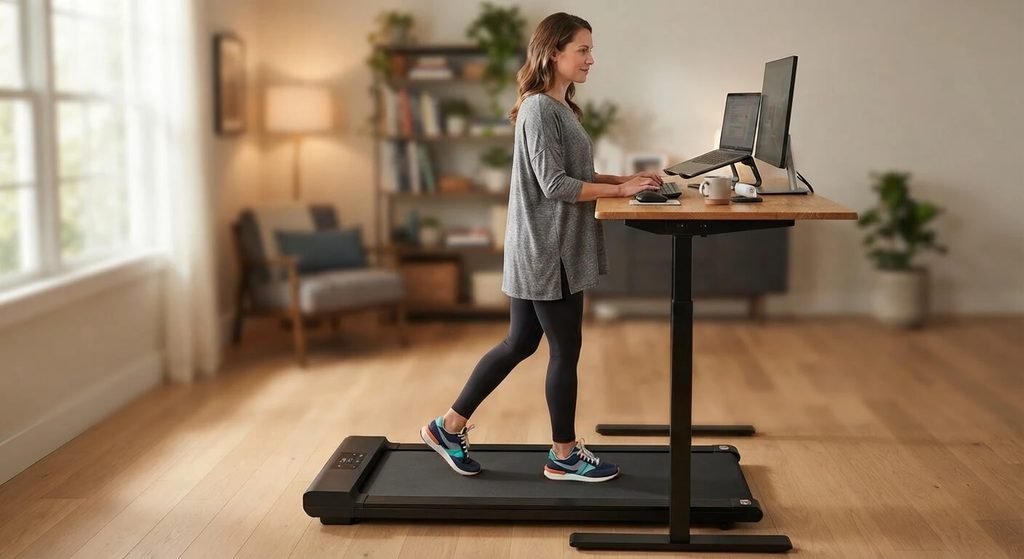
Coach’s Tip: Track your baseline daily steps for three normal days using your phone or a basic pedometer. Do not try to jump straight to 10,000 steps overnight. Simply add 1,500 to 2,000 steps to your current daily average for two weeks—that equals roughly 0.75 to 1 mile (1.2 to 1.6 km) of easy walking spread across your day.
Use Nutrition and the Thermic Effect of Food (TEF)
Every time you eat, your body has to spend calories to chew, digest, absorb, and transport nutrients. However, not all foods cost the same amount of energy to process. According to peer-reviewed metabolic data indexed by the National Institutes of Health (NIH), different macronutrients require vastly different amounts of digestive energy:
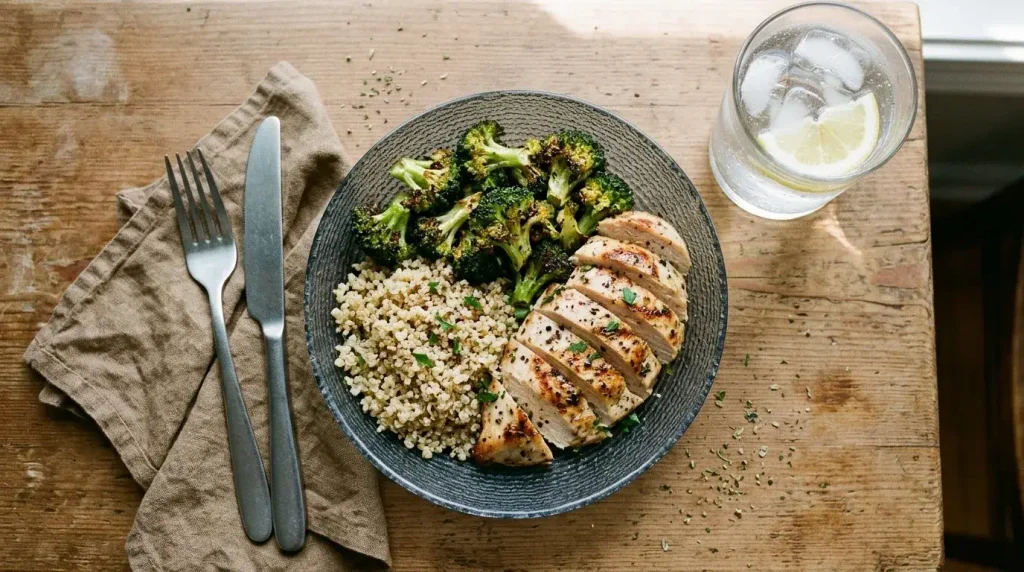
- Protein: 20% to 30% of the calories consumed are burned during digestion. If you eat 100 calories of chicken breast or Greek yogurt, your body uses 20 to 30 calories just processing it.
- Carbohydrates: 5% to 10% of the calories consumed are used for digestion (higher for fibrous whole grains and vegetables, lower for refined sugars).
- Dietary Fats: 0% to 3% of the calories consumed are required for digestion.
Prioritize Protein at Every Meal
Increasing your daily protein intake is one of the most reliable ways to raise your daily calorie burn while sitting completely still. Beyond its high thermic effect, protein supplies the amino acids needed to protect lean muscle tissue from breaking down.
Aim for 0.7 to 1.0 grams of protein per pound (1.5 to 2.2 grams per kg) of your target body weight each day, spread evenly across three or four meals. For a 160 lb (72.5 kg) individual, that equals roughly 110 to 160 grams of protein per day, or 30 to 40 grams per meal. Understanding the link between protein intake and metabolism makes meal planning much simpler because you get higher fullness and a higher metabolic burn from the exact same calorie budget.
Choose Whole, Minimally Processed Foods
Whole foods require more mechanical chewing and enzymatic breakdown than ultra-processed foods. A classic study published in Food & Nutrition Research (PMC) compared two sandwiches with identical calorie counts: one made with whole-grain bread and real cheddar cheese, and the other made with white bread and processed cheese product. The whole-food meal burned nearly 50% more digestive calories than the processed meal.
Pairing lean proteins with high-fiber vegetables, legumes, and whole grains naturally elevates your TEF while keeping hunger hormones steady. For more details on how digestive heat works, read our guide on what thermogenesis is and how it affects metabolism.
Common Mistake: Slashing your calories too aggressively (such as dropping down to 1,000 or 1,200 calories a day) to lose weight faster. Severe calorie restriction triggers adaptive thermogenesis—a survival response where your body lowers thyroid hormone output, reduces NEAT subconsciously, and drops your resting metabolic rate to conserve energy. Keep any calorie deficit mild (300 to 500 calories below maintenance).

Gentle Resistance Training to Protect Lean Muscle Mass
Notice that the focus keyword says “without intense exercise”—not without any muscle stimulation. You do not need heavy barbell deadlifts, CrossFit circuits, or exhausting gym sessions to maintain metabolically active tissue. However, your muscles are the largest metabolic engine in your body.
Even at complete rest, 1 lb (0.45 kg) of skeletal muscle burns roughly 6 calories per day, whereas 1 lb (0.45 kg) of fat tissue burns about 2 calories per day. More importantly, after age 30, adults naturally lose 3% to 8% of their muscle mass per decade if they do not challenge their muscles against resistance. When you lose muscle, your Basal Metabolic Rate drops year after year.
If you are over 40 and noticing this gradual slowdown, our guide on how to increase metabolism naturally after 40 covers age-specific strategies in detail.
You can preserve and even build lean muscle using brief, low-stress resistance sessions twice a week for 15 to 20 minutes at home. The goal is controlled tension, not cardiovascular exhaustion. You should finish these sessions feeling energized rather than wiped out.

- Coachs 15-Minute Low-Intensity Metabolic Muscle Routine
Perform this circuit twice a week on non-consecutive days (for example, Tuesday and Friday). Rest 60 seconds between exercises so your heart rate stays comfortable.
- Chair Box Squats (Quadriceps, Glutes, Hamstrings)
- How to do it: Stand with your feet shoulder-width apart, about 6 inches (15 cm) in front of a sturdy chair. Push your hips back, keep your chest proud, and lower slowly for a 3-second count until your glutes lightly tap the seat. Press through your heels to stand back up.
- Prescription: 3 sets of 10 to 12 reps | Tempo: 3-1-1 | Rest: 60 seconds.
- Regression (Easier): Use a higher chair or place a firm cushion on the seat to shorten the range of motion.
- Progression (Harder): Hold a single dumbbell or household object weighing 10 to 15 lb (4.5 to 6.8 kg) close to your chest (goblet position).
- Incline Wall or Counter Push-Ups (Chest, Shoulders, Triceps)
- How to do it: Place your hands slightly wider than shoulder-width on a kitchen counter or sturdy wall. Walk your feet back until your body forms a straight line from head to heels. Lower your chest toward the surface for 3 seconds, keeping elbows tucked at a 45-degree angle, then press back smoothly.
- Prescription: 3 sets of 8 to 12 reps | Tempo: 3-0-1 | Rest: 60 seconds.
- Regression (Easier): Stand closer to a vertical wall to reduce the angle and body weight load.
- Progression (Harder): Move your hands to a lower, sturdy bench or coffee table about 18 inches (45 cm) off the floor.
- Resistance Band Seated Rows (Upper Back, Lats, Biceps)
- How to do it: Sit tall on the floor or a chair with legs extended, looping a medium-tension resistance band around the soles of your feet. Pull the handles toward your lower ribs while squeezing your shoulder blades together for 1 full second, then return slowly.
- Prescription: 3 sets of 12 to 15 reps | Tempo: 1-1-3 | Rest: 60 seconds.
- Regression (Easier): Use a light-tension resistance band or hold closer to the ends of the band to decrease stretch.
- Progression (Harder): Use a heavy-tension resistance band or hold the squeezed position at your ribs for 3 full seconds on every rep.
- Standing Countertop Calf Raises (Soleus and Gastrocnemius)
- How to do it: Stand tall holding lightly onto a kitchen counter for balance. Rise up onto the balls of your feet over 2 seconds, pause at the top for 2 seconds, and lower your heels slowly to the floor over 3 seconds.
- Prescription: 3 sets of 15 to 20 reps | Tempo: 2-2-3 | Rest: 45 seconds.
- Regression (Easier): Perform seated calf raises while sitting in a chair with a light weight resting on your knees.
- Progression (Harder): Perform single-leg calf raises one side at a time.

Hydration, Cold Water, and Smart Beverages
Water is the medium in which every metabolic reaction in your body takes place. Even mild dehydration of 1% to 2% of your body weight can slow cellular energy production, cause fatigue, and trick you into moving less throughout the day.
Does Drinking Cold Water Boost Metabolism?
Drinking water triggers a mild, temporary rise in energy expenditure known as water-induced thermogenesis. When you drink cold water—around 39°F to 45°F (4°C to 7°C)—your body has to expend a small amount of thermal energy to warm that fluid up to your core body temperature of 98.6°F (37°C).
Research published in the Journal of Clinical Endocrinology & Metabolism (PubMed) found that drinking 500 mL (about 17 oz) of water increased metabolic rate by roughly 24% to 30% for up to 60 minutes, burning approximately 24 extra calories per 500 mL glass. While drinking cold water will not replace healthy eating, drinking four 16-oz glasses of cold water a day can add roughly 80 to 100 extra burned calories with zero physical effort—while simultaneously curbing false hunger cues.
Green Tea and Coffee in Moderation
Unsweetened green tea and black coffee contain natural bioactive compounds that support gentle fat oxidation:
- Green Tea Catechins (EGCG): Green tea combines a mild dose of caffeine with epigallocatechin gallate (EGCG), an antioxidant that slows the breakdown of norepinephrine—a hormone that signals fat cells to release energy. You can read the clinical breakdown in our review on whether green tea extract increases resting metabolic rate.
- Moderate Caffeine: One to two cups of black coffee earlier in the day can temporarily raise resting energy expenditure by 3% to 11%, according to studies indexed by PubMed / NIH. Keep caffeine intake before 2:00 PM so it does not interfere with deep sleep.
Sleep Quality and Stress Management: The Hormonal Metabolic Brakes
You can eat plenty of protein and hit 9,000 daily steps, yet still see your metabolic rate stall if you are chronically sleep-deprived or under unrelenting stress. Sleep and stress directly regulate the endocrine system—the chemical messengers that tell your body whether to burn energy freely or hoard it.
How Poor Sleep Slows Your Resting Metabolic Rate
When you regularly sleep fewer than 6 hours per night, two major metabolic shifts happen:
- Lower Resting Energy Expenditure: Clinical sleep restriction research published in Proceedings of the National Academy of Sciences / PMC shows that circadian disruption and sleep loss reduce resting metabolic rate and impair glucose tolerance.
- Appetite and Muscle Loss Shifts: Sleep deprivation raises ghrelin (your hunger hormone) and lowers leptin (your fullness hormone). Worse, during weight loss, inadequate sleep causes a greater proportion of lost weight to come from lean muscle rather than body fat.
For a deeper look at the hormone connection, check out our guide on how sleep affects metabolism and weight management. Aim for 7 to 9 hours of consistent sleep in a cool bedroom kept around 65°F to 68°F (18°C to 20°C).
Managing Cortisol Without Intense Workouts
High-intensity exercise is actually a form of physical stress that spikes cortisol. If you already work a demanding job, care for family members, or sleep poorly, adding brutal workouts can push cortisol chronically high. Elevated cortisol promotes abdominal fat storage, breaks down muscle proteins, and interferes with the conversion of inactive thyroid hormone (T4) into active thyroid hormone (T3), which governs your cellular metabolic speed.
Instead of intense workouts, use low-intensity nervous system down-regulators:
- 5 Minutes of Box Breathing: Inhale for 4 seconds, hold for 4 seconds, exhale for 4 seconds, and hold empty for 4 seconds.
- Morning Sunlight Exposure: Step outside for 10 minutes within an hour of waking to anchor your circadian rhythm, which regulates daytime energy and nighttime melatonin release.
- Gentle Mobility or Restorative Yoga: Spend 10 minutes in the evening doing slow cat-cow stretches, child’s pose, and supine spinal twists to lower evening cortisol before bed.
Essential Micronutrients and Gentle Cold Exposure
Your cells rely on specific vitamins and minerals as spark plugs to convert food into usable energy (ATP). If you are deficient in key micronutrients, your cellular energy production slows down regardless of how much you move.
Key Nutrients That Support Normal Energy Metabolism
- Iron: Essential for transporting oxygen to your muscles and brain via hemoglobin. Low iron causes profound fatigue and lowers metabolic efficiency. Good sources include lean beef, lentils, spinach, and pumpkin seeds.
- Iodine and Selenium: Required by your thyroid gland to produce and activate T3 and T4 hormones. Found in iodized salt, seafood, eggs, and Brazil nuts (just 1 to 2 Brazil nuts provide a full day’s selenium).
- B Vitamins (B1, B2, B3, B6, B12): Act as direct cofactors in carbohydrate, fat, and protein metabolism. Found in poultry, fish, eggs, legumes, and leafy greens.
- Magnesium: Involved in over 300 enzymatic reactions, including ATP synthesis and blood sugar regulation. Found in almonds, black beans, avocado, and dark leafy greens.
If you want to understand how specific micronutrients power cellular energy, read our breakdown of which nutrients support normal energy metabolism.
Mild Cold Exposure and Brown Fat Activation
Humans carry two main types of fat: white adipose tissue (which stores excess calories) and brown adipose tissue, or brown fat (which burns calories to generate body heat). You do not need painful ice baths to activate brown fat.
Research published in the Journal of Clinical Investigation (PMC) demonstrates that spending time in mildly cool environments—around 60°F to 66°F (15.5°C to 19°C)—stimulates brown adipose tissue activity and increases daily energy expenditure without shivering. Practical ways to apply this include lowering your home thermostat by 2°F to 3°F (1°C to 1.5°C) during the day, sleeping in a cool room, or finishing your normal warm shower with 30 to 60 seconds of cool water.
Sample 24-Hour Metabolic Routine (Zero Intense Workouts)
Putting these habits together works best when they fit naturally into your existing day. Here is a realistic, low-stress daily schedule designed to maximize NEAT, TEF, hydration, and hormonal recovery.
| Time of Day | Metabolic Action | Mechanism Targeted | Estimated Effort |
| 7:00 AM | Drink 16 oz (500 mL) of cold water + 10 min morning sunlight outside | Water thermogenesis + circadian rhythm anchor | Very Low |
| 7:30 AM | High-protein breakfast (e.g., 3 eggs + Greek yogurt = 35g protein) | High Thermic Effect of Food (TEF) + muscle protection | Low |
| 8:30 AM | 10-minute easy walk around the block at 2.5–3.0 mph (4.0–4.8 km/h) | Post-meal glucose clearance + NEAT accumulation | Low |
| 9:00 AM – 12:00 PM | Alternate sitting and standing every 45 min; pace during phone calls | Postural muscle activation + NEAT | Very Low |
| 12:30 PM | Balanced lunch with 35–40g lean protein + high-fiber vegetables | Sustained TEF + steady insulin response | Low |
| 1:00 PM | 10-minute brisk walk + 16 oz (500 mL) cold water | Digestion support + NEAT | Low |
| 3:30 PM | Optional cup of unsweetened green tea + protein-rich snack (cottage cheese or edamame) | Mild catechin thermogenesis + TEF | Very Low |
| 5:30 PM | 15-minute gentle home resistance circuit (2 days/week) OR 15-minute easy walk (5 days/week) | Lean muscle preservation + daily step goal | Light-Moderate |
| 6:30 PM | High-protein dinner (35–40g protein) + whole-food complex carbs | Overnight muscle protein synthesis + TEF | Low |
| 7:15 PM | 10-minute evening stroll or light household tidying | Evening NEAT + blood sugar balance | Very Low |
| 10:00 PM | Set bedroom to 66°F (19°C), dim screens, aim for 7.5–8 hours of sleep | Growth hormone release, cortisol drop, brown fat activation | Restorative |
For a broader look at combining daily habits with sustainable nutrition, explore our complete guide on how to support metabolism naturally for weight management.
Safety Notes and When to See a Doctor
While gentle lifestyle habits are safe for almost everyone, stubborn metabolic slowdown can sometimes point to an underlying medical issue that diet and walking alone cannot fix. Consult a physician for blood work if you experience persistent fatigue, unexplained weight gain despite consistent habits, feeling unusually cold all the time, hair thinning, or dry skin—as these can be signs of hypothyroidism, iron-deficiency anemia, or hormonal imbalances.
Avoid extreme hacks such as prolonged fasting, unregulated “fat-burner” stimulants, or ice-water immersion if you have cardiovascular conditions, high blood pressure, or a history of disordered eating. Sustainable metabolic improvements happen gradually over weeks and months, not overnight.
Frequently Asked Questions (FAQ)
How can I speed up my metabolism without intense workouts?
You can speed up your metabolism without intense workouts by increasing Non-Exercise Activity Thermogenesis (NEAT), eating 0.7 to 1.0 grams of protein per pound of target body weight, doing two brief 15-minute resistance sessions weekly to protect muscle, drinking cold water, and sleeping 7 to 9 hours per night.
How much does walking increase daily calorie burn?
Walking at a comfortable pace of 2.5 to 3.0 mph (4.0 to 4.8 km/h) burns roughly 80 to 120 calories per mile (1.6 km), depending on your body weight. Adding three 10-minute walks after meals adds about 1.5 miles (2.4 km) and 120 to 180 extra calories burned daily without joint stress.
Does eating smaller, frequent meals boost your metabolic rate?
No, meal frequency does not significantly change your metabolic rate. Research shows that total daily calories and macronutrient composition—especially total daily protein intake—determine your Thermic Effect of Food, whether you eat three larger meals or five smaller meals across the day.
Does drinking cold water really increase your metabolism?
Yes, slightly. Drinking 16 to 17 oz (500 mL) of cold water triggers water-induced thermogenesis, temporarily increasing metabolic rate by up to 24% to 30% for about an hour as your body warms the fluid, burning roughly 24 extra calories per glass.
Why does metabolism slow down without strength training?
Without regular muscle stimulation, adults naturally lose 3% to 8% of their lean muscle mass per decade after age 30. Because skeletal muscle burns roughly three times more calories at rest than fat tissue, losing muscle directly lowers your Basal Metabolic Rate over time.
Can poor sleep lower your resting metabolic rate?
Yes. Sleeping fewer than 6 hours regularly disrupts your circadian rhythm, increases cortisol, lowers resting energy expenditure, and reduces insulin sensitivity. Poor sleep also shifts hunger hormones, making your body conserve energy and hold onto fat more stubbornly.
Conclusion
Mastering how to increase metabolic rate naturally without intense exercise does not require punishing workouts or extreme diets. By focusing on the systems that drive 90% to 95% of your daily energy expenditure—accumulating easy NEAT movement throughout the day, prioritizing protein and whole foods for a higher thermic effect, protecting your lean muscle with brief twice-weekly resistance sessions, staying hydrated, and protecting your sleep—you build a resilient metabolism that works around the clock. Pick just two habits from this guide to start this week, stay consistent, and let steady daily momentum do the heavy lifting.