
You finish a workout, your stomach feels tight and distended, and the next morning you spot a fresh cluster of pimples along your jawline. It feels like your body is staging a full-body protest, and you’re left wondering why bloating and breakouts at the same time keep showing up in your routine. You’re not imagining it, and you’re definitely not alone.
These two symptoms often travel together because they share common upstream drivers: hormonal shifts, elevated cortisol, low-grade gut inflammation, and dietary triggers that stress both your digestive tract and your sebaceous glands. Understanding the connection is the first step. The second is building a practical, movement-based strategy that calms both systems at once.
This guide breaks down the physiology, gives you a weekly exercise plan that addresses the root causes, and walks you through dietary and recovery habits that reduce the frequency and severity of these flare-ups.
Quick Answer: Bloating and breakouts at the same time usually point to a shared trigger—most often a hormonal swing (estrogen/progesterone shift or a cortisol spike), gut inflammation, or a dietary sensitivity. Research on the gut-skin axis shows that intestinal irritation can increase systemic inflammation, which feeds both abdominal swelling and acne. A consistent routine of moderate cardio, core-friendly movement, stress management, and anti-inflammatory nutrition can reduce how often both symptoms appear.
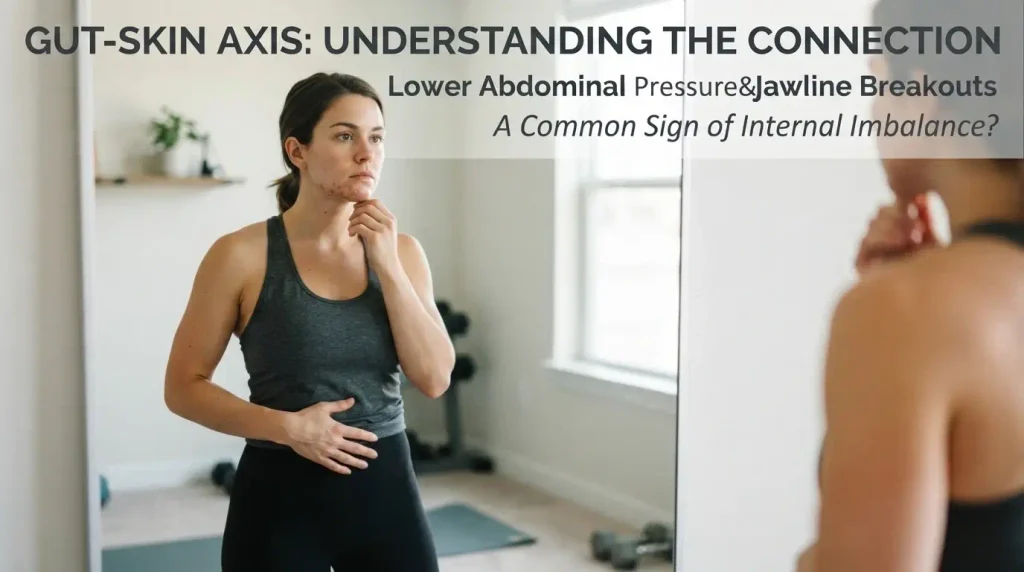
The Gut-Skin Axis: Why Your Stomach and Face Talk to Each Other
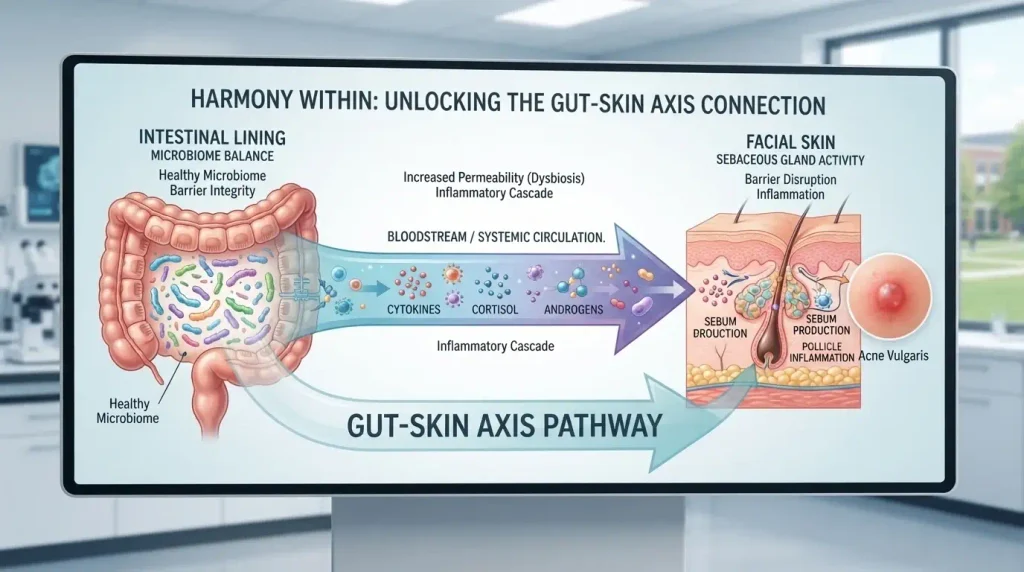
The phrase “gut-skin axis” sounds like a marketing buzzword, but it reflects a well-documented biological pathway. Your intestinal lining is the largest interface between your internal environment and the outside world. When that lining becomes irritated—by food sensitivities, poor microbiome balance, or chronic stress—small amounts of inflammatory molecules can enter circulation.
Research published in peer-reviewed dermatology and gastroenterology journals has linked dysbiosis (an imbalance in gut bacteria) to increased severity of inflammatory skin conditions, including acne vulgaris. The mechanism is straightforward: a compromised gut barrier allows bacterial byproducts to trigger an immune response. That immune response raises circulating inflammatory cytokines, which can stimulate sebaceous glands to overproduce oil and thicken the skin around pores.
At the same time, that same inflammatory signaling causes your intestinal walls to retain fluid and your smooth muscle to spasm, producing the tight, swollen feeling in your midsection. So the same low-grade fire is burning in two places.
A 2021 review in the Journal of Clinical Gastroenterology summarized that up to 60% of patients with moderate-to-severe acne show concurrent gastrointestinal symptoms, including bloating and altered bowel habits. The connection is not correlation-only; controlled trials using probiotic supplementation have shown measurable reductions in both gut discomfort and lesion count.

Hormones: The Other Half of the Story
Hormones are the second major driver, and they explain why these symptoms cluster around certain days of your menstrual cycle or during high-stress periods.
Estrogen and progesterone swing. In the luteal phase (roughly days 15–28 of a 28-day cycle), progesterone rises. Progesterone slows intestinal motility, which traps gas and fluid in the gut. It also shifts the skin’s water-holding capacity, making pores more congested. When estrogen drops just before menstruation, androgen activity becomes relatively more dominant, stimulating sebaceous gland output. The result: your belly feels puffy and your chin lights up.
Cortisol. Chronic stress keeps cortisol elevated. High cortisol increases intestinal permeability (sometimes called “leaky gut”), promotes insulin resistance, and upregulates androgen receptors in the skin. All three effects feed both bloating and acne. A 2019 study in Psychoneuroendocrinology found that women with chronically elevated salivary cortisol reported 40% more frequent acne flares and greater self-reported abdominal distension compared to a control group.
Insulin and IGF-1. Spikes in blood sugar from refined carbohydrates and added sugars raise insulin and insulin-like growth factor 1 (IGF-1). Both are linked to increased sebum production and to gut inflammation. If your diet is high in high-glycemic foods, you’re essentially feeding both problems at once.
Common Triggers at a Glance
| Trigger | Effect on Bloating | Effect on Breakouts | Typical Timing |
| Luteal-phase progesterone rise | Slows gut motility, water retention | Congests pores, shifts oil balance | Days 15–28 of cycle |
| Pre-menstrual estrogen drop | Mild fluid shift | Androgen-dominant sebum surge | 2–5 days before period |
| Cortisol spike (stress, poor sleep) | Increases gut permeability, gas | Inflammatory cytokine release | Ongoing if stress is chronic |
| High-glycemic / processed diet | Fermentation gas, intestinal swelling | Insulin/IGF-1 driven sebum | 24–72 hrs after trigger meal |
| Dairy or gluten sensitivity | Bacterial overgrowth, mucosal swelling | Immune-mediated skin inflammation | 12–48 hrs after ingestion |
| Sedentary behavior / poor posture | Reduced peristalsis, gas trapping | Reduced circulation to skin, slower repair | Cumulative over weeks |
How to Fix Bloating and Breakouts at the Same Time: A Movement-Based Plan
Exercise is not just a “feel-good” add-on. Moderate, consistent movement directly addresses the root causes listed above: it lowers resting cortisol, improves gut motility, reduces systemic inflammation, and supports healthy insulin sensitivity. The key is choosing the right intensity and type.
The Weekly Structure
Here’s a practical 5-day plan you can build into your existing schedule. It balances aerobic work (for cortisol and insulin), gentle core and diaphragmatic work (for gut motility and posture), and recovery (for skin repair and inflammation control).
| Day | Focus | Duration | Key Exercises |
| Monday | Moderate cardio + core | 35 min | Brisk walk or cycling (20 min) + dead bugs, bird-dogs, diaphragmatic breathing (15 min) |
| Tuesday | Strength (lower body focus) | 40 min | Goblet squats, Romanian deadlifts, hip thrusts, walking lunges |
| Wednesday | Active recovery / mobility | 25 min | Yoga flow (cat-cow, child’s pose, supine twist) + foam rolling |
| Thursday | Moderate cardio + core | 35 min | Incline treadmill walk or rowing (20 min) + planks, side planks, pelvic tilts (15 min) |
| Friday | Full-body strength | 40 min | Push-ups, rows, step-ups, farmer’s carries |
| Saturday | Low-impact movement | 30 min | Swimming, easy cycling, or a long outdoor walk |
| Sunday | Full rest or gentle stretching | 15–20 min | Light stretching, deep breathing, no structured workout |
Coach’s Tip: If you notice your bloating and breakouts cluster in the luteal phase, swap your Thursday moderate cardio for a 30-minute easy walk or restorative yoga session that week. Lowering intensity during your most hormonally sensitive window can reduce the cortisol-on-top-of-progesterone effect that makes both symptoms worse.
Key Exercises and Form Cues
1. Diaphragmatic Breathing (Gut Motility Reset)
- Lie on your back, knees bent, one hand on your chest, one on your lower ribs.
- Inhale through your nose for 4 counts, letting the lower ribs and belly expand. The hand on your chest should barely move.
- Exhale through pursed lips for 6 counts, gently drawing the navel toward the spine.
- Do 10–12 breaths, 2x per day. This stimulates the vagus nerve, which slows gut spasm and reduces the “fight-or-flight” cortisol loop.
2. Dead Bugs (Core Stability Without Intra-Abdominal Pressure Spikes)
- Lie on your back, arms reaching to the ceiling, knees bent at 90 degrees.
- Press your lower back into the floor. Slowly extend your right arm overhead and your left leg toward the floor, keeping the spine neutral.
- Return and switch sides. 2 sets of 10 per side, 2-second tempo on the extension.
- Easier version: Keep both feet on the floor; extend only the arms.
- Harder version: Add a light resistance band around the feet, or perform on a stability ball.
3. Goblet Squat (Lower-Body Strength, Hormone-Sensitive Muscle)
- Hold a dumbbell or kettlebell (25–50 lb / 11–23 kg) at chest height.
- Feet shoulder-width, toes slightly out. Sit your hips back and down until thighs are parallel to the floor.
- Drive up through your heels. 3 sets of 10–12 reps, 60 seconds rest.
- Easier version: Use a box or chair to limit depth.
- Harder version: Add a 3-second pause at the bottom.
4. Supine Twist (Digestive Decompression)
- Lie on your back, hug both knees to your chest.
- Gently lower both knees to the right side, letting your left shoulder stay on the floor. Hold 30 seconds, switch sides.
- Repeat 2x per side. This passive stretch massages the intestines and encourages gas to move.
5. Farmer’s Carry (Posture, Circulation, Cortisol Reduction)
- Grab a dumbbell or kettlebell (30–60 lb / 14–27 kg) in each hand.
- Walk a straight line for 30–40 yards (27–37 m), shoulders packed down and back, core braced.
- 3 sets per side. The bilateral load improves circulation to the extremities and face, supporting skin repair.
Sets, Reps, and Progression by Goal
| Goal | Sets × Reps | Rest | Tempo | Weekly Progression |
| Reduce inflammation / manage symptoms | 2 × 12–15 | 60–90 s | 3-1-1 (eccentric-concentric) | Add 1 set every 2 weeks |
| Build strength / support hormonal balance | 3 × 8–10 | 90–120 s | 2-1-2 | Add 5 lb (2.3 kg) when all reps are clean |
| Improve gut motility / core control | 3 × 10–12 | 45–60 s | 3-0-1 | Add a 2-s pause at peak contraction |
Common Mistake: Doing high-intensity interval training (HIIT) or heavy compound lifts every day during your luteal phase. The extra cortisol load on top of already-elevated progesterone can worsen both bloating and acne. If your cycle is regular, plan your hardest sessions in the follicular phase (days 1–14) and keep the luteal phase moderate.
Nutrition and Lifestyle Levers That Work in Tandem
Exercise alone won’t fix the problem if your plate is feeding the inflammation. You don’t need a restrictive diet, but a few targeted shifts make a measurable difference.
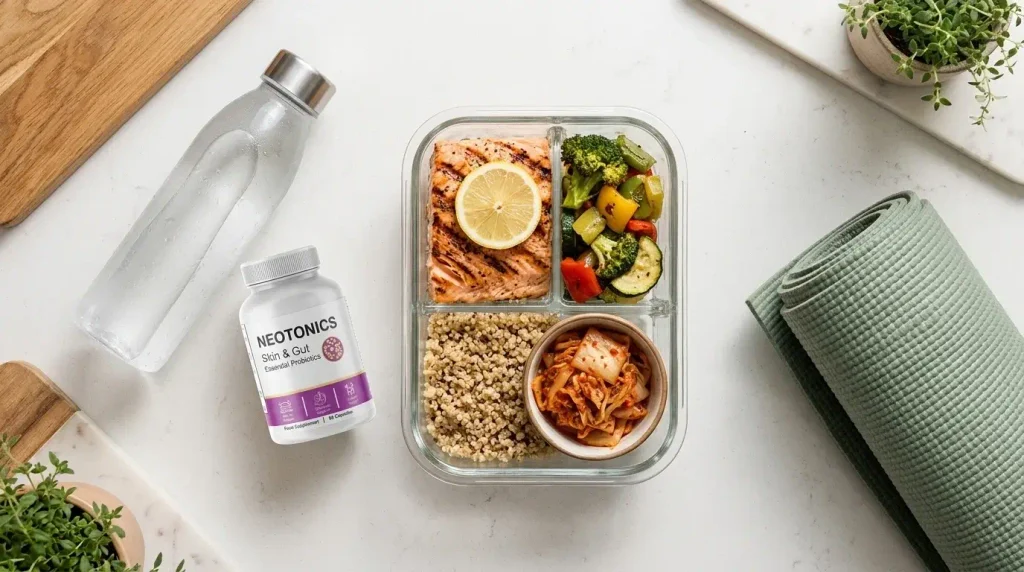
- Prioritize fiber and fermentable foods. Soluble fiber feeds beneficial gut bacteria and slows glucose absorption, blunting the insulin spike that drives sebum. Aim for 25–35 g of fiber daily from vegetables, legumes, oats, and fruits. Research on dietary fiber and appetite regulation supports that adequate fiber intake is linked to improved gut comfort and reduced inflammatory markers. You can read more about how soluble fiber supports gut and satiety health for practical food examples.
- Add omega-3 fatty acids. EPA and DHA are anti-inflammatory and have been shown in clinical trials to reduce the severity of inflammatory skin conditions. Two servings of fatty fish per week (salmon, sardines, mackerel) or a quality supplement can help. For a deeper look at the skin and inflammation connection, see omega-3 fatty acids and skin hydration.
- Identify and rotate out one dietary trigger. Dairy, gluten, and refined sugar are the most common culprits for simultaneous gut and skin flare-ups. You don’t have to eliminate them forever. Try a 2-week rotation: cut out dairy for two weeks, track your symptoms, then reintroduce. If bloating and breakouts worsen, you’ve found a trigger.
- Protect your sleep. Poor sleep raises cortisol by 18–25% within a single night of 5-hour sleep, according to research from the University of Chicago. That single night is enough to shift your gut barrier function and spike sebum production. Aim for 7–9 hours. The hormonal link between sleep and metabolic health is well documented, and you can explore the hormonal connection between sleep and weight management for a deeper dive.
- Manage stress actively. Ten minutes of box breathing (4-4-4-4) or a short walk outside can lower salivary cortisol by 10–15% in under 20 minutes. Chronic stress management is not optional if you want to break the bloating-breakout cycle. For evidence on how adaptogenic herbs and lifestyle tools can support cortisol balance, see adaptogens for stress and cortisol management.
Who Should Be Cautious and When to See a Doctor
Most cases of cyclical bloating and breakouts are benign and manageable with the strategies above. However, you should schedule a visit with your primary care provider or a dermatologist if:
- Bloating lasts more than 2 weeks without a clear dietary or cycle-related trigger.
- Breakouts are cystic, painful, spreading to your back or chest, or leaving scars.
- You experience unexplained weight loss, changes in bowel habits (persistent diarrhea or constipation), or blood in your stool alongside the bloating.
- You are on hormonal birth control or have been diagnosed with PCOS, endometriosis, or an autoimmune condition.
If you fall into any of these categories, get bloodwork (hormone panel, complete metabolic panel, celiac screening) and a dermatology evaluation before starting a new exercise or supplement protocol. This article is for general information and is not a substitute for advice from a doctor or physical therapist.
Related Tips for Long-Term Management
- Track your cycle and symptoms for 2–3 months. Use a simple notes app or a period-tracking app. Note what you ate, your sleep hours, your workout intensity, and where breakouts appear. Patterns will emerge. You’ll likely see that 80% of your flare-ups cluster in a 5–7 day window.
- Don’t skip the warm-up. A 5-minute brisk walk or dynamic stretch before strength work increases blood flow to the gut and skin, reducing the “shock” of sudden exertion on a sensitive digestive system.
- Hydrate with purpose. Drink 16–20 oz (470–590 ml) of water before and after workouts. Dehydration concentrates gut contents and slows motility, worsening bloating. It also thins the skin’s moisture barrier, making pores more prone to clogging.
- Support metabolic flexibility. A body that efficiently switches between fuel sources (glucose and fat) produces fewer insulin spikes and less inflammatory signaling. Building this capacity through consistent moderate cardio and strength work is one of the most underused tools for both gut and skin health. For a practical framework, see how to boost metabolic flexibility without crash dieting.
- Consider a probiotic if your diet is low in fermented foods. Strains like Lactobacillus rhamnosus and Bifidobacterium lactis have shown modest benefits for both gut comfort and inflammatory skin markers in randomized trials. If you’re exploring this, a guide to probiotics and gut health can help you evaluate strains and dosing.

FAQ
Why do I get bloating and breakouts at the same time before my period?
The luteal phase raises progesterone, which slows intestinal motility and increases water retention in the gut. Simultaneously, the drop in estrogen lets androgens stimulate sebaceous glands. The two hormonal shifts hit your digestive tract and skin within the same 5–7 day window, so the symptoms appear together.
Does bloating actually cause breakouts, or do they just happen together?
They share a common upstream cause (inflammation, hormones, gut irritation) rather than one directly causing the other. However, a compromised gut barrier releases inflammatory molecules into the bloodstream, which can worsen skin inflammation. So the gut is a contributor, not the sole cause.
Can exercise make bloating and breakouts worse?
High-intensity training done daily, especially during your luteal phase, can elevate cortisol enough to worsen both symptoms. Moderate exercise (brisk walking, cycling, moderate resistance training) 4–5 times per week is protective. The key is matching intensity to your cycle and stress load.
What foods should I cut to reduce bloating and breakouts together?
Start by identifying your personal trigger. The most common are dairy, refined sugar, and gluten. A 2-week elimination and rechallenge is the most reliable way to find yours. You don’t need to cut all three at once.
How long does it take to see improvement in both symptoms?
Gut motility and bloating often improve within 2–3 weeks of consistent exercise and dietary adjustment. Skin turnover takes 28–40 days, so visible reduction in breakouts typically shows up at 4–6 weeks. Be patient and track your progress.
Can stress alone cause both bloating and breakouts?
Yes. Chronic stress elevates cortisol, which increases gut permeability, promotes insulin resistance, and upregulates androgen receptors in the skin. If your work or personal life is consistently high-stress, stress management (sleep, breathing, moderate exercise) is as important as any dietary change.
Conclusion: You Don’t Have to White-Knuckle It
Bloating and breakouts at the same time are not a sign that something is fundamentally wrong with your body. They are a signal that your gut, your hormones, and your stress system are all running a little hot at the same time. The good news is that a consistent, moderate exercise routine—paired with a few targeted dietary and sleep adjustments—addresses all three systems in one plan.
You don’t need to overhaul your life. Start with the 5-day movement plan above, add diaphragmatic breathing to your morning and evening routine, swap one high-glycemic meal for a fiber-rich one, and protect your sleep. Track your symptoms for a full cycle. Within 4–6 weeks, most people notice that the frequency and severity of both bloating and breakouts drop significantly.
If symptoms persist, worsen, or are accompanied by other concerning signs, loop in your doctor. But for the vast majority of people, the fix is practical, repetitive, and well within your control. You’ve got this.