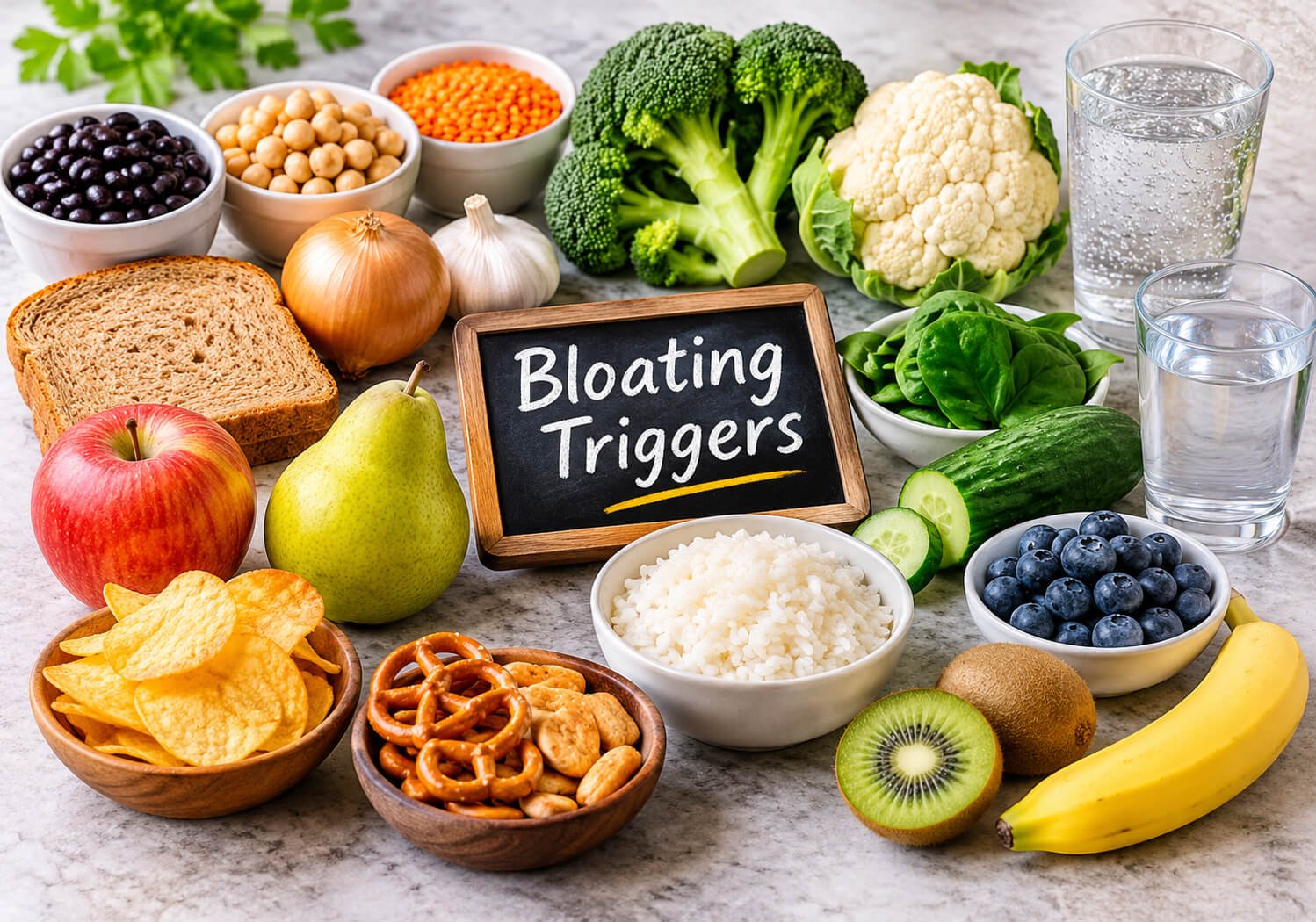
Foods That Cause Bloating List: 16 Common Triggers and Smart Swaps
Feeling like your stomach inflated like a basketball an hour after eating is frustrating, especially when you are trying to train hard, brace your core properly, or stay consistent with your nutrition. When your abdomen is distended, engaging your transverse abdominis during squats or deadlifts feels uncomfortable, and your waistband suddenly feels two sizes too tight. Knowing which items belong on a foods that cause bloating list helps you pinpoint whether your discomfort comes from harmless digestive gas, temporary water retention, or a specific carbohydrate intolerance.
Quick Answer The primary items on a foods that cause bloating list include beans, lentils, cruciferous vegetables (broccoli, cauliflower), dairy products, wheat, onions, garlic, high-fructose fruits (apples, pears), carbonated drinks, sugar alcohols, and ultra-processed salty foods. Most food-induced bloating happens because gut bacteria ferment poorly absorbed carbohydrates (FODMAPs) into gas, or high sodium draws excess water into tissues.
Why Certain Foods Trigger Abdominal Bloating
Before cutting entire food groups out of your diet, it helps to understand the mechanics of what is happening inside your digestive tract. Bloating is the physical sensation of fullness, tightness, or pressure in your belly, while distension is the visible outward expansion of your abdominal wall. According to the National Institute of Diabetes and Digestive and Kidney Diseases (NIDDK), gas enters your digestive tract either when you swallow air or when bacteria in your large intestine break down undigested carbohydrates.
For active people and lifters, two main physiological mechanisms drive post-meal bloating:
- Bacterial Fermentation (FODMAPs): FODMAP stands for fermentable oligosaccharides, disaccharides, monosaccharides, and polyols. These are short-chain carbohydrates that resist digestion in the small intestine. When they reach the colon, your gut microbes rapidly ferment them, producing hydrogen, methane, and carbon dioxide gas.
- Osmotic Water Pull and Sodium Retention: Certain sugars and sugar alcohols draw extra water into the intestinal lumen, increasing volume and pressure. Separately, high-sodium meals cause your kidneys to hold onto water, leading to generalized puffiness and a heavy feeling around your midsection.
Understanding these mechanisms matters because many bloating triggers are nutrient-dense whole foods. You do not necessarily need to ban them forever; you just need to manage portion sizes, cooking methods, and meal timing around your workouts.
The Complete Foods That Cause Bloating List
Below are 16 of the most common dietary triggers grouped by category, along with why they cause gas or fluid retention and practical swaps you can use right away.
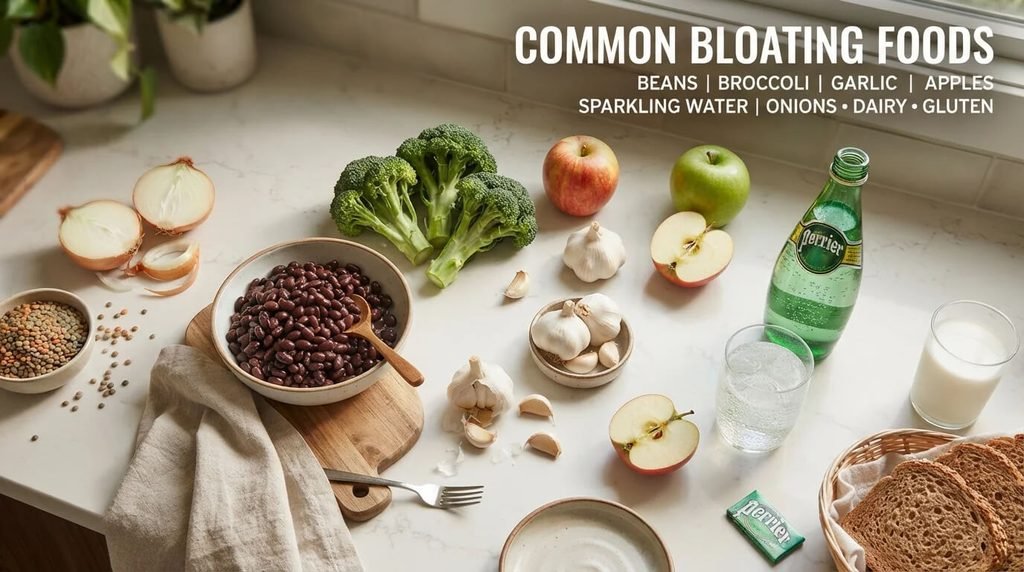
1. Beans and Legumes (Black Beans, Kidney Beans, Chickpeas)
Beans are packed with plant-based protein, micronutrients, and fiber, making them a staple for budget-friendly meal prep. However, they also contain high amounts of alpha-galactosides, a type of oligosaccharide that humans lack the enzyme to break down completely in the small intestine.
When these sugars reach your colon, gut bacteria feast on them and release gas as a byproduct. Beans also contain both soluble and insoluble fiber, which can slow transit time or add bulk rapidly if your digestive tract is not used to high fiber loads.
- Smart Swap: Choose canned lentils or chickpeas in small portions (about 1/4 cup or 45 grams), and rinse them thoroughly under cold water to wash away water-soluble oligosaccharides. Soaking dried beans overnight and discarding the soaking water before cooking also cuts down gas production.
2. Lentils
Like beans, lentils deliver solid protein and slow-digesting carbohydrates, but they are rich in fermentable oligosaccharides. Eating a large bowl of lentil soup right before a heavy training session is a classic recipe for trapped gas and uncomfortable abdominal pressure under a lifting belt.
- Smart Swap: Opt for red or yellow split lentils, which have their outer hulls removed and tend to digest faster than whole brown or green lentils. Keep servings around 1/2 cup cooked (about 100 grams) and pair them with easily digestible proteins like chicken breast or fish.
3. Cruciferous Vegetables (Broccoli, Cauliflower, Brussels Sprouts, Cabbage)
Cruciferous vegetables are nutritional powerhouses loaded with vitamins C and K, folate, and protective plant compounds. The catch is that they contain raffinose—a complex sugar that passes through the stomach and small intestine undigested until colon bacteria ferment it.
Eating large piles of raw broccoli florets or shredded raw cabbage salad forces your gut to work overtime. For lifters who eat huge volumes of raw vegetables to stay full during a fat-loss phase, this is one of the most overlooked causes of chronic evening distension.
- Smart Swap: Steam, roast, or sauté your cruciferous vegetables instead of eating them raw. Cooking softens the tough plant cell walls and partially breaks down complex carbohydrates before they ever reach your stomach. You can also rotate in lower-fermentation greens like spinach, zucchini, bell peppers, and cucumbers.
4. Onions and Garlic
Onions, garlic, shallots, and leeks are foundational flavor builders in almost every savory meal, yet they rank near the very top of any foods that cause bloating list. Both contain high concentrations of fructans, a type of oligosaccharide that human digestive enzymes cannot efficiently hydrolyze.
Even small amounts of onion powder or garlic powder in marinades, protein seasonings, and sauces can trigger noticeable bloating in people with sensitive guts. Because fructans are water-soluble, they leach directly into soups, stews, and sauces.
- Smart Swap: Use garlic-infused olive oil to get the aroma and flavor without the fructans, since fructans are not oil-soluble. For onion flavor, use the green tops of scallions (green onions) or fresh chives, leaving the white bulbs out.
5. Dairy Products (Milk, Soft Cheeses, Ice Cream)
Dairy provides high-quality whey and casein proteins along with calcium, but liquid milk, ice cream, and soft cheeses contain lactose. Lactose is a disaccharide sugar that requires the enzyme lactase to split it into glucose and galactose for absorption.
According to Johns Hopkins Medicine, many adults experience a natural decline in lactase production after childhood. When unabsorbed lactose enters the colon, it draws in water and ferments, causing gas, cramping, and bloating within 30 minutes to two hours of eating.
- Smart Swap: Switch to lactose-free cow’s milk, hard aged cheeses (such as cheddar, Parmesan, or Swiss, which contain negligible lactose), or plain Greek yogurt, where live cultures break down much of the lactose during fermentation.
6. Wheat, Barley, and Rye
Whole grains like wheat, barley, and rye offer sustained energy and B vitamins, but they are major dietary sources of fructans. Many people assume gluten is the sole culprit behind post-pasta or post-bread bloating, even when they do not have celiac disease.
Research highlighted by Harvard Health Publishing notes that fructans in wheat—rather than gluten itself—frequently drive gas and bloating in people with non-celiac food sensitivities. Large servings of refined white pasta or dense whole-wheat bread can leave your midsection feeling heavy for hours.
- Smart Swap: Rotate in naturally low-fructan carbohydrates such as white or brown rice, oats, quinoa, potatoes, and sweet potatoes, especially for pre-workout and post-workout meals.
7. High-Fructose Fruits (Apples, Pears, Watermelon, Mangoes)
Fruit is an essential part of a balanced diet, yet specific fruits carry excess fructose—a monosaccharide that some people absorb poorly in the small intestine. Apples, pears, watermelon, cherries, and mangoes contain more fructose than glucose, and apples and pears also pack sorbitol, a naturally occurring sugar alcohol.
When fructose and sorbitol sit unabsorbed in the gut, they exert an osmotic effect that pulls water into the bowel while feeding gas-producing bacteria. Eating two large apples as an afternoon snack can easily cause noticeable abdominal tightness before your evening workout.
- Smart Swap: Choose lower-fructose fruits like berries (strawberries, blueberries, raspberries), oranges, kiwi, bananas (especially slightly firm ones), and pineapple.
8. Sugar Alcohols (Sorbitol, Mannitol, Xylitol, Erythritol)
If you chew sugar-free gum, eat “keto” candies, or rely on low-calorie protein bars, you are likely consuming sugar alcohols (polyols). Look for ingredients ending in “-ol” on nutrition labels, such as sorbitol, xylitol, mannitol, and maltitol.
Your body only partially absorbs sugar alcohols in the small intestine. The remainder travels to the large intestine, pulling water along with it and undergoing rapid bacterial fermentation. Even erythritol, which is mostly absorbed in the small intestine and excreted in urine, can trigger bloating and digestive upset when consumed in large doses.
- Smart Swap: Check ingredient labels on protein bars and pre-workouts. Choose products sweetened with small amounts of pure stevia, monk fruit extract, or regular cane sugar or maple syrup when it fits your daily carbohydrate targets.
9. Carbonated Beverages (Soda, Sparkling Water, Seltzer, Beer)
Sometimes bloating has nothing to do with fermentation and everything to do with physical gas volume. Carbonated drinks contain dissolved carbon dioxide gas under pressure. When the liquid warms up inside your stomach, that gas is released.
While you burp out a portion of the air, the rest travels downward through your intestines, temporarily expanding your stomach and small bowel. Drinking sparkling water through a straw or chugging a fizzy energy drink right before training compounds the problem by increasing swallowed air.
- Smart Swap: Drink still water, herbal tea (such as peppermint or ginger tea), or plain iced tea around your workouts. Save sparkling water for times when you are not about to exercise or wear fitted clothing.
10. Ultra-Processed, High-Sodium Foods (Fast Food, Deli Meats, Canned Soups)
Restaurant meals, frozen dinners, cured deli meats, and packaged snacks pack massive amounts of sodium. Unlike bean-induced bloating, which stems from intestinal gas, sodium-induced bloating comes from extracellular fluid retention.
When you consume a sudden spike in sodium without adequate potassium and water, your body holds onto fluid to maintain proper blood electrolyte concentrations. You might see the scale jump 2 to 4 lb (0.9 to 1.8 kg) overnight and feel puffy across your abdomen, hands, and ankles. If you are tracking progress alongside strategies to support metabolism naturally, sudden sodium water weight can easily mask real fat loss on the scale.
- Smart Swap: Cook fresh proteins at home using herbs, lemon juice, vinegar, and spices for flavor. Balance sodium intake by eating potassium-rich foods like potatoes, spinach, avocados, and bananas.
11. Low-Quality Whey Concentrate and Certain Protein Powders
Protein powders are convenient tools for hitting daily muscle-building targets, yet they are a frequent complaint in the gym. Whey protein concentrate undergoes less filtration than whey isolate, meaning it retains higher amounts of lactose.
On top of lactose, many commercial protein tubs add thickeners like xanthan gum, guar gum, or inulin (chicory root fiber) alongside sugar alcohols to improve texture and sweetness on low calories. Combining lactose, fermentable fibers, and polyols in one shake creates a triple trigger for gas.
- Smart Swap: Switch to a pure whey protein isolate (which removes nearly all lactose), egg white protein, or a simple pea-and-rice protein blend without added chicory root fiber or sugar alcohols.
12. Artificial Sweeteners (Sucralose, Aspartame, Acesulfame Potassium)
Zero-calorie sweeteners like sucralose and acesulfame potassium are standard in diet sodas, pre-workout powders, and flavored amino acid drinks. While they do not contain calories, research published via the National Library of Medicine (PubMed Central) indicates that non-nutritive sweeteners can alter gut microbiota composition and slow or disrupt normal gut motility in sensitive individuals.
Additionally, tabletop packets of artificial sweeteners often use bulking agents like dextrose or maltodextrin, and people frequently consume them alongside carbonated beverages, multiplying the bloating effect.
- Smart Swap: Flavor plain water with fresh lemon, lime, cucumber slices, or a splash of 100% fruit juice, and look for unflavored or naturally sweetened workout supplements.
13. Soy Products (Edamame, Soy Milk, Textured Vegetable Protein)
Whole soybeans and edamame contain oligosaccharides similar to those found in black beans and lentils. Soy milk made from whole soybeans also retains these fermentable carbohydrates, whereas soy milk made from soy protein isolate contains far fewer FODMAPs.
- Smart Swap: Choose firm or extra-firm tofu and tempeh. During tofu production, the water-soluble oligosaccharides are pressed out with the liquid whey, making firm tofu much gentler on your stomach than whole edamame.
14. Beer and Certain Alcoholic Drinks
Alcohol irritates the lining of the stomach and slows down gastric emptying, which delays digestion and promotes a heavy, distended sensation. Beer is especially notorious because it combines alcohol with carbonation and fermentable carbohydrates derived from barley and wheat.
Sweet mixed drinks and ciders add high-fructose corn syrup or excess fruit sugars into the mix, further increasing osmotic water pull in the gut.
- Smart Swap: If you drink alcohol, keep intake moderate, alternate every drink with a full glass of still water, and opt for non-carbonated choices like dry wine or distilled spirits mixed with plain water and citrus.
15. Chewing Gum and Hard Candies
Chewing gum does not enter your stomach, yet it is a prime trigger for upper abdominal bloating. Every time you chew gum or suck on hard candy, you swallow small pockets of air—a habit called aerophagia.
When you pair frequent air swallowing with sugar-free gum sweetened with sorbitol, xylitol, or mannitol, you introduce both trapped air and fermentable polyols into your digestive tract simultaneously.
- Smart Swap: Freshen your breath with peppermint tea, a quick brush, or a small piece of fresh mint leaf instead of chewing gum all afternoon.

16. Large, High-Fat Meals (Fried Foods, Heavy Cream Sauces)
Dietary fat is essential for hormone production and vitamin absorption, so you should never eliminate healthy fats. However, fat takes significantly longer to leave the stomach than protein or carbohydrates because it triggers hormones like cholecystokinin (CCK) that intentionally slow down gastric emptying.
When you eat a massive, greasy meal—like fried chicken, french fries, and creamy pasta—food sits in your stomach for hours. If you also ate fermentable carbs in that meal, they have extra time to sit and produce gas while your digestive tract moves sluggishly. Pairing adequate protein with moderate fats helps control hunger during weight loss without overloading your stomach’s emptying speed.
- Smart Swap: Keep fat portions moderate (around 10 to 20 grams per meal) within 2 to 3 hours of working out, and choose easily digested fats like olive oil, avocado, or nut butter over deep-fried foods.
Quick Reference Comparison: Gas vs. Water Retention Bloating
Not all bloating feels or behaves the same. Use the table below to tell whether your symptoms come from intestinal gas or sodium-driven water retention, and pick the fastest way to get relief.
| Feature | Gas & Fermentation Bloating | Water Retention Bloating |
| Primary Triggers | Beans, lentils, onions, garlic, broccoli, lactose, wheat, sugar alcohols, carbonated drinks | Fast food, deli meats, soy sauce, canned soups, restaurant meals, high-carb refeeds |
| Where You Feel It | Localized to the stomach and lower abdomen; often accompanied by burping, flatulence, or gurgling | Generalized puffiness across the belly, face, fingers, wrists, and ankles |
| Timeline | Appears 30 minutes to 4 hours after eating; often worsens throughout the day and improves overnight | Appears 6 to 24 hours after a high-sodium meal; may persist for 1 to 3 days |
| Scale Weight Impact | Minimal to zero actual weight change, even if your waist looks 1 to 2 inches (2.5 to 5 cm) larger | Temporary scale spike of 1 to 5 lb (0.45 to 2.3 kg) from retained fluid |
| Best Immediate Fix | A brisk 10- to 15-minute walk, gentle torso twists, peppermint tea, and avoiding tight waistbands | Drinking plenty of still water, eating potassium-rich foods, and light sweating via cardio |
Coach’s Tip and Common Mistake
Coach’s Tip: Do not test new high-fiber foods, protein powders, or sugar-free snacks on heavy lower-body training days. Keep your pre-workout meal predictable—such as white rice, grilled chicken, and a small banana—about 90 to 120 minutes before lifting. Saving higher-fiber meals for after your workout ensures your transverse abdominis and diaphragm can brace freely without painful intra-abdominal pressure.
Common Mistake: Cutting out all fiber and vegetables at once when you feel bloated. Suddenly dropping your fiber intake to near zero often triggers constipation, which backs up stool in the colon and makes abdominal distension even worse. Instead, reduce one suspected trigger at a time for 7 to 10 days while keeping gentle, low-fermentation fiber sources like oats, carrots, and berries in your meals.
Why Healthy Foods Can Still Cause Bloating
One of the biggest frustrations clients face when cleaning up their diet is feeling more bloated after switching from processed snacks to whole foods. This happens for three predictable reasons:
- Rapid Fiber Increases: Jumping from 12 grams of daily fiber to 35 grams overnight overwhelms your current gut bacteria population. Your microbiome needs two to three weeks to adapt to higher fiber volumes. Increasing fiber gradually—by about 3 to 5 grams every few days—gives your digestive tract time to adjust smoothly. You can read more about how dietary fiber supports appetite and weight management while keeping portions sensible.
- High-Volume Eating: Raw salads, giant bowls of steamed broccoli, and air-popped popcorn take up substantial physical space in your stomach. Even without gas fermentation, sheer food volume pushes outward against your abdominal wall until the food moves into the small intestine.
- Eating Too Fast: Rushing through a meal between meetings or right after leaving the gym leads to poor chewing and excess air swallowing. Larger food particles require more bacterial breakdown lower in the gut, increasing gas production.

Step-by-Step Guide: How to Identify Your Personal Bloating Triggers
Every digestive system responds differently. One person can eat two cups of black beans with zero issues, while another feels distended after half a clove of garlic. Rather than following an overly restrictive diet indefinitely, follow this practical four-step elimination and reintroduction method:
- Keep a 7-Day Food and Symptom Log: Write down everything you eat and drink, including sauces, chewing gum, and supplements, along with the time of day. Rate your bloating on a 1-to-5 scale 1 hour and 3 hours after each meal, and note whether you experienced gas, cramping, or changes in bowel habits.
- Spot the Repeat Offenders: Look for patterns across the week. Notice if bloating consistently shows up after dairy, protein shakes, large raw salads, onions/garlic, or sugar-free snacks.
- Run a Targeted 10- to 14-Day Elimination: Remove only your top two or three suspected triggers for two weeks while keeping the rest of your diet consistent. If your baseline stomach comfort improves noticeably, you have likely found a real trigger. According to the Cleveland Clinic, short-term elimination phases—such as a structured low-FODMAP approach—are meant to calm symptoms temporarily before testing individual foods back in.
- Reintroduce One Food at a Time: Test one eliminated food by itself in a small portion (for example, 1/2 cup of milk or 1/4 cup of black beans) on Day 1, a medium portion on Day 2, and a normal portion on Day 3. Wait two full days before testing the next food so you know your exact tolerance threshold.
Practical Habits and Light Movement to Relieve Bloating
When food-related bloating strikes, gentle physical movement helps stimulate gut motility—the wave-like muscle contractions (peristalsis) that move gas and food through your intestines. You do not need an intense workout; in fact, heavy abdominal bracing or high-impact sprints can feel uncomfortable when your stomach is full of gas.
Try this simple 10-minute post-meal recovery sequence:
- Brisk Post-Meal Walk (5 to 10 minutes): Walking at a comfortable pace of about 2.5 to 3.5 mph (4 to 5.6 km/h) gently massages the abdominal organs and encourages trapped gas to pass naturally.
- Diaphragmatic Belly Breathing (2 minutes): Lie on your back with your knees bent and feet flat on the floor. Place one hand on your chest and one on your belly. Inhale slowly through your nose for 4 seconds so your belly rises, then exhale smoothly through your mouth for 6 seconds. Deep diaphragm movement gently compresses and releases the digestive organs while calming your nervous system.
- Supine Knee-to-Chest Stretch (1 minute per side): Lying on your back, hug your right knee gently toward your chest while keeping your left leg extended or bent. Hold for 30 to 60 seconds, breathing deeply, then switch sides.
- Cat-Cow Mobilization (8 to 10 slow reps): Get on your hands and knees with wrists under shoulders and knees under hips. Inhale as you drop your belly and lift your chest (Cow), then exhale as you round your upper back and tuck your pelvis (Cat). Move slowly for 60 to 90 seconds to mobilize your spine and abdomen.
Easier and Harder Movement Options
- Easier Version (Regression): If lying on the floor feels uncomfortable after eating, perform seated torso twists in a sturdy chair. Sit tall, inhale, and gently rotate your upper body to the right for 3 slow breaths, then rotate to the left for 3 breaths.
- Harder Version (Progression): Once acute gas pressure subsides, add 2 sets of 20-second dead bugs or gentle bird-dogs (resting 30 seconds between sets) to restore deep transverse abdominis engagement without heavy intra-abdominal compression.
Supportive Daily Habits That Prevent Food Bloating
Along with managing your foods that cause bloating list, small adjustments to how you eat and hydrate make a measurable difference:
- Chew Your Food Thoroughly: Aim to chew each bite until it loses its solid texture before swallowing. Digestion begins in the mouth with salivary amylase breaking down starches.
- Stay Consistently Hydrated with Still Water: Drinking steady amounts of plain water throughout the day keeps stool soft and prevents constipation-related bloating. If you use soluble fiber supplements to support digestion or satiety, learning how soluble fiber works in the digestive tract and drinking extra water alongside them prevents thickening and gas buildup.
- Space Out High-FODMAP Foods: FODMAP effects are cumulative. You might tolerate a small portion of strawberries at breakfast without trouble, but combining strawberries, whole-wheat toast, milk, and honey in a single meal can push you past your personal fermentation threshold.
- Check Pre-Workout and Diet Supplements: Many fat burners, pre-workouts, and low-calorie shakes hide sugar alcohols, inulin, or high doses of caffeine that stimulate gut spasms. Reviewing how to evaluate ingredients in weight management supplements helps you spot hidden digestive irritants on product labels before buying.
- Prioritize Sleep and Stress Recovery: Your gut and brain communicate constantly via the vagus nerve. High stress and poor sleep slow digestive motility and heighten gut sensitivity, making normal amounts of intestinal gas feel painful. Understanding how sleep affects metabolism and recovery reinforces why consistent rest supports both body composition and comfortable digestion.
When to Check With a Doctor
Occasional bloating after a big meal, beans, or sparkling water is a normal part of human digestion. However, persistent or painful abdominal distension warrants a medical evaluation to rule out underlying conditions such as irritable bowel syndrome (IBS), celiac disease, small intestinal bacterial overgrowth (SIBO), or food allergies.
Please consult a doctor or registered dietitian if your bloating is accompanied by any of the following warning signs:
- Severe or worsening abdominal pain
- Unintentional weight loss
- Persistent diarrhea, chronic constipation, or blood in your stool
- Fever, nausea, or persistent vomiting
- Bloating that does not improve overnight or lasts continuously for more than two weeks
Frequently Asked Questions
What are the top foods that cause bloating and gas?
The most common foods that cause gas and bloating are beans, lentils, cruciferous vegetables (broccoli, cauliflower, cabbage), onions, garlic, dairy products high in lactose, wheat, apples, pears, carbonated beverages, and sugar alcohols. Most of these contain fermentable carbohydrates (FODMAPs) that gut bacteria break down into gas in the colon.
Why do healthy foods make me feel bloated?
Healthy whole foods like beans, broccoli, apples, and whole grains are rich in fiber and fermentable short-chain carbohydrates. While gut bacteria ferment these fibers into beneficial compounds, rapid bacterial breakdown produces hydrogen and methane gas. Jumping into a high-fiber diet too quickly or eating large raw portions amplifies this temporary distension.
Which vegetables cause the most stomach bloating?
Cruciferous vegetables—including broccoli, cauliflower, Brussels sprouts, kale, and cabbage—along with onions, garlic, asparagus, and mushrooms cause the most bloating. Cruciferous vegetables contain raffinose, while onions, garlic, and asparagus are high in fructans. Cooking these vegetables thoroughly breaks down tough fibers and reduces gas compared to eating them raw.
Do artificial sweeteners and sugar alcohols cause bloating?
Yes, sugar alcohols like sorbitol, mannitol, xylitol, and maltitol frequently cause bloating and gas because your small intestine only partially absorbs them, leaving colon bacteria to ferment the rest. Non-nutritive artificial sweeteners like sucralose may also alter gut bacteria balance and disrupt normal digestive motility in sensitive people.
How long does food-related bloating usually last?
Gas-related bloating from a single meal typically peaks within 1 to 3 hours after eating and fades within 6 to 12 hours as your body passes the gas. Bloating caused by high-sodium meals and water retention can linger for 24 to 72 hours until your kidneys flush out the excess sodium and fluid.
Can protein shakes cause stomach bloating?
Yes, protein shakes commonly trigger bloating for two main reasons. First, whey protein concentrate still contains lactose, which causes gas and cramping if you have low lactase enzyme levels. Second, many protein powders include gums, chicory root fiber (inulin), or sugar alcohols that rapidly ferment in the large intestine.
Wrapping Up Your Plan for Better Digestion
Using a foods that cause bloating list is not about fearing whole foods or shrinking your diet down to chicken and plain rice forever. Most post-meal distension comes down to a handful of fermentable carbohydrates, carbonated drinks, sugar alcohols, or excess sodium—all of which you can manage once you identify your personal threshold.
Start by tracking your meals for one week, swapping raw or high-FODMAP triggers for gentler alternatives around your workouts, and taking a simple 10-minute walk after larger meals. Small, methodical adjustments keep your digestion calm so you can focus on training hard and feeling comfortable in your body every day.