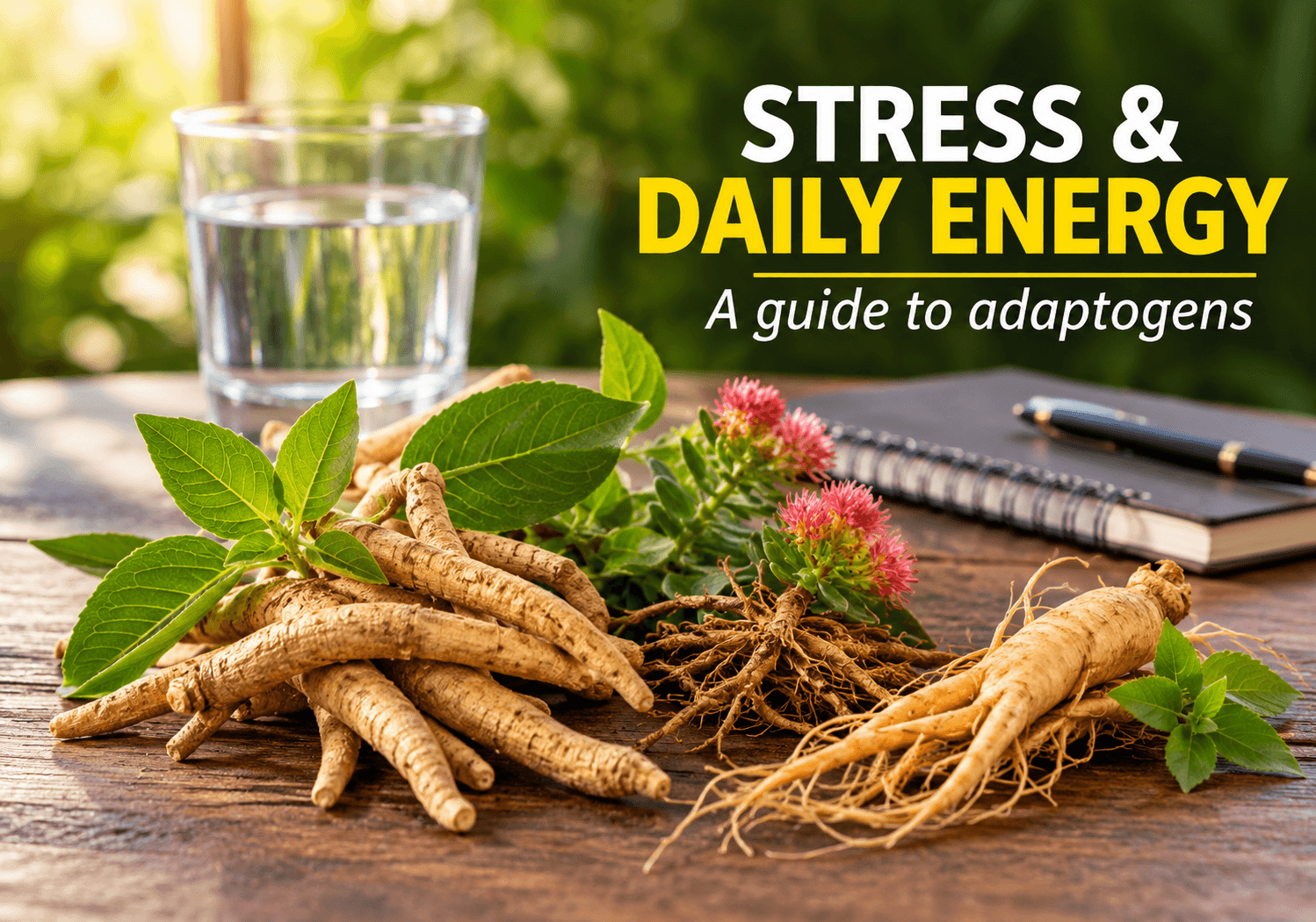
Most men looking into adaptogens for men’s stress relief and daily energy are not chasing a placebo effect. They are running on fumes: work stress piling up, sleep getting worse, workouts feeling heavier than they should, and a second coffee at 2 p.m. that no longer does much. Adaptogens are a group of plant extracts, including ashwagandha, rhodiola, Panax ginseng, and eleuthero, studied for their ability to help the body resist stress and blunt fatigue, and some of them have genuinely decent clinical trials behind them. This guide breaks down what the research actually supports, which herbs fit which problem, how I would dose and time them as a coach, and the safety lines you should not cross.
Quick Answer: Ashwagandha has the strongest evidence for lowering perceived stress and cortisol in men, typically 300 to 600 mg of root extract daily for 6 to 8 weeks. Rhodiola is the better pick when fatigue is the main complaint. Ginseng and eleuthero show mixed fatigue results. None of these replace sleep, training, and food; they are support tools, not fixes.
What Adaptogens Actually Are (and What They Are Not)
The term “adaptogen” comes from mid-20th-century Soviet research on plants that supposedly increased non-specific resistance to stress. Modern reviews define adaptogens as plant extracts that appear to increase the body’s stability against physical and mental loads, acting on the stress system, including the hypothalamic-pituitary-adrenal (HPA) axis and stress mediators such as cortisol and molecular chaperones like Hsp70 [1]. Classic adaptogens include Panax ginseng, eleuthero (Eleutherococcus senticosus), rhodiola (Rhodiola rosea), and schisandra, with ashwagandha added later through Ayurvedic tradition [2].
Here is the honest part: adaptogens are not a single drug with a single mechanism. They are a loose category of herbs with different active compounds (withanolides in ashwagandha, salidroside in rhodiola, ginsenosides in ginseng) and different evidence bases. Treating them as interchangeable is the first mistake I see in supplement stacks.
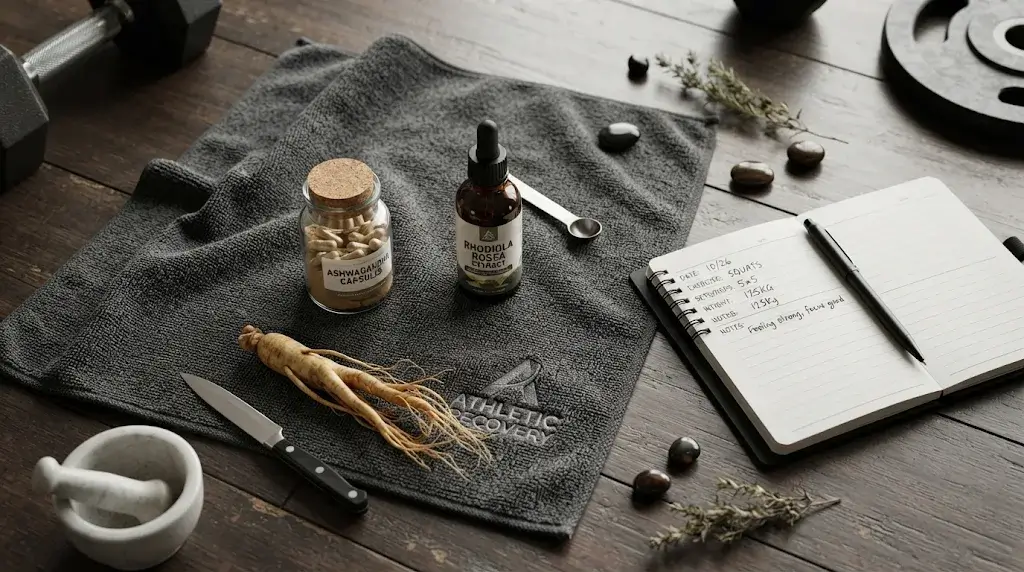
Why Chronic Stress Drains Men’s Energy
Stress is not just a feeling; it is a hormonal state. When your brain perceives a threat, whether that is a heavy deadlift or a hostile email, the HPA axis triggers cortisol release. Short-term, that is useful. Chronically elevated cortisol is linked to poor sleep, stubborn fatigue, increased appetite and cravings, and reduced training tolerance.
The connection to daily energy is practical, not mystical. A 2026 review of cortisol management describes how chronic HPA axis dysregulation contributes to metabolic, psychiatric, and inflammatory problems, and lists lifestyle levers (sleep, moderate activity, mind-body practices) as measurable ways to reduce cortisol [3]. If you sleep badly because your stress system never ramps down, you wake up with less capacity for training and work, and you reach for more stimulants, which can worsen the crash cycle. If that sounds familiar, it is worth reading our guide on why caffeine pills cause energy crashes, because stacking stimulants on a stressed nervous system usually makes the trough worse.
The Adaptogens With the Best Evidence for Stress and Cortisol
Ashwagandha: the stress and cortisol leader
Ashwagandha (Withania somnifera) has more human trials for stress than any other adaptogen, and the results are fairly consistent.
The landmark trial: 64 chronically stressed adults took 300 mg of a high-concentration full-spectrum ashwagandha root extract twice daily for 60 days. Stress scale scores dropped significantly versus placebo (P < 0.0001) and serum cortisol fell substantially (P = 0.0006) 4580fdd. A review of this work notes the treatment group saw roughly a 27.9% reduction in serum cortisol versus about 7.9% on placebo 6cd2d19.
Dose-response work supports that range. In an eight-week trial, 250 mg/day and 600 mg/day of a root extract both reduced perceived stress and cortisol versus placebo, with the higher dose showing the larger effect 1e369b3. A systematic review of nine trials concluded that ashwagandha supplementation decreases cortisol secretion with no significant adverse effects, while cautioning that long-term effects are not well understood [7].
For men specifically, there is a hormone angle. In a 60-day trial of stressed adults, a 240 mg standardized extract reduced morning cortisol and DHEA-S versus placebo, and testosterone rose in men over time, though not significantly versus placebo f388233. Separate trials in men have reported testosterone increases with higher withanolide doses; we cover the male-specific picture in more detail in our article on ashwagandha and testosterone in men [9].
There is also a stress-eating link worth knowing. In a trial of 52 adults under chronic stress, 300 mg twice daily for 8 weeks improved stress scores, reduced food cravings, and produced statistically significant reductions in body weight and BMI versus placebo 584d721. That ties directly into our coverage of adaptogens for stress eating and cortisol management.
Coach’s Tip: Take ashwagandha in the evening or split it morning and night. It is mildly calming, and several trials gave the evening dose at night. If your problem is winding down at the end of the day rather than staying sharp at noon, an evening dose makes sense.
Rhodiola rosea: the fatigue-first adaptogen
If your chief complaint is exhaustion rather than racing thoughts, rhodiola has the better fit.
The strongest trial: 60 people with stress-related fatigue syndrome took 576 mg/day of the standardized SHR-5 extract or placebo for 28 days. The rhodiola group improved significantly on burnout scores, attention tests, and cortisol response to awakening versus placebo [11]. An open-label trial of 100 people with prolonged fatigue used 200 mg twice daily of WS 1375 for 8 weeks and saw fatigue symptoms continue to decline, with significant improvement at week 8 ccaa4f7.
A 2022 review of rhodiola trials found encouraging clinical evidence for stress-related conditions, though most positive studies used standardized proprietary extracts, which matters for what you buy [13].
Balance point: the evidence is not unanimous. A rigorous randomized trial in nursing students on shift work found rhodiola actually performed worse than placebo on fatigue measures over 42 days 2ccdf90, and a systematic review concluded that rhodiola research is contradictory, with methodological flaws limiting assessment [15]. My read as a coach: rhodiola is a reasonable trial for fatigue, best judged over 4 to 8 weeks, not a guarantee.
Panax ginseng and eleuthero: mixed evidence for energy
Asian ginseng has a long traditional reputation and a messier clinical record. In a randomized trial of 90 people with idiopathic chronic fatigue, 1 g and 2 g of Panax ginseng extract daily for 4 weeks improved mental fatigue scores, with only the 2 g dose significantly reducing fatigue on the visual analogue scale cddd3d0. A meta-analysis of 12 RCTs found a small significant effect of ginseng supplements on fatigue reduction (SMD 0.34) but no effect on physical performance enhancement [17].
Eleuthero (Siberian ginseng) is often marketed alongside ginseng, but it is a different plant with eleutherosides rather than ginsenosides 2d206f2. A randomized controlled study added eleuthero to stress management training in people with stress-related fatigue and found negligible or no benefit on well-being, cognitive tests, or physiological stress markers [19]. I would not spend money on eleuthero expecting a noticeable energy effect based on current trials.
Adaptogens Compared: Which One Fits Your Goal
Table
| Adaptogen | Best for | Typical studied dose | Evidence strength for men’s stress/energy | Watch-outs |
| Ashwagandha root extract | Perceived stress, cortisol, sleep quality | 300-600 mg/day, standardized extract, 6-10 weeks | Strongest for stress and cortisol; moderate for sleep | Thyroid, pregnancy, liver injury reports, sedative interactions |
| Rhodiola rosea | Mental and physical fatigue, burnout | 200-576 mg/day standardized extract, 4-8 weeks | Moderate; contradictory trial results | Mild stimulation; some trials show no benefit |
| Panax ginseng | Mental fatigue, general vitality | 1-2 g/day extract, 4 weeks | Small effect on fatigue; not on performance | Possible insomnia; blood pressure and glucose interactions |
| Eleuthero | Traditionally marketed for fatigue | 300 mg/day or more | Weak; a key RCT found no benefit | Blood pressure effects in some reports |
How to Actually Use Adaptogens: A Coach’s Dosing and Timing Plan
This is where most men get adaptogens wrong. They buy a blend with eight herbs at fairy-dust doses, take it inconsistently, and conclude adaptogens do not work. Here is the protocol I would follow if I were testing one on myself.
Step 1: Fix the foundation first
Before any capsule, audit the basics, because no adaptogen out-supplements them:
- Sleep 7 to 9 hours. Sleep deprivation degrades stress regulation and energy on its own, and our article on how sleep affects metabolism and weight management covers why the hormonal fallout is real.
- Train 3 to 5 days per week. Regular moderate exercise is one of the behavioral interventions with measurable cortisol-lowering effects [3].
- Eat enough protein and calories. Underfeeding is a physical stressor.
Step 2: Pick one adaptogen matched to your symptom
- Racing mind, poor sleep, high perceived stress: ashwagandha, 300 mg twice daily of a root extract standardized to around 5% withanolides, the dose pattern used successfully in the main trials 4580fdd.
- Draining fatigue, especially mental: rhodiola, 200 mg twice daily or a single morning dose of a standardized extract, judged after 4 weeks ccaa4f7.
- General sluggishness on heavy training weeks: Panax ginseng 1-2 g/day is defensible, with modest expectations cddd3d0.
Step 3: Run an 8-week test, one variable at a time
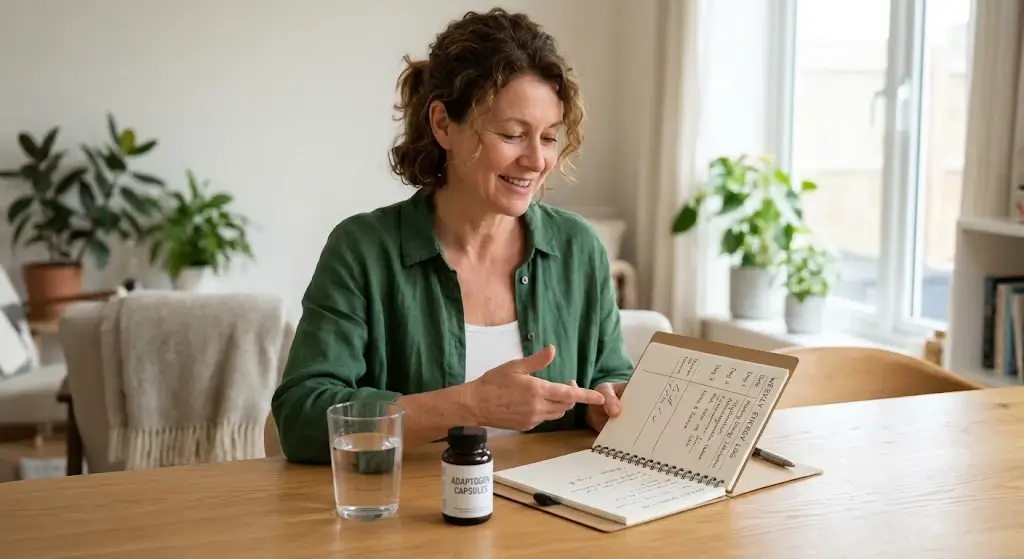
Start ashwagandha or rhodiola, not a blend. Keep training and sleep habits constant. Track two numbers: a simple 1-10 daily energy score and your resting heart rate or sleep duration from a wearable. At week 8, decide: keep it, stop it, or change the dose. Most trials that showed benefit ran 6 to 8 weeks or longer, so a 2-week trial tells you almost nothing 1e369b3.
Step 4: Pair it with training, not instead of it
Adaptogens sit best in a recovery-focused block: heavier lifting phases, high-stress work periods, or cutting phases where energy tends to sag. For nutrition support during a deficit, our guide to vitamins for energy while dieting covers the micronutrient layer that adapts more predictably than herbs. If your energy problem is mostly stimulant-related, start with our piece on improving daily energy without caffeine before adding anything to your stack.
Common Mistake: Doubling doses after a bad week. More is not faster with adaptogens; trials used fixed doses over weeks, not escalating amounts over days. If you feel worse on a dose, the right move is to stop and reassess, not to push through.
Can Adaptogens Support Training Performance?
This is a fair question for the xbodyshape.org audience, and the answer is “some evidence, modest effects.” A recent review of ashwagandha in athletes and healthy adults found promising effects on endurance, muscular strength, anxiety reduction, and sleep quality, with most studies using 500 to 1,000 mg/day, while calling for more high-quality trials 10fac57. A broader narrative review of ashwagandha in sports settings reports associations with improved strength, recovery markers, and VO2-related measures, again with the caveat that findings vary by dose, extract standardization, and study duration [21].
Practically: treat ashwagandha as a recovery and stress-management aid that may make hard training weeks more tolerable, not as a pre-workout. For an acute training-day edge, caffeine still has the strongest evidence base in sports nutrition.
Safety Notes: Where Adaptogens Are Not Free Passes
This is the section I would make every client read, because “natural” does not mean risk-free.
Ashwagandha safety boundaries. NIH’s consumer fact sheet states ashwagandha appears safe for up to about 3 months of use, that long-term safety is unclear, and that extracts have been linked to liver injury in some people; it also notes ashwagandha may affect thyroid function and interact with thyroid, diabetes, blood pressure, sedative, and immunosuppressant medications [22]. NCCIH similarly advises that ashwagandha may be safe short term, that it is not recommended during pregnancy or breastfeeding, and that people with hormone-sensitive conditions should be cautious [23].
Liver injury is rare but real. Case series from Iceland, the US Drug-Induced Liver Injury Network, and India document cholestatic jaundice occurring 2 to 12 weeks into ashwagandha use, typically self-limited after discontinuation but occasionally severe, particularly in people with pre-existing liver disease [24]. If you notice dark urine, itching, or yellowing of the eyes on an adaptogen, stop it and see a doctor.
Rhodiola and ginseng cautions. Rhodiola’s side effects are generally mild (dry mouth, restlessness, insomnia if taken late), and ginseng trials show safety profiles similar to placebo with occasional insomnia or gastrointestinal upset [25].
Who should check with a doctor first: anyone on thyroid, diabetes, blood pressure, sedative, or immunosuppressant medication; anyone with thyroid conditions, liver disease, prostate cancer, or autoimmune disease; anyone pregnant or breastfeeding; and anyone whose fatigue is severe, persistent, or unexplained, since fatigue is a symptom of real medical conditions that adaptogens will not fix.
This article is for general information and is not a substitute for advice from a doctor or physical therapist.
FAQ
Do adaptogens actually work for stress?
Some do, with caveats. Ashwagandha has the most consistent trial support for lowering perceived stress and cortisol in adults over 6 to 8 weeks, while evidence for rhodiola is encouraging but contradictory and eleuthero trials show little benefit [7]. Expect gradual, modest effects, not an immediate mood shift.
What is the best adaptogen for men’s daily energy?
For stress-driven fatigue, ashwagandha at 300-600 mg/day of standardized root extract is the best-evidenced starting point. For pure fatigue complaints, rhodiola at 200-576 mg/day of a standardized extract is the more targeted choice, judged over 4-8 weeks [11].
How long do adaptogens take to work?
Plan on 4 to 8 weeks. Trials showing stress and cortisol benefits ran 6 to 10 weeks, and rhodiola’s fatigue effects in the WS 1375 trial were clearest at week 8 ccaa4f7. A single-week trial is not a real test.
Should I take adaptogens in the morning or at night?
Match the herb to the problem and the time of day. Stimulating-leaning herbs like rhodiola go in the morning; calming-leaning ashwagandha works well in the evening, which is when several trials administered it f388233.
Can you take ashwagandha every day?
Daily use up to about 3 months appears well tolerated in trials, but longer-term safety is not established, so cycle it (for example, 8 weeks on, 4 weeks off) and check with your doctor if you take any regular medication [22].
Do adaptogens boost testosterone?
Possibly, modestly, in some men. Several ashwagandha trials reported increased testosterone, particularly in stressed or active men, but not every trial showed a significant effect versus placebo, and anyone with prostate cancer should avoid it f388233. See our full guide to ashwagandha and testosterone in men for the detail.
Conclusion
Adaptogens for men’s stress relief and daily energy are worth taking seriously, but only with the right expectations. Ashwagandha has the strongest case: multiple randomized trials show meaningful reductions in perceived stress and cortisol at 300-600 mg/day over 6 to 10 weeks, with plausible knock-on benefits for sleep and training recovery. Rhodiola is the fatigue specialist with genuinely mixed results, and ginseng and eleuthero sit at the “maybe, modest” end of the evidence. Whatever you choose, run a clean 8-week test with one herb at a studied dose, keep sleep and training as your foundation, and respect the safety lines: short-term use windows, medication interactions, and the rare but documented liver injury reports. Stress management that actually changes your week, sleep, sensible training loads, and a diet that does not run on caffeine crashes, will always outperform any capsule. Adaptogens are the 5% add-on, not the 95% foundation.