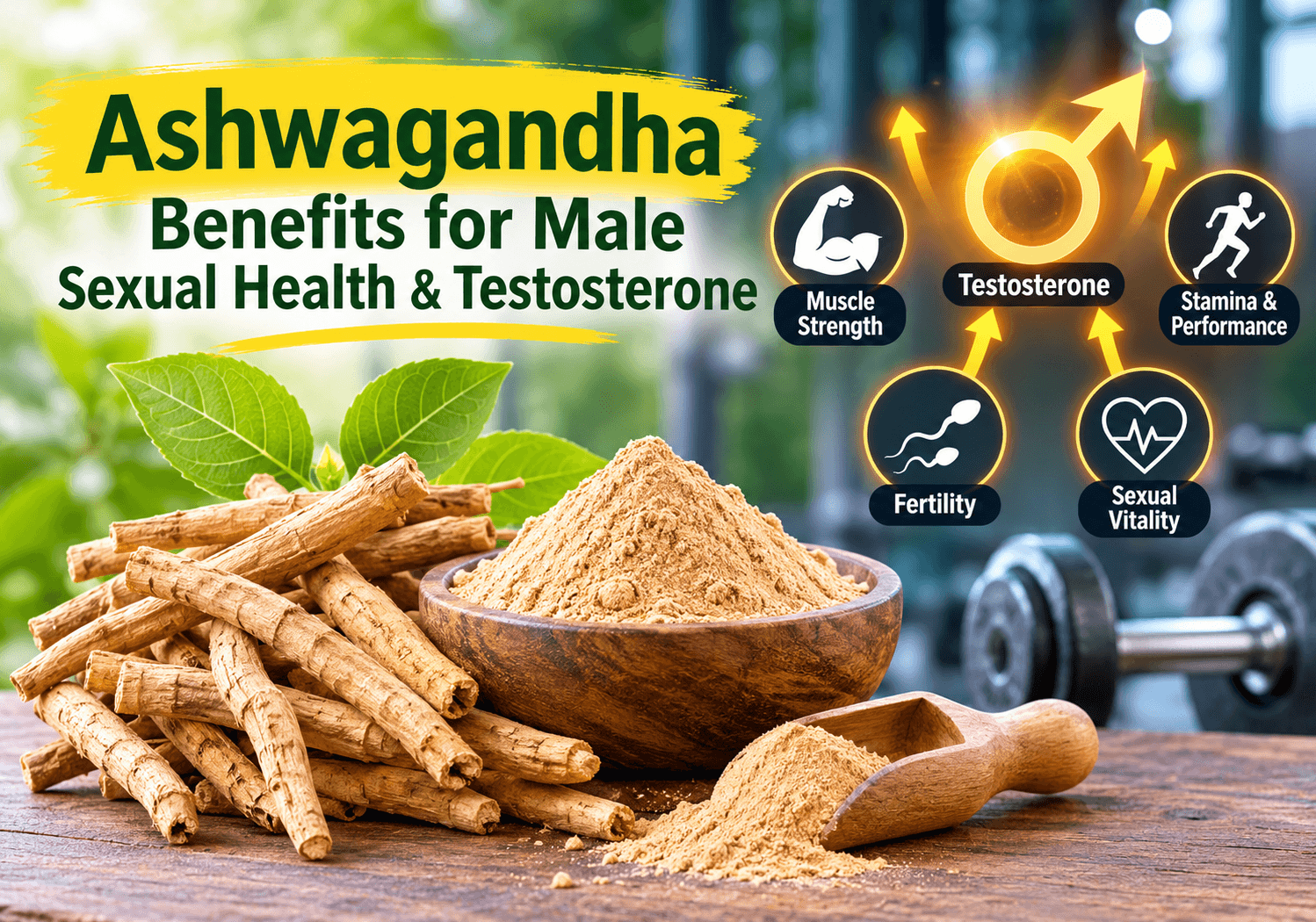
Chronic stress, demanding workout schedules, poor sleep, and age-related hormonal shifts take a silent toll on male vitality. If you have noticed lagging gym performance, slower recovery between heavy sets, or a noticeable drop in sex drive, your endocrine system may be signaling an overload. Among the vast array of natural supplements marketed to men, few herbs possess the clinical backing of Withania somnifera, commonly known as ashwagandha.
Understanding the ashwagandha benefits for male sexual health and testosterone requires looking beyond supplement hype and examining how adaptogens interact with your nervous system, hormone pathways, and reproductive biology.
Quick Answer: Clinical trials demonstrate that taking 300 mg to 600 mg of high-concentration ashwagandha root extract (such as KSM-66 or Sensoril) daily can increase total testosterone levels by 15% to 17% in stressed or training men. By reducing circulating cortisol, improving sperm motility and concentration, and calming the central nervous system, ashwagandha offers a grounded, dual-action approach to supporting male fertility, erectile quality, and physical stamina.
What Is Ashwagandha and How Does It Work in the Male Body?
Ashwagandha is an adaptogenic herb deeply rooted in traditional Ayurvedic medicine. Adaptogens are natural compounds that assist your body in resisting, adapting to, and recovering from physical, emotional, and environmental stressors.
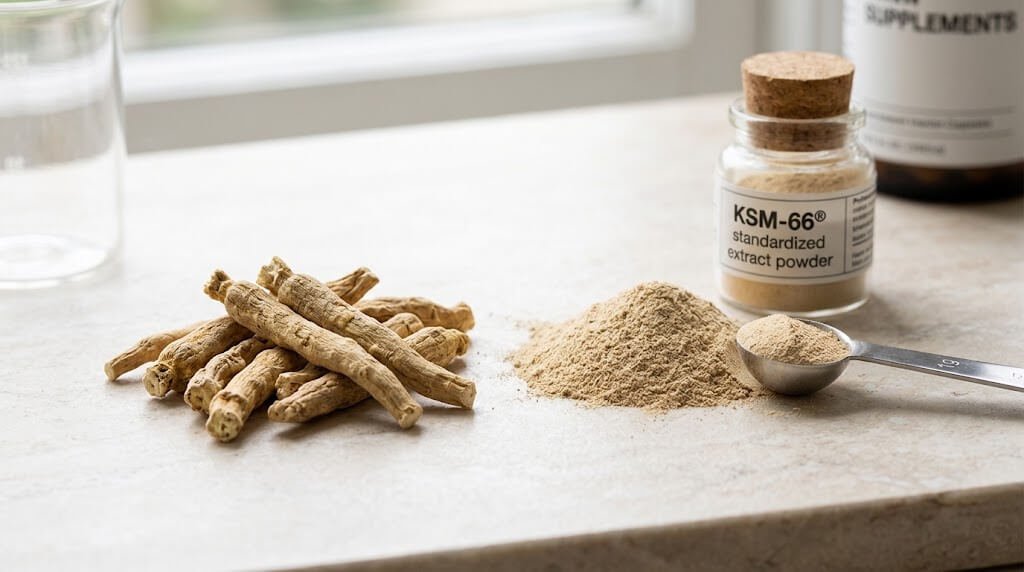
Unlike synthetic compounds or hormonal replacement therapies that artificially introduce exogenous molecules into your bloodstream, ashwagandha works natively through your body’s regulatory axes. Specifically, it acts upon the hypothalamic-pituitary-adrenal (HPA) axis. When physical exertion or emotional anxiety triggers a stress response, your adrenal glands flood your system with cortisol.
Elevated cortisol acts as a biological handbrake on sexual function and muscle recovery. Research published in the Indian Journal of Psychological Medicine demonstrates that standardized ashwagandha root extract significantly lowers serum cortisol levels. By muting excessive stress signaling, your endocrine system creates a favorable environment to produce endogenous hormones like testosterone.
1. Direct Testosterone Support and Endocrine Modulation
Testosterone is the primary anabolic and androgenic hormone in the male body. It governs muscle protein synthesis, bone density, fat distribution, facial hair growth, and overall sex drive.When evaluating ashwagandha benefits for male sexual health and testosterone, clinical evidence shows a clear link between root extract supplementation and elevated serum testosterone. A landmark randomized, double-blind, placebo-controlled study published in the Journal of the International Society of Sports Nutrition examined men undergoing a structured resistance training program over 8 weeks.
The group consuming 300 mg of standardized ashwagandha root extract twice daily experienced a significantly greater increase in testosterone levels compared to the placebo group. The supplement group gained more muscle mass on bench press and leg extension exercises while showing lower markers of exercise-induced muscle damage.The underlying mechanism involves Luteinizing Hormone (LH), secreted by the anterior pituitary gland. LH travels through the bloodstream to the testes, signaling the Leydig cells to convert cholesterol into testosterone. Standardized ashwagandha extracts stimulate LH production while protecting Leydig cells from oxidative degradation. If you are experiencing low energy, understanding what causes low libido in men after 40 will help clarify how hormonal drops impact daily vigor.
2. Reduction of Cortisol and the Stress-Hormone Connection
Cortisol and testosterone maintain an inverse physiological relationship known as the cortisol-testosterone axis. When cortisol remains chronically high due to overtraining, financial strain, or poor sleep hygiene, sex hormone production drops. Cortisol directly competes with testosterone for binding space and suppresses the hypothalamic-pituitary-gonadal (HPG) axis.
By acting as a GABA-mimetic agent, ashwagandha enhances calming neurotransmitter activity in the brain. This calms the nervous system and inhibits excess cortisol release from the adrenal cortex.

A clinical study in Medicine found that men supplementing with standardized ashwagandha experienced up to a 30% reduction in morning cortisol levels alongside significant reductions in subjective stress scores. For men who struggle to keep their stress down during body recomposition phases, learning how adaptogens for stress eating and cortisol management help control hormones provides an extra edge.
3. Male Fertility: Sperm Count, Concentration, and Motility
Beyond total serum testosterone, male sexual health depends heavily on reproductive markers. Infertility affects millions of men globally, with oxidative stress serving as a primary driver of reduced sperm viability and DNA fragmentation.
Clinical trials published in Evidence-Based Complementary and Alternative Medicine evaluated infertile men treated with standardized ashwagandha root extract (KSM-66) over 90 days. The findings revealed dramatic improvements across all key seminal parameters:
| Semen Parameter | Average Increase After 90 Days | Primary Biological Mechanism |
| Sperm Concentration | +167% increase | Upregulation of spermatogenesis via LH/FSH signals |
| Semen Volume | +53% increase | Enhanced accessory gland secretory function |
| Sperm Motility | +57% increase | Reduction in seminal lipid peroxidation & ROS |
| Serum Testosterone | +17% increase | Leydig cell protection and pituitary stimulation |
High concentrations of antioxidants within Withania somnifera (specifically withanolides) neutralize reactive oxygen species (ROS) in semen tissue. This protects sperm cell membranes, allows better swimming velocity (motility), and preserves genetic material. If optimizing your fertility profile is a priority, combining ashwagandha with core micronutrients—such as examining does zinc support healthy testosterone levels in men—creates a complete strategy for seminal health.
4. Libido, Erectile Function, and Nitric Oxide Pathways
Erectile response is fundamentally a neuro-vascular event. It requires adequate parasympathetic nervous system tone combined with effective vasodilation driven by nitric oxide within the pelvic vasculature.
When a man is trapped in a fight-or-flight sympathetic nervous state due to ongoing anxiety, penile smooth muscle contracts, restricting arterial blood flow. Ashwagandha addresses sexual wellness through two synergistic avenues:
- Psychological De-excitation: Lowering anxiety and performance-related apprehension via central nervous system modulation.
- Endothelial Support: Enhancing tissue-level antioxidant capacity, which preserves active Nitric Oxide? molecules in blood vessel walls.
While ashwagandha is not a direct PDE5 inhibitor like pharmaceutical erectile medications, it fosters the physiological baseline necessary for strong, reliable erections. Men seeking natural performance solutions often examine how targeted amino acids help; reviewing if does L-arginine support blood flow and erectile function shows how endothelial vasodilation operates alongside botanical adaptogens.Furthermore, sleep deprivation severely impairs nighttime penile tumescence and morning testosterone pulses. Investigating how does sleep affect metabolism and weight management highlights the deep link between restful deep-wave sleep cycles and night-time hormonal output.
5. Athletic Performance, Muscle Mass, and Strength Recovery
For lifters and athletes, total testosterone directly correlates with recovery capacity, force production, and total muscle hypertrophy. When training loads scale up, cortisol spikes to break down damaged tissue. If left unchecked, this leads to overtraining syndrome, muscle wasting, diminished libido, and chronic fatigue.

By suppressing excessive muscle tissue breakdown, ashwagandha improves performance across key metrics:
- Maximal Strength: Higher 1-rep max (1RM) gains on compound lifts like the barbell squat, bench press, and deadlift.
- VO2 Max Improvements: Increased oxygen delivery capacity during prolonged aerobic and anaerobic efforts.
- Reduced Serum Creatine Kinase: Lower systemic markers of cellular muscle damage 24 to 48 hours post-workout.
When your body recovers faster from physical stress, your testicular Leydig cells retain the energy reserves needed for continuous hormone synthesis.
Coach’s Tip: The Cortisol-Buffering Protocol
If you are running a high-volume strength phase (such as 4 to 5 heavy lifting days per week), take your standardized ashwagandha supplement approximately 30 to 60 minutes before bed alongside a small protein meal. This timing targets peak nocturnal cortisol suppression, matches natural human growth hormone (HGH) release, and promotes deeper restorative slow-wave sleep.
Dosing, Standardized Extracts, and Safety Protocols
Not all botanical supplements deliver equal bioactivity. Raw ground ashwagandha root powder contains small percentages of active compounds, requiring large quantities for clinical effect. High-potency standardized extracts are processed to guarantee specific percentages of active withanolides.
Extract Comparison Table
| Extract Type | Active Withanolide Content | Standard Daily Dose | Primary Use Case / Focus |
| KSM-66® | 5.0% (Root-only extract) | 600 mg (split into two 300 mg doses) | Muscle strength, testosterone, fertility, stress |
| Sensoril® | 10.0%+ (Root and leaf blend) | 125 mg – 250 mg daily | Deep sedation, anxiety reduction, acute stress |
| Raw Root Powder | 0.5% – 1.5% (Unstandardized) | 3,000 mg – 5,000 mg daily | Traditional tea brews, low-potency support |
How to Cycle Ashwagandha for Long-Term Efficacy
To prevent receptor desensitization and maintain optimal adaptogenic sensitivity, follow a structured cycling protocol:
- 8 Weeks On: Take 600 mg of KSM-66 daily.
- 2 Weeks Off: Discontinue all adaptogen supplementation to reset baseline receptor sensitivity.
- Re-evaluate: Monitor subjective sleep quality, libido, and strength markers before starting your next cycle.
Common Mistake: Expecting Instant Results
Ashwagandha is not a fast-acting stimulant or immediate pharmaceutical vasodilator. A common error among gym-goers is taking a single capsule before a workout or romantic evening and expecting immediate spikes in libido or power output. Adaptogens require cumulative dosing over 4 to 8 weeks to alter baseline endocrine markers and cellular antioxidant reserves.
Integrating Ashwagandha into a Testosterone-Optimized Routine
Supplements enhance a well-structured training program; they cannot replace foundational lifestyle habits. To maximize ashwagandha benefits for male sexual health and testosterone, align your supplement regimen with evidence-based workout programming and precise nutrition.
Sample Weekly Training Schedule for Testosterone Optimization
To optimize natural hormone levels, focus your training on multi-joint compound movements that recruit large muscle groups. This creates an acute endocrine response without causing system-wide overtraining.
| Day | Primary Focus | Key Exercises | Volume / Rest Parameters |
| Monday | Lower Body Power | Barbell Back Squats, Romanian Deadlifts, Walking Lunges | 3-4 sets x 6-8 reps (2-3 min rest) |
| Tuesday | Upper Body Push/Pull | Overhead Barbell Press, Weighted Pull-Ups, Incline Dumbbell Bench | 3-4 sets x 8-10 reps (90 sec rest) |
| Wednesday | Active Recovery | Light walking (2-3 miles [3.2-4.8 km]), mobility work | 45 minutes zone 1 movement |
| Thursday | Posterior Chain | Conventional Deadlifts, Barbell Hip Thrusts, Hamstring Curls | 3-4 sets x 5 reps (3 min rest) |
| Friday | Upper Body Hypertrophy | Dumbbell Chest Flyes, Cable Rows, Face Pulls, Bicep Curls | 3 sets x 10-12 reps (60 sec rest) |
| Saturday | Aerobic Conditioning | Kettlebell Swings, Rowing Ergometer intervals | 20 minutes (1:2 work-to-rest ratio) |
| Sunday | Full Rest | Total recovery, sleep focus, light stretching | Rest and supplement uptake |
When organizing your nutrition plan alongside heavy training, maintaining steady metabolic output is critical. Learning how to support metabolism naturally for weight management helps prevent energy crashes that trigger unwanted cortisol spikes.
Practical Workout Movements to Support Pelvic Health & Hormones
While ashwagandha provides systemic chemical support, physical movements directly improve localized pelvic circulation, lower-body power, and core stability. Incorporate these three exercises into your weekly routine:
1. The Heavy Barbell Hip Thrust
This movement builds maximal gluteal force, strengthens the pelvic floor, and increases blood flow to the hips and pelvic region.
Regression (Easier): Unloaded Bodyweight Glute Bridge on a mat (3 sets of 15 reps).
- Progression (Harder): Single-Leg Dumbbell Hip Thrust holding a 35 lb [16 kg] dumbbell over the working hip.
2. Barbell Front Squat
Front squats emphasize an upright posture, demand upper-back rigidity, and spur acute growth hormone release.

- Form Cue: Keep elbows driven high, parallel to the floor, ensuring the barbell rests on your deltoids rather than your collarbones.
- Sets & Reps: 4 sets of 6 reps using roughly 70-75% of your 1RM, resting 2.5 minutes between sets.
3. Deep Goblet Cossack Squat
This multi-planar movement opens hip adductors, improves groin mobility, and enhances arterial flow through the groin and pelvic region.
- Form Cue: Hold a 45 lb [20.4 kg] kettlebell at chest height. Take a wide stance and lower your weight over one leg while keeping the opposite leg straight with toes pointed up.
- Sets & Reps: 3 sets of 8 reps per side.
Who Should Be Careful with Ashwagandha?
While generally safe for healthy adult men, ashwagandha exerts potent physiological effects. Exercise caution or speak with a qualified physician under the following conditions:
- Thyroid Disorders: Ashwagandha can stimulate thyroid output (increasing T3 and T4 levels). Men with hyperthyroidism or Graves’ disease should avoid it.
- Autoimmune Conditions: Conditions like rheumatoid arthritis, lupus, or Hashimoto’s thyroiditis may flare up due to ashwagandha’s immune-stimulating effects.
- Hormone-Sensitive Prostate Conditions: Because ashwagandha elevates serum testosterone, individuals undergoing treatment for prostate issues or prostate cancer must consult their oncologist.
- Sedative Medication Use: Combining high-dose ashwagandha (especially high-withanolide extracts like Sensoril) with benzodiazepines or barbiturates can cause excessive drowsiness.
Checking for potential interactions with other natural supplements—such as evaluating if do libido supplements for men actually work—ensures a safe supplement regimen.
Frequently Asked Questions
How long does it take for ashwagandha to increase testosterone?
Clinical studies show measurable increases in serum testosterone after 8 to 12 weeks of daily consumption of standardized root extracts like KSM-66 (600 mg daily). Subjective improvements in stress levels, sleep quality, and exercise recovery often appear within 2 to 3 weeks.
Does ashwagandha help with erectile dysfunction?
Ashwagandha can improve erectile quality when performance issues stem from stress, high cortisol, or performance anxiety. By reducing sympathetic nervous tone and supporting nitric oxide retention, it creates a favorable environment for erections, though it does not act as a direct vasodilator for organic vascular disease.
What is the best ashwagandha dosage for male sexual health?
The clinically validated dosage for male sexual health and testosterone support is 600 mg per day of standardized root extract (such as KSM-66), typically split into two 300 mg doses taken with meals. For high-potency extracts like Sensoril, dosages range between 125 mg and 250 mg daily.
Can ashwagandha increase sperm count and motility?
Yes. Clinical trials in infertile men demonstrated that 90 days of standardized ashwagandha supplementation increased sperm concentration by up to 167%, semen volume by 53%, and sperm motility by 57% by reducing seminal oxidative stress and elevating LH levels.
Does ashwagandha lower cortisol to boost testosterone?
Yes. Cortisol and testosterone have an inverse relationship. Ashwagandha acts on the HPA axis to lower morning serum cortisol levels by up to 27–30%. This mitigates stress-induced suppression of the testes’ Leydig cells, allowing total and free testosterone production to rise.
Should I take ashwagandha in the morning or at night?
If using KSM-66 for strength performance, split the dose between morning and evening meals. If using ashwagandha primarily to improve sleep architecture and curb night-time cortisol spikes, take your daily dosage 30 to 60 minutes before bed.
Conclusion
The ashwagandha benefits for male sexual health and testosterone are rooted in solid biological mechanics rather than marketing hype. By directly dampening chronic cortisol signals, protecting Leydig cells from oxidative stress, and boosting pituitary LH release, standardized root extracts like KSM-66 offer men a safe, effective pathway to restore vitality, support fertility, and improve gym performance.
To get the most out of ashwagandha, pair your supplement routine with a structured progressive overload lifting program, adequate dietary fats, and 7 to 9 hours of quality sleep each night. Endocrine health is built on consistency—give your body the adaptogenic support, training stimulus, and recovery time it needs to thrive.