
What Causes Frequent Urination in Women Over 40? A Complete, Evidence-Based Guide
Hitting the bathroom five, six, or seven times a day used to be a rare inconvenience. Then you turned 40, and suddenly your bladder seems to have a mind of its own. You’re not imagining it, and you’re definitely not alone. What causes frequent urination in women over 40 is a question that comes up in gynecology offices, urology clinics, and kitchen-table conversations every single day.
The short truth is that your body is going through real, measurable changes. Estrogen levels shift. The muscles that support your bladder and urethra lose some of their tone. Your bladder wall may become more irritable. Add in a busy schedule, a cup of coffee, or a new medication, and the frequency creeps up. Understanding the why behind the trips to the bathroom is the first step toward feeling in control again.
This guide breaks down every major cause, explains what’s considered normal, and gives you practical, coach-level steps you can start this week. No jargon without explanation. No fear-mongering. Just clear information so you can have a confident conversation with your doctor if you need one.
Quick Answer: What causes frequent urination in women over 40 most often comes down to three things: declining estrogen during perimenopause and menopause, weakening of the pelvic floor muscles, and a more sensitive (irritable) bladder wall. Other contributors include caffeine, certain medications, urinary tract infections, and conditions like overactive bladder or diabetes. Most cases are manageable with lifestyle changes, pelvic floor exercises, and, when needed, medical treatment.

The Main Causes of Frequent Urination After 40
There is rarely just one reason your bladder is acting up. In most women over 40, two or three factors overlap. Here is what the research and clinical literature point to.
Hormonal Changes and Estrogen Decline
Between your mid-30s and early 50s, your body gradually produces less estrogen. This shift accelerates during perimenopause (the years leading up to your last period) and continues through menopause.
Estrogen does more than regulate your cycle. It keeps the tissues of your urethra and vaginal canal thick, elastic, and well-vascularized. When estrogen drops, those tissues thin out. The urethral seal becomes less effective, and the bladder lining becomes more sensitive to small volumes of urine. Research published in the Journal of Urology links lower estrogen levels to increased urgency and frequency in postmenopausal women Mayo Clinic – Overactive Bladder in Women.
You do not need to be fully postmenopausal to feel this. Many women notice the change starting in their early 40s, right in the perimenopausal window.
Pelvic Floor Weakness
Your pelvic floor is a hammock of muscles that stretches from your pubic bone to your tailbone. It supports your bladder, uterus, and bowel, and it helps you control when urine releases.
After 40, several things can weaken this muscle group:
- Childbirth, especially vaginal delivery, can stretch and stress the pelvic floor.
- Aging naturally reduces muscle mass and tone in all groups, including the pelvic floor.
- Chronic straining (constipation, heavy lifting, chronic coughing) pushes down on the pelvic floor over time.
- Sedentary habits mean the muscles get less functional work.

When the pelvic floor is weak, it cannot fully support the bladder neck. You may feel a sudden urge to go, or you may leak a small amount when you cough, sneeze, or laugh (stress incontinence). The National Institute of Diabetes and Digestive and Kidney Diseases (NIDDK) identifies pelvic floor dysfunction as a leading contributor to both urge and stress incontinence in middle-aged women NIDDK – Urinary Incontinence.
Overactive Bladder (OAB) and Detrusor Irritability
Your bladder wall contains a smooth muscle called the detrusor. Its job is to relax while the bladder fills and then contract to push urine out. In some women over 40, the detrusor starts contracting at lower volumes than it should. You feel a sudden, strong urge to go even when the bladder is only 20–30% full.
This is the hallmark of overactive bladder. The American Urological Association estimates that OAB affects roughly 33 million Americans, and women are diagnosed about twice as often as men Cleveland Clinic – Frequent Urination. Contributing factors include:
- Nerve changes that come with aging
- A history of pelvic surgery
- Chronic bladder irritation (infections, interstitial cystitis)
- High caffeine or alcohol intake
Bladder Capacity Changes
With age, the bladder’s functional capacity can shift. The detrusor muscle may become stiffer, so the bladder doesn’t stretch as easily. You feel “full” at a smaller volume than you did at 30. This is not a disease; it is a normal age-related adaptation. But it does mean you may need to empty more often to avoid discomfort.
Urinary Tract Infections (UTIs)
Women over 40 are not immune to UTIs, and the postmenopausal thinning of the urethral lining can actually make infections a bit easier to develop. A UTI causes irritation of the bladder lining, which triggers frequent, urgent, sometimes painful urination. Even a low-grade infection that you might dismiss as “just being a little off” can add two or three extra trips to the bathroom per day.
Medications and Lifestyle Factors
Several everyday things can tip a borderline-normal bladder into frequent urination:
- Diuretics (water pills) for blood pressure or fluid retention increase urine output directly.
- Caffeine (coffee, tea, energy drinks, some sodas) is a mild diuretic and a bladder irritant.
- Alcohol has the same dual effect.
- Artificial sweeteners (saccharin, aspartame) can irritate the bladder lining in sensitive individuals.
- Certain antidepressants, antihistamines, and sedatives can affect bladder signaling.
If you started a new medication a few weeks ago and your bathroom frequency jumped, that timing is a clue worth mentioning to your pharmacist or doctor.
Other Medical Conditions to Rule Out
Frequent urination can be a signal for conditions that need medical attention:
- Type 2 diabetes or pre-diabetes: Excess glucose in the blood pulls water into the urine, increasing volume and frequency.
- Heart failure: The body redistributes fluid at night, and the kidneys process it, leading to nocturia (waking to urinate at night).
- Interstitial cystitis (IC): A chronic bladder-pain condition that causes urgency and frequency without infection.
- Pelvic organ prolapse: When the bladder or uterus drops from its normal position, it can kink the urethra and leave you with a feeling of incomplete emptying, so you keep going back.
- Bladder or kidney stones: Can irritate the urinary tract and increase frequency.
If your frequent urination is new, sudden, or accompanied by other symptoms (pain, blood in urine, unexplained weight loss, excessive thirst), see a doctor promptly.

What’s Normal vs. What’s Not: Urination Frequency Table
“Normal” varies by person, fluid intake, climate, and activity level. But here is a general benchmark based on urological guidelines:
| Metric | Typical Range | When to Pay Attention |
| Urinations per 24 hours | 6–8 | More than 10, or fewer than 3 |
| Urinations per night (nocturia) | 0–1 | 2 or more regular nights per week |
| Urine volume per void | 200–400 mL (about 7–13 oz) | Consistently under 100 mL (3 oz) |
| Time between voids (awake) | 2–5 hours | Less than 1 hour most of the day |
| Urgency episodes per day | 0–1 | More than 3, especially with leakage |
If you are consistently outside these ranges, it is worth tracking your bathroom trips for three to five days (a simple bladder diary: time, volume estimate, fluid you drank, any leakage) and bringing that log to your doctor. It gives your provider a concrete picture instead of a vague “I go a lot.”
How to Manage Frequent Urination After 40: Practical Steps
You do not have to just “live with it.” A combination of targeted exercises, habit changes, and (when appropriate) medical treatment can make a real difference. Here is a practical plan you can start today.
Pelvic Floor Exercises (Kegels) – Step by Step
Kegels are the single most evidence-backed exercise for improving bladder control in women over 40. They strengthen the muscles that support your bladder and help you “catch” an urge before it becomes a leak.
How to find the right muscles:
- Next time you urinate, try to stop the stream mid-flow. The muscles you squeeze to do that are your pelvic floor. (Do this once to identify the muscles. Do not make a habit of stopping your stream regularly, as it can interfere with proper bladder emptying.)
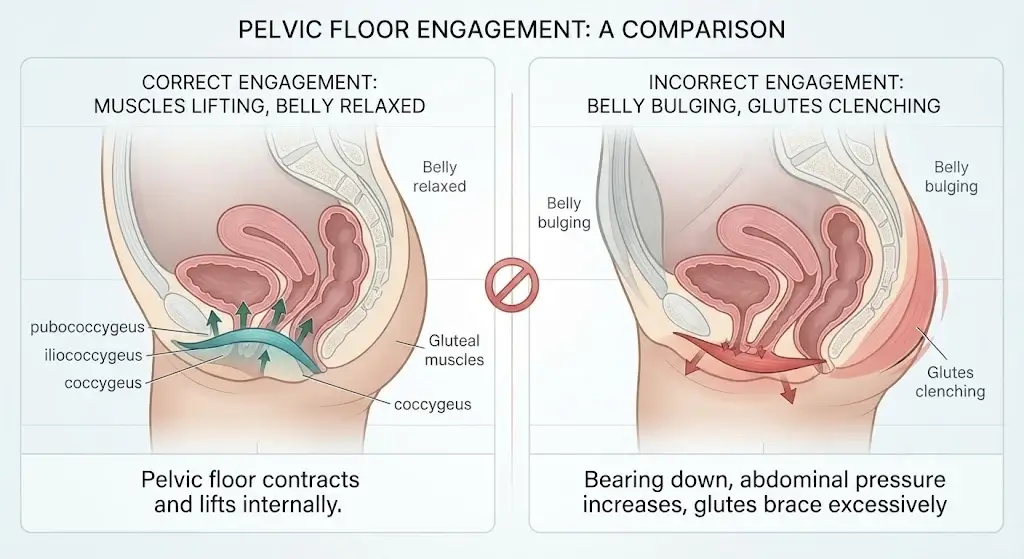
- You should feel a gentle lifting and tightening, like you are trying to hold in gas. Your belly, thighs, and buttocks should stay relaxed.
The exercise (do this 3 times a day):
- Sit or lie down in a comfortable position. For the first two weeks, lying down is easier because gravity is not working against you.
- Squeeze and lift your pelvic floor muscles. Hold for 5 seconds.
- Relax completely for 5 seconds. The relaxation phase is just as important as the squeeze.
- Repeat 10 times. That is one set.
- Rest 30 seconds, then do 2 more sets.
Coach’s Tip: Think of it as a “lift and tuck,” not a “push down.” If your belly is bulging or your glutes are clenching, you are using the wrong muscles. Place one hand on your lower belly; it should stay soft. If you are not sure you are doing it correctly, a pelvic floor physical therapist can check your form in one session and make a huge difference.
Progression over 8 weeks:
| Weeks | Hold Time | Rest Time | Sets | Reps per Set |
| 1–2 | 3 sec | 5 sec | 3 | 10 |
| 3–4 | 5 sec | 5 sec | 3 | 10 |
| 5–6 | 8 sec | 5 sec | 3 | 8 |
| 7–8 | 10 sec | 5 sec | 3 | 6 |
Easier version (regression): If a 3-second hold feels hard, start with 2-second holds and 5-second rests. Focus on the relaxation phase. Quality over quantity.
Harder version (progression): Once you can do 10-second holds with 6 reps comfortably, add a “quick flick” set: 10 rapid squeezes and releases (1 second on, 1 second off) to train fast-twitch fibers. This helps with sudden coughs or sneezes.
Common Mistake: Doing Kegels while standing up with locked knees and a tight core. This recruits your glutes and abs instead of the pelvic floor. Sit down, keep your knees slightly bent, and let your belly stay soft. If you feel a downward pressure instead of an upward lift, stop and reset.
Bladder Training
Bladder training is a structured habit-rebuilding exercise. The idea: if you feel an urge, you do not rush to the bathroom immediately. You pause, do a quick pelvic floor squeeze, and wait 5–10 minutes before going. Over 4–6 weeks, your brain re-learns that a small signal does not mean “emergency.”
How to start:
- Pick a comfortable interval (start with 2 hours between bathroom trips if you currently go every 45 minutes).
- When the urge hits, stop what you are doing. Squeeze your pelvic floor 3 times (5 seconds each).
- Distract yourself: count backward from 100 by 7s, or do 10 slow, deep breaths.
- After 5–10 minutes, go to the bathroom.
- Increase the interval by 15 minutes each week.
Track your progress in a simple notebook or phone note. Most people see a meaningful reduction in frequency within 4 to 6 weeks.
Lifestyle Adjustments That Actually Help
- Cut or reduce caffeine. If you drink 3 cups of coffee, try cutting to 1.5 for two weeks and see if frequency drops. Caffeine is a direct bladder irritant and a mild diuretic.
- Limit alcohol, especially in the evening. Alcohol increases urine production and irritates the bladder lining.
- Watch artificial sweeteners. If you use diet sodas or sugar-free products, try a two-week swap to water or unsweetened herbal tea and note any change.
- Manage fluid timing. Drink most of your water in the morning and early afternoon. Taper off 2–3 hours before bed to reduce nocturia.
- Treat constipation. Chronic straining pushes down on the pelvic floor. Aim for regular, soft bowel movements with fiber and adequate water.
- Move your body regularly. The CDC recommends at least 150 minutes of moderate aerobic activity per week plus muscle-strengthening work two days a week CDC – Physical Activity Guidelines. Walking, cycling, swimming, and even a good dance class keep blood flow to the pelvic region healthy and support overall muscle tone. If you are already working on your metabolism and energy after 40, pairing a practical movement plan for women over 40 with your pelvic floor routine creates a well-rounded approach.
- Sleep hygiene matters. Poor sleep can amplify the sensation of urgency and make nocturia feel worse. If you are already working on how sleep affects your hormonal balance and overall well-being, the bladder benefits are a bonus.
When to See a Doctor
Most frequent urination after 40 is manageable with the steps above. But you should schedule a visit with your primary care doctor, gynecologist, or urologist if:
- You are waking up two or more times per night to urinate, most nights of the week.
- You are leaking urine with coughs, sneezes, or exercise and it is affecting your daily life.
- You have pain or burning with urination, blood in your urine, or a fever (possible UTI or kidney issue).
- Your frequency changed suddenly (over a few days to a couple of weeks) rather than gradually.
- You are also experiencing excessive thirst, unexplained weight loss, or fatigue (possible diabetes).
- You have a history of pelvic surgery, radiation, or a known pelvic organ prolapse.
- Over-the-counter steps and pelvic floor exercises have not improved things after 6–8 weeks.
Your doctor may order a urinalysis, a bladder diary review, a post-void residual check (to see if you are emptying fully), or a urodynamic study. In some cases, a referral to a pelvic floor physical therapist or a urogynecologist is the next step.

Safety Notes and When to Seek Urgent Medical Attention
This article is for general information and is not a substitute for advice from a doctor or physical therapist.
Seek prompt medical care if you experience:
- Inability to urinate at all (urinary retention)
- Large amounts of blood in the urine
- Severe lower abdominal or back pain with fever
- Sudden, complete loss of bladder control (new onset)
- Frequent urination paired with confusion, extreme thirst, or dizziness (possible uncontrolled diabetes)
Before starting any new exercise program or pelvic floor routine, especially if you have a known pelvic organ prolapse, a recent pelvic surgery, or a diagnosed bladder condition, check with your doctor or a pelvic floor physical therapist. They can confirm that the exercises you choose are safe for your specific situation.
A note on supplements and “bladder support” products: The supplement market is full of products claiming to “tighten the bladder” or “stop leaks.” The evidence base for most of these is thin. If you are considering any supplement for urinary health, talk to your doctor first, especially if you are on medications. The same cautious approach applies to any supplement that claims to support metabolic or hormonal health—always verify with a healthcare professional before adding it to your routine.
Related Tips for Women Over 40
- Keep a bladder diary for 3–5 days before your next doctor’s visit. Note the time of each void, the approximate volume (small / medium / large), what you drank, and any leakage. This simple log gives your provider far more to work with than “I go a lot.”
- Avoid “double voiding” as a habit. Some women urinate, wait 30 seconds, and try again to “make sure they’re empty.” If this becomes a crutch, it can train the bladder to hold smaller volumes. Focus on emptying fully in one go, with a relaxed pelvic floor and a slight forward lean.
- Wear supportive underwear during exercise. If you are active, a well-fitted, moisture-wicking layer can give you confidence while you are building your pelvic floor strength.
- Manage stress. Chronic stress tightens your pelvic floor and can amplify urgency signals. Even 10 minutes of slow breathing, a short walk, or a gentle stretch routine can help. If stress is a regular part of your life, look into how to manage cravings and stress eating naturally as a broader wellness practice—the same calm-down tools help your bladder.
- Stay hydrated, but be strategic. Do not restrict water to “reduce bathroom trips.” Dehydration concentrates urine, which irritates the bladder lining and can actually increase urgency. Aim for about 6–8 cups (1.5–2 liters) of water spread through the day, with less in the evening.
FAQ
Does menopause cause frequent urination?
Yes. The drop in estrogen during perimenopause and menopause thins the urethral and vaginal tissues, reduces bladder wall elasticity, and can increase detrusor sensitivity. Many women notice more urgency and frequency in their early to mid-40s, before their last period. Local vaginal estrogen therapy, prescribed by a gynecologist, can help restore tissue health in some cases.
How many times is normal to urinate per day for a woman over 40?
Most urologists consider 6 to 8 urinations per 24 hours normal, with 0 to 1 nighttime voids. Going more than 10 times a day, or waking two or more times per night most weeks, is a signal to track your habits and talk to your doctor.
Can exercise help with frequent urination in women?
Yes, specifically pelvic floor exercises (Kegels) and general strength training. Strengthening the pelvic floor improves the muscle’s ability to support the bladder and respond to urgency signals. The CDC recommends at least 150 minutes of moderate activity per week, and adding targeted pelvic floor work two to three times a week can improve bladder control within 6 to 8 weeks.
What foods and drinks make frequent urination worse?
Caffeine (coffee, black and green tea, energy drinks), alcohol, carbonated beverages, and artificial sweeteners are the most common bladder irritants. Spicy foods and citrus can also aggravate a sensitive bladder. Try eliminating one suspect at a time for a week to identify your personal triggers.
Is frequent urination at night normal for women over 40?
One nighttime void is common and generally not a concern. Two or more regular nighttime trips (nocturia) can be linked to fluid redistribution in the legs, excess evening fluid intake, a smaller functional bladder capacity, or an underlying condition like heart failure or diabetes. If it is disrupting your sleep, bring it up with your doctor.
When should I see a doctor about frequent urination?
See your doctor if frequency is new or sudden, if you are leaking urine, if you have pain or blood in your urine, if you are waking two or more times per night most weeks, or if lifestyle changes and pelvic floor exercises have not helped after 6 to 8 weeks. Early evaluation rules out infections, diabetes, and other treatable conditions.
Conclusion
What causes frequent urination in women over 40 is almost always a combination of factors: the natural decline in estrogen, gradual weakening of the pelvic floor, a bladder wall that has become a little more sensitive, and everyday habits like caffeine intake or evening fluid timing. None of this means something is “broken.” It means your body is adapting, and you can adapt with it.
Start with the basics. Learn your pelvic floor muscles and commit to three short Kegel sessions a day. Track your bathroom trips for a week. Cut back on one bladder irritant at a time. Give it six to eight weeks. If things are not improving, or if you have pain, leakage, or sudden changes, make that doctor’s appointment. You do not have to white-knuckle it, and you do not have to accept it as “just part of aging.”
You have tools, and you have time. Move, strengthen, hydrate smartly, and take care of the rest. Your bladder can feel a lot more reliable than it does right now.