
Best Probiotics for Oral Health and Gum Comfort: A Coach’s Buying Guide
You brush twice a day, floss nightly, and still wake up with swollen, tender gums and a metallic taste. You are not alone. The mouth hosts roughly 700 bacterial species, and when the balance tips toward harmful strains, plaque builds faster, gums inflame, and breath turns foul. Probiotics for oral health and gum comfort target that imbalance directly by introducing beneficial bacteria that compete with the pathogens driving inflammation.
I have spent years coaching clients through daily routines where small, consistent habits compound into real results. Oral care works the same way. Adding a well-chosen oral probiotic is not a magic fix, but for many people it is the missing piece that keeps the gum line calm between dental visits. This guide walks you through the strains that matter, the delivery formats that actually work, and the specific products worth your money.
Quick Answer: The best probiotics for oral health and gum comfort contain Lactobacillus reuteri, Lactobacillus paracasei LPC-37, or Streptococcus salivarius M18 in doses of 1–10 billion CFU, delivered as a lozenge, powder, or capsule. Look for a product that lists the exact strain, CFU count, and a “use by” date. Start with a single-strain option for four weeks, then assess whether your gum comfort and breath have improved before adding more.
How Oral Probiotics Differ From Gut Probiotics
Most people think of probiotics as a pill you swallow for digestion. Oral probiotics take a different route. Instead of passing through the stomach, they are designed to colonize the teeth, tongue, and gum line for a short period. You hold a lozenge in your mouth, let a powder dissolve on your tongue, or apply a probiotic toothpaste. The goal is to let the beneficial strains attach to the same biofilm where harmful bacteria like Porphyromonas gingivalis and Streptococcus mutans live.
Research from the National Institute of Dental and Craniofacial Research (NIDCR) highlights that the oral microbiome is a complex ecosystem, and disrupting it with harsh mouthwashes or over-aggressive brushing can sometimes make inflammation worse. Introducing targeted beneficial strains is one approach people use to support that balance.
The key difference: gut probiotics aim for long-term colonization of the intestines. Oral probiotics aim for transient competitive exclusion—they crowd out bad bacteria for a few hours, then you rinse them away. That is why you will see instructions like “do not eat or drink for 30 minutes after use.”
Comparison Table: Top Oral Probiotic Products
| Product | Primary Strain(s) | CFU per Dose | Format | Best For | Price Range |
| Oricore | S. salivarius M18 | 1 billion | Lozenge | Bad breath, daily maintenance | 25–40 |
| ProDent Probiotic Toothpaste | L. paracasei LPC-37 | 1 billion | Toothpaste | Gum comfort, daily brushing routine | 15–25 |
| ReMastin / L. reuteri DSM 17938 | L. reuteri | 1–2 billion | Powder (capsule) | Periodontal support, post-treatment | 20–35 |
| LactoFit Oral (multi-strain) | L. reuteri + Bifidobacterium | 5 billion | Powder sachet | Broader oral + gut support | 30–45 |
| ProDent Probiotic Lozenge | L. paracasei LPC-37 | 1 billion | Lozenge | On-the-go gum comfort | 20–30 |
| OralB Probiotic Rinse [VERIFY] | Multi-strain blend | [VERIFY] | Liquid rinse | Sensitive gums, post-flossing | 12–20 |
| Lactobacillus salivarius BL09 (generic) | L. salivarius BL09 | 1–5 billion | Capsule | Budget-friendly daily use | 10–20 |
| Multi-Strain Oral Probiotic (e.g., Dentist’s Choice) | L. reuteri + S. salivarius + Bifidobacterium | 10 billion | Powder | Comprehensive, advanced users | 35–55 |
Prices are approximate retail ranges as of mid-2025. Check the manufacturer’s page for current pricing.
Product Breakdowns
1. Oricore – Streptococcus salivarius M18 Lozenge
Who it’s for: People whose main complaint is persistent bad breath (halitosis) or a dry mouth that makes the back of the throat feel coated.
Key features:
- Single, well-studied strain (S. salivarius M18) that produces bacteriocins—natural compounds that inhibit S. mutans and other cavity-causing bacteria.
- Lozenge format means the bacteria contact the tongue and soft palate for several minutes.
- No artificial sweeteners; sugar-free.
Pros:
- Simple, one-ingredient focus makes it easy to track what is working.
- Small, pocket-sized; easy to use at work or the gym.
- Tolerable minty flavor.
Cons:
- Only one strain, so it will not address the full range of periodontal pathogens.
- You must chew slowly for at least 10 minutes; rushing defeats the purpose.
Coach’s Tip:
Take the Oricore lozenge right after brushing and flossing, before bed. Your mouth produces less saliva overnight, which is when plaque bacteria multiply fastest. Letting the lozenge dissolve slowly during your wind-down routine gives the M18 strain the best window to compete with harmful bacteria.
2. ProDent Probiotic Toothpaste – Lactobacillus paracasei LPC-37
Who it’s for: People who want to fold a probiotic into the brushing habit they already do twice a day, without adding a separate step.
Key features:
- LPC-37 is one of the most researched strains for periodontal support. Studies in the Journal of Clinical Periodontology and related journals have examined its ability to reduce inflammatory markers in gingival tissue. [VERIFY specific study citation before publishing]
- Applied directly to the gum line during brushing.
- Contains standard fluoride or non-fluoride base (check the label for your preference).
Pros:
- Zero extra steps; replaces your regular toothpaste.
- LPC-37 has a solid body of peer-reviewed research behind it.
- Gentle formula suitable for sensitive gums.
Cons:
- CFU per brushing session is lower than a dedicated lozenge or powder.
- You must leave the paste on the teeth for the full two-minute brush; spitting it out early reduces contact time.
3. ReMastin / Lactobacillus reuteri DSM 17938 Powder
Who it’s for: Individuals dealing with recurring gum inflammation, those in the early stages of periodontal disease, or anyone who has just finished a professional cleaning and wants to support healing.
Key features:
- L. reuteri DSM 17938 produces reuterin, a compound shown in lab studies to inhibit several oral pathogens.
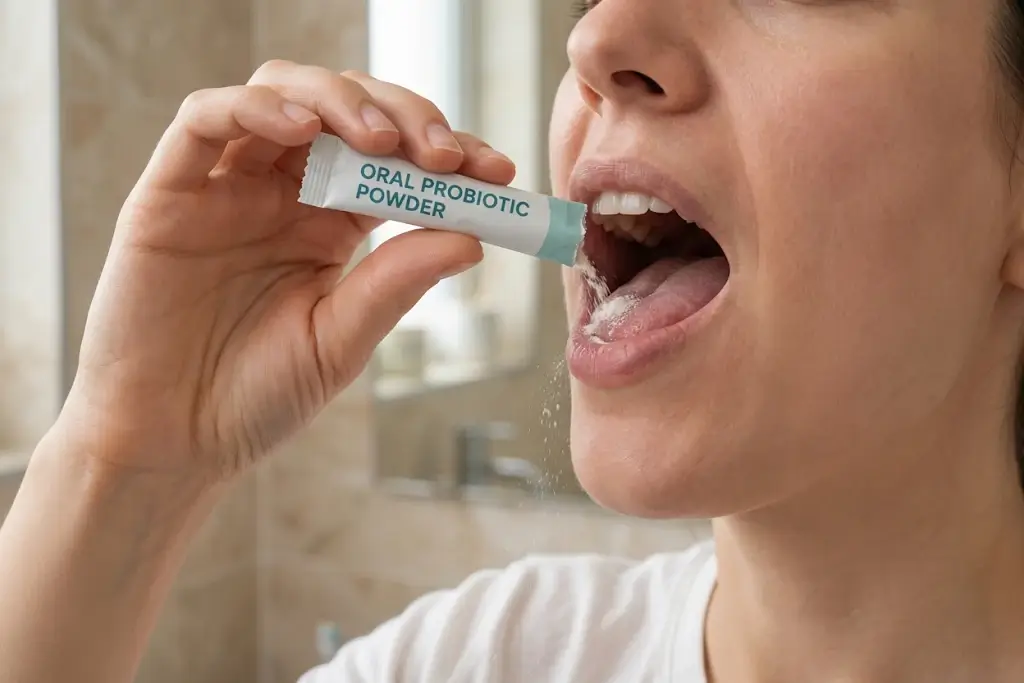
- Powder format: you open a capsule, sprinkle the contents under the tongue or on the back of the throat, and let it dissolve.
- Typically 1–2 billion CFU per dose.
Pros:
- Strong research base for L. reuteri in both gut and oral contexts.
- Easy to split the dose (half under the tongue, half on the gum line).
- No sugar, no artificial flavors.
Cons:
- Powder in a capsule is a two-step process; some people find it fiddly.
- Taste is mildly sour; not for the faint of palate.
Common Mistake:
Most people swallow the powder immediately. Do not. Let it sit under your tongue or on the inner cheek for at least 60 seconds before swallowing. The bacteria need direct contact with the oral mucosa to exert their competitive effect. Swallowing it like a regular pill sends it straight to your stomach, where it has nothing to do with your gums.
4. LactoFit Oral – Multi-Strain Powder Sachet
Who it’s for: People who want a broader approach, covering both oral and upper-gut bacteria, or those who have tried single-strain products without enough improvement.
Key features:
- Combines L. reuteri and a Bifidobacterium strain (typically B. animalis or B. lactis) at a combined 5 billion CFU.
- Sachet format: tear open, pour into mouth, let dissolve.
- Often marketed as a “oral + gut” dual-action product.
Pros:
- Two strains cover more ground than a single-strain lozenge.
- Sachet format is mess-free and travel-friendly.
- Higher total CFU than most lozenges.
Cons:
- More expensive per dose.
- Two-strain formula makes it harder to tell which strain is doing the work if you notice a change.
- Slightly tangy aftertaste.
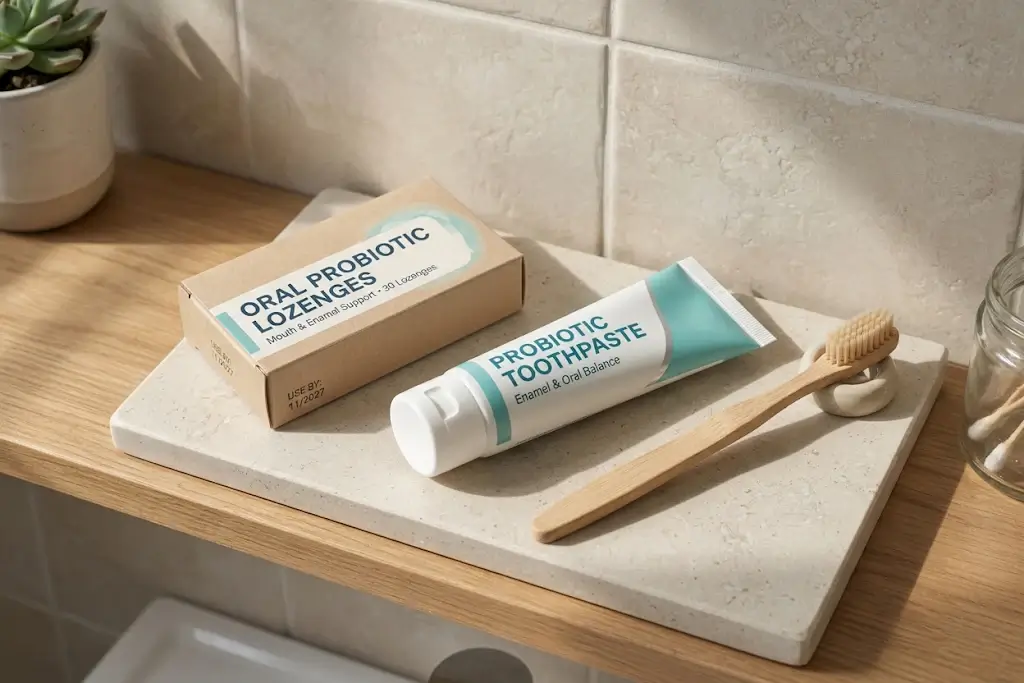
5. ProDent Probiotic Lozenge – L. paracasei LPC-37
Who it’s for: People who prefer a lozenge over a powder or toothpaste and want the same LPC-37 strain in a different delivery format.
Key features:
- Same well-studied LPC-37 strain as the toothpaste version.
- Lozenge dissolves over 10–15 minutes.
- Available in mint or unflavored.
Pros:
- Familiar lozenge format; easy to use at the office, gym, or after a meal.
- Unflavored version is good for people sensitive to mint.
- Pairs well with the ProDent toothpaste for a “double hit” of LPC-37.
Cons:
- You are essentially paying for the same strain in a different format.
- 10-minute dissolve time is longer than a powder.
6. OralB Probiotic Rinse
Who it’s for: People with very sensitive or bleeding gums who find brushing or lozenges too irritating and want a gentler delivery method.
Key features:
- Liquid rinse format with a multi-strain probiotic blend.
- Swish for 30 seconds, then spit.
- [VERIFY exact strain list and CFU count on the product label before publishing.]
Pros:
- Reach all tooth surfaces and the gum line in one swish.
- Gentle on irritated tissue.
- Short contact time (30 seconds) fits a busy morning.
Cons:
- Liquid format may deliver fewer live bacteria to the gum line than a lozenge or powder.
- [VERIFY: Confirm the product is still in production and the specific CFU count.]
7. Generic Lactobacillus salivarius BL09 Capsule
Who it’s for: Budget-conscious buyers who want a probiotic with a reasonable research footprint without the premium brand markup.
Key features:
- L. salivarius BL09 is a strain isolated from the oral cavity, making it naturally adapted to the mouth environment.
- 1–5 billion CFU per capsule.
- Typically sold as a 30- or 60-capsule bottle.
Pros:
- Lowest cost per dose in this guide.
- Oral-origin strain, so it is not “transplanted” from a gut isolate.
- Easy capsule format.
Cons:
- Less brand-specific research than M18 or LPC-37.
- You must open the capsule and let the powder dissolve in your mouth (do not swallow whole).
- Packaging and quality control vary by manufacturer.
8. Multi-Strain Oral Probiotic Powder (e.g., Dentist’s Choice or similar)
Who it’s for: Advanced users, people with a history of recurrent periodontal issues, or anyone who has tried single-strain products for 8+ weeks without enough improvement.
Key features:
- Three or more strains: typically L. reuteri, S. salivarius, and a Bifidobacterium species.
- 10 billion CFU combined.
- Powder in a single-serve sachet.
Pros:
- Broadest coverage of oral pathogens.
- Highest CFU count in this guide.
- Some formulations include a prebiotic (inulin or fructooligosaccharides) to feed the beneficial strains.
Cons:
- Most expensive option.
- Complex formula; harder to identify which strain helps if you react to one.
- May cause mild gas or a “fizzing” sensation in the mouth for the first week.
How to Choose: Buyer’s Checklist
Before you buy, run through this list. It takes two minutes and saves you from grabbing the wrong product.
- Strain specificity. The label must name the exact strain (e.g., L. reuteri DSM 17938), not just the species. “Contains Lactobacillus” is not enough.
- CFU count. For oral use, 1 billion CFU is a reasonable starting point. Multi-strain products may list 5–10 billion combined. More is not always better; the right strain at the right dose matters more.
- Delivery format. Lozenges and powders give the longest mucosal contact. Toothpaste is convenient but brief. Rinse is the shortest contact. Pick the format you will actually use every day.
- Shelf life and storage. Live bacteria die. Check the “use by” date. Some products require refrigeration after opening; others are shelf-stable. Read the label.
- Sugar and fillers. Avoid products with added sugar, which feeds the very bacteria you are trying to crowd out. Sugar alcohols (xylitol, erythritol) are fine.
- Allergens and sensitivities. Check for dairy, soy, or gelatin if you have allergies. Capsule shells may contain gelatin; look for a cellulose (vegetarian) option.
- Budget. A single-strain lozenge at 25–40 per month is a reasonable entry point. Multi-strain powders at 40–55 per month are the upper tier.
- Warranty / return policy. If the product does not agree with your mouth, you want a way to return it. Most major supplement retailers offer 30-day returns.
How We Picked
This guide was built on the following criteria:
- Peer-reviewed research. Each strain listed has at least a small body of human or in-vitro research indexed on PubMed or published in periodontal and microbiology journals. I prioritized strains with human trial data over those with only lab studies.
- Strain transparency. Products that name the exact strain and CFU count scored higher than those that list a “proprietary blend.”
- Delivery method. I favored formats that keep the bacteria in contact with the oral mucosa for at least 30 seconds (powders, lozenges) over quick-rinse formats.
- Safety profile. All listed strains are Generally Recognized as Safe (GRAS) by the FDA for oral consumption. I excluded products with added medicinal compounds (e.g., hydrogen peroxide, essential oil blends) to keep the focus on the probiotic mechanism.
- Practicality. A product you will not use consistently is worse than a slightly less potent one you will take every day. Format, taste, and convenience factored into the ranking.
Storage, Timing, and Daily Routine
Probiotics are alive. Treat them that way.
- Store at room temperature unless the label says refrigerate. Avoid the bathroom cabinet above the toilet; heat and humidity kill cultures. A kitchen drawer or a shelf in your bedroom is better.
- Timing matters. The best window is after brushing and flossing, before bed. Your mouth is clean, plaque has been mechanically removed, and you are about to enter the low-saliva overnight period when pathogens thrive.
- Do not eat or drink for 30 minutes after using a lozenge or powder. Water, coffee, or a snack will wash the bacteria away before they have time to compete with harmful strains.
- Consistency beats intensity. One lozenge every night for 12 weeks will outperform a 10-day “cure” followed by a month of nothing. Think of it like a strength-training program: the adaptation happens over weeks, not days.
- Antibiotics. If you are on a systemic antibiotic, wait at least 2 hours after the antibiotic dose before using an oral probiotic, and talk to your dentist or doctor first. Antibiotics can kill the beneficial strains you are trying to introduce.
Easier and More Advanced Approaches
Easier (beginner) approach:
- Replace your morning toothpaste with a probiotic toothpaste (e.g., ProDent LPC-37).
- Brush for a full two minutes, paying extra attention to the gum line.
- Floss once a day.
- That is it. No extra steps. You are adding one strain at the lowest-friction point in your routine.
More advanced (progression) approach:
- Morning: Probiotic toothpaste + floss.
- Evening: Probiotic toothpaste + floss, then a L. reuteri or S. salivarius M18 lozenge/powder under the tongue for 60 seconds.
- Weekly: Professional dental cleaning every 3–6 months (or more frequently if you have a history of periodontal issues).
- Monthly: Check your gum line in the mirror. Note any bleeding, swelling, or persistent bad breath. If symptoms persist beyond 6–8 weeks, see a dentist to rule out periodontal disease or other causes.
Who Should Be Cautious
- Pregnant or breastfeeding women. While the strains listed here are GRAS, your OB-GYN or dentist should clear any new supplement before you start.
- Immunocompromised individuals (HIV, chemotherapy, organ transplant recipients). Even “safe” bacteria can pose a risk when your immune system is suppressed. Get medical clearance first.
- People on blood thinners or immunosuppressants. Check with your prescribing doctor before adding any live-culture product.
- Children under 12. Most oral probiotic products are formulated for adults. A pediatric dentist can advise on age-appropriate options.
If you have a history of recurrent oral infections, unexplained gum bleeding, or jaw pain, see a dentist before starting any supplement. Probiotics support a healthy microbiome; they do not treat an active infection.
FAQ
Do probiotics actually help with bad breath?
Some strains, particularly Streptococcus salivarius M18, produce bacteriocins that reduce the sulfur-producing bacteria linked to halitosis. A small number of human trials suggest a measurable reduction in volatile sulfur compounds after 4–8 weeks of daily use. Results vary by individual, and probiotics work best alongside good brushing and flossing, not as a replacement.
Can probiotics prevent gum disease (periodontitis)?
Research suggests that certain strains like L. paracasei LPC-37 and L. reuteri may reduce inflammatory markers in gingival tissue and slow plaque accumulation. However, no probiotic is a substitute for professional dental care. The CDC notes that periodontal disease is a chronic infection best managed with regular cleanings and good home hygiene. Probiotics are a supportive addition, not a standalone treatment.
How long do oral probiotics take to work?
Most users report noticing a difference in breath and gum comfort within 2–4 weeks of daily use. For deeper changes in plaque composition or inflammatory markers, studies typically measure outcomes at 8–12 weeks. Give a product at least four weeks before deciding it is not working.
Are oral probiotics safe to use long-term?
The strains in this guide are GRAS and have been consumed safely in food and supplement form for years. There are no known long-term adverse effects from the oral strains listed here. If you experience persistent mouth irritation, unusual taste, or digestive upset, stop use and consult your dentist or doctor.
Can I take oral probiotics while on antibiotics?
You can, but timing matters. Take the probiotic at least 2 hours after the antibiotic dose to reduce the chance the antibiotic kills the live cultures. More importantly, talk to your doctor or dentist before combining the two, especially if the antibiotic was prescribed for an oral infection.
What CFU count do I need for oral probiotics?
For oral use, 1 billion CFU per dose is a reasonable starting point. Multi-strain products may list 5–10 billion combined. Higher CFU does not automatically mean better results; the specific strain and its ability to adhere to the oral mucosa matter more than the raw number.
Conclusion: Pick One Strain, Stick With It, and Give It Time
The best probiotics for oral health and gum comfort are not the most expensive or the most complex. They are the ones with a named, researched strain, a delivery format you will actually use every night, and a CFU count in the 1–10 billion range. Start with a single-strain lozenge or a probiotic toothpaste. Use it after brushing, before bed, for at least four weeks. Track your gum comfort, breath, and any bleeding after flossing. If you see improvement, you have found your product. If not, try a different strain or a multi-strain powder.
Your mouth is an ecosystem. You cannot “fix” it with a single product, but you can tip the balance in the right direction with consistent, small choices. Pair your probiotic with the fundamentals—soft-bristle brushing, daily flossing, and regular dental visits—and you give your gums the best environment to stay healthy.