
You train hard, eat clean, and still feel puffy by mid-afternoon. It’s natural to search for the best probiotics for bloating and hope one bottle fixes it. The honest picture is less tidy than the labels suggest.
Some probiotic types show a bloating signal in trials, but the evidence is weak and strain-specific. This guide shows which types have research behind them, how to choose a product, and when to skip the supplement and see a doctor. It also includes a gentle movement routine to pair with it.
Quick Answer
No single brand wins. Evidence for bloating is weak, but combination (multi-strain) and Bacillus-based probiotics show the most signal. Top pick: a multi-strain product. Budget pick: plain yogurt or kefir. Upgrade pick: a strain tested in IBS trials, chosen with your doctor. Try one product for about four weeks.
Do Probiotics Actually Help With Bloating?
Probiotics are live microorganisms, often bacteria, that are the same as or similar to ones found naturally in the body, according to the National Center for Complementary and Integrative Health (NCCIH). The NCCIH says some evidence supports probiotics for acute diarrhea, antibiotic-associated diarrhea, and a skin condition called atopic eczema. For most other uses, strong evidence is lacking.
Bloating isn’t on that short list. That doesn’t mean probiotics never help. It means the case is still being built.
What the large reviews found
The biggest review I found pooled data from 82 trials with 10,332 people with irritable bowel syndrome (IBS). For bloating or distension, the review found very low certainty evidence of benefit for combination probiotics and Bacillus strains. It also found that adverse events were not significantly higher with probiotics.
“Very low certainty” is the key phrase. It means future studies could change the picture.
A separate review of six double-blind trials in 970 adults with IBS found probiotics were linked to a significant reduction in bloating. The authors still said high variation between studies prevented a definitive statement.
A third analysis, a network meta-analysis of IBS trials, reported that three probiotic strains and two mixtures were effective at easing abdominal bloating.
What the guidelines say
The American Gastroenterological Association (AGA) took a cautious stance. Its 2020 guideline recommends probiotics for IBS only in the context of a clinical trial. The same guideline suggests Saccharomyces boulardii or specific combinations to prevent C. difficile infection in people on antibiotics.
That’s a big gap between “popular supplement” and “recommended treatment.” Keep it in mind when marketing promises sound certain.
The bottom line on evidence
Putting it together:
- Most trials studied people with IBS, not everyday bloating.
- Benefits are modest and depend on the strain.
- Certainty is low or very low.
- Safety looks reasonable for healthy adults, but long-term data are limited.
So the best probiotics for bloating are the ones with a trial behind them for your kind of symptoms, used as a time-limited experiment.
Why You’re Bloated First (It Isn’t Always Gut Bacteria)
Before buying anything, understand what bloating is. According to the NIDDK, gas normally enters the digestive tract when you swallow air and when bacteria in the large intestine break down undigested carbohydrates. Swallowing more air can mean more gas symptoms.
The NIDDK also lists conditions that can cause gas symptoms, including IBS, functional abdominal bloating, functional constipation, and trouble digesting certain carbohydrates such as lactose.
Common gym-related triggers
From a coaching view, these are worth a look:
- Eating fast or talking while eating, which can increase swallowed air.
- Carbonated drinks and sugar-free gum.
- Big pre-workout meals that sit heavy during squats and core work.
- Sudden jumps in fiber from new protein bars, powders, or “gut health” mixes.
- Constipation, which can make your midsection feel tight.
I haven’t pulled research on each of these, so treat them as things to track rather than proven causes.
Red flags: see a doctor
The NIDDK says to talk with a doctor if gas symptoms bother you, change suddenly, or come with symptoms like abdominal pain, constipation, diarrhea, or weight loss. Don’t try to supplement your way past those.
Comparison Table: Probiotic Types for Bloating
This table compares types, not brands, because evidence is strain-level. Prices vary widely, so confirm them before publishing.
| Type | Key strains studied | Evidence for bloating | Best for | Price range |
| Multi-strain blends | Varies by product | Very low certainty of benefit (IBS reviews) | People wanting a broad first try | |
| Bacillus-based | Bacillus coagulans and others | Very low certainty of benefit (IBS reviews) | Those who prefer shelf-stable options | |
| Bifidobacterium-based | B. longum 35624 and others | Low certainty for abdominal pain; bloating less clear | IBS-type symptoms, with a doctor | |
| L. plantarum 299v | Single strain | Low certainty for global IBS symptoms | Those wanting a single studied strain | |
| S. boulardii (yeast) | S. boulardii | Studied for antibiotic-related issues, not bloating | People taking antibiotics (ask your doctor) | |
| Fermented foods | Yogurt, kefir | Not established for bloating | Budget, food-first approach | |
| Synbiotics | Probiotic + prebiotic fiber | Not established; fiber may add gas | Cautious trial only | |
| Fortified powders and mixes | Varies | Unclear; check strain and dose | Convenience, with label scrutiny |

The 8 Probiotic Types to Consider
1. Multi-strain (combination) probiotics
Who it’s for: Adults who want a broad-spectrum first try for general bloating.
Key features: These blend several species, usually Lactobacillus and Bifidobacterium. The large IBS review found very low certainty evidence of benefit for combination products on bloating.
Pros:
- Widely available.
- Covers several species in one capsule.
- The only category with a bloating signal besides Bacillus.
Cons:
- “Multi-strain” is not a guarantee. Each exact combination needs its own trial.
- Marketing often highlights strain counts, not tested doses.
- Evidence certainty is very low.
2. Bacillus-based probiotics
Who it’s for: People who like shelf-stable capsules or can’t keep products refrigerated.
Key features: Bacillus strains form spores, which are a hardy resting form. In the same review, Bacillus strains had very low certainty evidence of benefit for bloating and distension.
Pros:
- Convenient storage.
- Shows up in the bloating results alongside combinations.
Cons:
- Very low certainty.
- Fewer long-term safety data.
- Spore products still need strain-level evidence.
Example products to check: Digestive Advantage (B. coagulans)
3. Bifidobacterium-based probiotics
Who it’s for: People with IBS-style symptoms working with a doctor.
Key features: In the large review, Bifidobacterium strains had low certainty evidence for reducing abdominal pain. Bloating results were less clear.
Pros:
- Among the more studied genera in IBS.
- Often well tolerated.
Cons:
- Benefit for bloating specifically isn’t established.
- Strain matters. A generic “Bifidobacterium” label isn’t enough.
Example products to check: Align (B. longum 35624)
4. Lactobacillus plantarum 299v
Who it’s for: People who want a single, named strain instead of a blend.
Key features: The review found low certainty evidence of benefit for global IBS symptoms with L. plantarum 299v. That’s not the same as bloating.
Pros:
- A clearly named strain makes it easier to compare products.
- Single strains are simpler to evaluate.
Cons:
- Evidence is for overall symptoms, not bloating alone.
- Fewer products carry this exact strain.
5. Saccharomyces boulardii (probiotic yeast)
Who it’s for: People on antibiotics, after checking with their doctor.
Key features: The AGA guideline suggests S. boulardii or specific combinations for preventing C. difficile infection in adults and children on antibiotic treatment. That’s a different goal than bloating.
Pros:
- Backed by guideline language for a specific use.
- A yeast, so it isn’t killed by antibiotics.
Cons:
- Not shown here to fix everyday bloating.
- Not suitable for everyone, especially people with weakened immune systems. Ask a doctor.
Example products to check: Florastor
6. Fermented foods: yogurt and kefir
Who it’s for: Anyone who wants a budget, food-first option.
Key features: The NCCIH notes probiotics come in foods like yogurt as well as supplements. Whether fermented foods ease bloating hasn’t been established in the sources used here.
Pros:
- Inexpensive and easy to fit into a meal.
- Adds protein, which suits training diets.
Cons:
- Dairy can worsen bloating for people who are lactose intolerant. The NIDDK lists lactose intolerance as a cause of bloating.
- Live culture content varies. Check the label for “live and active cultures.”
Coach’s Tip: Start with a small serving, such as ¼ cup (about 60 mL), and keep a log. If your belly tightens, stop and test again with a non-dairy option.
7. Synbiotics (probiotic plus prebiotic fiber)
Who it’s for: Only people who tolerate fiber well and want to experiment.
Key features: These add prebiotic fiber to feed the probiotic. The catch is that bacteria breaking down undigested carbohydrates is a main source of gas, per the NIDDK. More fiber can mean more gas for some people.
Pros:
- Convenient all-in-one products.
Cons:
- May worsen bloating in sensitive people.
- Harder to tell what is helping or hurting.
Common Mistake: Starting a synbiotic, a new protein powder, and a high-fiber bar in the same week. If bloating changes, you won’t know why. Change one thing at a time.
8. Probiotic-fortified powders and drink mixes
Who it’s for: Gym-goers who like convenience.
Key features: Some protein powders and mixes add probiotics. Check the strain name, not just “probiotic blend.”
Pros:
- Easy to build into a routine.
Cons:
- Dose and strain are often unclear.
- Powders may contain sweeteners or fibers that bloat some people.
How to Choose: A Buyer’s Checklist
Use this before you buy:
- Full strain names. Look for genus, species, and strain code (for example, “Lactobacillus plantarum 299v”). If only the genus appears, skip it.
- A trial for your symptom. The NCCIH says different probiotics may have different effects, and that in most cases we don’t know which ones help or how much to take. So match the product to a published trial.
- CFU count and a fair label. Look for CFU through the end of shelf life, not just at manufacture.
- Allergens and fillers. Check for dairy, soy, or sweeteners if those bother you.
- Storage needs. Some products need refrigeration.
- Third-party testing. Look for an independent testing seal.
- Cost per month. A 4-week trial shouldn’t break your budget.
- Your health status. The NCCIH notes the risk of serious side effects may be greater in people with underlying health conditions.
Weight, size, and space? Not here
Unlike gym equipment, probiotics don’t have weight capacities or dimensions. What matters is strain, dose, evidence, and tolerance.
How We Picked These Categories
We didn’t test products, and this guide doesn’t claim to have. Instead, I used these criteria:
- Evidence signal for bloating, from systematic reviews and guidelines.
- Strain clarity, since the AGA noted that differences in strain, dose, and route can significantly affect outcomes.
- Safety and tolerance, per the NCCIH.
- Practical fit for active adults, including cost and convenience.
No manufacturer paid for placement, and I haven’t tested any product personally.
Safety: Who Should Be Careful or Skip Probiotics
The NCCIH says probiotics usually have few side effects, but data on safety, especially long term, are limited. The agency notes that in 2023 the FDA warned that premature infants given probiotics are at risk of severe, potentially fatal infections.
Talk with your doctor first if you:
- Have a weakened immune system.
- Have a serious illness or a central venous catheter.
- Are pregnant or breastfeeding.
- Are giving probiotics to a baby or child.
- Take medications and aren’t sure about interactions.
Stop and seek care if bloating comes with severe pain, blood in stool, unexplained weight loss, fever, or vomiting. The NCCIH advises talking with a health care provider before using a probiotic supplement.
Setup and Maintenance: A 4-Week Trial Plan
Treat a probiotic like a small experiment.
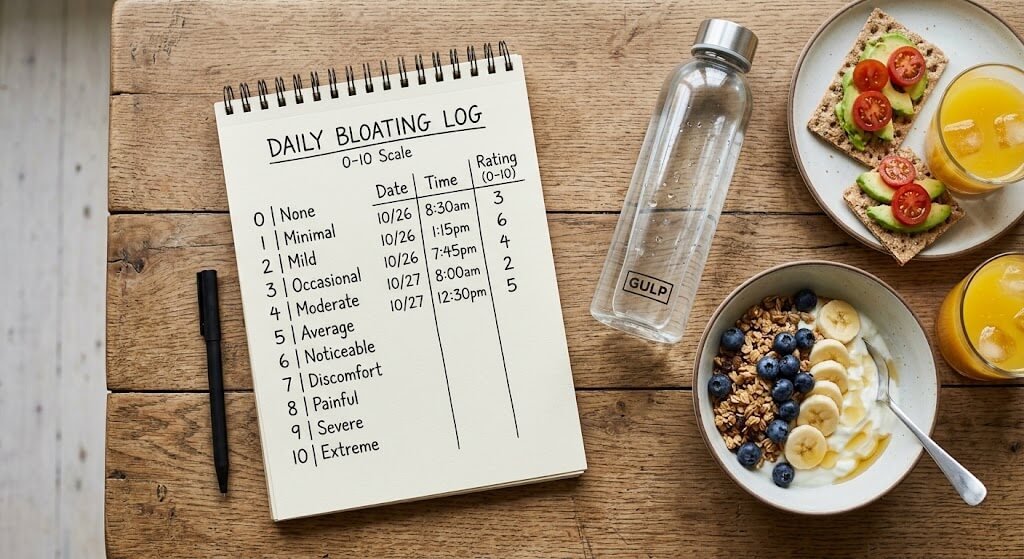
Week 0: Baseline. For 5-7 days, log meals, bloating (rate 0-10), bowel habits, and sleep. Don’t change anything else.
Weeks 1-4: One product. Start one product, following the label. Keep your diet steady. Rate bloating daily at the same time.
Week 4: Decide. If symptoms improved clearly, you may continue. If nothing changed, stop. If symptoms worsened, stop and talk to your doctor.
Storage and consistency
- Follow the label for storage and timing.
- Take it at the same time each day.
- Don’t stack multiple probiotic products at once.
I haven’t verified timing with food from a source, so follow the product label or ask a pharmacist.
Other supplements people stack
Gym-goers often add several supplements at once. If you do, keep each one evidence-based and separate. For example, our guides on inositol and insulin sensitivity and chromium picolinate and glucose metabolism cover different goals and shouldn’t be started in the same week as a probiotic.
Gym-Friendly Moves for a Bloated Belly
Movement isn’t a substitute for medical care, and I haven’t cited a source for any effect on bloating. Many people simply feel more comfortable with gentle activity.
The routine
| Move | Sets | Reps / time | Rest |
| Easy walk | 1 | 10 min (about 0.5 mile / 0.8 km) | None |
| Cat-cow | 2 | 8 slow breaths | 20 sec |
| Knees-to-chest rock | 2 | 30 sec | 20 sec |
| Bird-dog | 2 | 6 per side | 30 sec |
How to do each one
Easy walk: Keep a pace where you can talk comfortably. Stand tall and swing your arms.
Cat-cow: On hands and knees, round your back as you exhale, then lift your chest as you inhale. Move slowly.
Knees-to-chest rock: Lie on your back, hug your knees, and rock gently side to side. It should feel like a soft stretch, not pressure on a full stomach.
Bird-dog: On hands and knees, extend the opposite arm and leg while keeping your hips level. Pause for a beat, then switch.
Easier and harder versions
| Move | Easier | Harder |
| Easy walk | 5 minutes indoors | 20 minutes with brisk pace |
| Cat-cow | Smaller range, 5 breaths | Add a 3-second hold at each end |
| Knees-to-chest | One knee at a time | Add a gentle hold of 45 sec |
| Bird-dog | Arm only or leg only | Hold 5 sec, add a light ankle weight 1-2 lb (0.5-1 kg) |

Skip this routine if you have pain, recent abdominal surgery, or a medical condition that limits activity, and ask your doctor or physical therapist.
Related Tips Before You Buy a Probiotic
- Slow down at meals. Chew well and avoid gulping air.
- Limit carbonated drinks while you test.
- Introduce fiber gradually. Sudden jumps can increase gas.
- Check for lactose if dairy seems to trigger symptoms.
- Talk to a dietitian. The NIDDK suggests discussing a healthy eating plan with your doctor or dietitian for gas symptoms.
- Don’t self-diagnose IBS. Get symptoms checked first.
- Keep expectations realistic. Modest improvement is the likely best case.

Frequently Asked Questions
Do probiotics help with bloating?
They may help some people, especially those with IBS, but the evidence is weak. A large review found very low certainty of benefit for combination and Bacillus products on bloating. Results depend on the strain, so treat probiotics as a time-limited trial.
Which probiotic is best for bloating and gas?
No single product has proven best. Combination and Bacillus-based probiotics showed the most bloating signal in one large review, though with very low certainty. Pick a product with full strain names and a trial for your symptoms, and ask your doctor.
How long do probiotics take to work for bloating?
Studies vary, so there’s no fixed timeline. A practical approach is a four-week trial with a daily symptom log. If nothing improves, stop. If symptoms worsen or red flags appear, stop and see your doctor.
Can probiotics make bloating worse?
Yes, possibly. Some people notice more gas when starting a new probiotic, and added prebiotic fiber can add gas for some. Start one product at a time and stop if symptoms get worse or you feel unwell.
Is yogurt enough for bloating?
Not necessarily. Yogurt and kefir contain live cultures, but evidence for easing bloating isn’t established here. Dairy can also worsen bloating if you’re lactose intolerant. Try a small serving, check for “live and active cultures,” and track how you feel.
Who should not take probiotics?
People with weakened immune systems, serious illness, or central catheters should ask a doctor first, as should pregnant or breastfeeding people and anyone giving them to infants. The NCCIH says premature infants are at risk of serious infections. Always check with your health care provider.
Conclusion: Finding the Best Probiotics for Bloating
The best probiotics for bloating are the ones with a trial behind them for your kind of symptoms, tried one at a time. In the research I found, combination and Bacillus-based products show the most bloating signal, but the certainty is very low. Single strains like L. plantarum 299v and Bifidobacterium products have evidence for broader IBS symptoms.
Start with the basics: eat slowly, track triggers, and rule out red flags. If you try a probiotic, pick one, test it for about four weeks, and keep notes. When in doubt, talk to your doctor or a dietitian.