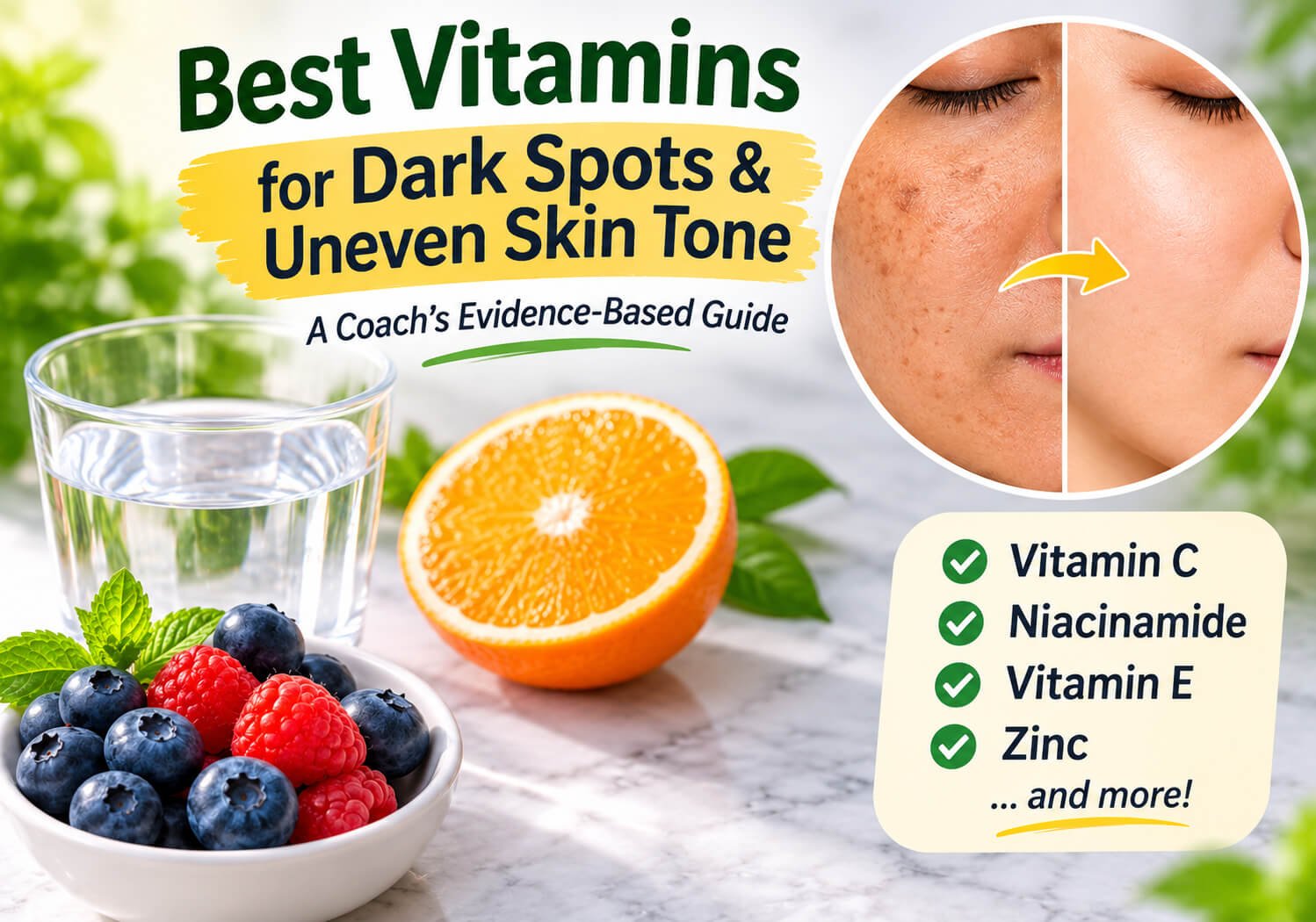
Dark spots, patchy discoloration, and an overall “tired” complexion are among the most common skin complaints I hear from people walking into my gym. You work hard on your training, your sleep, and your meals, but your face still looks uneven in the morning mirror. The good news: research points to a handful of vitamins and nutrients that may help support more even pigmentation and reduce the appearance of hyperpigmentation over time.
This guide breaks down the best vitamins for dark spots and uneven skin tone, what the evidence actually says, how to dose them, and how to build a simple daily routine. I’ll keep it practical—no fluff, no miracle promises—just what the science supports and what works in a real routine.
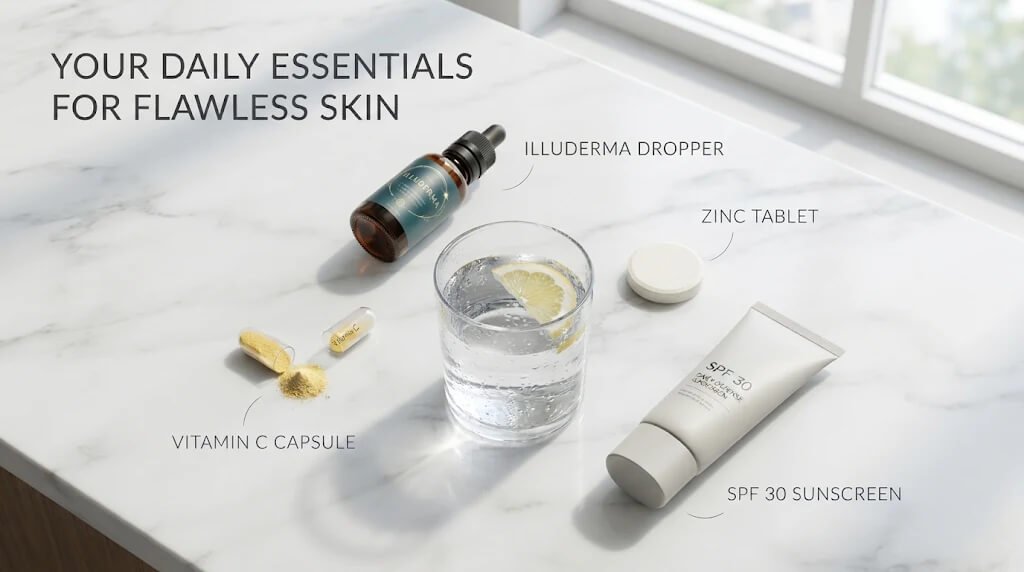
Quick Answer: The best vitamins for dark spots and uneven skin tone are vitamin C (500–1,000 mg), niacinamide (500–1,000 mg), vitamin E (100–200 IU), and zinc (15–30 mg). Together, they target melanin overproduction, oxidative stress, and slow cell turnover. Pair them with daily SPF 30+ sunscreen and consistent use for 8–12 weeks to see measurable changes in skin tone uniformity.
What Causes Dark Spots and Uneven Skin Tone?
Before you reach for a supplement bottle, it helps to understand what’s happening under the surface. Dark spots—sometimes called hyperpigmentation, melasma, or post-inflammatory hyperpigmentation—form when melanocytes in the epidermis produce excess melanin. The main triggers include:
- UV exposure (UVA and UVB rays): Sunlight stimulates tyrosinase, the enzyme that drives melanin production. Even short, repeated exposure can darken existing spots.
- Inflammation: Acne, eczema, or minor injuries can leave behind darker patches as the skin heals.
- Oxidative stress: Free radicals from pollution, poor sleep, and a high-sugar diet damage skin cells and slow repair.
- Hormonal shifts: Pregnancy, oral contraceptives, and menopause can trigger melasma.
- Genetics and aging: Cell turnover slows with age, so old pigmented cells linger longer.
Vitamins and nutrients don’t “erase” a spot overnight. Instead, they support the skin’s natural repair processes—boosting antioxidant defenses, encouraging healthy cell turnover, and reducing the inflammatory signals that tell melanocytes to overproduce pigment.
Coach’s Tip: Think of vitamins as the “support staff” for your skin, not the head coach. Sunscreen (SPF 30 or higher, reapplied every two hours outdoors) is still the single most effective tool for preventing new dark spots. No supplement replaces daily sun protection, according to the American Academy of Dermatology’s guidance on photoprotection.
1. Vitamin C (Ascorbic Acid)
Why it matters: Vitamin C is the most studied nutrient for skin tone. It acts as a potent antioxidant that neutralizes free radicals generated by UV exposure. It also plays a direct role in collagen synthesis, which keeps the dermal layer firm and even. Some research suggests oral vitamin C may modestly reduce melanin production by interfering with tyrosinase activity, though the effect is more pronounced with topical application.
Dose: 500–1,000 mg per day, taken with food to reduce stomach upset. The upper tolerable limit is 2,000 mg/day for adults, per the NIH Office of Dietary Supplements.
What to look for: L-ascorbic acid (the pure form) or a buffered version if you have a sensitive stomach. Pair with vitamin E for synergistic antioxidant recycling.
Timeline: Visible changes in overall brightness may appear in 6–8 weeks of consistent use.
2. Niacinamide (Vitamin B3)
Why it matters: Niacinamide is the form of vitamin B3 that dermatologists frequently recommend for hyperpigmentation. It works by reducing the transfer of melanin from melanocytes to surrounding skin cells (keratinocytes), which means less visible darkening on the surface. It also strengthens the skin barrier, reducing transepidermal water loss and the dryness that can make uneven tone more noticeable.
Dose: 500–1,000 mg per day as a supplement. Topical forms (2–5% serums) are also effective, but oral niacinamide supports the process from the inside out.
What to look for: Niacinamide (not niacin, which can cause flushing). A B-complex tablet with 500 mg niacinamide is a simple option.
Timeline: 8–12 weeks for noticeable improvement in tone uniformity.
3. Vitamin E (Tocopherol)
Why it matters: Vitamin E is a fat-soluble antioxidant that protects cell membranes in the skin from lipid peroxidation—a process where free radicals damage the fatty acids in your skin’s barrier. By preserving barrier integrity, vitamin E helps skin retain moisture and look smoother, which visually reduces the contrast between dark and light patches.
Dose: 100–200 IU (international units) per day. The tolerable upper intake level is 1,000 mg (about 1,500 IU) of mixed tocopherols, per the NIH ODS Vitamin E fact sheet.
What to look for: Mixed-tocopherol formulas (alpha, beta, gamma, delta) are more complete than alpha-tocopherol alone. Take with a meal containing fat for better absorption.
Timeline: 6–10 weeks for improved skin hydration and a more even, “lit-from-within” appearance.
4. Vitamin D
Why it matters: Vitamin D receptors are present in both melanocytes and keratinocytes. Low vitamin D status has been linked in observational studies to more severe melasma and slower resolution of post-inflammatory hyperpigmentation. Vitamin D also supports immune regulation, which helps the skin calm down inflammatory triggers that worsen discoloration.
Dose: 1,000–2,000 IU per day for most adults. If you’re deficient (serum 25-hydroxyvitamin D below 20 ng/mL), your doctor may recommend a higher dose temporarily. The NIH ODS Vitamin D fact sheet recommends 600–800 IU as the RDA, with upper limits of 4,000 IU/day.
What to look for: Vitamin D3 (cholecalciferol) is the more bioavailable form. Take with a fat-containing meal.
Timeline: 3–4 months to correct a deficiency; skin tone benefits may follow over 2–3 months of stable levels.
![A woman applying SPF 30 sunscreen to her face in a bathroom mirror, with a small bottle of vitamin D3 capsules and a glass of orange juice on the counter.]](https://pillsfeed.com/wp-content/uploads/2026/11/A-woman-applying-SPF-30-sunscreen-to-her-face-in-a-bathroom-mirror-with-a-small-bottle-of-vitamin-D3-capsules-and-a-glass-of-orange-juice-on-the-counter.webp)
5. Zinc
Why it matters: Zinc is a cofactor for over 300 enzymes involved in wound healing, DNA synthesis, and anti-inflammatory signaling. In the skin, zinc helps repair UV-damaged tissue and modulates the inflammatory response that can leave behind dark post-acne marks. It also supports the function of superoxide dismutase (SOD), a key antioxidant enzyme in the epidermis.
Dose: 15–30 mg of elemental zinc per day. The upper tolerable limit is 40 mg/day for adults, per the NIH ODS Zinc fact sheet.
What to look for: Zinc picolinate or zinc bisglycinate for better absorption and less stomach upset. Avoid taking zinc on an empty stomach.
Timeline: 6–8 weeks for improved healing of blemishes and fading of post-inflammatory marks.
6. Glutathione
Why it matters: Glutathione (GSH) is the body’s “master antioxidant.” It recycles oxidized vitamin E back to its active form, supports detoxification pathways in the liver, and has been studied for its role in reducing melanin synthesis. Oral glutathione supplements (typically 250–500 mg) have shown modest skin-lightening effects in small clinical trials, though results vary.
Dose: 250–500 mg per day, taken on an empty stomach for best absorption. Liposomal or sublingual forms may improve bioavailability compared to standard capsules.
What to look for: Reduced glutathione (not oxidized). Liposomal delivery or S-acetyl glutathione forms are easier on the gut.
Timeline: 8–12 weeks for subtle brightening; results are gradual and modest.
7. Vitamin A (Retinol / Retinoids)
Why it matters: Vitamin A accelerates epidermal cell turnover, meaning old, pigmented cells shed faster and fresh, evenly toned cells reach the surface sooner. Topical retinoids (prescription tretinoin, OTC retinol) are the gold standard for fading dark spots. Oral vitamin A supports this process systemically but must be used cautiously due to toxicity risk at high doses.
Dose (oral): 5,000–10,000 IU of retinol per day as part of a multivitamin. Do NOT exceed 10,000 IU/day long-term without medical supervision. The upper limit for preformed vitamin A is 10,000 IU (3,000 µg RAE) for adults.
What to look for: A quality multivitamin with 5,000–10,000 IU vitamin A. For faster visible results, a topical retinol serum (0.3–1%) used at night complements oral intake.
Timeline: 8–12 weeks for visible improvement in texture and tone.
Common Mistake: Taking high-dose vitamin A supplements (25,000+ IU) to “speed up” skin turnover. This can lead to liver toxicity, headaches, and paradoxically worsen skin irritation. Stick to the 5,000–10,000 IU range in a multivitamin and let your topical retinoid do the heavy lifting on the surface.
8. Astaxanthin
Why it matters: Astaxanthin is a carotenoid antioxidant found in algae, salmon, and krill. It’s significantly more potent at neutralizing free radicals than vitamin C or E in lab studies. In the skin, it helps reduce UV-induced erythema (redness) and may support a more uniform, healthy-looking complexion by protecting dermal collagen from oxidative breakdown.
Dose: 4–12 mg per day. Most clinical studies use 6–12 mg.
What to look for: Astaxanthin derived from Haematococcus pluvialis algae. Take with a fat-containing meal. If you want a deeper dive into this antioxidant, check out our guide on astaxanthin supplement for skin glow and anti-aging.
Timeline: 4–8 weeks for improved skin hydration and reduced redness; tone benefits build over 3 months.
9. Collagen + Vitamin C (The Pairing)
Why it matters: Collagen is the structural protein that gives skin its firmness and even surface. As collagen degrades with age and UV damage, the skin becomes thinner and more prone to showing underlying pigmentation unevenly. Oral collagen peptides (2.5–10 g/day) combined with vitamin C (which is required for collagen cross-linking) may support dermal thickness and a smoother, more uniform canvas.
Dose: 5–10 g collagen peptides + 250–500 mg vitamin C, taken together in the morning.
What to look for: Hydrolyzed collagen peptides (bovine or marine). Pair with a vitamin C source for the co-factor effect. For timing and absorption details, see our guide on the best time to take collagen powder for skin absorption.
Timeline: 8–12 weeks for improved skin elasticity and a more even surface.
10. Omega-3 Fatty Acids (EPA and DHA)
Why it matters: Omega-3s are anti-inflammatory fats that help calm the low-grade skin inflammation that can worsen hyperpigmentation. They also support the skin’s lipid barrier, reducing water loss and the dry, flaky patches that make uneven tone more visible. A 2021 review in the Journal of Clinical Medicine noted that omega-3 supplementation may reduce UV-induced skin damage and improve overall skin quality.
Dose: 1,000–2,000 mg combined EPA + DHA per day from fish oil or algal oil (for vegans).
What to look for: A third-party-tested fish oil (look for IFOS or NSF certification) or a high-quality algal DHA supplement. For more on how these fats support skin hydration and reduce inflammation, read our breakdown on omega-3 fatty acids for skin hydration and inflammation.
Timeline: 6–12 weeks for improved skin moisture and reduced redness.
11. Selenium
Why it matters: Selenium is a component of selenoproteins, including glutathione peroxidase, which helps the skin clear reactive oxygen species. Adequate selenium status supports the antioxidant network that protects melanocytes from oxidative damage that can trigger erratic pigment production.
Dose: 55–100 µg per day. The upper tolerable limit is 400 µg/day.
What to look for: Selenomethionine (the organic form) in a quality multivitamin. Brazil nuts (1–2 per day) are a natural food source.
Timeline: Benefits are subtle and build over 2–3 months of consistent intake.
12. Vitamin B12
Why it matters: B12 is essential for DNA synthesis and red blood cell production. Deficiency can lead to a pale, sallow complexion and, in some cases, vitiligo-like depigmentation or uneven tone. While B12 deficiency is less common in the general population, it’s more prevalent in vegans, older adults, and people with certain gastrointestinal conditions.
Dose: 2.4 µg RDA for adults; 500–1,000 µg as a supplement if you’re vegetarian/vegan or have absorption issues.
What to look for: Methylcobalamin or cyanocobalamin in a B-complex. Sublingual (under the tongue) forms bypass gut absorption issues.
Timeline: If correcting a deficiency, 4–8 weeks for energy and complexion improvements.
How to Build Your Daily Skin-Vitamin Routine
You don’t need all 12 nutrients at once. Start with the core four, then layer in extras as your budget and goals allow.
| Time of Day | What to Take | Why |
| Morning (with breakfast) | Vitamin C 500–1,000 mg + Collagen 5 g + Vitamin E 100 IU | Antioxidant protection for the day ahead; collagen synthesis needs vitamin C; vitamin E needs fat for absorption |
| Midday (with lunch) | Niacinamide 500 mg + Zinc 15 mg + Omega-3 1,000 mg | Supports barrier repair and anti-inflammatory pathways |
| Evening (with dinner) | Vitamin D3 1,000–2,000 IU + Glutathione 250–500 mg + Selenium 55 µg | Cell repair and antioxidant recycling happen overnight |
| As needed | Astaxanthin 6 mg (with any fat-containing meal) | Additional antioxidant layer |
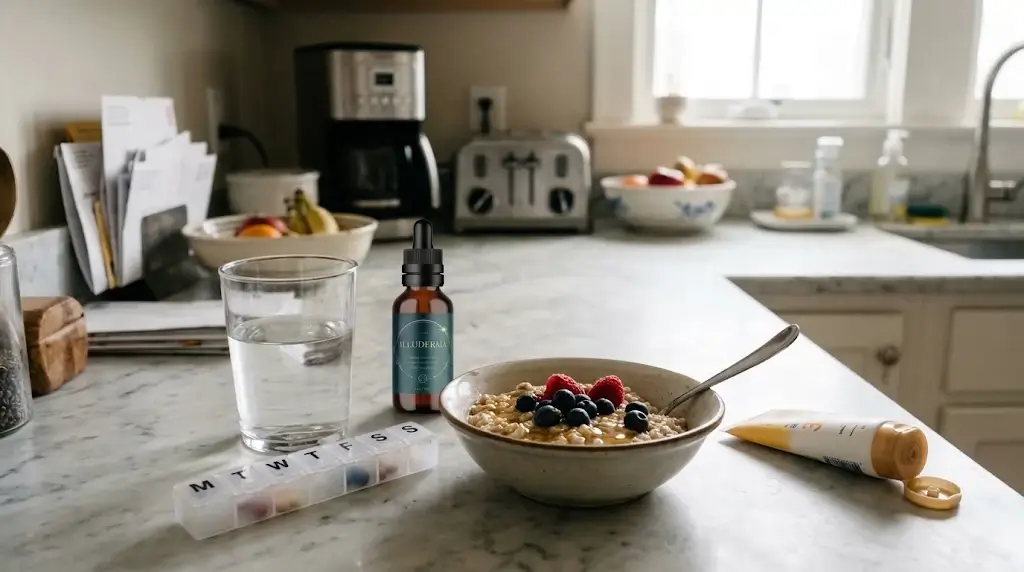
Simple starter stack (budget-friendly): A quality multivitamin (covers A, B-complex, C, D, E, zinc, selenium) + 500 mg niacinamide + 5 g collagen peptides + 1,000 mg omega-3. That’s four products and covers most bases.
Safety Tips and Who Should Be Cautious
- Check with your doctor first if you’re pregnant, nursing, taking blood thinners, have a liver or kidney condition, or are on hormone therapy. Some vitamins (especially A, E, and high-dose zinc) can interact with medications.
- Don’t exceed upper tolerable limits. More is not better. High-dose vitamin A can damage the liver; excess zinc can deplete copper; too much vitamin E may increase bleeding risk.
- Sunscreen is non-negotiable. No vitamin stack replaces SPF 30+ applied daily and reapplied every two hours in the sun. The CDC’s skin cancer prevention guidelines emphasize sun protection as the first line of defense.
- Be patient. Skin cell turnover takes about 28 days. You need at least 8–12 weeks of consistent supplementation to judge whether a routine is working.
- Watch for interactions. Vitamin E at high doses can interact with warfarin. Zinc can reduce absorption of certain antibiotics. Niacin at very high doses can affect liver enzymes.
- Quality matters. Look for third-party testing (NSF, USP, or IFOS seals) to ensure the label matches the bottle.
This article is for general information and is not a substitute for advice from a doctor or physical therapist. If you have a diagnosed skin condition (melasma, vitiligo, post-surgical scarring), see a board-certified dermatologist for a tailored treatment plan.
What vitamins help fade dark spots on the face?
Vitamin C, niacinamide (B3), vitamin E, and zinc are the most evidence-supported nutrients for supporting fade of dark spots. Vitamin C and niacinamide target melanin production and transfer, while vitamin E and zinc reduce oxidative stress and inflammation that worsen discoloration.
Can vitamins actually lighten hyperpigmentation, or is it a myth?
Vitamins don’t “bleach” skin, but research suggests they can support the skin’s natural repair processes—reducing melanin overproduction, accelerating cell turnover, and calming inflammation. Results are gradual (8–12 weeks) and modest. Topical retinoids and prescription treatments remain the most effective for stubborn hyperpigmentation.
How long do skin vitamins take to show results?
Most people notice a subtle improvement in overall brightness and tone after 6–8 weeks of consistent daily use. More noticeable changes in dark spot appearance typically take 3–4 months. Cell turnover cycles mean you can’t expect overnight changes.
Are oral vitamins better than topical serums for dark spots?
They work differently and are complementary. Oral vitamins support antioxidant defenses, collagen, and cell turnover from the inside. Topical products (vitamin C serums, retinol, niacinamide creams) deliver concentrated actives directly to the affected area. The best results come from using both.
What is the best vitamin combination for uneven skin tone?
A practical stack: 500–1,000 mg vitamin C + 500 mg niacinamide + 100–200 IU vitamin E + 15 mg zinc + 1,000–2,000 IU vitamin D3, taken daily with meals. Add collagen peptides and omega-3s for barrier and structural support.
Can vitamins replace sunscreen for preventing new dark spots?
No. Sunscreen (SPF 30 or higher) is the single most effective way to prevent UV-driven melanin overproduction. Vitamins support repair and protection from the inside, but they cannot block UVA/UVB rays the way a physical or chemical sunscreen can. Always wear sunscreen daily, even on cloudy days.
Final Thoughts: Your Skin Is Part of Your Training
You wouldn’t skip leg day and expect your quads to grow. The same logic applies to your skin. The best vitamins for dark spots and uneven skin tone aren’t a shortcut—they’re part of a consistent, daily maintenance routine, just like stretching after a workout or hitting your protein target.
Start with the core four (vitamin C, niacinamide, vitamin E, zinc), add sunscreen every single morning, and give it 8 to 12 weeks before judging results. Layer in collagen, omega-3s, and astaxanthin as your routine matures. Track your progress with monthly photos in the same lighting, and be patient with the process.