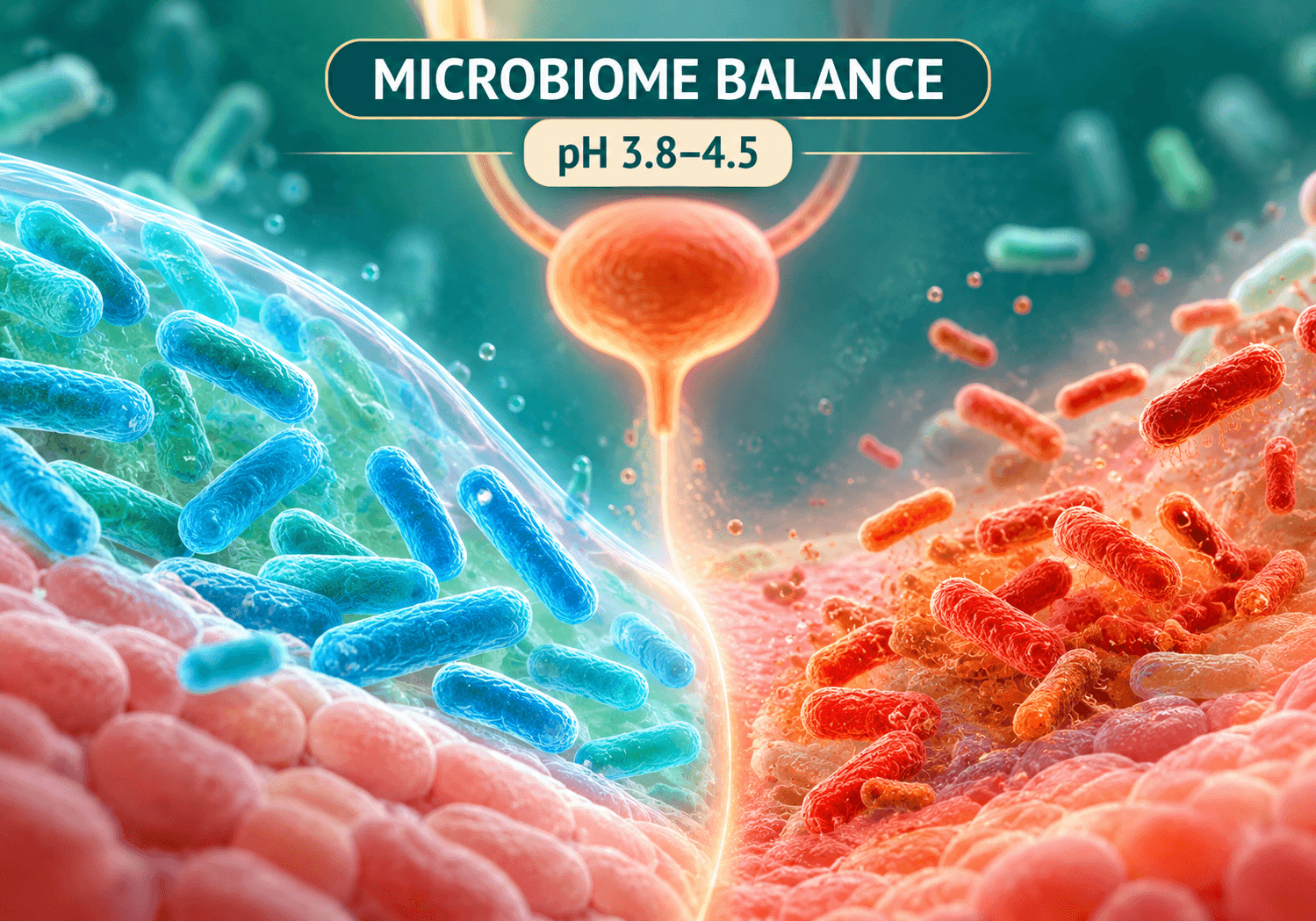
How Vaginal Microbiome Imbalance Causes Recurrent UTI in Women: A Coach’s Practical Guide to Recovery and Prevention
If you train consistently, hydrate well, and follow every hygiene rule in the book, getting hit with another urinary tract infection feels deeply frustrating. Painful urination, constant urgency, and pelvic pressure can derail your workouts, disrupt your sleep, and drain your energy for weeks at a time. When these infections keep coming back, the root cause often lies not in your hygiene habits, but in understanding how vaginal microbiome imbalance causes recurrent UTI in women.
For decades, standard medical advice focused almost entirely on flushing out bacteria with water or taking repeated courses of antibiotics. While antibiotics clear acute infections, they do not rebuild the biological shield that keeps harmful bacteria away from your urethra in the first place.
As a coach who works closely with active women navigating performance, recovery, and hormonal shifts, I look at the body as an interconnected system. Just as weak stabilizing muscles leave a joint vulnerable to injury, a depleted vaginal ecosystem leaves your urinary tract exposed to invading pathogens. By understanding how this protective barrier works—and how daily habits, hormones, and medications disrupt it—you can take targeted, evidence-based steps to support your body’s natural defenses.
Note: Because recurrent urinary tract infections involve complex medical and hormonal factors, always consult a qualified physician, gynecologist, or urologist for proper diagnosis and treatment before starting new supplements or protocols.
Quick Answer: A healthy vaginal microbiome relies on beneficial Lactobacillus bacteria to produce lactic acid, keeping vaginal pH acidic (3.8–4.5). When antibiotics, hormonal shifts, or stress deplete these protective bacteria, harmful pathogens like E. coli multiply near the urethral opening, easily ascending into the bladder and triggering recurrent urinary tract infections.
What the Research Says: The Urogenital Ecosystem Explained
To understand how vaginal microbiome imbalance causes recurrent UTI in women, it helps to look at the anatomy and microbiology of the female urogenital tract. The openings of the vagina and the urethra sit only millimeters apart, sharing a neighborhood of microorganisms known as the urogenital microbiome.
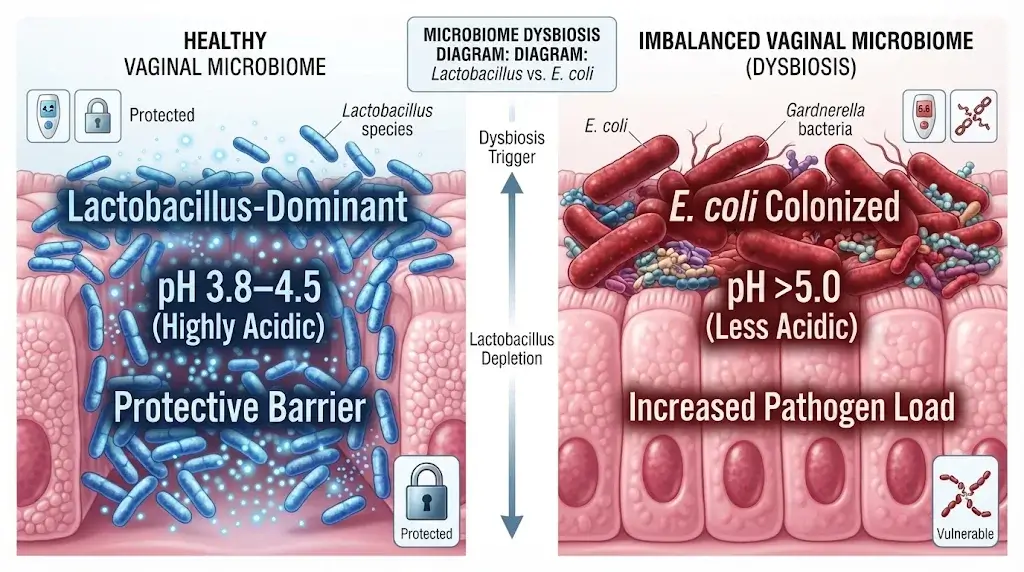
In a balanced, resilient state, the vaginal canal is dominated by beneficial bacteria from the genus Lactobacillus, particularly species like Lactobacillus crispatus, Lactobacillus jensenii, and Lactobacillus gasseri. According to research published by the National Institutes of Health (NIH), these protective microbes make up 70% to 90% of the healthy vaginal flora in reproductive-age women.
These beneficial bacteria act like an elite defensive line. They consume glycogen—a natural sugar stored in vaginal epithelial cells—and convert it into lactic acid. This process maintains an acidic environment with a vaginal pH between 3.8 and 4.5, which is hostile to most disease-causing germs.
When this ecosystem loses its Lactobacillus dominance, a state called vaginal dysbiosis occurs. Without adequate lactic acid, the vaginal pH rises above 4.5, allowing opportunistic bacteria—most notably uropathogenic Escherichia coli (E. coli)—to colonize the vaginal vestibule and the area surrounding the urethra. From there, E. coli has a short, unobstructed path up the urethra and into the bladder, initiating a new infection.
The Four-Step Mechanism Behind Recurrent Infections
Clinical studies indexed on PubMed Central show that vaginal dysbiosis drives repeated bladder infections through four distinct biological steps:
- Loss of Acidic Protection: When Lactobacillus numbers drop, lactic acid production falls, raising the local pH and removing the chemical barrier that normally inhibits E. coli growth.
- Loss of Competitive Exclusion: Healthy Lactobacillus species physically coat the mucosal lining, taking up space and nutrients. When they disappear, harmful bacteria easily attach to the tissue walls.
- Formation of Covert Reservoirs: Research from Washington University School of Medicine / NIH demonstrates that certain vaginal bacteria, such as Gardnerella vaginalis, can trigger dormant E. coli hiding inside bladder cells to re-emerge and multiply, even when Gardnerella itself never enters the bladder.
- Mucosal Inflammation and Biofilms: Chronic dysbiosis weakens the delicate mucosal barrier and allows uropathogens to build protective biofilms—slimy shields that resist both your immune cells and standard antibiotic treatments.
| Microbiome State | Dominant Bacteria | Typical Vaginal pH | Lactic Acid Levels | Impact on Recurrent UTI Risk |
| Balanced (Eubiosis) | Lactobacillus crispatus, L. jensenii | 3.8 – 4.5 (Acidic) | High | Low Risk: Strong acid barrier and physical coverage block E. coli colonization. |
| Transitional / Unstable | Lactobacillus iners | 4.5 – 5.0 (Slightly Elevated) | Moderate to Low | Moderate Risk: L. iners produces less protective lactic acid and easily shifts toward dysbiosis. |
| Imbalanced (Dysbiosis) | Gardnerella, Prevotella, E. coli | > 4.5 (Alkaline shift) | Very Low | High Risk: Pathogens thrive near the urethra, forming reservoirs and triggering frequent UTIs. |
Common Triggers That Disrupt Vaginal Flora in Active Women
Many women assume recurrent UTIs happen because of poor hygiene, yet over-washing is actually one of the fastest ways to damage your microbiome. Understanding what disrupts your internal environment allows you to stop accidentally sabotaging your recovery.
1. The Antibiotic Catch-22
Broad-spectrum antibiotics are life-saving when you have an acute kidney or bladder infection, as noted by the Centers for Disease Control and Prevention (CDC). However, antibiotics cannot tell the difference between bad bacteria and good bacteria.
Every course of antibiotics wipes out E. coli in your bladder while simultaneously wiping out protective Lactobacillus in your vagina. This leaves a biological vacuum. Once you finish the pills, fast-growing E. coli from the gastrointestinal tract often repopulates the area faster than slow-growing Lactobacillus, setting up another UTI weeks later.
2. Hormonal Shifts and Estrogen Decline
Estrogen plays a direct role in feeding your vaginal microbiome. It stimulates the vaginal lining to produce glycogen, the primary fuel source for Lactobacillus bacteria.
During perimenopause, menopause, breastfeeding, or periods of intense athletic overtraining (Relative Energy Deficiency in Sport, or RED-S), circulating estrogen levels drop. Without estrogen, glycogen stores shrink, Lactobacillus starves, and vaginal pH rises. According to the Mayo Clinic, declining estrogen after menopause is one of the primary drivers of structural and microbial changes in the urinary tract that cause frequent infections.
3. Sweat, Friction, and Moisture Trapping
If you lift weights, run, cycle, or play court sports like pickleball, your training gear matters. Tight synthetic leggings and damp sports underwear trap heat and sweat against the skin for hours.
Warm, moist, low-airflow environments encourage the overgrowth of yeast and anaerobic bacteria while irritating the vulvar skin. Furthermore, heavy friction during cycling or high-rep lunges can cause micro-abrasions near the urethral opening, making it easier for bacteria to adhere.
4. Harsh Soaps, Douches, and Spermicides
The vagina is self-cleaning and naturally acidic. Using scented body washes, antibacterial soaps, wipes, or douches washes away protective mucus and artificially raises vaginal pH. Similarly, spermicides containing nonoxynol-9 are toxic to Lactobacillus species, stripping away your natural shield right when friction increases bacterial transfer.
5. Chronic Stress and Poor Sleep
High training loads combined with work stress and short sleep elevate cortisol levels. Research indexed by the National Library of Medicine indicates that chronic psychological stress and elevated cortisol impair mucosal immunity and reduce vaginal glycogen availability, indirectly weakening Lactobacillus dominance.
Coach’s Tip: Treat your post-workout routine with the same discipline as your warm-up. Never sit around in sweaty compression leggings after training or driving home from the gym. Change into dry, breathable cotton underwear within 15 to 20 minutes of finishing your session to stop moisture-loving bacteria from multiplying.

How to Apply This Science: A Practical Protocol for Urinary & Microbiome Resilience
Rebuilding a depleted microbiome takes patience—typically 8 to 12 weeks of consistent daily habits, much like building muscular endurance or tendon strength. You cannot force bacteria to grow overnight, but you can create the exact internal and external conditions they need to thrive.
Step 1: Upgrade Your Daily Hydration and Fueling
Water remains your simplest mechanical defense. Drinking 64 to 96 ounces (1.9 to 2.8 liters) of water daily—and adding 16 to 24 ounces (0.5 to 0.7 liters) per hour of heavy sweating—ensures you urinate every 3 to 4 hours. Frequent urination physically flushes stray E. coli out of the urethra before it can climb into the bladder.
Pair your hydration with prebiotic-rich foods. Just as sufficient protein intake supports tissue recovery, fermentable fibers feed beneficial gut bacteria, which directly influence vaginal flora via the gut-vagina axis. Aim for 25 to 35 grams of daily fiber from oats, berries, garlic, onions, asparagus, and legumes. Understanding how dietary fiber supports overall health can help you build meals that nourish both your gut and urogenital tract.
Step 2: Use Targeted, Evidence-Based Supplements Strategically
While no supplement cures an active infection, specific compounds have strong clinical backing for supporting urinary and vaginal defenses when used consistently:
- Targeted Lactobacillus Probiotics: Look for strains specifically researched for urogenital health, such as Lactobacillus crispatus, Lactobacillus rhamnosus GR-1, and Lactobacillus reuteri RC-14. Clinical trials listed on PubMed show these strains can colonize the vaginal tract and help restore normal acidic pH. Learning how probiotics influence systemic health helps clarify why strain specificity matters far more than high generic CFU counts.
- D-Mannose: D-mannose is a simple sugar that passes through the kidneys into the urine. Research in the World Journal of Urology / PubMed suggests D-mannose binds to the finger-like projections (FimH adhesins) on E. coli, preventing the bacteria from sticking to the bladder wall so they flush out when you urinate. Typical preventative doses studied range from 1,500 to 2,000 mg daily.
- Cranberry Proanthocyanidins (PACs): Standard cranberry juice is often loaded with added sugar, which feeds harmful bacteria and yeast. Instead, look for standardized cranberry supplements providing at least 36 mg of soluble proanthocyanidins (PACs), which inhibit bacterial adhesion to urinary tract cells, as reviewed by the NIH Office of Dietary Supplements.
Step 3: Optimize Gym Hygiene and Clothing Choices
Small adjustments to your training wardrobe remove mechanical triggers that introduce bacteria to the urethra:
- Choose Breathable Fabrics: Swap tight nylon or polyester underwear for 100% organic cotton or moisture-wicking merino wool during workouts.
- Wash with Water Only: Clean the external vulva gently with warm water and your hand during your post-workout shower. Keep soaps, scrubs, and scented washes completely away from the vaginal opening.
- Follow Smart Intimacy Habits: Urinate within 15 minutes before and after sexual activity to clear bacteria mechanically. Choose water-based, glycerin-free, paraben-free lubricants that match normal vaginal pH (around 3.8–4.5) and osmolality.
Step 4: Support Pelvic Floor Relaxation (Not Just Kegels)
Many active women who lift heavy weights, run, or hold core tension develop a hypertonic (overly tight) pelvic floor. Tight pelvic floor muscles compress the urethra, prevent complete bladder emptying, and mimic UTI symptoms like urgency and burning.
Instead of doing endless Kegels, practice diaphragmatic breathing and pelvic floor drops:
- Lie on your back with your knees bent and feet flat on the floor, or rest in a deep supported squat.
- Inhale slowly through your nose for 4 seconds, letting your ribcage expand 360 degrees and allowing your pelvic floor to soften and lengthen downward.
- Exhale gently through your mouth for 6 seconds without clenching your glutes or abs.
- Perform 2 sets of 8 to 10 slow breaths daily, especially after heavy lower-body training sessions.

| Intervention Strategy | Primary Mechanism | Typical Evidence-Based Protocol | Best Time to Apply |
| Targeted Probiotics (L. crispatus, L. rhamnosus GR-1, L. reuteri RC-14) | Restores Lactobacillus dominance and lowers vaginal pH | 1–10 billion CFU daily (oral or vaginal, per doctor’s guidance) | Daily for 8–12 weeks, especially during/after antibiotics |
| D-Mannose | Binds to E. coli lectins to prevent bladder wall attachment | 1,500–2,000 mg dissolved in water | Before bed or post-intimacy |
| Cranberry Extract (PACs) | Blocks bacterial fimbriae from adhering to urothelial cells | 36 mg standardized soluble PACs daily | Daily with a meal |
| Hydration & Timed Voiding | Mechanically flushes bacteria from the urethral canal | 64–96 oz (1.9–2.8 L) water daily; void every 3–4 hours | Consistently throughout the day and after workouts |
| Vaginal Estrogen (Rx) | Restores mucosal glycogen to feed native Lactobacillus | Low-dose cream, tablet, or ring (prescribed by OB/GYN) | Perimenopause, menopause, or low-estrogen states |
Common Mistakes That Keep the UTI Cycle Alive
Even well-intentioned health habits can backfire when you are dealing with urogenital dysbiosis. Watch out for these frequent errors:
Common Mistake: Taking leftover antibiotics or stopping a prescribed antibiotic course early once symptoms fade. Stopping early leaves behind the toughest, most resistant bacteria, while taking unnecessary antibiotics repeatedly destroys your Lactobacillus shield and worsens microbiome imbalance.
- Over-relying on Sugary Cranberry Juice: Commercial cranberry cocktails contain up to 30 grams of sugar per serving and very few active PACs. High sugar spikes blood glucose and spills into urine, creating fuel for bacterial growth.
- Using Vaginal Steams, Essential Oils, or DIY Vinegar Douches: Home remedies disrupt mucosal pH, cause chemical burns, and strip away protective biofilms produced by healthy Lactobacillus.
- Holding Urine During Long Workouts or Work Shifts: Delaying bathroom breaks lets small numbers of bacteria multiply in warm, stagnant bladder urine every 20 minutes.
- Ignoring Chronic Constipation: A full rectum presses directly against the bladder and increases the load of E. coli migrating across the perineum. Prioritizing soluble fiber for digestive regularity helps reduce local bacterial pressure.
Safety Notes: When to See a Doctor Immediately
Understanding how vaginal microbiome imbalance causes recurrent UTI in women empowers you to support your daily health, but self-care never replaces medical evaluation. Recurrent UTIs are clinically defined as two or more culture-proven infections in six months, or three or more in one year, according to the American Urological Association (AUA) guidelines.
Always request a urine culture—not just a quick dipstick test—before starting antibiotics. A culture identifies the exact bacteria causing your symptoms and determines which medication will work, preventing unnecessary broad-spectrum antibiotic exposure. Also consider asking your gynecologist for a vaginal microbiome test or wet mount to check for underlying bacterial vaginosis (BV) or aerobic vaginitis.
Seek immediate medical care if you experience any of these warning signs of a kidney infection (pyelonephritis):
- Fever above 100.4°F (38°C) or shaking chills
- Pain in your lower back, side (flank), or groin
- Nausea or vomiting
- Visible blood in your urine or inability to pass urine
If you are perimenopausal or postmenopausal, ask your physician about local vaginal estrogen therapy. Unlike systemic hormone therapy, low-dose local estrogen stays primarily in the vaginal tissues, rebuilding glycogen stores and safely restoring Lactobacillus populations. Similarly, addressing how sleep affects hormonal balance and ensuring adequate recovery supports overall endocrine resilience.

Related Tips for Long-Term Microbiome & Metabolic Health
Your vaginal microbiome does not exist in isolation; it responds to your nutrition, sleep quality, stress management, and metabolic stability. High blood sugar levels can impair immune cell function and increase glucose in urine, making infections harder to clear.
Building balanced meals with lean protein, healthy fats, and high-fiber carbohydrates helps keep blood glucose steady throughout the day. If you struggle with afternoon energy dips or sugar cravings, learning how to manage sugar cravings naturally can support both your metabolic health and your microbiome.
Prioritizing 7 to 9 hours of consistent sleep also strengthens mucosal immunity. During deep sleep, your body regulates inflammatory cytokines and repairs epithelial tissues across the gut and urogenital tract. Exploring ways to improve daily energy naturally helps you avoid relying on excessive caffeine, which can irritate the bladder lining and worsen urinary urgency in sensitive individuals.

Frequently Asked Questions
How does vaginal microbiome imbalance cause recurrent UTI in women?
A healthy vagina relies on Lactobacillus bacteria to produce lactic acid, keeping vaginal pH acidic (3.8–4.5). When antibiotics, hormones, or harsh soaps deplete Lactobacillus, pH rises and harmful E. coli multiplies near the urethra, easily ascending into the bladder to cause repeated urinary tract infections.
Why do I keep getting UTIs even when I wipe properly and drink water?
Hygiene and hydration only address external bacteria and urine flow. If your internal vaginal flora lacks protective Lactobacillus or if Gardnerella bacteria are triggering dormant E. coli reservoirs inside your bladder cells, infections can recur even when your personal hygiene habits are spotless.
Can taking antibiotics make recurrent UTIs worse over time?
Yes. While antibiotics clear acute bladder infections, they also wipe out beneficial vaginal Lactobacillus bacteria. Without this protective acid shield, fast-growing E. coli from the gut easily recolonizes the area around the urethra, creating a cycle of repeat infections after treatment ends.
What probiotics are best for vaginal microbiome balance and UTI prevention?
Research supports targeted urogenital strains rather than generic digestive blends. Look for clinically studied species such as Lactobacillus crispatus, Lactobacillus rhamnosus GR-1, and Lactobacillus reuteri RC-14, which survive digestion, colonize the vaginal tract, and help restore protective lactic acid levels.
Does menopause increase the risk of vaginal dysbiosis and UTIs?
Yes. Lower estrogen levels during perimenopause and menopause reduce glycogen in vaginal cells. Because Lactobacillus bacteria feed on glycogen to make lactic acid, lower estrogen starves beneficial flora, raises vaginal pH, thins urinary tissues, and significantly increases susceptibility to recurrent UTIs.
Can bacterial vaginosis trigger urinary tract infections?
Yes. Bacterial vaginosis (BV) represents a state of vaginal dysbiosis where Lactobacillus drops and anaerobic bacteria like Gardnerella vaginalis overgrow. Studies show Gardnerella can damage bladder surface cells and awaken dormant E. coli reservoirs, directly triggering a clinical urinary tract infection.
Conclusion
Breaking free from recurring bladder infections requires shifting your focus from constant defense to long-term biological rebuilding. When you understand how vaginal microbiome imbalance causes recurrent UTI in women, it becomes clear why standard quick fixes often fall short. True protection comes from nurturing a resilient, Lactobacillus-dominant ecosystem that maintains an acidic pH, blocks E. coli colonization, and keeps mucosal tissues strong.
Start with simple, consistent daily upgrades: hydrate thoroughly, change out of sweaty gym gear immediately, skip harsh soaps, nourish your gut with prebiotic fiber, and speak with your doctor about urine cultures, targeted probiotics, or local hormonal support if needed. Just like progressive strength training, steady daily habits rebuild your body’s natural resilience from the inside out.