The Bladder Microbiome and Its Role in Women’s Urinary Health: A Complete Guide
For decades, the medical community operated under a major misconception: the human bladder is completely sterile. We now know this is false. Advanced DNA sequencing has revealed a complex ecosystem of bacteria living in the urinary tract. Understanding the bladder microbiome and its role in women’s urinary health is a game-changer, especially for women over 40 navigating hormonal shifts, recurrent infections, or pelvic floor changes.
As a strength and conditioning coach, I work with many women who struggle with urinary urgency, frequency, or recurring urinary tract infections (UTIs). Often, the solution is not just about medication. It is about building a resilient internal environment. Your daily habits, hydration, nutrition, and pelvic floor strength directly influence this delicate bacterial balance. This guide breaks down the science of the urobiome and gives you actionable, evidence-based steps to protect and optimize your urinary health.
Quick Answer
The bladder microbiome and its role in women’s urinary health centers on a balance of beneficial bacteria, primarily Lactobacillus species. These microbes protect the urinary tract by lowering urine pH, producing natural antimicrobials, and crowding out harmful pathogens like E. coli. Supporting this ecosystem requires consistent hydration, pelvic floor strengthening, and targeted nutrition to prevent dysbiosis and recurrent UTIs.
What the Research Says About the Urobiome
The term “urobiome” refers to the community of microorganisms residing in the urinary tract. In 2012, researchers from the Loyola University Chicago Stritch School of Medicine used enhanced quantitative urine culture (EQUC) to prove that the bladder is not sterile [1]. This landmark discovery shifted how urologists and researchers view urinary health.
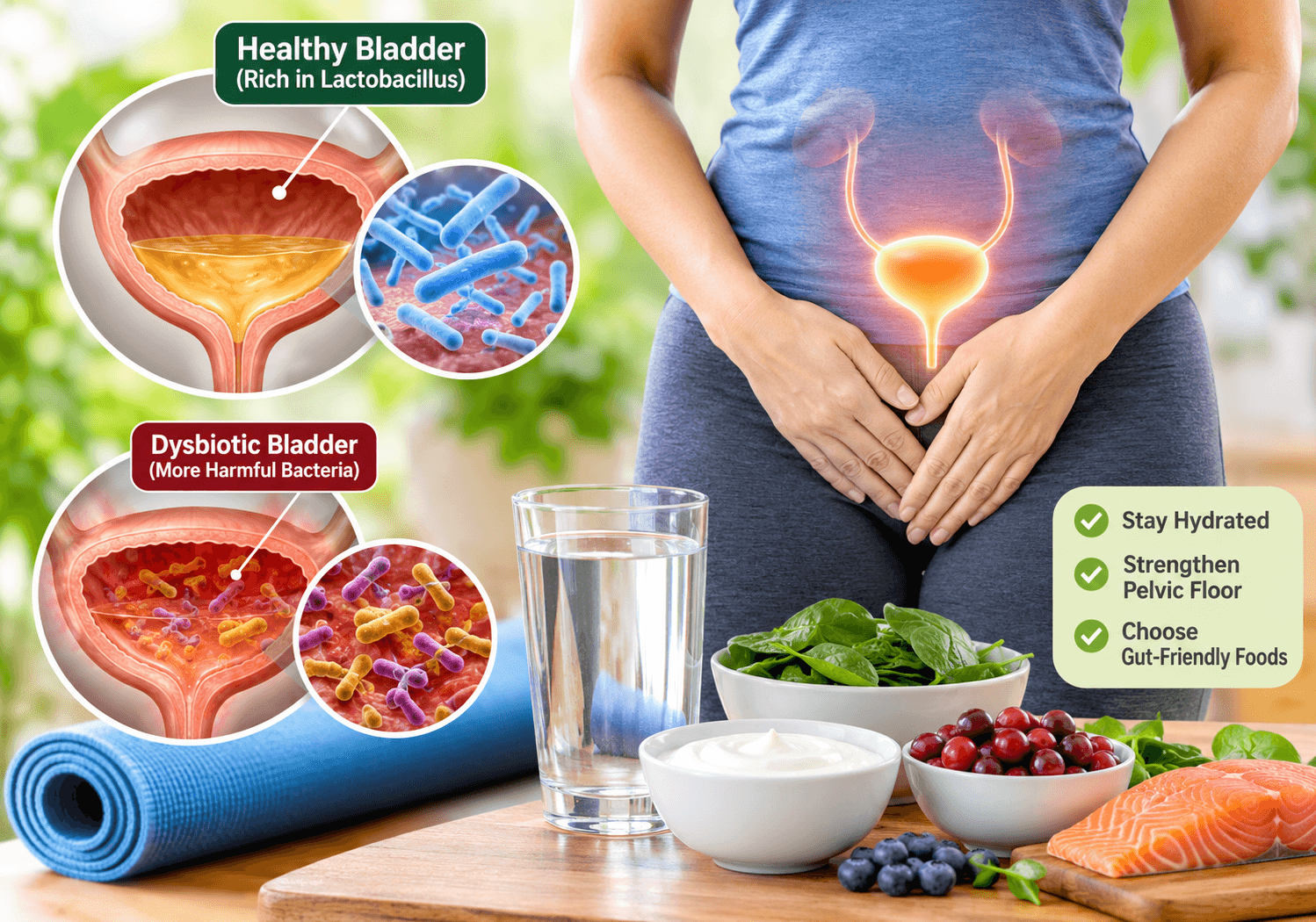
In a healthy female urinary tract, the microbiome is dominated by Lactobacillus species, such as Lactobacillus crispatus and Lactobacillus jensenii. These beneficial bacteria are the same ones that protect vaginal health. They produce lactic acid and hydrogen peroxide, which keep the urine pH slightly acidic. This acidic environment makes it difficult for harmful bacteria, like Escherichia coli (E. coli), to attach to the bladder wall and multiply.
When this balance is disrupted, a state called dysbiosis occurs. Dysbiosis in the bladder is strongly linked to overactive bladder (OAB) symptoms, interstitial cystitis, and recurrent UTIs. Research published in the Journal of Urology shows that women with urgency and frequency often have a less diverse urobiome with lower levels of protective Lactobacillus [2].
The Menopause Connection
For women over 40, declining estrogen levels significantly impact the bladder microbiome and its role in women’s urinary health. Estrogen receptors are present throughout the lower urinary tract. When estrogen drops during perimenopause and menopause, the urothelium (the bladder lining) becomes thinner and less resilient. This change reduces the population of protective Lactobacillus, making postmenopausal women much more susceptible to urinary infections and incontinence [3].

Healthy vs. Dysbiotic Bladder Microbiome
Understanding the difference between a thriving and a struggling urobiome helps you recognize what your body needs. Below is a comparison of the two states.
| Feature | Healthy Urobiome | Dysbiotic Urobiome |
| Dominant Bacteria | Lactobacillus species (e.g., L. crispatus) | Gardnerella, Streptococcus, or E. coli |
| Urine pH | Slightly acidic (pH 5.5 – 6.5) | More alkaline (pH > 7.0) |
| Microbial Diversity | Moderate, stable diversity | Either too low (lack of protection) or chaotic overgrowth |
| Common Symptoms | Normal voiding, no pain, rare infections | Urgency, frequency, burning, recurrent UTIs |
| Tissue Health | Thick, resilient urothelium | Thin, inflamed, or irritated bladder lining |
How to Apply It: A Coach’s Action Plan for Urinary Health
Science is only useful if you can apply it. As a coach, I translate research into daily habits. Supporting the bladder microbiome and its role in women’s urinary health requires a three-pillar approach: hydration, pelvic floor mechanics, and targeted nutrition.

Pillar 1: Strategic Hydration
Water is the most powerful, natural flush for your urinary tract. Stagnant urine allows bacteria to multiply. Regular voiding physically sweeps microbes out of the bladder before they can colonize.
- Daily Target: Aim for 80 to 100 oz (2.4 to 3 liters) of filtered water daily, adjusted for your body weight and activity level.
- Timing: Drink 16 to 20 oz (0.5 to 0.6 liters) upon waking. Sip consistently throughout the day.
- Coach’s Tip: Limit bladder irritants. Caffeine, artificial sweeteners, and highly acidic drinks can irritate the urothelium, worsening urgency and disrupting the local environment. If you drink coffee, follow every cup with an equal amount of water.
Pillar 2: Pelvic Floor Mechanics
Your pelvic floor muscles act as a supportive hammock for your bladder, urethra, and other pelvic organs. Weak or overly tight pelvic floor muscles can prevent the bladder from emptying completely. Residual urine is a breeding ground for bacterial dysbiosis.
The Foundational Kegel Routine Proper form is critical. Many women push down instead of lifting up, which worsens the problem.
- Identify the muscles: Imagine you are trying to stop the flow of urine or prevent passing gas. That lifting and squeezing sensation is your pelvic floor. (Only do this to identify the muscles, not as a regular exercise while voiding).
- The Contraction: Sit or lie down comfortably. Inhale deeply, letting your belly expand. As you exhale, gently lift and squeeze your pelvic floor muscles.
- The Hold: Hold the contraction for 3 to 5 seconds. Do not hold your breath or clench your glutes, thighs, or abdomen.
- The Release: Fully relax the muscles for 5 to 10 seconds. Complete relaxation is just as important as the contraction.
- Sets and Reps: Perform 3 sets of 10 repetitions, once or twice daily. Rest for 60 seconds between sets.
- Regression (Easier Version): If you cannot feel the muscles or hold for 3 seconds, start with “quick flicks.” Squeeze and release rapidly 10 times in a row, focusing only on the mind-muscle connection. Do this lying on your back with knees bent.
- Progression (Harder Version): Once you can easily hold for 5 seconds, progress to 10-second holds. You can also perform Kegels while standing, walking, or using a light resistance band around your thighs to engage the entire pelvic girdle.

Pillar 3: Targeted Nutrition and Supplementation
What you eat feeds your microbiome, both in the gut and the bladder. The gut and urogenital tract share microbial pathways. Supporting one supports the other.
- Probiotic-Rich Foods: Incorporate unsweetened kefir, plain Greek yogurt, sauerkraut, and kimchi. These provide live Lactobacillus strains that can help populate the urogenital tract. Research suggests that specific probiotics for urinary and gut health can reduce the recurrence of UTIs in women [4].
- Dietary Fiber: Constipation puts direct physical pressure on the bladder, preventing full emptying and altering the local microbiome. Ensuring adequate dietary fiber supports overall gut and urogenital health by promoting regular bowel movements [5]. Aim for 25 to 30 grams of fiber daily from vegetables, legumes, and whole grains.
- Cranberry and D-Mannose: Cranberry extract contains proanthocyanidins (PACs), which prevent E. coli from adhering to the bladder wall. D-mannose, a type of sugar, works similarly. While they do not “cure” an active infection, they are excellent, evidence-backed tools for prevention.
- Omega-3 Fatty Acids: Chronic inflammation can damage the urothelium. Consuming omega-3 fatty acids to reduce inflammation from sources like wild-caught salmon, chia seeds, or high-quality fish oil supports tissue resilience [6].
Common Mistake: Over-Cleaning and Harsh Soaps
Many women believe that aggressive washing prevents infections. This is a major error. Douching, using scented feminine washes, or harsh antibacterial soaps strip away the protective Lactobacillus from the vulvar and vaginal area. Because the vaginal and urinary microbiomes are closely linked, destroying vaginal flora directly invites urobiome dysbiosis. Wash the external area only with warm water or a mild, unscented, pH-balanced cleanser.
Safety Notes and When to See a Professional
While lifestyle and coaching strategies are powerful, they do not replace medical care. The bladder microbiome and its role in women’s urinary health is complex, and some conditions require clinical intervention.
Consult a urologist or urogynecologist if you experience:
- Blood in your urine (hematuria).
- Fever, chills, or lower back pain alongside urinary symptoms (signs of a kidney infection).
- Incontinence that disrupts your daily life or exercise routine.
- More than two UTIs in six months, or three in a year.
Disclaimer: This article is for general information and is not a substitute for advice from a doctor or physical therapist. Always consult a healthcare provider before starting new supplements, especially if you are pregnant, postpartum, or managing a medical condition.
Related Tips for Holistic Urinary Health
Your urinary system does not operate in a vacuum. It is deeply connected to your overall metabolic and hormonal health.
Manage Stress and Cortisol Chronic stress elevates cortisol, which can suppress immune function and alter microbial balance throughout the body. Learning managing cortisol and stress levels through breathwork, walking, or adaptogenic support can indirectly protect your urobiome by keeping your immune system robust [7].
Prioritize Sleep Poor sleep disrupts the hormones that regulate tissue repair and immune defense. Understanding how sleep affects hormonal balance is critical for women over 40, as restorative sleep supports the mucosal barriers in the urinary tract [8]. Aim for 7 to 9 hours of quality sleep per night.
Support Metabolic Health Metabolic dysfunction and insulin resistance are linked to higher rates of urinary issues. Implementing natural ways to support metabolism after 40 through strength training and balanced nutrition helps maintain healthy tissue function and immune response [9]. Furthermore, ensuring you have essential vitamins support metabolic and immune function, particularly Vitamin D and B vitamins, is foundational for cellular health in the urinary tract [10].

Frequently Asked Questions (FAQ)
1. Is the bladder really sterile? No. Advanced DNA sequencing has proven the bladder is not sterile. It houses a unique community of bacteria called the urobiome. A healthy bladder microbiome is dominated by beneficial Lactobacillus species, which protect against infections and maintain urinary tract health.
2. How does menopause affect the bladder microbiome? During menopause, declining estrogen levels cause the bladder lining (urothelium) to thin. This reduces the population of protective Lactobacillus bacteria, making the urinary tract more vulnerable to dysbiosis, urgency, frequency, and recurrent urinary tract infections.
3. Can probiotics improve women’s urinary health? Yes. Specific strains of Lactobacillus probiotics can help restore and maintain a healthy urogenital microbiome. They produce lactic acid and hydrogen peroxide, which lower urine pH and prevent harmful bacteria like E. coli from attaching to the bladder wall.
4. How much water should I drink to support my urobiome? Aim for 80 to 100 oz (2.4 to 3 liters) of water daily, adjusted for your body size and activity level. Consistent hydration ensures regular bladder emptying, which physically flushes out bacteria before they can multiply and cause an infection.
5. Do pelvic floor exercises really help prevent UTIs? Yes. Strong, coordinated pelvic floor muscles ensure the bladder empties completely during urination. Incomplete emptying leaves residual urine, which acts as a breeding ground for bacteria. Proper Kegel exercises improve this mechanical function.
6. What foods should I avoid to protect my bladder microbiome? Limit known bladder irritants, especially if you have symptoms. These include excessive caffeine, alcohol, artificial sweeteners, spicy foods, and highly acidic beverages. Also, avoid high-sugar diets, which can feed harmful bacterial overgrowth and disrupt microbial balance.
Conclusion
The paradigm has shifted. We now know that the bladder microbiome and its role in women’s urinary health is fundamental to preventing discomfort, urgency, and recurrent infections. A thriving urobiome, rich in protective Lactobacillus, acts as your body’s first line of defense.
As a coach, I encourage you to take a proactive, holistic approach. Drink enough water to flush the system daily. Train your pelvic floor with proper, consistent Kegels to ensure complete bladder emptying. Nourish your body with fiber, probiotics, and anti-inflammatory foods to support the microbial ecosystem from the inside out. By respecting the science of your urobiome, you can take control of your urinary health and maintain an active, confident lifestyle at any age.