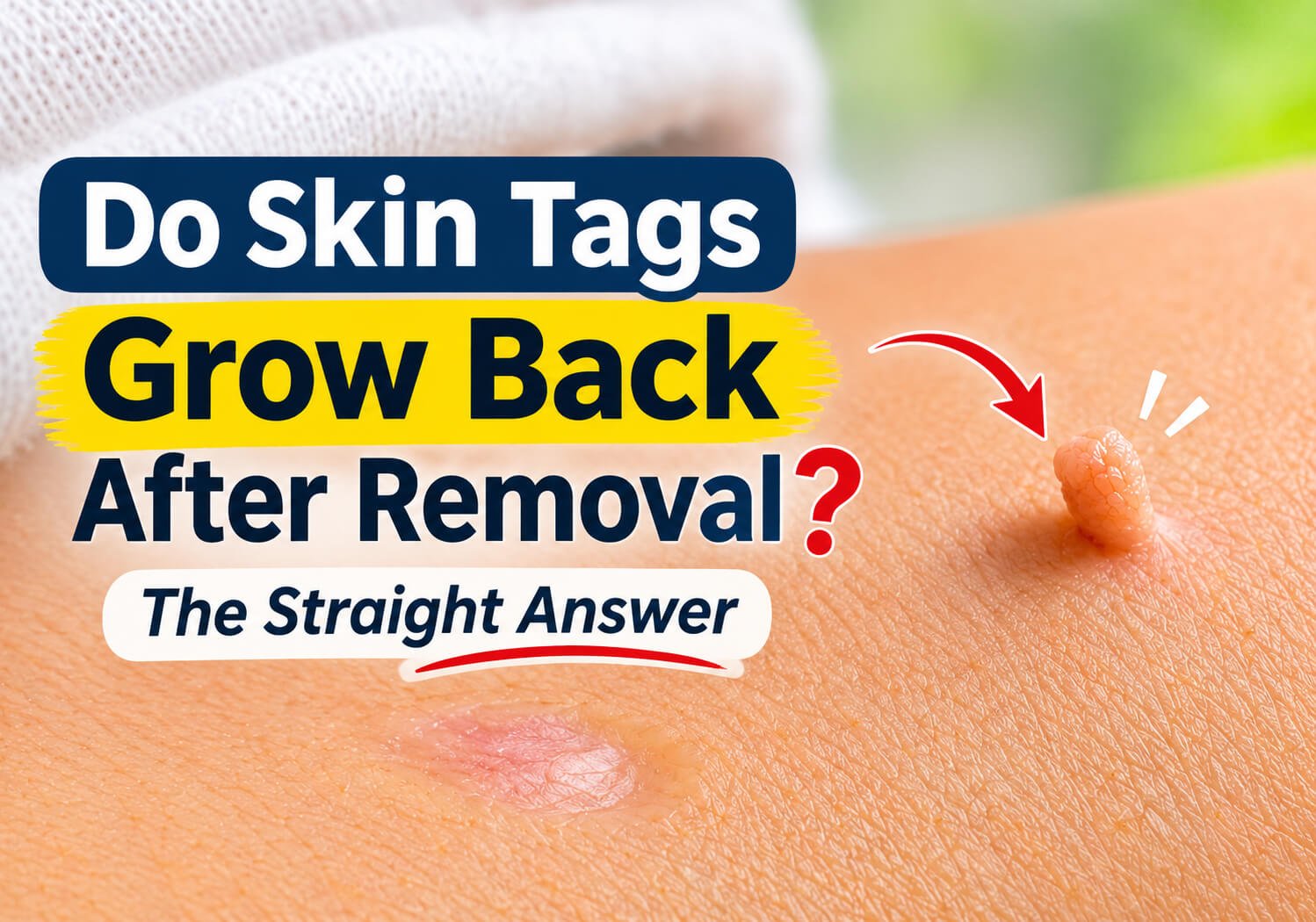
You found a skin tag, got rid of it, and now you are staring at the same spot wondering if it will come back. The question “do skin tags grow back after removal” comes up constantly in the gym, because skin tags love the exact places training life stresses: armpits, neck, groin, under sports bras. I have walked plenty of clients through this exact worry, usually after they tried a home remedy first.
Here is the honest answer up front, then the details: most of the time, a skin tag that a professional removes completely does not grow back in that spot. What people often see later is a brand-new tag forming nearby, usually where skin keeps rubbing skin or clothing. That difference matters, because it changes what you can actually do about it. This guide covers why tags form, which removal methods last, what the research says about regrowth, and practical steps to lower the odds of new ones showing up.
Quick Answer: A completely removed skin tag does not usually grow back in the same spot, according to dermatology sources. New skin tags can still appear nearby, especially in areas with ongoing friction, weight gain, pregnancy hormones, or insulin resistance. Incomplete removal, such as cutting a tag at home, raises the risk of regrowth, scarring, bleeding, and infection.

What Is a Skin Tag, Really?
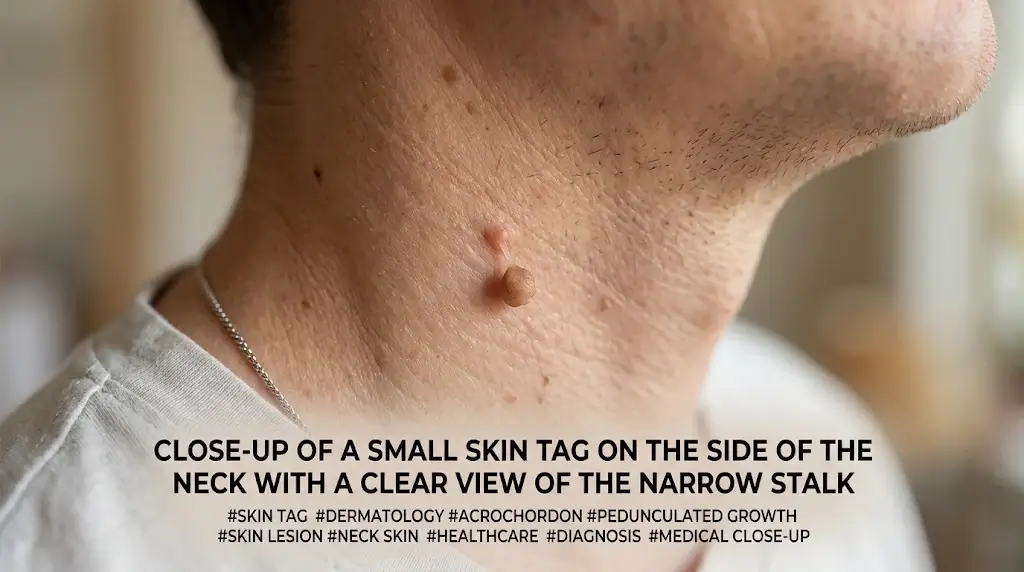
A skin tag, medically called an acrochordon, is a small, soft, noncancerous growth that hangs off the skin on a narrow stalk. Doctors also call them fibroepithelial polyps or soft fibromas. Most are the same color as your skin or slightly darker, and they range from a couple of millimeters up to about half an inch (1 centimeter) long [1].
They are not warts, moles, or anything contagious. A tag is basically normal skin tissue, collagen fibers, and tiny blood vessels pushed out on a peduncle, which is the medical word for that little stalk. Cleveland Clinic notes they form when the body produces extra cells in the skin’s top layers, typically in folds where skin rubs against skin [2].
You will find them most often in high-friction zones:
- Neck (the number one spot in most clinic data)
- Armpits
- Groin and inner thighs
- Under the breasts
- Eyelids
- Under skin folds on the torso
What the Research Says About Skin Tag Regrowth
Here is the core finding, straight from the sources. MedlinePlus states that in most cases, a skin tag usually does not grow back after it is removed, though new skin tags may form on other parts of the body [1]. The NHS says the same thing more bluntly: once a skin tag is removed, it does not usually return [3].
So why do so many people swear theirs “grew back”? Three things are usually happening:
- Incomplete removal. If some of the tag tissue stays at the base, leftover tissue can regrow. This is the most common reason for a tag “coming back,” and it is exactly what happens with DIY cutting, clipping, or tying at home. Cleveland Clinic lists incomplete removal, meaning it is likely to come back, among the specific risks of at-home removal products [2].
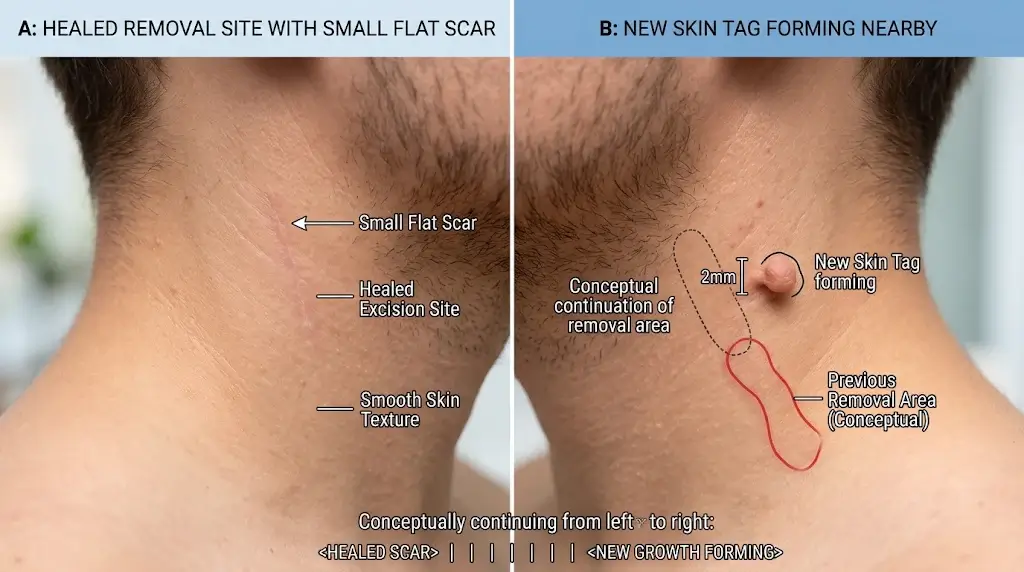
- A new tag in the same neighborhood. Tags form where friction is chronic. Remove one tag from your armpit and the same rubbing that created it can build another one nearby within months. University of Utah Health dermatology guidance puts it plainly: removed tags are not likely to grow back, but new tags can occur in the same area if the rubbing or irritation continues [4].
- Scar tissue mistaken for regrowth. After snip removal or freezing, a small firm bump of scar can form at the site. It sits where the tag used to be, so it feels like the tag returned. It did not. A dermatologist can tell the difference in seconds.
The takeaway: the tag itself is gone for good when removal is complete. Your skin’s tendency to make tags, however, does not disappear.
Coach’s Tip: If you have a tag removed and a bump shows up at the site later, do not assume failure and do not pick at it. Book a quick follow-up. The doctor who removed it can tell you in one visit whether it is scar tissue or a new tag, and each has a completely different treatment.
Why New Skin Tags Keep Showing Up
Understanding what drives tag formation tells you what “prevention” can realistically look like. No single cause has been proven, but several risk factors show up consistently in the clinical literature.
Friction is the main driver. Tags cluster where skin rubs skin, or where skin rubs clothing, straps, and jewelry. Cleveland Clinic lists the classic spots, armpits, eyelids, groin, neck, and under the breasts, precisely because that is where repeated rubbing happens [2]. This is also why lifters and runners notice tags around bra lines, waistbands, and hydration pack straps.
Body weight matters. Heavier body weight means more skin folds and more friction surfaces. MedlinePlus notes tags are more common in people who are overweight or who have diabetes, and researchers think skin rubbing against skin is a key mechanism [1].
The metabolic connection is real, and worth knowing about. This is the part most articles skip. A case-control study of 110 patients with multiple skin tags and 110 matched controls found significantly higher fasting glucose, BMI, insulin resistance, total cholesterol, LDL, and triglycerides in the skin tag group, and concluded that acrochordons may represent a cutaneous sign of metabolic syndrome [5]. A Brazilian cross-sectional study of 201 adults went further: the presence of multiple skin tags was strongly associated with insulin resistance, independent of other risk factors [6]. StatPearls, the clinical reference on NCBI Bookshelf, also lists associations between skin tags and abnormal lipid profiles, type 2 diabetes, cardiovascular disease, and obesity [7].
To be clear about the limits: association is not diagnosis. Some newer studies have found weaker or no link between tag count and insulin resistance. But if you suddenly develop a crop of tags, especially alongside fatigue or weight gain, it is a reasonable prompt to ask your doctor about a simple metabolic checkup, not to panic.
Hormones play a role. Pregnancy is the classic example. Hormonal changes plus new skin folds mean many women notice tags in the second and third trimesters. The NHS notes pregnancy hormones are thought to drive skin tag growth [3], and Mayo Clinic notes that in rare cases, multiple new tags can signal an underlying hormonal condition such as polycystic ovary syndrome or acromegaly, which is why medical evaluation before treatment is always recommended [8].
Genetics and age round it out. Tags run in families and become steadily more common from the 40s onward as skin loses elasticity and folds deepen. StatPearls adds that human papillomavirus (HPV) has been linked to skin tags in several investigations, though the evidence remains mixed and tags are not considered contagious [7].
Common Mistake: People treat skin tags as a hygiene problem and scrub, pick, or file the area harder. Friction and irritation do not work that way. Aggressive scrubbing adds irritation, and irritation is one of the suspected triggers. Wash gently, dry the fold areas well, and leave the tags alone until you decide on proper removal.
Skin Tag Removal Methods Compared
Not all removal methods are equal when it comes to regrowth risk. The methods below are performed by dermatologists or trained medical providers, usually in a quick office visit with the area numbed first.
Table
| Method | How It Works | Best For | Regrowth Risk When Done Right | Notes |
| Snip excision | Numb, then cut off with surgical scissors or a blade | Medium to large tags, tags with thick stalks | Very low | Cleveland Clinic dermatologists often prefer it; the tag is gone before you leave [9] |
| Electrosurgery (cautery) | Electric current burns the tag at the base | Small to medium tags | Very low | Also seals the wound, so bleeding is minimal [9] |
| Cryotherapy | Liquid nitrogen freezes the tag, which falls off in about 10 to 14 days | Small tags | Low, but multiple treatments may be needed | Can inflame surrounding skin more than snipping [9] |
| Laser removal | Targeted light destroys the tag tissue | Small tags | Low | StatPearls notes carbon dioxide laser for smaller tags [7] |
| Ligation | A suture is tied around the stalk to cut off blood supply | Tags with thin stalks | Low to moderate | Slow; the tag dies and drops off over days to weeks [10] |
Two things stand out from that table. First, complete removal at the base is what makes regrowth unlikely, which favors snipping and cautery for tags with a real stalk. Second, freezing works but can need repeat sessions, so do not read a single cryotherapy appointment as a guarantee.
StatPearls adds a practical warning about freezing: liquid nitrogen cryotherapy can cause dyschromic lesions, meaning temporary or sometimes lasting color changes in the treated skin, especially relevant for deeper skin tones [7].

How Long Does Healing Take?
Most skin tag removals heal fast. The tiny wound left after a snip or cautery typically heals on its own without further intervention, according to StatPearls [7]. In practice, expect a small scab or crusted spot that settles within one to two weeks.
Basic aftercare, the same advice every removal provider will give you:
- Keep the area clean and dry for the first day or two.
- Follow whatever ointment or dressing instructions your provider gives you.
- Do not pick the scab. Picking is the fastest route to a scar and a slow-healing spot.
- Reduce friction over the healing site. That means looser collars, softer bra straps, or a small adhesive pad over the spot during training for the first week or so.
- Watch for spreading redness, warmth, swelling, pus, or increasing pain, and contact your provider if any of those show up.
Rare complications exist and are worth knowing, not fearing. StatPearls lists scarring from improper removal, mild irritant dermatitis at the site, and, rarely, a small neuroma with lingering tenderness if a nerve within the tag is cut [7]. All of these are reasons to have removal done properly the first time rather than chances you need to accept.
The DIY Problem: Why Home Removal Backfires
This is where I have to be the coach who stops you before you do something you will regret. The internet is full of floss-tying tutorials, apple cider vinegar videos, and freeze-it-yourself kits. The medical consensus is uniformly against them.
Mayo Clinic states directly that skin tag removal should be performed under the guidance of a physician and that home remedies are not recommended [8]. Cleveland Clinic warns that at-home treatments carry higher risks of scars, excessive bleeding, infection, incomplete removal, and damage to healthy nearby skin [2]. The NHS goes further with a headline instruction: do not try to remove a skin tag yourself, because the risks include infection, bleeding, and scarring [3].
There is a regulatory layer here too. The FDA has approved no over-the-counter drug for removing skin tags, and in 2022 it issued warning letters to Amazon and two product sellers for marketing unapproved skin tag and mole removers [11]. A review in the Journal of Clinical and Aesthetic Dermatology documented 38 skin injuries from unapproved topical removers, with burns, pain, ulceration, and permanent scarring among the outcomes .
One more angle that matters more than regrowth: self-diagnosis. A growth you think is a skin tag might be a wart, a mole, or something serious. Cleveland Clinic notes that a growth that looks like a skin tag may be something else, including skin cancer, and should be diagnosed by a dermatologist or other experienced provider [2]. When you remove it yourself, you also throw away the tissue that would have told you what it was.
Coach’s Tip: Before any removal appointment, take a dated photo of the tag next to a coin or ruler. Tags are stable; they do not grow or change over time, per MedlinePlus [1]. A photo lets you and your doctor confirm months later that a new bump is a new tag, not the old one changing.
How to Apply It: A Practical Action Plan
Here is the sequence I give clients, in order:
- Get the growth identified first. One dermatology visit settles whether it is a tag, a wart, a mole, or something that needs closer attention. This step is not optional in my book.
- Remove only what bothers you. The NHS is clear that skin tags do not need removal unless they are causing problems [3]. If it is not catching on clothing, bleeding, or bothering you in the mirror, leaving it alone is a valid choice.
- Pick the method by location and size. Snipping suits most tags with stalks. Freezing suits small ones. Eyelid tags need an experienced hand, sometimes an ophthalmologist’s [8].
- Treat the environment, not just the tag. Address what created the friction: swap the chafing waistband, add anti-chafe balm to thigh zones before long runs, adjust the strap that sits on the same spot every session. If a tag keeps regrowing at one exact spot, look at what touches that spot daily.
- Book a metabolic checkup if you are developing many tags. Given the research linking multiple tags with insulin resistance [6], a fasting glucose and lipid panel is a cheap, sensible ask. Your primary care doctor, not a skin clinic, runs that.
- Give healing its two weeks. No picking, no retraining over a fresh wound in a friction zone without padding.
Can You Prevent New Skin Tags?
Honest answer: you cannot fully prevent them, and the NHS says so directly [3]. But you can lower the odds of new ones, and the levers overlap almost perfectly with general metabolic health, which happens to be my day job as a coach.
- Reduce friction where you can. Smooth-chafe clothing in hot spots, well-fitted sports bras, and moleskin or balm over chronic rub points during long training sessions.
- Manage body weight gradually if that is a goal. More skin folds mean more friction surfaces. If weight management is on your list, a coach’s practical guides to supporting metabolism naturally can help you plan it sensibly, and the research linking tags with metabolic markers suggests the effort may pay off on more than the scale.
- Support insulin health through the basics. Regular resistance training, adequate daily protein, and fiber-rich meals are the boring fundamentals that move metabolic markers. If you are working on appetite and fullness while adjusting your diet, evidence-based coverage of how soluble fiber helps control appetite and how protein intake affects metabolism and weight is a good place to start.
- Sleep is not optional. Poor sleep worsens nearly every metabolic marker. Our guide on how sleep affects metabolism and weight management breaks down the hormonal connection.
- During pregnancy, wait it out. Many pregnancy-related tags shrink or fall off after delivery. Do not schedule elective removal mid-pregnancy unless a tag is bleeding or causing real problems; discuss timing with your obstetrician.
None of this promises a tag-free body. It stacks the odds in your favor and improves markers your doctor actually cares about.
When to See a Doctor About a Skin Tag
See a provider promptly if a skin growth:
- Changes in size, shape, or color
- Bleeds, becomes painful, or develops a crust that will not heal
- Multiplies rapidly into many new tags
- Sits somewhere delicate, like the eyelid or groin, where removal carries extra risk
The NHS lists bigger, painful, bleeding, or numerous tags as reasons to see a GP [3], and StatPearls notes that untreated tags can enlarge from constant friction but carry a very low or no risk of malignancy [7]. Also mention any history of diabetes, PCOS, or rapid weight change at the appointment, since these connect to the tags you are seeing.
FAQ: Do Skin Tags Grow Back?
Do skin tags grow back after removal by a dermatologist?
Rarely. Complete professional removal, especially snipping or cautery at the base, makes regrowth of that specific tag unlikely. What can appear later is a new tag nearby in the same friction zone. If a bump returns at the exact site, ask your provider whether it is scar tissue or leftover tissue from incomplete removal.
Do skin tags grow back after freezing (cryotherapy)?
The frozen tag itself does not return once it falls off, but freezing sometimes needs a second session for complete destruction, so a residual bit of tissue can regrow. Freezing also inflames surrounding skin more than snipping, per Cleveland Clinic dermatologists, which is why method choice matters.
Does removing skin tags cause more to grow?
No. There is no evidence that removing a tag triggers others. New tags form because the underlying drivers, friction, hormones, genetics, age, and metabolic factors, are still present. People who get tags tend to keep occasionally getting them, removal or not.
Do skin tags come back after pregnancy?
Many pregnancy-related tags shrink or disappear on their own after delivery as hormones settle. Tags that persist can be removed, and once removed they are unlikely to recur, though new tags can develop in predisposed areas. If you are pregnant or breastfeeding, check with your doctor before any removal.
How can I stop skin tags from coming back in the same spot?
You cannot guarantee it, but you can reduce the triggers: eliminate the friction source at that exact site, keep the fold area dry, manage body weight if that applies to you, and address metabolic health. A tag that returns to one spot usually means something, a strap, a collar, skin folds, is still rubbing there daily.
Are skin tags a sign of diabetes?
Not a diagnosis, but a possible clue. Studies link multiple skin tags with insulin resistance and metabolic syndrome markers [5], while other research has found weaker associations. If you develop many tags suddenly, ask your doctor about a simple blood sugar and lipid check rather than self-diagnosing.
Conclusion: The Honest Answer on Skin Tag Regrowth
So, do skin tags grow back after removal? A skin tag that a professional removes completely almost never grows back in that spot. What people mistake for regrowth is usually incomplete home removal, scar tissue, or a brand-new tag forming nearby in the same friction zone. The tag is temporary; your skin’s tendency to make them is the thing to manage.
The practical path is short: get any growth identified by a dermatologist, have bothersome tags removed properly the first time, cut the friction that created them, and treat a sudden crop of tags as a nudge to check your metabolic health, not a cosmetic emergency. Do that, and the question answers itself the next time you spot a new bump: it is not the old one coming back, it is a new one, and now you know exactly what to do about it.