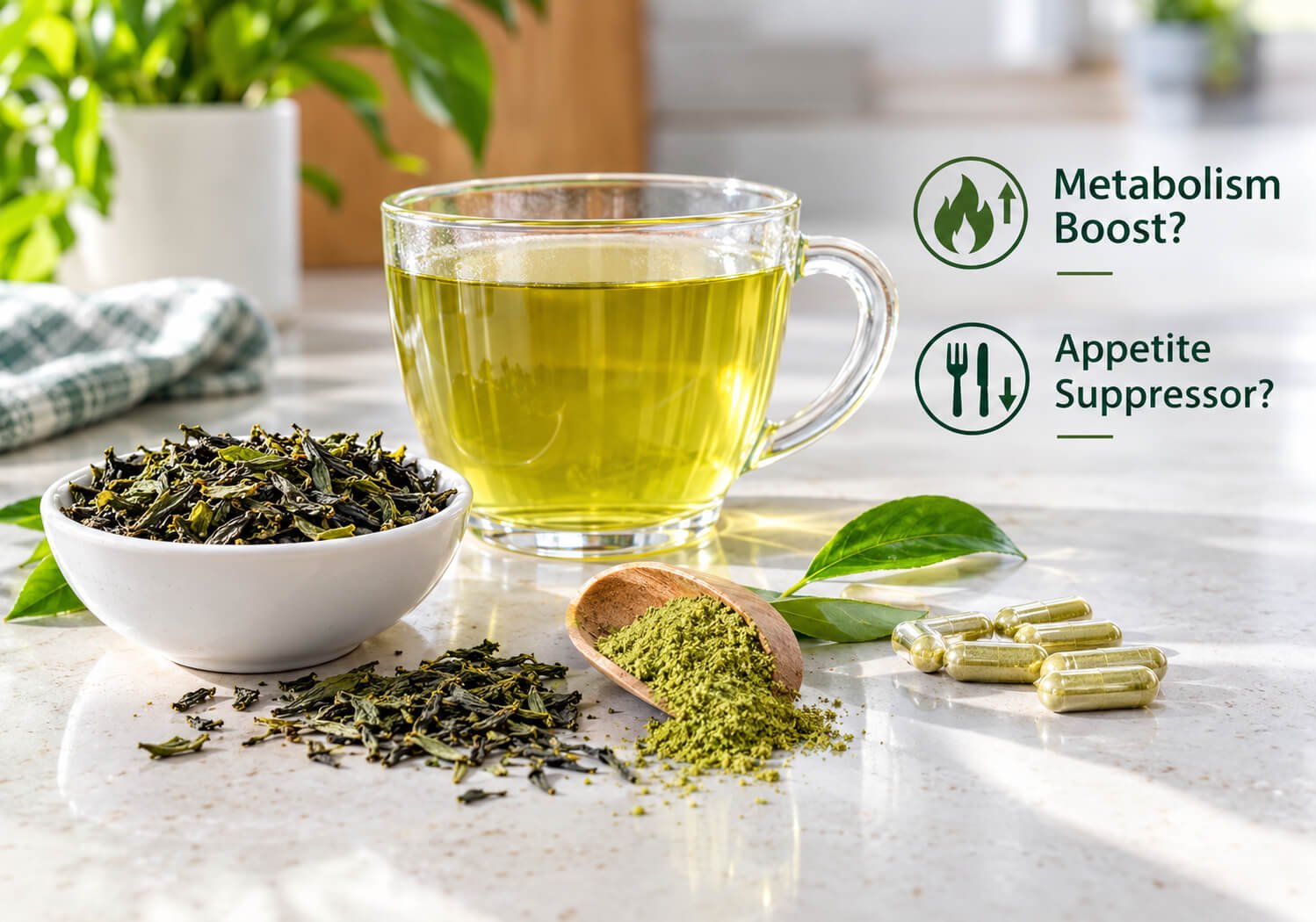
Green tea extract is one of the most common ingredients in weight-loss supplements, and the pitch is almost always the same: it speeds up your metabolism and takes the edge off your appetite. If you’ve picked up a bottle and wondered whether that’s actually backed by research or just good marketing, you’re asking the right question. The short version is that green tea extract has a real, measurable effect on metabolism, but it’s small, and the appetite-suppressing part of the claim is much shakier.
Quick Answer
Green tea extract modestly raises energy expenditure and fat oxidation, largely through its EGCG and caffeine content, but the effect is small and fades with regular use. Evidence for appetite suppression is weak and inconsistent. On its own, green tea extract is unlikely to produce meaningful weight loss without diet and exercise changes.
What’s Actually in a Green Tea Extract Supplement
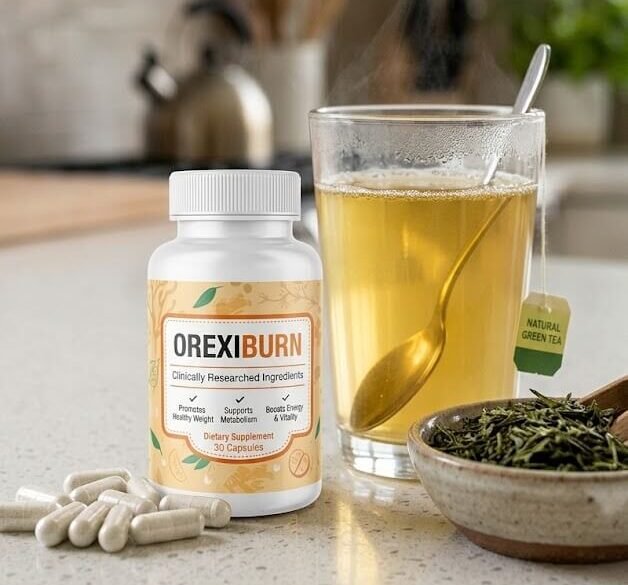
Green tea extract is made from the leaves of Camellia sinensis, the same plant used for black and oolong tea, just processed differently so the leaves stay unoxidized and keep more of their natural compounds. The two groups of compounds that matter most for metabolism and appetite are catechins and caffeine.
Catechins are a type of polyphenol, and the most studied one is epigallocatechin gallate, usually shortened to EGCG. A standard cup of brewed green tea delivers somewhere in the range of 90 to 300 mg of EGCG, while supplement extracts concentrate that down into a capsule, sometimes delivering several hundred milligrams in a single dose. That concentration is exactly why extracts can produce stronger effects than tea, and also why they carry more safety considerations, which this article covers later.
Most green tea extract supplements also contain caffeine, either naturally present or added back in after decaffeination. Caffeine on its own is a well-established, mild stimulant of metabolism and alertness, and several of the studies on green tea’s metabolic effects can’t fully separate what came from the catechins versus what came from the caffeine.
Coach’s Tip: If you want to know what you’re actually taking, check the label for a specific EGCG amount in milligrams, not just “green tea extract.” Products that only list a vague percentage of polyphenols make it hard to judge dose, which matters for both effectiveness and safety.
Does Green Tea Extract Boost Metabolism? What the Research Shows
The proposed mechanism. Catechins, especially EGCG, are thought to slow the breakdown of norepinephrine, a hormone involved in fat burning and energy use, by inhibiting an enzyme called catechol-O-methyltransferase (COMT). In theory, that leaves more norepinephrine active for longer, which can modestly increase thermogenesis, or heat production from calorie burning, and shift the body toward burning more fat for fuel.
What the research actually shows. A systematic review and meta-analysis of eight randomized controlled trials found that EGCG supplementation at doses around 300 mg per day moderately increased energy expenditure and reduced the respiratory quotient, a marker that reflects a shift toward burning more fat, though the effect on other measures of metabolism was mild, according to a systematic review and meta-analysis on EGCG and energy expenditure. A separate systematic review focused specifically on resting metabolic rate found that green tea catechins can produce acute increases in energy expenditure, but the effect was inconsistent across studies and depended heavily on dose, caffeine content, and how long participants had been supplementing, according to a systematic review on green tea catechins and resting metabolic rate.
Older review work going back to cell, animal, and early human studies describes a similar pattern: green tea and its catechins can increase thermogenesis and fat oxidation and have been linked to modest reductions in body weight and fat mass in some human trials, according to a 2006 review on the anti-obesity effects of green tea. The key word across nearly all of this research is “modest.” Nobody studying this seriously is finding a dramatic metabolic shift, and several trials find no measurable change at all once body weight and habitual caffeine intake are accounted for.
Does Green Tea Extract Suppress Appetite? What the Research Shows
The proposed mechanism. The appetite-suppression claim rests on the idea that green tea compounds can influence hunger and fullness hormones, such as ghrelin, which stimulates appetite, and GLP-1 and peptide YY, which promote fullness after eating.
What the research actually shows. This is the weaker half of the green tea extract story. A systematic review of bioactive plant compounds marketed for appetite suppression and satiety, which included green tea extract as one of the most frequently studied ingredients, concluded that the evidence for these compounds actually reducing hunger or increasing fullness was mostly inconclusive, and called for more rigorous clinical trials before any firm claims could be made, according to a systematic review of appetite-suppressing phytochemicals published in Nutrients.
An ancillary study from the Minnesota Green Tea Trial, which gave overweight and obese postmenopausal women a decaffeinated green tea extract supplying over 1,300 mg of total catechins daily, looked specifically at appetite-related hormones and satiety questionnaires after meals. The researchers were investigating exactly this question, but the broader body of research on green tea and postprandial appetite hormones has produced mixed and inconsistent results rather than a clear, repeatable appetite-suppressing effect, according to the Minnesota Green Tea Trial ancillary study on postprandial response.
Common Mistake: Assuming that feeling less hungry after a cup of hot tea means green tea is suppressing appetite through some special metabolic pathway. Often it’s simply the warmth, volume of liquid, and the act of sipping something slowly that temporarily blunts hunger cues, the same way a glass of water before a meal can. That’s a real effect, but it’s not unique to green tea’s catechins.
Comparing the Evidence: Metabolism vs. Appetite
| What’s claimed | Typical research dose | Strength of evidence |
| Increased energy expenditure | ~300 mg EGCG/day | Moderate — consistent small effect across several RCTs |
| Increased fat oxidation | ~300–500 mg EGCG/day | Moderate — seen acutely, less clear long-term |
| Reduced resting metabolic rate decline (during dieting) | Varies, often paired with caffeine | Weak to moderate — inconsistent across studies |
| Reduced hunger hormones (ghrelin) | 800+ mg EGCG/day | Weak — limited, mixed trial results |
| Increased fullness hormones (GLP-1, PYY) | Varies | Weak — inconclusive per systematic review |
| Overall weight loss | 1,000 mg or less/day, 8–12 weeks | Weak — small, often not statistically significant |
So Does It Add Up to Real Weight Loss?
This is really the question behind the question, and the clearest answer comes from a Cochrane systematic review, which is considered one of the highest standards of evidence in medicine. Pooling 15 weight-loss trials and three weight-maintenance trials, the reviewers found that green tea preparations produced a small, statistically non-significant amount of weight loss in overweight or obese adults, and had no meaningful effect on helping people keep weight off afterward, according to the Cochrane review on green tea for weight loss and weight maintenance. The U.S. government’s own consumer health agency reaches a similarly cautious conclusion, noting that green tea has not been shown to be effective for weight loss, according to the NCCIH fact sheet on tea.
That doesn’t mean the metabolic and appetite effects discussed above are fake. It means they’re real but small, and too small on their own to produce weight loss you’d notice on a scale without also changing what and how much you eat and how active you are.
How to Use Green Tea Extract If You Decide to Try It
If you want to add green tea extract to a weight-management routine, here’s how to do it in a way that matches what the research actually supports:
- Pick a product with a known EGCG dose. Look for 300 to 500 mg of EGCG per serving, the range most consistently used in the studies showing a metabolic effect.
- Take it with food, not on an empty stomach. Bolus doses taken fasted are linked to higher blood levels of EGCG and a higher risk of liver-related side effects, covered in detail below.
- Split the dose if your label allows it. Taking half in the morning and half with lunch, rather than one large dose, tends to match how it was dosed in the safer end of the research.
- Pair it with resistance training or regular cardio. Green tea’s thermogenic effect is additive at best; a workout and a sensible calorie deficit are what actually move the needle on body composition.
- Give it 8 to 12 weeks before judging it. Most of the trials that found any weight effect ran for 8 to 12 weeks, not days.
Coach’s Tip: Treat green tea extract the same way you’d treat a pre-workout supplement: a small edge on top of consistent training and nutrition, not a substitute for either.
Common Mistake: Doubling up on dose because “more EGCG means more fat burning.” The safety data below shows the opposite is true past a certain point, where risk goes up faster than any benefit.
For people specifically interested in how other common supplements affect metabolism, it’s worth comparing green tea extract’s thermogenic effect to how chromium picolinate affects glucose metabolism, since the two are often stacked together in weight-management products but work through different pathways.
Who Should Be Careful With Green Tea Extract
Liver health. This is the most important safety issue with green tea extract, and it’s specific to concentrated extracts rather than brewed tea. A comprehensive review commissioned by the United States Pharmacopeia found that concentrated green tea extracts taken as a bolus dose, especially on an empty stomach, show a hepatocellular pattern of liver injury in both toxicology studies and human adverse-event reports, with cases linked to EGCG intakes ranging from roughly 140 mg to around 1,000 mg per day, according to the USP comprehensive review of green tea extract hepatotoxicity. A separate systematic review of randomized controlled trials identified dozens of reported liver injury cases tied to green tea extract use, with a probable or possible causal link in the majority of them, according to a systematic review of liver-related safety in green tea extract RCTs. Based on toxicology and human safety data, one review proposed a safe intake level of roughly 338 mg of EGCG per day for solid, concentrated preparations, which is notably lower than doses used in some weight-loss products, according to a systematic review on the safety of green tea and green tea extract consumption.
Caffeine sensitivity. An 8-ounce cup of brewed green tea contains about 28 mg of caffeine, modest compared to roughly 96 mg in the same size cup of brewed coffee, but concentrated extracts can deliver considerably more per serving, according to Mayo Clinic’s caffeine content comparison. Most healthy adults tolerate up to about 400 mg of caffeine a day from all sources combined, but if you’re sensitive to caffeine, get headaches, feel jittery, or have trouble sleeping, a green tea extract with added caffeine can make that worse.
Medication interactions. Green tea’s vitamin K content can interfere with blood-thinning medications like warfarin, and both green tea and its extracts can interact with certain blood pressure medications, stimulants, and drugs processed through the liver. If you take any prescription medication regularly, check with your doctor or pharmacist before adding a concentrated extract.
Pregnancy and breastfeeding. Because of the caffeine content, people who are pregnant or trying to become pregnant are generally advised to keep total caffeine intake under 200 mg a day from all sources, which leaves little room for a concentrated supplement on top of coffee, tea, or other caffeinated foods.
If you have a history of liver problems, take regular medication, are pregnant or breastfeeding, or are otherwise managing a health condition, talk with your doctor before starting a concentrated green tea extract, since bottle dosing varies widely and isn’t always clearly labeled.
A Few Related Tips for Metabolism and Appetite Control
If your main goal is appetite control rather than a metabolic nudge, protein and fiber at meals have considerably stronger, more consistent research behind them than any catechin supplement. If your goal is metabolic rate, resistance training to build and maintain muscle mass has a far bigger and more durable effect than any thermogenic supplement, green tea extract included. Those two habits are worth prioritizing before, not instead of, a supplement like this one. If you’re also looking at supplements for blood sugar control alongside weight management, it’s worth reading how [inositol affects insulin sensitivity](https://pillsfeed.com/inositol-insulin-sensitivity-studies-copy-url-slug/), since insulin response is a separate lever from the thermogenic effect covered here.
FAQ
Does green tea extract really boost metabolism? Yes, modestly. Research shows EGCG, the main catechin in green tea, can increase energy expenditure and fat oxidation at doses around 300 mg per day, but the effect is small and inconsistent across individuals, not a dramatic metabolic shift.
How much green tea extract should I take to lose weight? Most studies showing a metabolic effect use 300 to 500 mg of EGCG per day. Doses above roughly 800 mg have been linked to a higher risk of liver-related side effects, so more isn’t better here.
Can green tea extract suppress my appetite? The evidence is weak and inconsistent. Some studies on hunger hormones like ghrelin show modest changes at very high doses, but a systematic review of appetite-suppressing plant compounds found the overall evidence inconclusive.
Does green tea extract burn belly fat specifically? No research supports spot reduction of fat from any single area. Green tea extract’s modest effect on fat oxidation applies to overall body fat, not a specific region like the abdomen.
Can green tea extract cause liver damage? In concentrated form, yes, in some people, particularly at high doses taken on an empty stomach. Case reports and systematic reviews link liver injury to bolus doses, though this risk is far lower with brewed tea than with extracts.
Is green tea extract better than coffee for metabolism? Neither produces a large effect on its own. Caffeine, found in both, drives much of the thermogenic response, while green tea extract adds catechins with a separate, smaller mechanism. Combining realistic expectations with diet and exercise matters more than the source.
Conclusion
So does green tea extract boost metabolism or suppress appetite? The honest answer is a qualified yes on metabolism and a much weaker, largely unproven yes on appetite. The research supports a small increase in energy expenditure and fat oxidation from EGCG, typically at doses in the 300 to 500 mg range, while the appetite-suppressing claim rests on thinner, more inconsistent evidence. Used sensibly, with food, at a reasonable dose, and alongside a solid diet and training plan, green tea extract can be a minor supporting player. Used as a stand-in for those basics, or pushed to high doses in pursuit of a bigger effect, it’s unlikely to deliver and carries real safety trade-offs.